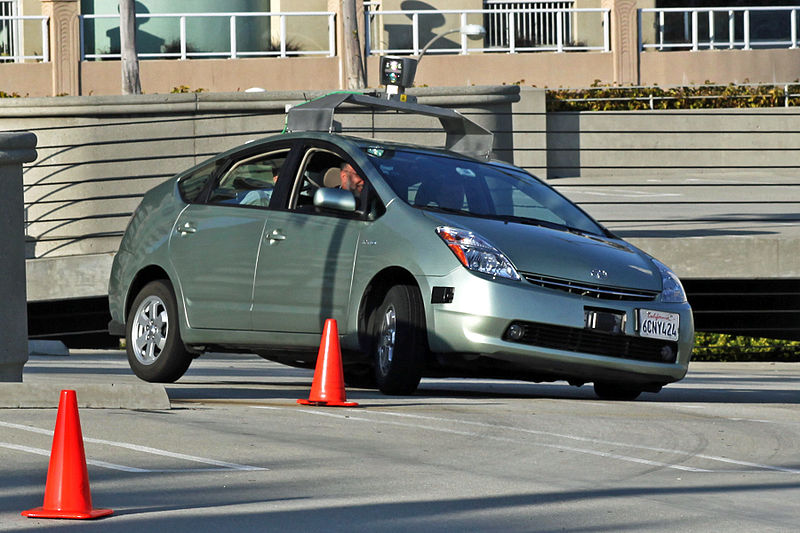
Toyota is developing a shortwave-driven car?!?

(Photo: Wikimedia Commons & Toyota)

(Photo: Wikimedia Commons & Toyota)

Though I’ve always believed that the shortwave spectrum is a medium–a conduit for international communications  not simply confined to analog audio broadcasts–I would have never guessed it would be used in an autonomous vehicle technology system. But check this out (and see update/comments below, plus our follow-up post):

(Source: TPM)

Toyota and Audi turned heads earlier this month by announcing that they were following in Google’s tracks and developing partially self-driving, or “autonomous” vehicle technology systems of their own.

At that time, Toyota noted in press materials that it has been testing one such semi-autonomous vehicle system — the Intelligent Transportation System (ITS), which uses short wave radio signals to have cars communicate with other vehicles and surrounding infrastructure to avoid collisions — at a simulated city inside its Higashi-Fuji Technical Center in Susono City, Japan.

Toyota also said that further “research and development will continue at Toyota Research Institute, North America (TRiNA), in Ann Arbor, Mich.” […] Read the full article on TPM.

Update: Sean (@VA5LF) commented on Twitter, “wow, that sounds ill-advised. HF is no place for local area comms!”

I wholeheartedly agree, Sean. The use of LED traffic lights alone bombards my car’s AM radio with Radio Frequency Interference (RFI). I can’t imagine my life depending on a technology that is so vulnerable to RFI. I would assume Toyota has a way to overcome this, else this info is simply incorrect/inaccurate. I mean, imagine how geo storms or skip would effect local driving conditions. 🙂

Reader comments:

One commenter noted:

“I didn’t know that VHF, UHF, or 5.9 GHz bands were considered short wave.”

Then Mike sent a message with the following comment:

I was just reading the posting about Toyota and self driving vehicles and the mention of “short wave radio signals”. I wonder if some how they meant “near field communication (NFC)”  and it has been translated to short wave (near field – short distance) radio communication? NFC is a proven technology being used for payment systems etc.

Just wondering aloud.

Indeed. I strongly suspect this journalist got their terminology a little skewed! Check out our follow-up post.

WRTH : B12 updates are now available for download

WRTH2013(Source: WRTH Editorial Team)

A few hours later than planned, the B12 broadcast schedules update file is now available from the WRTH Website: http://www.wrth.com (and follow the links) the file is in PDF format and requires Acrobat 6 or greater to open it. The file contains updates to the International and Clandestine/Target broadcast schedules published in WRTH2013. We hope you find this a useful accompaniment to the printed book.

Best wishes / 73 from WRTH Editorial team.

Shortwave Radio Recordings: Voice of Greece music

TheParthenonAthensFor your listening pleasure: 193 minutes of music, and a little Greek commentary, from the Voice of Greece. Recorded on Friday, January 18th–starting around 22:30 UTC–on 9.42 MHz.

Click here to download the MP3 of the recording, or simply listen below:

Attend the 26th Annual Winter SWL Fest

For those of you readers who often feel you’re alone in your enthusiasm for radio, I highly encourage you to attend the NASWA-sponsored SWL Fest in Plymouth Meeting, Pennsylvania this year. The ‘Fest is jam-packed with radio-related information and attended by many radio kindred spirits.  Forum topics this year will include the following :

  • From the WBCQ Archives – Larry Will

  • The Annual Pirate Forum – George Zeller
  • QRP: Operating and Listening at Low Power – Skip Arey
  • Economically Enhancing Your Collection thru Auctions and Flea Markets – Ed Mauger
  • Defeating Jammers with Text By Shortwave – Kim Andrew Elliott/Thomas Witherspoon
  • The Shortwave Shindig – David Goren (Friday night confirmed)
  • The Other Side of Satellite Monitoring – Dave Marthouse
  • More! All About Loop Antennae – Jef Eichner

If you’re interested in attending the SWL Fest, too, go to the official website and register!

Shortwave Radio Recordings: Radio Romania International

RRI-RadioRomaniaInternationalRadio Romania International is on of my favorite international broadcasters. I routinely listen to their broadcasts in English and French. With the demise of Radio Bulgaria in 2012, I turn to RRI for news not only about Romania, but Eastern Europe in general.

I do fear for the future of Radio Romania International on the shortwaves as so many broadcasters are pulling out of the spectrum and putting all of their faith into online “broadcasting.” If you enjoy RRI as much as I do, consider submitting a reception report and letting them know that you’re listening.

Tuesday, I recorded RRI’s English broadcast from Tiganesti on 9.435 MHZ (21:30 UTC)–quite an easy and reliable catch in eastern North America. You can click here to download the recording as an MP3, or simply listen via the embedded player below:

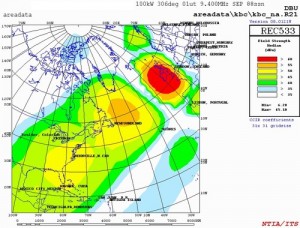
The Mighty KBC testing fast digital modes this weekend

KBC Propagation Map (Source: The Mighty KBC)

KBC Propagation Map (Source: The Mighty KBC)

The Mighty KBC will broadcast this Sunday (January 20) on 9,450 kHz between 00:00-02:00 UTC (that’s Saturday night in North America from 19:00-21:00 EST). Details below:

(Source: The Mighty KBC)

We will try some fast text modes this weekend on The Mighty KBC, to see if they can survive the rigours of shortwave.

This will be during the North America broadcast at 0000-0200 UTC 20 January on 9450 khz. At about 0130 UTC, 4XPSK63R will be centered on 1000 Hz and MFSK64 centered on 2000 Hz. (For 4XPSK63R, use Fldigi 3.21.65 or newer: OpMode > PSKR > MultiCarrier > 4XPSK63R.) At just before 0200 UTC, MT63-2000 (long interleave) will be centered on 1500 Hz, and PSKR250 on 2800 Hz. This will be an Flmsg formatted transmission, with html. Fldigi and Flmsg can be downloaded from www.w1hkj.com.

Deutsche Welle: spies received secret messages on their shortwave receiver

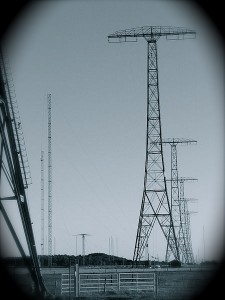
towersIf you’ve ever been curious who listens to and acts upon the coded messages we hear in numbers stations (a.k.a. spy numbers stations), follow this German-based couple who are being accused of spying on NATO and and the EU:

(Source: DW)

A spectacular trial at a Stuttgart court is about to begin, involving a German-based couple accused of spying on NATO and the EU for decades on Russia’s behalf. Neighbors say they knew something was fishy.

It reads like a John le Carre novel: “dead mail boxes,” secret radio signals, encrypted messages hidden in plain sight on the Internet.

According to accusations, a married couple has been spying in Germany for more than 20 years – first at the behest of the Soviet Union and thereafter for its post-Soviet incarnation, the Russian Foreign Intelligence Service.

On Tuesday (15.01.2013) 54-year-old Andreas Anschlag and his 48-year-old wife, Heidrun, will stand trial in Stuttgart. Federal prosecutors accuse them of “secret agent activity” and of “forgery of documents.”

[…]The history of the purported agent couple begins at a time when the Soviet Union still existed and the Cold War was still cold. According to accusations, Andreas Anschlag traveled to West Germany in 1988 with the help of a forged Austrian passport. His wife did the same in 1990. Both were supposed to have been born in South America. The two settled in Aachen, close to the western border with Belgium, where Mr. Anschlag studied mechanical engineering.

[…]The files were delivered via “dead mail boxes,” according to official charges, to the Russian Foreign Intelligence Service in Moscow. The couple apparently received further commands through an agent radio network and sent their own messages via satellite and through an internet video platform.

When they were arrested in October 2011, the German news magazine Der Spiegel reported that the woman was sitting in front of a shortwave receiver, writing down secret messages. At that point the pair was living in a house in Michelbach, a small community in the German state of Hesse.

“Suddenly we had this spy thriller taking place right outside our window – it was better than the movies,” one of the neighbors told DW.

Read the full article on DW’s website.

Note that this story reads much like the Russian couple who spied on the US a few years ago.