Jonathan Marks re-publishes “The Hitch-Hikers Guide to DXing”

Jonathan Marks has re-released The Hitch-Hikers Guide to DXing. In his own words:

It is thirty years ago since I wrote a rather silly parody on both international radio broadcasting based on my favorite radio series at the time, the Hitch-Hikers Guide to the Galaxy. There seemed to be so much to make fun of at the time…the boring propaganda at the height of the Cold War, jamming, the waste of energy shouting from one country to another, and the variable quality of reaction from listeners. I don’t think it was the listeners’s fault that most of the feedback was very technical, to do with signal strength and QSL cards rather than comments on the programme. May be people were being too polite.

[…]There wasn’t much time to write radio drama on the second floor of the Radio Netherlands building. And there was no budget to hire actors. So I just rattled it off on a typewriter and asked colleagues to come and read their parts in a lunchtime recording session. This was all two track material, sliced together with a chinagraph pencil and a razor blade. In total we made 5 in 1981 to fit the 5th Thursday in the month, and then one more in 1982 as a Christmas special.

To listen to all five episodes, simply cruise to the Media Network Vintage Vault and start with Episode 1. It’s well worth a listen and a nice little piece of 1981 RNW ingenuity.
ETOW featured on PRI’s The World Technology Podcast

Shortwave radio charity, ETOW (Ears To Our World) has been featured in this week’s PRI’s The World Technology Podcast. If you’ve never heard of ETOW, check out our previous posts or simply visit ETOW’s website. Self-powered shortwave radios are an integral part of their mission to provide “appropriate” technologies to schools and children in the third world.

Click here to go to PRI’s webpage for The World Technology Podcast.


Passion for Morse Code, Night of Nights featured in NY Times

Many of you reading the SWLing Post are not only passionate shortwave radio listeners, but also amateur radio operators. My love of shortwave radio listening eventually led me to obtain my ham radio license, and as a result, to learn about Morse code. I had always admired Morse code–a.k.a. CW (Continuous Wave)–as a mode of communication in the amateur radio world.

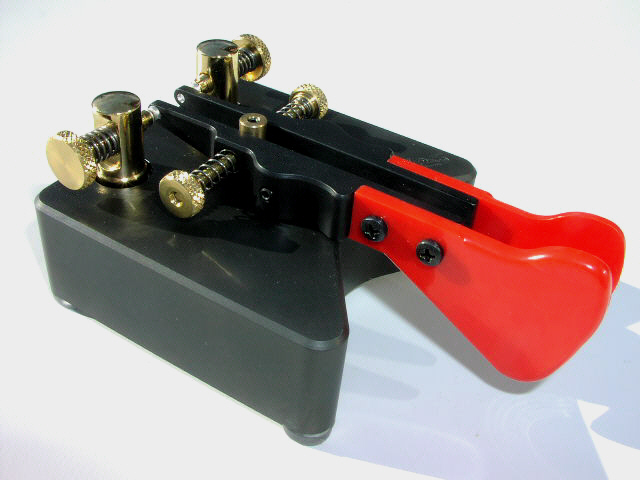
The Italian, hand-crafted Begali Simplex is this author's way of sending code in style. (Photo courtesy: Begali)

Several years ago my passion for CW finally encouraged me to learn it, during which time I practiced it almost daily with my ham radio mentors. During the process of learning code, I went from struggling to hear the difference between “dits” and “dahs” to being able to distinguish letters, symbols, words and phrases. Today, we chat over the SW radio bands about all sorts of things–radios, the weather, our families–in Morse code, or what we like to call “the sacred language.” Indeed, it is sacred…in its simplicity and its efficacy. Morse code is more intelligible than voice-over long-distance radio transmission, because the receiver or radio operator only needs to distinguish between the short and long “dit” and “dah” sounds, truly form following function.

And speaking of function, Morse code used to have a vital role in our communications landscape. The following article, from the NY Times, sheds some light on a little maritime radio history. For a Night Each Year, the Airwaves Buzz With Morse Code

Morse code/CW frequencies–how to find morse code on the shortwaves

Don’t be fooled by the NY Times article’s title: the airwaves are always filled with the sounds of Morse code 24/7. Don’t believe me? Simply turn on the SSB (single-side band) mode on your portable shortwave receiver, then tune between the following frequencies:

1800-2000 kHz

3500-3600 kHz

7000-7200 kHz

10100-10150 kHz

14000-14150 kHz

18068-18110 kHz

21000-21200 kHz

24890-24930 kHz

28000-28300 kHz

This is by no means a comprehensive list of all frequencies where you’ll hear CW; rather, it represents the main amateur radio watering holes for CW/Morse code operations.

Want to learn Morse code? Check out this article on QRPer.com!

BBC World Service audience dwindling in transition to internet-based media

A lesson here is when you pull out of shortwave radio broadcasts you lose very large swatches of listeners–especially when many in your audience lack access to the internet.

(Source: Journalism.co.uk)

The BBC World Service’s global audience has dropped by 14 million in the past year, according to the broadcaster.

Overall audience for the year has been estimated at 166 million, down from 180 million last year.

However, it claims online the World Service’s audience has risen by 40 per cent in the past 12 months.

In the BBC World Service annual report, published today, the broadcaster blamed the overall fall on the numerous service closures and changes which were implemented following cuts to its funding.

Read full article at Journalism.co.uk.

Shortwave plays vital roll in Somalia

I found this BBC profile on Somalia quite indicative of many countries in Africa. In light of cuts that the BBC World Service has been facing, this short article, about Somalia’s fragmented media landscape, admits that shortwave plays a vital roll in domestic news.

The TV and press sectors are weak and radio is the dominant medium. There are around 20 radio stations, but no national, domestic broadcaster. Many listeners tune to Somali-language media based abroad, in particular the BBC Somali service. The latter is available on shortwave, and via FM relays in Mogadishu (91.1), the Somaliland capital Hargeisa (89.0), and elsewhere.

They go on to say:

The Somali diaspora – in the West, the Gulf states and elsewhere – sustains a rich internet presence. But domestic web access is hampered by practicalities such as limited access to mains electricity. There were 102,000 internet users by September 2009 (Internetworldstats). In secessionist Somaliland and Puntland the authorities maintain a tight hold on broadcasting.

Shortwave listeners in Somalia, one should note, also listen to the likes of the Voice of America, Radio Netherlands Worldwide, Radio France International and many others. Most of whom are facing cuts right now as national budgets are being tightened in the economic recession. To those living in Somalia, where the media is fragmented and untrustworthy, shortwave radio represents a lifeline of information.

As we mentioned in this previous post, please consider speaking up on behalf of those without a voice. Let international broadcasters and their governing bodies know how crucial shortwave services are into impoverished regions of the world.


All India Radio on DRM track

As we’ve mentioned before, it appears AIR (All India Radio) may soon be a leader in digital radio in all forms, including shortwave. This, from the Deccan Herald:

The government plans to launch a 24-hour news broadcast channel of All India Radio (AIR) as part of its sweeping modernisation programme in the next five years.

AIR will also witness a complete digitisation of its studios, transmissions and connectivity across the country by 2017 according to plans by Ministry of Information and Broadcasting. With a view to improving efficiency and broadcast quality, the government will replace old and obsolete equipment besides enhancing AIR’s infrastructure by refurbishing its studios.

[…]While the reach of the national channel is proposed to be extended to the whole of the country, the external services of the AIR will also be strengthened through digitalisation of shortwave transmitters.

Read the full article at the Deccan Herald. Thanks to @kaedotcom (Kim Elliot) for the tip!