Shortwave listening and everything radio including reviews, broadcasting, ham radio, field operation, DXing, maker kits, travel, emergency gear, events, and more
Many thanks to Oscar (EA3IBC) who shares this simple hack.
I’ve gotten quite a few emails from Post readers telling me that the only thing holding them back from building a NCPL antenna is the BN-73-302 binocular ferrite core needed for the 1:1 Balun. While so much of the world is sheltering at home due to Covid-19, it’s less convenient to purchase one just for this purpose.
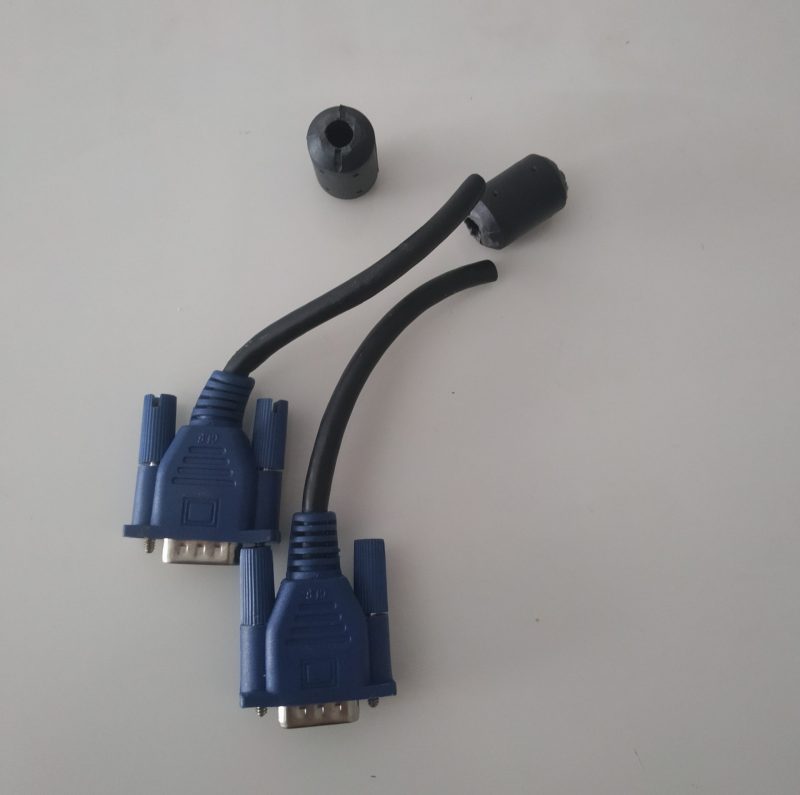
But almost everyone has an old VGA or USB cable with ferrite cores they can cannibalize for this very purpose. Oscar shared this super-simple hack on Twitter:
1. Cut the cable and remove the ferrite cores
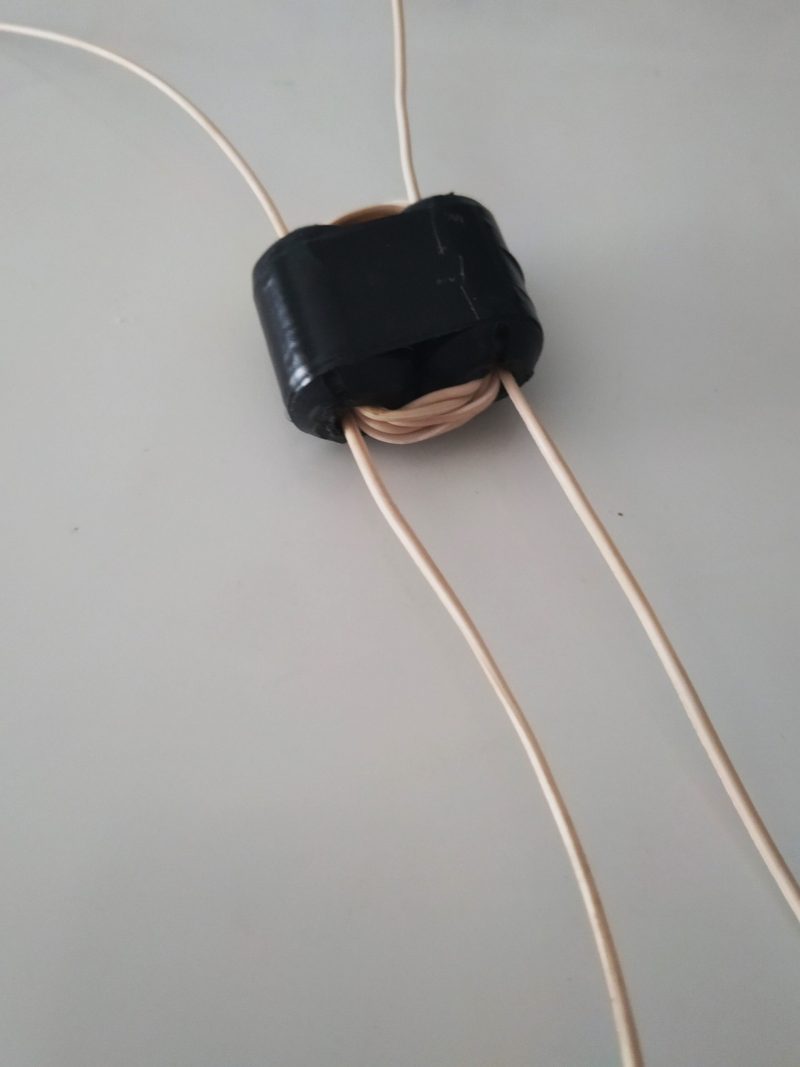
2. Tape the two cores together
3. And wind four turns on both sides
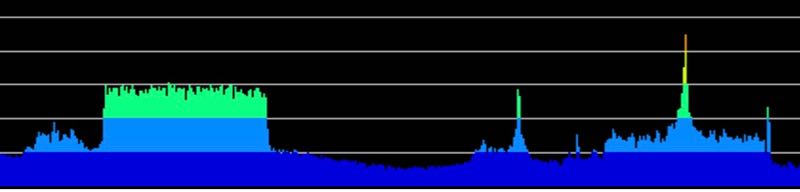
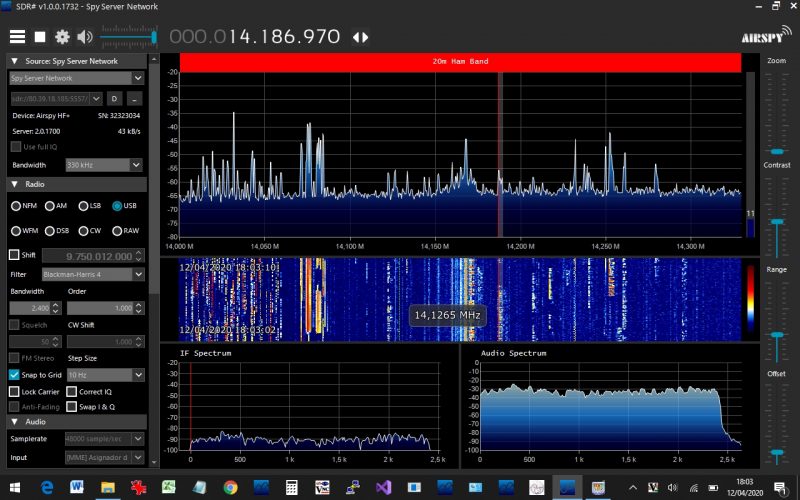
Admittedly, this 1:1 balun might not have the same properties as the BN-73-302 from our tutorial, but it seems to be working for Oscar. Check out this screenshot he shared from SDR# while hooked up to his NCPL antenna:
DRM broadcast (left) as seen via a KiwiSDR spectrum display.
Many thanks to SWLing Post contributor, Ed, who writes:
The April 14, 2020 edition of the BBC World Service program ‘Digital Planet’ includes a story about the status of Digital Radio Mondiale (DRM) broadcasts on shortwave. The segment had no breaking news, but SWLing Post readers might enjoy hearing an updated explanation on BBC of how DRM works on shortwave and other bands, where it’s being used, and what unique services it can offer. The segment includes a clip of digital audio played over shortwave and an interview with Ruxandra Obreja, Chair of the DRM Consortium and DRM Association.
The segment was followed by a casual conversation between BBC producer Gareth Mitchell M7GJM and interviewer Bill Thompson about SWLing and Amateur Radio–which was great to hear discussed on BBC World Service!
The entire segment and followup discussion begins at 21:17 and ends at 31:49 minutes into the mp3 recording found at this BBC URL:
Many thanks to SWLing Post contributor, Richard Langley, who shares the following note:
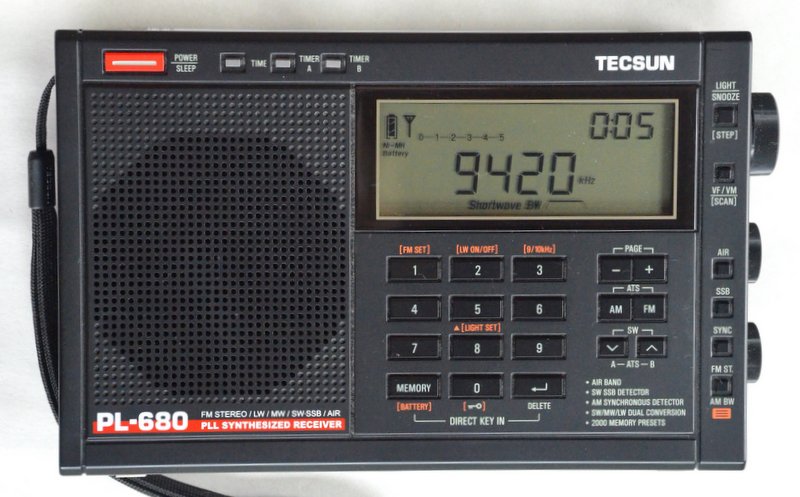
One of the benefits of the Covid-19 pandemic, as if there are any real benefits of a pandemic, is serendipitous programming on SW. I speak in particular of the ERT Proto Programma now airing on the Voice of Greece. As noted today (14 April), here in NB, on 9420 kHz tuning in around 19:50 UTC or so, there was classical opera being broadcast and after the news at 20:00 UTC, we were treated to “Musical Choices by Elena Maraka,” which is an eclectic music program of jazz and blues (funk, etc.). Nice. By the way, in a couple of hours, Proto Programma joins the Second Program (Deftero Programma).
Thank you, Richard, for sharing this note. Just one more reason 9420 kHz is a preset on all of my digital receivers.
And, you’re right: there are no real benefits of a pandemic. Still, it is fascinating from a listener’s perspective to hear how it changes the content of our shortwave landscape.
From the Isle of Music, April 19-25:
April is Jazz Appreciation Month! This week we feature the music of Janio Abreu including a new release, Juntos Otra Vez, a collaboration with Victor Goines.
The broadcasts take place:
1. For Eastern Europe but audible well beyond the target area in most of the Eastern Hemisphere (including parts of East Asia and Oceania) with 100Kw, Sunday 1500-1600 UTC on SpaceLine, 9400 KHz, from Sofia, Bulgaria (1800-1900 MSK)
If you don’t have a shortwave radio or are out of range, you can listen live to an uplink from a listening radio in the Netherlands during the broadcast at
http://websdr.ewi.utwente.nl:8901/?tune=9400am
2. For the Americas and parts of Europe, Tuesday 0000-0100 (New UTC) on WBCQ, 7490 KHz from Monticello, ME, USA (Monday 8-9PM EST in the US).
If you don’t have a shortwave or are out of range, you can listen to a live stream from the WBCQ website here (choose 7490): http://www.wbcq.com/?page_id=7
3 & 4. For Europe and sometimes beyond, Tuesday 1900-2000 UTC and Saturday 1200-1300 UTC on Channel 292, 6070 KHz from Rohrbach, Germany.
If you don’t have a shortwave radio or are out of range, you can listen live to an uplink from a listening radio in Europe.
Visit our Facebook page at https://www.facebook.com/fromtheisleofmusic
Uncle Bill’s Melting Pot, April 19 and 21:
Episode 161 features music related to Passover, the Eastern and Western Easters and Ramadan with a little secular music on the side.
The transmissions take place:
1.Sundays 2200-2300 (6:00PM -7:00PM Eastern US) on WBCQ The Planet 7490 KHz from the US to the Americas and parts of Europe
If you don’t have a shortwave or are out of range, you can listen to a live stream from the WBCQ website here (choose 7490): http://www.wbcq.com/?page_id=7
2. Tuesdays 2000-2030 UTC on Channel 292, 6070 KHz from Rohrbach, Germany for Europe.
If you don’t have a shortwave radio or are out of range, you can listen live to an uplink from different web SDRs in Europe.
Visit our Facebook Page at https://www.facebook.com/UncleBillsMeltingPot
I’m honored to have been interviewed by Frank Howell (K4FMH) for the ICQ Amateur / Ham Radio Podcast. The interview was posted as a podcast this weekend.
If you’re not familiar, the ICQ podcast is posted every fortnight and runs about 1.5-2.5 hours or so depending on news items and features. Here’s the description of this episode (#322):
In this episode, Martin M1MRB is joined by Chris Howard M0TCH, Martin Rothwell M0SGL, Ed Durrant DD5LP, Frank Howell K4FMH and Bill Barns N3JIX to discuss the latest Amateur / Ham Radio news. Colin M6BOY rounds up the news in brief and this episode’s feature is – Passion of Shortwave Listening with Thomas Witherspoon K4SWL.
The ICQ Podcast website also links to the many ways you can subscribe and listen to their shows published every two weeks.
Many thanks to Frank for inviting me to be interviewed–I really enjoyed talking shortwave with a fellow shortwave radio enthusiast (and long-time SWLing Post reader!).
I think this passive loop antenna project has been so appealing because (1.) most of us around the world are sheltering at home due to the Covid-19 pandemic and (2.) this project is simple and you likely have all of the components in your tool shed or junk box at this very moment.
A number you have written to tell me about your antenna builds and some of you have agreed to allow me to share your projects with the SWLing Post community.
Below, you’ll find three fine homebrew examples of the NCPL antenna–all of which were made with what these fine radio enthusiasts had on-hand:
Jerome van der Linden
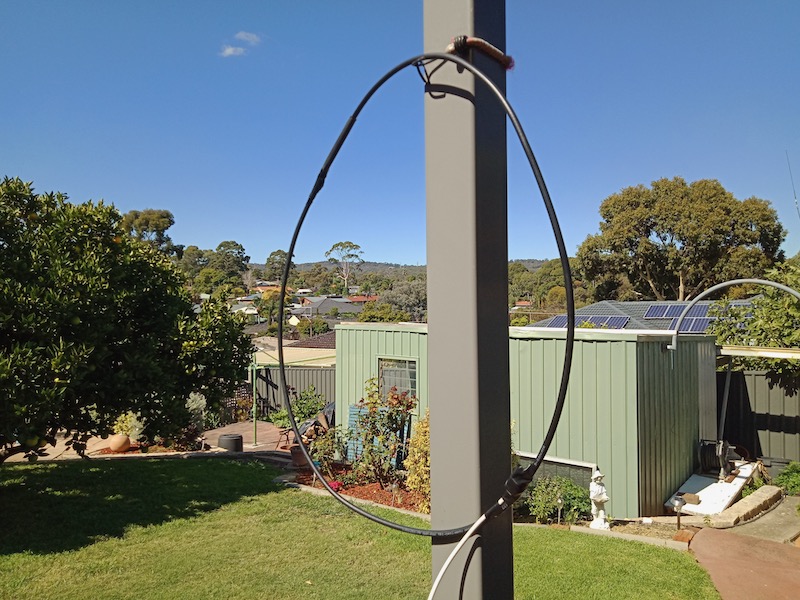
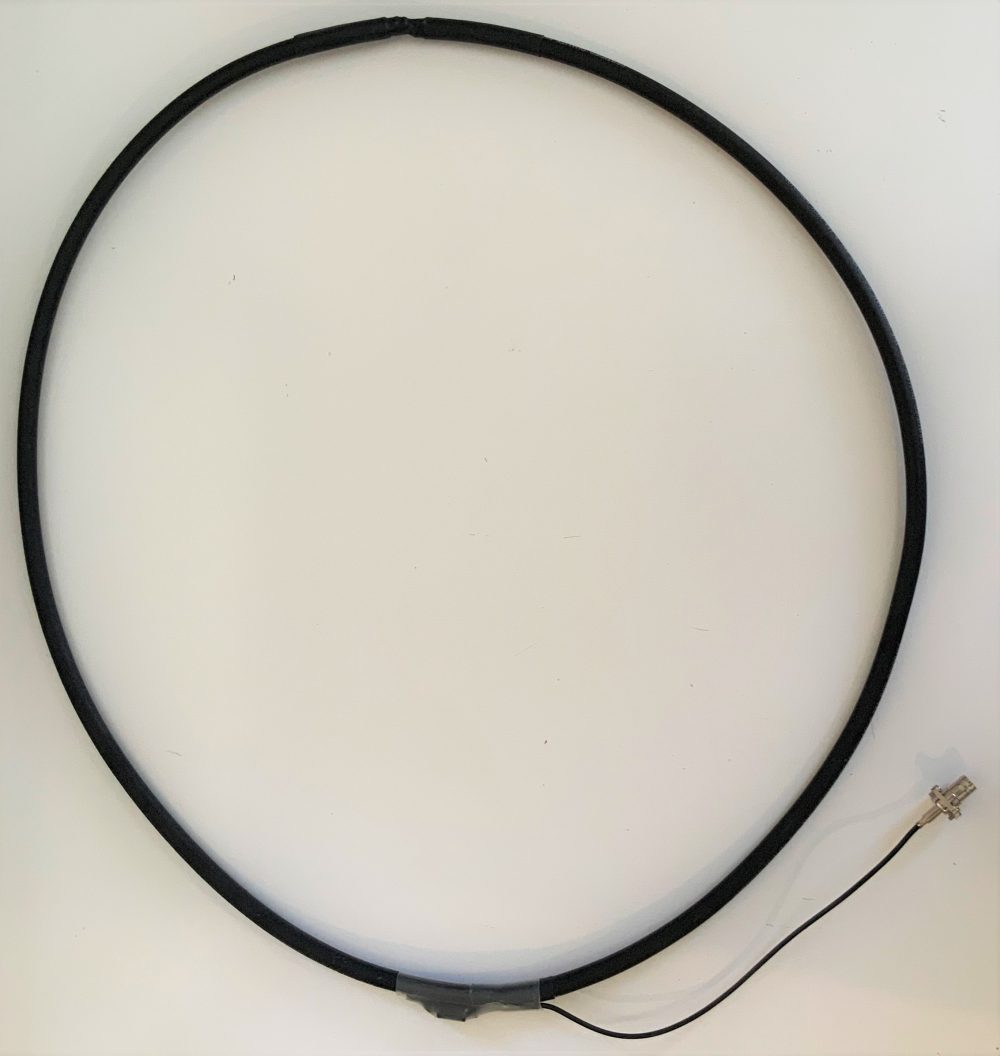
Jerome’s NCPL antenna
Jerome writes:
Hello Thomas,
Well, I took up the challenge and built a NCPL antenna pretty close to your instructions.
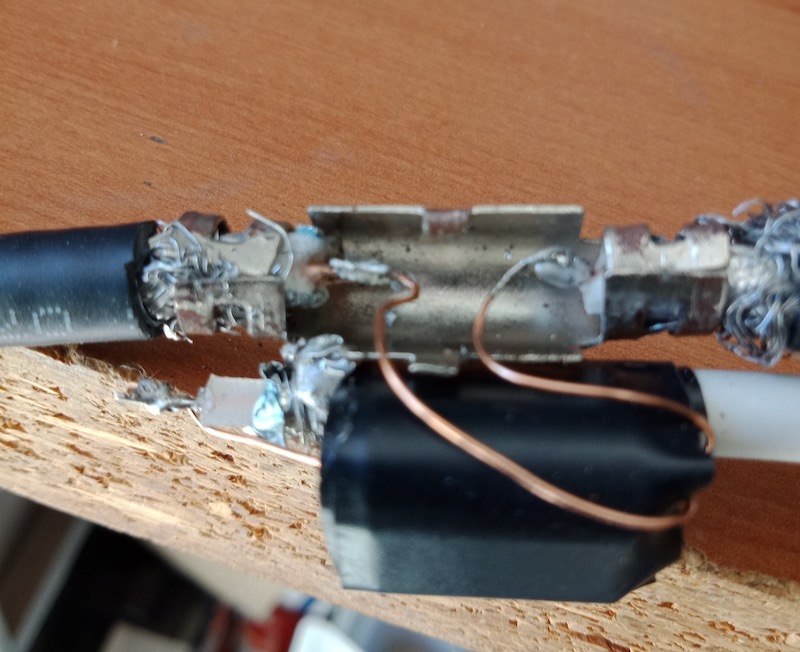
Unfortunately, the coax I had available used (had aluminium shielding, and too late into the project I discovered solder would not take to it. My solution was to cannibalize a coax cable joiner (see photos attached), where – normally – the centre conductors are joined / held by a plastic centre piece and screw fittings.
The braid / shield for the two bits of coax is clamped / squeezed by an outer metal piece. My cannibalising effort involved removing the plastic centre bit which joins the two centre cores, and keeping just the outer metal component which I used (after completely cutting through the coax) to clamp the two metal braid sections, while the two centre copper bits were far enough apart for me to solder the leads for the ferrite balun.
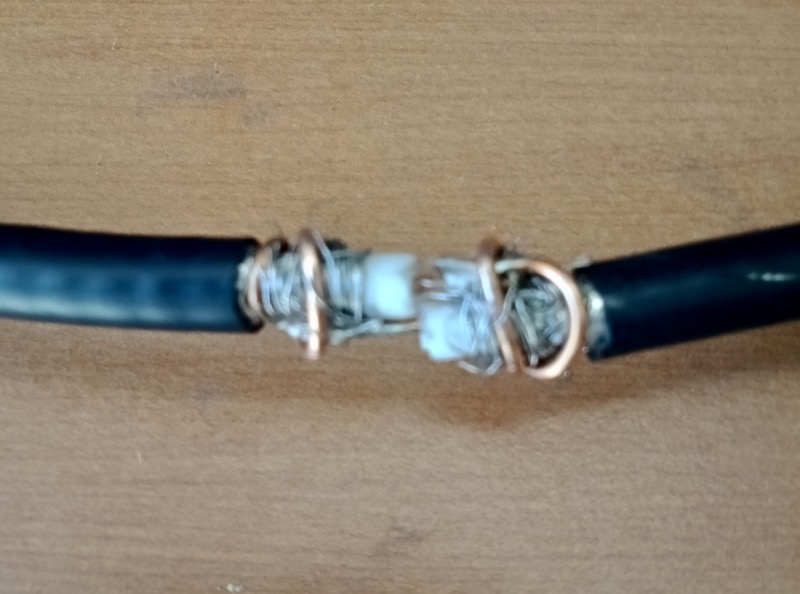
Of course, I could not do the same at the top of the loop where the internal and external conductors need to swap over. I soldered some quite thick copper wire (perhaps 2mm in diameter) to each center core, pushed the center core into the opposing coax and coiled the 2mm thick copper tightly around each end of the coax.
Once it was all taped up it looks no worse than yours, and it does indeed WORK! [see photo above]
Here in Oz, I could not source the identical ferrite, but I think it’s pretty close. Best performance for me is on 11MHz, where the Radio New Zealand signal on 11725 is markedly better using the loop than the internal whip on my Tecsun PL-880. Other bands not quite so significant, but the Noise level is definitely lower.
As you say, Jerome, once all packaged up, it looks great! Sure, the mixture of materials you had on hand wasn’t ideal (aluminium shielding, etc.) but you found a way to make it work from the resources you had in your home. And I love the fact it’s lowed your RFI level! Thanks for sharing!
Giuseppe Morlè (IZ0GZW)
Dear Thomas,
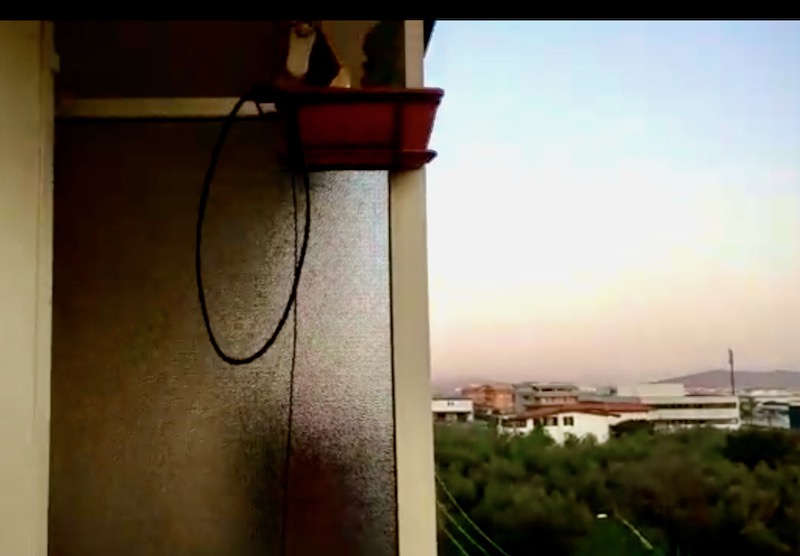
I’m Giuseppe Morlè (IZ0GZW), from Formia, central Italy, on the Tyrrhenian Sea.
I wanted to build your noise canceling loop seen on SWLing Post …
seems to work well especially from 40 meters. upward…
the diameter is 50 cm.
I will do other tests soon.
You can see the initial test on my YouTube channel via this link:
Thanks for the nice idea and a greetings from Italy.
73. Giuseppe IZ0GZW
Thank you, Giuseppe! What an amazing view you have there from your balcony! I’m quite impressed your PL-660 can take advantage of this design so well. We look forward to your other tests! Grazie mille!
John Mills
Hi Thomas,
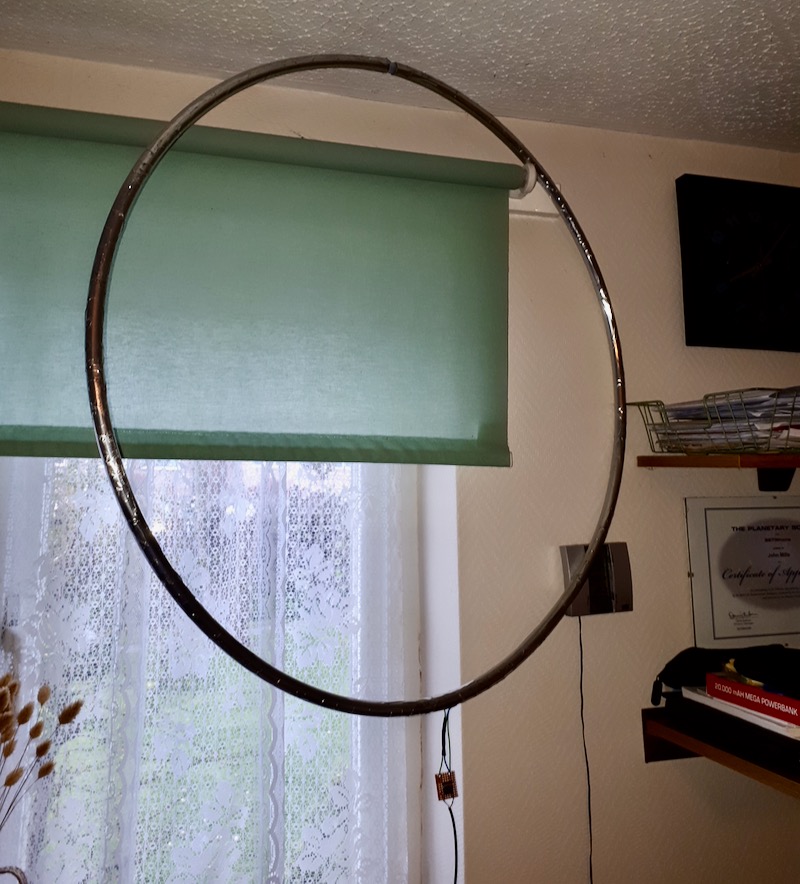
My idea was to use a fitness hoop 75cm diameter bought off eBay. I removed the flashy striping to reveal a plastic like hoop that was joined in one spot with a plastic insert.
I have wrapped the whole hoop in tin-clad copper foil tape that has a conductive adhesive backing, but to be sure I have soldered all the overlapping seams. I drilled two holes opposite each other for the upper foil connections and the lower exit to the Balun.
Hopefully the three pictures will be helpful, I did the 4 turn design on Airspys website and it works really well connected to my RSPdx.
73
John
Thank you, John. What a fantastic way to build the NCPL antenna without using a coax for the loop. Indeed, since your plastic hoop has a small insert in the middle, you’ve an ideal spot to make the shield to center conductor cross-over. Very clever! I also like how you mounted the 1:1 Balun (or Unun) on a small board. Thanks for sharing this.
Got Loops?
Post readers: If you have your own unique NCPL antenna design, please consider sharing it with us! Contact me with details and photos. I’ll plan to publish at least one more post with examples here in the near future.
Radio Waves: Stories Making Waves in the World of Radio
Because I keep my ear to the waves, as well as receive many tips from others who do the same, I find myself privy to radio-related stories that might interest SWLing Post readers. To that end: Welcome to the SWLing Post’sRadio Waves, a collection of links to interesting stories making waves in the world of radio. Enjoy!
Many thanks to SWLing Post contributors Dave Zantow (N9EWO), Paul Evans (W4/VP9KF), and Mike Hangen (K8RAT) for the following tips:
With all of the strange happenings and excessive “Pop-Up” issues on Angelfire (even more so of late), we have finally decided to move off of that web host and made the move to QSL.NET.
Please, for anyone who have web pages that have my web page linked (with the now old URL), I would appreciate the correction. Hopefully this will be the last time I will need to move the page.[…]
Please Note : Are still a few pages that still need to be transferred, but I expect to have that completed over the weekend. This has been quite a bit of work recoding all (again).
Paul Evans notes that Martin Lynch and Sons (ML&S) has just updated the product page for the IC-705 with the following note: “RRP £1199.95 incl 20% VAT. Estimated delivery now July 2020 due to major component shortage.”
Icom America retailers (Universal Radio, Ham Radio Outlet, Gigaparts, etc.) have not published an estimate for availability.
Pilots on reconnaissance missions could immediately call in their findings
As soon as the first humans went up in hot air balloons in the late 1700s, military strategists saw the tantalizing possibilities of aerial reconnaissance. Imagine being able to spot enemy movements and artillery from on high—even better if you could instantly communicate those findings to colleagues on the ground. But the technology of the day didn’t offer an elegant way to do that.
By the early 20th century, all of the necessary elements were in place to finally make aerial reconnaissance a reality: the telegraph, the telephone, and the airplane. The challenge was bringing them together. Wireless enthusiasts faced reluctant government bureaucrats, who were parsimonious in funding an unproven technology.
[…]One early attempt involved wireless telegraphy—sending telegraph signals by radio. Its main drawback was size. The battery pack and transmitter weighed up to 45 kilograms and took up an entire seat on a plane, sometimes overflowing into the pilot’s area. The wire antenna trailed behind the plane and had to be reeled in before landing. There was no room for a dedicated radio operator, and so the pilot would have to do everything: observe the enemy, consult the map, and tap out coordinates in Morse code, all while flying the plane under enemy fire.
Despite the complicated setup, some pioneers managed to make it work.[…]


 Thanks again!