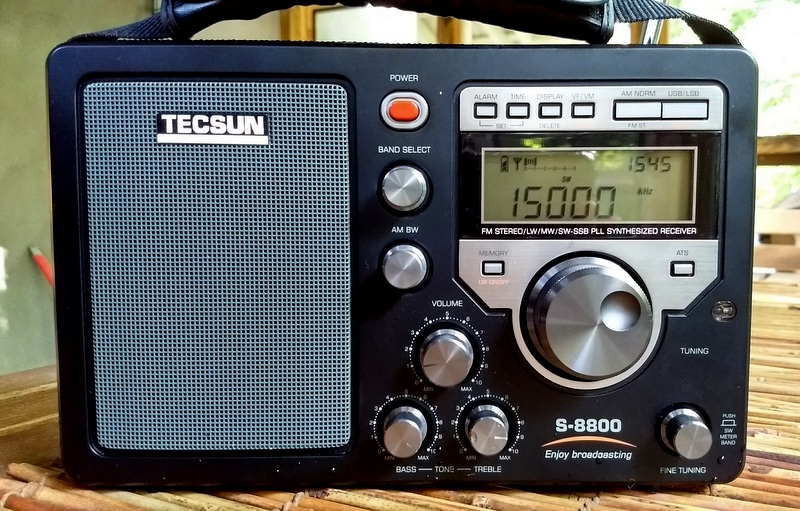
Many thanks to SWLing Post contributor, PA, who notes that Lennart Benschop has posted a review comparing the Tecsun PL-680 and Tecsun S-8800.

Many thanks to SWLing Post contributor, PA, who notes that Lennart Benschop has posted a review comparing the Tecsun PL-680 and Tecsun S-8800.
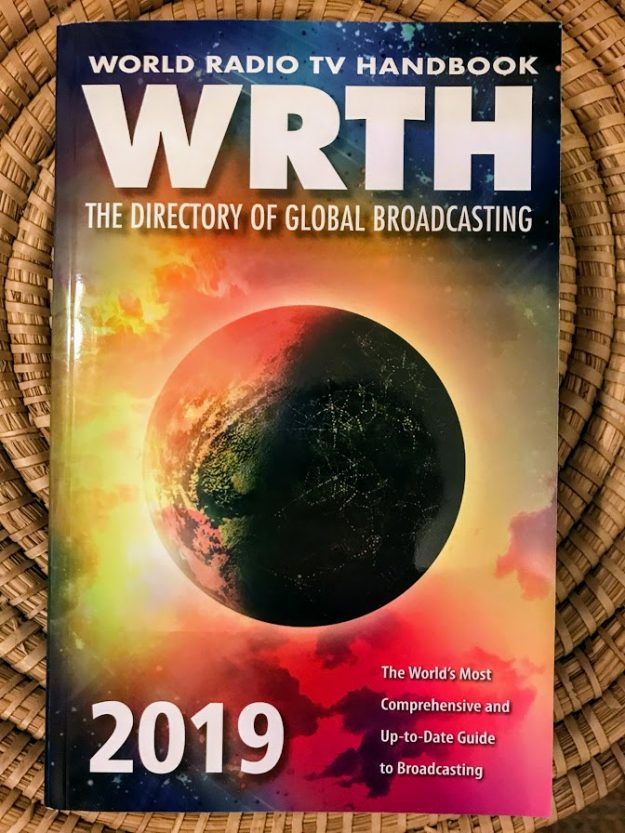
(Source: WRTH)
The latest version of the A19 International and C&OTB broadcaster schedules pdf has been uploaded to the WRTH website.
This download is available free of charge and includes the transmission schedules from 180+ International and Clandestine/Target broadcasters, arranged by country.
For maximum usability, these schedules are in the same format and use the same names/sites and codes as the printed World Radio TV Handbook.
If you have already downloaded the A19 file previously, I would recommend replacing it with the new version as this has a significant number of changes and updates (shown in blue throughout the file) over the original.
There are a number of free schedule compilations available on the web, some (or many) of which use at least part (or some) of our data – which is flattering. What makes ours different is that when used together with the printed WRTH, our schedules files and in-season updates, you get:
- Full contact details of all the broadcasters mentioned, plus all those domestic stations from every nation;
- Numbers and powers of transmitters, both Shortwave and Medium/Longwave;
- Reference material;
- Equipment reviews;
- Articles about broadcasters, antennas, etc.
All of this goes into making WRTH usable and current, all year long.
Many thanks to SWLing Post contributor, Ron, who shares the following news via the ARRL:
After filing a civil action and seeking an injunction to stop a church-related pirate radio station from operating in Worcester, Massachusetts, the US Attorney’s Office this week reached a settlement with the station’s operators, Vasco Oburoni and Christian Praise International Church. US Attorney Andrew E. Lelling and FCC Enforcement Bureau Chief Rosemary Harold announced the settlement on June 10. […]According to a consent decree filed on June 10 and subject to court approval, Oburoni and Christian Praise International Church agree not to do so in the future. They also agreed to surrender all of their broadcasting equipment.
“In the event the FCC reasonably suspects that they have violated the Act, the FCC may inspect the premises and seize any broadcasting equipment,” an FCC news release said. If the FCC determines that “the defendants” have operated an unlicensed broadcasting station in violation of the settlement, they will be subject to a $75,000 fine. The FCC received complaints, including one from a licensed broadcaster, that the pirate station was causing interference.
According to the signed consent decree, Vasco Oburoni and Christian Praise International Church admitted that they operated a radio broadcast station in Worcester, on 97.1 MHz, without an FCC license and previously had operated an unlicensed radio station on 102.3 MHz. The FCC had issued multiple warnings and issued a Forfeiture Order in the amount of $15,000 against Oburoni. The FCC said Oburoni agreed to a payment plan but later began broadcasting again without a license on a different frequency.

Many thanks to SWLing Post contributor, Kris Partridge, who shares the following note following our recent series of posts about WWII radio:
The, nearly, full story of the BBC’s wartime reporting can be found here. Yes, I hope another interesting read both for your good self and the readers of The SWLing Post:
What an excellent read! Thank you for sharing this link, Kris!
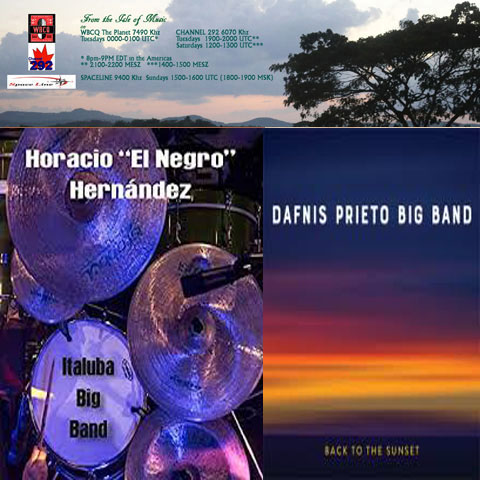
From the Isle of Music, June 16-22:
This week our special guest is Horacio “El Negro” Hernández, whose new album Italuba Big Band Live was the winner of the Jazz category of Cubadisco 2019. This is one of our rare interviews in English, and the Jazz is superb.
The broadcasts take place:
1. For Eastern Europe but audible well beyond the target area in most of the Eastern Hemisphere (including parts of East Asia and Oceania) with 100Kw, Sunday 1500-1600 UTC on SpaceLine, 9400 KHz, from Sofia, Bulgaria (1800-1900 MSK) Station website: www.spaceline.bg
2. For the Americas and parts of Europe, Tuesday 0000-0100 UTC (New UTC) on WBCQ, 7490 KHz from Monticello, ME, USA (Monday 8-9PM EST in the US).
Station website: www.wbcq.com
3 & 4. For Europe and sometimes beyond, Tuesday 1900-2000 UTC and Saturday 1200-1300 UTC on Channel 292, 6070 KHz from Rohrbach, Germany.
Station website: www.channel292.de
Uncle Bill’s Melting Pot, June 16 and June 18, 2019:
Episode 117 is a Father’s Day special episode a la Uncle Bill.
The transmissions take place:
1.Sundays 2200-2230 UTC (6:00PM -6:30PM Eastern US) on WBCQ The Planet 7490 KHz from the US to the Americas and parts of Europe
2. Tuesdays 2000-2030 UTC on Channel 292, 6070 KHz from Rohrbach, Germany for Europe.
Many thanks to SWLing Post contributor, Bill (WD9EQD), who notes:
[Recently] the Radio Canada program Sunday Edition had an interview with CBC President Catherine Tait. Very interesting on the challenges facing CBC and radio/tv in general:
(Source: CBC Radio)
It is the job of the CBC to build social cohesion in Canada, according to CBC/Radio-Canada president and CEO Catherine Tait, but “we also have an obligation to run a business.”
The longtime Canadian television and film executive told Michael Enright, host of The Sunday Edition, that her experience will help with that goal.
“I don’t think it was a surprise that I was selected as an entrepreneur to run this corporation, to try and find ways to uncover revenue that we might not have considered as possible for the public broadcaster,” she said.
The CBC depends on the government for about 70 per cent of its budget. It has never had stable, long-term funding. Budgets ebb and flow because they’re decided by the government of the day.
When it comes to financial support for public broadcasting, Canada ranks third-lowest among Organization for Economic Co-operation and Development (OECD) countries. The average per capita funding is $90 — in Canada, it’s $34.
About a year into her mandate, Tait revealed a new strategic plan to guide the CBC through a period of unparalleled media competition, over the next three years.[…]
Click here to listen to the full interview on Sunday Edition.

Many thanks to SWLing Post contributor, David Iurescia (LW4DAF), who shares this piece from the Vatican News:
‘Hebdomada Papae’: News in Latin on Vatican Radio
Saturday, 8 June, sees the launch of “Hebdomada Papae, notitiae vaticanae latine redditae” (The Pope’s week in review: Vatican news bulletin in Latin), on Vatican Radio.
By Linda BordoniStarting on Saturday, 8 June, a 5-minute weekly news bulletin in Latin will be broadcast to the world on Vatican Radio frequencies through the Italian language audio channels. Of course you will also be able to follow it on our web portal and listen to it on podcast, and it will soon be available on the English-language audio frequencies as well.
The bulletin goes to air thanks to the collaboration of the Vatican’s Latin Letters Office, a department of the Secretariat of State where Church documents are written in or translated into Latin. The bulletin will be edited by veteran Vatican Radio journalist Alessandro De Carolis.
A challenge for the future
Vatican Radio’s Editorial Director, Andrea Tornielli, describes ‘Hebdomada Papae’ as a real, informative news bulletin.
“We did not conceive it with a nostalgic look to the past, but as a challenge for the future,” he said.
Noting that Latin is the official language of the Catholic Church, he said Latin already “resonates daily on the frequencies of Vatican Radio, which every morning broadcasts Mass in Latin.”
This weekly initiative, he explained, aims to breathe new life into the language.
‘Anima Latina’
Straight after the news bulletin, Vatican Radio Italy, whcih broadcasts news and other programmes on the frequencies dedicated to the Italian language, will also provide an in-depth programme entitled “Anima Latina, radio colloquia de lingua ecclesiae.”
“Anima Latina”, dedicated to the rediscovery of the value and beauty of the Latin language, will feature Father Waldemar Turek, Director of the Latin Letters Office.