Shortwave listening and everything radio including reviews, broadcasting, ham radio, field operation, DXing, maker kits, travel, emergency gear, events, and more
Many thanks to SWLing Post contributor, Gérard Koopal, who writes:
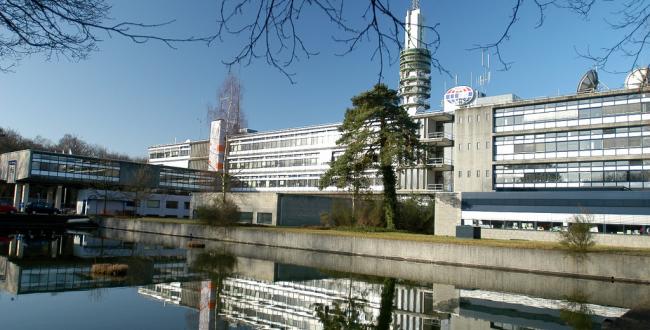
Dear Thomas, on November 6 it is exactly 100 years ago that Hans Idzerda transmitted the first radio broadcast in the Hague, the Netherlands.
To commemorate this event, the VRZA has a special broadcast using the original Zeedijk studio from radio Veronica and historical NOS/NRU studios. The broadcast is from 10.00 till 21.00 hours CET and there is an internet stream available.
Also rebroadcasting through some lpam stations. For more information see this website (in Dutch):
Good question, Adid. The FM band wasn’t widely included on radios until the late 1950s and early 1960s. Since this film dates from 1961, I imagine some of those new transistor/valve radios could have included FM, although I imagine mediumwave was the choice band for regional broadcasts.
Hopefully, an SWLing Post reader can shed some more light on Radio Sarawak’s history! Please comment!
Scientific American magazine reports new data suggest the 1921 ‘New York Railroad Storm’ could have surpassed the intensity of the famous Carrington Event of 1859
In a paper published in the journal Space Weather, Jeffrey Love of the U.S. Geological Survey and his colleagues reexamined the intensity of the 1921 event, known as the New York Railroad Storm, in greater detail than ever before. Although different measures of intensity exist, geomagnetic storms are often rated on an index called disturbance storm time (Dst)—a way of gauging global magnetic activity by averaging out values for the strength of Earth’s magnetic field measured at multiple locations. Our planet’s baseline Dst level is about –20 nanoteslas (nT), with a “superstorm” condition defined as occurring when levels fall below –250 nT.
Studies of the very limited magnetic data from the Carrington Event peg its intensity at anywhere from –850 to –1,050 nT. According to Love’s study, the 1921 storm, however, came in at about –907 nT. “The 1921 storm could have been more intense than the 1859 storm,” Love says. “Prior to our paper, [the 1921 storm] was understood to be intense, but how intense wasn’t really clear.”
Many thanks to SWLing Post contributor, Eric McFadden (WD8RIF) who shares the following post by James Wade (WB8SIW) from the QRZ.com forums:
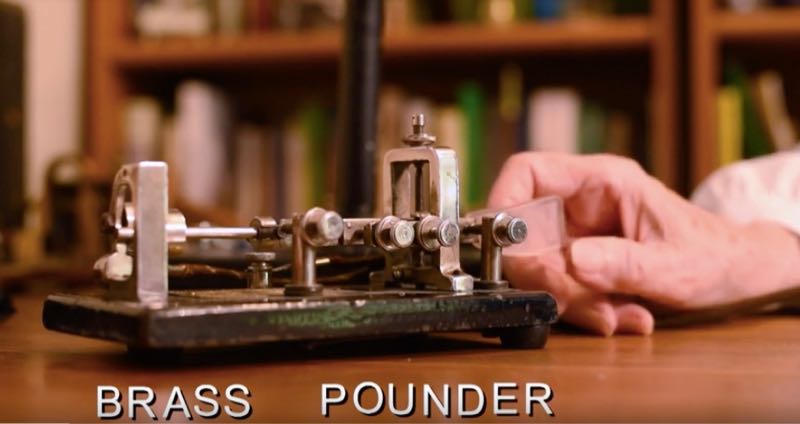
The CBC recently interviewed Lavina Shaw, Past International President of the Morse Telegraph Club. In this biographical documentary, Lavina talks about her experiences working as a railroad and commercial telegrapher as well as her experiences as a woman working in a man’s world. Like many telegraphers of her era, Lavina had a front-row seat to history.
In addition to railroad and commercial operations (telegrams, cablegrams), the telegraph was widely used in a variety of applications such as stock brokerage operations, commodities and board of trade work, press operations, and so forth. Even the telephone company used Morse telegraphy extensively for its internal operations well into the post war era.
Radio amateurs in general, and CW operators in particular, will undoubtedly find this video interesting, not just for the human interest content, but for its insights into the antecedents of radiotelegraphy.
The Morse Telegraph Club is a non-profit historical and educational association dedicated to preserving the history and traditions of telegraphy and the telegraph industry. MTC members and chapters demonstrate telegraphy at historical events, design and construct historically correct museum exhibits and conduct presentations on the history of telegraphy. MTC also publishes an excellent quarterly journal entitled “Dots and Dashes, which includes articles on telegraph history and first-person accounts of telegraph industry employees.
Photo showing off the inside of an Audimeter, a device for measuring what people were listening to on radio (Photo: February 1945 issue of Radio-Craft via Gizmodo)
[…]The February 1945 issue of Radio-Craft magazine included an article titled “Radio Audience Meter” which looked at the machine that was revolutionizing audience measurement. First installed in homes on a trial basis in 1939, the Audimeter was placed next to a family’s existing radio.
The article included photo cutaways that showed how the Audimeter worked. Back in those days, radios had dials. Fitted with a series of gears, the Audimeter was a standalone device connected to a radio. It had an arm that moved whenever the radio dial was turned. So whenever the radio station was changed, the Audimeter’s arm would swivel along a long tape that was slowly rolling inside this gadget. The tape inside was about 100 feet long and three inches wide and reportedly lasted for about a month of recording.
The market researchers would collect the tapes by visiting each house monthly and shipping the tapes to a plant in Chicago. Once there, the tapes were processed by dozens of laborers feeding the tapes into tabulation machines.
“The Audimeter made it more scientific,” Buzzard noted about the measuring device. “They got automatic readings.”
And words like “scientific” and “automatic” were all the rage for gadgets of the 1940s, even if by today’s standards there was quite a bit of legwork involved.[…]
Many thanks to SWLing Post contributor, Dave Kolesar, who shares the following review:
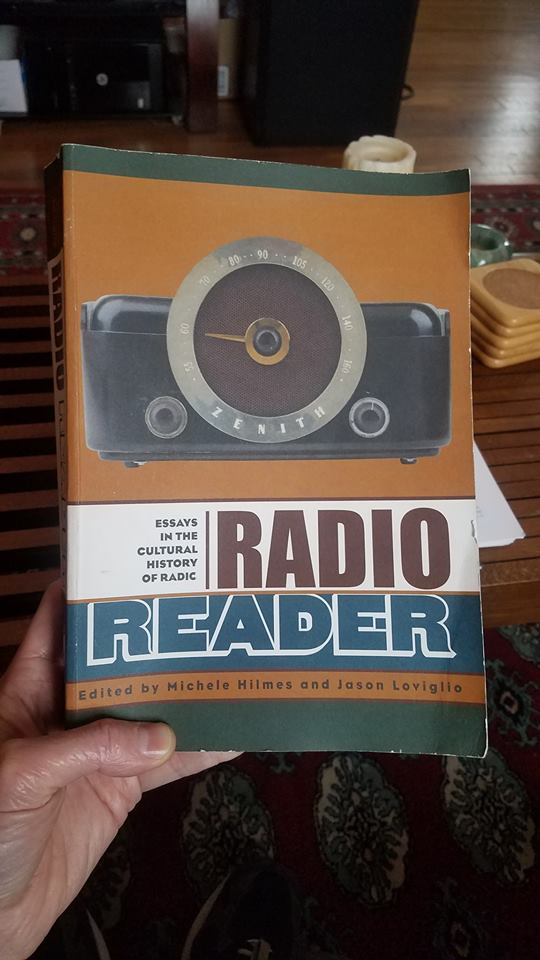
Just finished another excellent read: Hilmes and Loviglio’s collection “Radio Reader: Essays in the Cultural History of Radio.”
Very little scholarship exists about the cultural impact of radio in America, and this volume explores the history highlights (long partial list): the initial fight over the nature of broadcasting in the 1920s and 30s (educational vs. commercial), stratification of programming and channels with regards to representation of women, people of color, and gays during the Depression, WWII, and the pre-televison era, the discovery of the teenage market in the 1950s that led to the Top 40 format, the commerical Underground radio movement of the 60s, the creation of NPR and the associated decimation of student-run university stations, the rise of commercial (in everything but name) religious broadcasting and and its corrupting effects on the religious experience and political discourse, the 1980s male-dominated talk radio genre as an effort to roll back feminism, the 1996 Telecom bill and the creation of LPFM and the proliferation of pirate radio as responses to it, and finally, the digital radio future and its public service obligations.
For those who love the medium, this is a great reminder of why we work in it, how it’s succeeded and yet failed to live up to its potential, and what the future may hold as new technologies enter the audio landscape.
Thanks, Dave—sounds like this collection spans a wide variety of radio cultural histories. I did some searching and found that, of course it’s on Amazon.com, but also available used on a number of sites including Barnes and Noble.