Tag Archives: Radio World

Radio World: Bryan Broadcasting Asks FCC to Allow All-Digital AM

(Source: Radio World via Ulis K3LU)

A prominent advocate for the AM band is petitioning the FCC to allow stations to use all-digital transmissions in the United States.

Bryan Broadcasting Corp. on Monday filed a petition for rulemaking asking the commission to initiate a proceeding to authorize the MA3 all-digital mode of HD Radio for any AM station that chooses to do so.

Permitting such modernization would “give AM broadcasters a needed innovative tool with which to compete” without harming others in the spectrum ecosystem, it wrote.

Bryan is licensee of four AM stations, five FMs and six FM translators in Central Texas. Ben Downs is the vice president and general manager, and submitted the petition along with the company’s attorney David Oxenford of Wilkinson Barker Knauer. Downs also has served on the NAB board in the past, and he has been a vocal advocate for various regulatory steps to “revitalize” the AM band.

All HD Radio receivers in the market that have AM functionality would be able to receive such all-digital signals. But legacy AM receivers would not, which has long been a barrier to serious discussion of all-digital. Now, some observers say, the availability of FM translators for AM licensees has made something that once seemed unthinkable at least worth discussing.

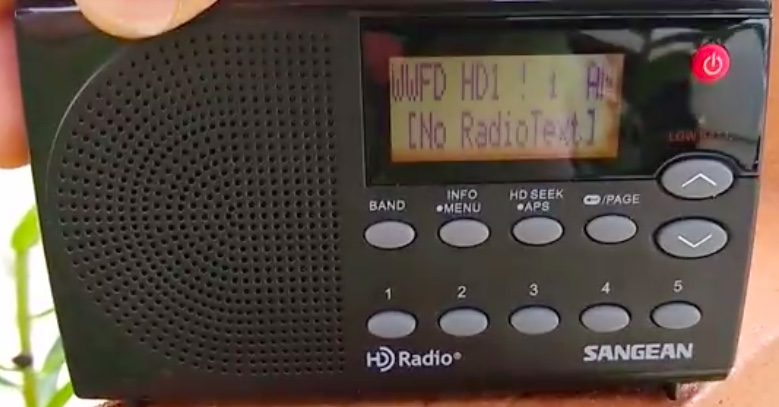
There is one AM station in the country with special temporary authority to broadcast in all-digital. Hubbard’s WWFD in Frederick, Md., near the nation’s capital has been on the air since last summer. The station’s Dave Kolesar has been speaking in public about the ongoing experiment and will do so again at the upcoming NAB Show.[…]

Click here to continue reading.

Radio World: Koode Radio Aims to Reduce Conflict in Africa

(Source: Radio World via Mike Hansgen)

ABUJA, Nigeria — Koode Radio International, a new shortwave program with considerable goals, has begun broadcasting to much of Western Africa.

With programs in the Fulani (or Fula) language, KRI aims to “educate, enlighten and entertain” its listeners, the Fulbe people. This predominantly Muslim, nomadic herder and farmer group is spread across Africa from Senegal in the west to Lake Chad in the east. Dialects of the language are spoken in some 20 countries and the station chose the name “Koode” because it means “star” in all of the dialects.

Usman Shehu in the KRI studio in Abuja. Photos courtesy of KRI.
While some Fulbe are able to communicate via the likes of WhatsApp and Facebook, others cannot. Because a number of Fulbe are herders, they are not only beyond the range of the internet, but beyond the range of electricity.[…]

Click here to read the full article t Radio World online.

Chairman of DRM Consortium looks at the current state of shortwave

(Source: Radio World via Maichael Black)

Note that the excerpt below is only a portion of the full article. Read the full piece at Radio World.

Does Shortwave Have a Future?

by RUXANDRA OBREJA

When is the last time you heard a shortwave radio transmission? And why should you put up with possible crackly audio and some interference when we have now internet, satellites, FM and all forms of digital radio?

[…]Shortwave is just short of a miracle, actually. When it is beamed at an angle, it hits the ionosphere. A mirror around the Earth and then it falls like a ball at great distances, beyond the horizon. Thus these transmissions reach listeners over large areas, continents and beyond. Two or three high-power transmitters can potentially cover the entire world.

Shortwave is used not just by international radio stations or radio amateurs but is also essential for aviation, marine, diplomatic and emergency purposes. Shortwave signals are not restricted or controlled by the receiving countries and, as frequencies change in winter and summer, they need to be coordinated internationally.

[…]Digital Radio Mondiale was originally invented to offer medium (AM) and large coverage (HF) and the advantages of the good audio quality and extra multimedia services that can take shortwave into the 21st century. Maybe DRM was ahead of its time. The phasing in of digital broadcasts internationally was not in tandem with the production and sale of receivers, which remains a regional and national business. Since its birth DRM has proven that it is a suitable option for shortwave offering an good digital quality of audio and even short live video at great distance without fading and crackly sound.

Now, at last, there are DRM receivers capable of receiving shortwave, there are broadcasts and interested broadcasters. Quietly and surely shortwave is being re-examined and appreciated for the quality of broadcasts and its potential as a “crisis radio” too. It can become crucial in emergencies when local and regional radio stations, satellite and internet may be off the air due to damage. Broadband is getting cheaper but is limited, 5G will come but not just yet, digital shortwave is here.[…]

Click here to read the full article at Radio World.

Peter Tannenwald asks, “Are we really ‘revitalizing’ AM?”

(Source: RadioWorld via Bill Patalon)

On AM revitalization, Peter Tannenwald asks, Are we really “revitalizing” AM, or are we walking around in circles?

Late on Friday, October 5, the Federal Communications Commission (“FCC”) released a Second Further Notice of Proposed Rulemaking in a five-year ongoing effort to “revitalize” the AM radio broadcast service. The new proposals continue a trend toward allowing higher power operation by smaller stations, by reducing nighttime signal protection for some 60 Class A AM stations located in the continental United States and 16 stations in Alaska. The end result would be less wide area coverage and more local radio service to the public.

To understand why the FCC is considering this action, it helps to understand a bit of the science behind AM signal propagation. AM radio signals travel through both the ground and through the air. At night, the airborne signal component (“skywave”) is reflected back to the earth from the ionosphere — a layer of the atmosphere extending from about 50 to 600 miles above the earth’s surface. The reflected signals may come back down to earth hundreds, if not thousands, of miles away from a station’s transmitter. Class A AM stations — formerly known as “clear channel” stations (no relation to Clear Channel/now iHeartMedia) — are powerhouses, transmitting with 50 kilowatts of power 24 hours a day – 200 or more times the power of the smallest AM stations.

[…]Signal reflection doesn’t work so well during the day, so the FCC has allowed other stations to occupy the Class A frequencies in other markets. But those stations have to curtail power during “critical hours” (two hours before sunrise and after sunset) and often have to reduce power to nearly nothing or shut down altogether at night. In today’s 24-hour-a-day, nonstop world, not being able to reach an audience at night is a losing proposition; so the FCC has yielded to constant pressure over the years to allow more power and longer hours of operation by those “other” stations, at the expense of long distance reception of Class A signals.

Now the FCC is proposing to go further, rolling back some previous restrictions on non-Class A AM stations and perhaps eliminating whatever remains (and it’s not much) of the protection of far-away reception. Under the proposals, which are sufficiently complicated that you should talk to your engineer if you really want to understand the details, Class A AM stations would be protected only within a higher strength signal contour (and so within a smaller area) than they are now; at least some, if not all, skywave protection would be eliminated.[…]

Click here to read the full article at RadioWorld.

Radio World: “Who’s Got the Biggest, Meanest AM Flamethrower?”

(Source: Radio World)

More broadcasters than you might realize are helping keep the ionosphere warm (and the power companies happy)

In the May 9 issue of Radio World, I reported on a recent power upgrade at TWR’s Bonaire AM facility that brought that station close to the half-megawatt level (440 kW), allowing the station to make the claim that it is the most powerful medium-wave (MW) operation in the Western Hemisphere. After the dust settled, I thought it might be interesting to poke around a bit in the data available to see if they have a close (or even not-so-close) contender for second place for this title.

With only a few exceptions, U.S. stations have been capped at 50 kW since this power level was authorized by the Federal Radio Commission in the late 1920s. Powel Crosley Jr.’s WLW 500,000 kW 1930s “experimental” operation is one very well-known example, as it received a lot of publicity during the five years or so during it operated before being powered down. However, there was another much less well-known superpower operation during that period (it actually beat WLW to the punch by putting 400,000 Watts on the air about three years before Crosley was ready to belt out his hundreds of kilowatts).

[…]Surprisingly, there is one U.S. AM station that has the necessary paperwork and equipment to operate at 100 kW full-time. However, it’s not listed in the FCC’s AM database. I’m referring to the VOA’s “Radio Martí” in Marathon, Fla. which operates on 1080 kHz.

The VOA station (it sports no call sign) appears to be the only operation in its class in the U.S. and Canada, but it if you cross the border into Mexico, you’ll find “muchas estaciones de radio” that emit lots more than a puny 50,000 “vatios.”[…]

Click here to read the full story at Radio World.

AFRTS: Thousands of hours of Roger Carroll shows now online

Roger Carroll

(Source: Radio World via Richard Langley)

Beginning in the early 1940s and for more than 50 years, the U.S. armed services produced long-form radio programs on vinyl disc to broadcast to troops overseas.

These were usually recorded by the top voice talents in Los Angeles and were heard over the American Forces Radio TV Service. Many of the same talent later created other shows specifically to aid the military with recruitment. The latter programs were then distributed to American radio stations for free on-air use.

Until recently, this trove of historical programming had been M.I.A., but now thousands of hours are available for online streaming, thanks to Army veteran Thom Whetston, who served in Panama and Korea.

“For years, AFRTS recorded many hours a week of personality-oriented music shows, and these were sent all over the world,” Whetston said. “The guys that hosted them got complimentary copies, and luckily one air talent in particular, Roger Carroll, saved most of his albums in his garage. For the last 10 years I had been writing a blog about AFRTS, and about a year ago, with Roger’s help, I began building a website where people can hear these shows again.”[…]

Continue reading the full article at Radio World…

Click here to visit Roger Carroll’s Best Sounds In Town and listen to the archive.

DRM feeds RNZ Pacific relays

(Source: Radio World via Mike Hansgen)

RANGITAIKI, New Zealand — Radio New Zealand Pacific, the official international arm of Radio New Zealand, is using Digital Radio Mondiale digital radio transmission/reception equipment to feed studio-quality audio to some of its 20 relay stations in the Pacific Ocean region. The others use satellite feeds or web downloads.

The locations being served by DRM include the Cook Islands, where RNZ Pacific’s programs are rebroadcast locally in analog mode by Aitutaki 88FM, the islands’ only broadcaster. RNZ Pacific also serves Tonga, Samoa, and the Solomon Islands using DRM; among others. Previously, RNZ Pacific had fed its relays using analog AM shortwave radio, with that transmission mode’s limited audio range and interference issues.

“When DRM became available to us in 2005, we saw it as a great opportunity to provide high quality audio to Pacific radio stations that relayed our news broadcasts from our AM transmitter,” said RNZ Pacific’s Technical Manager Adrian Sainsbury. “As a platform to deliver good quality audio to remote island FM stations, it has been a great success.”[…]

Click here to read the full article at Radio World.

As the article points out, RNZ has been using DRM as a feed for quite a few years. I think this is a brilliant use of the technology. Of course, those of us in the rest of the world can snag RNZ DRM broadcasts as well.