Tag Archives: Voice of America

“Shifting away from shortwave”: Significant reductions for BBG under FY 2018 budget

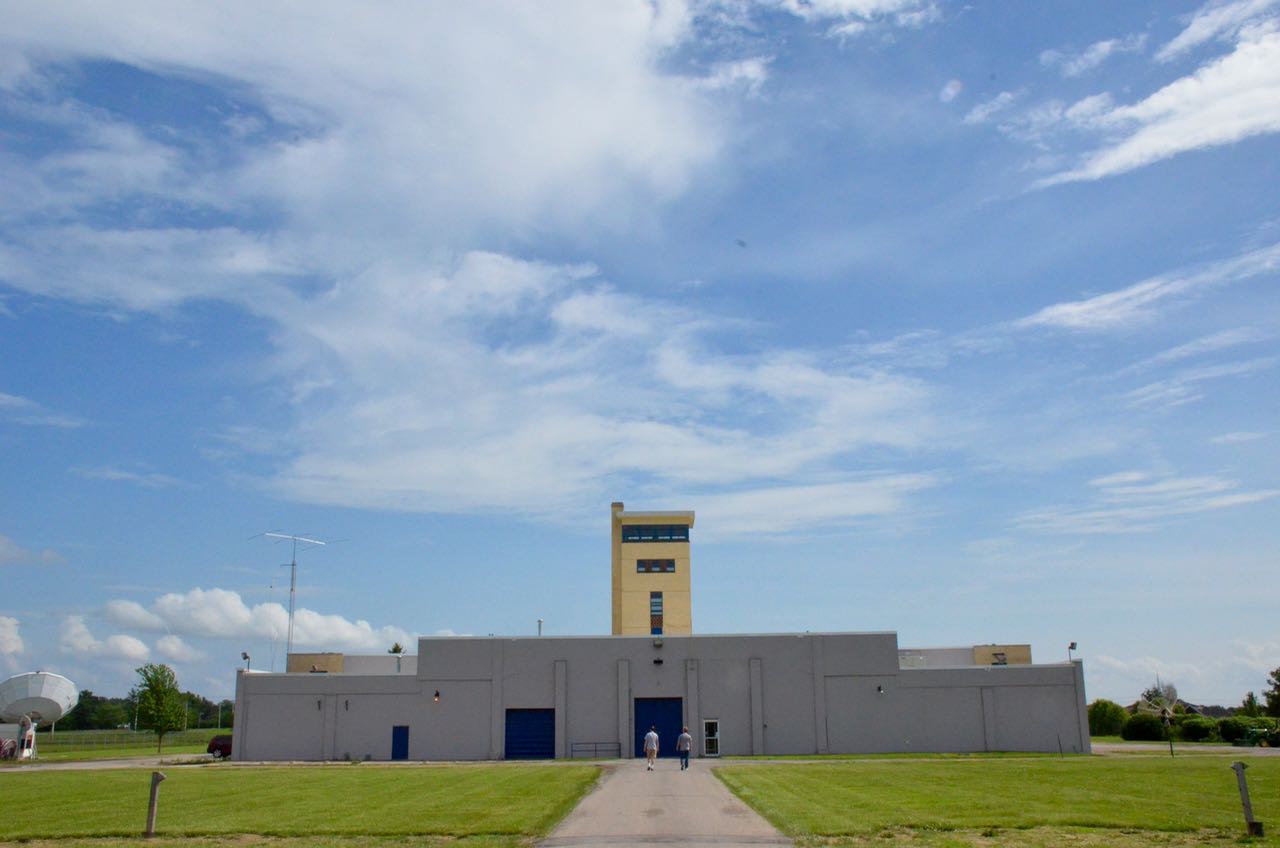
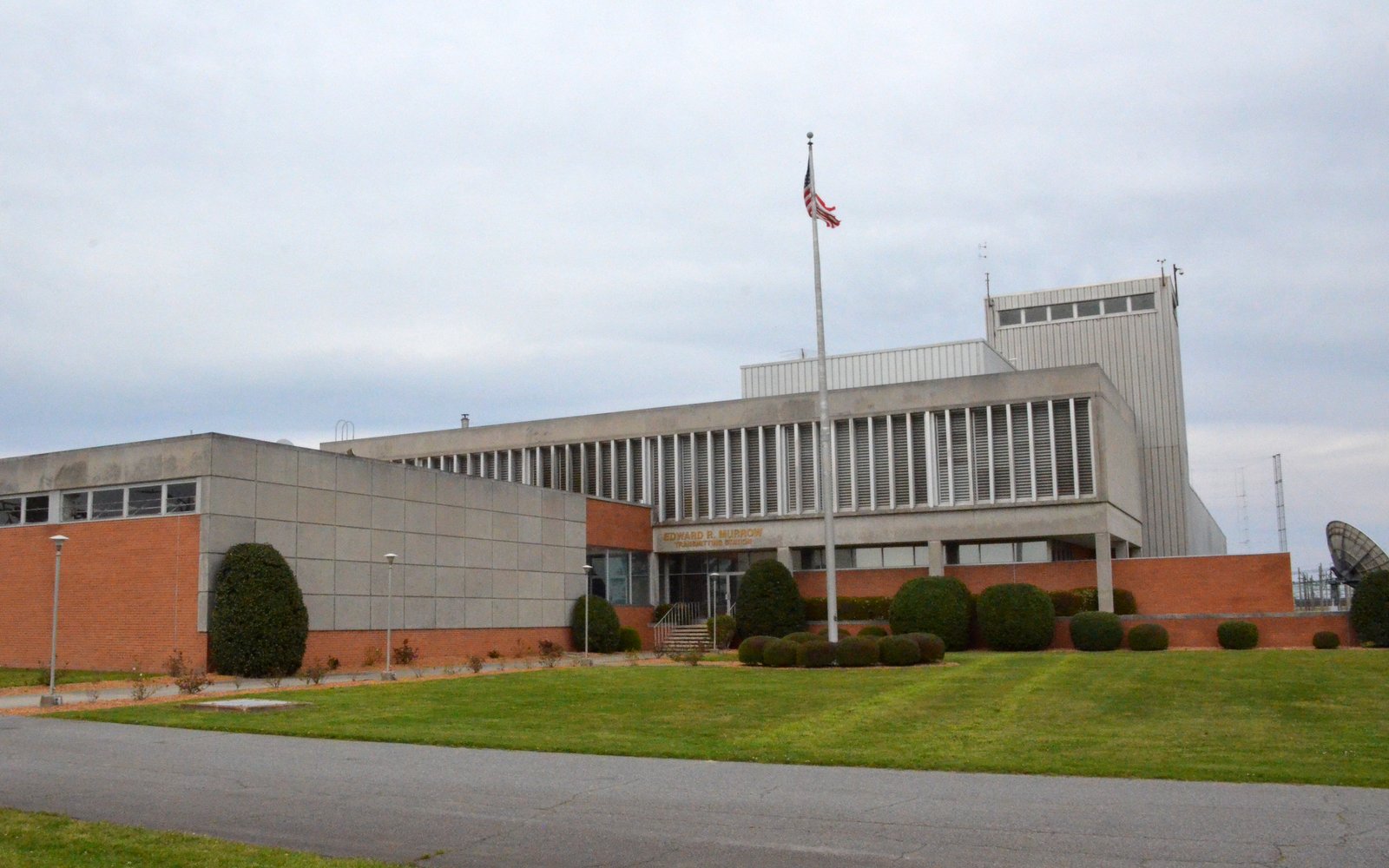
Edward R. Murrow Transmission Site near Greenville, North Carolina

(Source: BBG Press Release via Dan Robinson)

FY 2018 budget request reflects key BBG priorities amid spending constraints

WASHINGTON, D.C. — The Broadcasting Board of Governors today released the FY 2018 budget request to support key U.S. foreign policy goals by providing news and information around the world while accommodating the current tight fiscal climate.

“As is true throughout the federal government, the budgetary environment requires that we prioritize our resources while emphasizing impact and maintaining the level of excellence our audiences have come to expect,” said CEO John F. Lansing. “Despite reductions in spending, we are committed to our mission, impacting the lives of hundreds of millions of people around the world by providing accurate, unbiased, and uncensored news and information.”

The tight fiscal environment necessitates BBG to improve operational efficiencies and make difficult resource trade-offs to effectively meet performance goals and support U.S. foreign policy priorities.

The $685.1 million budget request includes transmission, program and staffing reductions across all BBG networks—the Voice of America, Radio Free Europe/Radio Liberty, the Office of Cuba Broadcasting, Radio Free Asia, and the Middle East Broadcasting Networks—and the International Broadcasting Bureau, including the Office of Technology, Services and Innovation. This includes reducing, and in some cases, eliminating certain language service capacities; shifting away from shortwave transmissions where they have the least impact; and optimizing information technology.

Although the funding request represents a 12.9 percent reduction from the FY 2017 enacted budget, it prioritizes funding for U.S. foreign policy goals, including combatting violent extremism, countering Russian disinformation, and enhancing programming for North Korean audiences. It also capitalizes on the momentum gained from the streamlining of operations in 2016 and the aggressive shift to digital already underway at each of the five networks.

The request includes $680.4 million for International Broadcasting Operations, including Federal and non-Federal networks, as well as $4.7 million for Broadcasting Capital Improvements.

The FY 2018 budget request contains proposals to continue the agency’s responsive shift to the most effective media platforms, respond readily to crises, keep pace with shifts in audience demographics and interests, and sharpen strategy and results measurement to drive performance.

BBG’s extensive network of seasoned, professional and well-connected journalists is particularly strong in regions where ISIS, Russia, Iran, China and other global actors that do not share American values are attempting to make further inroads.

“Should Congress enact this budget, there is no doubt that staff reductions would be difficult,” Lansing said. “We will do everything possible to minimize the effect on our employees by emphasizing attrition, early retirement opportunities, and agency buyouts for federal employees wherever possible. Our staff and journalists are the core of what drives our impact around the world. We will do everything we can to safeguard our greatest asset.”
Dan Robinson: “Voice of America has never been independent”

SWLing Post contributor, Dan Robinson, is the former White House, Congressional and foreign correspondent for the Voice of America.

I’ve just learned that Dan has authored a piece in the Columbia Journalism Review titled Spare the indignation: Voice of America has never been independent“:

http://www.cjr.org/opinion/broadcasting_board_of_governors_house_trump.php

I encourage you to read his full article and please direct your comments to the original post on the Columbia Journalism Review website.

NPR: VOA Chief On The Future Of The News Service

(Source: NPR)

John Lansing is the CEO of the governing body in charge of the government-funded Voice of America news service.

He talks with Steve Inskeep about the agency’s operations under the new administration.

Click here for the full story at NPR.

The Voice of America celebrates 75 years

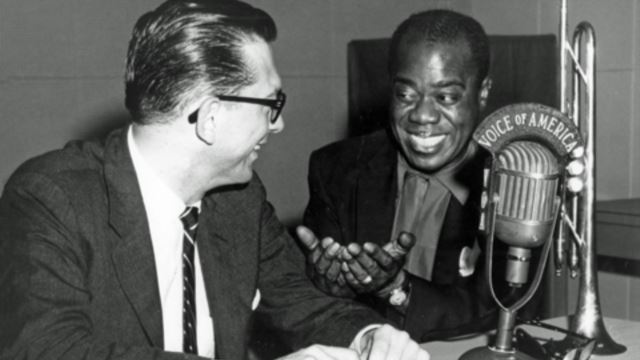
Willis Conover interviewing Louis Armstrong (Photo source: Inside VOA)

(Source: VOA News)

A little more than seven weeks after the United States officially entered World War II, a live, 15-minute shortwave radio broadcast was transmitted into Germany from a small studio in New York City on February 1, 1942.

It was introduced by the American patriotic song “The Battle Hymn of the Republic.” Then, announcer William Harlan Hale’s voice could be heard saying: “We bring you Voices from America. Today, and daily from now on, we shall speak to you about America and the war. The news may be good for us. The news may be bad. But we shall tell you the truth.”

That was the very first broadcast from what, 75 years later, is now the Washington-headquartered Voice of America.

By the end of the war, VOA was broadcasting in 40 languages, with programming consisting of music, news and commentary.

Since then, VOA has grown into a multimedia international broadcasting service, with programming and content in 47 languages on multiple platforms, including radio, television and mobile.

On that first broadcast, announcer Hale’s words set the standard for future programs.

?And since 1976, his words have carried the weight of the VOA Charter, which by law requires VOA to “serve as a consistently reliable and authoritative source of news.” What’s more, it says VOA news must “be accurate, objective and comprehensive.”

“It’s been 75 years since we first began broadcasting objective news and information around the world,” said VOA Director Amanda Bennett. “And now, I think what we do here is more important than ever.”

Over the years, VOA correspondents and freelance reporters in many parts of the world have been on the scene to cover major world events.

In 1989, VOA East European correspondent Jolyon Naegele reported on demonstrations in Czechoslovakia and the fall of the communist government. Later that year, on the other side of the world, VOA increased programming and added staff to its Beijing bureau to cover the student-led demonstrations in Tiananmen Square. Beijing Bureau chief Al Pessin was expelled from China for his reporting.

Today, VOA broadcasts news and other programming through 2,500 television and radio affiliates around the world. At the same time, it provides content for mobile devices and interacts with audiences through social media.

As of 2016, VOA’s weekly audience across all platforms averaged more than 236 million people worldwide.

Check out more information on our VOA 75th anniversary page.

Click here to read this article on the VOA News website.

75 years ago today, VOA started German broadcasts

Voice of America Bethany Relay Station, May 2015

Many thanks to SWLing Post contributor, Alexander (DL4NO), who writes:

Hello Thomas,

I just heard a short feature on Deutschlandfunk: 75 years ago today VoA started transmitting – in German.

vy 73
Alexander
DL4NO

Many thanks for the tip, Alexander!

The Deutschlandfunk article, of course, is in German. I found, that Google Translate did an acceptable job translating it into English.


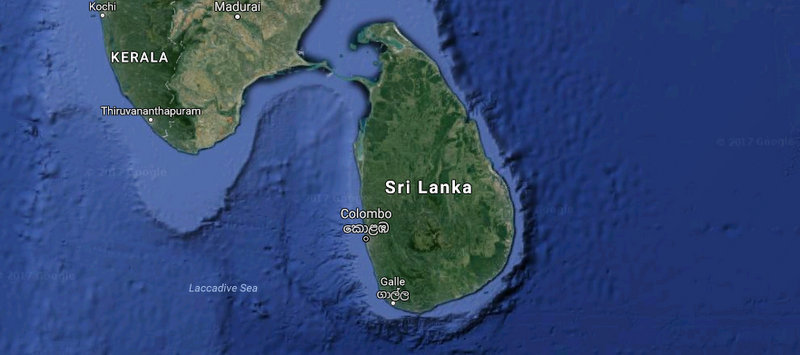
Citing a diminishing audience, US to close Iranawila Station in Sri Lanka

(Source: US Embassy in Sri Lanka)

The United States values its strong relationship with Sri Lanka and our bilateral partnership over the past 60 years. The Iranawila shortwave station, managed by an independent U.S. agency, the Broadcasting Board of Governors (BBG), is an example of this partnership. The shortwave station has transmitted Voice of America programs from Washington through shortwave radio signals to audiences around the world, bringing them news, music, and special interest programs about the United States. Without the support of Sri Lankan governments over many years, Voice of America could not have succeeded in its mission of telling America’s story to the world.

Over time, however, the audience for shortwave broadcasts has diminished. People are increasingly turning to other sources of news and information – including, but not limited to FM radio, satellite television, websites, and social media – often delivered via mobile phones. The BBG is committed to reaching audiences on their preferred media. Given changing audience habits and the increasing costs of operating shortwave transmission stations, the BBG decided to close the Iranawila station.

The land where the station is located was leased from, and is being returned to, the Government of Sri Lanka. During the time of its operation, the U.S. government has developed the Iranawila property, building roads, clearing and levelling the land, building drainage canals, fences, and modern office buildings. The U.S. government has also installed service connections to public utilities and 4.2Mw of onsite self-generated power. All of these improvements have significantly increased the property’s value, and the flexibility of the site to serve many roles in the future. The United States government is returning with gratitude its lease of over 400 acres of property in Iranawila back to the Government of Sri Lanka in its entirety, including any and all improvements.

Voice of America provides trusted and objective news and information in 47 languages to a measured weekly audience of more than 236.6 million people around the world. For nearly 75 years, VOA journalists have told American stories and supplied objective news and information about the US, their region and the world. For more information on VOA – www.voanews.com

Remnants of WOO at Good Luck Point to be removed

Many thanks to SWLing Post readers Al Quaglieri and Alan Tu for sharing the following story via app.com about the removal of the remnants of radio station WOO:

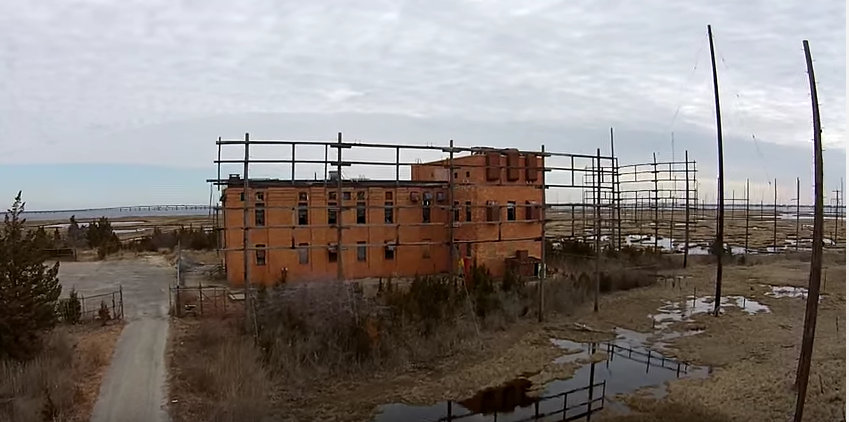
BERKELEY TOWNSHIP — The mysterious poles have stood in the open marshland off Good Luck Point for nearly 80 years, but sometime in January these local landmarks will finally be removed.

“We’re still working with the contractor to determine the exact start time,” said Virginia Rettig, a spokeswoman for the Edwin B. Forsythe National Wildlife Refuge. “This is a little more difficult than the typical project, as we’re trying to be sensitive to the marsh surface.”

The Good Luck Point poles – and a similar pole field in Stafford’s Manahawkin section – were part of inactive shortwave antenna fields used by AT&T for ship-to-shore shortwave communications.

They’ve become a familiar landmark for boaters, fishermen and residents of the area, and can be seen from the bayside in Seaside Heights and Seaside Park.

The antenna field was in operation from the early 1930s until 1999. A shuttered building on the Good Luck Point portion of the antenna field contained equipment related to shortwave communications.

Under the call sign WOO, the shortwave facility at Good Luck Point (known as Ocean Gate) was a renowned transmitting station, which helped broadcast Voice of America around the globe after 1944 and enabled communication with ships at sea throughout the 20th century, according to the U.S. Fish and Wildlife Service.

According to federal officials, about 340 poles will be removed from the Berkeley site, along with several metal antennae.

In Manahawkin, about 113 wooden poles will be removed from the antenna field. Several metal antennas will also be removed.

Continue reading at app.com…

Check out this excellent video–an aerial view of Good Luck Point: