Shortwave listening and everything radio including reviews, broadcasting, ham radio, field operation, DXing, maker kits, travel, emergency gear, events, and more
Many thanks to SWLing Post contributor, Martin Tobisch, who shares the following guest post and videos from his home in Malta:
New AM Signal Coupler
Many AM medium wave listeners are looking for solutions to improve the reception performance of their radios.
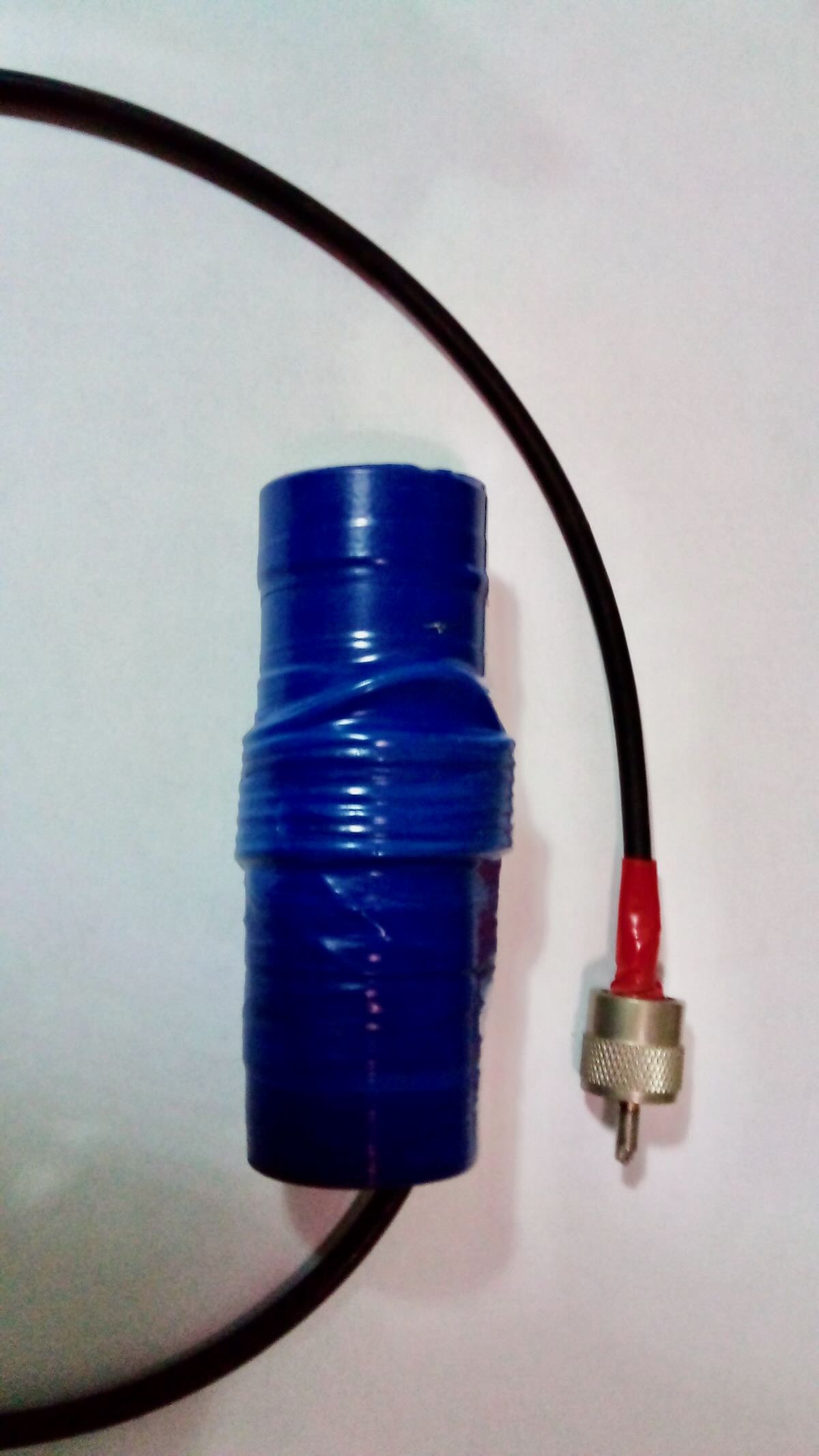
After many attempts, which I don’t want to entertain anyone with, a coupler was created that feeds the external antenna directly into the ferrite antenna. I use my 66 foot long wire antenna on 50 ohm RG-58 cable, but other antennas will have similar success.
The clips available on YouTube speak for themselves:
https://youtu.be/FIylJk3F9Xk?si=Kp7SowdUXI5i5QAV
https://youtu.be/RHAla9jPoi8?si=VoG3w274k08Ul8Q4
Experiments with smaller ferrites and antenna rods met with no success. It is important that the coupler still works even at a distance from the ferrite antenna and without precise alignment.
With tube radios it easily bridges the distance from the housing to the ferrite rod Antenna
The finished coupler consists of 6 NiZn ferrite cores, which are connected with glue to form a rod. 8 turns of wire are wound over this and soldered to an RG-58 cable. Some electrical isolation tape and ready. So far I’ve just put it in a box. Of course there are finer solutions and it should be protected against shock. Ferrite cores are notoriously brittle.
Advantages: Advantages to what? Nothing comparable exists.
So there are advantages to feeding via an antenna socket. The signal coupler is also good for radios without an antenna socket. But in case of using an antenna socket, common mode wave interference picked up in the house goes unlimited into the radio. Due to the magnetic coupling to the ferrite antenna, common mode waves are completely suppressed. They do not create a magnetic field in the coupler.
No changes are necessary in the radio
The biggest advantage is, that you can listen to distant stations loud and clear, which previously only produced a quiet scratching noise.
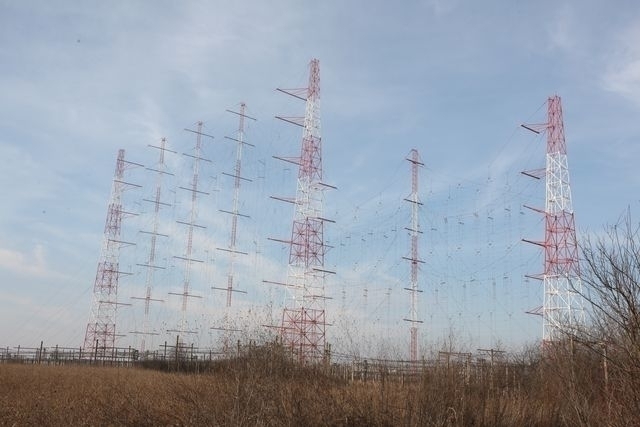
RRI’s Tiganesti-based shortwave transmitter centre (Photo source: Radio Romania International)
Many thanks to SWLing Post contributor, Gérard Koopal, who shares the following announcement and schedule via Radio Romania International’s English Language Service:
Dear friends,
Please find below the programme schedule for 2023-2024.
You are invited to discover our new slots: Working in Romania – a segment devoted to the increasingly numerous foreign nationals working in Romania; Romania – the Eastern Flank – a show devoted to foreign military deployed to Romania; Music from A to Z, featuring all music genres as well as interviews with famous artists.
Feel free to distribute this list to members of your clubs or to other listeners.
Please also note we are working on ways to send out digital QSLs in 2023.
The English Service
Radio Romania International
60-64 G-ral Berthelot Street, district 1, Bucharest
PO Box 111, postcode 010165, fax 00.40.21.319.05.62
E-mail: [email protected].
CML Microcircuits (CML Micro) has announced at the IBC 2023 DRM Showcase Event, the full release of the world’s lowest-cost, lowest power, and smallest sized Digital Radio Mondiale (DRM) broadcast receiver module (DRM1000). DRM is the world’s leading digital radio broadcast standard able to provide rich, high quality digital content over vast areas using medium-wave (MW) and short-wave (SW). In addition to high-capacity local broadcasting at Very High Frequencies (VHF).
The DRM1000 is a complete ‘antenna to speaker’ module, containing all hardware, software, IP and patent licenses required for a radio equipment manufacturer to easily realize a dual mode (digital and analogue) DRM capable receiver.
The module offers a 60% cost reduction and 80% power reduction over existing DRM technologies in the market. The device can run effectively from solar or wind-up rechargeable batteries: in addition to small primary cells. Low power operation directly improves accessibility to vital educational and public digital radio services across many emerging nations and opens the great features of DRM to many millions of potential listeners around the world.
In offering the DRM1000, CML Micro wish to enable their customers to design a complete DRM /AM /FM broadcast receiver solution, which is attractive, highly featured and accessible for all. The module allows these innovative receivers to be manufactured locally in emerging nations in addition to traditional technology manufacturing locations.
In addition to announcing the availability of the DRM1000; CML Micro is also proud to announce that the device has been adopted by Gospell Digital Technology Ltd for two new DRM portable radio families to be shown for the first time at the IBC 2023 DRM Showcase Event.
Haochun Liu, Head of Research and Development at Gospell, said: “At Gospell, we’ve always held a steadfast belief in the pivotal role that the accessibility and ubiquity of DRM radios play in enabling people to access high-quality information. This unwavering commitment has driven us over the years to design and manufacture user friendly DRM receivers, constantly pushing the boundaries to make them more accessible and attainable for all. The introduction of the DRM1000 module, with its impressive low-power consumption, cost-effectiveness, and high performance, has been a game-changer. We are truly honored to collaborate with CML Micro in launching two groundbreaking DRM receivers based on the DRM1000 module, namely the GR-220 and GR-221. We’re confident that our combined efforts will not only deliver unparalleled value to people but also pave the way for the next chapter in DRM technology.”
One third of the world’s population remains without an internet connection. Many millions of people will benefit from widespread DRM adoption. Increasing access to DRM enhances public services in remote areas, or where an internet connection is very expensive. This includes a disaster and early warning service that can be used in the event of interruption to communications caused by natural disasters.
CML Micro’s VP of Global Marketing, Matthew Phillips, said: “The benefits of DRM are already being enjoyed by listeners in the Indian market with 70% of the population covered by DRM broadcast services and 6 million new cars already fitted with DRM capable receivers. We believe the market for DRM capable receivers is set for significant growth over the coming years. The DRM1000 provides an ideal platform to serve this emerging market with low cost, battery-powered portable receivers sold in millions of units.”
DRM in the medium-wave or short-wave band delivers FM-like quality to listeners spread over many thousands of square miles, from a single transmitter. This makes DRM the optimum digital radio solution for emerging nations. DRM uses existing long-, medium-, short-wave and very-high frequency (LW, MW, SW and VHF) radio frequency bands, operating seamlessly alongside current analogue services. [Continue reading…]
Fourier analysis. https://en.wikipedia.org/wiki/Fourier_analysis This can transform a serial data stream into a parallel data stream using a different frequency carrier for each path. For example a 16 level quadrature Amplitude modulated data stream at around 99.4 kbit/s is carried on 213 carriers in a channel 95 kHz wide using a transmission frequency between 47 – 230 MHz.
The Digital Radio Mondiale™ (DRM) Consortium has welcomed the decision by Indonesian authorities to adopt the globally recognised, open, and ITU-endorsed DRM Digital Radio Standard for national implementation in a country with a population exceeding a quarter of a billion.
The announcement was made during the DRM IBC Showcase event in Amsterdam. DRM is the only digital radio standard capable of meeting all coverage requirements for national and local public radio stations, as well as commercial and community broadcasters. Moving forward, DRM-based digital radio services will be available in the medium wave (MW) and FM bands, and also in VHF band-III, across all 18,000 of Indonesia’s islands.
Some 275 million Indonesians will soon benefit from a transformative radio experience featuring enhanced audio quality and, importantly, an additional layer of disaster protection via DRM’s Emergency Warning Functionality (EWF). The introduction of modern digital radio services is set to invigorate the entire radio ecosystem and broadcast industry, thereby stimulating both Indonesian and global receiver manufacturing.
The DRM Consortium is keen to continue its close collaboration with Indonesian broadcasters, stakeholder groups, governmental agencies, as well as the receiver, automotive, and mobile phone industries in Indonesia. This concerted effort aims to ensure the successful nationwide roll-out of DRM digital radio services, for the benefit of the entire Indonesian populace.
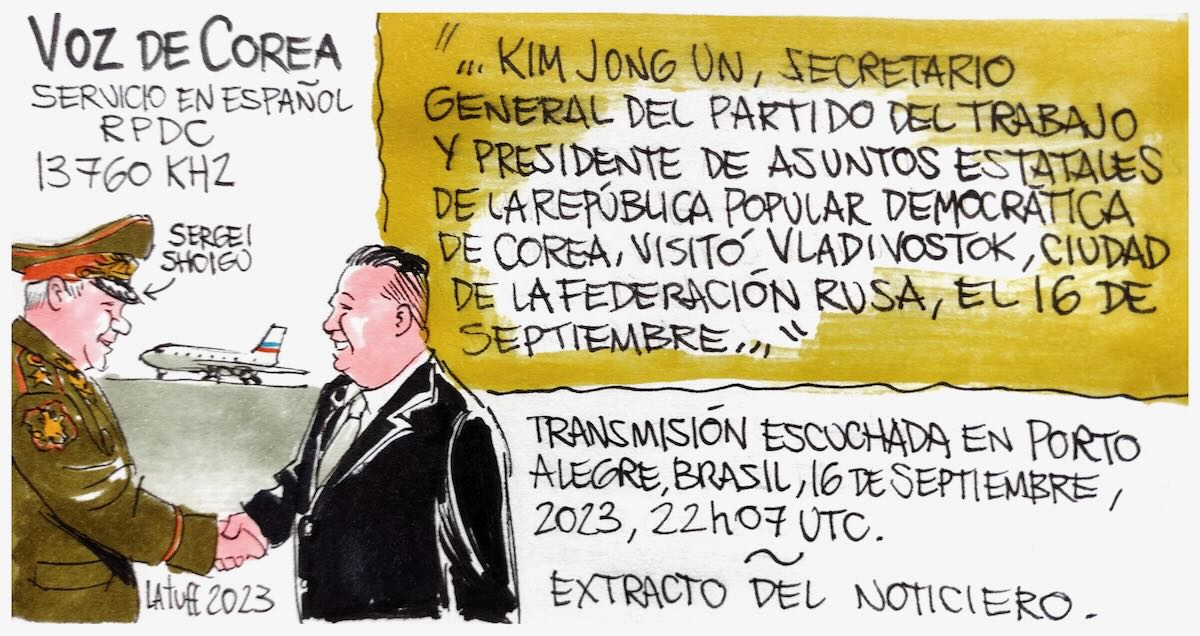
Many thanks to SWLing Post contributor and noted political cartoonist, Carlos Latuff, who shares his radio log art of a recent Voice of Korea broadcast.
Carlos notes:
Excerpt from the Spanish-language news broadcast by Voice of Korea (DPRK) on Kim Jong Un’s historic visit to Russia. Broadcast on 13760 kHz shortwave and listened in Porto Alegre, Brazil.
Many thanks to SWLing Post contributor, Zach R., who shares the following guest post:
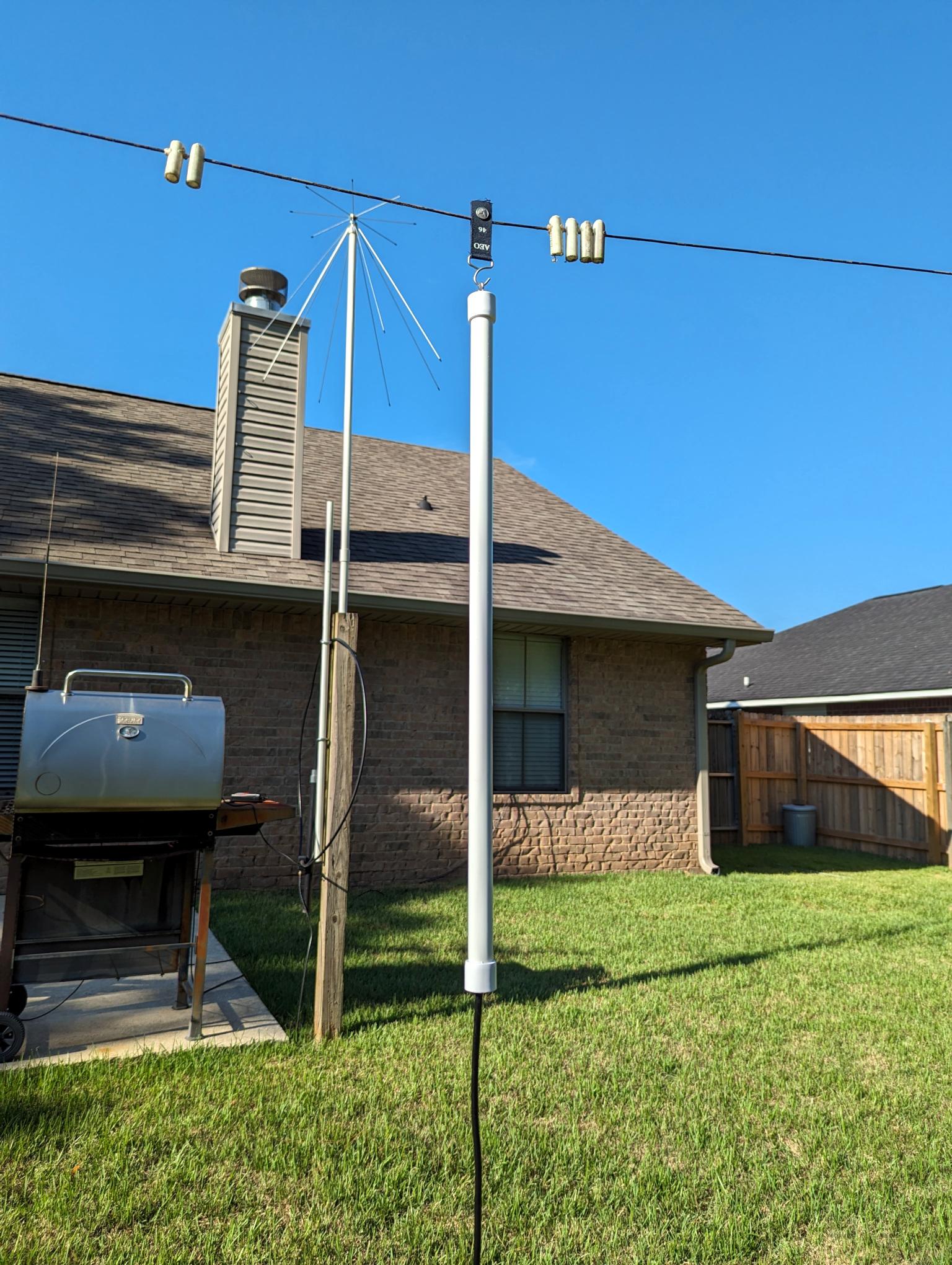
A review of the outdoor Planespotter antenna prototype
When it comes to airband monitoring, the stock whip antennas that ship with desktop and portable scanners are not the greatest. They’re fine if you’re at an airport and only interested in communications specific to your immediate area, but if you are someone like me who lives well out from any major airport, quality listening in can be impossible without some help in the antenna department.
Ideally, you want something like a discone or similar for omnidirectional listening, mounted as high as possible. This is not always possible or practical, however. SWLing Post contributor Ron recently reviewed the indoor Planespotter antenna, and I have one as well that works better than any rubber ducky, and can be easily hidden away when company comes.
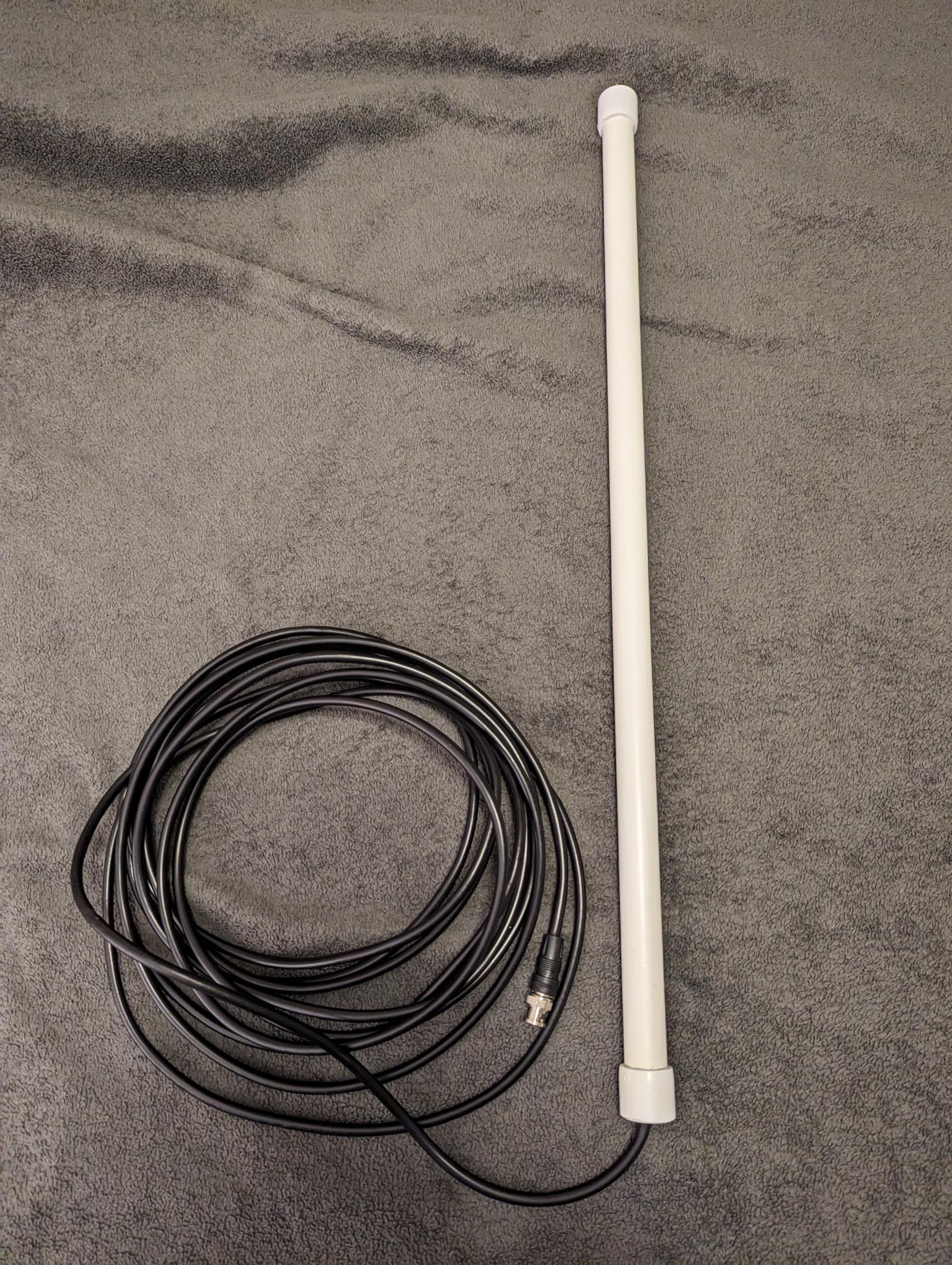
Recently, the creator has come out with a prototype outdoor model. It’s the same design as the indoor unit, but with a longer run (25 feet) of coax, terminating in a BNC connector.
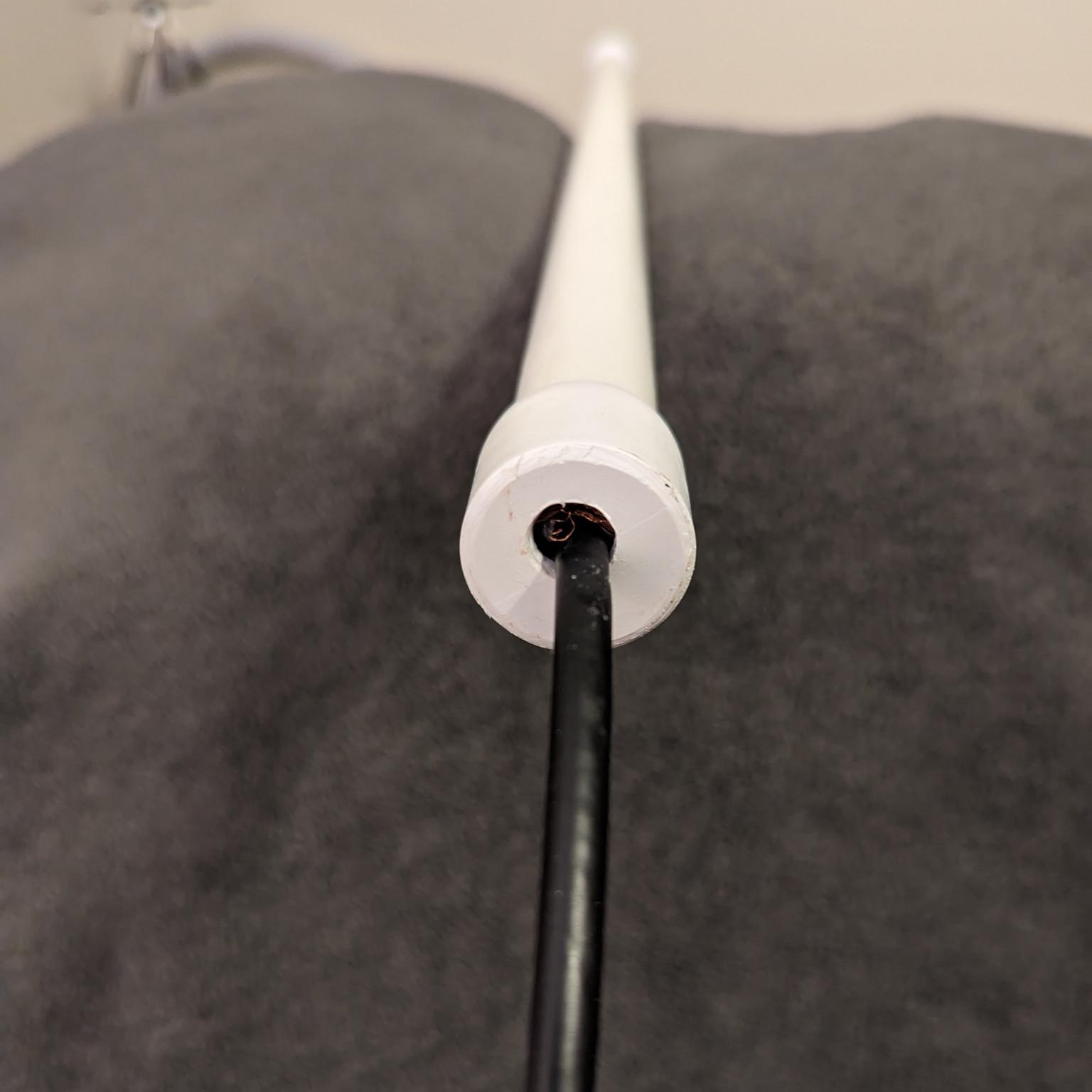
Besides the longer cable, the only other obvious change is the antenna is house in a skinnier PVC tube from the indoor model. It’s also sealed at the bottom so moisture won’t get in.
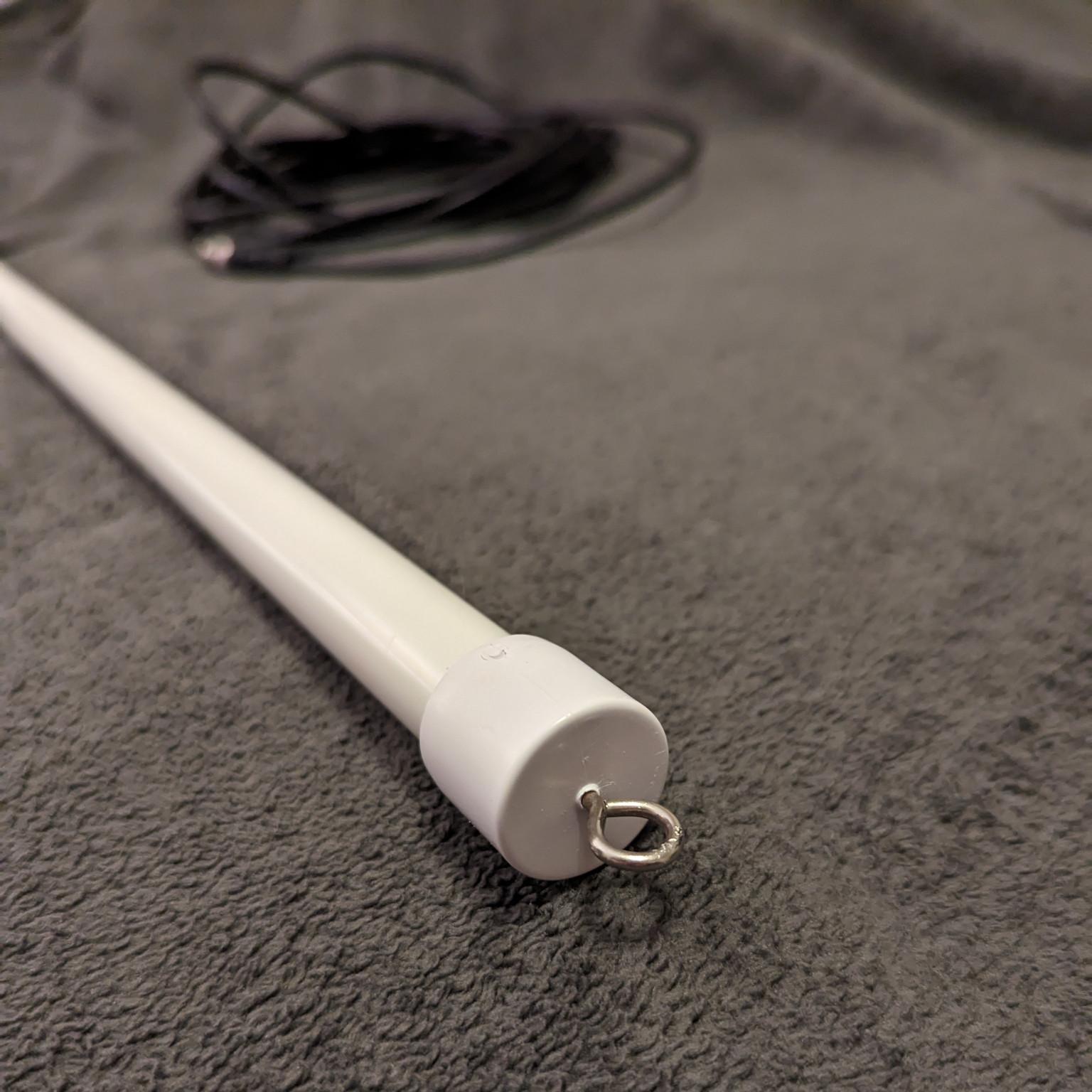
It has the same small metal hook on top, suitable from hanging from various mounts. I’d like more mounting options, but the hook does make for quick installation and removal. The half-wave length isn’t ungainly to handle and if painted it could easily be mounted on the side of a home without many people noticing.
The indoor version definitely works best on the VHF air band and seems to roll off aggressively above and below that band. The outdoor version, in side-by-side tests, seemed to perform the same on the air band but notably better on the VHF public safety band. It also pulled in more UHF air band traffic than the indoor model, despite being basically the same design.
The new outdoor version is a good choice for someone looking for a simple, already assembled antenna that’s suitable for temporary use or stealth mounting.
Disclosure: The outdoor prototype was supplied to me for free in exchange for a review. While taking more photos of the antenna I noticed the weatherproofing had come undone from the bottom. Hopefully this issue can be addressed before the antenna goes into production.
Many thanks to SWLing Post contributor, Alan Roe, who shares his A-23 (version 6.0) season guide to music on shortwave. Alan provides this amazing resource as a free PDF download:

 Many AM medium wave listeners are looking for solutions to improve the reception performance of their radios.