Author Archives: Thomas

FM Pirates: FCC Enforcement sends letters to landlords

Photo by Ben Koorengevel

(Source: Radio World)

NYC-Area Landlords Get Pirate Letters (Radio World)

FCC Enforcement Bureau traced FM signals after receiving complaints

Continuing its efforts to fight illegal broadcasts, the Federal Communications Commission has sent notices to five property owners and managers in and around New York City.

The letters from the Enforcement Bureau inform the owners that the FCC, after receiving complaints, traced unlicensed signals to each property in April, May or June. These letters inform the owners that under federal law, anyone who allows pirate radio broadcasting on a property can face significant financial penalties — up to $2.1 million.

The recipients are given 10 business days to show that they are no longer permitting pirate radio on their properties and to identify individuals engaged in pirate radio on the property that they own or manage. [Continue reading…]

Radio Waves: DRM Demo in Australia, Decoding the JWST, the ARDC, and EV Makers Dropping AM Radio

Radio Waves:  Stories Making Waves in the World of Radio

Welcome to the SWLing Post’s Radio Waves, a collection of links to interesting stories making waves in the world of radio. Enjoy!


Australia Demonstrates DRM on AM, FM (Radio World)

Since September 2020, ABC Radio has been quietly trialing DRM technology in Victoria

The public-service Australian Broadcasting Corp. and its transmission contractor BAI Communications Transmission Network hosted a public demonstration of Digital Radio Mondiale broadcasts on June 29, 2022. ABC highlighted the use of DRM on both AM and FM in Wagaratta, Victoria.

According to the DRM Consortium, the demonstration was the culmination of almost two years of COVID-impacted work to assess the performance of DRM services in Australia’s VHF and medium-wave bands.

Previously, the Australian Amateur Radio Experimenters Group reported that AREG member Steve Adler (VK5SFA) had been monitoring “a very un-publicized Digital Radio Mondiale (DRM) trial” on 747 kHz from Wangaratta in August 2021.

The Australian Communications and Media Authority provided ABC with a license variation to conduct the DRM 30 trials from September 1, 2020, to August 31, 2022.

At the public demonstration, senior representatives from the public, commercial and community radio sectors, along with regulators and other interested parties, were able to hear and see the capabilities of DRM broadcasting on AM from Dockers Plains and on FM from Mount Baranduda. They were also able to review the transmission equipment at Wagaratta.[Continue reading…]

Also check out the DRM Consortium’s article on this same topic.

Decoding James Webb Space Telescope (Daniel Estévez)

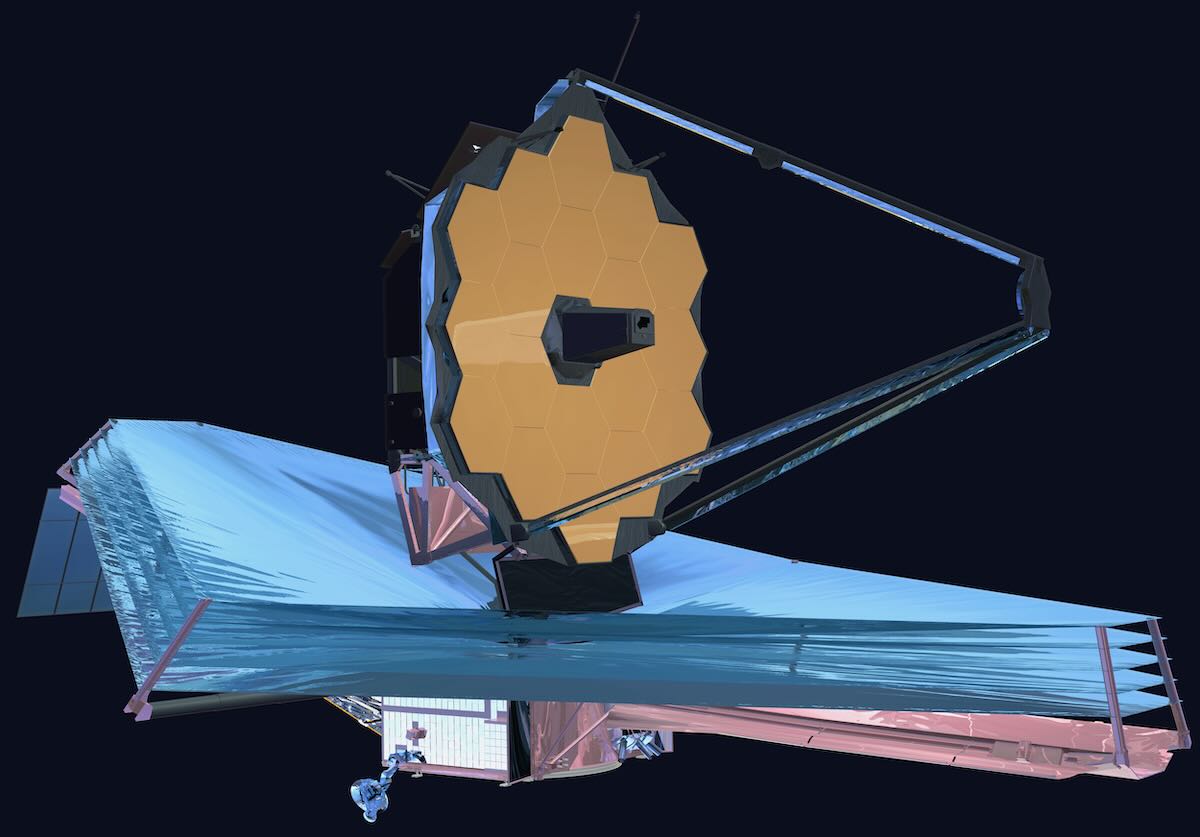
The James Webb Space Telescope probably needs no introduction, since it is perhaps the most important and well-known mission of the last years. It was launched on Christmas day from Kourou, French Guiana, into a direct transfer orbit to the Sun-Earth L2 Lagrange point. JWST uses S-band at 2270.5 MHz to transmit telemetry. The science data will be transmitted in K-band at 25.9 GHz, with a rate of up to 28 Mbps.

After launch, the first groundstation to pick the S-band signal from JWST was the 10 m antenna from the Italian Space Agency in Malindi, Kenya. This groundstation commanded the telemetry rate to increase from 1 kbps to 4 kbps. After this, the spacecraft’s footprint continued moving to the east, and it was tracked for a few hours by the DSN in Canberra. One of the things that Canberra did was to increase the telemetry rate to 40 kbps, which apparently is the maximum to be used in the mission.

As JWST moved away from Earth, its footprint started moving west. After Canberra, the spacecraft was tracked by Madrid. Edgar Kaiser DF2MZ, Iban Cardona EB3FRN and other amateur observers in Europe received the S-band telemetry signal. When Iban started receiving the signal, it was again using 4 kbps, but some time after, Madrid switched it to 40 kbps.

At 00:50 UTC on December 26, the spacecraft made its first correction burn, which lasted an impressive 65 minutes. Edgar caught this manoeuvre in the Doppler track.

Later on, between 7:30 and 11:30 UTC, I have been receiving the signal with one of the 6.1 metre dishes at Allen Telescope Array. The telemetry rate was 40 kbps and the spacecraft was presumably in lock with Goldstone, though it didn’t appear in DSN now. I will publish the recording in Zenodo as usual, but since the files are rather large I will probably reduce the sample rate, so publishing the files will take some time.

In the rest of this post I give a description of the telemetry of JWST and do a first look at the telemetry data. [Continue reading…]

Helping Secure Amateur Radio’s Digital Future (Hackaday)

The average person’s perception of a ham radio operator, assuming they even know what that means, is more than likely some graybeard huddled over the knobs of a war-surplus transmitter in the wee small hours of the morning. It’s a mental image that, admittedly, isn’t entirely off the mark in some cases. But it’s also a gross over-simplification, and a generalization that isn’t doing the hobby any favors when it comes to bringing in new blood.

In reality, a modern ham’s toolkit includes a wide array of technologies that are about as far away from your grandfather’s kit-built rig as could be — and there’s exciting new protocols and tools on the horizon. To ensure a bright future for amateur radio, these technologies need to be nurtured the word needs to be spread about what they can do. Along the way, we’ll also need to push back against stereotypes that can hinder younger operators from signing on.

On the forefront of these efforts is Amateur Radio Digital Communications (ARDC), a private foundation dedicated to supporting amateur radio and digital communication by providing grants to scholarships, educational programs, and promising open source technical projects. For this week’s Hack Chat, ARDC Executive Director Rosy Schechter (KJ7RYV) and Staff Lead John Hays (K7VE) dropped by to talk about the future of radio and digital communications. [Continue reading…]

Interference causes EV makers to drop AM radio (Radio World via the Southgate ARC)

Radio World reports the Electromagnetic Interference generated by Electric Vehicles is causing some EV automakers to drop AM (medium wave) radio

The article says:

Some EV automakers are dropping AM altogether due to audio quality concerns, but that’s just one piece of the puzzle as radio continues to fight for space on the dash.

“As carmakers increase electric vehicle offerings throughout their lineups, the availability of AM radio to consumers is declining,” said Pooja Nair, communications systems engineer with Xperi Corp., in a Radio World guest commentary. “This is because the effects of electromagnetic interference are more pronounced in EVs than in vehicles with internal-combustion engines.”

In other words, electromagnetic frequencies generated by EV motors occupy the same wavelength as AM radio signals. The competing signals clash, effectively cancelling each other out. As EV motors grow more powerful, AM static tends to increase.

Read the full story at
https://www.radioworld.com/news-and-business/headlines/why-are-some-automakers-ditching-am-radio


Do you enjoy the SWLing Post?

Please consider supporting us via Patreon or our Coffee Fund!

Your support makes articles like this one possible. Thank you!

Listen: Apollo 11 Real-Time Mission Experience


CAPCOM Charles Duke (left), with backup crewmen Jim Lovell and Fred Haise listening in during Apollo 11’s descent (Photo: NASA)

Many thanks to SWLing Post contributor, Wilbur, who writes:

I thought you may be interested in this. A few years back the same group posted Apollo 13 realtime audio. I listened to for days. It was during lockdown for Covid-19 so I had lots of time at home to keep it on.

It really renewed my love of radio.

I missed the Launch, as I just found it here at 2:00 local EST. But I will be monitoring for the next few days.

This the Big one, so it will be interesting to hear.

Click here to check out NASA’s Apollo 11 Real-Time Mission Experience.

Thanks for all that you do!

Wilbur

Thank you for the tip! As I did with Apollo 13, I’ll keep this running in the background for the next few days! 

CIDX Special Event Stations and QSL information!

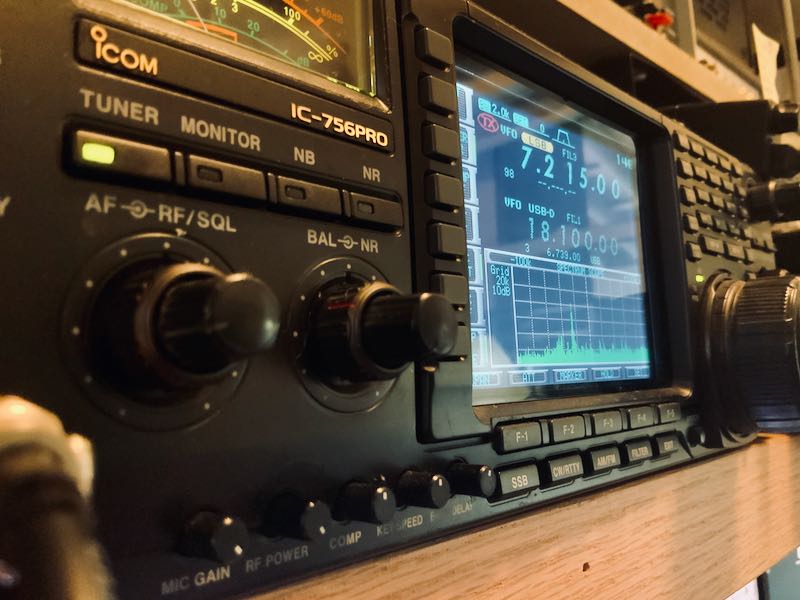
Icom IC-756 Pro Transceiver DialMany thanks to SWLing Post contributor, Sheldon Harvey, who shares the following announcement from the CIDX:


CIDX AMATEUR RADIO CLUB STATIONS ON THE AIR JULY 17, 2022

CIDX has two amateur radio club stations that are activated from time to time on the ham bands, usually to mark special events, club anniversaries, etc.

VE2AQP is our eastern Canada amateur club station callsign, located at CIDX eastern Canadian headquarters in Saint-Lambert, Quebec

VE6SWL is our western Canada amateur club station callsign, located at CIDX western Canadian headquarters in Sherwood Park, Alberta

CIDX is planning to activate the stations in July to mark the 60th anniversary of the Canadian International DX Club.

VE2AQP will be active from Montreal, Quebec, operated by CIDX World of Utilities editor Gilles Letourneau, VE2ZZI, on July 17th from 1800 UTC to 2200 UTC around 14240 kHz USB, plus or minus, depending on activity and the conditions on the band,

VE6SWL will be active from Lamont, Alberta, operated by CIDX Vice-President & Verie Interesting editor Mickey Delmage, VE6IDX, also July 17th from 1800 UTC to 2200 UTC around 14265 kHz USB, plus or minus, depending on activity and the conditions on the band.

VE2AQP will be active again on July 31st at 2200 UTC to August 1 at 0200 UTC on 40 meters around 7150 kHz LSB, plus or minus, depending on activity and the conditions on the band.

CIDX will be issuing special e-QSLs for contacts with either or both CIDX club stations. SWLs are also welcome to submit reports should you log either or both stations. For those receiving e-QSLs who are not CIDX members, a free sample copy of “Messenger” together with club information will accompany the e-QSL.

CIDX will activate the two CIDX amateur club stations at various times throughout the balance of 2022 to mark CIDX’s 60th anniversary. Notices of future operations will be posted on the CIDX Facebook group and the CIDX IO Group.

Listening to Shortwave Australia this morning

I’m traveling at present and staying in a hotel where, let’s just say, QRM is heavy.

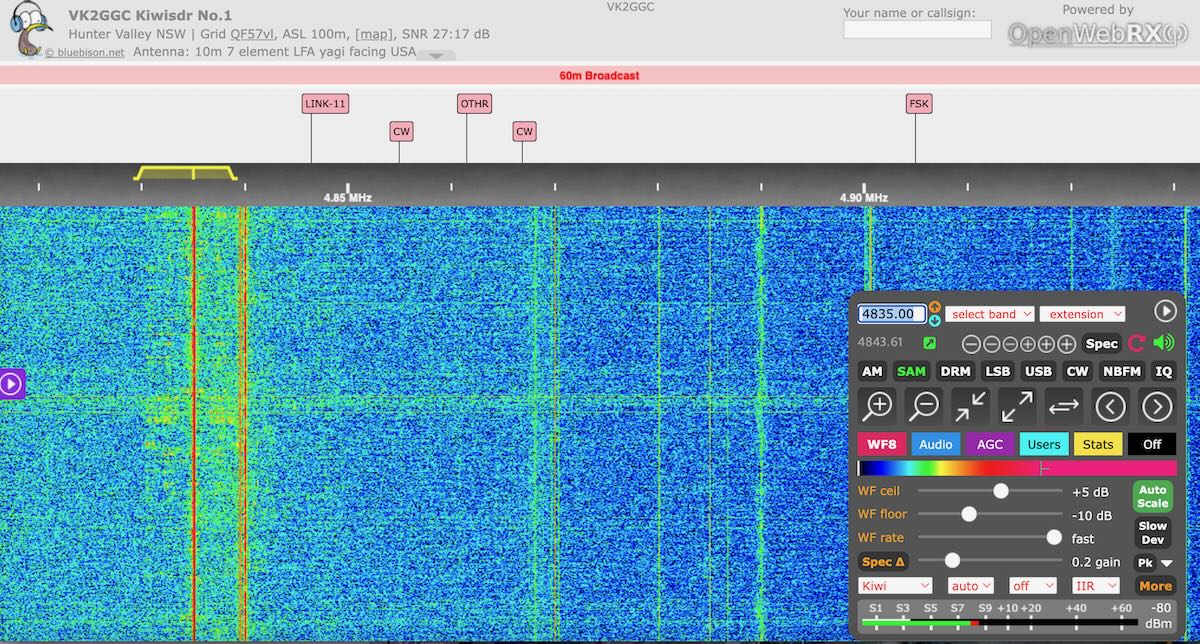
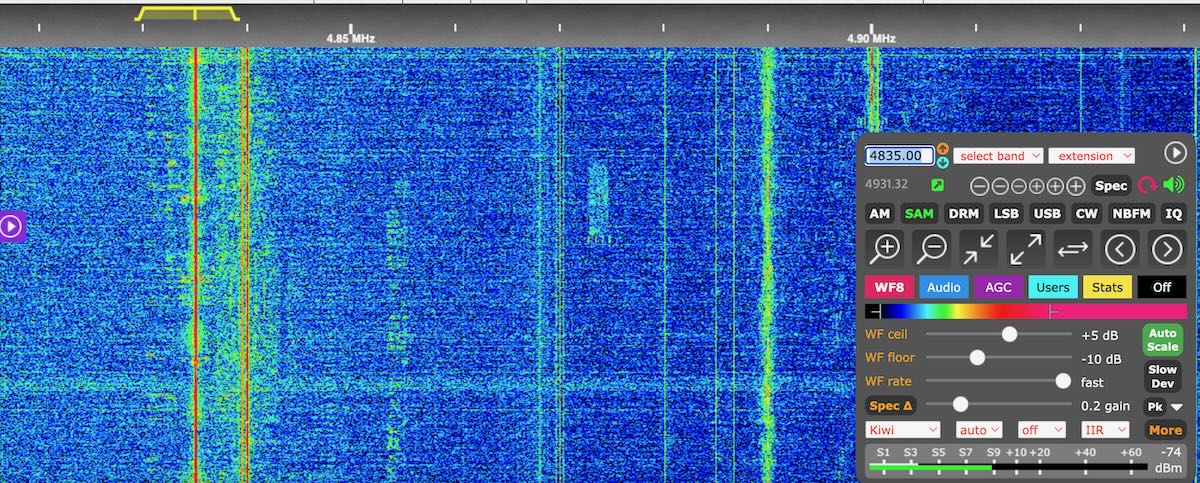
I decided to cruise the KiwiSDR network and found myself on the VK2GGC KiwiSDR in Hunter Valley NSW, Australia. As I was band-scanning, I stumbled upon Shortwave Australia on 4,835 kHz around 9:40 UTC.

It was great hearing this low power shortwave broadcaster on the air again!  Check out the recording below with ID:

Click here to download audio.

WebSDRs are such a wonderful resource when you truly need to escape QRM. It’s fun to travel the globe and tune through the bands like a local. Again, it’s great to hear Shortwave Australia again–I’m curious if anyone has logged them as DX from home.

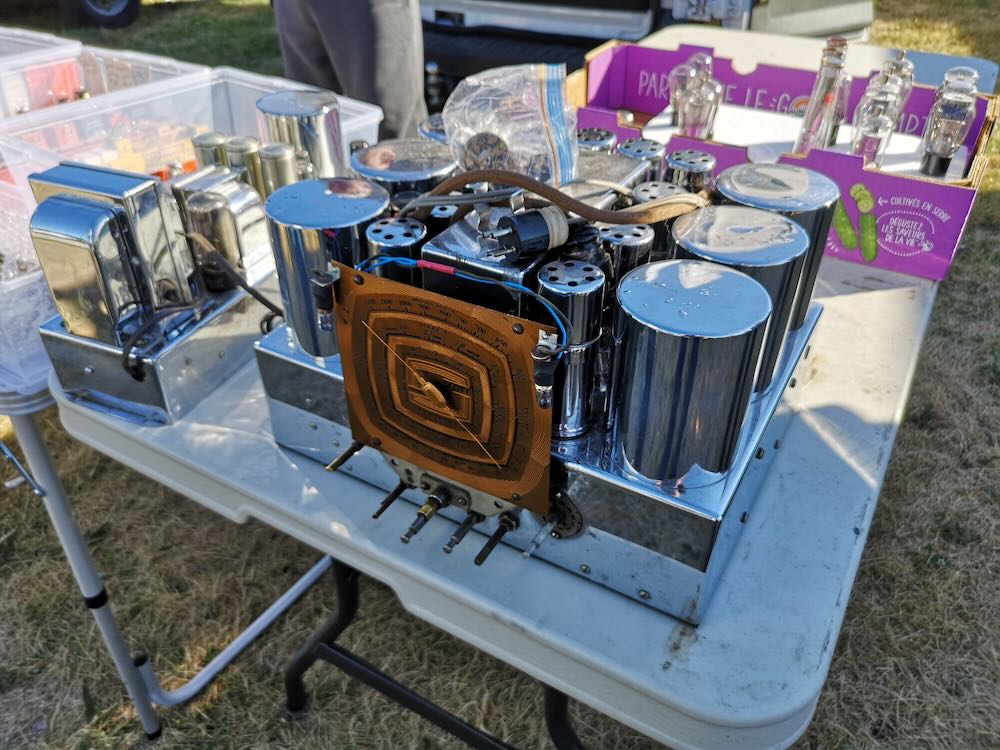
Photos from the 2022 Milton Ontario Hamfest

Many thanks to SWLing Post contributor, Mike (VE3MKX), who writes:

The following pictures are from a Hamfest which was held yearly at the Milton Fairgrounds in Milton Ontario, Canada. (Located 20 minutes west of Toronto).

The Burlington Amateur Radio Club organizes the event and confirms that they had 108 vendor spaces sold and over 475 general admin passed through the gates.

A great day of meeting friends, lots of deals and smiling faces!

Thank you so much for sharing this, Mike! I haven’t been to a hamfest yet this year, so it’s great to catch a glimpse of what looks like a very successful one! 

Readers: This is a large gallery of 132 photos courtesy of Kevin (VA3RCA) and Mike (VE3MKX). If you would like to view the entire image gallery click on the link to see more.  Continue reading

Ken reverse-engineers the Apollo spacecraft’s FM radio

Many thanks to SWLing Post contributor, Paul, who shares the following post from Ken Shirriffs’ Blog:

Reverse-engineering the Apollo spacecraft’s FM radio

How did NASA communicate with the Apollo astronauts, hundreds of thousands of miles from Earth? The premodulation processor1 (below) was the heart of the communication system onboard the Apollo spacecraft. Its multiple functions included an FM radio for communication to the astronauts, implemented by the Voice Detector, the module second from the top. In this blog post, I reverse-engineer the circuitry for that module and explain how it worked.

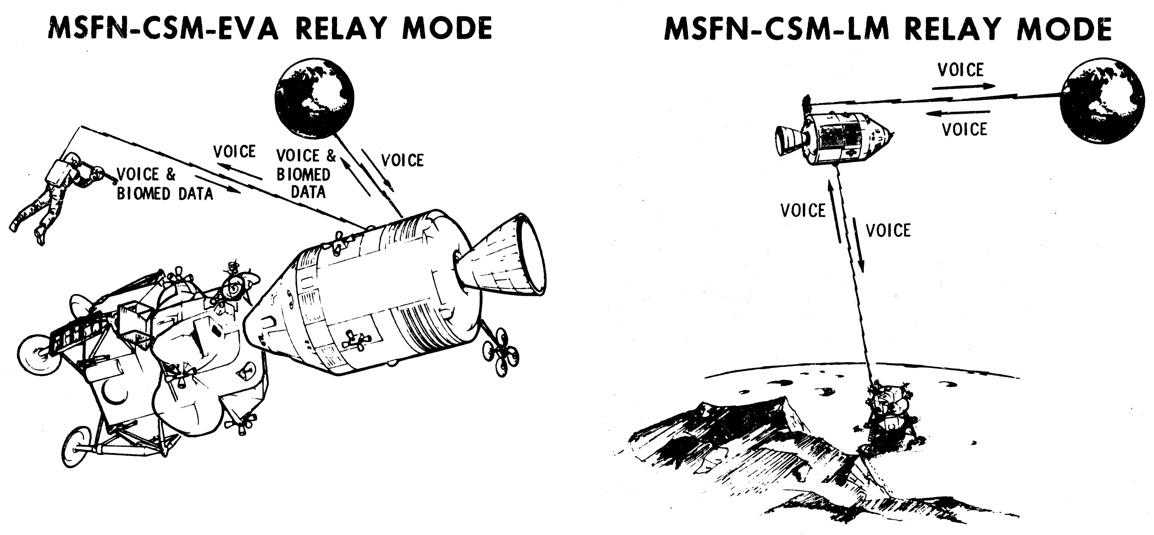
The Apollo communication system was complex and full of redundancy. Most communication took place over a high-frequency radio link that supported audio, telemetry, scientific data, and television images.2 NASA’s massive 85-foot dish antennas transmitted signals to the spacecraft at 2106.4 megahertz, an S-band frequency, giving the system the name “Unified S-Band”. These radio signals were encoded using phase modulation;3 onboard the spacecraft, a complex box called the transponder received the S-band signal and demodulated it.4

The voice and data signals from Earth were combined through a second layer of modulation: voice was frequency-modulated (FM) onto a 30-kilohertz subcarrier while data was on a 70-kilohertz subcarrier, so the two signals wouldn’t conflict.5 One of the tasks of the premodulation processor was to extract the voice and data signals from the transponder’s output. These voice signals went to yet another box, the Audio Center Equipment, so the astronauts could hear the messages from the ground. The data signals were decoded by the Up-Data Link, allowing NASA to send commands to the Apollo Guidance Computer, control onboard relays, or set the spacecraft’s clock.

Many systems worked together for communication, but I’m focusing on a single module: the voice detector inside the premodulation processor that performed the FM demodulation. [Continue reading the full article…]