Author Archives: Thomas

A first look at the new C.Crane CCRadio Solar portable self-powered AM/FM/Weather radio

I remember when I first laid hands on a self-powered portable radio. It was the Baygen FPR1 designed by the amazing Trevor Bayliss. The FPR1 was a large portable radio with a black plastic body, large front-facing speaker, and large hand crank on the side. It was a clockwork radio, meaning you’d use the hand crank to wind up an internal spring that would slowly release and provide enough dynamo power to bring the radio to life for a few minutes at a time.

The FRP1 had a very utilitarian feel to it and was incredibly basic.

After the introduction of the FRP1, radio manufacturers jumped on self-powered radio technology and we’ve seen many different designs and iterations on the market for nearly two decades.

Introducing the C.Crane CCRadio Solar

Back in October 2020, C.Crane sent me a pre-production sample of the CCRadio Solar to evaluate. This was before C.Crane had published their new print catalog that features the CCRadio Solar on the cover, so I really had no idea what to expect. I assumed it might be a refreshed version of the CC Solar Observer.

Man…was I wrong!
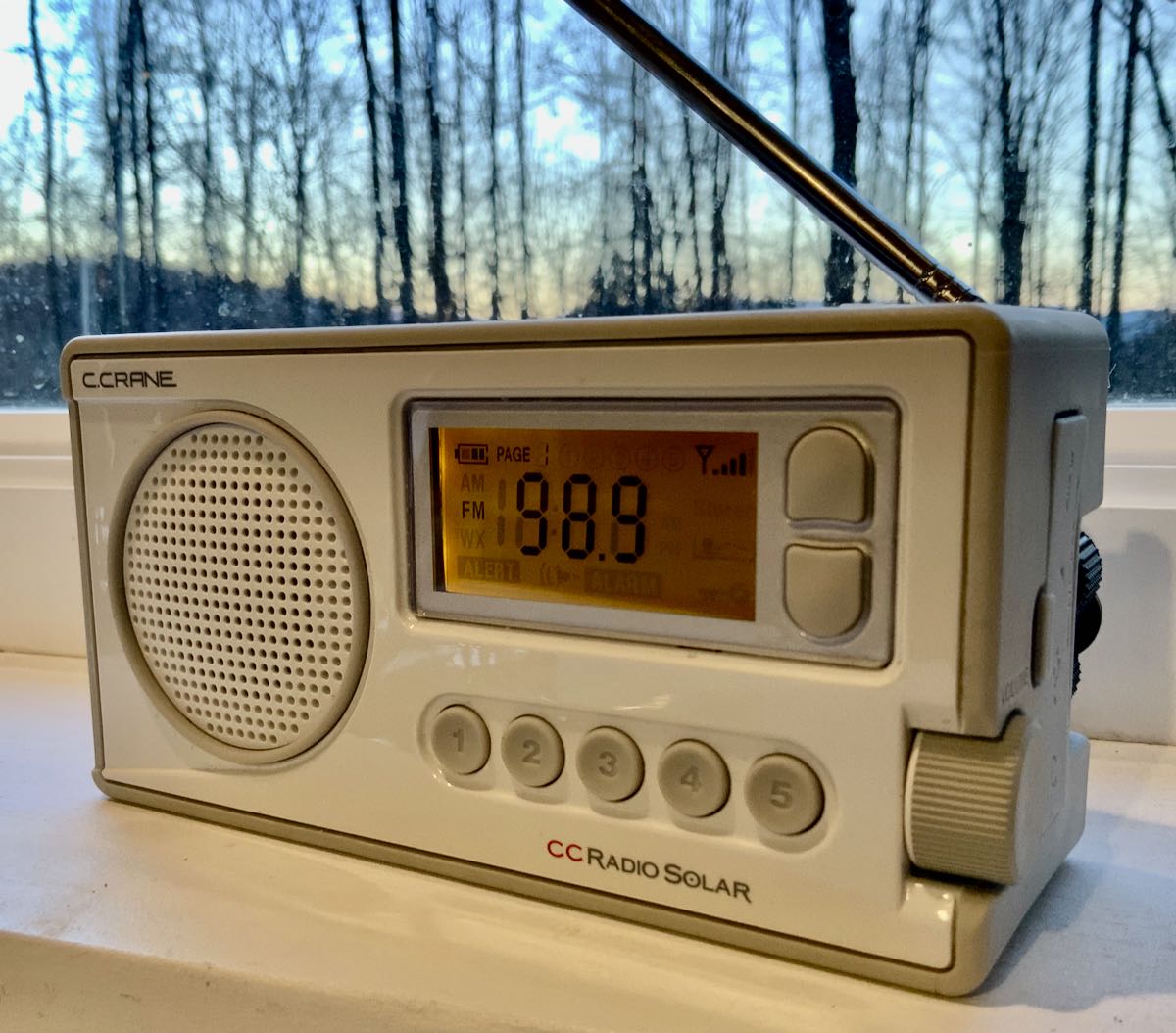
Most self-powered radios these days either look like a flashlight, a portable analog radio, or they sport “high tech” styling (like the FRX3).

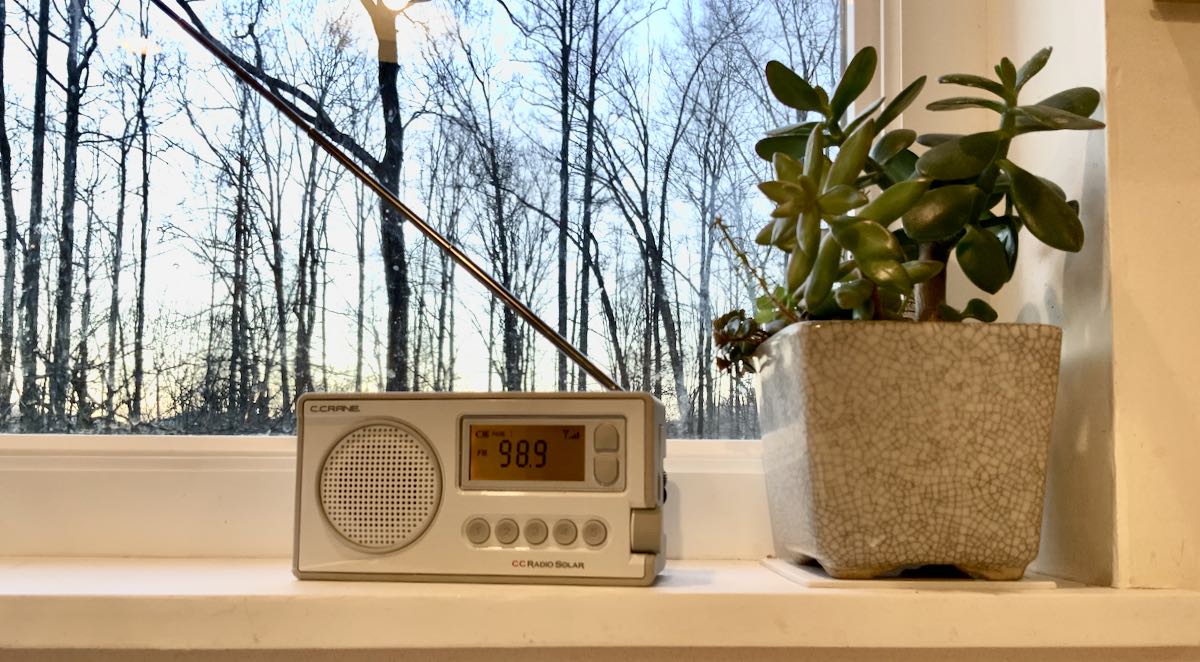
I can honestly say that the CCRadio Solar is the first self-powered radio that my wife actually welcomed into our kitchen!
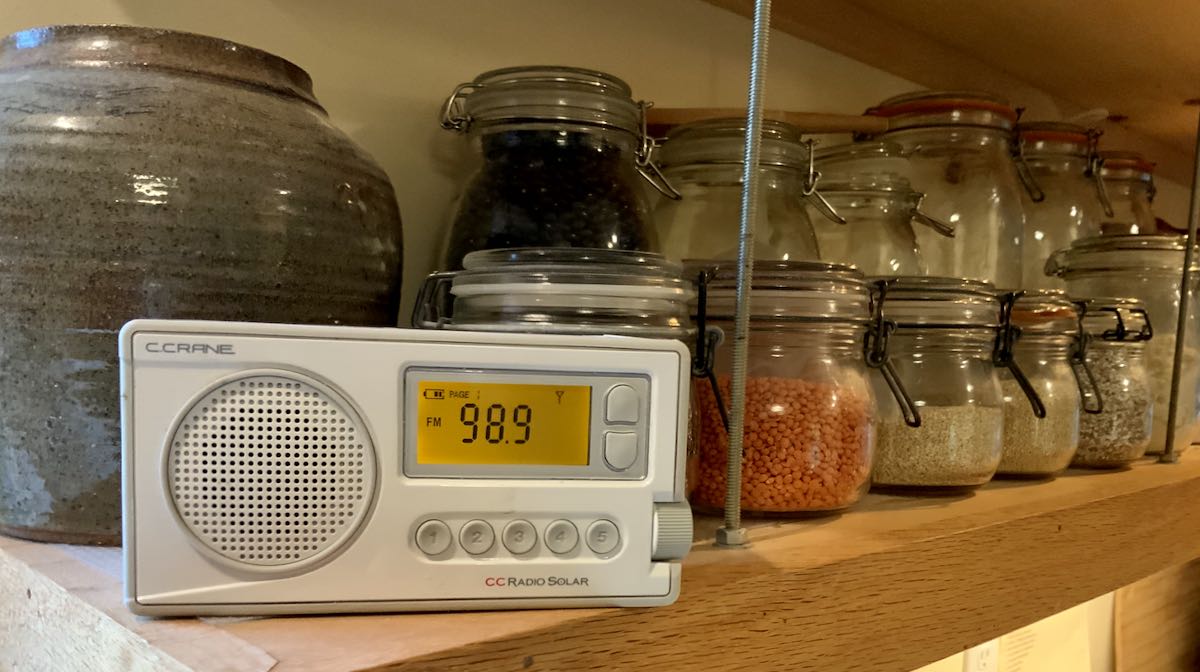
 

This is a huge.

Out of all of the radios I’ve owned or tested over the years, my wife only tolerated their temporary presence in our living spaces.

There have been a few notable exceptions:

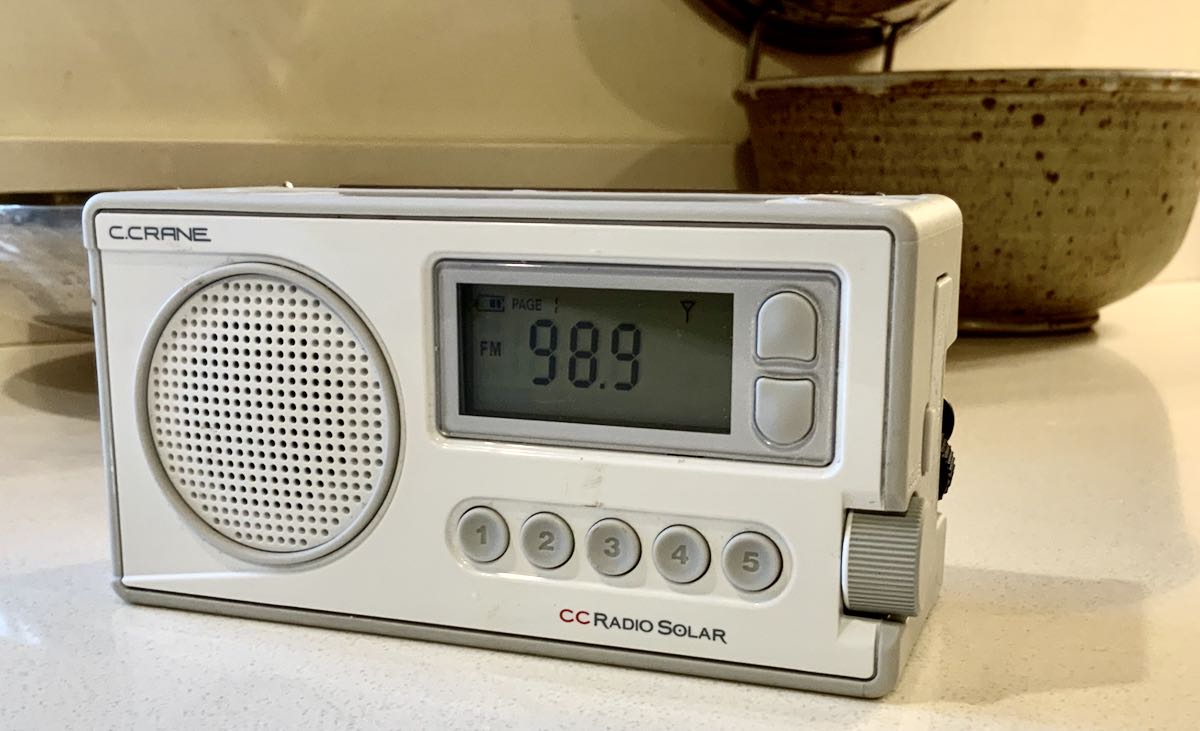
The CCRadio Solar’s design is very simple and clean.

The radio body measures 6″ x 3″ x 2.25″ and weighs about one pound. It’s easy to hold in your hand, but is also incredibly stable on a surface due to its low center of gravity, flat base, and UV-resistant rubber perimeter/jacket. (Note that the rubber jacket is in no way associated with rubberized coatings found on legacy portables that could break down over time and become sticky.)

I can place the CCRadio Solar in a window sill and not worry about it getting accidently knocked off.

On the top of the radio, there’s a large built-in solar panel, power button, flashlight button, and band button (to toggle between FM, AM, and WX radio).
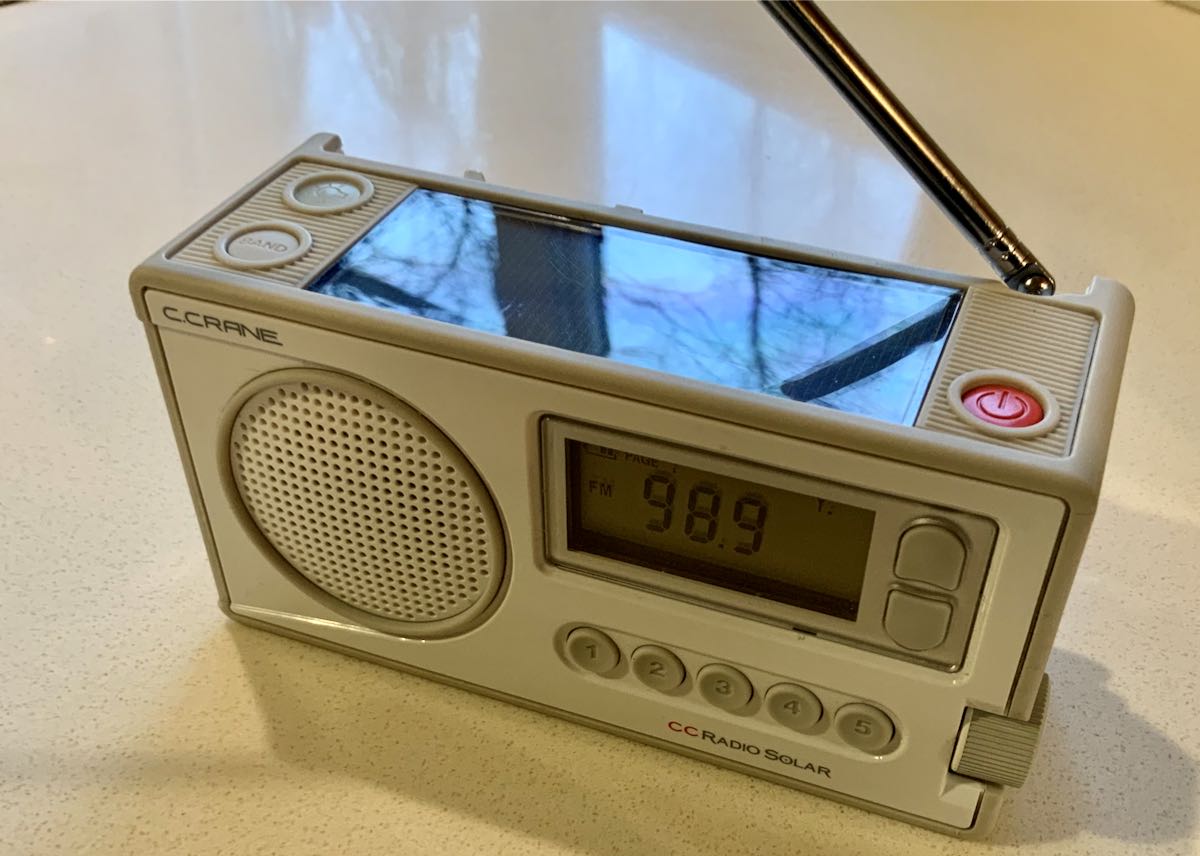
The solar panel is large for a radio of this size.

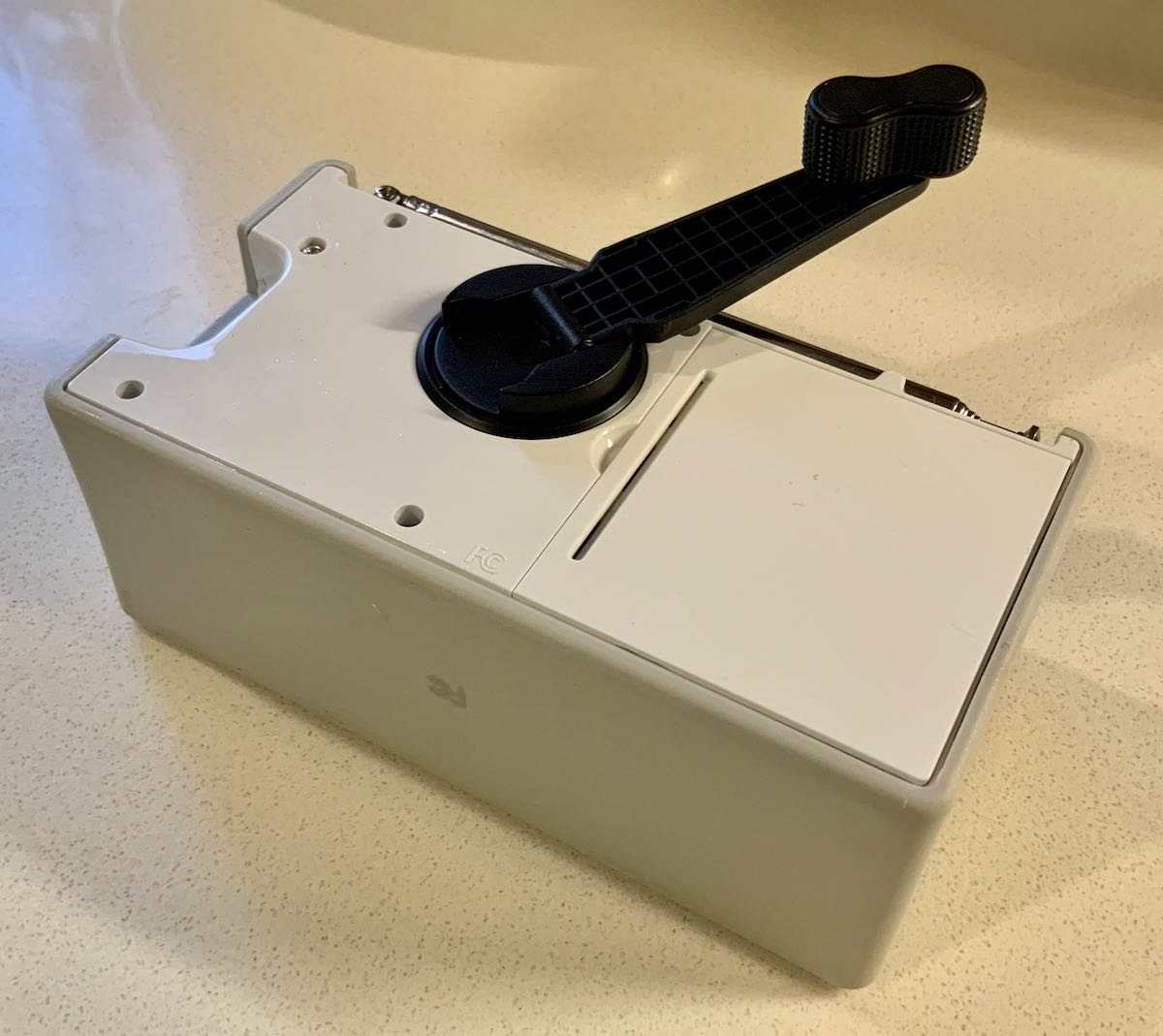
On the back, you’ll find a fold-out hand crank and battery compartment for the internal Lithium-ion rechargeable battery and optional three AA cells. Yes, this radio can be powered from standard AA batteries!
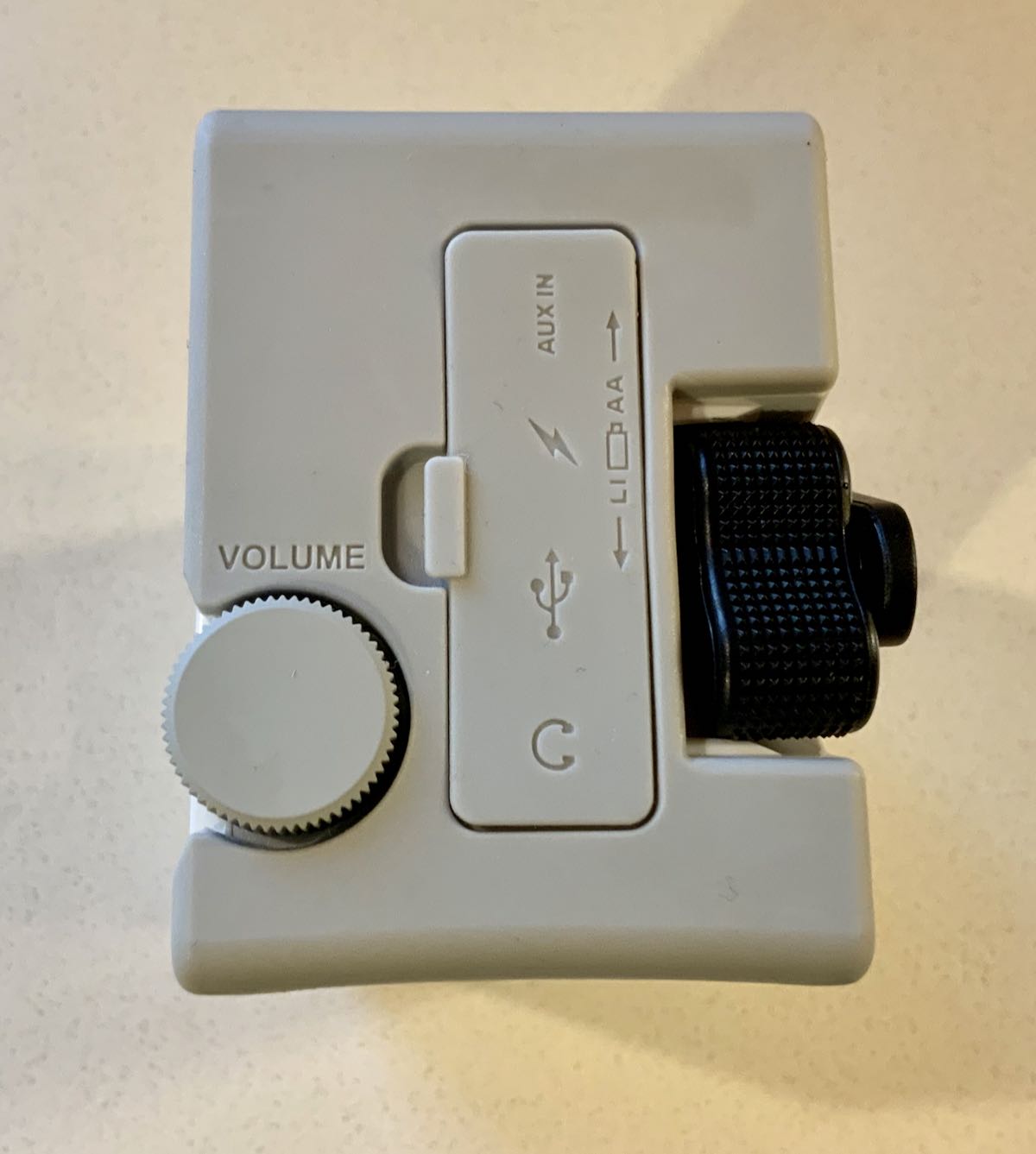
On the right side of the radio, you’ll find the volume control and a cover that protects the headphones, micro USB charging port, USB power-out port, Aux In port, and a mechanical switch that allows you to toggle between Li-Ion and AA batteries.
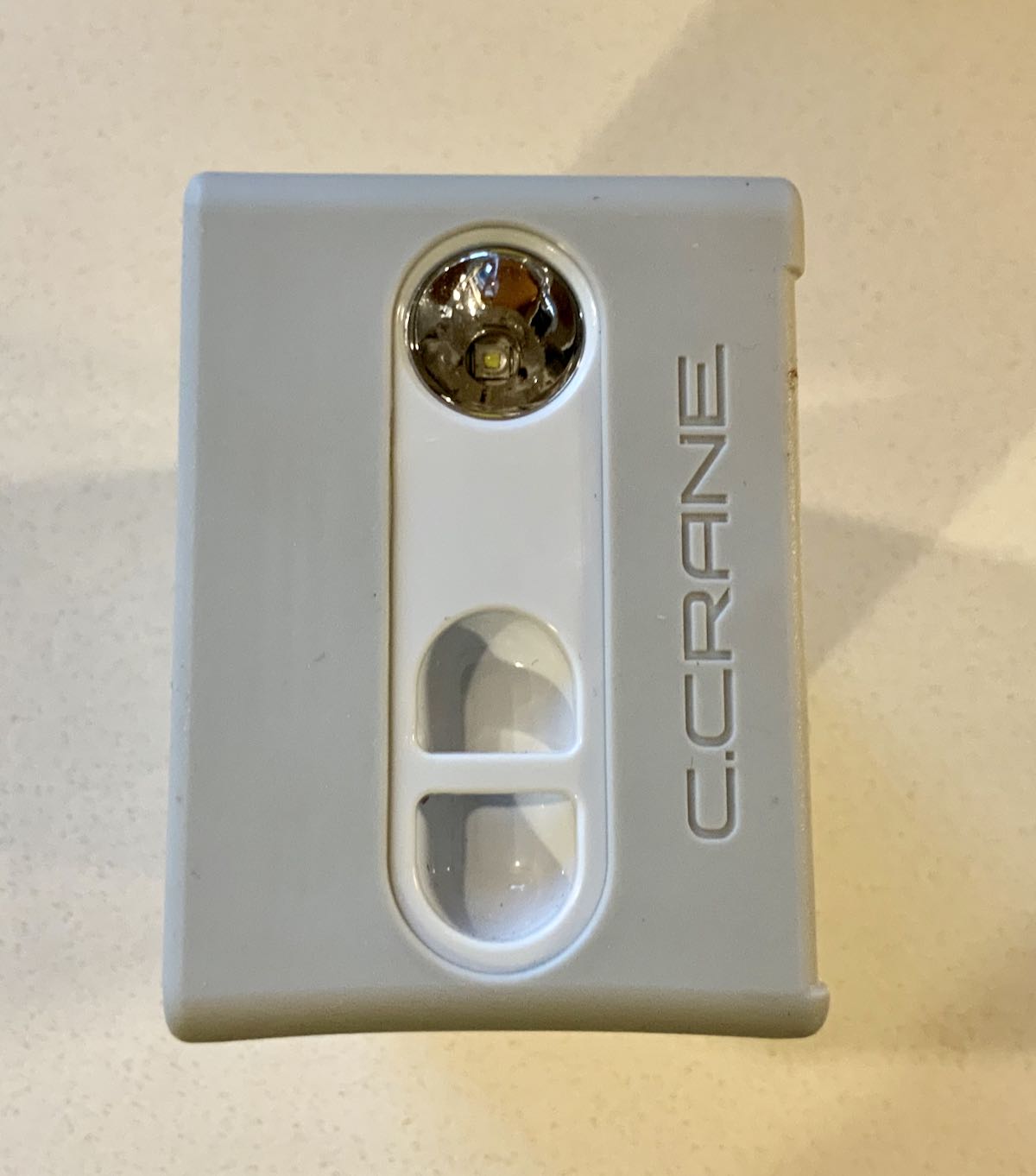
On the left side of the radio you’ll find the attachment point for the supplied hand carry strap (I haven’t attached mine), and the built-in LED flashlight.
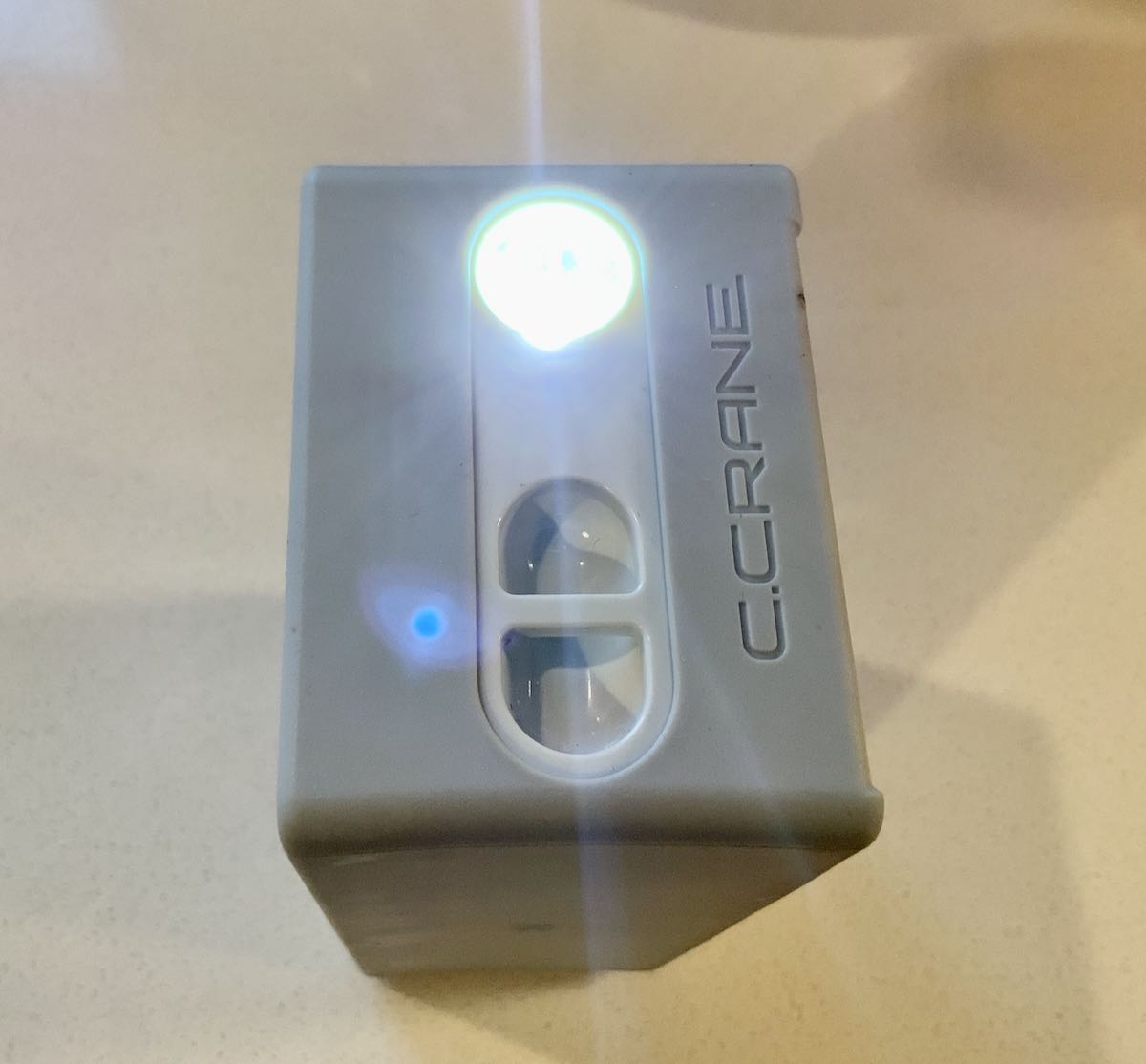
CCRadio Solar features at a glance

  • Multiple power options:
    • Solar
    • Windup
    • USB
    • AA Batteries
  • Multiple bands
    • AM
    • FM
    • Weather radio with an alert alarm
  • Auxiliary input allows you to use it as an amplified speaker
  • Five one touch memory buttons with a total of 50 presets
  • Clock
  • Alarm
  • Sleep timer
  • Rubber jacket is UV resistant

Impressions

This CCRadio Solar is a pre-production model and it’s my personal policy to not comment in detail about performance as this model comes from a very limited pilot production run.

Here’s what I can say…

This is one of the first solar radios I’ve ever used that actually works as a daily driver.

Since I took delivery of the CCRadio Solar, it’s primarily lived on our kitchen window sill. This window faces due south, so the CCRadio Solar gets ample opportunity to take advantage of solar charging.

I like to listen to the news when I cook, so the CCRadio Solar gets daily use. I’ve used it to listen to both my local NPR station and my “benchmark” distant NPR station on FM. I’ve also programmed a preset for my favorite daytime AM station which is a good 25 miles from my home.

This prototype, at least, shows promise in terms of its ability to receive distant stations with a great deal of stability.

Solar chops
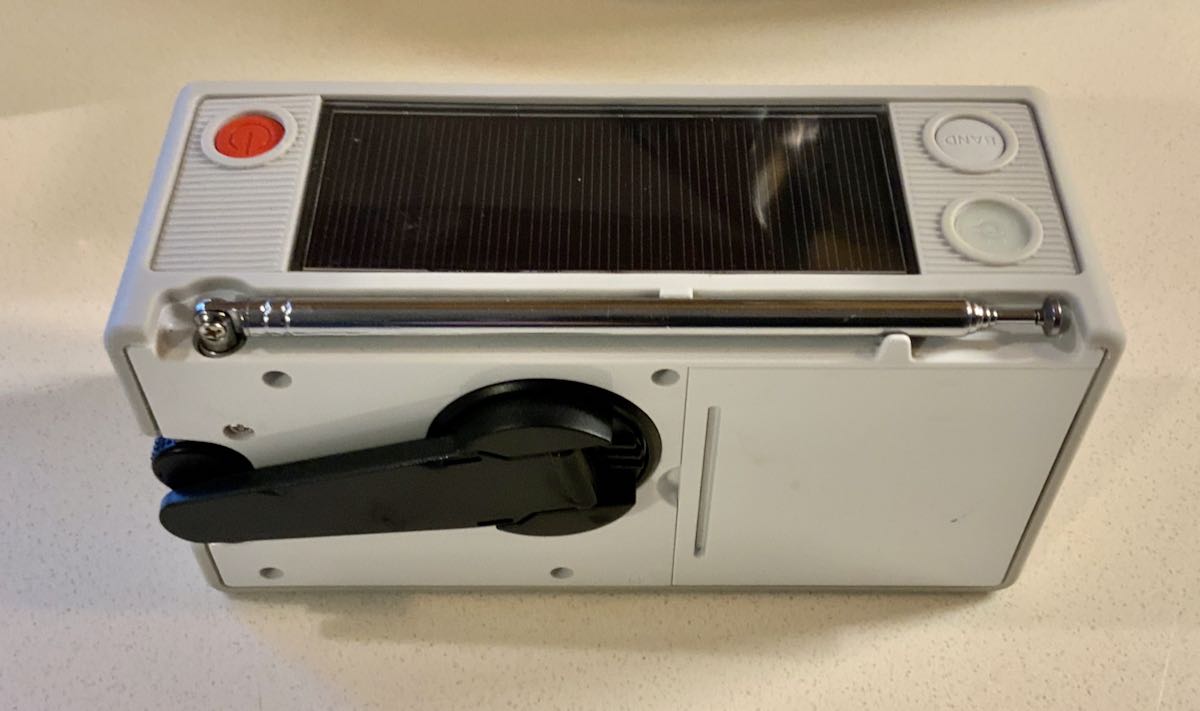
Last week, I realized that I’ve never had to charge the CCRadio Solar via the micro USB port. I’ve been using it since October for up to a couple hours a day–the solar gain from our kitchen window has easily kept the battery topped off!

I wanted to test this further, so a few days ago I moved the CCRadio Solar to another south-facing window in our living room area. I hooked it up to our SiriusXM receiver via the CCRadio Solar’s AUX IN port. (FYI: when you insert an AUX IN source, the radio automatically switches to auxiliary input.)  This SiriusXM receiver is typically paired with my CCRadio3 and plays a variety of stations throughout the day for hours at a time–sometimes from early in the morning until the early evening.

The CCRadio Solar has been doing a brilliant job of playing all day long just on solar power and at a volume level that is room-filling, though not too loud to be distracting. Most impressive!

I should mention here that the built-in speaker provides (surprisingly) pleasant room-filling audio. The audio isn’t as robust as, say, my CCRadio3 or KLH–obviously–but it’s good enough that my wife has suggested we start using the CCRadio Solar as the speaker for our SiriusXM receiver because it’s powered by the sun instead of the power grid. I’m in agreement with her: it works.

There are a couple of caveats here:

  • First of all, we’ve been having mostly sunny or partly cloudy days since I started running the radio all day long and
  • secondly, our home is passive solar so our south-facing windows, by design, do not have “Low-E” coatings that block UV rays.

I’m not sure if Low-E coatings affect solar panel performance, but I think it’s worth mentioning.

Summary
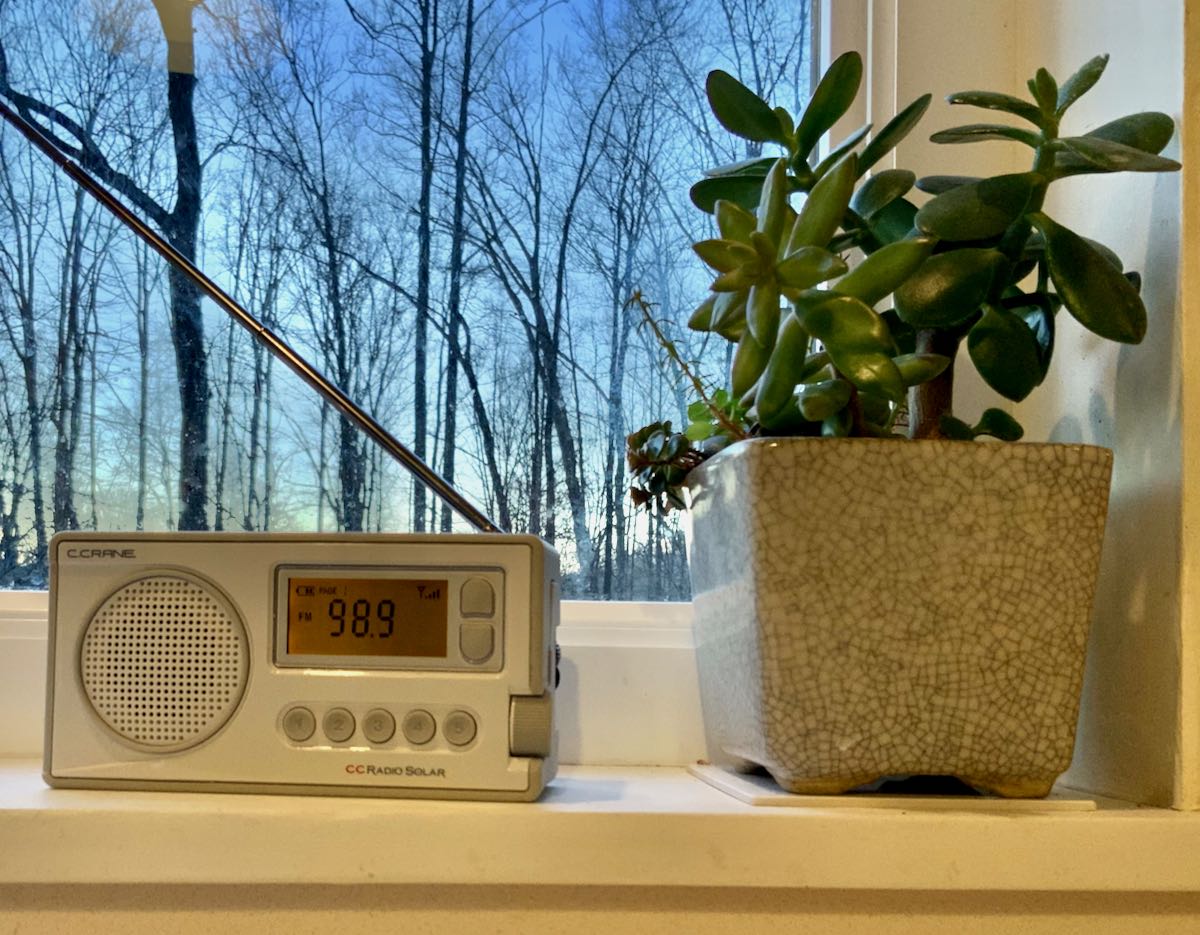
If this prototype CCRadio Solar is any indication of how the production units will operate–and, in theory, it should be–I think the CCRadio Solar will become a very popular radio in the C.Crane product line.

At time of posting, there is no product page for the CCRadio Solar on the C.Crane website. When they do add it, it should appear on their Emergency Radios page.

I believe the price is projected to be $99.99 US–which is on the high side of the self-powered radio market–but if the production units function as well as this prototype I think it’ll be worth it.

I believe C.Crane hopes to start shipping the CCRadio Solar sometime in the first quater of 2021. Since we’re still coping with all of the logistics issues of the Covid-19 pandemic, assume that date could change. I’ll continue to provide updates here in the SWLing Post. Just follow the tag: CCRadio Solar
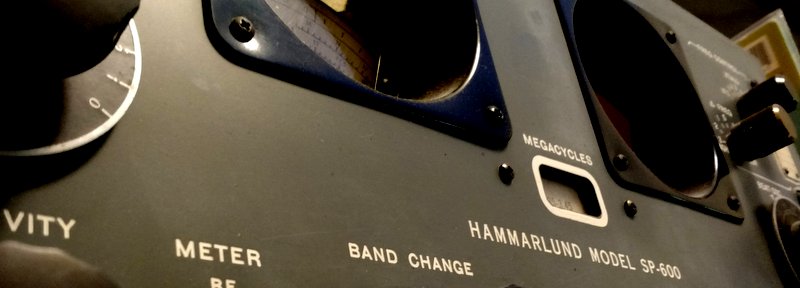
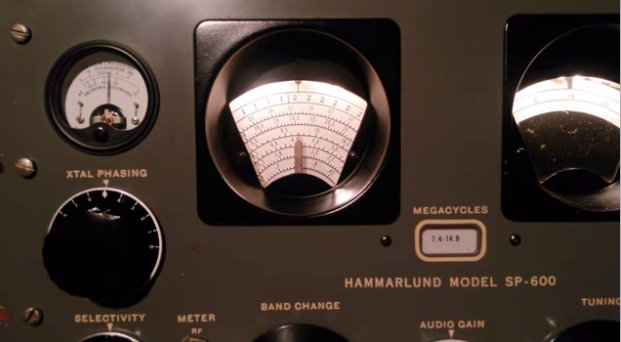
Dan’s respect for Hammarlund and the SP-600 series

Many thanks to SWLing Post contributor, DanH, who shares the following comment in response to this news article from the Citizen Times featured in Radio Waves yesterday:

Here are my thanks to members of the Amateur Radio community and The News-Record & Sentinel for remembering the legacy of Hammarlund Manufacturing Company Incorporated. It is good to know that this part of our radio history is valued and preserved. I loved the newspaper article!

I have a few vintage Hammarlund radios including two Super-Pro models. The SP-600-JX-21 is one of my daily drivers. This relatively late production SP-600 is in stock condition with the exception of a half dozen electrolytic capacitors that I replaced mostly in the power supply. By the time this SP-600 was built in 1957 Hammarlund had replaced the short-lived black beauty electrolytes with ceramic disc capacitors. Like military and industrial users I upgraded the original nickel plated tube shields with IERC heat dissipating tube shields where possible. I also installed vintage GE No. 1847 long-life incandescent bulbs as direct replacements for the brighter (too bright, for me) No. 47 dial lamps.

Here are my two most recent reception videos of the SP-600. The first features reception of Radio National da Amazonia and the second is a brief operating demo of the SP-600. The loudspeaker used in both videos is a full-range vintage Jensen 10? with matching transformer from the 1950’s instead of a communications range speaker typically used with these radios. This makes a big difference when listening to broadcasts.

This old Hammarlund is still working pretty well.

RN da Amazonia

SP-600 operating demo

Wow! Thank you for sharing this, Dan!

I used to own an SP-600 myself and I do miss it. The only reason I sold it is I was struggling to find a spot in my very compact shack where I could keep it on the air as a daily driver, yet still have enough room to bring new radios and accessories into the shack for evaluation. Moving it around all of the time (especially higher on my radio shelves) was incredibly difficult as she’s a hefty girl indeed! I ended up selling the ‘600 to a good friend for a song. That’s okay because like you, I know he’ll keep her in prime operating condition and I can even pop by to visit when I wish! I do miss having the ‘600 in the shack, though. It was truly a champion MW receiver as well!

Radio Waves: Hammarlund Legacy, FM Radio Using Arduino, VOA Report on Bias, ARISS SSTV Event, and Geminids

Radio Waves:  Stories Making Waves in the World of Radio

Because I keep my ear to the waves, as well as receive many tips from others who do the same, I find myself privy to radio-related stories that might interest SWLing Post readers.  To that end: Welcome to the SWLing Post’s Radio Waves, a collection of links to interesting stories making waves in the world of radio. Enjoy!

Many thanks to SWLing Post contributors Trevor, Dan Robinson, and the Southgate ARC for the following tips:


Ham radio operators honor legacy of Mars Hill company (Citizen Times)

During the 1950’s and ’60’s, when the Hammarlund Manufacturing Company had a factory just west of Mars Hill College, the town could have been considered a world center of advanced electronic technology. With a company motto of “Quality Without Compromise,” almost 90% of American WWII wartime military electronic equipment employed Hammarlund capacitors. They also built U.S. Navy search radar installed on aircraft carriers, battleships and cruisers.

Hammarlund was one of the three leading brands of radio communications equipment at the time, along with Hallicrafters and Collins Radio. These three companies dominated in providing state of the art electronics equipment to the U.S. military, large and small corporations, and to private individuals who had the means and taste to own the very best.

Hammarlund Radio initially operated out of New York City starting in 1910, in the early days of radio. They began consolidating all of their operations in Mars Hill in 1951, in a newly constructed facility that spread out to over 100,000 square foot on Hammarlund Drive — now named Hickory Drive. The site employed hundreds from around the area and their work lives on today. []

FM Radio From Scratch Using An Arduino (Hackaday)

Building radio receivers from scratch is still a popular project since it can be done largely with off-the-shelf discrete components and a wire long enough for the bands that the radio will receive. That’s good enough for AM radio, anyway, but you’ll need to try this DIY FM receiver if you want to listen to something more culturally relevant.

Receiving frequency-modulated radio waves is typically more difficult than their amplitude-modulated cousins because the circuitry necessary to demodulate an FM signal needs a frequency-to-voltage conversion that isn’t necessary with AM. For this build, [hesam.moshiri] uses a TEA5767 FM chip because of its ability to communicate over I2C. He also integrated a 3W amplifier into this build, and everything is controlled by an Arduino including a small LCD screen which displays the current tuned frequency. With the addition of a small 5V power supply, it’s a tidy and compact build as well.[]

2016 Report Confirmed Problem of Political Bias At Voice of America (USAGM Watch)

by Dan Robinson

Trump USAGM CEO Michael Pack Was Attacked For Attempts to Focus on Problem

It was May of 2016 and Amanda Bennett was only a few weeks into what would become a nearly four year stint as director of the Voice of America, among the “plum” jobs in Washington, D.C.

Bennett was just getting her feet wet, and at the time was dependent on a group of longtime embedded VOA managers that she would at one point describe as a “fantastic leadership team.”

She had received fair warning, from former VOA employees and extensive reporting by the independent watchdog website BBG and USAGM Watch, of disturbing issues at VOA, located in what has long been one of the most dysfunctional of federal agencies.

Some VOA journalists were using their taxpayer-funded positions to engage in self-promotion and campaign for political causes, a fact little known to most Americans. VOA’s website and digital operations were plagued by failures in breaking news coverage, and inaccuracies in content.

Both VOA and what was then called the Broadcasting Board of Governors (BBG) were increasingly seen by U.S. lawmakers as moribund. A Republican-led and eventually bipartisan effort in Congress proposed major restructuring – there was little patience left on Capitol Hill where the agency was increasingly considered to be “broken,” “rudderless,” and “worthless.” President Obama signed the reform legislation in December 2016 to create a powerful agency CEO position and to make the BBG Board purely advisory.[]

ARISS Slow Scan TV event (Southgate ARC)

An ARISS Slow Scan TV (SSTV) event is scheduled from the International Space Station (ISS) for late December. This will be a special SSTV event to celebrate the 20th anniversary of ARISS.

The event is scheduled to begin on December 24 and continue through December 31.

Dates are subject to change due to ISS operational adjustments.

Dave, AA4KN
ARISS PR

The Geminids – a reminder (Southgate ARC)

The Geminids are a prolific meteor shower caused by the object 3200 Phaethon, which is thought to be a Palladian asteroid with a “rock comet” orbit. This would make the Geminids, together with the Quadrantids, the only major meteor showers not originating from a comet.

They are the biggest meteor shower of the year, and normally occur between 4 December – 17 December.

The peak is expected on 14 December.

Expect FM “pings” and hopefully interesting dx opportunities.

Mike


Do you enjoy the SWLing Post?

Please consider supporting us via Patreon or our Coffee Fund!

Your support makes articles like this one possible. Thank you!

April’s collection of Japanese language WebSDR recordings for November 2020

Many thanks to SWLing Post contributor, April TimeLady, who shares her latest collection of Japanese language WebSDR recordings–this time, for November 2020.

Feel free to listen to her recordings via the clickable playlist below, or on her Archive.org page.

Thank you, April for once again uploading and sharing your recordings!

Click here for a link to this and all of April’s archived recordings.

RTI’s New Korean Language Service on Shortwave

Many thanks to SWLing Post contributor, David Iurescia (LW4DAF), who writes:

Generally, the news about shortwave is bad (stations that close, stations that leave the short wave and go to the Internet), but this time the news is good: After 15 years, Radio Taiwan International is broadcasting again in Korean language in short wave.
At the link, the article is in Spanish (not yet available in English).
Good week

David Iurescia (LW4DAF)

(Source: RTI – translated into English)

After 15 years, RTI restores shortwave broadcasts in Korean language

Starting on Sunday the 13th of this month, Radio Taiwan International will resume shortwave broadcasts in the Korean language. Today, 10 during a ceremony held at the radio station, the president of the RTI board of directors, Lu Ping, highlighted the many common aspects that Taiwan and South Korea present and highlighted the audiovisual and cultural exchange with which both countries can learn from each other. The reestablishment of broadcasts in Korean through the short wave is a new milestone that will further strengthen relations between the two countries.

Also present at the ceremony were the director of the Department for Asia-Pacific Affairs of the Ministry of Foreign Affairs, Larry Tseng, and the representative of South Korea in Taipei, Kang Young-hoon.

Lu explained that since taking over as chairman of the board five years ago, he has supported the restoration of Korean broadcasts. In 2018, programming was relaunched through the RTI website and YouTube, and now, two years later, shortwave broadcasts are resumed.

These were her words: “As of December 13, short wave broadcasts will resume. Under the leadership of our CEO, Chang Cheng, this is a very important date. This is a new milestone and we hope that through programming in Korean the exchange in various fields will increase and that communication will strengthen the values ??in which both peoples believe. “

Lu Ping explained that Taiwan and South Korea have many similarities in historical and cultural aspects. Through the exchange, both countries will be able to enjoy the values ??that the two peoples share.

For his part, Kang said that, due to the pandemic, this year interpersonal relationships have been severely limited and that, in this scenario, Korean broadcasts that transmit news about Taiwan have become an important bridge that crosses borders and connects hearts.

Radio Taiwan International’s programming in Korean was launched for the first time in 1961. In 2005 the broadcasts were suspended after adjustments in the organization’s budget, although during those decades many groups of listeners who followed these broadcasts were formed. At today’s ceremony, seven Korean listening friends expressed their congratulations and congratulations through a video. The listeners told that they went from childhood, adolescence to adulthood listening to these broadcasts and one of them even asked his son to offer a word of greeting in Chinese. Listeners look forward to tuning in to these broadcasts that they will hear with great pleasure.

This is the schedule that RTI gave me:

Radio Taiwán International : New Korean Service : Schedule

10:30 – 11:00 UTC – 9610 Khz

22:00 – 22:30 UTC – 5955 Khz (Repetition 1)

23:00 – 23:30 UTC – 9430 Khz (Repetition 2)

Thank you very much for the tip, David!

Radio Waves: RIP Phil Erwin, Federal Watchdog Targets Pack, Eclipse Festival of Frequency Measurement, and VOA testing DRM

Radio Waves:  Stories Making Waves in the World of Radio

Because I keep my ear to the waves, as well as receive many tips from others who do the same, I find myself privy to radio-related stories that might interest SWLing Post readers.  To that end: Welcome to the SWLing Post’s Radio Waves, a collection of links to interesting stories making waves in the world of radio. Enjoy!

Many thanks to SWLing Post contributors Dave Zantow, Michael Guerin, Eric McFadden, and Dan Robinson for the following tips:


The voice of Phil Irwin will be greatly missed (Rappahannock News)

Where wasn’t the presence of Phil Irwin felt in Rappahannock County?

A constant of virtually all proceedings of the Rappahannock County community and government, cherished innkeeper of Caledonia Farm – 1812, founding member of the Rappahannock League for Environmental Protection, regional director of the Virginia Farm Bureau, committee member for both Rappahannock County Farmland Preservation and the Agricultural Forestal District, Rappahannock tourism advisory member — for 25 years chief of morning broadcasts for Voice of America (VOA) — Irwin was found dead Thursday at his working cattle farm north of Washington.

“What a contribution Phil made to our county over his many years here,” Huntly friend Ralph Bates reacted upon learning of Irwin’s death. “He will live in our memories as we drive and see how well our viewshed and environment has been protected because of his commitment and work.”

Former Washington Mayor John Fox Sullivan recalled “a good man and such a part of the Rappahannock fabric. His love for this county, and commitment to it, was unmatched.”[]

Federal watchdog finds ‘substantial likelihood of wrongdoing’ by Trump appointees overseeing Voice of America (NBC News)

The federal watchdog’s findings mark the latest rebuke of the Trump-appointed CEO of the U.S. Agency for Global Media, Michael Pack.

WASHINGTON — A federal watchdog agency has found “a substantial likelihood of wrongdoing” by Trump administration appointees who oversee the Voice of America and other U.S.-funded media outlets.

The finding from the U.S. Office of Special Counsel, an independent government agency charged with safeguarding federal employees’ rights, marks the latest rebuke of Michael Pack, who President Donald Trump appointed to run the U.S. Agency for Global Media, the parent agency to VOA and other broadcasters.

A federal judge last month ordered Pack to stop interfering in the newsrooms of VOA and other media outlets and found that he had jeopardized the First Amendment rights of journalists that his office had targeted for investigation. Lawmakers from both sides of the aisle and press freedom groups have blasted Pack over his actions since he took over in June, accusing him of undermining the broadcasters’ editorial independence and defying congressional authority.

After reviewing allegations from current and recent employees, the Office of Special Counsel wrote to the whistleblowers Wednesday saying it had demanded Pack and the U.S. Agency for Global Media conduct an investigation into the allegations.[]

The December 2020 Eclipse Festival of Frequency Measurement (HamSCI)

Changes in ionospheric electron density caused by space weather and diurnal solar changes are known to cause Doppler shifts on HF ray paths. For example, see Figure 7 in Boitman et al., 1999. HamSCI’s first attempt at a measurement of these Doppler shifts was during the August 2017 total solar eclipse. We plan a careful measurement during the 2024 eclipse. As part of the WWV centennial, 50 stations collected Doppler shift data for the original Festival of Frequency Measurement, demonstrating the value of volunteer participation in collecting this data. During the June 2020 Eclipse Festival, we enlisted participants around the globe and experimented with different data collection protocols. This winter, we request that all amateur radio stations, shortwave listeners, and others capable of making high-quality HF frequency measurements help us collect frequency data for the December 14 total eclipse.[]

USAGM, VOA Testing Innovative Digital Radio Platform (Inside VOA)

A few weeks before the COVID-19 pandemic shut down much of the world, broadcast engineers in Greenville, North Carolina, launched a test of digital radio signals. The U.S. Agency for Global Media began aiming a digital broadcast at Cuba and Latin America, which included Office of Cuba Broadcasting and Voice of America content.

With this 2020 test, VOA embarked on a new phase of global innovation on a platform called Digital Radio Mondiale (DRM), a versatile digital signal not well known in the U.S., but the only one that can cover the entire spectrum: shortwave, mediumwave and longwave, as well as VHF (FM). As digital radio emerged in the 1990s, VOA was among the first broadcasters testing a signal that promised to even out shortwave radio signals that often faded in and out and were marred by static.

VOA tested the DRM signal in the 1990s at the agency’s Morocco transmitter site, one of five facilities opened in a period of expansion in the previous decade. However, other digital signals became the standard in various markets around the world. The U.S. standard audio digital platform is called HD.

Around the world, as other digital radio platforms were adopted, DRM was held back by the marketplace. Nobody was making commercially available receivers.

By the end of the 1990s, VOA innovation focused more on television, the platform that promised larger audiences, even in some places in the world where shortwave dominated. By the early 2010s, the rallying cry became “Digital First,” as VOA strived to attract readers for its language service websites and began tapping into the growing audiences on new social media sites like Facebook, Twitter, Instagram and YouTube.

By 2020, however, DRM had come full circle.

“You’re no longer limited to just reading the news or playing music,” says Gerhard Straub, supervisory director of the USAGM Broadcast Technologies Division.

Straub, along with Gary Koster, Broadcast Radio Technician and transmitter expert and Macon Dail, Chief Engineer at the Greenville Transmitting Station, set up the test broadcast in February of this year, not long before the COVID-19 pandemic grounded global travel. The trio put up a DRM signal with Radio Marti and VOA audio along with scrolling text messages and rotating images.

Engineers have received reports of a clear signal as far south as Brazil.

The USAGM test, says Straub, is “coasting along” in the pandemic, but additional content will be added when technicians can travel again. Straub says the VOA signal was taken off in the initial test to concentrate on the OCB digital content and to keep the signal robust. Now that there is good reception data, he noted, the digital bit rate can be increased and VOA content added back into the test in 2021.

Because DRM operates at lower power, more radio stations and digital signals can be broadcast on a single transmitter. The platform is starting to grow in countries of interest to Western international broadcasters. DRM signals will soon cover all of China, though its government is expected to attempt to control the stations accessed by its citizens. India built 39 transmitters and, more importantly, 2.5 million vehicles already are equipped with DRM radios. Indonesia, Pakistan, Brazil and North Korea all have nascent DRM operations.

Religious broadcasters, who sometimes target audiences similar to those sought by Western governments, are experimenting with the technology. For example, a missionary group, TWR.org, sent the Bible’s Gospel of Mark from Guam to Cambodia via DRM shortwave.

“You have to stop thinking of it as radio, because it’s not,” says USAGM’s Straub. “We are now broadcasting digital data. Just like we broadcast digital data on the internet, we can broadcast digital data over shortwave without being hampered by an internet firewall that maybe limits what we can send to a particular country.”

Reason enough, Straub believes, for VOA to continue leading innovation in a new-again technology.[]


Do you enjoy the SWLing Post?

Please consider supporting us via Patreon or our Coffee Fund!

Your support makes articles like this one possible. Thank you!