Author Archives: Thomas

WRTH 2020: A look inside

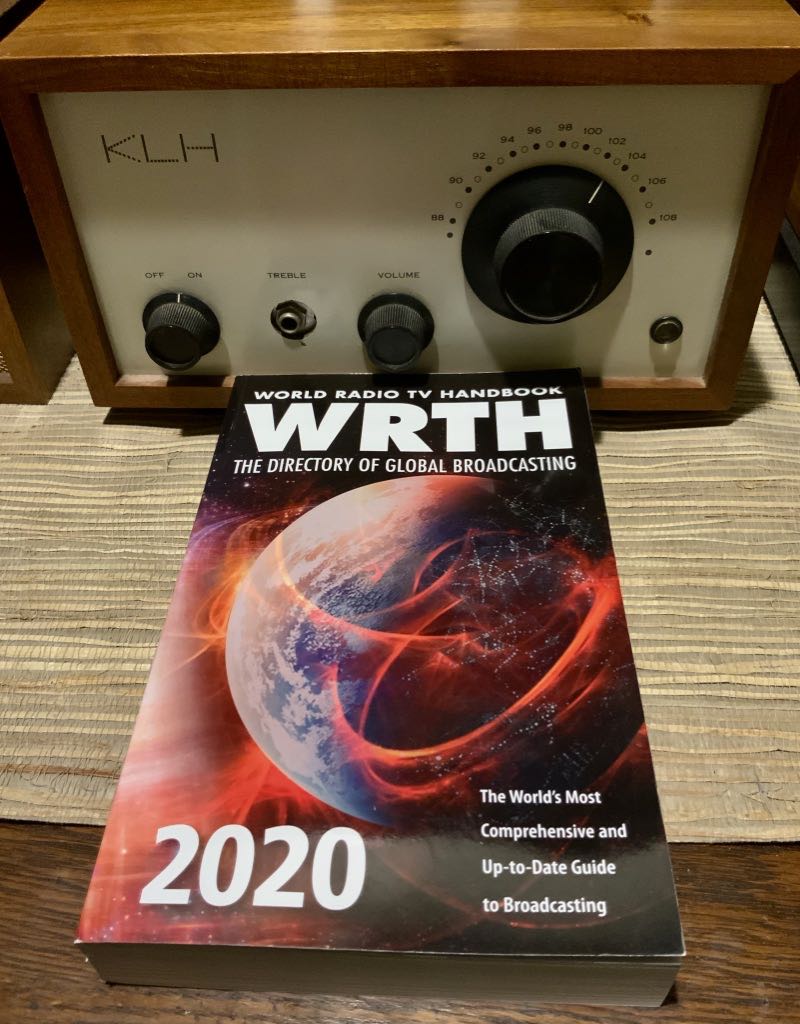
I received my review copy of the 2020 World Radio and TV Handbook (WRTH) shortly after returning from holiday travels last week. I always look forward to receiving this excellent staple radio reference guide–and this is their 74th edition! The WRTH has never disappointed, so my expectations are always quite high.

Once again, the WRTH lived up to my expectations.

WRTH’s team of noted DXers from around the world curate frequencies and broadcaster information by region; while I’m not sure how they orchestrate all of this, the end result is truly a symphony of radio information. In addition to broadcaster listings, WRTH’s radio reviews, feature articles, and annual HF report make for excellent reading.

But the WRTH isn’t just a frequency guide: the publication always devotes the first sixty or so pages to articles relating to various aspects of the radio hobby. Following, I offer a quick overview of these.

The first article always features a WRTH contributor:  this year, they feature Luis Cavalho who is their contributor for Portugal, the Azores and Madeira. His path to becoming a WRTH contributor began in his childhood snagging mediumwave DX with an array of portable radios. His love of radio lead him to the world of shortwave radio, WRTH and eventually his own radio website to serve Portuguese listeners.

WRTH Reviews

The second set of articles is always my favorite: WRTH receiver reviews.

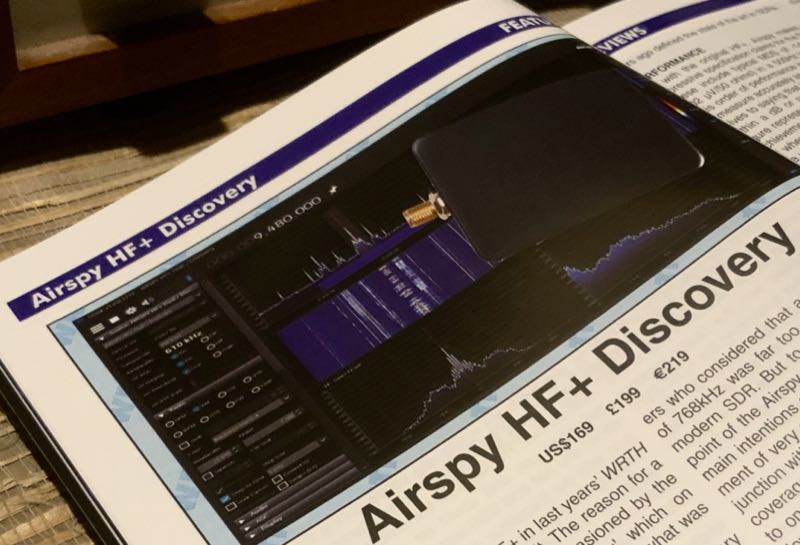
This year, WRTH begins with an in-depth review of the excellent ELAD FDM-DUOr tabletop SDR receiver.  Next they build on their 2019 review of the SDRplay RSPduo by exploring its unique diversity reception capabilities. They also review the AirSpy HF+ Discovery and were so impressed they awarded it the 2020 Best Value SDR.
This year, WRTH also reviewed two portable radios by Pure: the Pure Elan E3 DAB, DAB+, FM receiver and the Pure Elan IR5 WifI radio.

The final two reviews are of affordable products that offer incredible value for the radio listener: the venerable Tecsun PL-310ET ultralight radio and the Tecsun AN-200 MW Loop Antenna. I enjoyed reading a fresh review of each of these products as I’ve personally used both for nearly a decade.

WRTH Features

The first feature article, written by none other than Dave Porter, focuses on the development of HF broadcast antennas. His article serves as an excellent primer on the topic, covering Rhombic Antennas, Corner Quadrant Antennas, Log-Periodic Arrays and ALLISS /Rigid Curtain Arrays. A must-read for those who want to know more about the “business side” of a broadcast signal!

Hans Johnson’s feature, Sea Breeze and Wind from Japan, explores the story behind the broadcasts to Japanese citizens abducted by North Korea. Truly, an inspiring story of a determined and mission-dedicated broadcasters.

The following feature article was written by WRTH contributor and chief editor of the New Zealand DX Times, Stu Forsyth, who outlines the history of broadcasting from New Caledonia in the Pacific.

The next feature article focuses on the “finer points” of mediumwave propagation. I thought this was an informative and and timely article as so many shortwave DXers (including yours truly) spend time on the mediumwave bands especially during winter and times of rough HF propagation. A must-read!
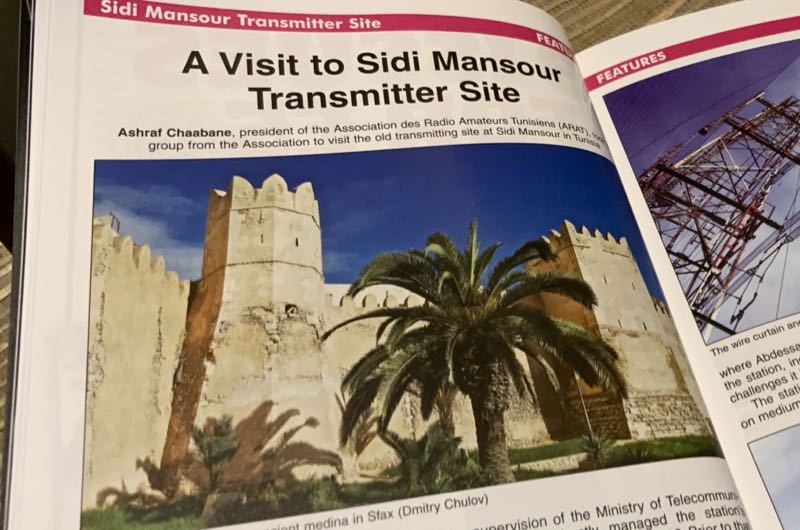
Ashraf Chaaban, president of the Association des Radio Amateurs Tunisiens, takes WRTH readers with him on a visit to the Sidi Manson Transmitter Site in Tunisia in the final feature article. Having an affinity for broadcast sites, I sincerely enjoyed the focus on Sidi Manson which fell silent on shortwave in 2014.

Next, WRTH spotlight the annual Digital Update which summarizes the dynamic state of digital broadcasting. I’ve found this feature to be incredibly informative as we see how digital broadcasting is penetrating both domestic and international services.

The final article–a tradition–is the WRTH  HF propagation report/forecast by Ulf-Peter Hoppe. Always an informative read especially as we work our way out of a log-term solar slump.

The 74th is another fantastic edition of the World Radio TV Handbook. As I say every year, I’ve never been disappointed with WRTH. Their publishing standards are such that the quality of their reviews, their writing, and (most importantly) their broadcast listings are simply unparalleled.

At the heart of any WRTH is an uncompromising and unparalleled amount of information regarding regional and international broadcasting.

For DXers who collect QSL cards, you’ll find that broadcaster contact information in WRTH is often more up-to-date than a broadcaster’s own website. When readers contact me asking for QSL information from an obscure broadcaster, the first place I search is the current WRTH. Remember: their information is based on volunteer contributors who specialize in specific regions of the world–the most knowledgeable regional DXers keep this publication accurate.
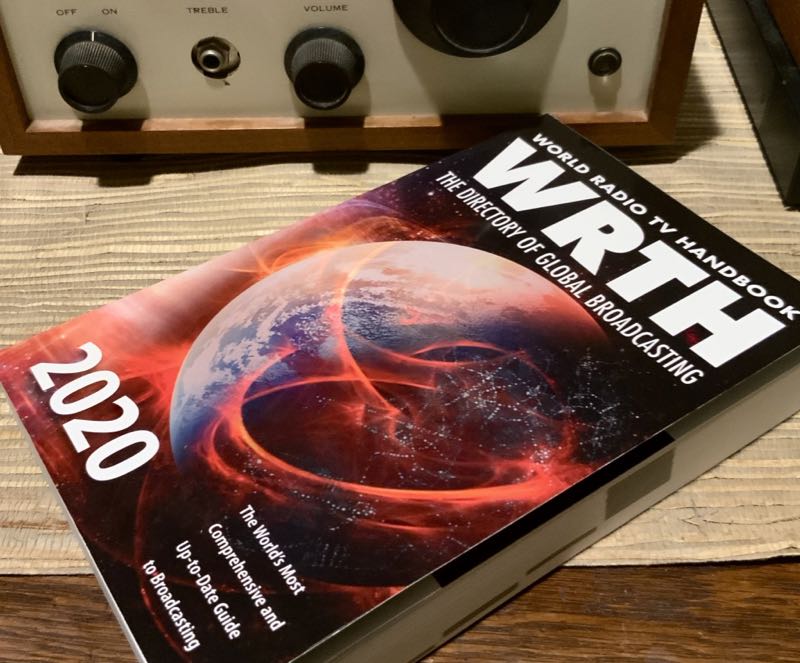
Purchase your copy of WRTH 2020 directly from WRTH’s publishers, or from a distributor like Universal Radio (US) , Amazon.com (US),  or the Book Depository (international).
Brooklyn Pirate Radio Sound Map Fundraiser

Many thanks to SWLing Post contributor, Jack Jones, who shares the following:

Do you want to be part of pirate radio history? David Goren, creator of the Brooklyn Pirate Radio Sound Map, ( https://map.pirateradiomap.com/ ) is headed for an upgrade/expansion in 2020 with many exciting new features… To that end there’s a fundraiser afoot!

The Brooklyn Pirate Radio Sound Map is the first phase of a multimedia documentary project which launched in 2017 with the help of funding from the Brooklyn Arts Council (BAC). An interactive online sound map containing archival recordings of the pirate stations is paired with a four part historical essay tracing the development of Brooklyn pirate radio through interviews, and sound recordings.

The map was initially funded by the Brooklyn Arts Council. David is seeking additional funding to continue his research, add new features to the map, and expand the map to the other pirate radio neighborhoods of Queens, the Bronx and suburban New Jersey.

Please support David via GoGetFunding.

Thanks so much for sharing this fund raiser for the Brooklyn Pirate Radio Sound Map, Jack!

Radio Kahuzi Comparison Between Sweden and Switzerland KiwiSDRs

Many thanks to SWLing Post contributor, Dan Robinson, who recently took advantage of a rainy Sunday in Maryland to put together the following video.

Dan notes that the video/screencast demonstrates, “reception of the low power Radio Kahuzi, the religious station in Democratic Republic of Congo, via two of the best KIWI SDR sites, in Sweden and Switzerland. The video shows how the signal of Radio Kahuzi propagates the 9,000 + kilometers from DRC into Europe.”

Fascinating!  Thank you for sharing this, Dan!

Tomorrow: Morristown Hamfest and youth radio event

My buddy, Vlado (N3CZ), and I have decided to head to the Morristown, Tennessee hamfest tomorrow morning. The event is sponsored by the Lakeway Amateur Radio Club and also features a “kids day” to promote amateur radio to unlicensed youth. The club provides opportunities for both individuals and youth groups to get on-the-air experience and help sort out the best path to get an amateur radio license.

Neither one of us knew about this regional hamfest until last month when I received a request from the radio club’s president asking if I could help spread the word. It was then that I discovered Morristown is within a two hour drive. Vlado and I are always up for a road trip (even if it means leaving at 5:00 am…egad–!).

We’ll keep our expectations in check, but we both hope to sell some radio gear that is in excess to our needs. If you happen to live in the area, pop by and introduce yourself!  Here are the details:

Lakeway Amateur Radio Club’s
28th Annual HAMFEST
Where: 1615 Pavilion Drive, White Pine, TN 37890
8:00 AM -3:00 PM
Saturday, January 4th, 2020

Gates Open @ 8:00 AM.
Admission $10.00 at the Gate
Opening Cermonies @ 8:30
HAMFEST Forums start at 9:oo AM, District 8 Meeting and ARRL, David Thomas
Keynote: Jason Johnston W3AAX, Parks on the Air!

Grand Prize is an Icom IC-7300.

Click here to visit the hamfest website.

Reginald Fessenden’s connection to Bermuda

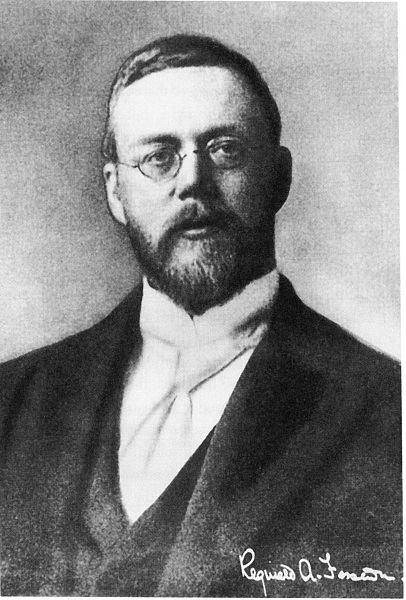
Reginald Fessenden: “The Father of Radio Broadcasting” (Source: Wikipedia)

Many thanks to SWLing Post contributor, Paul Evans (W4/VP9KF), who writes:

The story of Reginald Fessenden has a background in Bermuda.

Before he finished his college education in Canada, he spotted an advert for Headmaster at a school in Bermuda. He applied for it and got the job. At the right age of 18 he became headmaster of Whitney Institute, a school near the top of the hill in Flatts and where your scribe went to school starting in 1968! He met Helen Trott of Flatts and they were married and he moved on to his radio and scientific fascination. The main school building that I attended is exactly as it was in Fessenden’s time (and is to this day).

Later, they moved back to Bermuda and bought Wistowe a house on North Shore Road in Flatts (on the east side of the inlet), which was no more than a stiff 10 minutes walk to Whitney). The school and house still stand although the roads are now so very busy (and the house literally within an inch of passing buses) it’s hard to see them (I do have pictures!). Wistowe is just yards from the Bermuda Aquarium across the road.

In October 2007 the amateur radio special callsign VP9F was used to celebrate his life (indeed he held the callsign himself in 1929).

A fuller article is at http://vp9ge.com/vp9f.htm as written by myself and Ed, VP9GE.

The celebrations also included Ken Hubbard who demonstrated radio to students from Whitney and other Bermuda schools (Ken was my Physics instructor at Bermuda College, although not a radio ham). In 1976 Ken and I did a public demo of radio while I manned the world’s first all solid state transceiver, the Atlas 210X at a similar open day at Bermuda College (ironically the student [me] taking the lead and having to supervise the instructor!).

Once again, a small world!

Thanks for sharing this interesting bit of Fessenden history, Paul!

Looking back: 2019––and ETOW–– in review, and the dawn of a new decade

Yes, I’ll admit it:  I’m  happy to say “Goodbye” to 2019 and “Hello!” to 2020.

While a lot of wonderful things happened last year, one event in particular will always be present in my mind when I recall 2019.

The End of an Era: Remembering ETOW

Most importantly, however, last year will be remembered as the bittersweet year that we closed Ears To Our World (ETOW) as a formal non-profit organization.

I founded ETOW––a mission of the heart––in 2008, and I would never have guessed that it would be so successful.  We’ve spent the past eleven years building up and supporting rural and remote communities throughout the world with appropriate technologies, like self-powered radios.

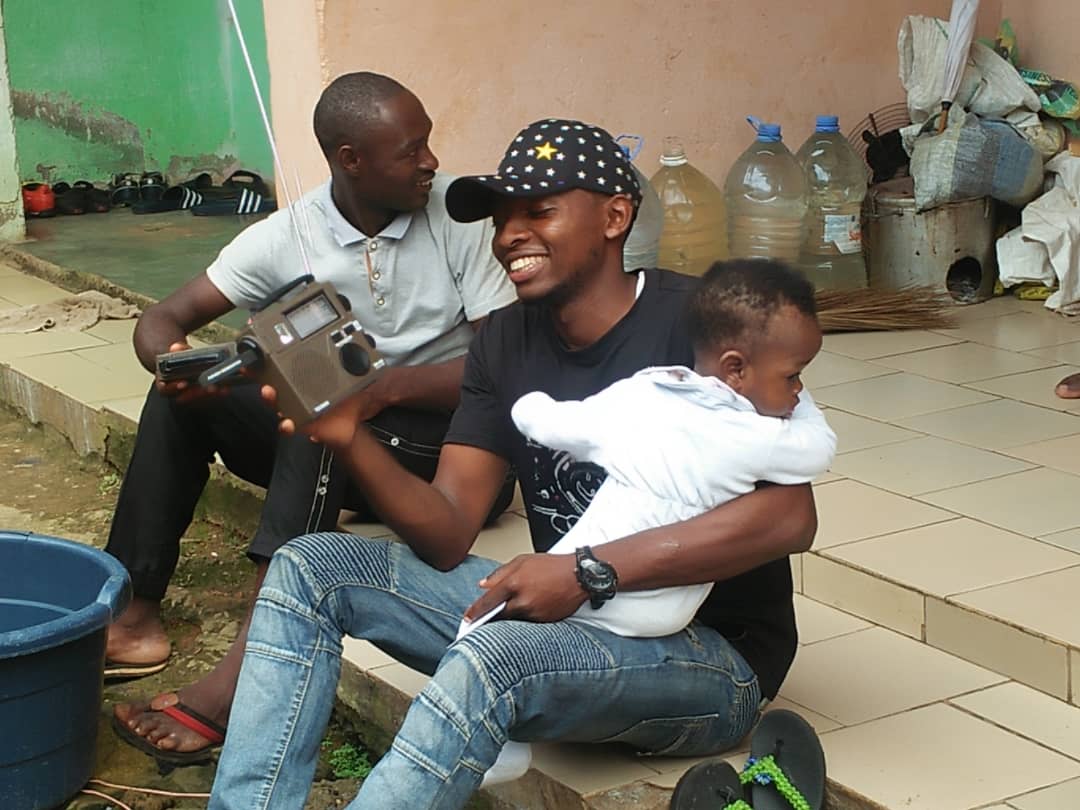
I’m incredibly proud of and humbled by all that ETOW has accomplished.  It’s touching that we’re still receiving photos from the field, documenting projects we completed over the past two years.  (It’s often taken months for our intrepid partners to get our radios and gear to the end-users…but they get it there!).

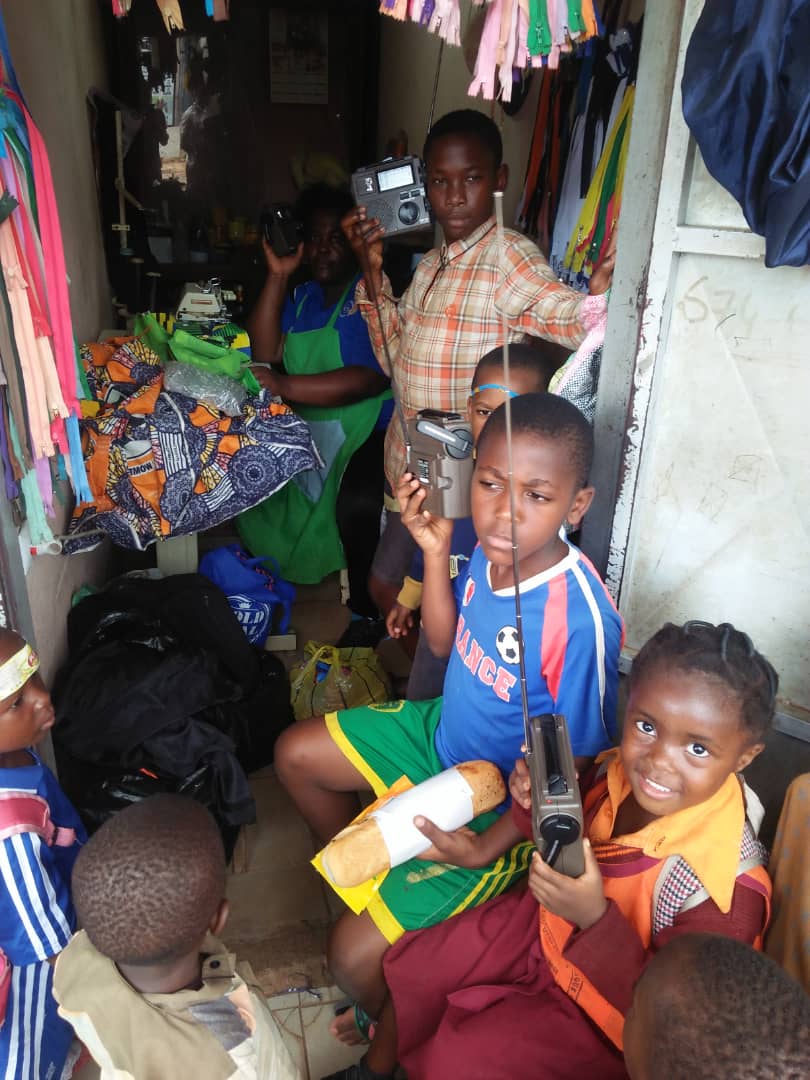
Our radios finally reached the remote area of Cameroon served by the amazing community-driven FM station, Radio Taboo. Hooray!

It’s been such an honor and a labor of love to serve as ETOW’s director.

ETOW had a great run, too. I knew going in that all-volunteer NGOs have a dismal survival rate, typically not making it beyond two, three, or maybe four years. It requires an enormous amount of organization, work, and dedication to insure the mission has meaningful and strategic impact. I’m very proud of the fact that we topped a decade with ETOW. No doubt, we were able to accomplish so much because of our amazing supporters and volunteers, many of whom are here as a part of the SWLing Post community. Thank you!

But…if ETOW was successful, why did we close shop?

As I mentioned in our annual letter to donors, I have always believed that charity begins at home. And at this point in my life, I must acknowledge more pressing needs in my home and extended family, some members of whom are more in need of my care than ever before.

However, there’s a happy ending.  Closing ETOW as a formal non-profit does not signal the end of our humanitarian work. Ironically, without all of the administrative overhead of running a formal organization, I have the freedom to continue doing the work we’ve been doing, and even possibly even do more of it In fact, at this very moment, I’m working on three different projects through partners in Haiti and South Sudan.

Basically, in closing ETOW, I’ve simply changed “hats:”  instead of being a volunteer non-profit director, I am now essentially a volunteer non-profit tech consultant. And, really, that’s okay with me.

Another silver lining is that I may now also have more dedicated time for the Radio Spectrum Archive––yet another project near and dear to my heart.

Resolutions and plans for 2020

If I can, I would like to play more radio this year––and of course, spend quality time with my wonderful family.

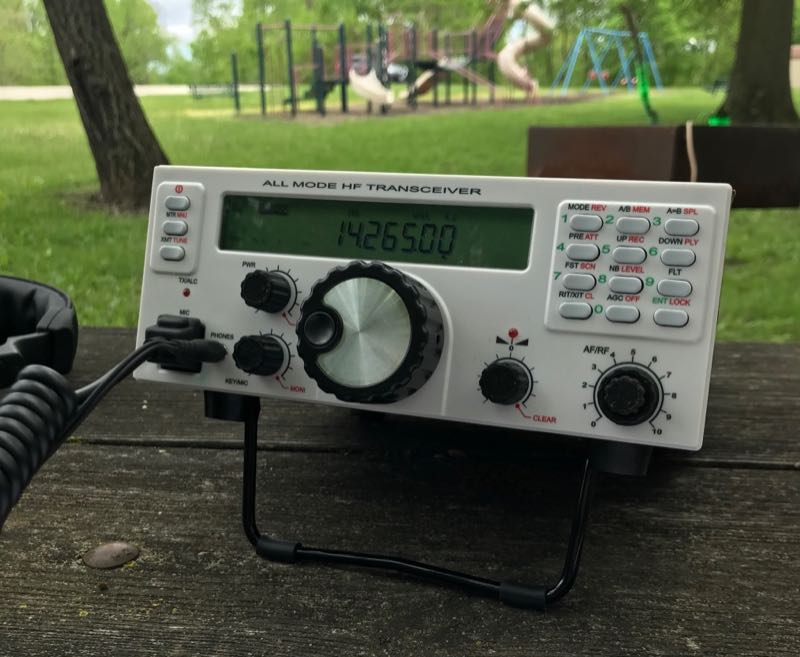
I’m truly passionate about field-portable radio, so, as I travel to visit and assist family, I plan to activate more state and national parks via the Parks On The Air (POTA) program.  I’d also like to make a few Summits On The Air (SOTA) activations, if time allows.

Now that I have a capable portable SDR system, I also plan to capture radio spectrum recordings as I travel back and forth.

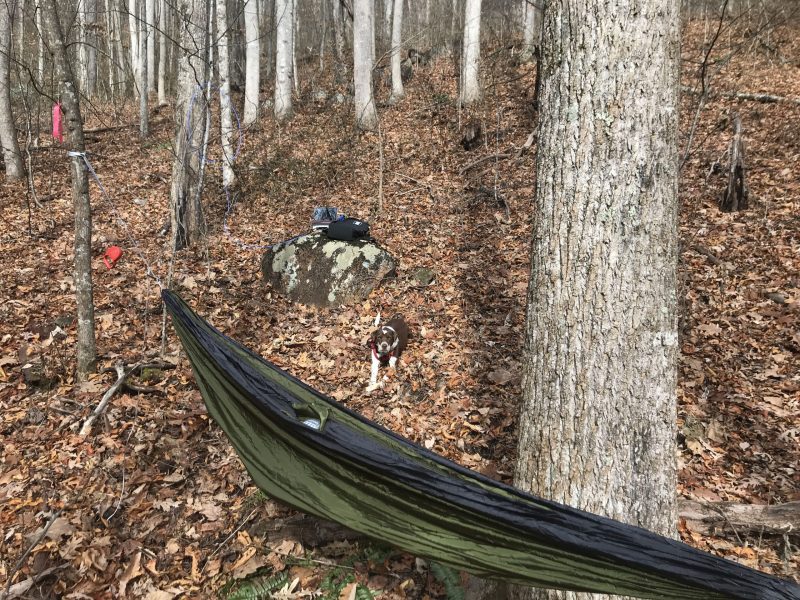
In a national forest with my portable SDR system, my hammock, and dog, Hazel, on the alert for black bears (and squirrels). Does life get any better?

2020 will also be the year that I re-invest in my antennas.

If time permits, I’d like to re-build my sky loop antenna, install a LOG (loop on ground), and (hopefully!) install a hex beam. I may not be able to hit all of these, but I’m going to try.

Schedule

I do have a few conventions and events on the calendar this year:

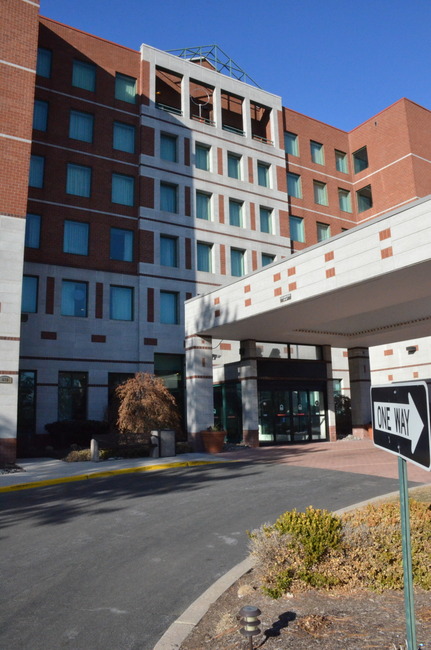
The DoubleTree hotel where the Winter SWL Fest is held.

February 27-29, I’m planning on attending and presenting at the 2020 Winter SWL Fest in Plymouth Meeting, PA.

April 3-4, I’ve been invited to speak at the Ozarkcon QRP Conference in Branson, Missouri. I’ve wanted to attend this conference for years, so I’m really looking forward to making the pilgrimage!

May 15-17, I’ll again try to attend the 2020 Hamvention in Xenia, Ohio. This is always a highlight of my year as it gives me a chance to meet with so many radio friends. I hope to also attend the full Four Days In May QRP conference which is held in conjunction with Hamvention.

September 25-26, I plan to attend and help at the W4DXCC conference.

I’ve also been invited to speak at a number of regional ham radio clubs––I love doing this because it always gives me an excuse to engage in a little shortwave radio “evangelism.”

Of course, I realize that family concerns can always change my plans. But having fun things to look forward to gives me positive energy and direction…Radio is my happy place.

Thank you so much!

If you’ve been reading the SWLing Post for a while, you’ll know that my posts don’t typically get this personal. A lot happened this past year, though, and I wanted to share this with my radio family and friends.

Thanks, especially, for understanding when it’s taken days or even weeks for me to reply to email.

Thank you for your support of the SWLing Post through the Coffee Fund and Patreon!  Thanks, too, for your comments, tips, guest posts, and active interest in the SWLing Post.  And, no worries: I definitely plan to continue hosting this website, as I can work on it in and around whatever else may be required of me. The SWLing Post is a true labor of love.

I truly appreciate your support!

What are your resolutions?

I’m looking forward to 2020, and I hope you are too.

What are your resolutions, goals and objectives this year? Inquiring minds want to know! Please comment and share!


Do you enjoy the SWLing Post?

Please consider supporting us via Patreon or our Coffee Fund!

Your support makes articles like this one possible. Thank you!

The Worldwide Listening Guide: A deep dive into online and over-the-air listening

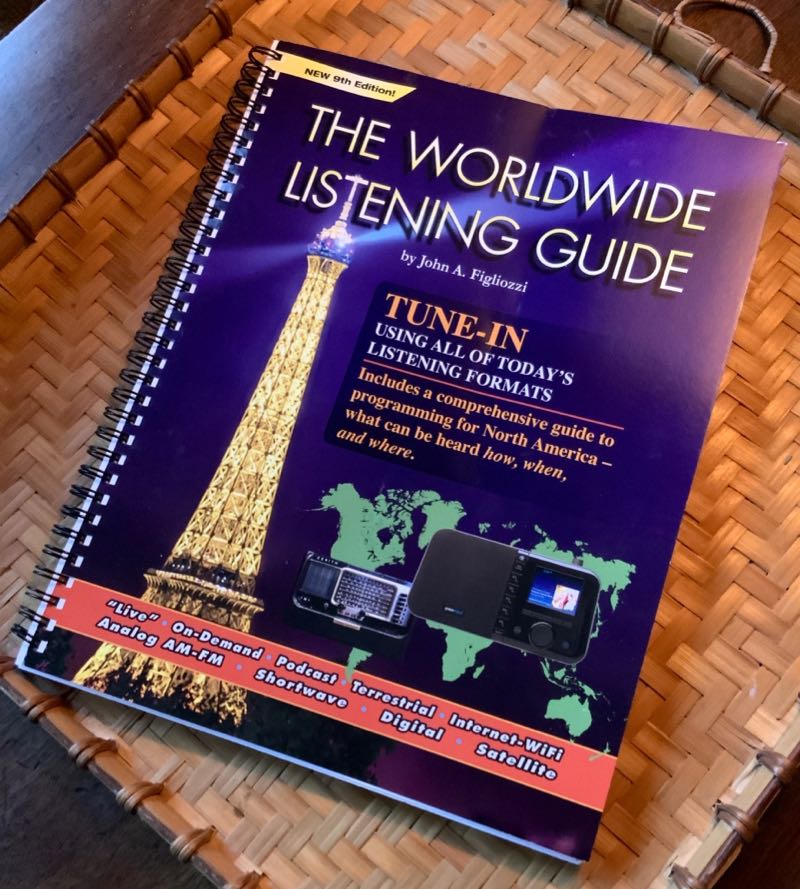
I recently received a review copy of the 9th Edition of the Worldwide Listening Guide by John Figliozzi:

While WRTH is my favorite guide for radio frequencies and schedules, Figliozzi’s Worldwide Listening Guide (WWLG) is my go-to for programming and content, not only helpful on the shortwaves, but especially handy when tracking online content.

The WWLG is a unique guide–there’s nothing quite like it on the market. I look forward to each edition because it truly takes a deep dive into the world of broadcasting, technology, and programming.

“Deep dive” almost feels like an understatement. I received the latest edition only a few days before Christmas travels, so packed it in my luggage and read it over the course of a week. Being the editor of the SWLing Post, I’m in the middle of a constant stream of news items and tips about the world of broadcasting and communications technology. When I read the WWLG, however, I discover so much information about the broadcasting industry as a whole, the health of various platforms, particular media companies, and even the history and technology behind content delivery systems.

Case in point: I always assumed SiriusXM satellite radio was delivered by a network of geostationary satellites. Turns out, they use a hybrid system of both “roving” satellites that orbit in a figure 8 pattern and geostationary satellites in the Clarke Belt. The WWLG is chock-full of details like this.

Each media delivery platform–AM, Shortwave, FM, Satellite Radio, Internet (WiFi Radio), and Podcasting–has a dedicated section in the book where Figliozzi explores each in detail. He also includes a “State of the Radio Platforms” chapter where he examines the health and potential direction of each.

SWLing Post contributor, Mark Fahey, recently summed up his love of the WWLG in the following comment: 

[I]t’s the best guide to digital streaming media I have ever found. An indispensable guide to the world’s public broadcasters and others broadcasters who appeal to us raised on decades of shortwave.

As shortwave transmitters close, don’t make the mistake of thinking your favourite broadcasters disappear – they in most cases continue and the Worldwide Listening Guide will guide you to them as live and on-demand programs.

I use the guide as a directory for online listening, but of course RF transmission broadcasts are comprehensively covered as well.

I agree 100%.

Like Mark and many SWLs, I’m something of a “Content DXer:” I love chasing obscure programming––news, documentaries, music, and variety shows, anything the broadcasting world has to offer.  For this, I often turn to Wi-Fi radio.  Wi-Fi radio offers the discerning listener the ability to track down fascinating regional content from every corner of the globe––content never actually intended for an international audience.

Digging into local content via a WiFi radio isn’t nearly as challenging or fun (for me, at least) as scanning the shortwave bands in search of elusive weak signal DX or a pop-up pirate radio station. Though my WiFi radio offers an easy and reliable way to “tune” to online content–both station streams and podcasts–the actual content discovery part is quite difficult.

Truth is, there’s so much content out there–tens of thousands of stations and shows–it’s hard to know where to start!

This is where the WWLG comes in: Figliozzi exhaustively curates thousands of programs, indexing their airing times, stations, days of broadcast, program types, frequencies, and web addresses. Additionally, he sorts the programs by genre:  arts, culture, history, music, sports, and more. And Figliozzi also includes a well-thought-out directory of at least forty genres. In my shack and office, the WWLG has been an invaluable tool for content discovery.

There’s a surprising amount of information packed into this slim, spiral-bound edition of the Worldwide Listening Guide…enough to keep even a seasoned content DXer happy for years.

The 9th edition of Worldwide Listening Guide can be purchased here: