Author Archives: Thomas

Reminder: Christmas on-air event to honor Radio Luxembourg

Many thanks to SWLing Post contributor, Alexander (DL4NO), who writes:

For a very long time Radio Luxembourg was *the* pop music radio in Europe, especially in Germany and GB. At a time when Germany only had its public radio system, the Radio Luxembourg was the one and only. But this is history.

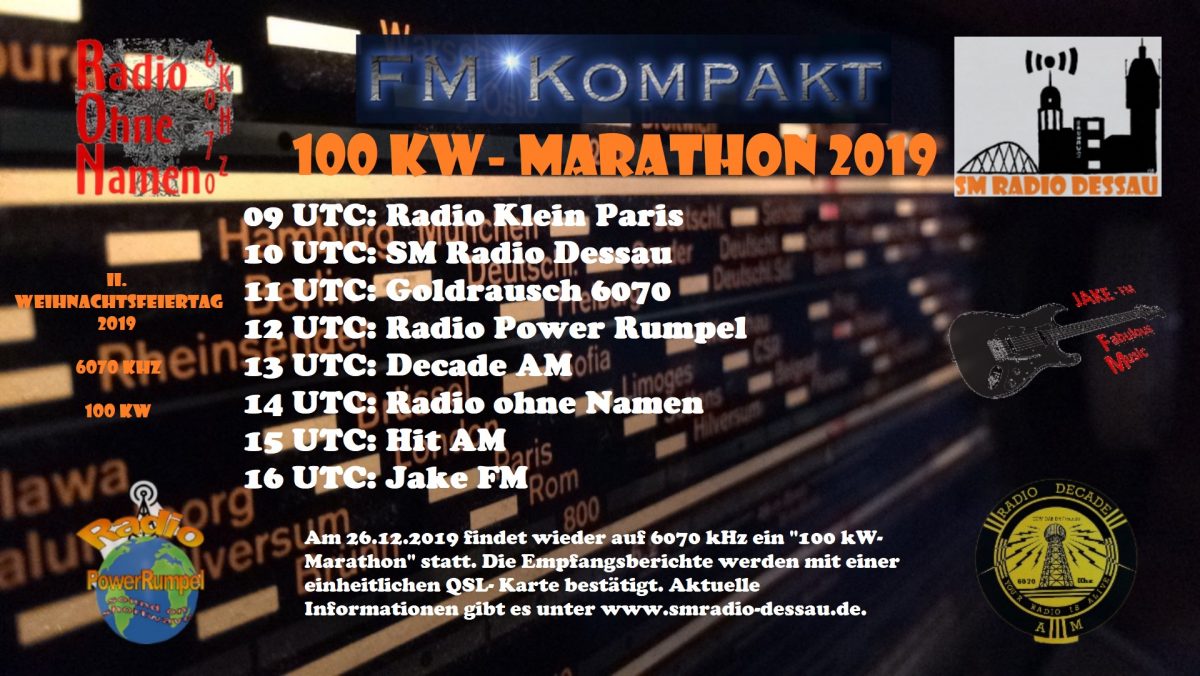
At Christmas, several German shortwave broadcasters, organized by Radio DARC, will transmit on 6070 kHz in memoriam of Radio Luxembourg from Vienna. See the attached flyer [above].

Excellent! Thank you for the heads-up, Alexander!

Christmas Carols from Antarctica on Shortwave

McMurdo Station, Antarctica. (Source: USAP.gov)

(Source: ARRL News)

A program of Christmas carols will be broadcast from Antarctica on Christmas Eve. The transmissions on 7995 kHz USB will begin on December 23 at 2300 UTC, coordinated by McMurdo Communications Operations (MacOps) — known as “The Voice of Antarctica.”

Each year, the station’s residents celebrate the holiday by singing Christmas Carols to those at remote Antarctic field camps. Participation will be from stations scattered throughout the Antarctic continent.

“The radios and antenna systems are optimized for on-continent communication, so we will be lucky to hear them in other parts of the world, but it has happened in the past,” said Nathaniel Frissell, W2NAF, who is handling QSL requests and who has participated as part of the chorus in past years while studying in Antarctica. Frissell shared some links of previous concerts, one recorded at McMurdo Station and one from the University of Twente WebSDR in the Netherlands.

Click here to read the full article at the ARRL.

UPDATE: Check out this episode of Short Wave–an NPR podcast–wher they interview the scientists involved in this tradition:

Video: “Tribute to a Century of Broadcasting”

Many thanks to SWLing Post contributor, Bill (WD9EQD), who writes:

You probably have already seen this, but from The ARRL Letter, November 21, 2019:

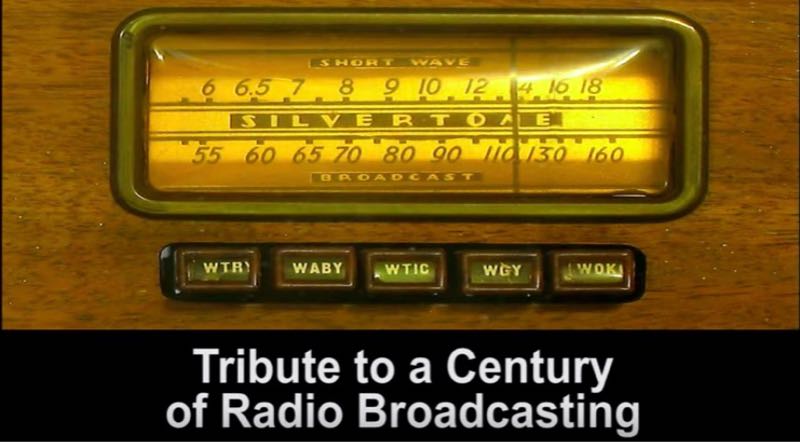
Art Donahue, W1AWX, of Franklin, Massachusetts, has posted his “Tribute to a Century of Broadcasting” video in recognition of the centennial of formal radio broadcasts. The video features a complete scan of the AM broadcast band (530 – 1700 kHz), with station IDs for all 118 AM radio channels.

Following is ARRL Link:

Radio Amateur’s “Tribute to a Century of Broadcasting” Video Debuts on YouTube

Following is YouTube link to the video:

It was a lot of fun to watch the video, hear the on-air id checks, and compare what he heard to the list of stations that I have heard.

Thanks for sharing this, Bill–I missed reading about this in the newsletter.  This goes to show you that the AM dial is chock-full of stations here in North America. Those who complain that it’s “dead” simply aren’t listening.

Carlos seeks help identifying signals

Many thanks to SWLing Post contributor, Carlos Latuff, who writes:

Attached are two different recordings.
Both made in South Brazil.

– Florianópolis, 26/11/2019, 19h13 (Brasilia time) 12015 kHz

– Porto Alegre, 12/12/2019, 20h11 (Brasilia time) 7455 kHz

Searching on the Web I found these two frequencies related to US Navy NATO RTTY station STANAG 4481:

Are you able to confirm this?

Thanks for your inquiry, Carlos! Unfortunately, I cannot confirm this. If your radio had been in SSB mode, it would have made the RTTY pop out and we could have perhaps confirmed at least the RTTY mode with FLDIGI. I’m hoping a savvy SWLing Post reader can help you ID these transmissions. Please comment!

An Enigma machine just fetched over $106K at auction

(Source: Bloomberg.com)

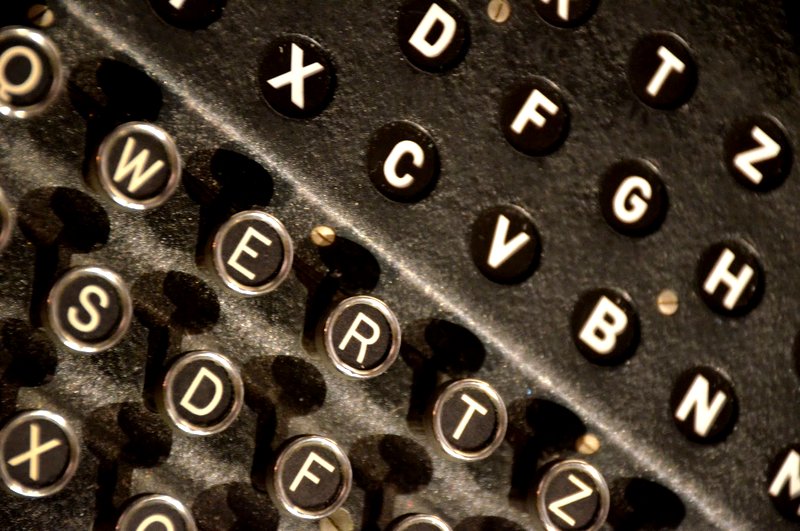
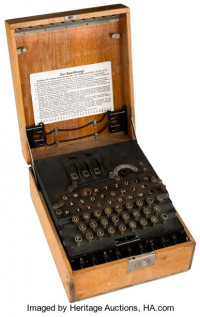
A rare “Enigma” machine, used by Nazi Germany to create military communications code thought to be unbreakable, sold at auction for more than $106,000.

The 28.5-pound cipher machine went to an internet buyer on Saturday, according to Heritage Auctions. It comes with operating instructions, a case with an engraved Third Reich emblem — and a rich lore including how British scientist Alan Turing helped crack the code.

One of the unit’s 26 light bulbs is broken, according to the description.

It’s not the first time a Nazi code creator has traded hands for such a sum. In May, an Irish private collector swiped up a different encryption machine, known as the “Hitler mill” because of its hand crank, for 98,000 euros ($109,000) from a Munich auctioneer, according to the Telegraph.[…]

Click here to continue reading the full article at Bloomberg.com.

Click here to view the auction page.

SWLing Post contributor and friend, Dan Robinson, and I once visited the National Cryptological Museum at Fort Meade and got to try our hand at using an Enigma machine. It’s an absolutely brilliant bit of mechanical engineering, of course. I highly recommend this museum to anyone interested in radio, computers or cryptography.

If you’d like to learn about another fascinating bit of over-the-air WWII technology–the SIGSALY network–I strongly encourage you to check out this post from our archives.

Ninth Edition of The Worldwide Listening Guide

Many thanks to SWLing Post contributor, Dan (KB0RTQ), who writes:

Hi Thomas!
Apologies if you have covered this and I missed it – the 9th edition of John Figliozzi’s Worldwide Listening guide is available on Amazon (apparently, it has been since 11/15/19).

Click here to view on Amazon (affiliate link supports the SWLing Post).

Just thought I’d pass it along.

Thank you very much for passing this along, Dan! I see that Universal Radio also has the new guide in their inventory (click here to check it out).

The publisher is sending me a review copy of the ninth edition, so I’ll be posting my overview soon!

“My father paid four times his weekly wage for the greatest gift of my life”

Photo by Markus Spiske

(Source: The Guardian)

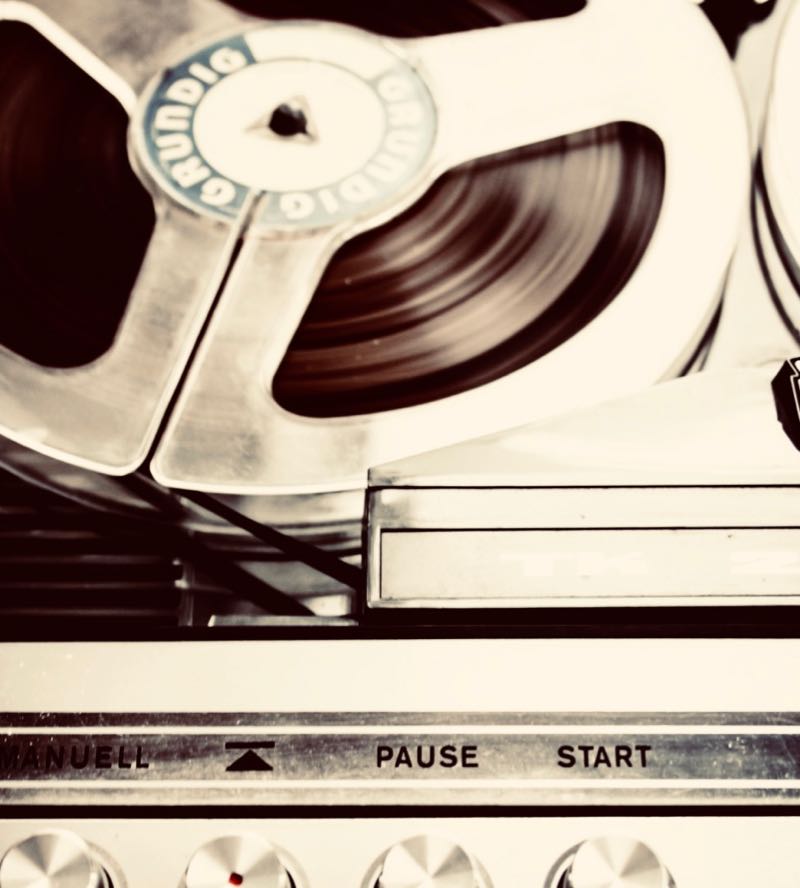
He bought me and my brother – both of us blind – a tape recorder that dominated Christmas Day and the remainder of the holidays, and led to a long and happy career

It’s eight o’clock on Christmas morning, and Uncle Tom wants to hear the news. My 11-year-old self is wondering why on earth grownups want to hear the news on Christmas Day when there are vital things to be done, such as handing out presents. And then, while I am only half-listening, something weird happens: the Greenwich time pips start. Surely we have already heard those. And then the boring man with the plummy voice begins going on about a Christmas message to the world from the Vatican. Surely that’s been on already, too.

It’s my older brother, Colin, who gets it! “Pete, Pete, it’s a tape recorder, you idiot! We’ve got our tape recorder.”

The penny drops: Uncle Tom and my dad have recorded the headlines, and are playing them back.

I think it’s often quite rare to experience real excitement over a present: in my experience, children are as good as adults at knowing what is expected of them and simulating joyful surprise, even when they don’t feel it. But for me this was one of those rare moments when my insides gave an involuntary lurch and the world did a little somersault.

Colin and I had both been blind from birth, and at this point were spending most of our time at a special boarding school, Worcester College for the Blind (now called New College Worcester). In the late 1950s, Britain had just reached the point when exciting consumer goods were coming within reach of the not-really-rich, and at Worcester reel-to-reel tape recorders were definitely the consumer gizmos of choice. For blind kids, they would trump cameras every time, especially at this moment when rock’n’roll was more of a religion than a pastime. For us, you could spot the better-off kids not by the clothes they wore, or the holidays they boasted about, but by the tape recorders they owned. So in our class, Iain Hopkin was marked out as something of a plutocrat by his Brenell recorder. Fortunately for us, Hoppy was a generous soul, and gave us all access to his recordings of Tony Hancock and Peter Sellers.

Still, a recorder of your own was the height of aspiration, and Colin – better informed and more realistic about family finances than me – had no real expectations.

I realised, much later, that at this time my dad, a very good joiner and carpenter, was probably earning about £8 a week. The tape recorder my parents had bought us, although nowhere near at the top of the range, would have cost more than four times his weekly wage. My parents could only afford it by borrowing the money from Uncle Tom, who had a thriving grocery business. Family or not, I know my mum and dad would have thought long and hard before incurring the debt.

The new toy, mains-powered and the size of a small suitcase, dominated the rest of Christmas Day and the remainder of the holidays. Once we had mastered the controls (Colin was the technical one, but was surprisingly patient in sharing his discoveries with me), we recorded everything in sight: each other, our parents, the milkman, the dog … And we very quickly learned the fun to be had at catching people unawares.[…]

Click here to continue reading at The Guardian.