Author Archives: Thomas

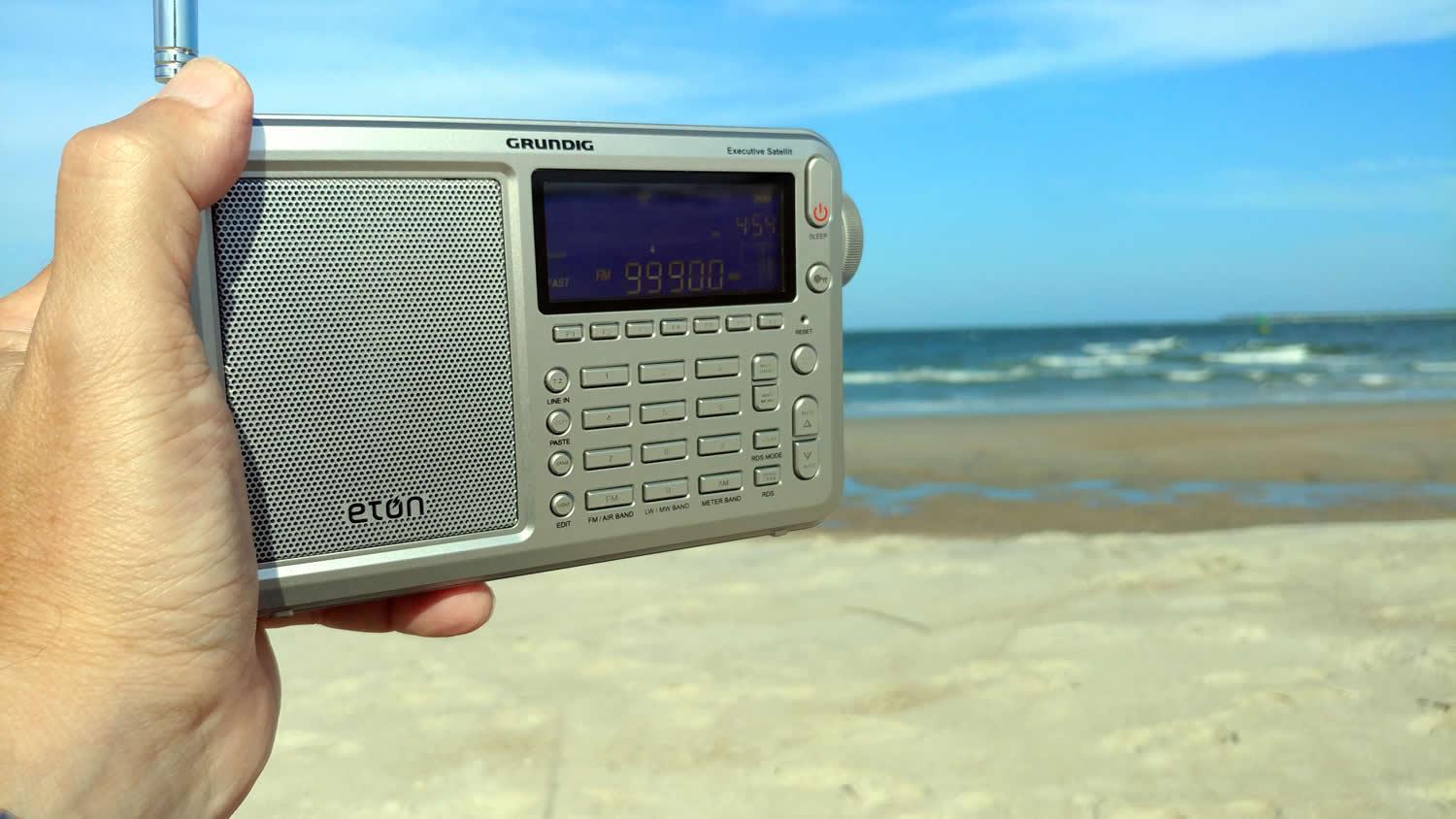
Jack had a technical question…Eton gave him a detailed reply

Many thanks to SWLing Post contributor, Jack Kratoville, who writes:

I was once big into Grundig; I owned the YB-400PE, 550, Traveller II, Mini, finally settling on the G5 as one of my favorite radios. I looked at the G3 and probably got a bad one – sold it on eBay. When the G2 “Reporter” went on sale, $35 closeout at RS, I grabbed it. The worst radio I ever owned, so bad I returned it. A radio that had sold for $150, down to $35, and I still wanted my money back. I moved on to Tecsun and C Crane.

Recently, a friend in eastern NC had the Executive Satellit (silver) and had no use for it. I took it to the backyard, then to Atlantic Beach and was very impressed. This receiver was hitting all the right user buttons for me. I was reminded of what the G3 should have been, a decent upgrade to the G5. Aside from solid performance on all bands, the Executive Satellit provides better dial info (no big fan of orange display that goes poof when off), analog volume, decent speaker (second only to the Digitech AR1780) Sync & SSB, plus very quick scanning. And… a Line In/Out! I’m thinking here’s most likely the last of the Grundig (and Satellit) lineage and they finally hit a home run!

Well here’s where I’m reminded of how weird radios from Eton can be. I like bringing along my mp3 player for when I’m bored of band scanning. I have a JBL Flip 4, but now here was a single unit that could cover all the bases for me on a quick trip. I activated the Line In, plugged in my Sansa Sport and knew right away one of the stereo channels was missing. I looked up the manual and it said the Line In was 3.5mm stereo. I called Eton. Unfortunately, the service department (I remember Walter, who knew more about those radios than most) no longer exists. The woman I spoke to tried to explain there was only the mono speaker and after as simple an explanation I could manage, she said she would get back to me.

In a few days, she did and said, after consulting a colleague, I was right. The jack is stereo, but only produces the right channel. I wrote back saying “I felt this was a serious design flaw and why in the world would anyone design a radio like this?” I figured that was the end of our email exchange, but then I received the following:

———-

Jack,

My colleague tells me that the reason the implementation was done this way is that the internal speaker amplifier, which is also shared as the output driver for the headphones is set up as a stereo-in / stereo out configuration. This works well for the line input to headphone output scenario as both L & R channels are separated within their respective connectors. Since this internal speaker amplifier’s outputs are shared between the mono internal speaker and the stereo line output jack the summation of the signal for that mono speaker would result in the summation for the line output jack as well. While this would be OK, a L + R mix for the internal speaker it would cause the user to also have a L + R mix for the line output for both line input and radio applications. In order to maintain the stereo line output for the radio signals we cannot sum the two channels together at the output of the amplifier. The only way to fix this would be to add a summing op-amp on the line input side or summing speaker amplifier on the output side, neither of which were chosen by the designer due to board space, power consumption and cost consequences. A more simple “dirty” way to sum the input would be to buy a short 1/8″ female to 1/8″ male cable, cut that cable open in the center and then short the L & R signals together and place it in-line between the source device and the analog line input on the Satellit. This is not ideal but would work to crudely mix both L & R input signals together.

We apologize that we do not have a more elegant solution for this product.

Regards,

Eton

————–

Wow! I thanked her graciously for a full and detailed answer.

So now I attempt quick fixes like stereo to mono to stereo adapters and it overloads the input. I can turn down the source, but I lose a lot of volume. (And trying to compensate with the radio’s volume is not a viable solution.) I’m also not one to open up this unit with soldering gun at the ready.

Therefore, to those with far greater knowledge, understanding and electronically more inclined – is there a way to create a cord that would give me L+R at proper line-in volume/level? (Rerecording over 5,000 songs to mono would be a real pain.)

Thanks in- advance for any suggestions – and kudos to Eton for providing above and beyond standard customer service.

Thank you for sharing your Eton customer support experience, Jack. That was indeed a thorough and sincere reply!  I’m hoping someone in the community here can help you with ideas for a patch cable/adapter.

If you can help Jack, please comment!
Carlos questions possible Radio Denge Welat jamming

Many thanks to SWLing Post contributor, Carlos Latuff, who writes:

Greetings from Porto Alegre, Brazil.

Yesterday I listened something unusual.

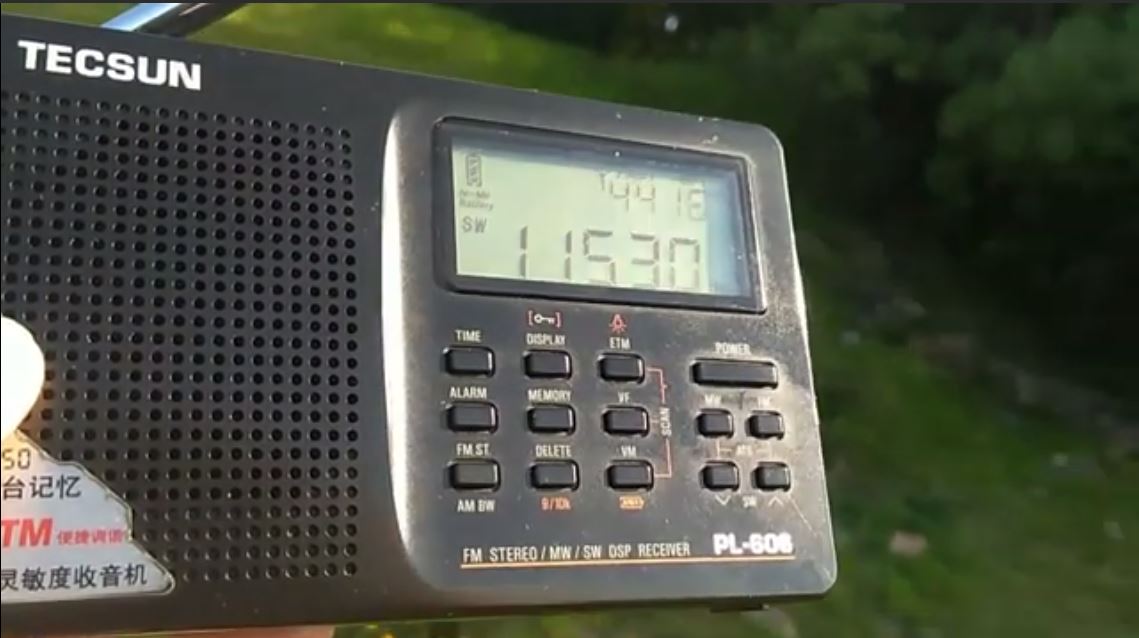
On the shortwave band of 11.520 kHz, 11.525 kHz and then 11.530 kHz, this last the frequency of Kurdish Radio Denge Welat, it was broadcasting military songs from the times of the Ottoman Empire something [typically associated with] the Turkish far-right. It happened yesterday [September 26, 2019] at 19h09 UTC. I made a video clip of this transmission:

Click here to view on YouTube.

So, if Turkish patriotic/military songs were broadcast on the same frequency of a Kurdish radio, could we assume that this is a kind of jamming from Turkey, like China do with U.S. govt “Free Asia” radio, broadcasting Chinese music on the same frequency?

Are you familiar with this kind of jamming coming from Turkey?

Please comment if you can shed some light on Carlos’ request.

Jim’s Vintage DX Audio Clips

Many thanks to SWLing Post contributor, Jim (W4OXB), who writes:

I have been involved in SWLing and ham radio since the middle 1960s. Mostly listening before I got my ham ticket in 1969. My current call is W4OXB.

I used to record dx catches on mediumwave and shortwave that I put in my logbook. About 20 years ago, I transferred my recordings from reel-to-reel to digital format.

My goal is to share the old recordings with other radio enthusiasts and the easiest way I’ve found to do that is YouTube. So, I have been working on this for a few weeks.

Click here to check out W4OXB’s Vintage DX Audio Clips

Excellent, Jim! You’ve got some great recordings in your list already. Thanks for sharing and, Post readers, note that Jim also plans to share some of his recordings with the Shortwave Radio Audio Archive. We really appreciate the support, Jim!

eBay: Julian spots an excellent condition Sony ICF-7600A complete with box

Many thanks to SWLing Post contributor, Julian Stargardt, who writes:

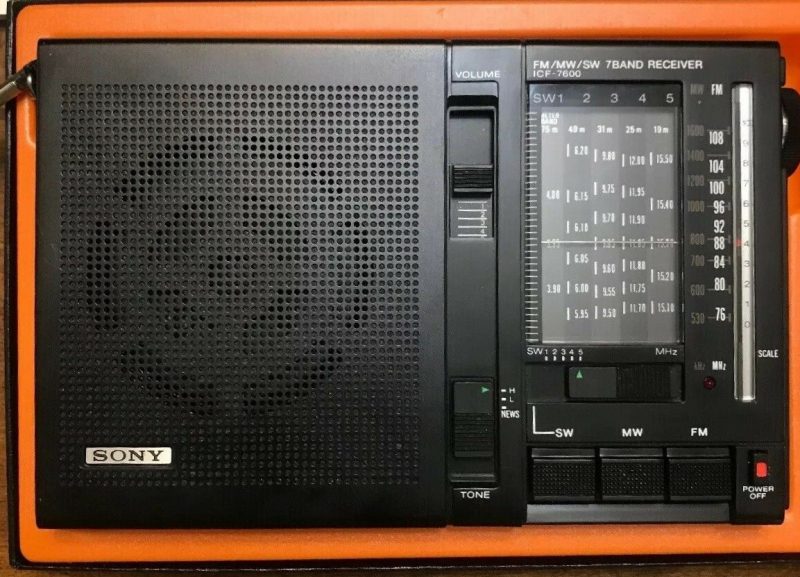
I was just browsing through eBay when I stumbled on this listing that may interest some SWLing readers: An excellent condition SONY ICF-7600A.

The listing is for a Sony ICF 7600 [with box and accessories] – the original ICF 7600, a very different beast from the still in production ICF 7600GR.

Must be over 40 years old and looks like it’s just left the shop.

Click here to view on eBay (partner link supports the SWLing Post).

Thanks for the tip, Julian. For someone seeking a complete ICF-7600A in great shape, this would be a good choice. The price is a bit steep compared to other 7600A’s on the market, but few come with a box, earpiece, and packing. I notice that the seller is accepting offers (that’s the route I’d go!). The ICF-7600A is a cool analog portable and one I’ve thought about acquiring at some point.

Video: Comparing SDR power consumption

Many thanks to SWLing Post contributor, Ivan Cholakov, who writes:

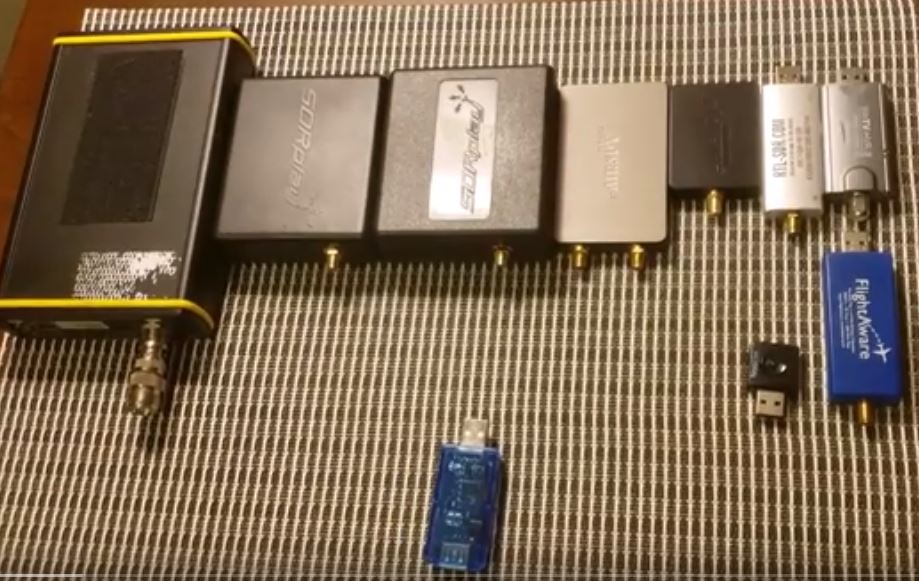
If you are interested, here’s a video where the power consumption of nine different SDRs was compared:

Click here to view on YouTube.

Fascinating!  I’ve always been curious about SDR power consumption because many of my SDRs are rarely turned off. Thank you for sharing, Ivan!

Gospell product lineup for IBC 2019 includes the GR-22 portable DRM radio

Many thanks to SWLing Post contributor, Ed, who writes:

SWLing Post readers might be interested in learning about Gospell’s newly-announced DRM receivers and active antenna products. The GR-22 “pocket-sized” “full-wave” receiver that’s supposed to be available for purchase by June 2020 seems especially interesting.

(Source: Gospell Press Release)

Gospell to announce the DRM monitoring system and imminent release of portable DRM receiver, and more

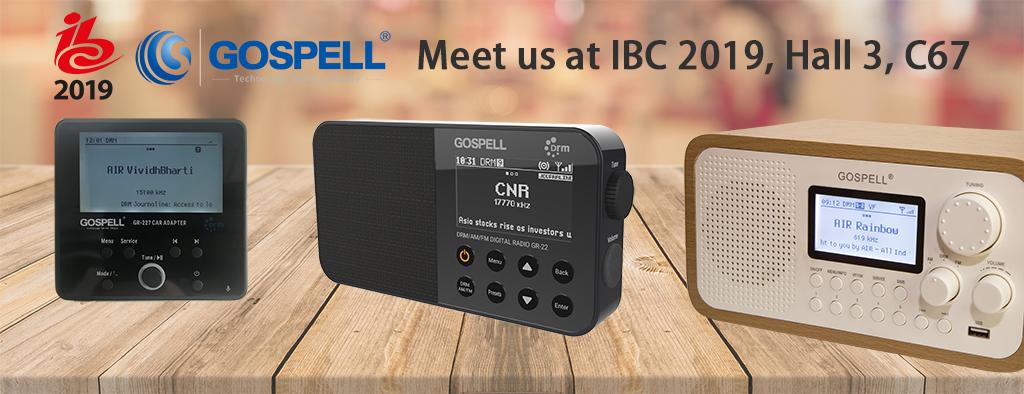
Chengdu, China – Gospell, a leading supplier of pay TV system and equipment, satellite TV receiving products and microwave products, announces its product lineup for IBC 2019. The company will debut several new products featuring DRM (Digital Radio Mondiale) for both consumer and industry market, including:

    • GR-22 – Portable DRM/AM/FM Receiver
    • GR-227 – DRM Car Adapter
    • GR-301 – DRM/AM/FM Monitoring Receiver
    • GR-310 – Audio Broadcast Monitoring Platform
    • GR-AT3 – High Performance Active HF Antenna

GR-22 is a sleek and classy portable radio from Gospell, the contemporary stylistics of exterior design fits in your personal style, crystal clear DRM digital radio and AM/FM brings practicality and comfort to your daily enjoyment. Despite its pocket-size, it’s a nifty full wave band receiver packed up in a tiny body that enables you to explore a wide variety of radio stations. It is also future-proofed for the next generation DRM-E technology. You have access to all the presets, station names, program details and even Journaline news on the easy to ready large LCD in a simple and intuitive way. Sleep timer set your radio to automatically switch off or wake up at your convenience. Listen to your favorite radio programs anywhere you like with 4 x AA batteries or connect it to mains. GR-22 is a multi-functional radio that is flexible to your listen habits. GR-22 will be available for purchase on Q2 2020.

GR-227 is a car digital radio adapter that utilizes most advanced interference and noise cancellation technology to receive digital radio in car while achieving the best audio quality and serve it to the car audio system over aux cable or by transmitting over an unused FM frequency. The receiver is fully compatible with DRM standard that is being deployed over the world, with its latest audio codec xHE-AAC. Based on software defined radio technology, GR-227 is ready for the emerging DRM-E standard that extends the DRM broadcast to FM band.

GR-301 is a high performance monitoring receiver that supports DRM, AM and FM. GR-301 supports the collection of key parameters of audio broadcasting, including SNR, MER, CRC, PSD, RF level, audio availability and service information. The collection and uploading of parameters meets DRM RSCI standards. The GR-301 can work independently or be deployed with other receivers to become a node in the service evaluation network. The GR-301 supports the xHE-AAC audio codec and is capable of handling the latest DRM-E standard through software upgrades.

GR-310 is a management platform designed for audio broadcast monitoring and receiver control purposes, it manages the geographically distributed GR-301 receivers. The platform can formulate receiving schedules, configure the receivers to perform receiving tasks, perform real-time browsing of the reception status, store historical data, and visualize the statistic data in a intuitive way. In addition to monitoring and analyzing data, the GR-310 platform also supports real-time audio monitoring and configuration of alarm conditions, alarms will be triggered when rules are met.

GR-AT3 is a high-performance active monopole antenna with reception frequency ranges from 0.3 to 50MHz. It is designed to work in harsh environments with respect to strong man-made noise and stern natural conditions. It is compact and easy to install, supplied accessories enable rapid installation. The antenna is comprised of a wide band amplifier in an IP67 waterproof aluminum body together with an active element made of a stainless-steel. The solid construction ensures durability and maintenance-free operation.

“We’re constantly working to ensure we’re bring the latest technology in our product”, says Haochun Liu, assistant to general manager, “These products underscore the Gospell’s commitment to providing easy access to high quality information at affordable prices. Both consumer and industry can benefit from it.”

Gospell will be exhibiting at IBC 2019 in the Amsterdam International Broadcasting Convention (IBC) Hall 3 C67, September 13-17. To schedule a meeting at IBC 2019 or access a sample of the featured IBC showcase, email [email protected]

About Gospell

Established in 2001, Gospell Digital Technology Co Ltd (GOSPELL). is a hi-tech enterprise with R&D, manufacturing, business consultancy and planning, trade, delivery, project implementation and after sales service, acting as a complete DTV and triple-play solution provider for Digital TV/OTT related projects. Headquartered in GOSPELL INDUSTRIAL PARK at Chenzhou, Hunan Province for CPE related production manufacturing, GOSPELL also has its office in Shenzhen for business/marketing management and administration, in Chengdu for R&D and headend/transmitter system production/debugging and Customer Service Center, and in 12 cities in China as well as international offices in India, Africa and Mexico.

Thank you for sharing this, Ed. Looking through the press release, I don’t see any DRM radios where they note shortwave reception, however, the GR-22 is being called a “full wave band receiver.” Perhaps “full wave” is their way of indicating shortwave reception?

It looks like the GR-22, and all of the products listed above, are squarely targeting the new DRM market in India.

The radio man of Kumartuli

Set against this unlikely backdrop, Amit Ranjan Karmakar’s little shop is easy to miss. In his mid-60s, the ‘radio man’ of Kumartuli sits surrounded by radio sets of all sizes and vintages. (Express photo: Shashi Ghosh)

Many thanks to SWLing Post contributor, Kim Elliott, who shares a link to this short but fantastic photo pdoc about Kumartuli’s radio man, Amit Ranjan Karmakar.

Click here to view at The Indian Express.