Author Archives: Thomas

Chairman of DRM Consortium looks at the current state of shortwave

(Source: Radio World via Maichael Black)

Note that the excerpt below is only a portion of the full article. Read the full piece at Radio World.

Does Shortwave Have a Future?

by RUXANDRA OBREJA

When is the last time you heard a shortwave radio transmission? And why should you put up with possible crackly audio and some interference when we have now internet, satellites, FM and all forms of digital radio?

[…]Shortwave is just short of a miracle, actually. When it is beamed at an angle, it hits the ionosphere. A mirror around the Earth and then it falls like a ball at great distances, beyond the horizon. Thus these transmissions reach listeners over large areas, continents and beyond. Two or three high-power transmitters can potentially cover the entire world.

Shortwave is used not just by international radio stations or radio amateurs but is also essential for aviation, marine, diplomatic and emergency purposes. Shortwave signals are not restricted or controlled by the receiving countries and, as frequencies change in winter and summer, they need to be coordinated internationally.

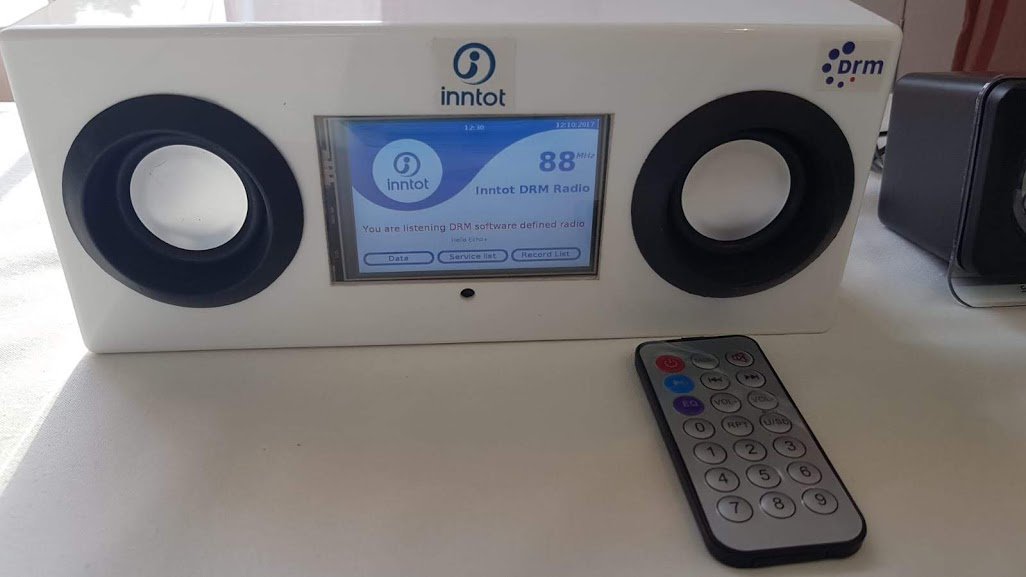
[…]Digital Radio Mondiale was originally invented to offer medium (AM) and large coverage (HF) and the advantages of the good audio quality and extra multimedia services that can take shortwave into the 21st century. Maybe DRM was ahead of its time. The phasing in of digital broadcasts internationally was not in tandem with the production and sale of receivers, which remains a regional and national business. Since its birth DRM has proven that it is a suitable option for shortwave offering an good digital quality of audio and even short live video at great distance without fading and crackly sound.

Now, at last, there are DRM receivers capable of receiving shortwave, there are broadcasts and interested broadcasters. Quietly and surely shortwave is being re-examined and appreciated for the quality of broadcasts and its potential as a “crisis radio” too. It can become crucial in emergencies when local and regional radio stations, satellite and internet may be off the air due to damage. Broadband is getting cheaper but is limited, 5G will come but not just yet, digital shortwave is here.[…]

Click here to read the full article at Radio World.

Guest Post: Report from the 2019 Henry’s Island DXpediton

Many thanks to SWLing Post contributor, Sandipan Basu Mallick (VU3JXD), for sharing the following guest post:


Henry’s Island DXpediton 2019

World Radio day is observed by the UNESCO on 13th February every year. This year is the 8th year world day being celebrated with theme “celebrate radio and how it shapes our lives”.  In recent times there has been a sea change in radio listening and radio broadcasting. More and more radio broadcasters are shifting to FM which radiate over a small distances and require low power transmitters. Medium wave broadcasting and shortwave broadcasting which is used to reach audience over larger distances is gradually becoming less important with the growth of internet connectivity. Broadcasters are increasingly streaming their content over the internet to reach their audience via the PC, Laptop and now via the mobile phone.

DXing is the hobby of listening to the faraway and distant signals and the hobbyist are called DXers. DXers would switch on their radio set, connect it to the piece of wire which is the antenna and turn the dial to search and listen to the far away and sometimes feeble radio signals. For these radio enthusiasts challenge is becoming greater. The big names of yesteryear such as BBC, Voice of America, Radio Moscow and Deutsche Welle, the German radio are all gradually shifting their content from shortwave broadcasting to the internet. Now with data connectivity to the mobile phone available to everyone, the shortwave broadcasters find a more reliable and popular route to reach their audience through the internet rather than troublesome “bounce” through the ionosphere. Then with the rise of household electrical devices which radiate “radio noise” such as the LED bulb or the TV, the radio signals from distant lands have to rise over this local noise to reach the ear of the audience.

That is why a band of radio enthusiasts from all over India have travelled to the listening camp set up at a resort in Henry Island at Bakkhali in the state of West Bengal, India. This year the listening camp ran from 10th – 13th Feb, which celebrated World Radio Day and the hobby of radio. The dedicated radio enthusiasts who have been drawn into this radio listening camp, are drawn from different parts of country varying from New Delhi to Tripura. Kolkata the home of the Indian DX club International (www.idxci.in), has been promoting the hobby since 1980 has naturally most participants in this camp. They were very upbeat while worldwide radio enthusiasts have to cope up with bad news for the hobby. In the last few years, stations after stations have closed down and so have iconic radio clubs like Danish Short Wave Club and periodicals like Monitoring Times. Broadcasting mega corporations like VOA and DW have reduced their presence in the airwaves to a faint whisper compared to their former roar.

Sandipan Basu Mallick (VU3JXD) with Dr Supratik Sanatani (VU2IFB)

Sandipan Baus Mallick (VU3JXD), who is the principal in organizing this year’s DXpedition from IDXCI says that the appeal of radio is still there among the various age groups. These camps are set up in remote locations, which enable the radio enthusiast to come together with likeminded people to exchange ideas and experiment with their equipments and brush up their skills with conventional radio. People from various races of life participated in this years camp.

Among the participants Sudipto Ghose (VU2UT) who just retired from a job with the Ministry of Finance is drawn by the technical part of the hobby and toys with new radio receivers and accessories such as antennas and preamplifiers.

C K Raman (VU3DJQ) from Delhi whose job incidentally involved professionally monitoring broadcast stations, has narrowed his interest down to the medium wave stations and the tropical band stations such as stations from Brazil, Colombia and Indonesia and has come down looking for such exotic signals.

Suvendu Das (SWL), who professionally managed ship communications has suddenly become interested in the hobby of broadcast band listening.

Pradip Kundu (SWL) of Tripura who after retiring as a Principal has more time to pursue his childhood passion and is an avid QSL collector.

Babul Gupta (VU3ZBG) an interior designer still spends time to seek those rare signals at the wee hours and has to his credit listening to some of the most rare to hear stations from India such as Cross Radio, an evangelist radio station broadcasting from the Carribean.

Alokesh Gupta (VU3BSE) has flown in from Delhi for the radio camp is an avid enthusiast who also served to coordinate the Listeners association of Radio Taiwan and runs the website radioactivity.org which disseminates information related to radio broadcasting.

Kallol Nath (SWL) is among the newest entrants in the DXer squad. Armed with XH Data D-808 receiver, he logged a number of pirate stations on the MW band.

For Sandipan, a marketing professional worked to set up this camp and bring together radio enthusiast from various parts of India. He is also drawn by the technical aspects of the hobby and can flaunt many a radio gear just like his friend Debanjan Chakraborty (VU3DCH) who is a radio collector and has radio sets.

Accompanying them is Eye Surgeon Dr Supratik Sanatani (VU2IFB), who has key interest in home brewing various radio equipment, and a veteran in DXpedition also came together explore the airwaves from the Bay of Bengal.

Henry’s Island marked with a red location pin.

Henry’s Island is at the tip of the Bay of Bengal which for the radio listener gives a good opportunity to hear distant signals from Australia, New Zealand, Oceania, Indonesian archipelago and Papua New Guiniea.

DXpeditioners strung long wire antennas aimed in their favorite direction and then connect their modern digital radio receivers to try to catch the feeble signals from exotic radio stations. During their whole night listening sessions, some would exclaim at 2.30 am that the Phillipines medium wave station was opening with a greeting its local audience in the local language Tagalog–or someone might simply record the Maldivian medium wave station from Male ending its transmission with their national anthem. The fisheries ground also has the advantage of low noise from electrical devices. To run away from local noise, the hobbyist might even have to pitch a tent in the middle of nowhere and use their advanced radio receivers with battery power.

What is the pinnacle of success? Just like the bird watcher catching a glimpse of the rare migratory bird, for the DXers it is the thrill of listening to exotic signals such as from the American Forces Military Base at Diego Garcia to the barely audible Papua New Guinean station from Port Moresby. Then there are others like that Peruvian station Radio Tarma with excited football commentary which comes through to India only during a short window in the very early morning before day break and only on few days in a year. Even though the 11 year old solar sunspot cycle which influences radio transmission, is at its favorable “ low”, we can still confirm that DXing as a hobby is still alive and kicking!!!

DXers in Action


Thank you so much for sharing this report, Sandipan! It appears that you not only enjoyed some excellent DX on Henry’s Island, but you also strengthened friendships that will last a lifetime. Well done!


Do you enjoy the SWLing Post?

Please consider supporting us via Patreon or our Coffee Fund!

Your support makes articles like this one possible. Thank you!

WRTH 2019 B18 Updates & Questionnaire

(Source: WRTH)

Dear WRTH reader,

We have uploaded a pdf of updates to the B18 schedules in the International section of WRTH 2019. Visit Updates and click the “International Updates” link to download the file from the WRTH store.

If you haven’t yet got your copy of WRTH 2019 you can buy one NOW using this link.

Readers in North America can also order copies from Universal Radio or Amazon.com.

Please take a few minutes to give us your thoughts about WRTH on the 2019 Questionnaire.

I hope you find the update useful.

Best wishes,

Nicholas Hardyman

Publisher

Purchase your copy of WRTH 2019 directly from WRTH’s publishers, or from a distributor like Universal Radio (US), Amazon.com (US), Radio HF (Canada), or check BookDepository.com (International).

eBay find: New In Box Sony ICF-2010, AN-1, AN-3 and AN-LP1

Many thanks to SWLing Post contributor, Troy Riedel, who shares a link to this amazing eBay find: A Sony ICF-2010, AN-1, AN-3 and AN-LP1 all new in box.

Here’s the description:

SONY ICF-2010, AN-1, AN-3, AN-LP1 Short Wave Radio Monitoring Package
Complete package of SONY Short Wave Radio Items.
Originally purchased by me and in my possession the entire time
New In Box, never opened or removed from boxes
The radio box is still sealed with the original tape!!!
Condition is New
Shipped with USPS Priority Mail.

Click here to view on eBay.

I’m willing to bet this auction will fetch a tidy sum. I know I would love to open a new ICF-2010.

This NYC vintage vault is a source of electronics for movies and TV shows

From “Fear of the Walking Dead”

Many thanks to SWLing Post contributors Kevin and Stan who share the following article from Gizmodo. Stan notes:

You (and your readers) often comment on radios in movies and tv shows,
so I thought ya’ll might be interested in the following article:

“Where Movies Get Their Vintage Electronics”
https://gizmodo.com/where-movies-get-their-vintage-electronics-1832218560

Turns out, some come from an electronic waste recycling company in NYC,
which repairs and resells some of the waste they collect, puts the best
specimens in a museum/prop library for movies and TV show, and the rest
is recycled in an environmentally conscious way without ending up in a
landfill.

Fascinating!  That vault looks amazing!  I think it’s brilliant that set designers reach for vintage radios and I’m glad the vault has a ready supply!

“How one tiny Ontario station keeps listeners tuning in”

(Source: TVO.org)

At Amherst Island’s CJAI 92.1 FM, volunteers host shows, work the mixing board, and woo advertisers — it’s just one of many small local radio stations across the province trying to do more with less

AMHERST ISLAND — Radio host Brian Little takes a quick break from playing hit songs from 1975 on his weekly Friday Morning Show to throw to Keith Miller and the CJAI traffic chopper.

“Thanks, Brian!” Miller yells over the sound of swooshing blades. “Your traffic update for Amherst Island: There are four cars in the ferry lineup. A few cars stopped at Concession Road 2 taking pictures of the snowy owls. This concludes your traffic update!”

Miller, an 78-year-old former dairy farmer, gives Little a satisfied grin as he pulls away from the microphone and puts down an oscillating fan with “CJAI Chopper” written on it in black Sharpie. It’s clearly one of Miller’s favourite gags.

CJAI 92.1 FM, a community radio station on Amherst Island, about 30 kilometres west of Kingston, in Lake Ontario, was created in 2006 by a group of residents — including veteran broadcaster Peter Trueman, who had retired to the island — to promote local content and community events. It now reaches roughly 10,000 listeners from Picton to the western edge of Kingston and airs more than 40 hours a week of live shows: Jazz Jim’s Vault (jazz classics and history), Saturday Night Barn Burner (lesser-known artists with a focus on rock), Sally’s Books (readings from selected books), and Birding (birding), to name just a few.

Like most of Ontario’s 54 campus and community radio stations, it relies on a team of dedicated volunteers to keep it running and is fighting to survive in a rapidly changing media landscape. And CJAI’s fight for survival has only gotten tougher since it learned that it may lose Dayle Gowan’s milk house — the building that’s been its home since the station’s inception.

“When they first started, they basically had no money, and this old milk house just had some junk, so I said, ‘Do you want to use it?’” says Gowan.[…]

Click here to read the full article.

Listen to CJAI live via TuneIn Radio:

Remembering “The Professor:” Michael Pool, radio zealot and host of WFMU’s Audio Kitchen

Michael Pool, aka, “The Professor,” circa 1985. The photo was taken at a record shop where, he wrote, ”I really began my journey in music.”

Regretfully, I’ve had to bid farewell to few radio friends in the past few months.  But until very recently I never dreamed I’d be saying goodbye to my great friend and radio arts mentor Michael Pool, known to the radio world as “The Professor.”

Michael was an interesting individual, to say the least.  His curiosity in humanity had no bounds:  he could find the interesting in the so-called mundane. Moreover, he was brilliant, his mind a quirky work of art as well as complex and intricate repository for a broad spectrum of facts, particularly of the radio-related. This was, no doubt, the source of his professorial “title.”

Moreover, Michael’s lifelong interest in radio, and indeed all the radio arts––especially AM broadcasting––led to his becoming an audio and radio archivist; over the years he assembled a vast collection of off-air recordings, band scans, and air checks, a curated collection of audio which he loved sharing with the world. Besides broadcasting, Michael was passionate about music; he could guide you into the depths of almost any genre, but he was especially fond of soul and R&B.  I know my own interest in these genres was enhanced by his knowledge of them.

Much like his vintage radio receivers, Michael seemed to have no filter. If he thought it, he said it. And perhaps, partly as a result of his combination of astute observation and frank speech, Michael was also a published poet.

Michael, who was feeling great throughout most of December, admitted himself to the hospital in the latter part of the month when he began noticing that his breathing was labored. Doctors soon found that fluid was building up in his lungs.

When Michael called to tell me he was ill, he broke the news indirectly and thus gently. He had been in the hospital for a week or so already; in his typical lighthearted delivery, he told me how he’d learned to finagle an extra cup of coffee from the nurses, how he managed to save his sleeping pill until he actually wanted to sleep, and how no one there really understood the “spaceship” aspect of his bedside table set up, which included a computer, hard drives, radios, and speakers. He called it his “on-site HQ.” If anything happened to him, it was clear he intended to go out with his boots on.

On the phone, Michael had me laughing pretty hard for a good twenty minutes before I was able to ask, “So what did you have…pneumonia?” He replied, quite casually, “Turns out I have stage four pancreatic cancer.”

I sat in shocked silence, groping for words.  Noting my silence, he took up my part of the exchange almost cheerfully. “You know,” he continued lightly, saying what I was unable to voice, “I’m not sure it could be a worse diagnosis.”

Michael was in and out of the hospital for the next few weeks, but somehow remained positive, setting up his HQ wherever he was, writing poetry and long humorous emails to friends. Even when he finally entered a hospice center, he remained positive, somehow at peace with this very unexpected turn of events.

I’ve struggled to pull together this post about Michael.

Like his other friends and his family, I’m still in a bit of shock. There’s no way I can summarize his life. But I can say that my life was richer and more interesting because Michael was in it.

I’m going to miss him.

Michael and I shared a love of archiving off-air radio recordings and he has entrusted me with his collection. I’ll make sure these recordings are curated, archived, and shared online.

Some readers may know Michael as a radio host on WFMU: his show was The Audio Kitchen, in which he featured “an hour of homemade recordings freshly liberated from thrift stores and junk shops, as well as some amateur audio spirited away from the closets and computers of their creators.”

If you want a flavor of what it was like to hang with The Professor, I encourage you to listen to some of the archived shows on WFMU.  They’re definitely worth a listen:

https://wfmu.org/playlists/AK

Michael was also a regular contributor here on the SWLing Post, and for many years, hosted his own websites called, appropriately, “The Radio Kitchen” and “The Audio Kitchen.” I have some of his articles in an archive, as well, and plan to post them here over time.

I had planned to visit Michael when I fly to Philly next week. Still, on Saturday morning, I sat down to compose a long newsy email to him, musing on dreaming in other languages and various other audio experiences, among other things.  I had just finished writing it and hit “send;” when my inbox refreshed, I found a message from a family friend that Michael had died the previous night.

Michael Pool skipped the light fandango and departed this world on Friday, February 15, 2019. All too soon…But be at peace, my friend.

A post script.  In one of Michael’s recent emails, not long after he received his devastating diagnosis, he sent the following poem he’d written.  Hopefully, he will not mind my sharing it with you here, because fortunately for me in this moment, it says what I cannot:


A Brief Winter Examination

The future is so hard to find. It’s not yours
And it’s not here. Of course you could go for a walk
And not come back, but the mindless highway has no predictions.
That seeker? That’s me with a measurement problem, almost looking ahead.
The other day as old folks made their way to their bus seats, I realized
they are
Already in the future. Although a decrepit body Is a poor outfit for a
time traveler, it fits.

For me, these days are going somewhere,
But I just have less to say about it. Yesterday I performed
A test. I opened my eyes and noted the time, Not long after
I took another look at the clock. The readout of minutes had increased.
Why I did I think it might be any other way? I had to do the math to be
sure
I wasn’t going back in time. But give me the opportunity and I just
might do just that.

Tonight I’m all Ellington with my orange cat.
I opened the door a few minutes ago, to see the rest of it.
About an inch of snow. I had no idea. But I’m out to enjoy this era
Of surprise. I don’t know or guess or ponder as I have, I let the facts
come to me.
Call me primitive. Or just call me if you get this message. Our
conversation isn’t over.
It never will be, but I’d like to do some more work on it. The
meandering is the best part.