Author Archives: Thomas

How to listen to Hurricane Watch Net frequencies

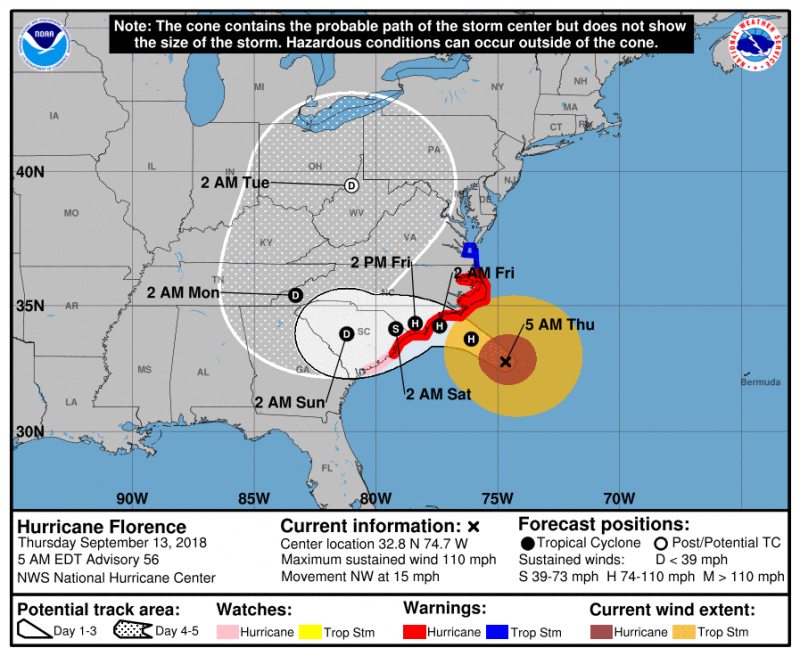
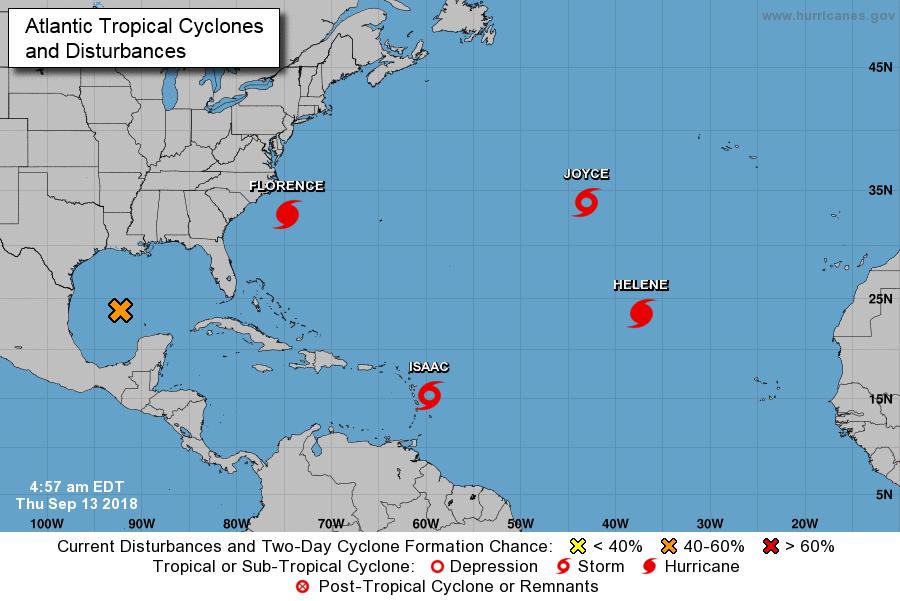
As Hurricane Florence starts to make landfall today, it is expected to have a serious impact on coastal South Carolina and North Carolina. Florence is currently a category 2 hurricane, but they expect wind speeds to diminish quickly upon landfall. No doubt, we’ll remember Florence for the tremendous amount of rainfall she packs–there will be significant flooding in her path.

A few readers have asked about frequencies to monitor as the storm approaches.

Hurricane Watch Net (HWN)

hwn-hurricane-watch-netThe Hurricane Watch Net is a group of amateur radio operators who are trained and organized “to provide essential communications support to the National Hurricane Center during times of Hurricane emergencies.” The HWN focuses on “ground truth” observations (much like SkyWarn nets).

The Hurricane Watch Net is activated when a hurricane is within 300 statute miles of expected land-fall. The HWN covers the Caribbean, Central America, Eastern Mexico, Eastern Canada, and all US Coastal States.

The HWN operates in both English and Spanish, and is active on 14.325 MHz (upper sideband) during the day and 7.268 MHz (lower sideband) at night. The HWN is known to operate on both frequencies if propagation allows.

Please keep HWN frequencies clear

If you’re an amateur radio operator, please avoid using 14.325 MHz and 7.268 MHz anytime the HWN has been activated.

Monitoring hurricane frequencies

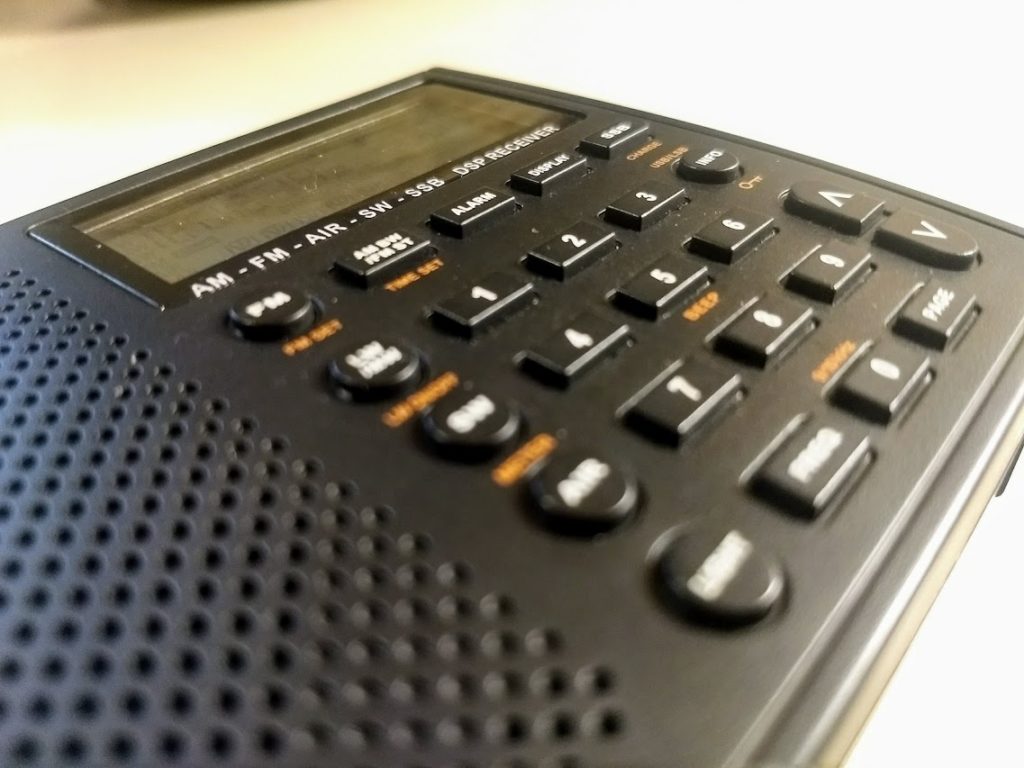
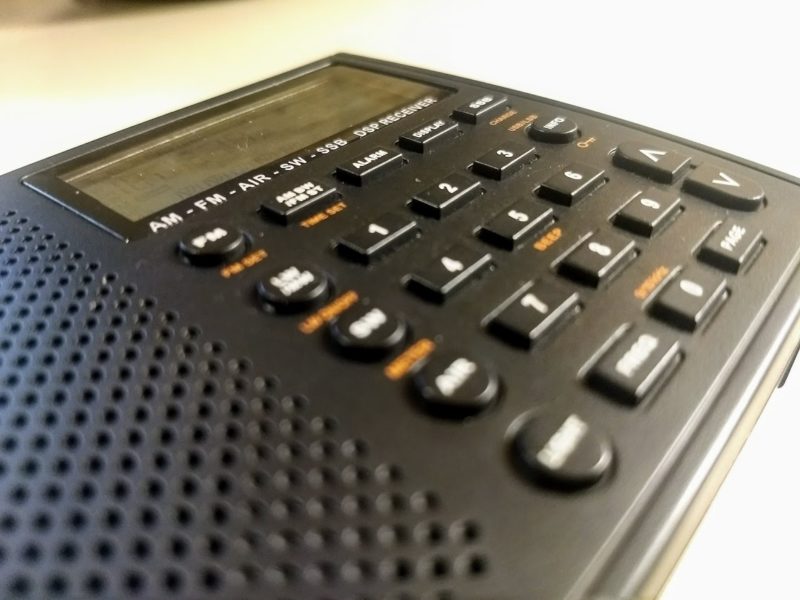
If you have a shortwave radio with a BFO/SSB mode–and you live within the propagation footprint–you can monitor the Hurricane Watch Net.

Note that you’ll need to use upper sideband on 14.325 MHz and lower sideband on 7.268 MHz.

You can also monitor the Hurricane Watch Net via a number of WebSDRs on the KiwiSDR network and even potentially via the U Twente WebSDR in the Netherlands (although a WebSDR in North America would be preferable).

Click here to view the Hurricane Watch Net website.

At time of posting, there are a number of tropical storms in the Atlantic. If you live in an area prone to hurricanes, tropical storms and other natural disasters, please keep an emergency kit fully-stocked and at the ready. Click here for some ideas about building your own simple kit.

Slow Radio via BBC Radio 3

Described as “an antidote to today’s frenzied world”, the BBC has launched a new radio program with 30-minute recordings of “the sounds of birds, mountain climbing, monks chatting as you go about your day.”

With the popularity of Slow Television and ASMR (Autonomous Sensory Meridian Response) I imagine Slow Radio will be quite popular.

Of course, Slow Radio can be heard on Radio 3, via the BBC iPlayer and as a podcast. The BBC iPlayer is geo-blocked outside the UK, but the podcast is available albeit with some advertising.

Click here for the Slow Radio homepage on the BBC.

Spectrum Management and the Impact on Amateur Radio

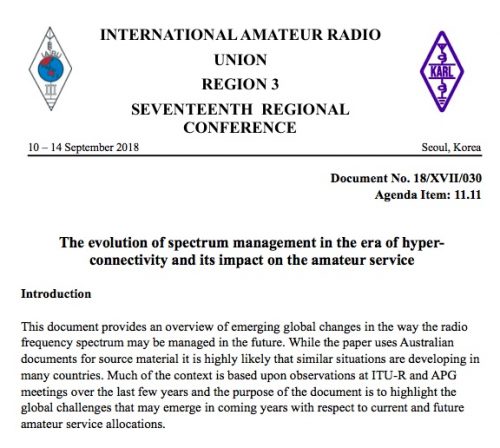
Many thanks to an SWLing Post reader who has shared the following document which was published during the IARU Region 3 conference in Seoul. The document is titled “The evolution of spectrum management in the era of hyper-connectivity and its impact on the amateur service.” Certainly a tough look at the realities of spectrum use and amateur radio’s part in it.

Click here to download (.docx format). 

Marketplace: “Time may be up for timekeeping radio stations”

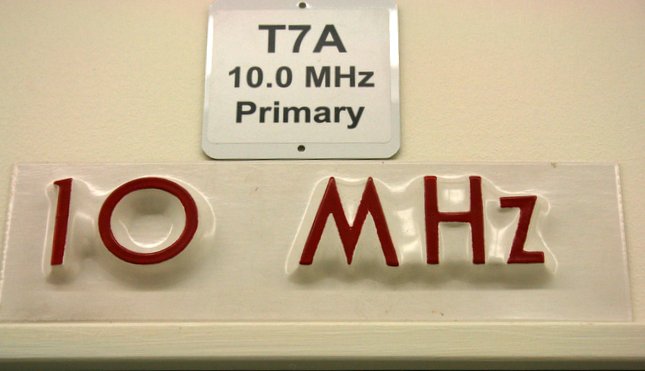
Photo taken in 2014 of the sign above WWV’s primary 10 MHz transmitter.

(Source: Marketplace via Richard Cuff)

The Trump administration wants to shut down two shortwave radio stations that broadcast time signals from the nation’s master clock.

The administration’s budget proposal would eliminate nearly $27 million in funding from the National Institute of Standards and Technology for the two stations. WWV, based in Fort Collins, Colorado, has been transmitting one rock-steady pulse per second for more than 80 years. Its sister station, Hawaii’s WWVH, has been extending the time signal across the Pacific for nearly 70 years. WWV is also the world’s longest continuously-broadcasting radio station. (NIST doesn’t stream the stations online because signals are often delayed as they stream over the internet. But you can hear the stations by calling (303) 499-7111 for WWV or (808) 335-4363 for WWVH . There are also online recordings of the stations’ gentle announcements.)[…]

Click here to read the full story and listen to the program audio.

If you feel strongly about keeping the atomic clock signals on the air, I urge you to contact your local representatives,and sign this White House petition.

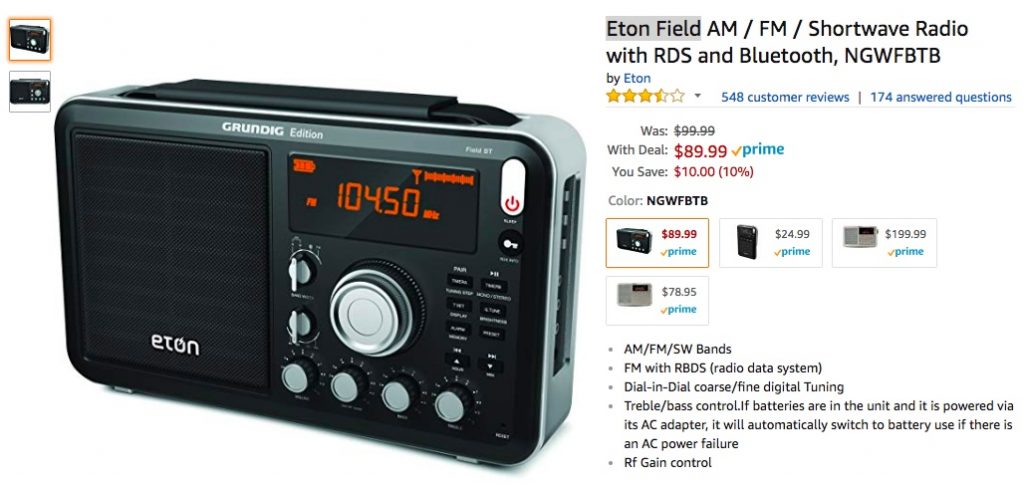
Radio Deal: Eton Field BT on Amazon

Many thanks to SWLing Post reader, Christian, who writes:

Hi Thomas. Just thought you should know that Amazon has lowered the price of the Eton Field BT to $89.99 shipped. For how long this will be the price I don’t know. This is only $5 more than the lowest price I’ve ever seen for the Field on Amazon. I just bought one and thought I’d share.

Thanks for the tip, Christian!

Click here to view on Amazon.com (affiliate link).

Hurricane Florence reminds us to be prepared

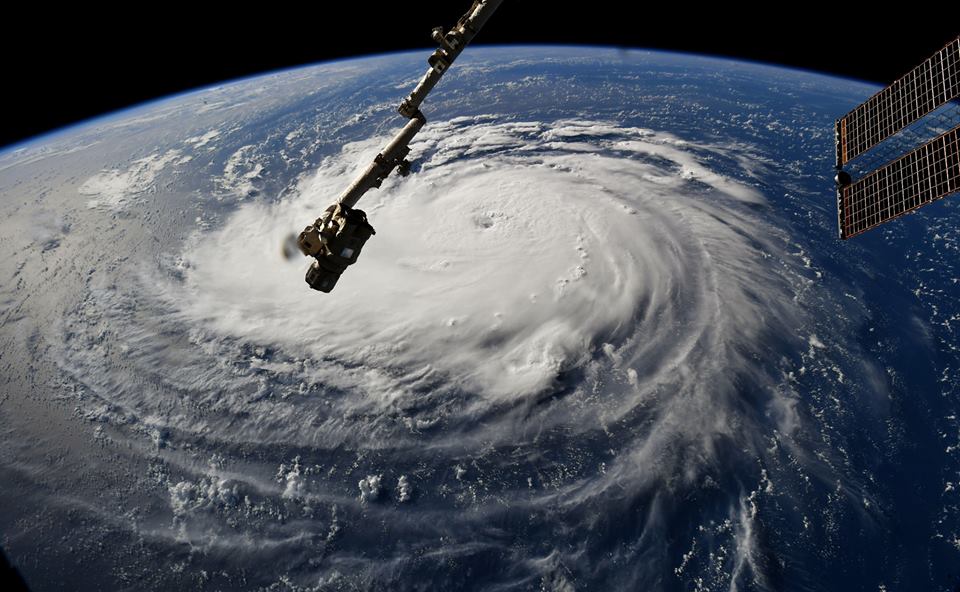
Hurricane Florence as seen from the International Space Station

As I write this post, Hurricane Florence has her sites set on eastern North Carolina, South Carolina and Virginia. In terms of her path and potential for flooding, Florence is already looking like an extraordinary storm and certainly one for the history books. It’s a scary situation.

My family is all about practical preparedness. Where we live, we have to be concerned with the occasional sever summer/winter storm, flash flooding, and potential impact from hurricanes like Florence. Although we’re in Canada right now and far removed from any potential impact from Florence in North Carolina (regardless, thanks for all of your kind messages), we have friends living in our house and I can rest easy knowing they have all of our supplies at the ready.

What supplies should you have at the ready? I like using the Build-A-Kit list from Ready.gov as a practical starting point. It’s designed around a 72 hour window of time. Many of us may assume that 72 ours is too short, but once you start looking at realistic quantities of food and, especially, water that are needed, you might be surprised. These items are difficult to find when your area is threatened by natural disaster–it’s important to collect these items when there’s no immediate threat.

Here’s the list taken directly from Ready.gov:

Build A Kit

Make sure your emergency kit is stocked with the items on the checklist below. Most of the items are inexpensive and easy to find, and any one of them could save your life. Headed to the store? Download a printable version to take with you. Once you take a look at the basic items, consider what unique needs your family might have, such as supplies for pets, or seniors.

After an emergency, you may need to survive on your own for several days. Being prepared means having your own foodwater and other supplies to last for at least 72 hours. A disaster supplies kit is a collection of basic items your household may need in the event of an emergency.

Basic Disaster Supplies Kit

To assemble your kit, store items in airtight plastic bags and put your entire disaster supplies kit in one or two easy-to-carry containers such as plastic bins or a duffel bag.

A basic emergency supply kit could include the following recommended items:

  • Keeping items in an inexpensive plastic container not only protects them from water intrusion, but makes it easy grab-and-go on a moment’s notice.

    Water – one gallon of water per person per day for at least three days, for drinking and sanitation

  • Food – at least a three-day supply of non-perishable food
  • Battery-powered or hand crank radio and a NOAA Weather Radio with tone alert
  • Flashlight
  • First aid kit
  • Extra batteries
  • Whistle to signal for help
  • Dust mask to help filter contaminated air and plastic sheeting and duct tape to shelter-in-place
  • Moist towelettes, garbage bags and plastic ties for personal sanitation
  • Wrench or pliers to turn off utilities
  • Manual can opener for food
  • Local maps
  • Cell phone with chargers and a backup battery

Download the Recommended Supplies List (PDF)

Additional Emergency Supplies

Consider adding the following items to your emergency supply kit based on your individual needs:

  • Prescription medications
  • Non-prescription medications such as pain relievers, anti-diarrhea medication, antacids or laxatives
  • Glasses and contact lense solution
  • Infant formula, bottles, diapers, wipes, diaper rash cream
  • Pet food and extra water for your pet
  • Cash or traveler’s checks
  • Important family documents such as copies of insurance policies, identification and bank account records saved electronically or in a waterproof, portable container
  • Sleeping bag or warm blanket for each person
  • Complete change of clothing appropriate for your climate and sturdy shoes
  • Household chlorine bleach and medicine dropper to disinfect water
  • Fire extinguisher
  • Matches in a waterproof container
  • Feminine supplies and personal hygiene items
  • Mess kits, paper cups, plates, paper towels and plastic utensils
  • Paper and pencil
  • Books, games, puzzles or other activities for children

Maintaining Your Kit

After assembling your kit remember to maintain it so it’s ready when needed:

  • Keep canned food in a cool, dry place
  • Store boxed food in tightly closed plastic or metal containers
  • Replace expired items as needed
  • Re-think your needs every year and update your kit as your family’s needs change.

Kit Storage Locations

Since you do not know where you will be when an emergency occurs, prepare supplies for home, work and vehicles.

  • Home: Keep this kit in a designated place and have it ready in case you have to leave your home quickly. Make sure all family members know where the kit is kept.
  • Work: Be prepared to shelter at work for at least 24 hours. Your work kit should include food, water and other necessities like medicines, as well as comfortable walking shoes, stored in a “grab and go” case.
  • Vehicle: In case you are stranded, keep a kit of emergency supplies in your car.

Of course, I have specific suggestions regarding portable radios to have on hand. I’ll try to post my current favorites soon.

The takeaway is no matter where you live, spend some time preparing for natural disasters or interruptions to public utilities. We have several helpful posts on the SWLing Post which can help you with this very thing.  Take a look at the following in our archives:

Do you enjoy the SWLing Post?

Please consider supporting us via Patreon or our Coffee Fund!

Your support makes articles like this one possible. Thank you!

Citizens Band (CB) radio celebrates 60th anniversary

Many thanks to SWLing Post contributor, Ron, who reminds us that today is Class D CB radio’s 60th anniversary. From Wikipedia:

On September 11, 1958 the Class D CB service was created on 27 MHz, and this band became what is popularly known today as “Citizens Band”. There were only 23 channels at the time; the first 22 were taken from the former amateur radio service 11-meter band, and channel 23 was shared with radio-controlled devices. Some hobbyists continue to use the designation “11 meters” to refer to the Citizens Band and adjoining frequencies.

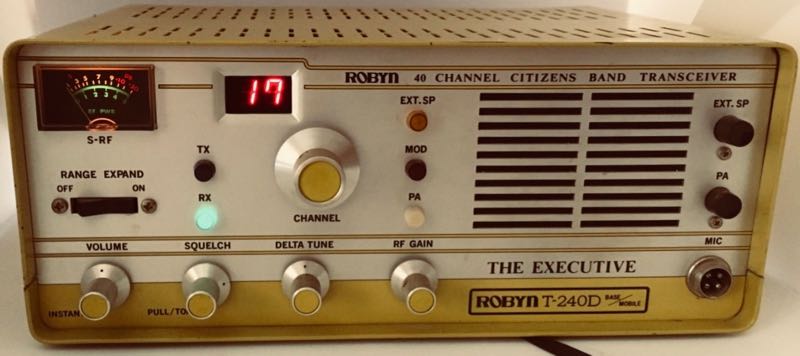
My dad was an avid CBer when I was a kid. He had an FCC-issued license and belonged to a healthy community of CBers in our part of the state. He had a beautiful yellow Robyn T-240D (same as pictured above) as a base station, and a mobile CB installed in every car. After the FCC dropped the licensing requirement, his activity on the bands slowed down although it did give me a chance to hop on.

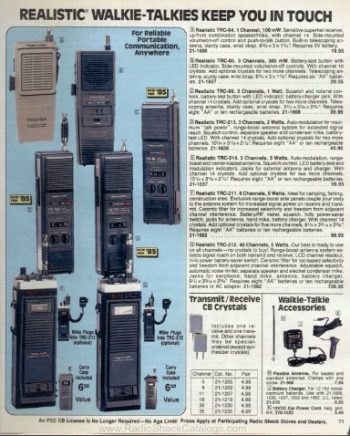
My best friend (who lived about 1/4 mile away) and I used to keep in constant contact with our 40 channel 5 watt CB walkie talkies. It was great fun.

Of course, it was a treat when I would catch some “skip” and make contact with someone two states away with that same walkie talkie.

Like it or hate it, a lot of radio enthusiasts and ham radio operators cut their teeth on CB radio.

I was certainly one of them.

CB radio is still a pretty dynamic public radio space today.  True, it’s a bit of a free-for-all and if you can’t tolerate profanity and “colorful metaphors” then you best stay away.

https://youtu.be/gvLGmhALHGY

You don’t need a CB radio in order to listen to the CB frequencies; most SDRs and many portable shortwave radios can tune in. If interested, check out this previous post: Listening to Citizens’ Band (CB) radio on your shortwave receiver.

Post readers: Anyone still use CB radio today? Anyone else get their start in CB radio? Any stories you’d like to share? Please comment!