Author Archives: Thomas

Bridging Two Worlds: Shortwave Listening Meets Amateur Radio

When the SWL and Amateur Radio hobbies meet

by  Dan Greenall

Many of us who are also amateur radio operators, got their start in the hobby through simply listening to shortwave radio, or perhaps, to stations in the AM or FM broadcast bands.  I suppose it is then inevitable that these two hobbies are bound to connect with each other from time to time.  Here are a few examples of this that relate to my experiences.

In 1972, while doing a random band scan on shortwave, I came across a point-to-point radio station from Managua, Nicaragua that was transmitting a repeating test message (recording attached below):

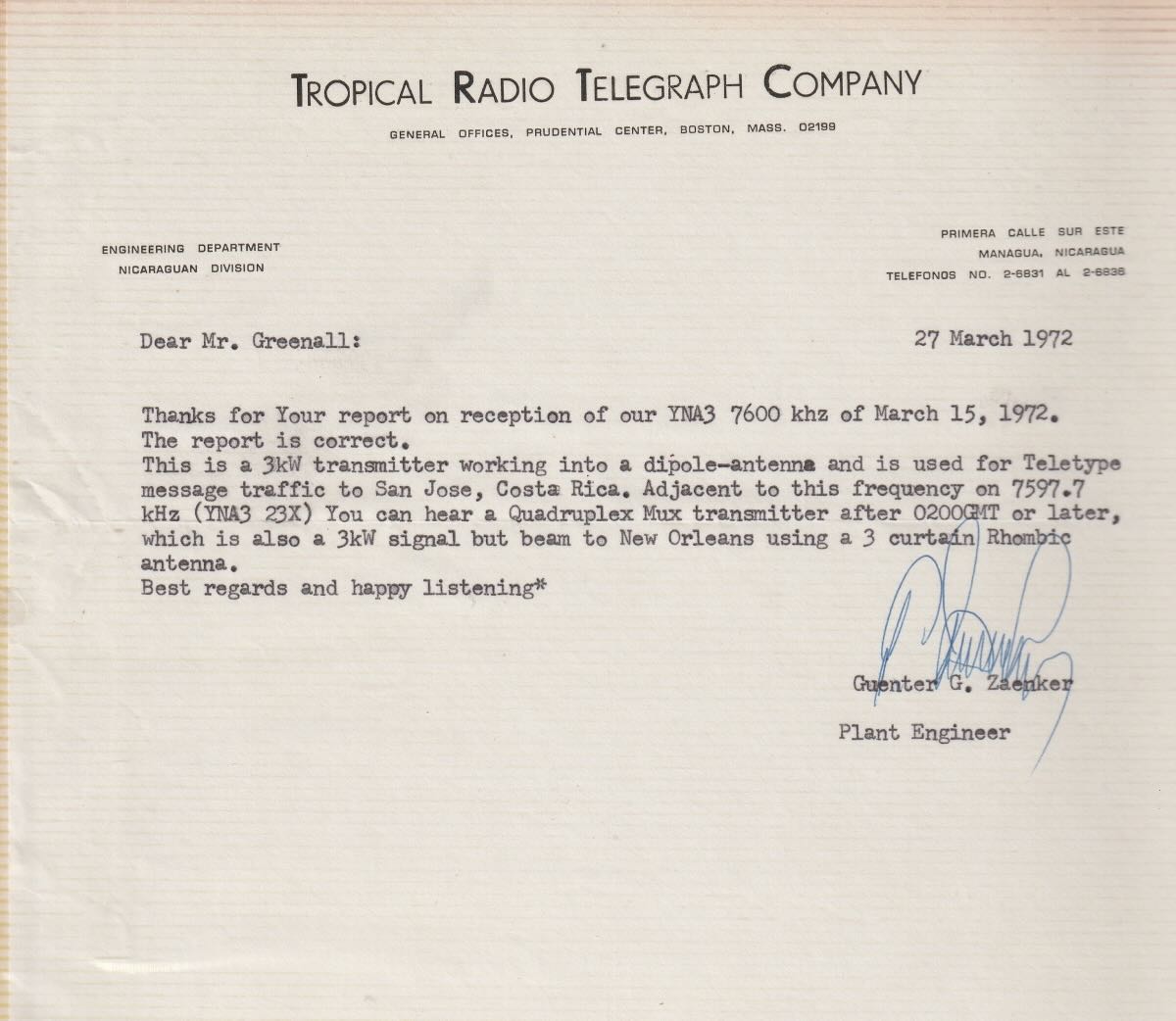
The station was operated by the Tropical Radio Telegraph Company and I sent off a reception report in hopes of receiving a QSL from them.  As luck would have it, the Plant Engineer, Guenter G. Zaenker, responded with a friendly letter including some details about their transmitter power and antennas used.
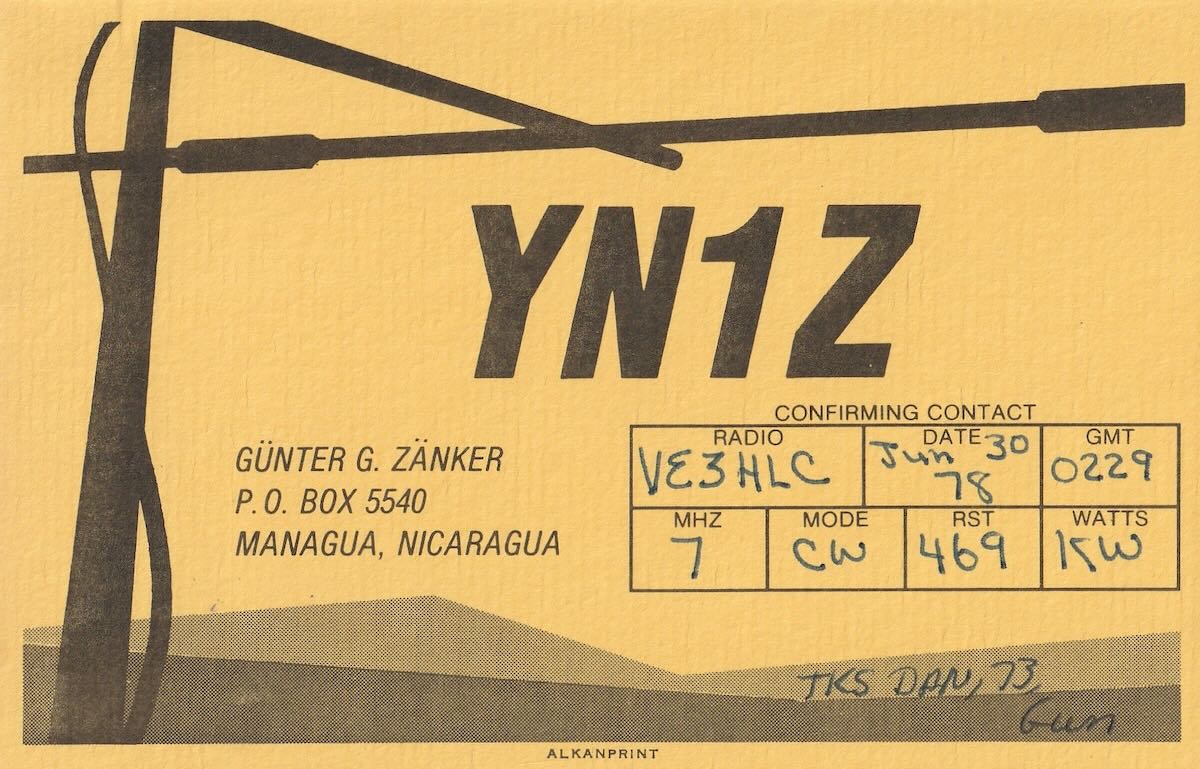
A couple of years later, when I got my amateur radio licence (VE3HLC), my SWL activities took a back seat to ham radio for a while.  In 1978, I received a QSL for a contact with station YN1Z in Managua who turned out to be none other than Guenther G. Zaenker.
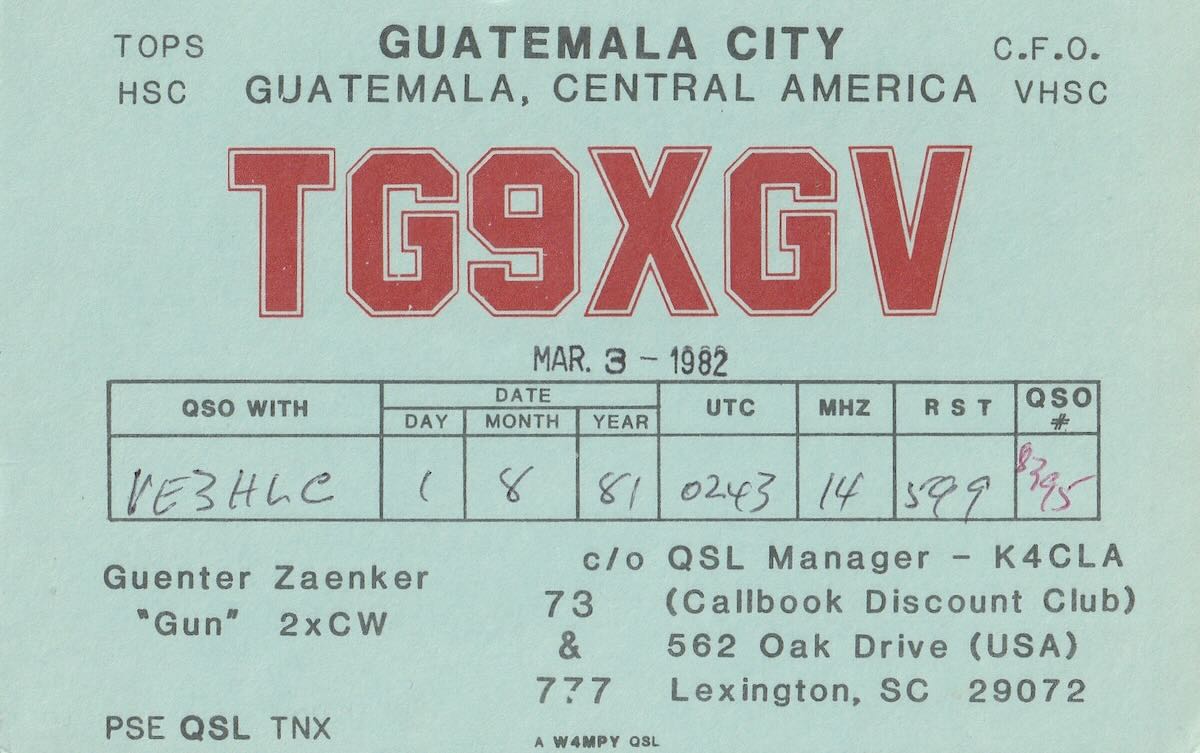
I worked Guenter for a final time as TG9XGV in Guatemala City, Guatemala. How is that for completing a hat trick!
Shortly after receiving my amateur radio ticket in 1974, I made a contact with station PJ9BN, Jack Van Sciver on the island of Bonaire in the Netherlands Antilles.
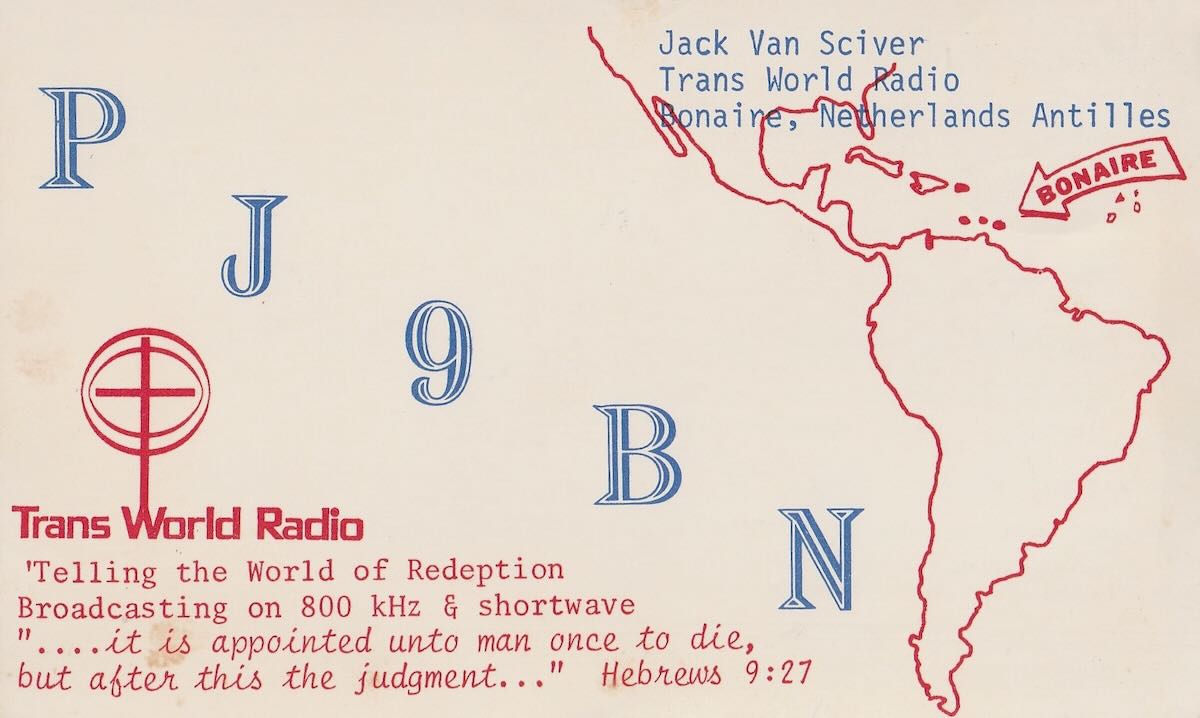
It turns out he worked at Trans World Radio, a broadcaster I had listened to regularly on the SWBC bands and it was quite exciting to discover this connection.  Attached is a link to a recording I made of this station that same year as they were concluding a segment of their popular DX Special program:

https://archive.org/details/trans-world-radio-bonaire

It seems that Jack is still going strong as I recently found this link to his current amateur callsign NA3F: https://www.qrz.com/db/NA3F

A final note, I had made a 2-way contact through the Oscar 6 amateur radio satellite (uplink on 2 metres, downlink on 10 metres) in 1976 with W.G. “George” Roach in Ottawa, Ontario.
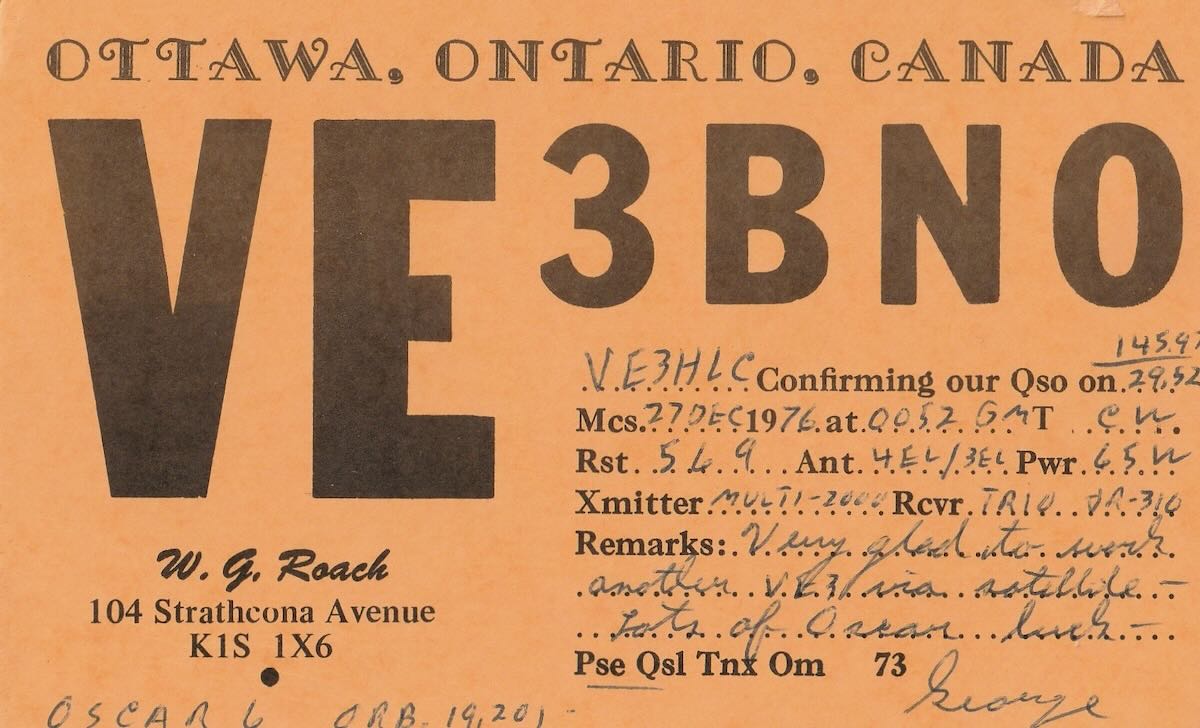
Some 11 years later, I was able to pick up station CFMO FM on 93.9 MHz, over 300 miles away, through some great ducting conditions.  When I received a QSL from the station, it was signed by W.G. Roach who was the chief engineer at CFMO FM.
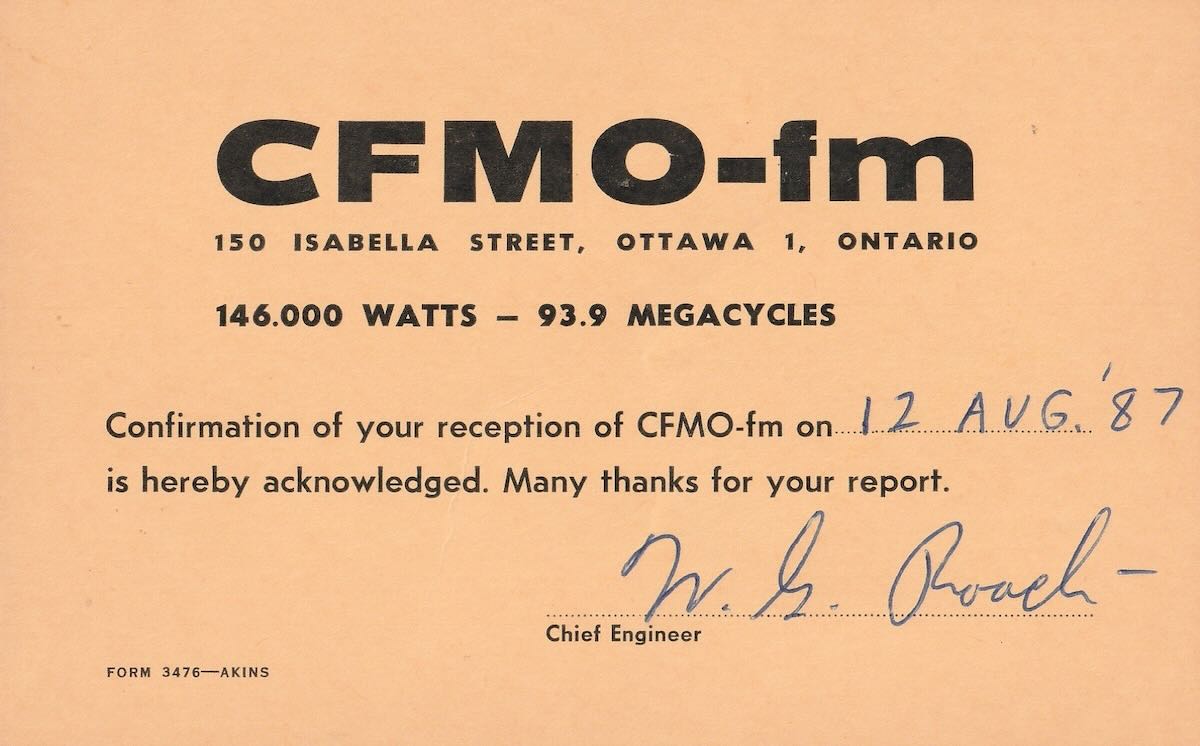
It certainly is a small world!  I wonder how many others out there have experiences similar to mine?
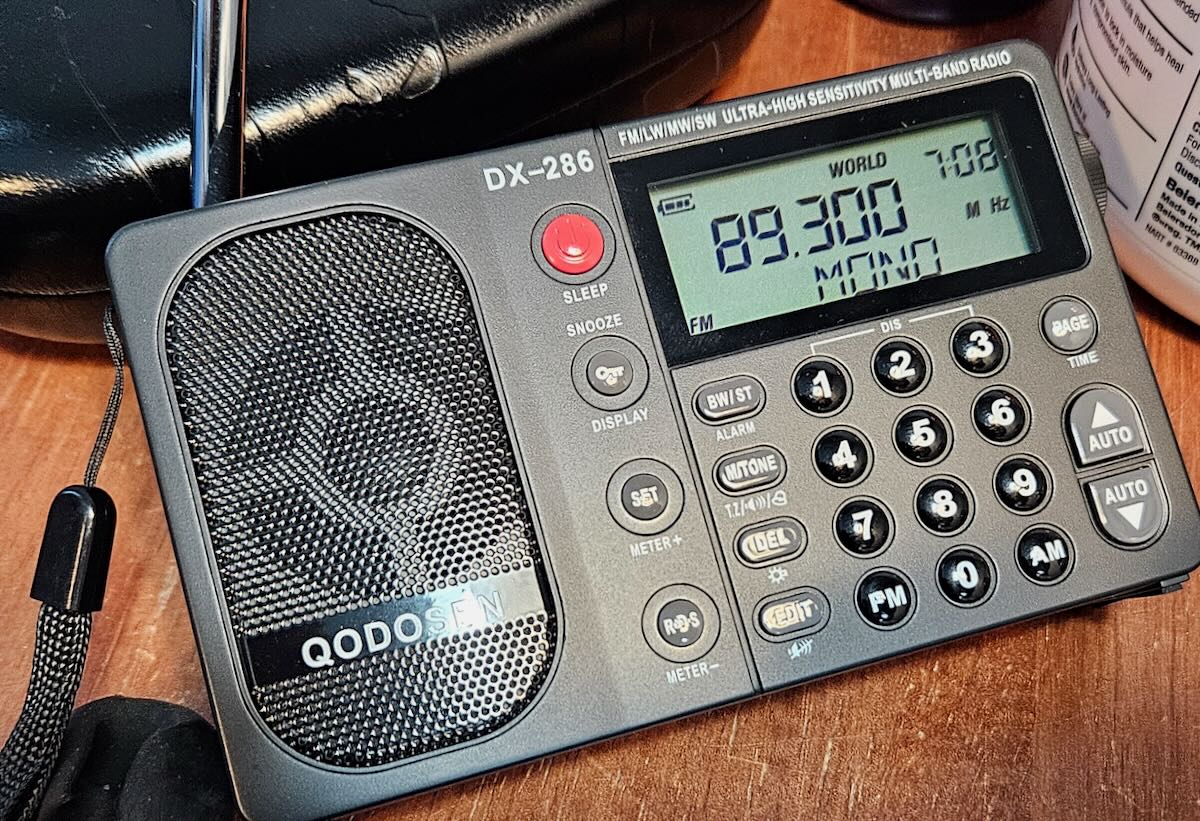
Why Jeff Returned the Qodosen DX-286

Many thanks to SWLing Post contributor Jeff McMahon, who notes that he’s published his thoughts about the Qodosen DX-286 [SWLing Post affiliate link] over on his blog, The Herculodge. While the DX-286 had solid AM reception, its audio quality and build didn’t quite meet his needs.

In the end, Jeff opted for a more robust choice for his setup. Curious about his experience with the DX-286 and why he made the switch? Read Jeff’s review here.

Sangean PR-D12: Jeff’s first radio review in ten years

Many thanks to SWLing Post contributor Jeff McMahon, who writes:

Hi Thomas,

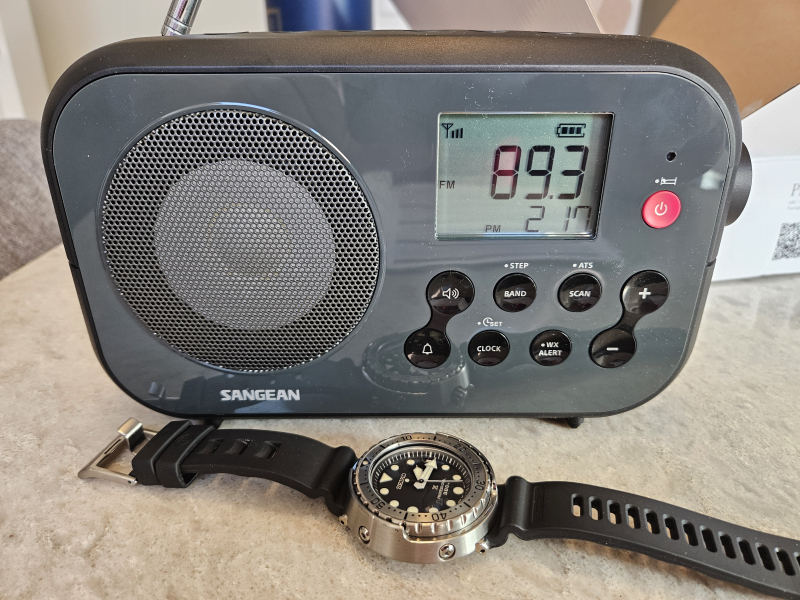
I hope all is well. The fires here in Los Angeles prompted me to buy 3 radios, including this Sangean PR-D12 (a Tecsun PL-990X arrives in a few days). This is my first radio review in about 10 years:

Click here to check it out on Jeff’s excellent blog, The Herculodge.

It’s great to see a radio review on your site again, Jeff. Having recently experienced an apocalyptic natural disaster, I can confidently say that a simple AM/FM radio is a reliable and robust source of local news and information. Here in the Swannanoa/Asheville area, we had two stations simulcasting local news and recovery information on both FM and AM frequencies. This service was invaluable when all other communications failed.

We look forward to your review of the PL-990x!

World Radio Day 2025: Radio and Climate Change

Many thanks to SWLing Post contributor Paul Jamet, who writes:

Hello Thomas,

This short message to draw your attention on the following:

The theme of World Radio Day on February 13, 2025 is “Radio and Climate Change”:

https://www.unesco.org/en/days/world-radio?hub=66636

https://www.unesco.org/en/days/world-radio/radio-climate-change?hub=66636

I hope this information is helpful to you.

All the best.

Paul JAMET

Thank you so much for sharing this, Paul! I always look forward to World Radio Day!

From NDBs to TIS: A DXer’s Journey Across 1610-1700 kHz

Many thanks to SWLing Post contributor Dan Greenall, who shares the following guest post and asks, “Wonder who can add to this list?“:


A Look Back – DXing between 1610 and 1700 kHz

by Dan Greenall

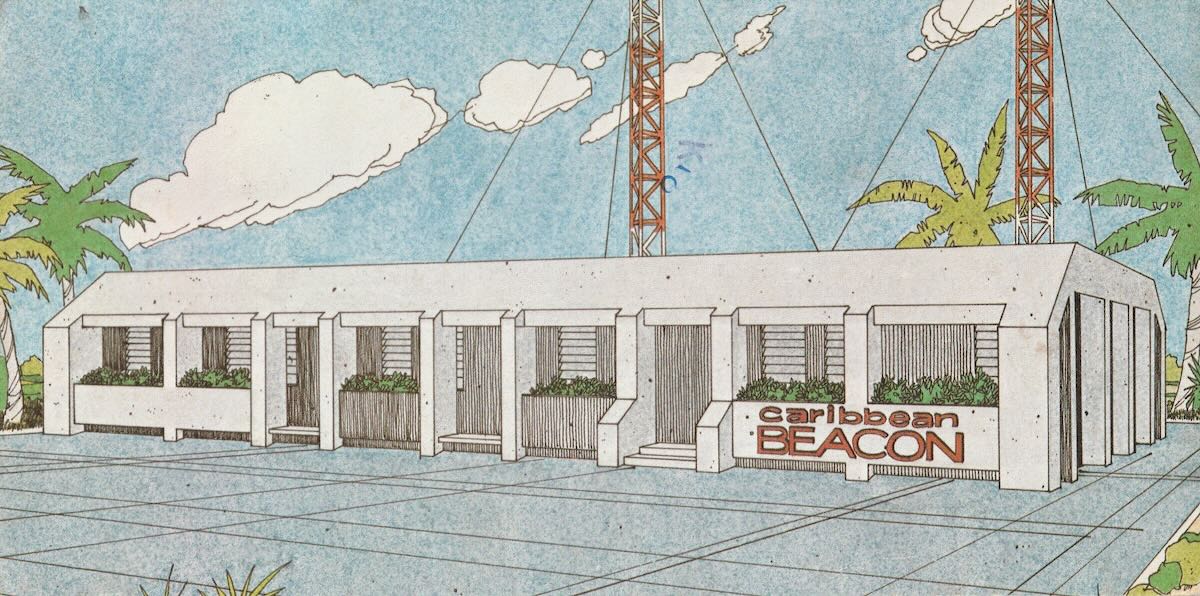
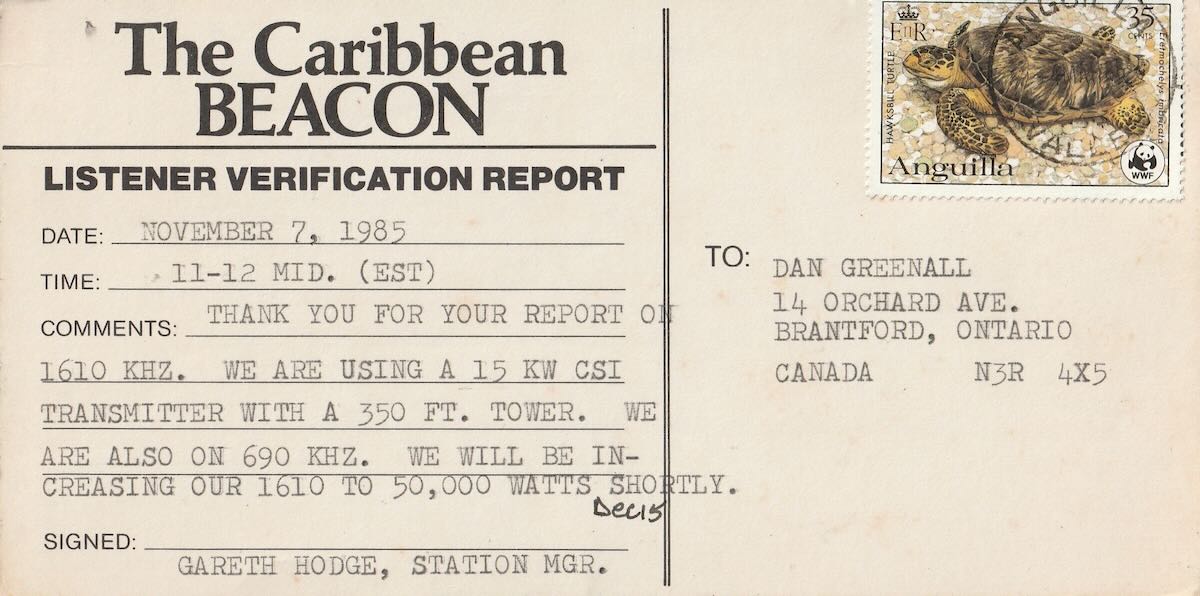
1. The Caribbean Beacon, Anguilla West Indies 1610 kHz (1985 QSL)

2. NDB stations (non-directional beacons)

  • transmitted call letters on CW, mostly from airports, heard in the 1970’s
  • examples: MDE Medellin, Colombia 1690 kHz and RAB Rabinal, Guatemala 1613 kHz

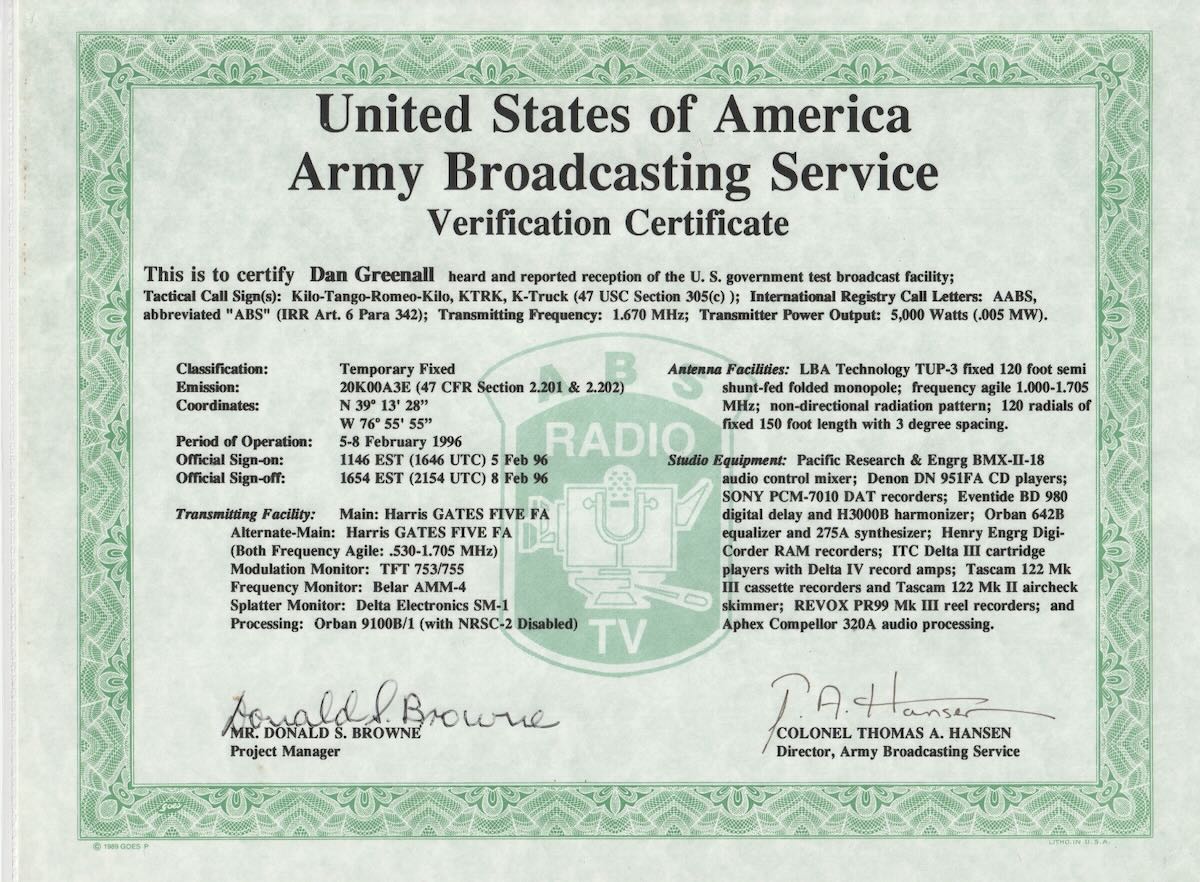
3. U.S. Army Broadcasting Service KTRK 1670 Fort Meade, MD Feb 1996          articles and recordings

https://www.radioheritage.com/ktrk-k-truck-1670-khz/

4. FCC Part 15 Radio Stations

Example:    WDKW 1630 “the Klaw” Dundalk High School near Baltimore, MD

Link to my recording made at a DX camp in Coe Hill, Ontario, Canada on April 20, 1997: https://archive.org/details/wdkw-the-klaw-1630

An internet search revealed the following;

Part 15 of the Federal Communications Commission (FCC) rules allows some low-powered radio devices to operate without a license on the AM and FM radio broadcast bands. These devices are subject to certain restrictions, including:

  • Range: On FM frequencies, the effective service range is limited to about 200 feet (61 meters).
  • Field strength: The field strength should not exceed 250 ?V/m (48db) at 3 meters.
  • Detachable antennas: Part 15 rules prohibit detachable antennas on all Part 15 transmitters.

Some examples of Part 15 radio stations include:

  • Microbroadcasting

Often used by hobbyists, drive-in theaters, or on college or high school campuses.

  • Talking roadsigns, talking houses, or talking billboards

These transmitters air a repeating loop of information, such as traffic or highway construction. They typically operate on empty channels on the AM broadcast band.

  • InfOspot

A custom product that can include special audio systems, USB / internet connectivity, cabinets, and antenna mounting styles.

  • Free-radiate AM radio stations

Educational institutions can use a transmitter without a license if the signal coverage is limited to their property.

5. TIS (Travellers Information Stations)

1610 kHz with low power, usually around 10 watts, such as the one I hear near the Blue Water Bridge between Sarnia, Ontario and Port Huron, Michigan

6. Expanded AM broadcast band 

Over a quarter century ago, these frequencies began to be used in the U.S. by BCB stations.  I still have recordings of a half dozen of these from the early days.

WTDY 1670:

WNML 1670:

WMDM 1690:

KCNZ 1650:

KCJJ 1630:

KBGG 1700:

Also, here is a link to a column in Popular Communications magazine from February 1998.

https://www.worldradiohistory.com/Archive-Popular-Communications/90s/Popular-Communications-1998-02.pdf

Carlos’ Illustrated Radio Listening Report Special: Los Angeles Wildfires (Vatican Radio, NHK, CGTN and Kyodo News) from January 11, 2025

Many thanks to SWLing Post contributor and noted political cartoonist, Carlos Latuff, who shares the following illustrated radio listening reports, all covering the ongoing Los Angeles Wildfires.


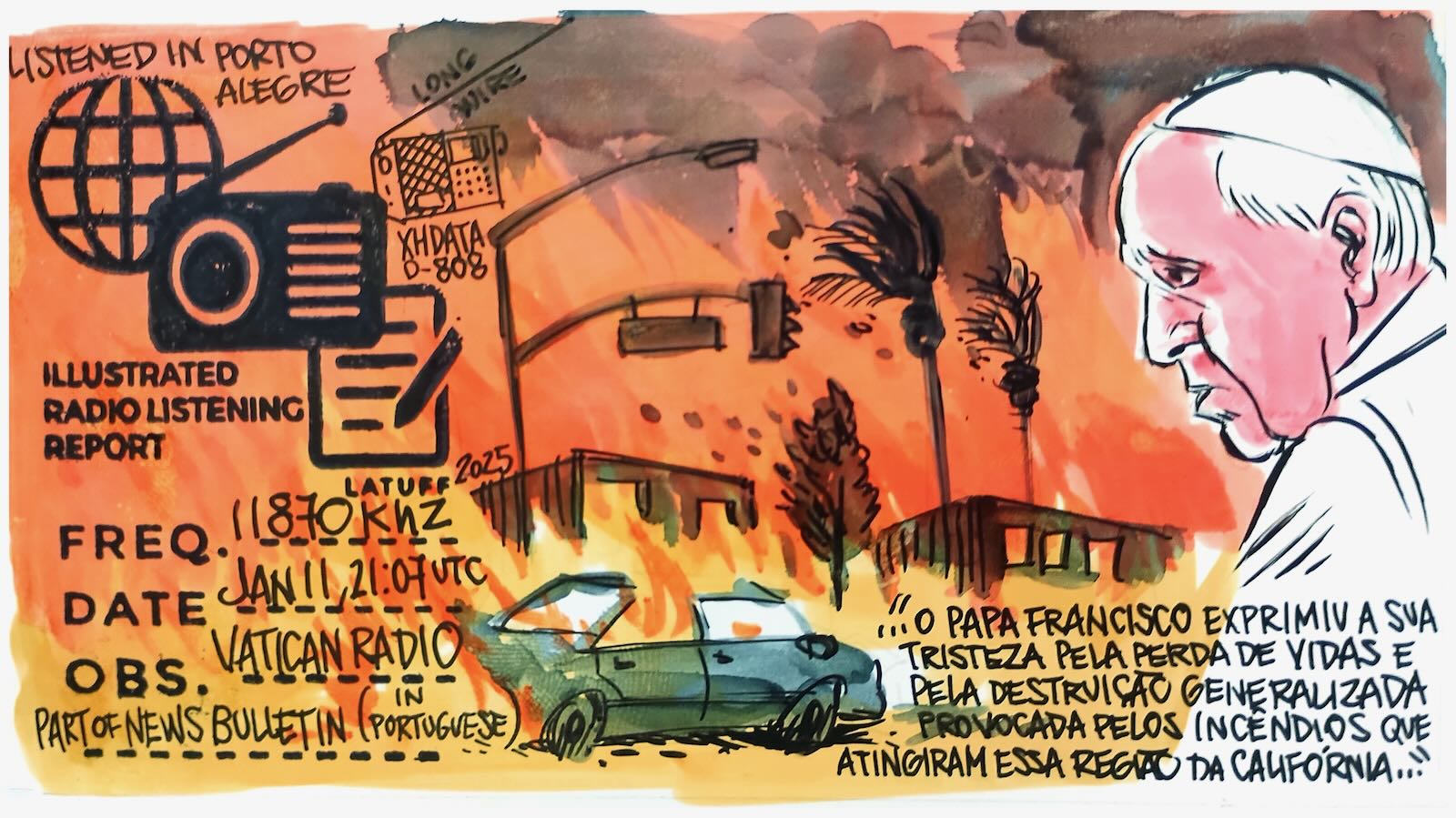
Part of Vatican Radio’s news bulletin (in Portuguese), listened in Porto Alegre:

“In a telegram to the Archbishop of Los Angeles, in the United States of America, Dom José Gómez, Pope Francis expressed his sadness at the loss of life and the widespread destruction caused by the fires that have hit this region of California. In a message signed by the Cardinal Secretary of State, Pietro Parolin, the Holy Father assures his spiritual closeness to the affected communities and entrusts the souls of the deceased to the loving mercy of Almighty God, sending his sincere condolences to those who mourn their loss.

The Pontifex also prays for the emergency teams and grants his blessing to all as a promise of consolation and strength in the Lord. To date, at least 11 people have died and 150,000 have been evacuated due to the devastating fires that hit the Los Angeles region. In addition to the loss of human lives, the fire left a trail of destruction with economic losses of between 135 and 150 billion dollars.”

Click here to view on YouTube.


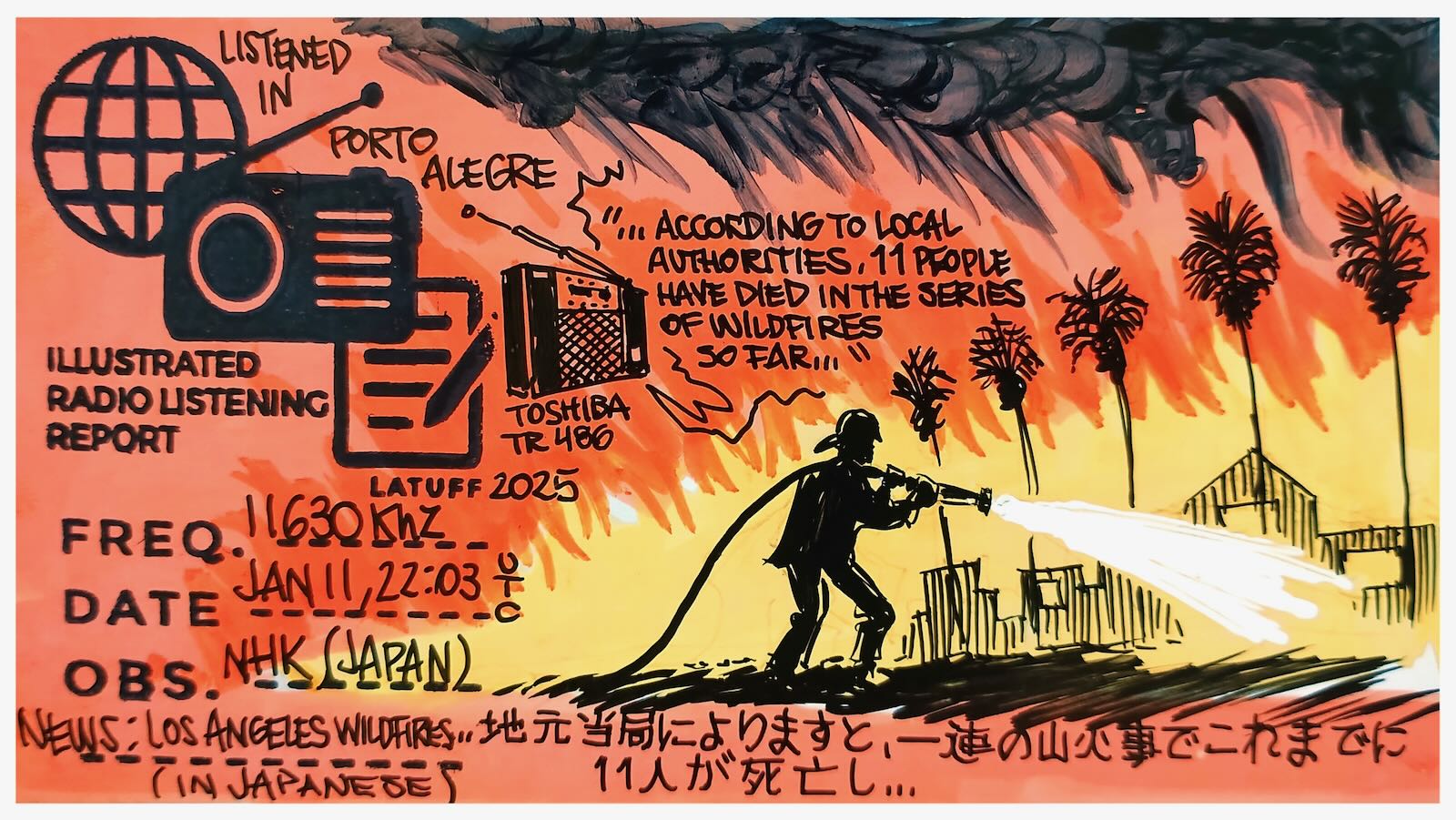
Part of NHK news bulletin (in Japanese) about Los Angeles wildfires. Listened (indoor) in Porto Alegre in a Toshiba TR486 receiver, telescopic antenna.

Click here to view on YouTube.


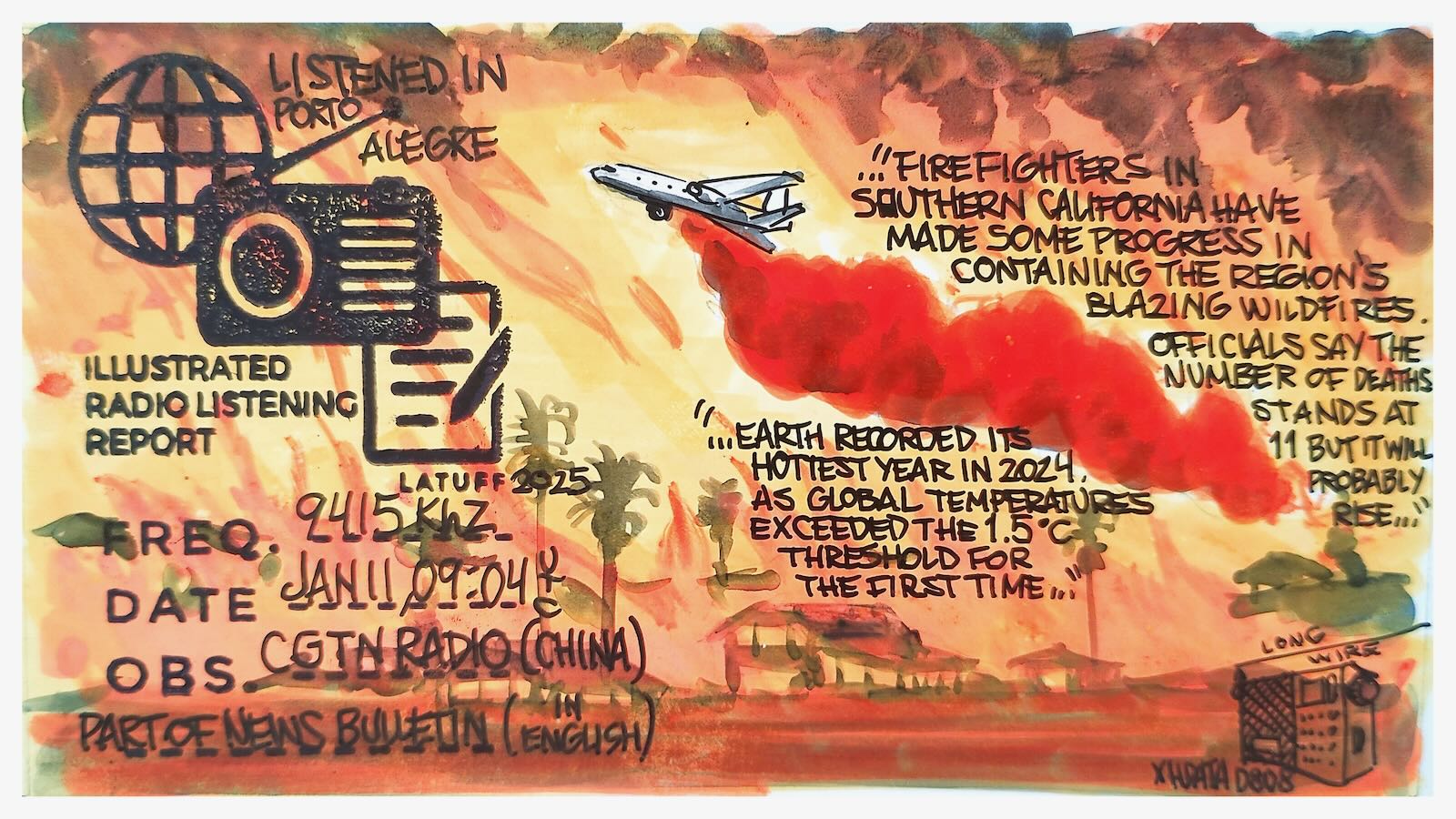
Part of CGTN Radio news bulletin (in English).
Firefighters have made some progress in Southern California, earth recorded its hottest year in 2024. Listened in Porto Alegre, Brazil.

Click here to view on YouTube.


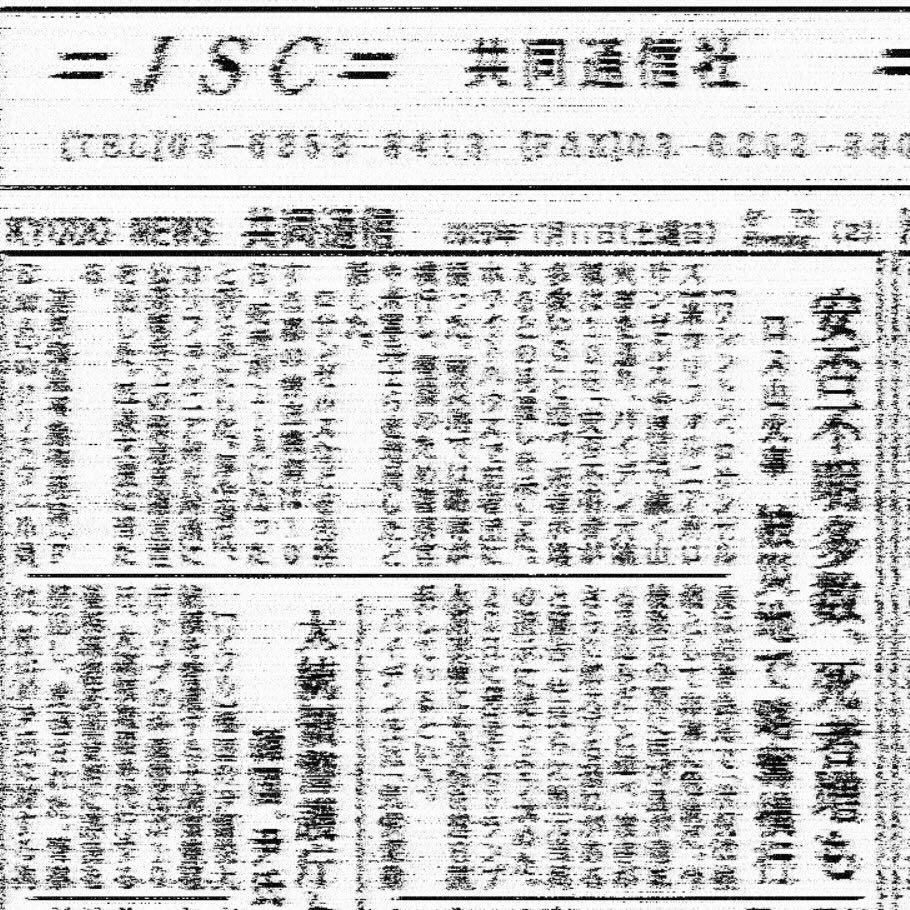
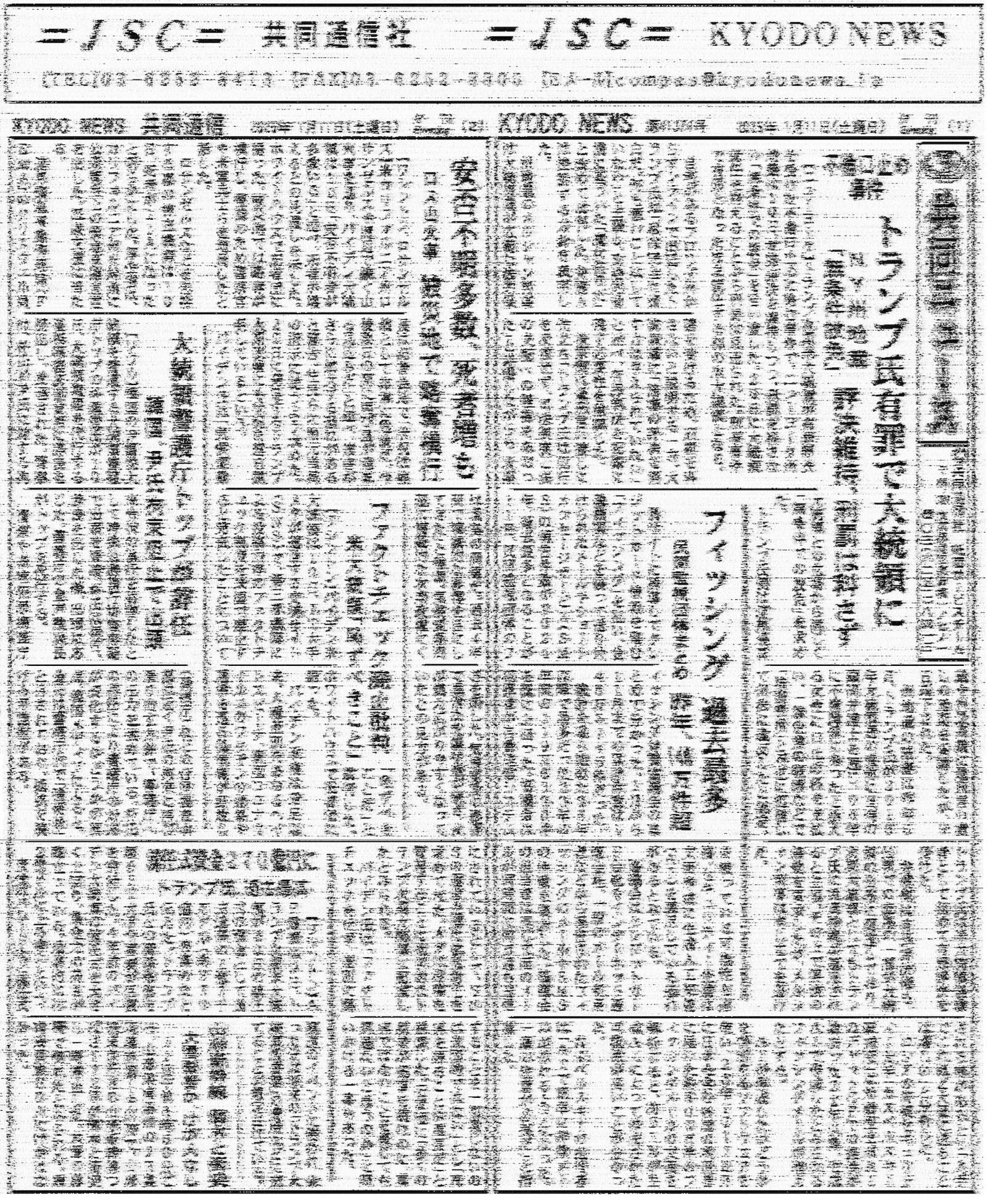
Kyodo News Evening Edition radiofax, 16970 kHz: “L.A. wildfire death toll rises, as many remain uncontacted”.