Shortwave listening and everything radio including reviews, broadcasting, ham radio, field operation, DXing, maker kits, travel, emergency gear, events, and more
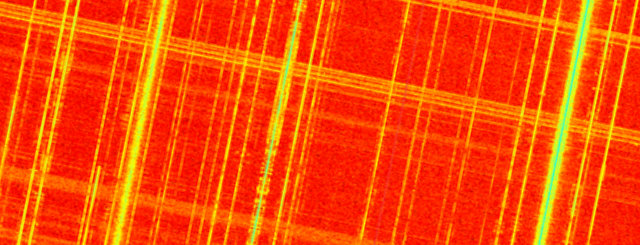
Between 1600 – 2015 UTC on August 21, 2017, as the solar eclipse swept across the nation, I captured much of the lower 2 MHz of the radio frequency spectrum. I used a Microtelecom Perseus SDR, a 130? inverted L with four radials, and lots of disk space. In doing so, I have created a permanent record of this portion of the RF spectrum during the solar eclipse.
I am making the spectrum capture files available for your analysis and research. Each file contains a 5 minute segment. If you download a group of files, they will play in succession.
You can use the demo version of the Perseus software or any other software that can read the Perseus data, such as Linrad or HDSDR. You cannot use just an audio player to play the files, even though they have .wav extentions.
Should you perform any analysis or otherwise make use of the files, I’d like to hear from you in the comments below.
Special thanks to Jav, K4JH, for donating the bandwidth for this effort.
Many thanks, Dan and Jav for making these files available for download! Someday, if I can find the bandwidth and space to upload them, I’ll also share the spectrum recordings I made.
My schedule last week made it impossible to carve out the dedicated time I needed to begin an S-8800 evaluation.
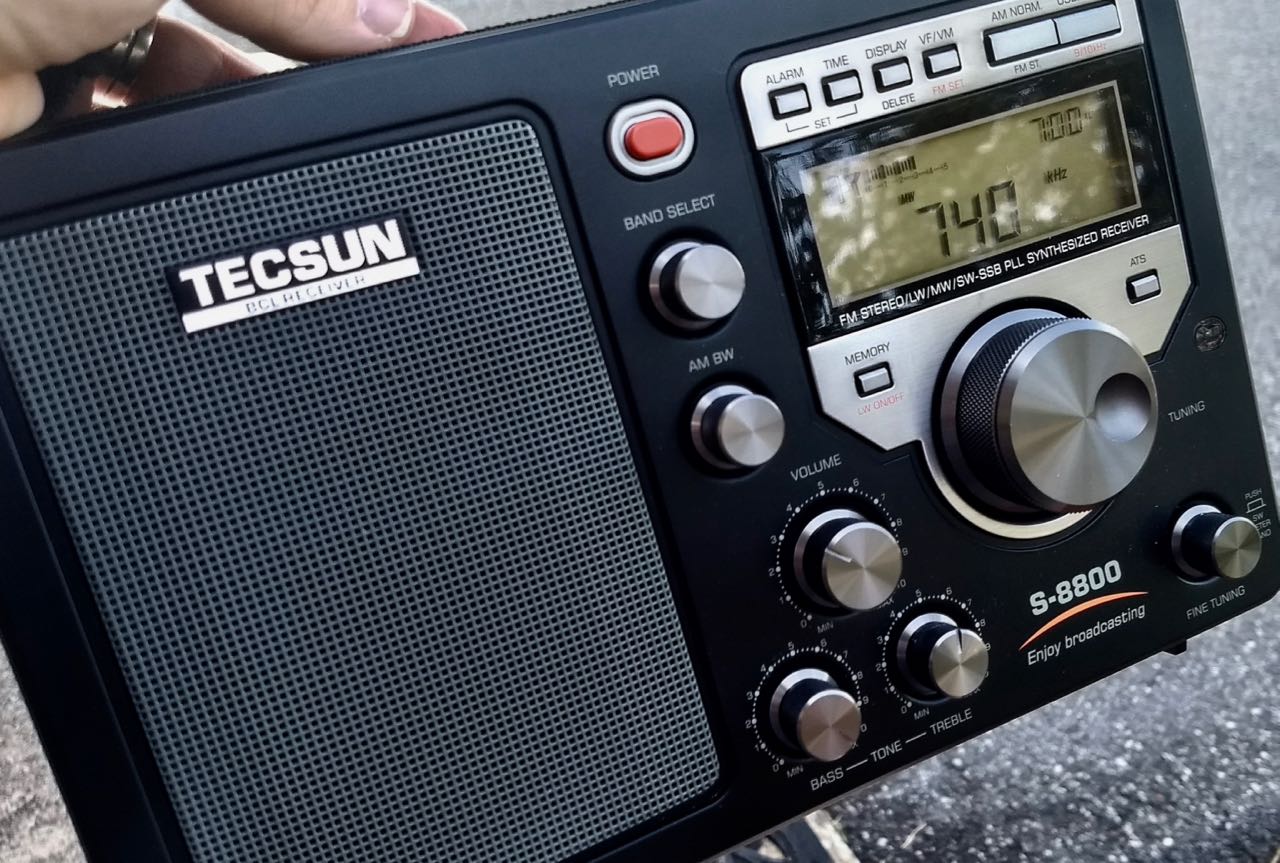
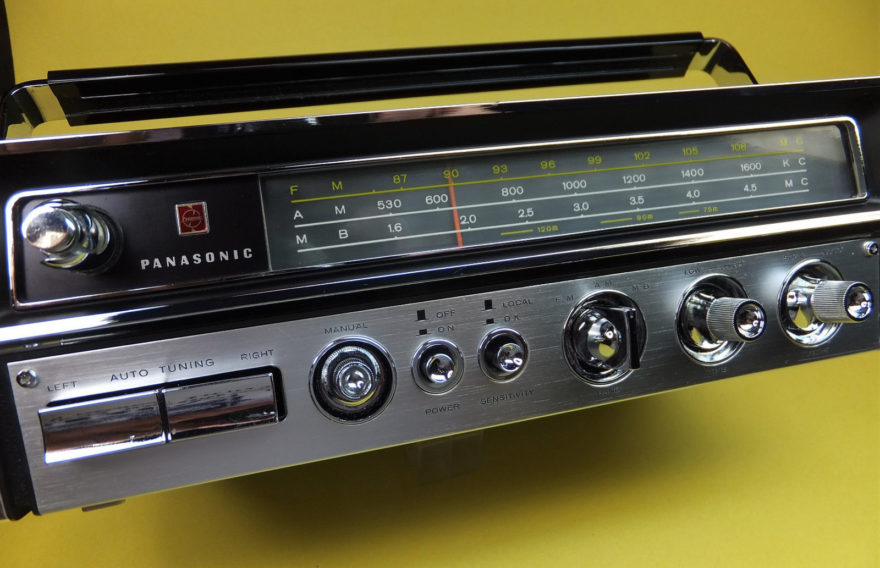
Yesterday, however, I spent the afternoon with my family at Richland Balsam, the highest point on the Blue Ridge Parkway (6,000′ ASL) and a completely RFI-free zone. I brought the Tecsun S-8800 and a few other portables along for the ride–namely the Digitech AR-1780, the C.Crane CC Skywave and the Panasonic RF-2200.
I had just enough available space on my smart phone to record this one short video:
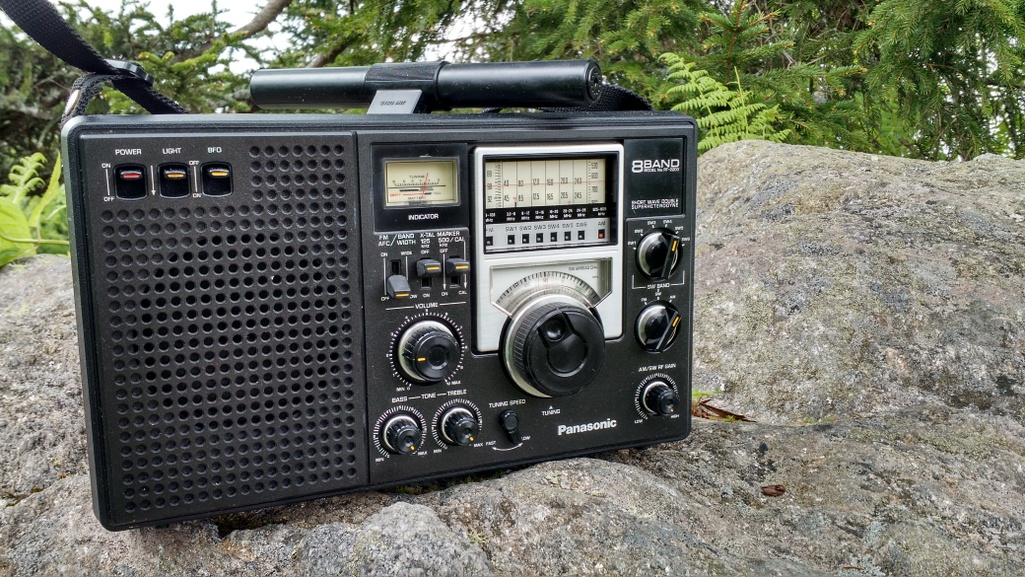
Let’s be clear: comparing any modern radio with the RF-2200 on mediumwave is hardly fair.
For one, the RF-2200 has been out of production for a few decades.
Secondly (what I never finished saying in the video is that) the RF-2200 has a large rotatable ferrite bar antenna that provides excellent gain. The RF-2200 simply wipes the floor with all of my modern portables as their ferrite bar antennas are a fraction of the size.
In other words, the RF-2200 was engineered to rule mediumwave like a boss.
On shortwave, the RF-2200 does a fine job, but isn’t nearly as accurate and stable as modern DSP receivers.
Spoiler alert
Still, as the video indicates, my final review of the Tecsun S-8800 will indicate that it is not a receiver for the serious Mediumwave DXer. It’s been my experience that few shortwave portables are excellent on both HF and MW.
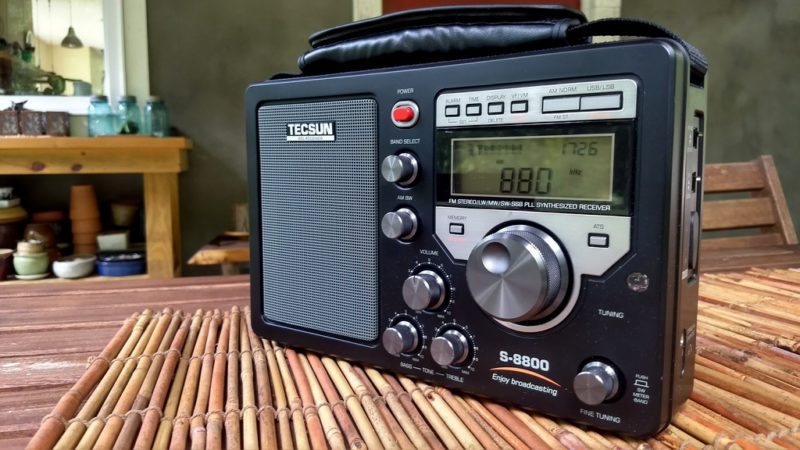
At home, tuned to local station 880 AM.
Of course you can’t tell from the video, but the S-8800 actually sounds brilliant when tuned to a relatively strong/local AM station, but either a lack of sensitivity or internal noise makes MW DXing a challenge.
I spent the better part of two hours yesterday evaluating its daytime MW performance–the video is pretty indicative of my findings. The S-8800 struggles with weak stations, but does a fine job with strong ones. It’s overall audio fidelity almost matches that of the RF-2200 when tuned to a strong broadcast. I’ve yet to test evening MW
The S-8800 still has some birdies on MW, but they’re not the loud warbling kind found on the previous model. Tecsun did properly address this, though in full disclosure, I haven’t fully explored the shortwave bands yet.
Shortwave?
I suspect the S-8800’s performance on shortwave will be much better than mediumwave because the previous S-8800 showed excellent results. As long as sensitivity wasn’t harmed while addressing the DSP birdies, I expect it’ll give the PL-880, PL-680 and Sony ICF-SW7600GR a run for their money.
Still…the lesson learned yesterday?
The Panasonic RF-2200 is the indisputable champion of mediumwave!
There’s a quick and dirty video review of the AR-1780 by Peter VK3YE, which highlights a few interesting quirks (if that’s the right word!) with this receiver. Some birdies, specs that don’t appear accurate, and a query over one of the bandwidth settings. Well worth a look!:
Peter (VK3YE) has done an excellent job indeed summing up the AR-1780–his notes and comments mirror my own. I would have never caught that oddity with the 1.2 to 1 kHz bandwidth reversal.
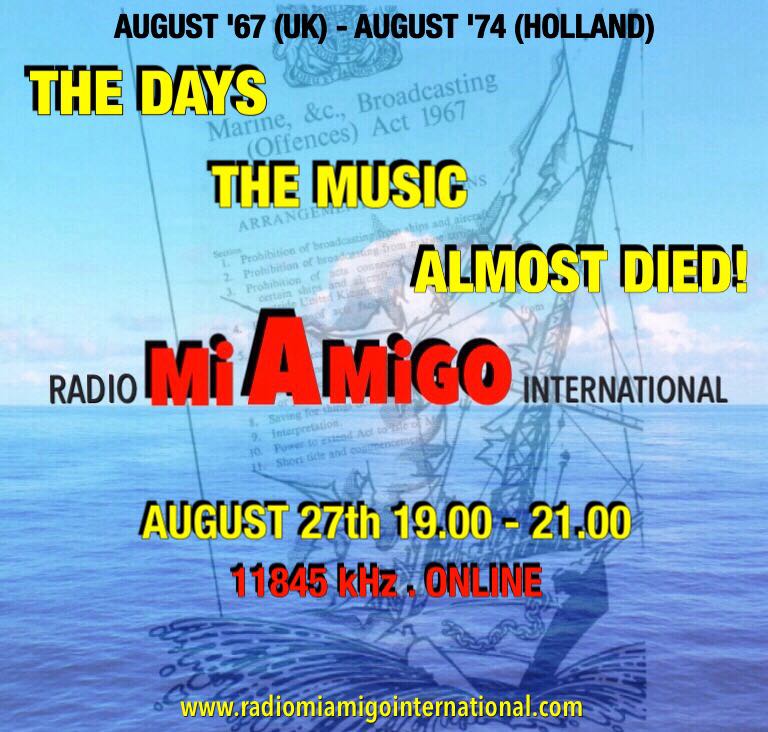
Radio Mi Amigo International presents a very special live broadcast remembering those days ‘the music almost died’. We remember Aug. 1967 (UK) and Aug. 1974 (Netherland) when the MOA (‘Anti-Pirate-Law’) became law in those countries and stopped most of the offshore stations. We remember with the songs from that time and some original recordings.
The show will be aired on August, 27 from 19 – 21 hr CET (17 – 19 hr UTC) on 11845 kHz in the 25m SW-band with 100 kw of power all over Europe and also online on our webstreams.
With travels, solar eclipse events and family activities this week, I’ve had very little time to play radio.
Yesterday was a gorgeous day though, so I took the family to the Blue Ridge Parkway and (of course) packed a couple portable radios.
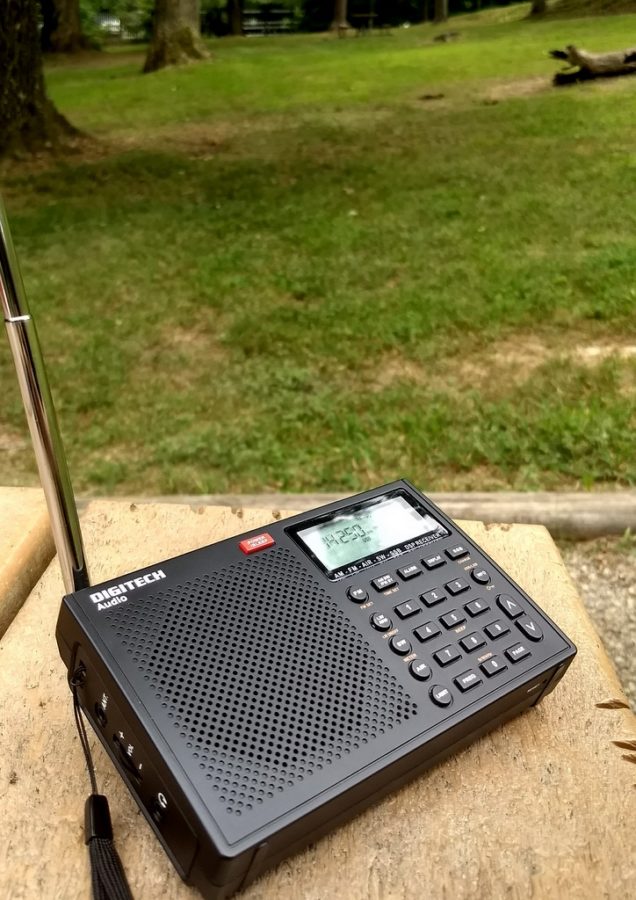
While we all enjoyed a picnic, I pulled out the AR-1780 with the intention of exploring its SSB performance and audio fidelity. I found an Islands On The Air (IOTA) activation with a decent pileup on 14,250 kHz.
Overall, I’m very pleased with the AR-1780 on SSB. The noise floor is pretty low, the filter selections are handy and the overall audio is comparable to slightly larger portable radios.
The dedicated fine tune control is quite handy, even though it’s oddly located on the right side of the radio (where one typically finds a volume control).
I’m putting together a short review of the AR-1780, but will need more air and comp time before I form any firm opinions.
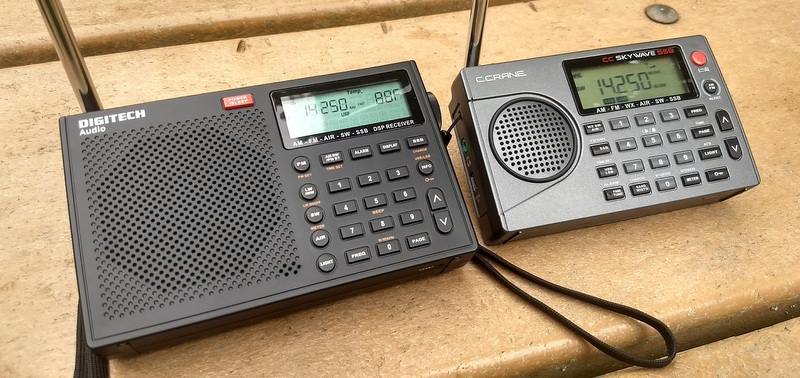
For readers that have made it this far down the post, you might recognize a yet-to-be-released portable next to the AR-1780. Of course, I’m comparing it with the AR-1780 and its predecessor, but it’s not a production run unit (yet!), so I can’t comment on performance. Stay tuned, though, as I will be posting more in the coming days!
I was not aware of this unique Panasonic model, Mario. Thanks for sharing!
Mario points out that the tuning mechanism on this Radar Matic RF-880 does not function. Any eBay bidder would have to be willing to repair this otherwise very clean unit.
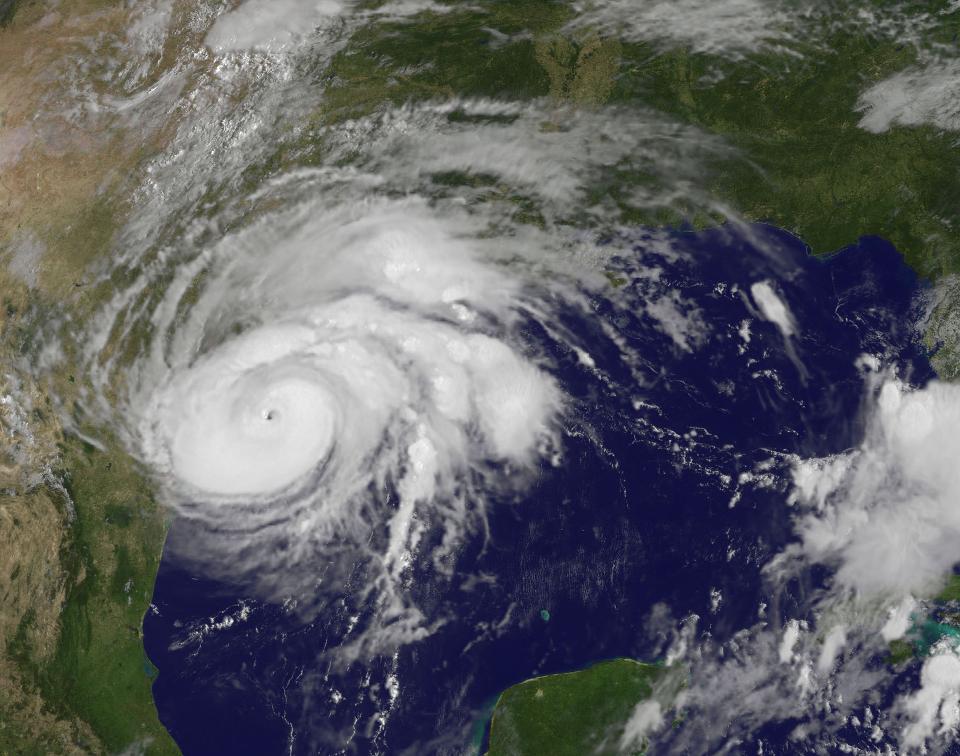
As Hurricane Harvey makes its slow trek through toward Corpus Christi, we’re watching what might become one of the most damaging storms this decade in the States.
Each hurricane season, I receive emails from readers asking about frequencies to monitor as the storm approaches.
Hurricane Watch Net (HWN)
The Hurricane Watch Net is a group of amateur radio operators who are trained and organized “to provide essential communications support to the National Hurricane Center during times of Hurricane emergencies.” The HWN focuses on “ground truth” observations (much like SkyWarn nets).
The Hurricane Watch Net is activated when a hurricane is within 300 statute miles of expected land-fall. The HWN covers the Caribbean, Central America, Eastern Mexico, Eastern Canada, and all US Coastal States.
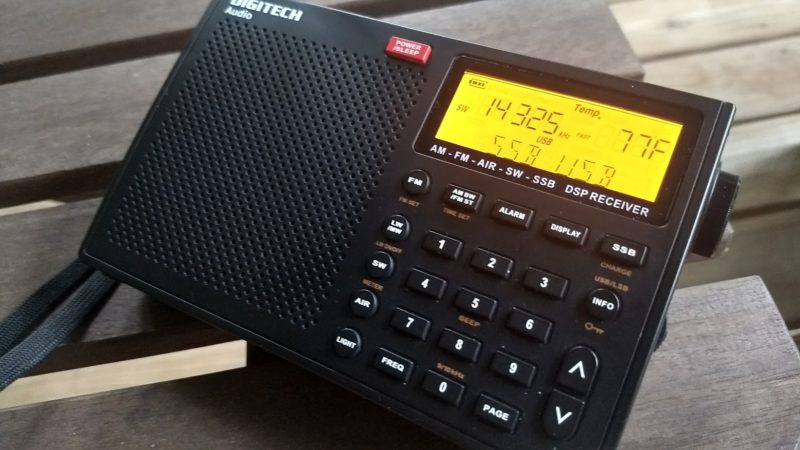
The HWN operates in both English and Spanish, and is active on 14.325 MHz (upper sideband) during the day and 7.268 MHz (lower sideband) at night.The HWN is known to operate on both frequencies if propagation allows.
Please keep HWN frequencies clear
If you’re an amateur radio operator, please avoid using 14.325 MHz and 7.268 MHz anytime the HWN has been activated.
Monitoring hurricane frequencies
If you have a shortwave radio with a BFO/SSB mode–and you live within the propagation footprint–you can monitor the Hurricane Watch Net.
Note that you’ll need to use upper sideband on 14.325 MHz and lower sideband on 7.268 MHz.