Author Archives: Thomas

2017 BBC Midwinter Broadcast test transmissions

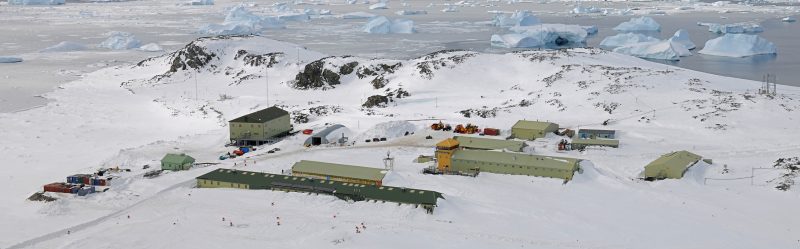
Rothera Research Station, Adelaide Island, Antarctica (Image Source: British Antarctic Survey)

Many thanks to SWLing Post contributors, Richard Langley and Mauno Ritola, who shared frequencies and times for the test transmissions in advance of the BBC Midwinter broadcast next week (June 21).

I didn’t get their tips in time to post prior to the transmissions yesterday, however, Mauno believes there may be another test transmission today.

This schedule was originally posted by Martin Goulding on BDXC-UK list–times are GMT:

ASCENSION

2130-2145 7360 kHz

DHABAYYA

2130-2145 – 6035 kHz

WOOFFERTON

2130-2145 7230 kHz
2130-2145 5985 kHz

Please comment if you log a test transmission today (or if you logged one yesterday)

As in years past, I plan to record the actual broadcast next week and share all of your recordings here on the SWLing Post as well.

Click here to browse the Midwinter recordings from last year.

Radio Bulgaria petition

Many thanks to SWLing Post contributor, David Iurescia (LW4DAF), who writes:

Hi Thomas: I’m sending you what I received today from Radio Bulgaria.
The petition can be read in Spanish, English or Bulgarian.

Dear Friends:

We need your support for a noble and responsible cause.

Radio Bulgaria, which belongs to National Radio of Bulgaria, is the only means of communication that presents the image of Bulgaria before the world in nine languages, as well as in Bulgarian language with programs destined to the Bulgarian communities abroad. Today Radio Bulgaria faces the risk of being in history!

We urge you to support the efforts of editors, journalists, translators and institutions against this destructive act, contrary to the interests of society and statehood of Bulgaria, signing our request to save our, and yours also Radio Bulgaria.

Here is the address of the website with the request: http://www.saveradiobulgaria.com/en

Sign, please.

Spanish Language Section of Radio Bulgaria

Many thanks, David!

Carl Laufer of RTL-SDR.com on HamRadioNow

(Source: Southgate ARC)

Carl Laufer’s RTL-SDR on HamRadioNow

Carl Laufer isn’t a ham (yet), but he got caught up in the RTL-SDR craze in his home town, Auckland NZ, as he was completing his PHD

He began writing about them, and selling them, on his blog at www.RTL-SDR.com, and soon discovered that the little SDR receiver dongles could stand some improvement.

So he designed ways to make them work better, and contracted a Chinese manufacturer to build them with his mods. That just about doubled the price, from $10 to about $20. Yeah, big deal.

TAPR invited Carl to come to the 2017 Dayton Hamvention to talk about them at both their Friday Forum (part of HamRadioNow Episode 324) and as the main speaker at the TAPR/AMSAT Banquet.

And we got him for a conversation with HamRadioNow’s KN4AQ and PhasingLine’s Chicken With Fries in the SIB back in Tent City.

Watch HRN 328: Carl Laufer’s RTL-SDR on HamRadioNow:

Click here to watch on YouTube.

I got to meet Carl at the Hamvention this year–what a great guy and his website is certainly the best source of information about the RTL-SDR.

I should note that I also met with contributor, Mike Ladd, in person at the Hamvention. Mike now works for SDRplay.

This is one of the great things about gatherings like the Hamvention–it brings together so many people that you’d otherwise likely never meet in person!

NASA’s ionospheric experiment tonight and remembering The Woodpecker Project

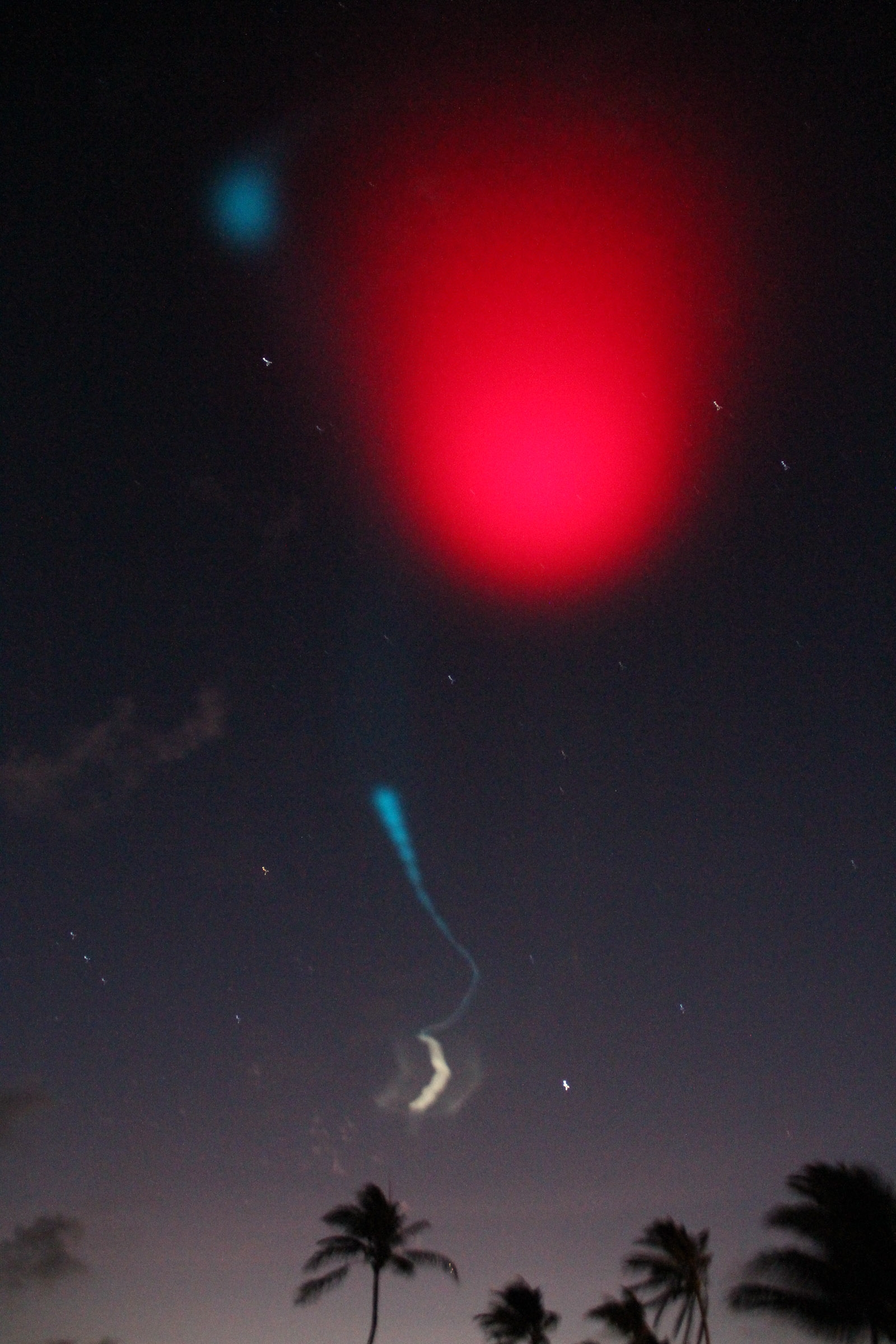
The gas mixtures from NASA’s ionospheric experiment cause parts of the night sky to glow blue and green. (Photo: NASA)

Many thanks to SWLing Post contributor, Ed, who writes:

It might be interesting if you invited SWLing Post readers today see how NASA’s ionospheric experiment tonight (shortly after 9:00PM ET) affects RF propagation along the east coast:

http://www.smithsonianmag.com/smart-news/nasa-will-make-colorful-clouds-near-sunset-tonight-180963652/

I searched online to find any reference to this long series of NASA experiments affecting RF propagation, and found this 1980 paper:

https://ntrs.nasa.gov/archive/nasa/casi.ntrs.nasa.gov/19810005401.pdf

…which contains this paragraph:

Ionospheric Modifications

The objectives motivating various experiments based on either decreasing or increasing the ambient plasma density by means of a chemical release include: (a) obtaining measurements of the rate of refilling after creation of a plasma depletion “hole” as a means of studying ambient ionization processes, (b) studying the magnetic field aligned propagation of VLF waves by creating a propagation duct, (c) simulating the formation and movement of the natural depletion “bubbles” which occur over the magnetic equator, (d) investigations of reaction rates, recombination coefficients, airglow production, etc., and (e) creating the conditions for inducing selected plasma instabilities to produce ionospheric irregularities and spread-F conditions. The science objectives in these experiments have a direct bearing on communication problems. Other forms of ionospheric modification are directed toward studying ionospheric/magnetospheric coupling and testing plasma theories.

So it might be fun to crowdsource from the SWL community to see if we can detect any propagation anomalies Tuesday night during this brief experiment. It’s unfortunate there’s not more time to coordinate different listeners monitoring different assigned frequencies. This reminds me of participating in ANARC’s “Woodpecker Project” in 1985 with 95 other SWL’s in 18 countries to determine the interference effects on HF broadcast from the Soviet Union’s use of Over-The-Horizon (OTH) radar in the HF bands.

I wonder how many SWL’ing Post readers participated in The Woodpecker Project and still have the nice “No Woodpeckers” tee shirt they earned for submitting their findings, which were combined into a final report that condemned the Soviets for causing interference on the HF bands.

Thanks for the tip, Ed! According to the linked article, the experiment will take place this evening, “soon after nine o’clock eastern time” (or 01:00 UTC).

This would be a great time to do an SDR wideband spectrum recording since you could possibly see any propagation effects on the waterfall display and play the event over multiple times. I’ve no clue if this experiment would yield any discernable results on HF, but it would be fun trying to detect it nonetheless.

Please comment if you plan to check out the experiment and/or if you were a participant in the Woodpecker Project!

2017 Hamvention photos: Saturday Flea Market

While looking through photos I had backed up on my laptop, I discovered a set I took at the Hamvention Flea Market on Saturday morning (May 20, 2017). I’ve gotten tremendous positive feedback from the photos I posted of Hamvention Setup, the Friday Flea Market and Inside Exhibits, so I thought I’d post these as well.

Below, you’ll find 84 additional flea market photos. Click on the thumbnail to expand each photo. I’ve tried to include price tags when possible. I’m sure some of these items are also featured in my Friday flea market photo album. Enjoy:

Radio Erena “provides a voice for the voiceless”

(Source: Open Democracy)

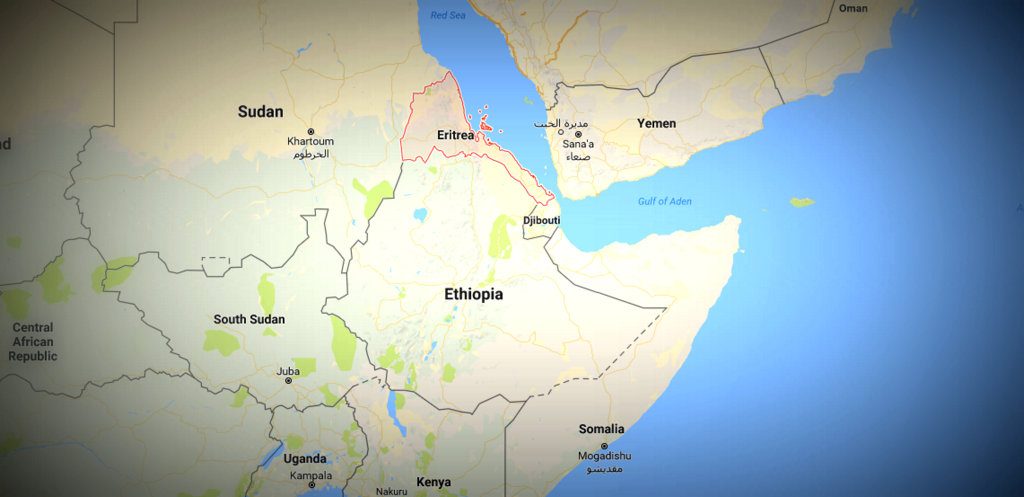
Eritrean radio station Radio Erena provides a voice for the voiceless

Broadcasting from Paris, Fathi Osman’s Radio Erena challenges the government’s monopoly on truth and champions those who gave their lives for freedom of expression.

Last night turned out to mark a double-celebration for Eritrean journalist Fathi Osman. While the father-of-four nearly let his 51st birthday slip by unnoticed, he certainly couldn’t play down his radio station’s spectacular win at One World Media Awards in London’s BAFTA building.

Radio Erena (‘Our Eritrea’) broadcasts from Paris, where Fathi now lives with his wife and children, having fled the dictatorship five years ago. The station was founded in 2009 by the well-known exiled Eritrean journalist Biniam Simon, with support from Reporters Without Borders. The goal? To offer a lifeline of independent news, information and entertainment for Eritreans both in their homeland and worldwide.

As Fathi held out his hand to shake mine, he noticed his fingers were stained inky blue. “Ah, you can tell I’m a writer,” he observed with a smile. Currently Radio Erena’s Assistant Project Manager, in the past Fathi worked variously as a journalist and diplomat before he left the Eritrean embassy in Riyadh to seek safety in France. “I had developed ideas that the government did not accept,” he explained, “and you know, with these kinds of conflicts, in the end you will meet trouble.”

Fathi’s family was among more than 4,000 Eritreans who flee each month. And is it any wonder, given the UN June 2016 report that the regime has been responsible for crimes against humanity since 1991? Known globally as a predator of press freedom, President Isaias Afewerki has led Eritrea to be ranked consistently as the very lowest of 180 countries in Reporters Without Borders’ World Press Freedom Index, though in 2017 the regime came second-last as North Korea deteriorated even further.

Afewerki’s purges in September 2001 ended Eritrea’s free press – by now, seven of the 11 journalists arrested at that point have died in detention. This year at least 15 journalists are believed to be detained without charge or trial. Dawit Isaak, a Swedish-Eritrean citizen who had returned to Eritrea to open Setit – the first independent newspaper there, has not once talked to a lawyer in 16 years of imprisonment. His fate is unclear.

Far from having deterred the four journalists based in Radio Erena’s newsroom (as well as their 25 or so correspondents worldwide), these appalling abuses have driven them to pour every effort into remedying the crackdown. The station broadcasts in Tigrinya and Arabic by satellite and short wave – and is available online or via a mobile phone app.

“Within the whole of Eritrea there’s only one radio station, one newspaper,” Fathi explained. “That means the ‘truth’ is dominated by the government. Radio Erena is working to counter that. We do everything, from exposing news that the government doesn’t want people to know, to hosting shows for singers and writers – and raising awareness of human rights is very important to us.”[…]

Continue reading the full article on Open Democracy’s website. 

Note: Radio Erena can be heard on 11,965 kHz between 1700-1800 UTC. They broadcast from Kostinbrod in Sofia, Bulgaria with 50 KW.