Author Archives: Thomas

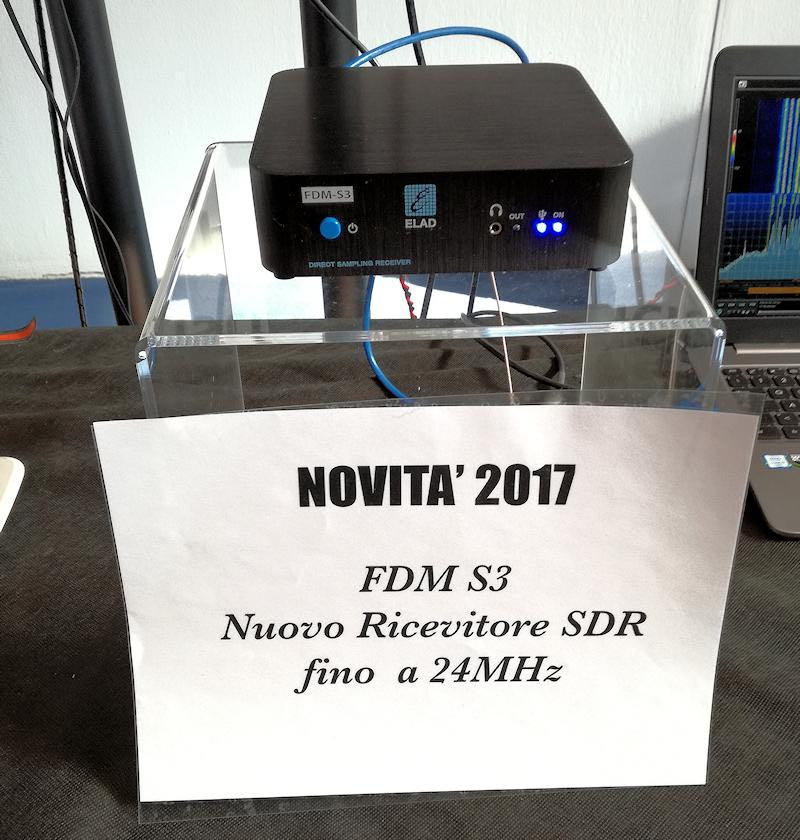
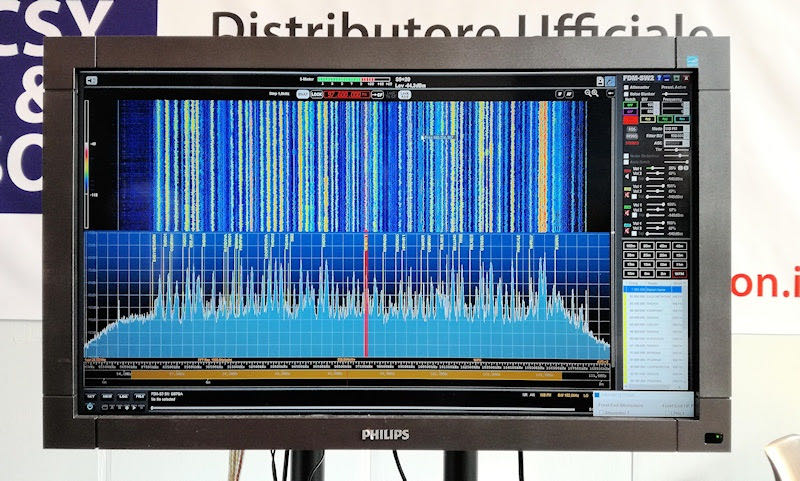
Photo of the new Elad FDM-S3

Many thanks to SWLing Post contributor, Rafman, who shares the following photos that were originally posted by Alberto (I2PHD) on the Elad email reflector. Alberto noted:

“Here it is…. shown for the first time today at the Montichiari Ham Fest. Price TBD….”

Many thanks, Rafman, for the tip!

We’ll continue to post FDM-S3 updates as they become available. I will also plan to review the FDM-S3 when it hits the market.

Click here to view the Elad website.

RTÉ to continue on longwave through June 2019

(Source: Radio Today)

RTÉ has agreed to continue its longwave 252 service in the UK until the end of June 2019.

After that, RTÉ hopes Radio 1 will gain approval from UK authorities to launch via a chain of small broadcast networks which cover main urban centres. Currently, a broadcaster has to be based in the UK to obtain an Ofcom licence.

RTÉ says using the DAB+ platform will be considerably less (approx one fifth) than the present quarter of a million per annum that RTÉ expends in running costs for 252.[…]

Continue reading at Radio Today.

Bishops ask for “restoration” of Vatican shortwave transmissions to Africa

(Source: Yahoo News via London Shortwave)

Vatican City (AFP) – African bishops have asked Radio Vatican, the official radio of the pope, to restore shortwave transmissions to the continent, the Catholic agency Fides reported on Friday.

[…]The Symposium of Episcopal Conferences of Africa and Madagascar (SECAM), meeting in the Ghanaian capital Accra, has written a letter expressing “concern about the recent shutdown of the shortwave services of the radio, which afforded millions of Africans the opportunity to hear (the) Holy Father and share in the Church’s concerns and mission,” Fides said.

[…]This year, services to Africa, Asia and the Middle East will be slashed, Fides said.”While recognising that Vatican Radio services can still be received through the Internet,” the SECAM said “many Africans simply do not have the means or the technology to enjoy such services”.

[…]Radio Vatican was created in 1931 and has services in 45 languages.

With the latest move “a heritage is in the process of being destroyed,” a Fides journalist told AFP.

Read the full article at Yahoo News.

Cornell engineers invent two-way radio on a single chip

Many thanks to SWLing Post contributor, Tom Ally, who shares the following news via the Cornell Chronicle:

Engineers devise two-way radio on a single chip

Two-way communication requires, of course, both send and receive capabilities. But putting them in the same device requires a filter between the send and receive circuits to provide signal isolation.

Without a significant filter, communication would be impossible.

“Your transmit signal is [10 to the power 14] times stronger than your receive signal,” said Alyosha Molnar, associate professor of electrical and computer engineering (ECE). “That’s 100 trillion times stronger – that’s a really hard problem.”

But researchers in Molnar’s lab have offered up a solution.

Molnar and collaborator Alyssa Apsel, professor of ECE, have devised a method for both transmitting and receiving a radio signal on a single chip, which ultimately could help change the way wireless communication is done.

Their work is described in “A wideband fully integrated software-defined transceiver for FDD and TDD operation,” published online Jan. 27 in the Institute of Electrical and Electronics Engineers’ Journal of Solid-State Circuits. Doctoral student Hazal Yüksel and Dong Yang, Ph.D. ’15, are co-lead authors.

Separating the send and receive bands is difficult enough, but the problem is compounded by the ever-increasing number of bands in the latest devices. From GPS to Bluetooth to Wi-Fi, each band requires a filter to stop the strong transmit signals from drowning out reception.

Molnar and Apsel have come up with an ingenious way to separate the signals. Their idea lies in the transmitter – actually a series of six subtransmitters all hooked into an artificial transmission line. Each sends its signal at regular intervals, and their individually weighted outputs are programmed so that they combine to produce a radio frequency signal in the forward direction, at the antenna port, while canceling out at the receive port.

The programmability of the individual outputs allows this simultaneous summation and cancellation to be tuned across a wide range of frequencies, and to adjust to signal strength at the antenna.

“In one direction, it’s a filter and you basically get this cancellation,” Apsel said. “And in the other direction, it’s an amplifier.”

“You put the antenna at one end and the amplified signal goes out the antenna, and you put the receiver at the other end and that’s where the nulling happens,” Molnar said. “Your receiver sees the antenna through this wire, the transmission line, but it doesn’t see the transmit signal because it’s canceling itself out at that end.” […]

Continue reading on the Cornell Chronicle.

Shortwave Shindig rebroadcast via WRMI tonight!

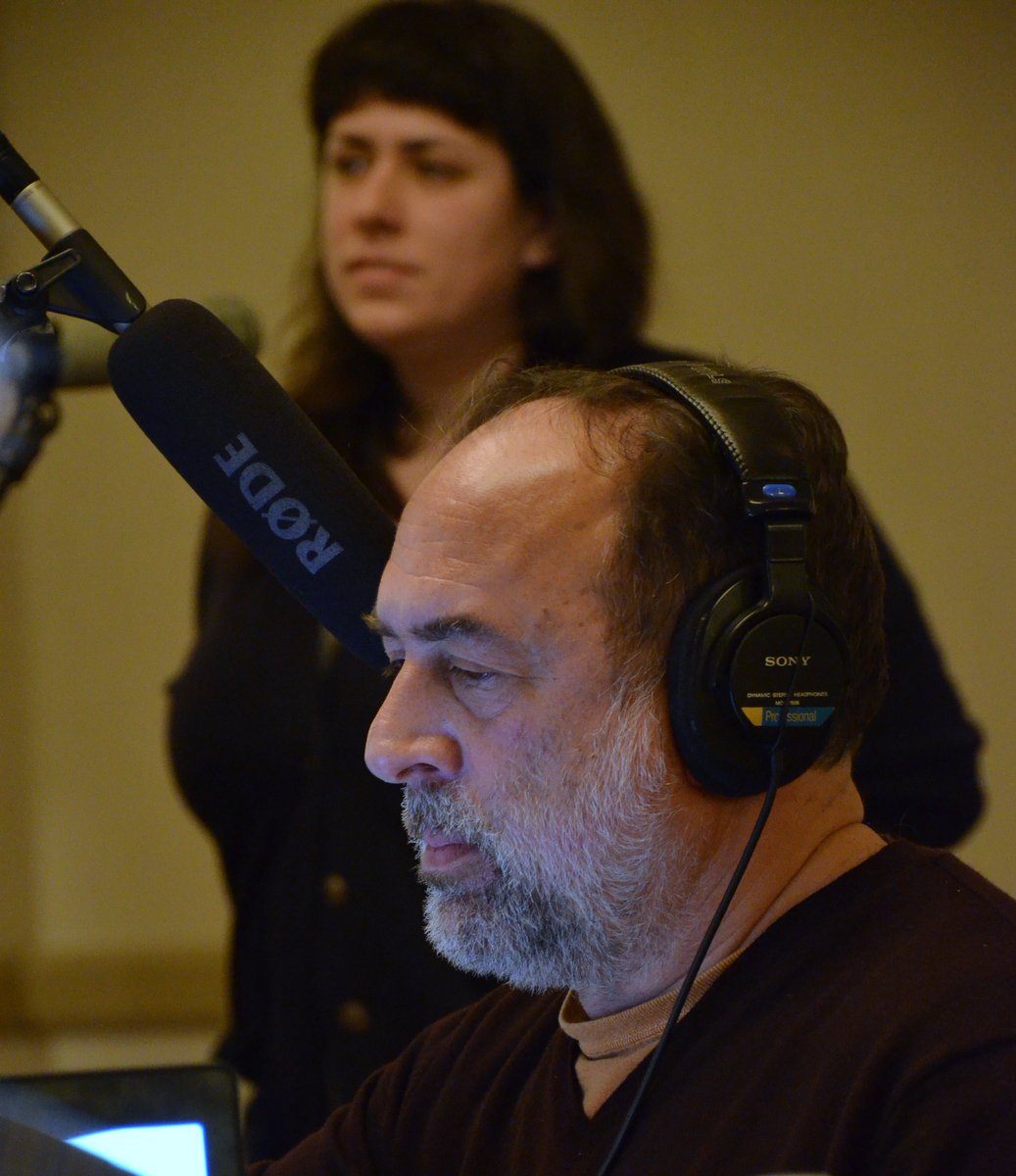
Jess Puglisi of WGXC (Wave Farm) and David Goren at the 2017 Shortwave Shindig live broadcast.

Many thanks to SWLing Post contributor, Richard Cuff, for sharing the following details:

Repeat shortwave airing of the Shortwave Shindig on WRMI — Saturday 3/11 0300 UTC, same time as last week; same frequencies (9395 aimed north, 6855 aimed west).

Thanks to David Goren and Jeff White for arranging this!! Will update as on-demand / streaming availability is determined.

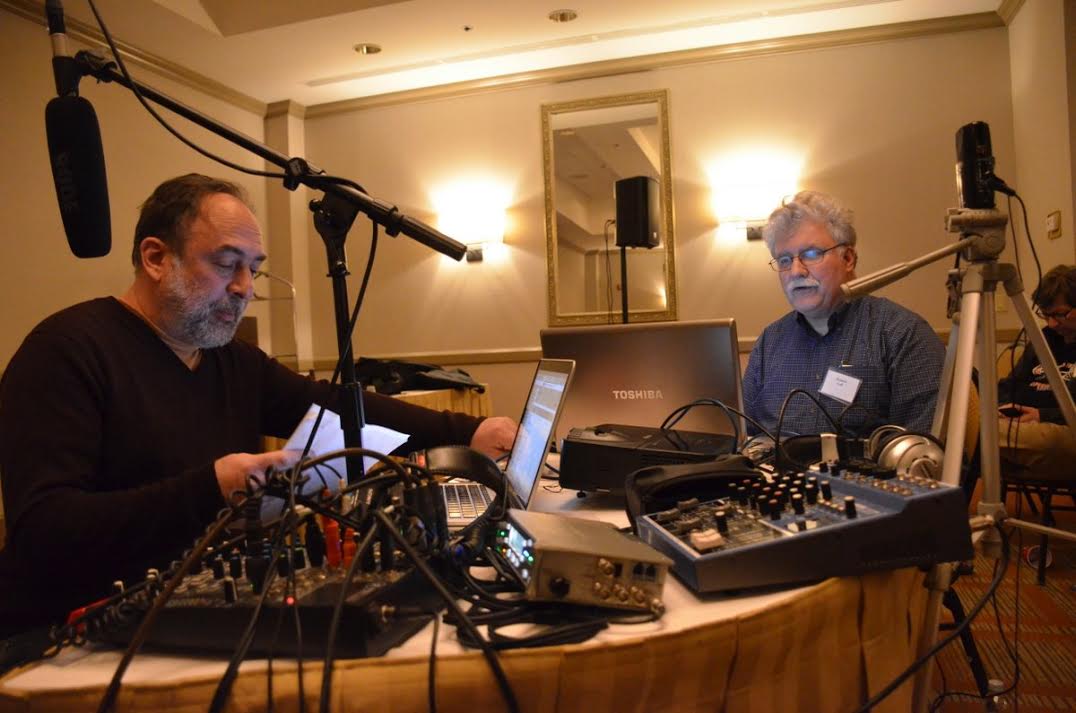
David Goren (left) and Richard Cuff (right) during the Shindig live broadcast.

Note that for those of us in North America, the Shindig rebroadcast will take place at 22:00 EST tonight (0300 UTC Saturday) on 9,395 kHz aimed north and 6,855 kHz aimed west from WRMI.

I plan to record the broadcast tonight as propagation was so poor last week, very few listeners could enjoy it.

pantronX Titus II quick update

Many thanks to SWLing Post contributor, Ed, who notes:

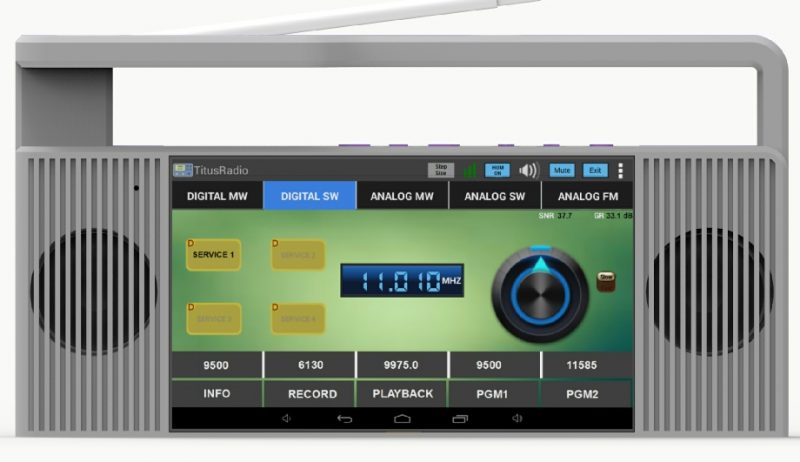
I just received a status update on the pantronX Titus II portable SDR from Mike, their chief engineer.

Mike said the self-contained SDR portable will include “SoapySDR as the interface to make it much easier to roll your own SDR app.” Here’s some info about SoapySDR:

https://github.com/pothosware/SoapySDR/wiki

Mike also said, “To be 100% truthful, our biggest push right now is for the international MW & SW broadcasters. They want to go DRM digital is the worst way!”

You might want to share this news with SWLing Post readers.

Thank you for the update, Ed! Click here to view the pantronX website.

Radio Slovakia International asks, “Why is shortwave radio still alive?”

Many thanks to a number of SWLing Post readers who shared a link to this article via Radio Slovakia International:

Why is shortwave radio still alive?

If you use the internet to listen to streaming audio and podcasts, you could be forgiven for assuming there’s no need for shortwave radio any more. It seems many broadcasters appear to agree, with stations dropping their shortwave services year after year.

But not so fast. Shortwave’s not dead, say its proponents. Rather, it’s in a state of transformation. Not only does it still provide a vital service for the many millions of individuals worldwide who don’t have access to the internet, but this medium also has a certain ‘magic’ which, we discovered, is very hard for its fans to explain.

In this entertaining, full-length feature, Gavin Shoebridge asked shortwave listeners from across the globe to explain why they still use the service, why they don’t ‘go digital’, and where they think shortwave will be in the coming years.

Click here to download the MP3 audio.

Click here to read and listen via Radio Slovakia International.