Author Archives: Thomas

WTWW Christmas Shortwave Radio Picture Contest

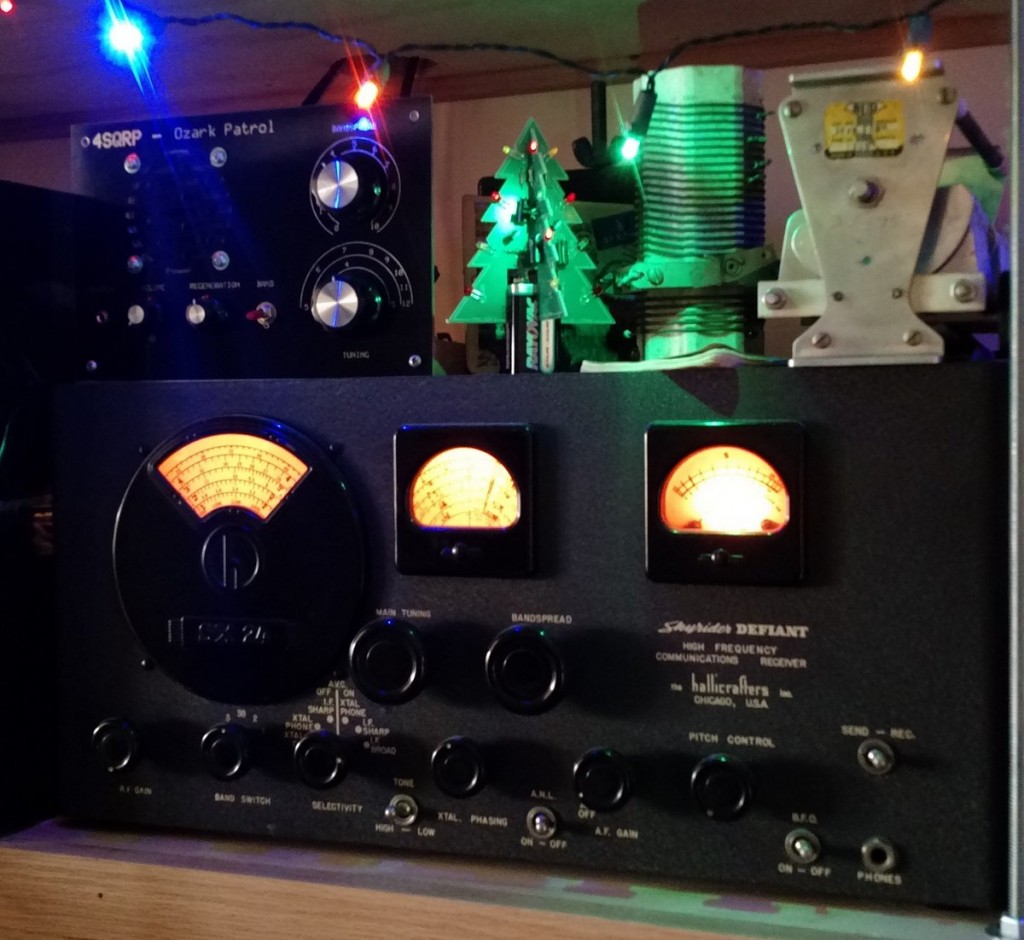
Yes, though I'm not entering the contest, I am getting into the spirit of the season!

Though I’m not entering the WTWW contest, I *am* getting into the spirit of things!

(Source: WTWW via David Korchin, K2WNW)

It’s Christmas music on International Shortwave Radio Station WTWW. We want the shortwave radio to take the place of the electric train under the Christmas Tree! We are asking for pictures of your shortwave radios – the most festive picture wins! Include yourself, friends and family, include the Christmas tree, or deck your radio with boughs of Holly and all things Christmas!

Send your pictures to [email protected] for the chance to win the Grand Prize – a TW 2010 Antenna complete with the quadra stand and custom carry bag! During the week we are starting on 5085 kHz at 7pm CST until 11pm CST. On the weekends we are starting at 1pm CST on 9930 kHz until 7pm when we change to 5085 kHz and it will go until late into the night.

Blow the dust off of those classic radios and get them out of the closet or attic and Tune In for Bing Crosby, Montovani, Dean Martin, Burl Ives, Mannheim Steamroller and many more. There is nothing like the sound of Christmas music coming out of the speaker of a classic shortwave radio.

We will even accept creative pictures of not so classic radios and newer radios including SDR’s that look festive and capture the spirit of Christmas. We also love and welcome videos with WTWW playing in the background. If you think your radio can make Santa smile, then send us your picture – you could be our big winner! Other prizes will be announced as we go along.

[email protected]

or

WTWW
P.O. Box 102
Lebanon, TN 37088
Wired: Inside Bang & Olufsen

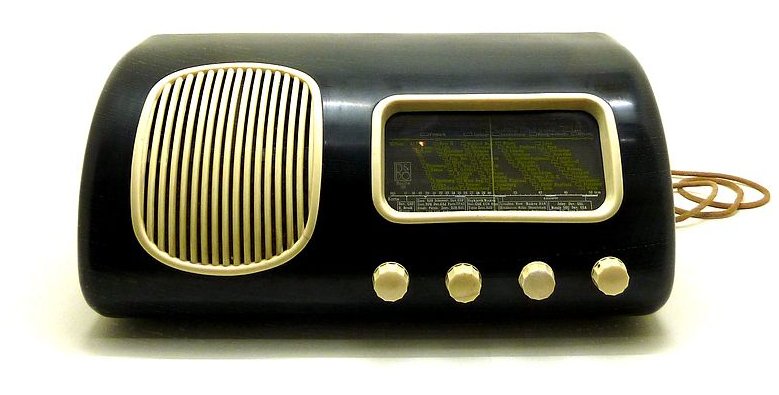
Beolit 39 from 1938, B&O's first Radio in Bakelite (Source: Wikipedia, image by Theredmonkey)

Beolit 39 from 1938, B&O’s first Radio in Bakelite (Source: Wikipedia, image by Theredmonkey)

On the topic of beautiful radio design, I just read this Wired Magazine article which features photographer, Alastair Philip Wiper.

Wiper has been researching the Danish consumer electronics company Bang & Olufsen for his upcoming book, The Art of Impossible: The Bang & Olufsen Story. He was granted unprecedented behind-the-scenes access to B&O, where he learned about the company’s design philosophy, process and history. Here’s a short excerpt from the article:

“In the mid-1950s, design greats like Arne Jacobsen began experimenting with new materials and colors, galvanizing a wave of mid-century modern Danish furniture makers. Everything was sleek, teak, and handsome—it still is—but exhibits showing off the new pieces had a curatorial problem: no one was making modern radio cabinets, forcing curators to display decidedly outdated designs alongside the stylish new furniture. The technology definitely needed a major overhaul.

Bang & Olufsen joined a handful of radio manufacturers in rising to the challenge. The two men spent a few years doing research and working with architects and designers to design devices as beautiful as they were functional—an approach widely taken for granted today but novel at the time[..]”

I encourage you to read the full article at Wired.com and view some of the photographs in their online gallery.  If you’re not familiar with B&O design, do a simple image search online.

Video: How The Teleprinter Works (1940)

Telegraph

(Source: Stephen, G7VFY, via the Southgate ARC)

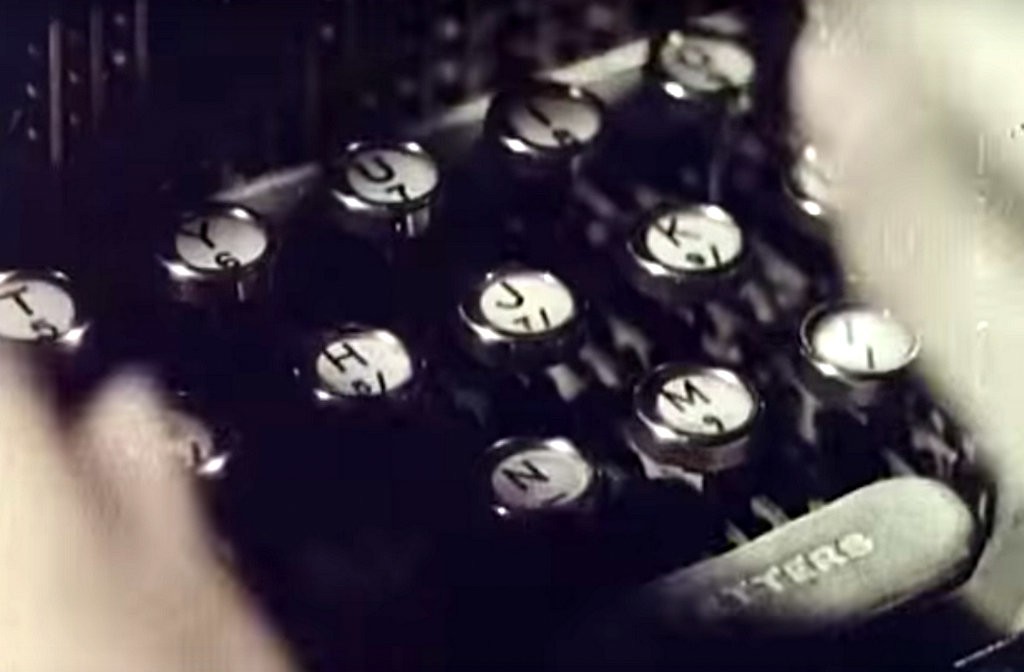
Produced by the GPO Film Unit. Models are used to demonstrate the working of a teleprinter. Shown is how the pressing of a key on the keyboard generates a five unit teleprinter code, is then transmitted as a serial code to the teleprinter line and finally is decoded to select the correct character on the type wheel of the printing mechanism of the receiving teleprinter.

https://www.youtube.com/watch?v=HcMHam54EOI

Click here to view on YouTube.

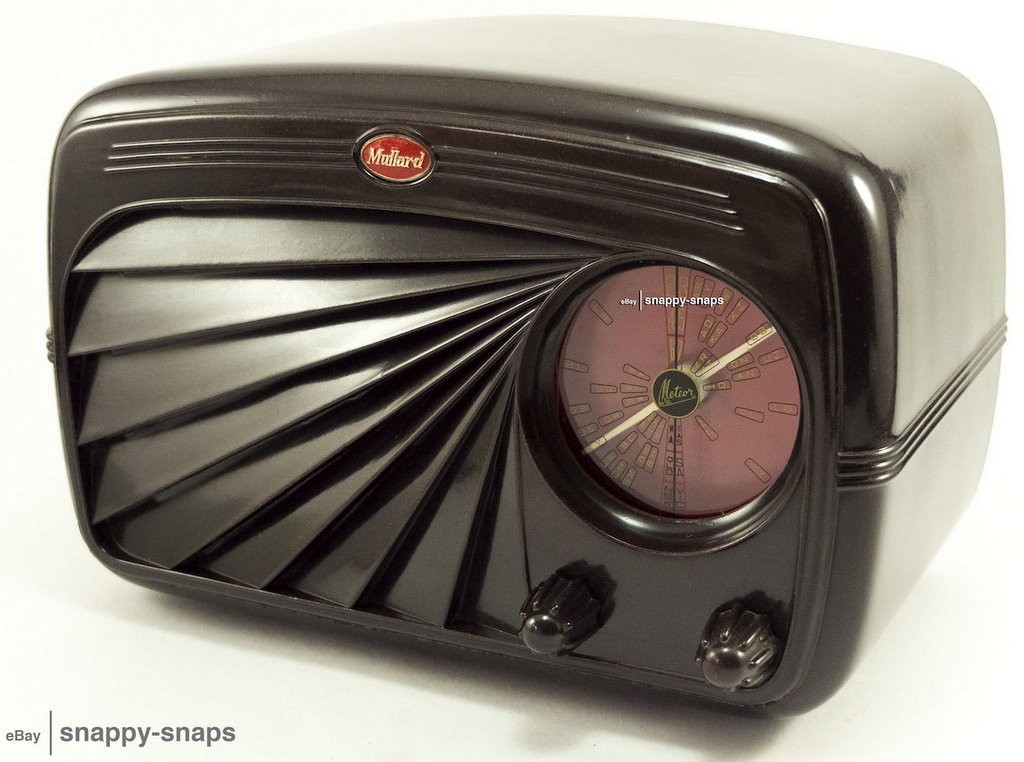
eBay find: Mullard Meteor 600A

Mullard-Tube-Radio-Bakelite-1Many thanks to SWLing Post reader, Monti, who knows that I have a serious affinity for 1940s era receivers. Monti writes from his home in Australia:
I had to send you this link Thomas. I’ve never seen this model before but what a stunning shape for a 40’s piece.

Look at this on eBay:
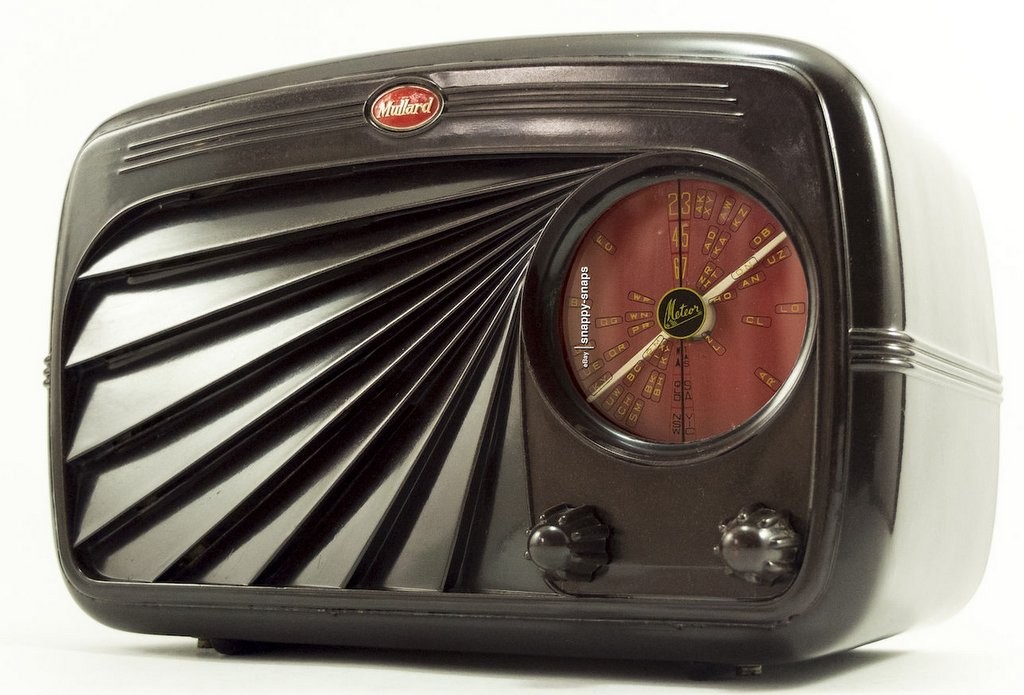
Mullard Meteor 600A Vintage Art Deco Bakelite Valve Radio c.1947

Lovely! While I could never pay $485.00 AUD for a non-working radio, I can certainly appreciate this gorgeous and unique design with radiating speaker grill louvres.

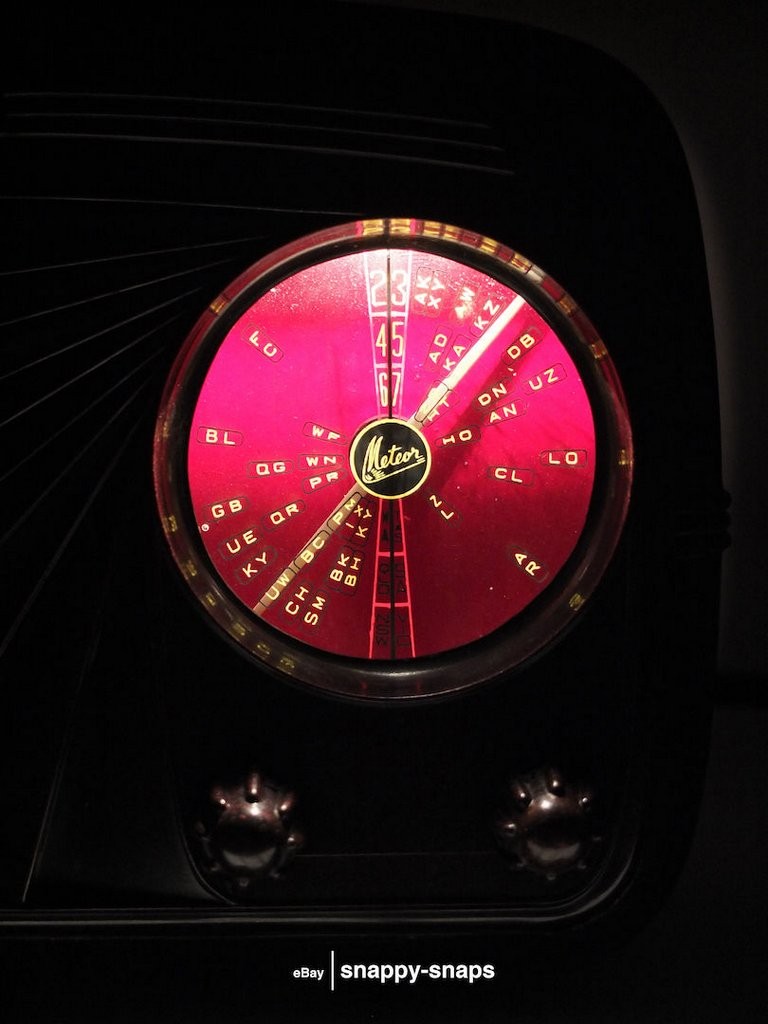
Check out this beautiful “meteor” dial:

Mullard-Tube-Radio-Bakelite-2

What a stunning radio!

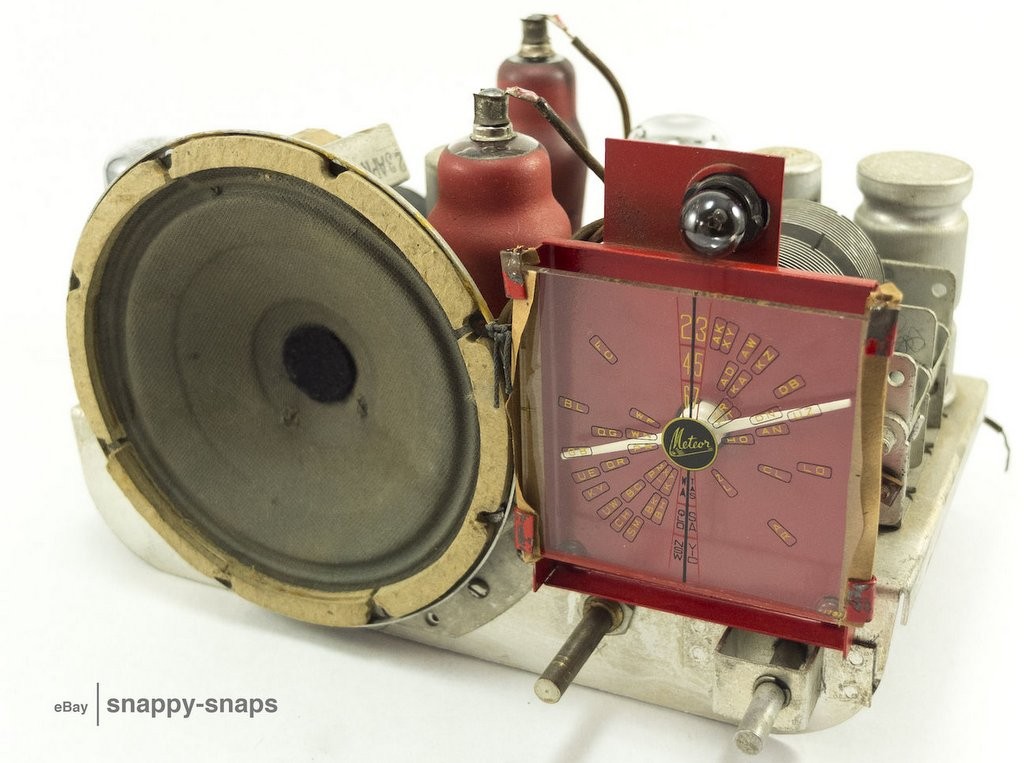
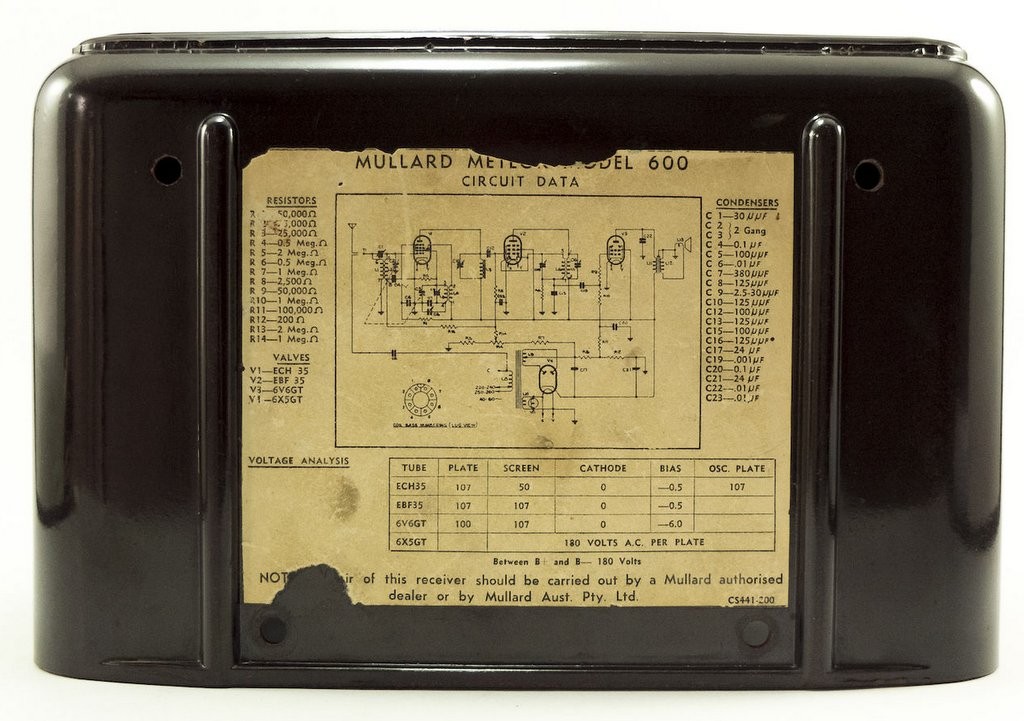
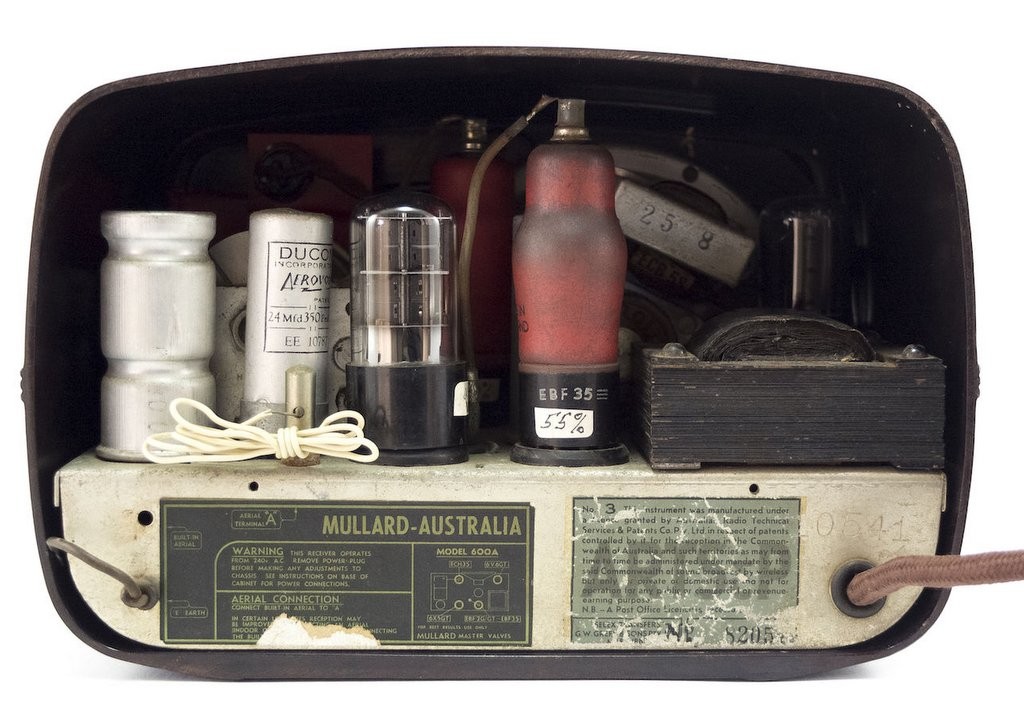
Here are a few more pics I snatched from the eBay listing:

Mullard-Tube-Radio-Bakelite-3Mullard-Tube-Radio-Bakelite-5

Mullard-Tube-Radio-Bakelite-4

Mullard-Tube-Radio-Bakelite-6

Thanks for sharing, Monti!

Any lucky SWLing Post readers in Australia or New Zealand own one of these Mullards?

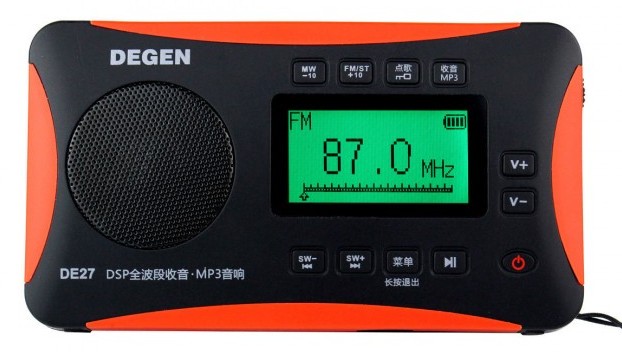
Phil’s initial impressions of the Degen DE27

Degen-DE27

Many thanks to SWLing Post reader, Phil Ireland, who comments:

I’ve just received my Degen DE27 from China. Interesting little radio, I haven’t had a good chance to put it through its paces yet but my initial impressions are the radio seems well built and fairly intuitive to turn it on.

However, all the instructions are in Chinese so luckily there was someone in my office who could set the language to english otherwise, setting up the radio is a nightmare! I will have to take the radio outside to test its performance as the office environment is useless to listen in.

The box says the radio tunes from 3.2 mhz to 21.850 mhz however, I havent been able to work out how to make it tune out of the standard SW Broadcast Bands yet. Toggling between 10 khz and 9 khz steps for AM is easy as it setting the FM band coverage but I’m yet to determine the SW settings. It appears tuning is only in 5 khz as well on SW.

As for venturing into MP3 settings and recording, I’ll leave that, it seems too much of a challenge! The clock and calendar, sleep timer, alarms are all fairly straight forward but there is an “E-Book” setting which defies description! It has a USB flash disc function and inputs for a micro SD card. Charging the supplied Lithium battery is via a supplied USB cable.

The display is easy to read and attractive with excellent backlighting. I’m not expecting stellar performance on any band, after all, it was a cheap radio (about 40 AUD with free postage) but it is built around DSP architecture. Only a single bandwidth is available and there is no SSB capabilities. The radio hopefully will be ideal to throw onto a backpack or pocket as a travel portable.

If DEGEN read these comments, perhaps an English manual put online would be extremely helpful to allow users to get the most out of the DE27.

I’ll comment more on the performance later but for now, the radio shows promise.

Thanks so much for sharing your initial impressions, Phil! Please keep us informed as you discover more about this little radio!

This reminds me that I have yet to put my Degen DE221 through the paces. Stay tuned!

Dave reviews the Yaesu FT1XD

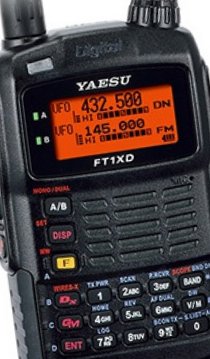
Yaesu-FT1XDSWLing Post contributor, Dave Zantow (N9EWO), has completed a review of the Yaesu FT1XD (FT1XDR) “System Fusion” Digital-Analog Handheld Transceiver.

The FT1DX 2 meter/440 HT provides both analog and digital communications on both bands with up to 5 watts. It also has wideband receiver that covers from 500 kHz to 999 MHz (US version, less cellular) including the AM and FM broadcast band. It even has a built-in ferrite bar for mediumwave/AM reception.

What does Dave think?

Click here to read Dave’s full review.

Historic Ocean Gate antenna field may be removed

GoodLuckPointMany thanks to SWLing Post contributor, Ulis K3LU, for sharing the following story from newsworks.org:

Pole removal project planned for Good Luck Point tidal marshlands

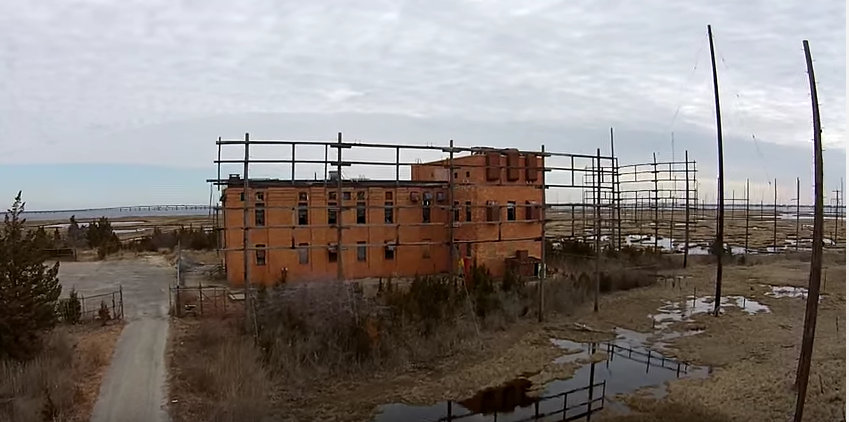
The iconic poles emerging from the tidal marshes in Bayville’s Good Luck Point may soon disappear if a federal plan clears a historic preservation hurdle.

A plan funded by the federal Disaster Relief Appropriations Act of 2013 calls for the removal of hundreds of poles along with cables, wires, metal towers, and concrete blocks that sit within Barnegat Bay marshlands at the foot of the Toms River.

“The goal of this action is to enhance coastal marsh habitats by increasing marsh resiliency from impacts of large storm events and other ecosystem stressors,” according to a U.S. Fish & Wildlife Service release.

The poles are a component of inactive shortwave antenna fields associated with AT&T’s ship-to-shore shortwave communications system, which was in operation at the sites from the early 1930s until 1999, according to the release.

The area also includes a shortwave transmitter building and antenna field. Under the call sign “WOO,” the station helped broadcast Voice of America around the globe after 1944 and enabled communication with ships at sea throughout the twentieth century.

Click here to continue reading…

The article also noted this excellent video–an aerial view of Good Luck Point:

For more information about the Good Luck Point site and its history, check out this website and this article from Wavescan.