Author Archives: Thomas

Recording the 2015 Leap Second

Fullscreen capture 6302015 115321 PM

Yesterday, I posted a brief article about the leap second that occurred between 23:59:59 June 30, 2015 and 00:00:00 UTC July 01, 2015.

I decided to record the leap second on as many shortwave time station frequencies as possible. The only viable options for me–based on time of day and my reception location–were the WWV frequencies 10, 15, 20, and 25 MHz, and CHU frequencies 7,850 and 14,670 kHz.

I was able to record four different time station frequencies simultaneously on the TitanSDR Pro.

I was able to monitor four different time station frequencies simultaneously on the TitanSDR Pro. (click to enlarge)

Unfortunately, HF propagation was very poor yesterday, so the higher WWV frequencies–20 and 25 MHz–were completely inaudible, as was CHU on 14,670 kHz. There were numerous thunderstorms in our area, so static crashes were prevalent.

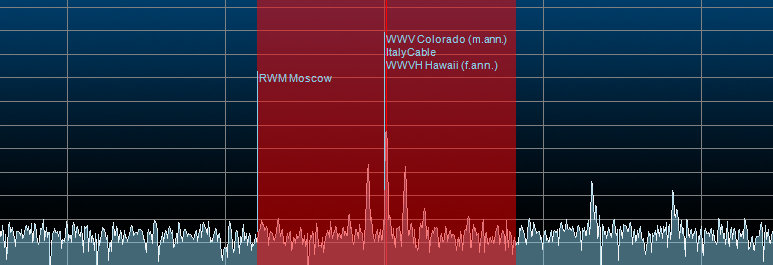
Still, since this was a first attempt to record a “leap second,” I didn’t want to take any chances.  I had the Titan SDR Pro monitoring and recording two CHU and two WWV frequencies [screenshot], the Elad FDM-S2 recording WWV on 15 MHz [screenshot], and the WinRadio Excalibur on WWV’s 10 MHz frequency, as well as recording the whole 31 meter band spectrum [screenshot].

In the end, the strongest frequencies I captured were CHU on 7,850 kHz and WWV on 15,000 kHz. WWV on 10,000 kHz was much weaker than normal and the band was quite noisy–still, it’s readable, so I included this recording, too. Recordings follow…

Recordings
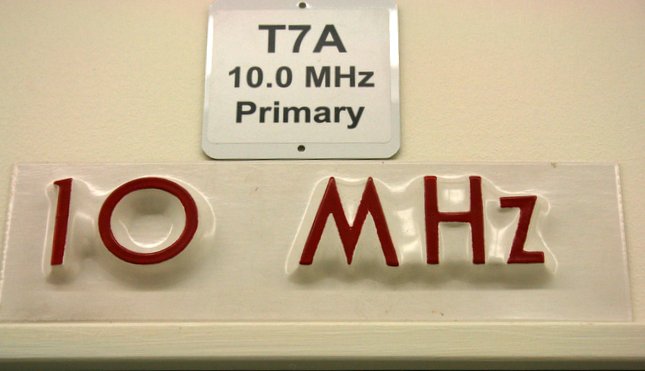
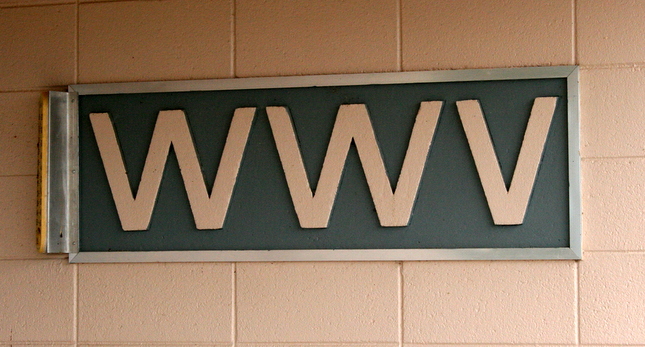
Photo I took in 2014 of the sign above WWV's primary 10 MHz transmitter.

The sign above WWV’s primary 10 MHz transmitter (2014).

All of the recordings start just before the announcement of 23:59 UTC.

WWV added the extra second and higher tone, then continued with their top of the hour announcements, including a note about leap second (which begins after the 00:04 announcement). CHU simply injects a one second silence before the long tone.

WWV on 15,000 kHz using the Elad FDM-S2:

CHU on 7,850 kHz using the TitanSDR Pro:

WWV on 10,000 kHz using the WinRadio Excalibur:

One interesting note about the 10 MHz WWV recording above: I believe I may be hearing BPM China in the background. I’m curious if anyone can confirm this because I don’t know BPM’s cadence/pattern well enough to ID it.

Other recordings…?

Did you record a shortwave time station as leap second happened? If so, please comment, and feel free to share a link to your recording!
Hang on a second…seriously

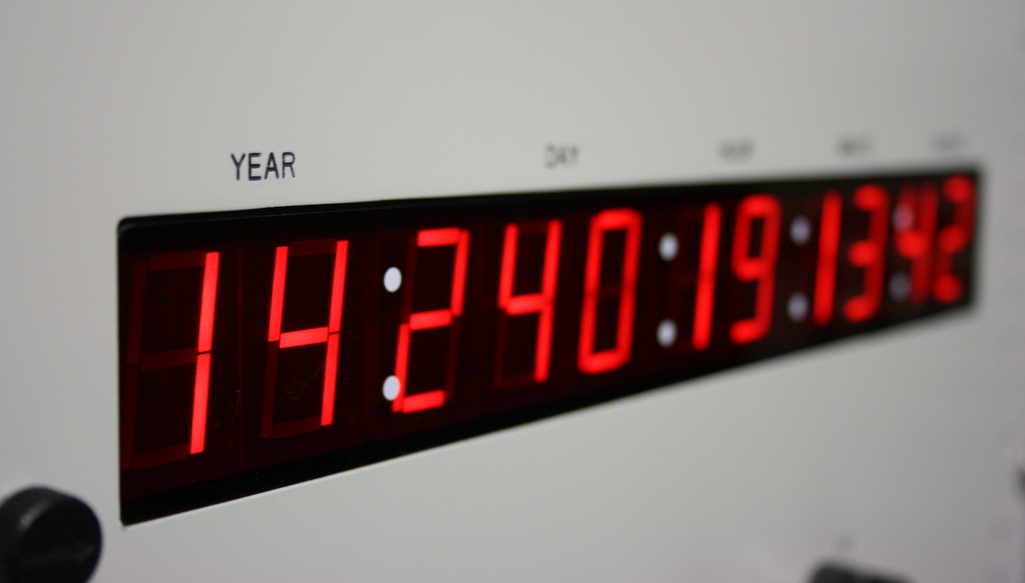
WWV-TimeCodeGenerator

One of four WWV time code generators in late August, 2014

Tonight, for the first time in three years, we will experience a leap second. What is a leap second?  Wikipedia provides a concise explanation:

A leap second is a one-second adjustment that is occasionally applied to Coordinated Universal Time (UTC) in order to keep its time of day close to the mean solar time, or UT1. Without such a correction, time reckoned by Earth’s rotation drifts away from atomic time because of irregularities in the Earth’s rate of rotation. Since this system of correction was implemented in 1972, 25 such leap seconds have been inserted. The most recent one happened on June 30, 2012 at 23:59:60 UTC. A leap second, the 26th, will again be inserted at the end of June 30, 2015 at 23:59:60 UTC.

Like many of you, when I think of time–or UTC–I think about the NIST radio station WWV in Fort Collins, Colorado.

I had the honor of visiting the facility last year (yes, photo tour still forthcoming!).  During the tour, my guide and Chief Engineer at WWV and WWVB, Matthew Deutch, told me that he’s always going to be on site come Leap Second!

MattDeutch-WWVB

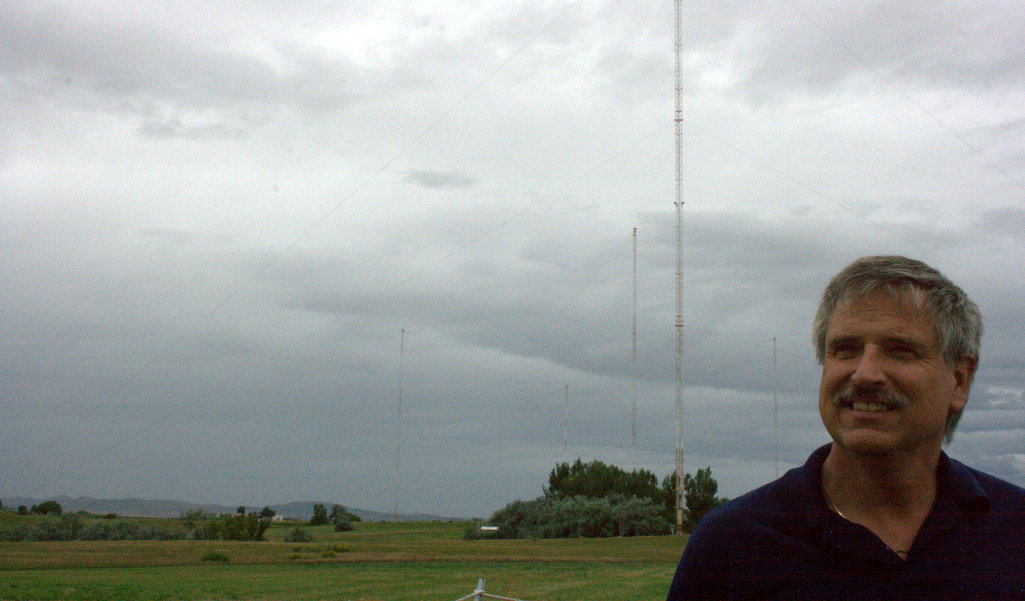
WWV’s Matthew Deutch with WWVB antennas in background

I wrote Matt this morning to ask what were his plans tonight?  His reply:

“The leap second happens at 0000 UTC tonight, which is 6:00 pm here in Fort Collins. All of the programming took place at the beginning of the month, so the equipment is armed…we just sit back and watch for the leap this evening.

Even though it is automated I hang around the station to make sure everything goes smoothly at the critical moment…”

WWV-First-Sign-SMMatthew closed his message by wishing me a “Happy Leap Second.”

Back at you, Matt! We hope that second leaps as smoothly as you’d like!

Not to put Matt on the spot, but you can listen to WWV (or the atomic clock of your choice) make the leap second tonight at 00:00 UTC. As for me, I’ll hop on 10 MHz and 15 MHz to hear (and hopefully record) the extra “tick.” At the end of this post, I’ve provided a list of time stations for your convenience.

Happy Leap Second!

20MHZtransmitter

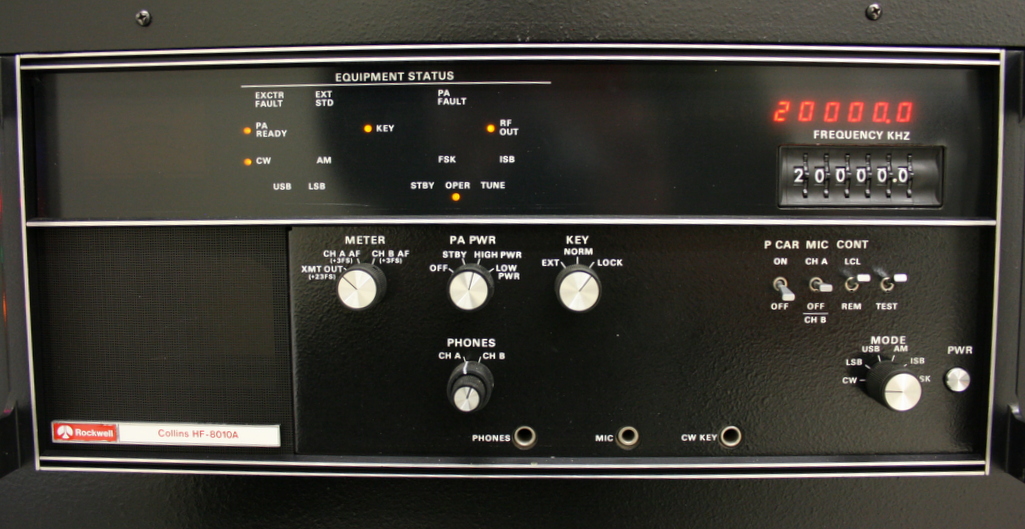
WWV 20 MHz Collins transmitter

List of shortwave radio time stations

  • CHU Canada: 3330 kHz, 7850 kHz, 14670 kHz
  • BPM China: 2,500, 5,000, 10,000, and 15,000 kHz
  • HLA South Korea: 5,000 kHz
  • BSF Taiwan: 5,000 and 15,000 kHz
  • WWV (Ft. Collins)/WWVH (Hawaii) United States:  2,500, 5,000, 10,000, 15,000, 20,000 and 25,000 kHz

Update

Click here to listen to Leap Second recordings from WWV and CHU.

Shortwave Radio Recordings: Voice of Greece

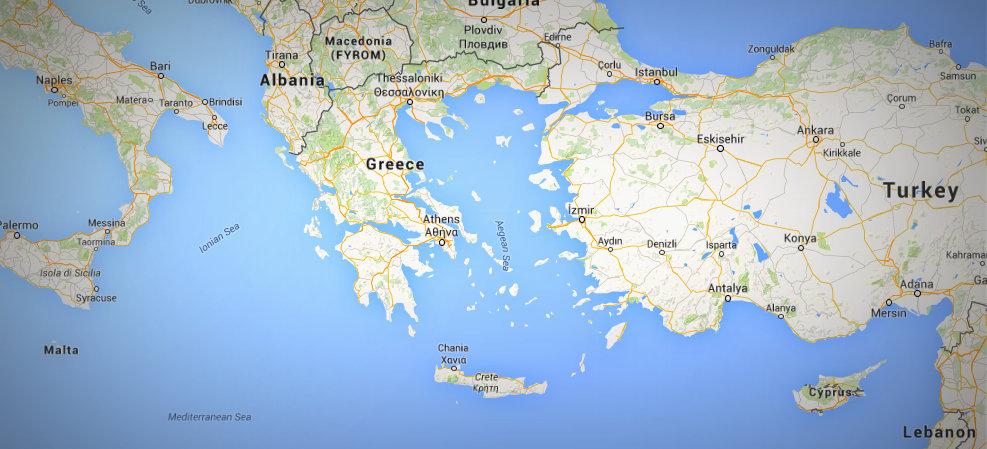
greeceFor your listening pleasure: the Voice of Greece.

This was recorded on 29 June 2015 starting around 01:50 UTC on  9,420 kHz using my WinRadio Excalibur and my horizontal delta loop external (wire) antenna.

I’m very pleased with this off-air recording because it contains several minutes of multi-language station IDs in the last 10 minutes or so of the broadcast.

Click here to download this recording as an MP3, or simply listen via the embedded player below:

A map of languages

MapOfLanguages

(Source: IFLScience)

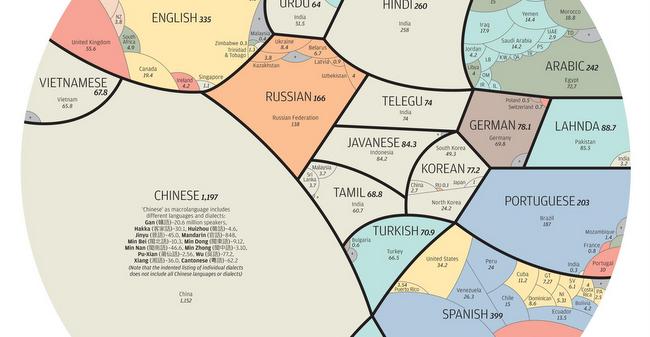
This beautifully illustrated infographic (above), designed by South China Morning Post’s graphics director Alberto Lucas Lopéz, shows the most spoken known languages in the world and where they’re spoken by the 6.3 billion people included in the study.

Based on records collated from the database Ethnologue, the infographic illustrates the wide-ranging facts and figures of the world’s living languages catalogued since 1951.

“There are at least 7,102 known languages alive in the world today. Twenty-three of these languages are a mother tongue for more than 50 million people. The 23 languages make up the native tongue of 4.1 billion people,” says Lopez on his infographic.

“We represent each language within black borders and then provide the numbers of native speakers (in millions) by country. The colour of these countries shows how languages have taken root in many different regions,” added Lopez.

You can see the full pie chart in all its technicolor glory here.

WRMI test transmission of Armed Forces Radio of Nigeria

Radio Miami International

(Source: WRMI on Facebook)

Radio Miami has arranged for a one-week test transmission of the Armed Forces Radio of Nigeria from the Issoudun, France relay site beginning Tuesday, June 30.

The transmission, which will be directed to West Africa, will be from 0600-0700 UTC on two frequencies:

  • 11,825 kHz will carry a Hausa-language program, and
  • 13,775 kHz will carry an English-language program.

Passport to World Band Radio now available for download

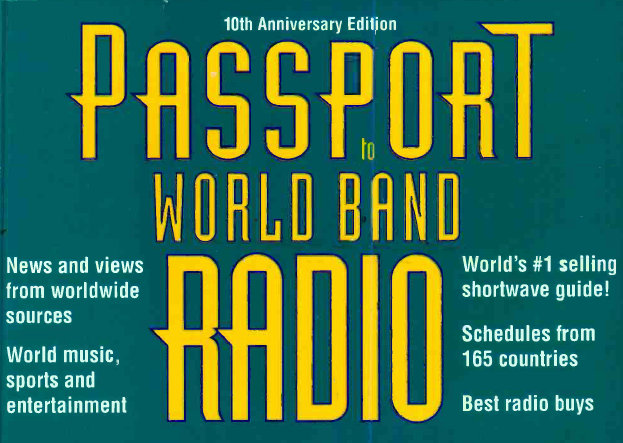
PassportToWorldband RadioMany thanks to my buddy, Skip Arey (N2EI), who informed me that the American Radio History website has added 18 issues of the late Passport To World Band Radio to their free downloads archive. These issues span 1986-2009 and are free to download. What a treasure trove!

Click here to view Passport To World Band Radio on the American Radio History website.

International Radio Serbia petition

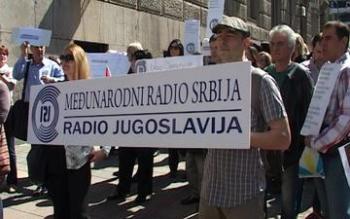
SerbiaProtestMany thanks to SWLing Post reader, David Iurescia (LW4DAF), who shares a link to this online petition for International Radio Serbia.

The link labeled, “Serbia needs a World Service” is prominent on Radio Serbia’s website.

Click here to open the petition page which is in both Serbian and English. I have pasted the English wording of the petition below:


Serbia needs a world service!

The friends and listeners of the International Radio Serbia – Radio Yugoslavia have initiated this petition to prevent the extinguishing of this media house, important for Serbia. The people signed below ask of the Serbian Prime Minister to abolish the government’s decision and that he personally talks to the employees. We demand that the extinguishing of this radio be stopped and that Serbia finally starts pondering its presence among the global media and the importance of shortwave broadcasting, along with all other media outlets that the International Radio Serbia is using (internet, video and audio newscasts, live stream).

After the failed negotiations between the employees of the International Radio Serbia – Radio Yugoslavia and the Ministry of Culture and Information, the Serbian Government passed the decision to EXTINGUISH the International Radio Serbia as of 1 July 2015.

The Serbian Government (including several different ruling parties and governments since the country has not been called Yugoslavia) for more than two decades is unable to understand the significance of having a media house such as the International Radio Serbia. It is owing to the negligence of the Serbian Government that we still carry the name Radio Yugoslavia.

The International Radio Serbia is the only radio station in the country that broadcasts program on the shortwave frequency, reaching all parts of the world, and for 79 years has been the promoter of the state policies, economy, culture, and traditions. Through the broadcasts on the short waves and via internet (www.glassrbije.org and www.voiceofserbia.org ) in Serbia and another eleven languages, this media house has been the unofficial portal of the state of Serbia for eight decades, covering all five continents. This kind of informal diplomacy is today an irreplaceable avenue of country’s promotion in the most positive manner. It is confirmed by the fact that other, much bigger countries, have not renounced on their world services, so they are modernizing and improving the work of similar media – Deutsche Welle, BBC World Service, Voice of America, Voice of Russia – as do some countries in the region, like Slovenia, an EU member that declared their radio for the media of national importance.

Numerous listeners around the world, as well as the Serbian embassies abroad and foreign embassies in Serbia, have assessed the International Radio Serbia as a relevant and reliable source of information about Serbia. For the members of Serbian Diaspora, it is an irreplaceable tie with the homeland.

It is worth reminding that the International Radio Serbia is one of the oldest shortwave radio stations, founded six years before the Voice of America. It started broadcasting on 8 March 1936, in the then Kingdom of Yugoslavia.