Category Archives: Broadcasters

“I listen to NPR…on my shortwave radio”

npr_logoLast year, National Public Radio (NPR) asked listeners when and how they listen to NPR. Their goal was to put together clips into a short spot for the network’s spring fund drive. After telling them that I’ve been known to listen to NPR on shortwave, they asked for me to record a short clip stating this fact. I amiably complied.

Last week, I rediscovered the clip. The spot would have been aired on local member stations in the first half of 2013:

Have you listened to NPR on shortwave? Both the American Forces Network and Radio Australia broadcast NPR news content.

Remembering Radio Beijing: 25th anniversary of the Tiananmen Square massacre

A long shot of the iconic "Tank Man" on Tiananmen Square. Photographer: Stuart Franklin

A long shot of the iconic “Tank Man” on Tiananmen Square. Photographer: Stuart Franklin

Today is the 25th anniversary of the horrible events that took place in Beijing’s Tiananmen Square on June 4, 1989, during which Chinese troops opened fire on unarmed student demonstrators.

In this off-air shortwave radio recording of Radio Beijing, made on June 3rd, 1989, you’ll hear the news reader/editor depart from the script and comment on the massacre of protestors in Tiananmen Square:

It’s believed this brave news editor was detained shortly after the broadcast and spent years in a detention (re-training) camp.

Rest assured, you will hear no mention of the Tiananmen Square protests on China Radio International today–even though this year marks the 25th anniversary of the event. China’s state media goes to great lengths to keep this sort of on-air protest from happening again. State media even tries to limit on-line research of the protests; last year, we posted a fascinating article which listed banned search engine terms in China.

I also encourage you to check out Jonathan Marks’ comments (from a broadcaster’s perspective) on this particular Radio Beijing broadcast.

International Radio for Disaster Relief includes special QSL: June 5 – 6, 2014

HFCC-InternationalRadioForDidsasterRelief

The High Frequency Co-ordination Conference’s (HFCC) test of the International Radio for Disaster Reduction (IRDR) broadcasts are on track for June 5-6, 2014.

Many thanks to SWLing Post reader, Mehmet Burk, who has posted the updated schedule on his website, Relief Analysis.

Mehmet also shares this message from HFCC Board member, Oldrich Cip, who mentions a special QSL card that will be issued for IRDR reception reports:

“The Trial of International Radio for Disaster Relief on June 5th and 6th during the Jakarta ABU Media Summit is approaching quickly. The last updated version of the Trial programme is available in a presentation here:
http://hfcc.org/doc/HFCC_RAD_2014-004-IRDR_Jakarta_Presentation.pdf

Let me ask all organisations taking part in the Trial to check on the Trial programme schedule and ask for any changes or additions of the technical details that might be still needed. More details about the IRDR and about the Trial and its background are here:
http://hfcc.org/humanitarian/irdrtrial.phtml

The interest in the Trial created among participants indicates that it is real to set up a world-wide system of a voluntary, disaster relief shortwave radio with tools and services that are already in place. Publicity is needed to raise awareness in the world community about it – since the on-going cuts of shortwave installations might make this increasingly difficult.

Please kindly spread the word about it and encourage people to listen to the Trial programmes. Reception reports will be confirmed by special QSL cards.”

Again, check out Mehmet Burk’s IRDR updates on Relief Analysis.

Shortwave Radio Recordings: Radio Station of Macedonia (Voice of Greece)

A view of the Mount Olympus

For your listening pleasure: three hours, seven minutes of the Radio Station of Macedonia (a.k.a. Voice of Greece/ERT Macedonia 3) recorded on May 23, 2014 starting around 19:00 UTC on 9,420 kHz.

This recording was made using my WinRadio Excalibur receiver and a large horizontal delta loop antenna.

Click here to download as an MP3, or simply listen via the embedded player below:

Remembering BBC Ottringham on Memorial Day

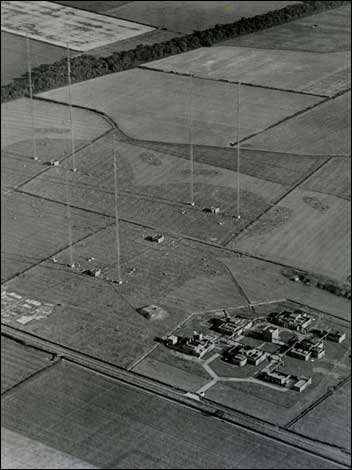
The BBC Ottringham complex (Source: BBC Humberside History)

The BBC Ottringham complex (Source: BBC Humberside History)

Many thanks to SWLing Post reader, Jonathan Marks, who shares this amazing story of the BBC Ottringham (a.k.a. OSE5) broadcast site.

Since Ottringham was an active transmitting site during in World War II, it makes for a fitting tribute here on Memorial Day.

On his blog, Critical Distance, Jonathan writes:

“Few people know that Ottringham, a village near Hull in the UK was the home of many of the BBC’s broadcasts during the Second World War, and that its transmissions were received well into the heart of occupied Europe. The site was intended to broadcast both medium and long wave services to counteract propaganda coming from Nazi occupied Europe. Today the site of the old transmitter site is an engineering works and the fields where the antennas stood reveal little of their radio past.”

I have embedded the BBC documentary of Ottringham below, but ask that you visit Critical Distance for two others Jonathan has posted (including one from his days at Radio Netherlands). Thanks again, Jonathan!

Thailand Coup: BBC World Service increases shortwave broadcasts

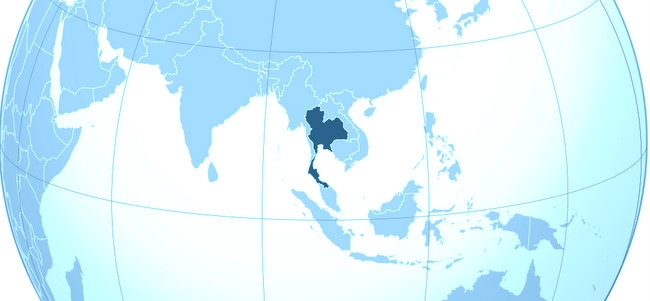
Original Image by Zuanzuanfuwa via WikiMedia Commons

Many thanks to SWLing Post reader, Richard Cuff, for forwarding this press release from the BBC World Service Group Communications:


 BBC World Service increases broadcasts to Thailand

BBC-WorldService

26 May 2014. As authorities in Thailand take key national and international channels off air in the country, BBC World Service has increased its shortwave English-language radio broadcasts to Thailand, to continue the delivery of its independent news and analysis to audiences there.

From 01:00 GMT on Monday 26 May, BBC World Service expanded its availability via shortwave to Thailand by adding [ten] hours of broadcasts to its daily shortwave schedule (all times GMT):

  • 01:00-03:00 on 11,600 kHz
  • 03:00-05:00 on 7,370 kHz
  • 05:00-11:00 on 11,700 kHz

Acting Director, BBC World Service Group, Liliane Landor says: “In times of national crisis, there is an acute need for accurate, trusted and impartial news. This is why, with our international TV news channel off the air in Thailand, we have increased BBC World Service radio broadcasts in the country.”

The above transmissions add to BBC World Service’s six hours of shortwave broadcasts at peak times for Thailand.

Ends//


For more information about the military coup in Thailand, and how it affects international broadcasting, please follow our tag: Thailand Coup

[Update 27 May 2014: Number of broadcast hours corrected. HT to Dan Ferguson and Richard Cuff]

Budget cuts threaten Radio Australia: how you can help

FriendsOfABCThe Friends of the ABC have asked for your help to support Radio Australia.

In short: the ABC (Australian Broadcasting Corporation) is trying to cope with a 60% cut in funding resulting from the loss of the Australian Network contract. There are fears that Radio Australia could be cut significantly as a result; after all, the number of Australians listening to Radio Australia domestically (either online or via shortwave) is very low.

Those of you who followed the Canadian Broadcasting Corporation‘s cuts in 2012 will remember that Radio Canada International was consequently dealt an unfair and crippling budget cut. I believe the Friends of the ABC’s fears are not unfounded.

Below, you’ll find the message from Friends of the ABC with contacts to send your letters of support:

ABC-Radio-AustraliaPlease take a few moments to write to the Managing Director of the ABC in support of the staff of Radio Australia, who are facing a 60% cut in funding, not by the government directly, but by ABC management!

-Mal Hewitt – President, Friends of the ABC NSW

Message from Jemima Garrett, Pacific Economic and Business reporter, ABC Radio Australia:

“As a long term member of ABC staff I am writing to you now because of a new and urgent threat to Radio Australia. As I am sure you know Radio Australia is a vital service in the Pacific Islands reporting on and covering issues that no other media outlet covers. It has huge audience ratings but is often forgotten in Australia because it is not heard here. The cuts to Australia Network are now set to affect Radio Australia as well. In tough time[s,] radio is an inexpensive and effective way of maintaining our expertise so that we are ready to rise like a phoenix when the political environment improves. It is also able to report on more issues, in more depth and more quickly than TV and therefore is an important source for and method of keeping our online offering as rich and varied as possible.”

Please send you views to:

Background:

ABC management is looking at how to cope with the budget cuts resulting from the cancellation of the Australia Network contract. This doesn’t just affect Australia Network but may result in substantial cuts to Radio Australia as the ABC tries to use some of the money it still has for radio to keep some TV programs, contracts in Asia, the mobile and online services connected with Australia Network going too. The scale of the cut is huge – 60 per cent of our budget has been lost ($21 of $35 million a year). This is for broadcasts to a geographic area ranging French Polynesia in the east to India in the west and FSM and China in the north. (Jemima Garrett, Pacific Economic and Business reporter, ABC Radio Australia)