Category Archives: Broadcasters

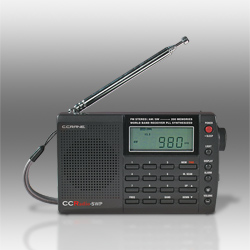
Win a shortwave portable via The Happy Station Show

ccradio-swpSWLing Post reader, Tom, writes:

The Happy Station Show from Tawain just started testing its show on 11880 for a time via WRMI facilities in Okeechobee FL, ex-WYFR

Broadcast schedule can be found here:  http://www.pcjmedia.com/

Also looks like they plan on giving away a shortwave radio [CCRadio SW Pocket] this week from their twitter account post at https://twitter.com/PCJMedia/status/418955953807962113/photo/1

Many thanks, Tom!

Listening Rewind: Radio Australia rings in the millennium

Source: Wikimedia CommonsYesterday–New Year’s Eve, 2014–I spent some time listening to a few broadcasters as the new year passed through their time zones. While I missed hearing Radio New Zealand International (the first to welcome the New Year on the air), I did manage to catch Radio Australia, and the New Year was celebrated with no fanfare; one program merely ran into the next, and there was a brief mention of 2014’s arrival in the headline news.

Oh, but it wasn’t that way when we moved into the year 2000…

Rewind 14 years

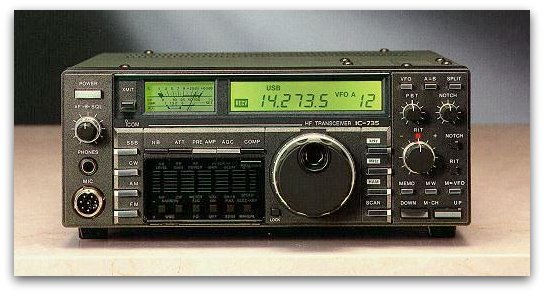
Back in December of 1999, before setting off to visit family for the New Year, I had a sudden notion: I decided it would be fun–and a bit novel–to record radio broadcasters as each moved into the new millennium. As we were packing the car to travel, I changed my mind about using my Grundig Yacht Boy 400 to accomplish this fairly ambitious, round-the-world listening/recording endeavor; instead, I grabbed my ham radio transceiver, an Icom IC-735, and packed it, along with a hefty 12-volt power supply. While my IC-735 lacked AM filters (at the time) it had much better sensitivity than the YB400, especially when hooked up to a decent antenna. I also had the foresight to take along a few odds and ends, including a mechanical antenna tuner and a spool of long wire.
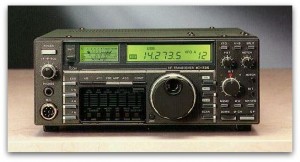
The Icom IC-735

The Icom IC-735

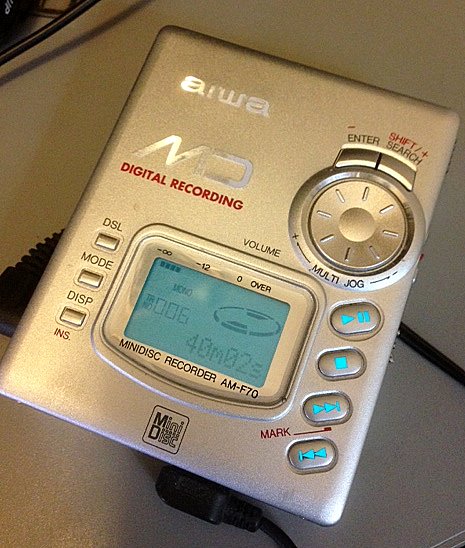
To record the broadcast, I used my trusty Aiwa AM F70 MiniDisk recorder–remember those? Upon arrival at our extended family’s home, they kindly permitted me to erect a long wire antenna in a sloping configuration in their yard. It did a fine job netting the airwaves. The MiniDisk recorder recorded brilliantly, allowing me to monitor levels and even edit afterward.

As a result, I spent New Year’s Eve 2000 recording station after station as the earth turned.  It was great fun, and meanwhile had very little impact on our family celebrations as I simply left the recorder running for long periods of time.
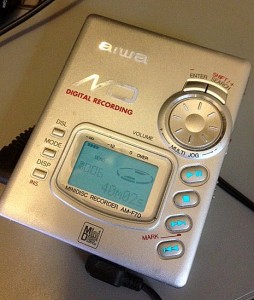
My trusty Aiwa

My trusty Aiwa AM F70 MiniDisk recorder.

While I have yet to dissect the many hours of recordings, if memory serves, I think I managed to record Radio New Zealand International, Voice of Russia, Radio France International, NHK, Voice of America, and Radio Canada International as each rang in 2000. The IC-735 performed quite well, save a lack of bandwidth filters, as I only really had two–very wide, and very narrow.

So, for your New Year’s Day listening pleasure:  I hope you’ll enjoy, as much as I did,  listening to Radio Australia ring in the new millennium yet again. In the news items, you’ll hear that Russian President Boris Yeltson has handed the reigns over to Vladimir Putin, and remarks about the (lack of) problems resulting from the infamous Y2K threat.

Click here to download the recording as an MP3, or simply listen below:

BBC News on the long-term survival of shortwave radio

BBC-World-Service-007Many thanks to SWLing Post reader, Alex, who shares this essential listening: an audio report aired at 17:45 GMT today by Lucy Burton of the BBC World Service.

In this report, Burton discusses the future (or lack thereof) of shortwave radio. Burton interviews staff at Radio Romania International and even Glenn Hauser. To listen, just click:

The report reminds me that shortwave radio is often viewed as only legacy technology, when, in fact, shortwave has many advantages over digital options and is as relevant as ever.

This photo was taken in South Sudan, after Ears To Our World distributed radios in this rural community for the fourth year running. This photo was taken prior to the outbreak of violence the country is currently enduring.  Can you imagine the power of information each radio can provide to its community?

This photo was taken in rural South Sudan, after Ears To Our World had distributed hundreds of radios via our partner Project Education South Sudan. This photo was taken prior to the recent outbreak of violence the country is currently enduring. Can you imagine the power of information just one radio can provide to a community during these turbulent times?

As I’ve mentioned before, Gareth Mitchell once interviewed me for the BBC World Service technology program Click. Mitchell’s interview focused specifically on my non-profit, Ears To Our World, which uses self-powered shortwave radios to further its mission. His description of our radios during his introduction was as insightful as it was humorous:BBC_Click

“…Portable battery powered devices that can stream audio in real time all via an intuitive touch interface.”

Aptly put.  Shortwave radio, after all, has several profound benefits over the Internet, the three most significant being: 1) radio has no regard for national borders, and crosses them effortlessly; 2) listeners retain anonymity (thus cannot be readily tracked nor penalized by repressive authorities); and 3) radio requires no apps nor subscriptions to work.  Nor even, for that matter, a power grid.  It’s “just” an inexpensive “battery powered device” that can bring listeners vital lifesaving information, and, well…the world.

In short, I continue to stand by what I reported to UNESCO last year:

This post joins our popular tag: Why Shortwave Radio?

From Moscow With Love: Comments on the future of VOR

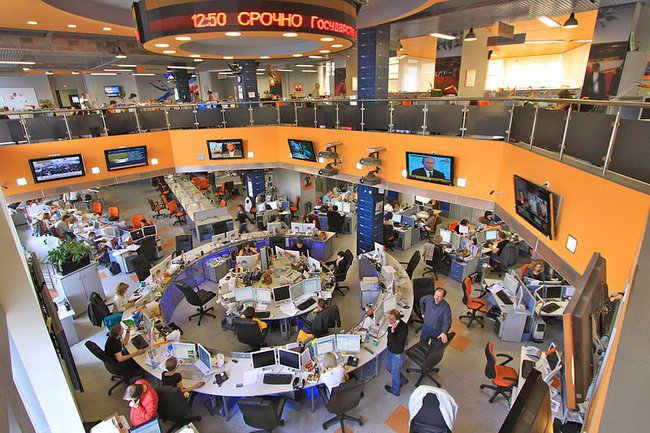
RIA Novosti Newsroom, Moscow (Source: Wikipedia)

RIA Novosti Newsroom, Moscow (Source: Wikipedia)

SWLing Post reader, Richard, writes:

This is apparently a transcript from Vasily Strelnikov’s most recent “From Moscow With Love” that represents, probably as much as anything, the thinking currently within the halls of VoR.

Interesting reading & listening –

Many thanks, Richard, for sharing. Note that you can read and listen to the full show on the Voice of Russia website.

From Moscow With Love is hosted by Vasily Strelnikov and Natalia Stefanova. I thank them both for their refreshingly frank view of the the future of their show and the Voice of Russia.


Click for direct links to their show audio for part 1 and part 2. I’ve also pasted the bulk of the transcript below for the convenience of email subscribers:

(Source: Voice of Russia)

“This is our last show this year and, who knows, probably the last show on the VR.

There’s been a lot of talk on the internet all over the place about the end of shortwave broadcast from the Voice of Russia. Is it going to happen? I don’t know. I haven’t discussed it with anyone around here. Am I worried like some of you are? No. Am I losing sleep over it? No. Am I posting mindless crap about this all over the Internet? No. Do I care? Not really. Do I have a life? Yes, I’d like to think so. So, many stations have already left the shortwave for the same reasons. Are we as shortwave listeners happy? No. But can we put all our emotions aside and deal with reality? You might be asking why there hasn’t been on the air or on the website about this. Good question. I would probably guess it is because folks here don’t make such a big deal out of it. The fact is most of the comrades here at the office will continue working just as they always did. The programs will be carried online, on satellite and on the many local stations around the world in cities like Washington DC, New York, Miami, Chicago. There are DAB broadcasts in the UK and other European cities. The list grows all the time. Yes shortwave listeners are disappointed, I can understand this. But the hobby doesn’t end there. Get a grip.

But what about the merging of the station with RIA or RIA News Agency?

At the risk of sounding like the devil’s advocate, let me say I am not an employee of this radio station for as long as I’ve been a shortwave listener including the very early years as a kid in Maryland in the years I worked at radio Moscow World Service, I’ve always felt there was so much room left for improvement at radio Moscow. Now if this merger with the other Russia news organizations leads to something good, I can only welcome this. It’s been long overdue.

But aren’t you sad at all? This is bad news for the shortwave listeners around the world.

What I am sad about is the yet unconfirmed information dealing with having to move out of this historic building into a new facility several miles away because, maybe it is because we worked here for a long time, our lives are connected with this building at Pyatnitsaya street.

I suppose we feel like the BBC staff when they were forced to leave Bush House. It looks like most of the people are very worried about the future.

And what’s that got to do with leaving the building?
It is everything.

We are talking about our plans for New Year’s holiday as it is a time when the whole country goes on vacation for 10 days and the consequences are felt for the rest of the year. As for yours truly, I’ll probably spend a few days in the country in the fresh air, relaxing, playing with my new radio. But the atmosphere in Moscow if we talk about the first 10 days of January is very nice. It is very quiet during the holidays here. The city is empty, as all the oligarchs are out of here, off-shores. There is no traffic, the lighting is still there, it is magical. I also want to take a late night dinner cruise on the Moskva River aboard the Radisson fleet.

That must be a fantastic experience now that Moscow is sparkling with thousands of lights.

Let’s talk about traditions a bit more. You mentioned the one about throwing all the old stuff away. The one I never understood, I mean tradition speaking was how and why you are supposed to say farewell to the old year by having a drink a few minutes before midnight.

That is very simple, mind you, it is an absolute must to say goodbye to the old year and thank it for all the good things it brought you. After that you must have a shot of vodka or a glass of wine or any other alcoholic beverage provided it is not Champaign. Champaign is something to see the new year in.
I think it is just another excuse to drink. What about all the mythical animals that are always associated with this holiday? It may sound dumb coming from me and it probably is, but I don’t recall paying any attention to these things back in the US but here every year is assigned with an animal, like this time. It is the year of the horse.

Right, blue horse.

Are Russians really into that sort of thing?

I think they are and I am very much into this. And I am ready to tell you all that I know about the year of the blue horse and the oriental and occidental horoscopes, and their influence on people. But let’s do it next week because it is a very interesting topic and we simply have no time for it now.

One New Year’s tradition here is to have Santa Claus or Father Frost and his Snow Maiden visit kids from their parents workplace.

In USSR another New Year’s tradition which I hated was watching TV till the early hours of morning. There was nothing to watch but a lame soviet produced New Year’s special called Blue Light made up of ideologically safe jokes and unbearable Soviet singers. And later that night it would be followed by an east German production featuring dancers from the Friedrichstadt-Palast Cancan troop.”

Read more: http://voiceofrussia.com/radio_broadcast/36578738/256786661/


Voice of Russia to remain on the air in 2014

RIA Novosti Newsroom, Moscow (Source: Wikipedia)

RIA Novosti Newsroom, Moscow (Source: Wikipedia)

This year has been a confusing one for Voice of Russia listeners.  At least two separate news sources–in August and December–announced that VOR would be leaving the shortwaves effective Jan 1, 2014, but VOR couldn’t confirmed or denied the news.

Then, only two weeks ago, Russian President Vladimir Putin surprised us all by essentially liquidating the Voice of Russia and merging it with Rossia Segodnya newswire in sweeping changes affecting all Russian state media.

I was curious if this move might have changed VOR’s outlook on the shortwaves, so I contacted VOR to see if they had any official word. I received the following response this morning:

“We are glad to let you know that the Voice of Russia will stay on the air in 2014, however, considerable changes in our frequency schedule are expected. The information on the updated frequency chart will become available on the Voice of Russia’s web site before the New Year at http://voiceofrussia.com/radio_broadcast/frequencies/ , so please stay logged in.

You may have already read about the planned merger of the VOR an RIA Novosti Press Agency in the upcoming year, for details please see the article at http://voiceofrussia.com/news/2013_12_09/President-Vladimir-Putin-issues-decree-to-reorgonize-Voice-of-Russia-RIA-Novosti-to-Rossia-Segodnya-news-wire-1689/

WG2XFQ: Brian Justin’s holiday longwave broadcasts

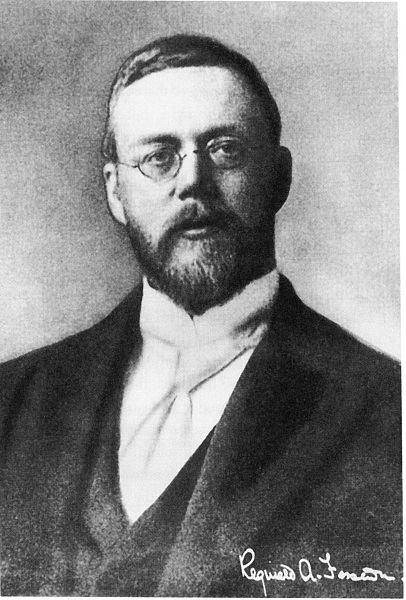
Reginald Fessenden: "The Father of Radio Broadcasting" (Source: Wikipedia)

Reginald Fessenden: “The Father of Radio Broadcasting” (Source: Wikipedia)

SWLing Post reader, Tom, recently shared a link to an article on the ARRL news page which describes this annual longwave broadcast:

“As he has over the past several years, Brian Justin, WA1ZMS/4 — an active participant in the ARRL’s WD2XSH 600 meter experimental project — will transmit voice and music on 486 kHz as WG2XFQ on Christmas Eve and Christmas Day and again on New Year’s Eve and New Year’s Day. Transmissions will begin at 0001 UTC and end at 2359 UTC.

Justin, who may be better known for his microwave exploits on ham radio, will use an AM audio loop modulating his vintage-style, homebrew transmitter to honor Reginald Fessenden’s Christmas Even 1906 AM voice transmission.”

Since I’m a sucker for radio history, I contacted Brian Justin and he kindly answered a few questions:

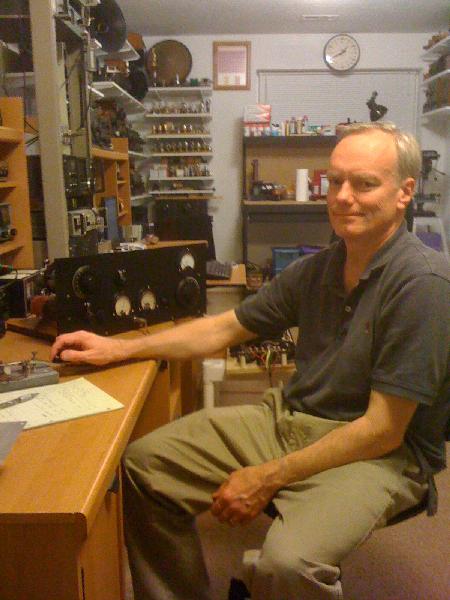
Brian Justin with his homebrew transmitter (Source: http://w4dex.com/500khz/wd2xsh31.htm)

Brian Justin with his homebrew transmitter (Source: w4dex.com)

SWLing: How did you first become interested in longwave (LW)?
Justin: Always had an interest in history of radio since becoming a ham at age 11. Early wireless had emphasis on LW and so it was a good trail to follow in my years as a ham.

SWLing: Is the process of getting a license to broadcast complicated?
Justin: Yes and No. What I hold is not a broadcast license as a TV or FM or AM station would have. I hold an FCC Part 5 license which is for The Experimental Radio Service. The LW and MF spectrum is formally US Govt spectrum that is managed by the NTIA (the US Govt Agency version of the FCC). So before the FCC can issue any license that is in non-FCC regulated bands the NTIA must first approve any license Grant. A good number of people who are involved in radio today don’t always understand the difference between FCC and NTIA spectrum. But licenses can be granted if you have the willingness to wait and know how the application process works. It’s not all that difficult once you know the context of what one is asking for.

SWLing: What is the best time to listen for WG2XFQ and how can listeners improve their chances of hearing you?
Justin: The transmissions are only a few times each year to mark historical dates in radio history. I try to make at least two each year, one for Fessenden and one for the Berlin Radio Treaty. I also ran one on the 100th Aniv of the sinking of the Titanic since wireless played a big role in the tragic event.

A loop antenna is a good antenna to try as one can at least null any loud noise source. But simple E-field probe antennas have worked for many in years past.

Anyone who copies WG2XFQ is encouraged to submit a logging of it at 500kc.com.

Thank you and good DX to all this Holiday Season. I hope I can deliver a tiny DX gift to all if the band is in good condition this year.


Many thanks, Brian!

I will be listening for WG2XFQ on 486 kHz on December 24th and 25th, then again on December 31st and January 1st. With any luck, and if conditions are favorable, perhaps I’ll hear a little longwave DX commemorating Reginald Fessenden’s Christmas Even 1906 AM voice transmission.

Readers, be sure to check out Brian Justin’s web page and the ARRL 600 meter experimental group’s website. Please log your WG2XFQ listener reports at: 500KC.com

If you would like to learn more about Reginald Fessenden, check out Fessenden.ca.

Shortwave Radio Recordings: beHAVior Night

GramophoneFor your listening pleasure: beHAVior Night, a shortwave radio show (relayed by WBCQ) dedicated to showcasing music from the first four decades of the 20th Century.

This show was recorded on 7,490 kHz, starting at 22:00 UTC on December 8, 2013.

Click here to download the recording as an MP3, or simply listen via the embedded player below: