Category Archives: Broadcasters

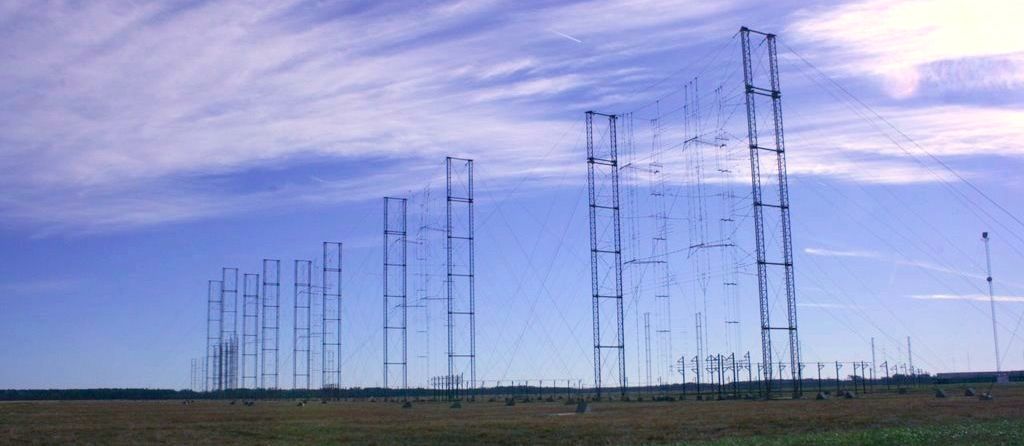
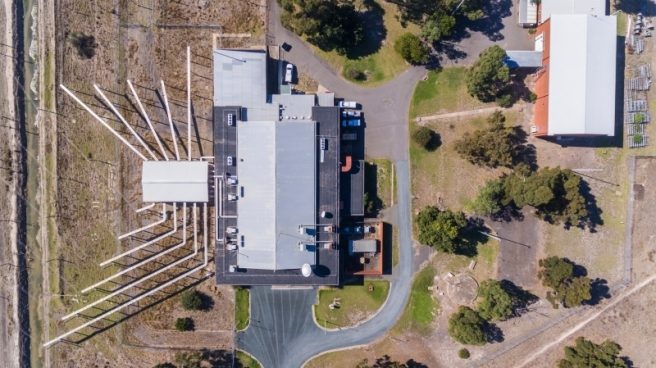
Phil notes some updates regarding Radio Australia Shepparton site

Many thanks to SWLing Post contributor, Ian P, who writes:

Bob Padula noted some interesting information on his latest podcast–this was also played on last weeks episode of Wavescan.

[In summary]  the Shepparton site is still intact and on standby mode yet not staffed and is now Heritage Listed.  The property is still for sale yet no knowledge of any bids[…].


Thank you for passing along the update, Ian!

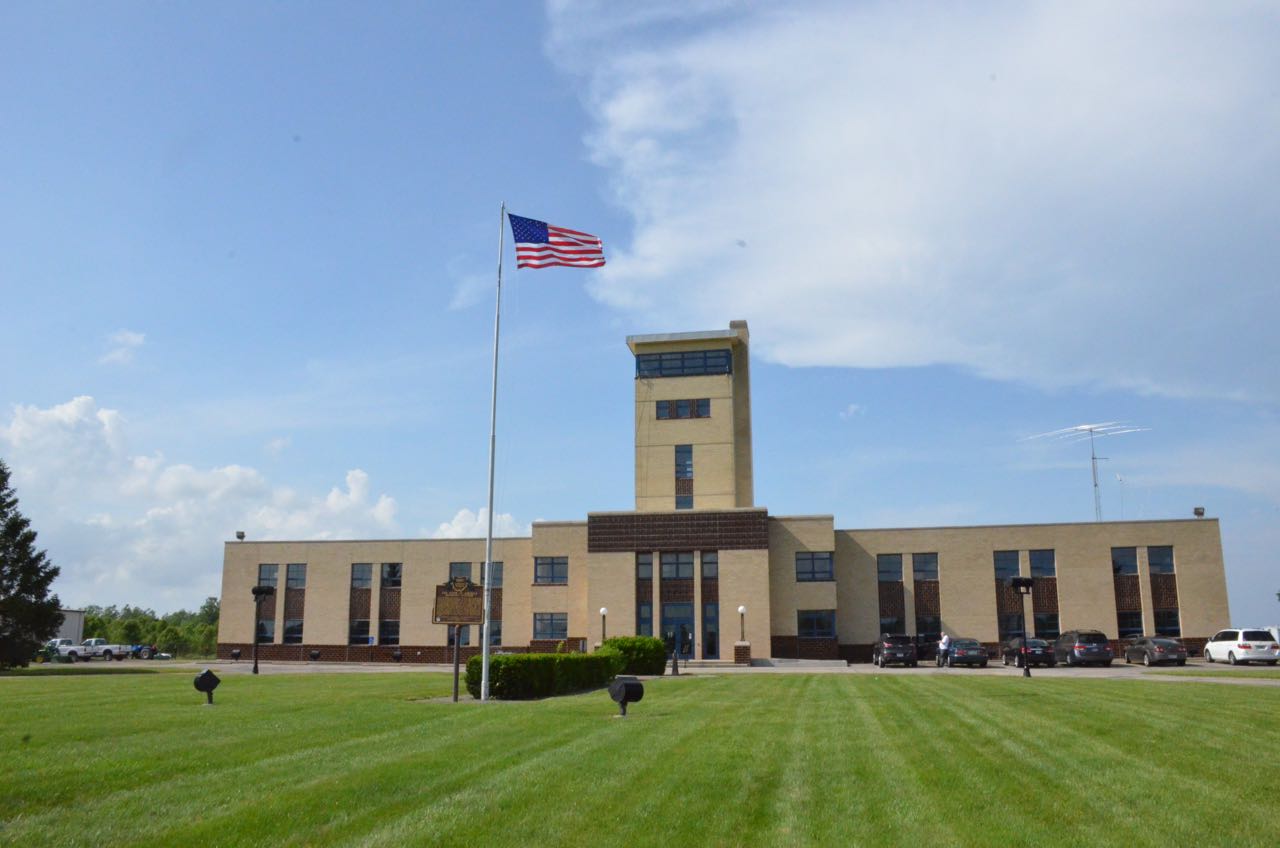
Cincinnati Society of Professional Journalists meeting at National VOA Museum of Broadcasting

(Source: Southgate ARC via Kris Partridge)

‘Who can I trust to give me the real news?’

Where and how should American citizens access trustworthy news, how do journalists determine real from fake news, and how can the average citizen identify fake news and avoid accidentally promoting it through social media?

These questions and more are of great importance to citizens across greater Cincinnati and the nation.

They’ll be addressed by the Cincinnati Society of Professional Journalists and other area media on Thursday, April 26 at a panel discussion in conjunction with the National Voice of America Museum of Broadcasting in West Chester on the topic of “Who can I trust to give me the real news?”
The event is being underwritten by Kehoe Financial Advisors.

Panelist moderator will be Tom McKee of WCPO, with panelists Hagit Limor of the University of Cincinnati journalism program; Jim Bebbington of Cox Media Group; Ann Thompson of WVXU; and Kevin Aldridge of the Enquirer.

Admission will  be the same as last year– $10 for adults and $5 for students. Since this was a standing-room only event last year, we’re encouraging people to order tickets in advance of the event.

Melinda Zemper
Board Member
National VOA Museum of Broadcasting
(513) 706-3737

RadioWorld: “Radio Caroline Returns to Its Roots”

(Source: RadioWorld via Mike Hansgen)

The station is now operating 24 hours seven days a week on AM

NEAR COLCHESTER, England — Well into its second half-century of broadcasting, Radio Caroline has begun the next phase of its operations, returning to wide-area AM transmissions for the first time in nearly 30 years. Although by no means the first offshore radio station (that honor probably goes to one of the gambling ships that operated off the coast of California back in the mid-1930s), it is nevertheless the archetypical “pirate” station and one of the most famous names in European broadcasting.

[…]Under its new license, Radio Caroline is permitted to broadcast with a radiated power of 1 kW, not a particularly high-power service in terms of its earlier offshore activities. However, given the lack of incoming interference on the frequency, and its long-wavelength signals, the result is effective coverage that, in practice, for many listeners is larger than planning criteria might suggest.

In many ways, Radio Caroline has both kept up with the times in terms of the broadcasting technologies it uses and come full circle with its recent return to AM broadcasting.[…]

Click here to read the full article via RadioWorld.

BBG sets five-year goals

(Source: Radio World via Richard Langley)

BBG Sets Itself a Series of Five-Year Goals

Agency points to security, need to keep pace with changing media landscape

The Broadcasting Board of Governors has a definite goal for the next five years — advance America’s national interests, work in tandem with the current administration’s national security strategies, and keep its networks up to speed with the way the media landscape has changed.

The board, known widely as BBG, recently released its 2018–2022 Strategic Plan titled “Information Matters: Impact and Agility in U.S. International Media.” The plan was presented to the board during the group’s March board meeting in Washington.

“This plan is a comprehensive roadmap for moving the agency forward in the next five years, including significantly increasing our audience reach,” said BBG Chief Executive Officer and Director John F. Lansing.[…]

Click here to read the full article at Radio World.

BBG budget includes plans for shortwave

Many thanks to SWLing Post contributor, Richard Langley who shares the following item from Kim Elliott. Note that this news is dated February 22, 2018 (yes, it was lost in my drafts folder!):

Broadcasting Board of Governors budget request includes plans for shortwave

Kim Andrew Elliott
22 February 2018

The Broadcasting Board of Governors, consisting of VOA, RFE/RL, Radio Free Asia, Radio/TV Martí, Radio Sawa and Alhurra, is slated for a $24 million budget reduction in fiscal year (FY)
2019.

Of course, Congress will review and probably will modify the President’s budget request for BBG and other agencies.

Here are excerpts from the budget request pertaining to shortwave:

“TSI [Technology, Services and Innovation, i.e. BBG engineering] continues to move the BBG from traditional broadcasting technologies, such as cross-border radio transmissions shortwave (SW) and medium wave (MW serving regions where these platforms are no longer popular, to other delivery systems that are rapidly growing in effectiveness and are less expensive to operate (e.g., FM radio, DTH satellite, internet streaming, mobile, and social media). …

“As part of its multi-year global network realignment, TSI will continue to focus efforts on upgrading its shortwave capacity at the Kuwait Transmitting Station, even as use of SW decreases. With superior strategic location and extremely low operating costs, this station will be able to serve the overwhelming majority of legacy SW audiences in the most cost-effective manner possible, at a fraction of the cost of other BBG operated site or expensive leased capacity. …

“Over the years, the use of shortwave (SW) radio has declined globally. TSI has responded by consolidating broadcasts to more cost-effective transmitting stations and reducing or even eliminating SW where it is no longer relevant. In markets where SW does still retain a sizable, valuable audience, TSI is committed to making SW service available in the most cost-effective way possible. To meet this need, TSI has been upgrading the Kuwait Transmitting Station (KTS), which enjoys a superior strategic location and extremely low operating costs. In FY 2017 TSI continued to expand that facility, and in FY 2018 TSI will procure and install new antennas. In FY 2019, TSI is committed to investing in the KTS expansion further, utilizing whatever resources may be available, in order to realize longer-term savings. Ultimately, the BBG’s goal is to be able to serve most legacy SW audiences from this one site, at a fraction of the cost of all the other transmitting stations, so that other, more expensive sites may be scaled back or closed.

Philippines relay will close

“In FY 2017, TSI completed the closure of the station in Sri Lanka and in FY 2018 will close the BBG facility in Poro, Philippines. TSI’s systematic and thorough review of all transmission leases will continue in FY 2019, identifying further opportunities for savings. In the years between 2010 and 2016, total costs associated with Cross Border Radio (SW and MW ) have declined by over $25 million (34.5%), and we expect this decrease to continue as we respond to market needs and as the Administration and Congress authorize us to shutter less effective legacy facilities …

“[I]n China, including Tibet, TSI will continue to provide satellite TV and radio service via Telstar 18, the most popular satellite in China, for only a fraction of the cost of the BBG’s legacy shortwave and medium wave transmissions to the region. This allows TSI to leverage the widespread use of satellite receiver dishes across the country and provide accessible programming where local cable and internet access is restricted. In FY 2018, TSI will procure additional satellite capacity on this satellite, allowing BBG to simultaneously distribute HD and SD TV programming and capitalize on the migration of Chinese audiences to HDTV, while not stranding legacy SD users. …

“Radio remains a very popular platform in many BBG markets, particularly Africa. BBG global weekly radio audiences increased by a stunning 28 million in 2016 alone and by 35 million since 2012. While shortwave continues to be a relevant means of delivery in several African markets, in most countries rapid growth and competition in the media market have shifted radio
habits almost entirely towards FM. The BBG provides 24/7 FM radio programming in over 30 markets across the continent. …

But good news for Kuwait and Greenville stations

“As part of its multi-year global network realignment, TSI will continue to focus efforts on upgrading its shortwave capacity at the Kuwait Transmitting Station, even as use of SW decreases. With superior strategic location and extremely low operating
costs, this station will be able to serve the overwhelming majority of legacy SW audiences in the most cost-effective manner possible, at a fraction of the cost of other BBG operated site or expensive leased capacity. …

“The BCI [broadcasting capital improvement] funds in FY 2018 (and base funds in FY 2019) will be used to continue the planned reconfiguration and expansion of the shortwave broadcast
infrastructure at the Kuwait Transmitting Station. This will allow BBG to enhance transmission to multiple regions, including Africa, and achieve cost savings for shortwave broadcasts.
Because of the very low cost of electrical power in Kuwait, the Kuwait Transmitting Station is the least expensive IBB station to operate. This project will allow the agency to shift mission-critical but higher cost transmissions from other stations in the IBB network to Kuwait.

“TSI will install and deploy three newer SW transmitters at the Greenville, NC Edward R. Murrow transmitting station enabling a doubling of frequencies servicing Cuba and making it extremely difficult for the Cuban government to effectively block Radio Marti signals into the Island. …

“To serve audiences in less developed areas of the world, the BBG must continue to broadcast via traditional technologies, such as shortwave, and maintain capability and improve efficiency on these platforms by replacing antiquated equipment. But to stay relevant in competitive news markets and serve current and future audiences, the BBG must continue to invest in new cutting-edge technology. In areas where ownership and usage of shortwave radio has declined significantly, the Agency has evolved away from broadcasting in that medium. The BBG has closed transmission stations, repurposed equipment and invested these savings in
platforms that the audience has shifted to, primarily television and digital media.”

The entire FY2019 BBG budget submission is here:
https://www.bbg.gov/strategy-and-performance/budget-submissions/

China consolidates three national networks to form the Voice of China

China Radio International will become a part of the new Voice of China.

(Source: CNN Money via Cap Tux)

Beijing has a new propaganda weapon: Voice of China

China is creating a new giant broadcaster to ensure its voice is heard loud and clear around the world.

Voice of China, as the new outlet will be known internationally, will be formed by combining three mammoth state-run national networks: China Central Television (CCTV), China National Radio and China Radio International. It will employ more than 14,000 people.

The merger was revealed in a Communist Party document on a sprawling government reorganization program, championed by President Xi Jinping to reinforce the party’s absolute control in all aspects of state governance.

State news agency Xinhua released the document Wednesday after it was approved by China’s rubber-stamp parliament.

With echos of the Voice of America radio service created by the US government during World War II, Voice of China is tasked with “propagating the party’s theories, directions, principles and policies” as well as “telling good China stories,” according to the document.

It will be under the direct control of the party’s central propaganda department.

The new broadcast juggernaut is being formed at a time when Chinese authorities face growing challenges to control their message in the age of the internet and social media. They are making strenuous efforts to maintain strict censorship at home while pouring money into propaganda projects abroad.[…]

Click here to read the full article at CCN Money.

“Air Waves”: A WWII era film about the art of broadcasting at NBC

Many thanks to SWLing Post contributor, Mike Hansgen (K8RAT), who shares the following film by RKO Radio Pictures via YouTube.

Click here to watch on YouTube.

Here’s the film description:

Made during WWII by RKO Radio Pictures, AIR WAVES gives a brief history of the radio, and shows the development of the technology as it progressed from a crystal set novelty to an indispensable part of American life. Radio City Music Hall and the Rockefeller Center are seen at the 2:00 mark, with the largest radio studios in the world. At 2:30, the NBC studios are seen and at 3:10 a demonstration is made of how sound effects are made using cellophane, wooden blocks, and rubber spheres. At 4:10, a studio is seen with actors rehearsing their lines, and an engineer working with the actors to make sure everything is technically okay. At 5:41, announcers Milton Cross is seen with Jack Costello and Calvin Keach. “Twin gods of radio broadcasting are the clock and the conference…” says the narrator, and at 6:00 you’ll see the discussions that lead up to the broadcast of any network show on radio (and today, on TV). At 7:15, records are played on the air, scripts are produced on steno and mimeograph machines, and all sorted… The music library is seen at 7:48 with sheet music laid out. At 8:06, all stations are notified of the latest information with the new program and a dress rehearsal undertaken. The stopwatch commands the attention of everyone, and the program is finally on the air at the 9:10 mark.

At 10:00, the film dramatically shifts to show December 7th in Hawaii, and speaks about the work of NBC to sell war bonds and promote national defense and “do its share unflinchingly”. The war effort is shown with men and women working on the air to help people working “at war” and boosting their morale. Lowell Thomas is shown at the 11:30 mark, keeping the public informed of the latest developments.

Thanks for the tip, Mike! It’s truly amazing to see the amount of effort that went into live radio broadcasts.