Category Archives: Ham Radio

Historic ‘Radio Row’ Finds a Home on the Internet

73RR Logo - B

(Source: 73 Radio Row press release)

A new website designed for radio amateurs, SWL’ers, CB’ers and all communications hobbyists has launched on the Internet recreating the atmosphere of the famed Radio Row in New York City.

According to its founder, Richard Fisher, KI6SN, “’73 Radio Row’ takes its cue from an era when New York’s legendary radio district bustled with communications fanatics shopping for surplus and used gear along Cortlandt Street in Lower Manhattan.” 73 Radio Row’s Web address is: http://www.73RadioRow.com

The site features used radio receivers, transmitters and transceivers, as well as unbuilt kits, new/old stock antennas, Morse instruments and station accessories of all kinds.

“We are crazy about radio, the same as everyone else,” Fisher said. “RETRO is NOWtro.” For complete details, visit: http://www.73RadioRow.com or write to: [email protected]. Call (951) 395-1923.

I discovered 73 Radio Row right after it launched–I ordered a portable ER TiCK Deluxe Keyer for the very affordable price of $26 US shipped.

IMG_20160507_073723040-001

The keyer was dispatched immediately and I received it within a couple of days.

I know Richard Fisher (KI6SN) quite well and can certainly vouch for his integrity. In fact, he’s even giving a portion of 73 Radio Row proceeds to Ears To Our World–what a nice guy!

The new LNR Precision LD-11 transceiver is essentially general coverage

LNR-Precision-LD-11

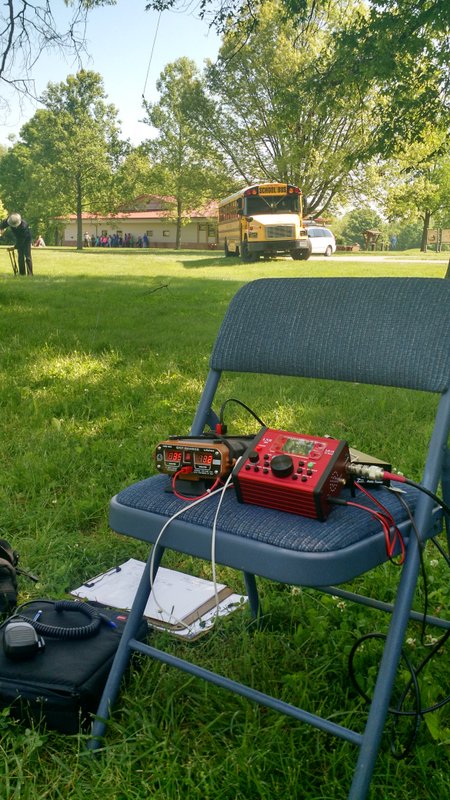
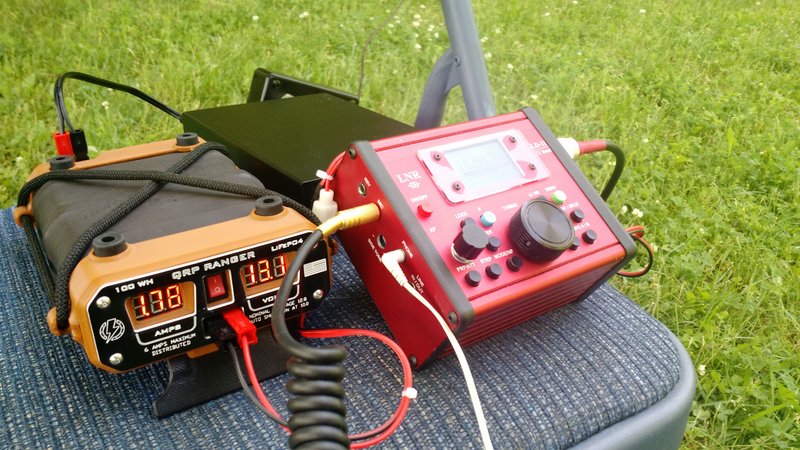
A couple weeks ago, LNR Precision sent me their new LD-11 Digital Direct Conversion QRP transceiver on loan for review.

The LD-11 is basically a small, tabletop SDR transceiver. It’s like a miniature, simplified version of the Icom IC-7300 I’ve also been evaluating.

The LD-11 is an all-mode and all-band transceiver–meaning, it includes SSB, CW, CW-R, Digi, AM and FM modes on all amateur radio bands (160 – 10 meters).

Though the LD-11 isn’t advertised as having a general coverage receiver, it will indeed tune the entire HF band.

You do this by entering the LD-11’s administration mode. LNR describes this in the LD-11 product manual, but suggests you contact them for help the first time you do this. In the admin panel, you’ll find functions that allow you to set the band edges on each amateur radio band.

For a preliminary test of broadcast reception, I moved the lower band edge of the 30 meter ham radio band to 8.2 MHz.

LNR-Precision-LD-11-front panel

After saving the settings and re-starting the LD-11 in normal operation mode, I could then tune the entire 31 meter broadcast band on the LD-11.

Hypothetically, you could either widen each amateur radio band to include adjacent broadcast bands, or you could simply set one of the ham bands to include the entire HF spectrum. To make it easier to navigate and tune through the bands, I’m choosing the former method over the latter.

Since the LD-11 has a proper AM mode, broadcasts sound great–especially via headphones!

Proper AM filters for broadcast reception!

Better yet?  The AM filter width can be widened to an impressive 9.6 kHz! Woo hoo!

LNR-LD-11-Shortwave-AM

The LD-11 has four filter slots: F1, F2, F3 and F4.

The F1-F3 slots can be set to a fixed user-defined widths (common widths are default).

F4 can be altered to any available filter width without having to enter the admin mode of the transceiver. Simply press the “F” (blue function button) and the FILTER button simultaneously and use the encoder/tuning knob to specify the filter width in .1 kHz steps. Pressing the F and FILTER button simultaneously again, will save your filter width for the F4 position.

I’ve been using the F4 filter position for widths between about 8.2 and 9.6 kHz in AM.

It’s still early days with the LD-11, but I’m enjoying this little transceiver immensely. It reminds me of one of my favorite QRP transceivers of yesteryear: the Index Labs QRP Plus (though the LD-11 is much smaller, more versatile and has a much better front end than the QRP Plus!).

LNR Precision sold out all of their first run LD-11 units within moments of having announced availability. I’m willing to bet they’ll bring a few LD-11s to the upcoming Dayton Hamvention, though.

Check inventory status and view LD-11 details on LNR Precision’s website. 

Off-Grid Radio: Portable power recommendations?

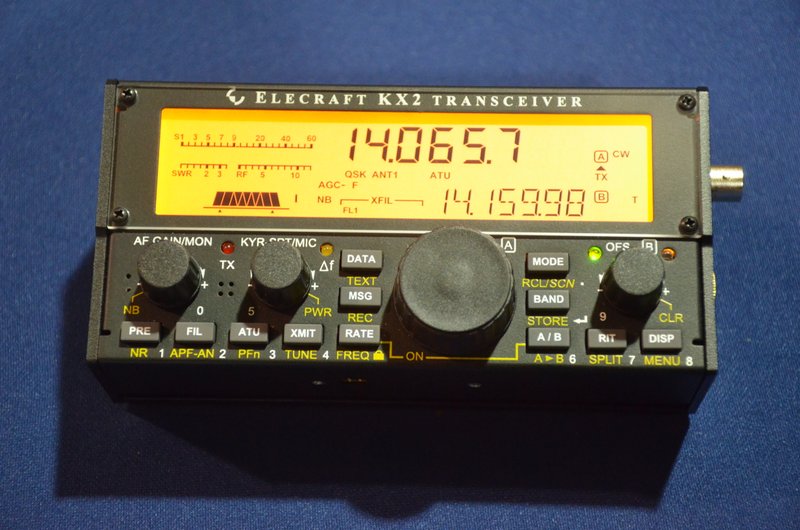
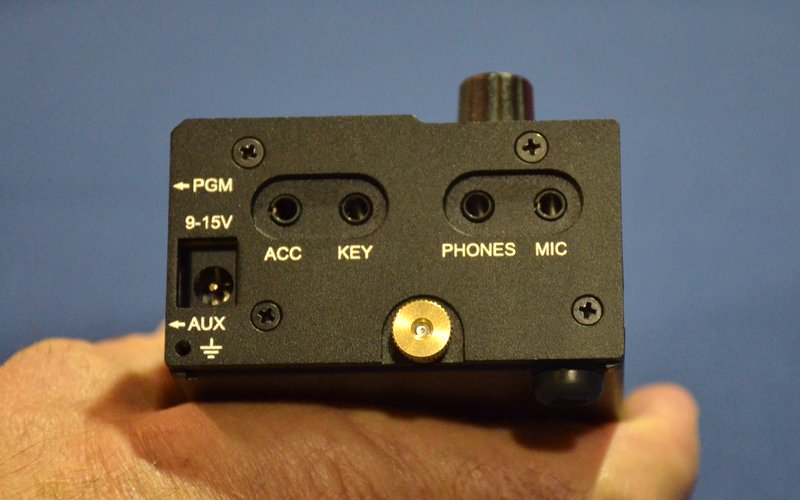
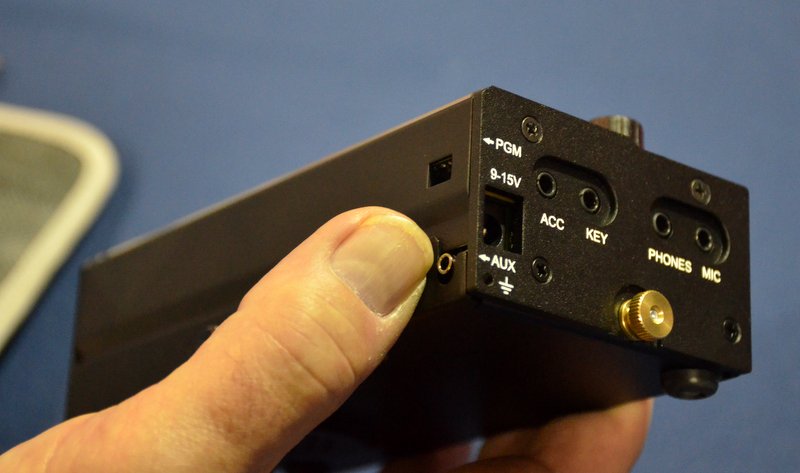
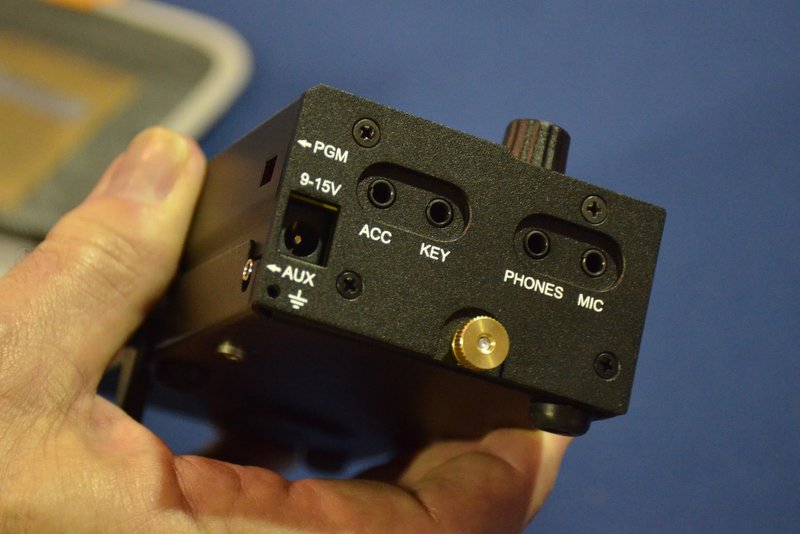
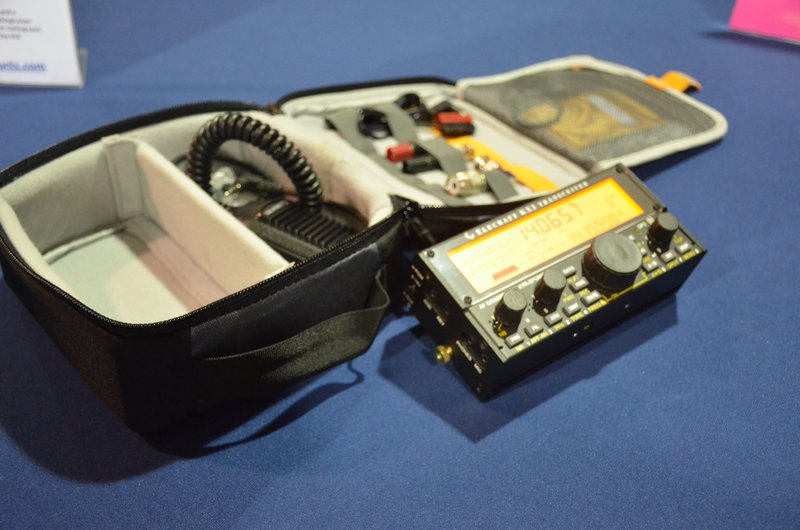
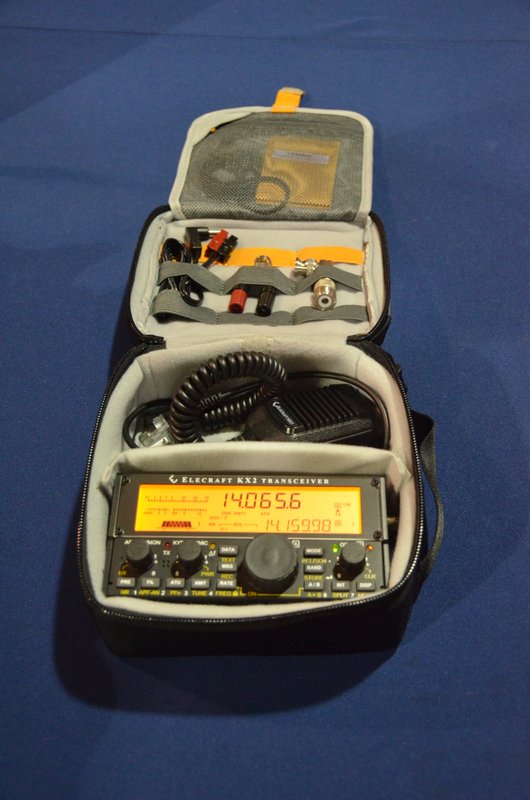
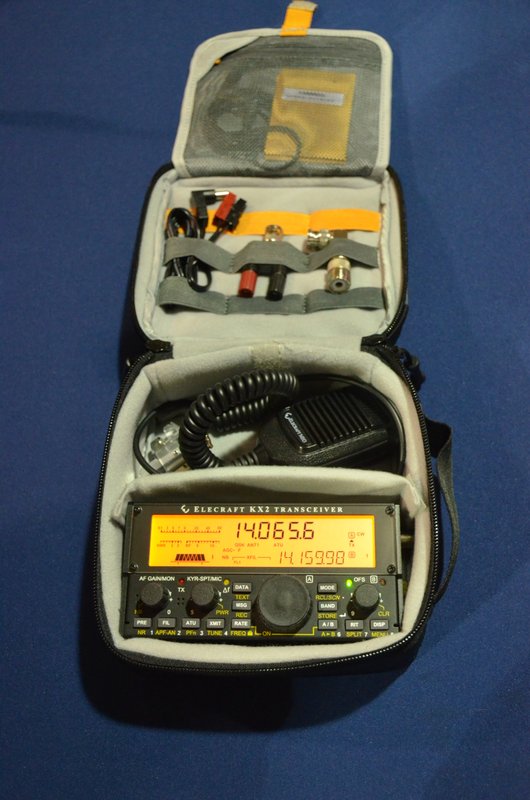
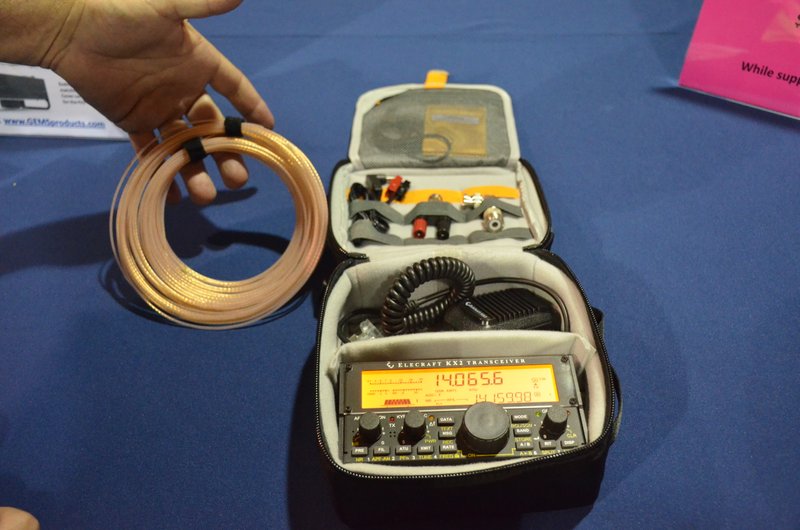
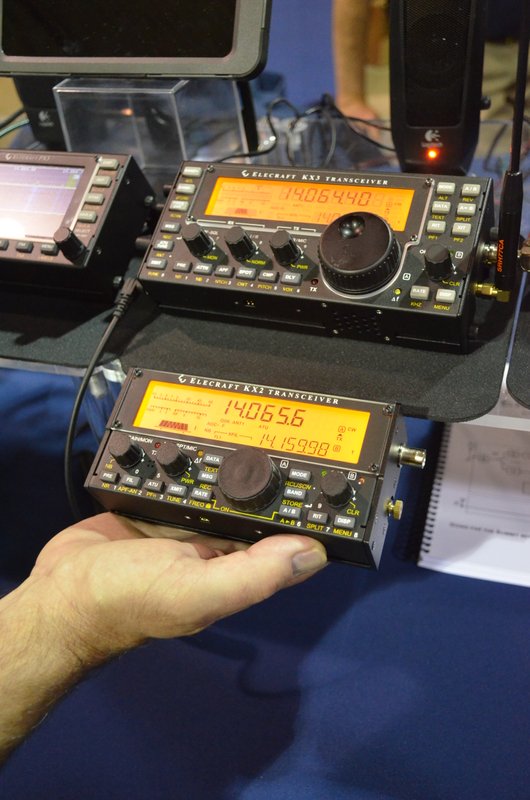
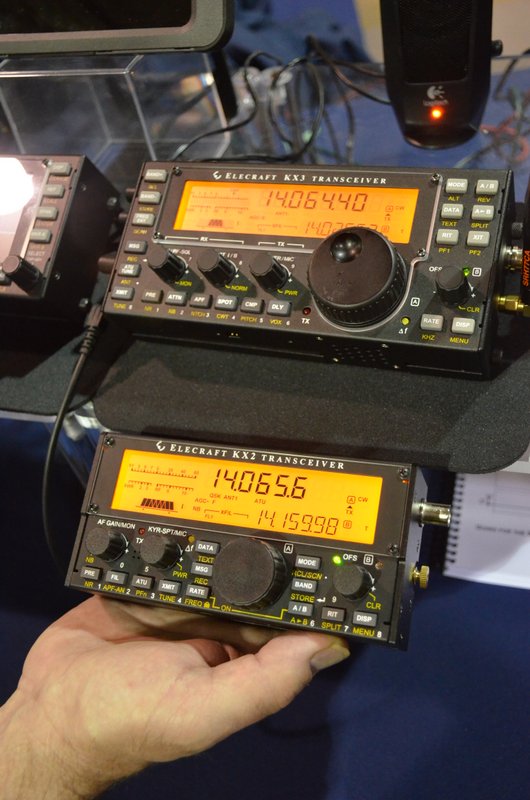
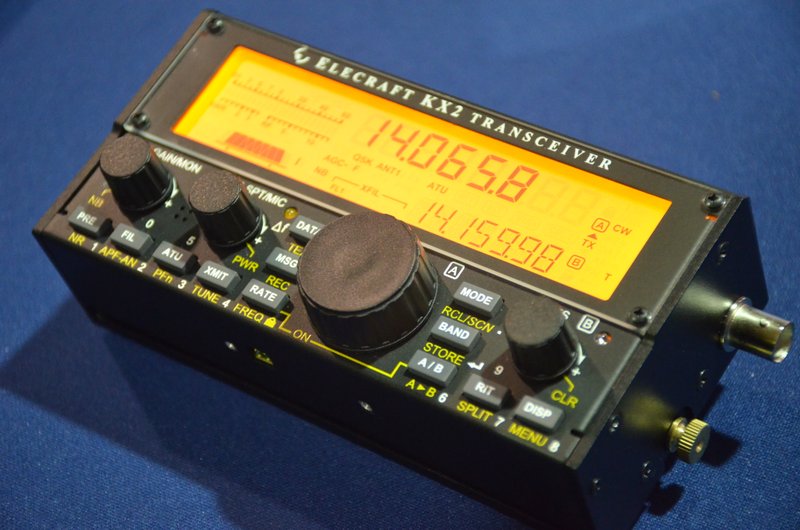
Elecraft-KX3This year, I have a lot of portable radio play in mind as I travel across the continent. At some point, I even plan to spend several days in an off-grid cabin on the coast.

In the past, I’ve powered my 12 VDC ham radio transceivers with a system comprised of three PowerFilm solar 5 watt foldable PV panels (see below), a Micro M+ charge controller and several gel cell type sealed batteries (a couple 7 Ah and one 20 Ah).Powerfilm-Solar-Panel

The system works well, but the batteries are a little heavy and unhandy when I want to hike into a remote site or play radio on the beach, for example.

PowerFilmAACharger-1

In terms of receivers, my portables (like the Sony ICF-SW7600GR, Tecsun PL-660, etc.) simply use AA batteries which I charge with PowerFilm AA PV chargers (see above). My CommRadio CR-1a has an internal battery that will power it for hours at a time.

Power is much less of an issue with receivers because they’re quite resource efficient.

I mainly need a system to power my QRP ham radio gear, and that’s where I could use your experience!

Wish list

Charge controller

I need a new charge controller since my Micro M+ (no longer produced) is now being used to power a remote antenna tuner.

Of course, I’ll need an inexpensive charge controller that doesn’t produce RFI (radio interference).

It would be an added bonus if the charge controller could also charge my batteries when grid power is available.

12 VDC Battery packs

I’d like something relatively lightweight and safe.

Note: LiPo packs worry me, especially since I had one (an early GoalZero model) quite literally melt down and burn up on my bed only a few hours after bringing it back from an eight hour flight a few years ago. Scary!

Pure Sine Wave Inverter

PureSineWaveInverter

I’d also like a small, efficient pure sine wave inverter that I I could connect to my largest battery and power my laptop for extended SDR spectrum recording sessions while off-grid.

I’d love a recommendation from someone who uses one and can confirm a model that doesn’t create radio interference while operating.

Recommendations?

Post readers: Please comment with your recommendations and include model numbers and links if possible. Thank you in advance!

The Icom IC-7300 vs. Elecraft KX3: Which do you prefer for CW/SSB?

IMG_20160424_105444629

[UPDATE: Read the full review of the IC-7300, along with listener survey results, by clicking here.]

Many thanks to all of you who participated in our last survey comparing the new Icom IC-7300 with the WinRadio Excalibur SDR. We had over 100 responses (!!!)–the results will be posted in the forthcoming IC-7300 review.

Before completing my review, I thought I might fit in one more quick comparison–this time, comparing the Icom IC-7300 to my Elecraft KX3 and focusing on SSB and CW reception.

Recording notes and disclaimers

The Icom IC-7300 offers native digital audio recording, which means that it records both transmitted and received audio to an inserted SD card.

IC-7300The Elecraft KX3 does not have a built-in recorder (indeed, most transceivers do not) thus I made in-line recordings using my Zoom H2N digital recorder.

I did no post-processing of the audio other than converting .wav files to .mp3.

Both receivers shared my large outdoor omni-directional horizontal delta loop antenna for each test.

The Elad ASA15 Antenna Splitter Amplifier

The Elad ASA15 Antenna Splitter Amplifier

To keep the comparison on as equal footing as possible, the receivers shared the same antenna through my Elad ASA15 antenna splitter amplifier. Though the ASA15 has both 12dB amplification and –15dB attenuation, I employed neither.

The ASA15 allowed me to make the following recordings simultaneously.

In each case, I tried to set up both radios using the same filter widths, AGC settings, and (as much as possible), audio level. I didn’t engage a noise-reduction feature on either rig.

I also didn’t employ any type of audio equalization on either rig–still, you’ll note that one radio produces a more “flat” response than the other.

Please vote!

At the end of this post, I have an embedded a survey in which you can vote for the sample recordings you like best. Each recording is clearly labeled to denote that it’s either from “Radio A” or “Radio B” (chosen at random).

And now…here are the recordings:


Audio Clip 1: CW (20 meter band)

Radio A

Radio B


Audio Clip 2: Weak Signal CW (20 meter band)

Radio A

Rado B


Audio Clip 3: Weak/Strong SSB
(Sable Island working Asia/Pacific on 20 meter band)

Radio A

Radio B


We want to hear from you!

Use the form below to vote for the recordings you prefer in each section.

I’ll close voting at 12:00 UTC on Wednesday April 27, 2016. Thank you in advance for your participation in this survey!

Video: SDR Touch demo on Android device using SDRplay RSP

Fullscreen capture 4242016 10946 PM

(Source: SDRplay via YouTube)

Click here to view on YouTube.

This demonstrates turning an Android Tablet (or Android Phone) into a highly portable comms receiver or spectrum analyzer operating from Long Wave to Microwave (10kHz to 2GHz) – using SDR Touch and the SDRplay RSP www.sdrplay.com

To be a beta tester simply go to https://play.google.com/apps/testing/ and follow the instructions – the SDR Touch author welcomes feedback on https://www.facebook.com/SdrTouch/ – your chance to influence the way this amazing software can get better and better.

Guest Post: Tracking High Seas Pirates on Shortwave Radio

Suspected pirates surrender to crew members of the CGC Boutwell. (U.S. Coast Guard photo)

Suspected pirates surrender to crew members of the CGC Boutwell. (U.S. Coast Guard photo)

Many thanks to SWLing Post contributor, Mario Filippi (N2HUN) for the following guest post:


Tracking High Seas Pirates on Shortwave Radio

by Mario Filippi (N2HUN)

(All photos taken by author–click to enlarge)

Ahoy! After spinning a radio dial for over a half-century, shortwave listening still provides a source of adventure and interesting intercepts. While major broadcasters continue to move to the Internet and dwindle in number, there nonetheless remains plenty of utility intrigue to be had; you just need to know where to look, and be comfortable with other modes of communication such as RTTY (Radioteletype).

RTTY remains on HF (3 – 30 MHz), albeit mostly encrypted, but there are some stalwarts of this mode that transmit important and interesting information for ships at sea. The information can take the form of weather broadcasts, hazards to navigation, information on ships lost at sea, and pirate activity. Yes, pirate activity but not radio pirates; real honest-to-goodness modern day pirates looking to loot, plunder and prey upon commercial ships making an honest living or other leisure watercraft just out having fun.

SignaLink-AOR

Who knows what dangers lurk behind that dial? Trusty AOR AR-3000 receiver and SignaLink™.

Has your interest been piqued? When avast mateys as I spin ya’ a yarn on how to find out where these sea-faring scoundrels lurk from the Caribbean all the way to the South China sea!

Pirate activity is not something of the past; it exists today and is a threat conducted by ragtag armed ragamuffin groups. To keep abreast of the action you’ll need the following gear: a shortwave radio with single sideband (SSB), a decent antenna, a means of decoding RTTY, and WLO, a station from Mobile, AL that transmits information to ships at sea.

You’ll do well to add WLO’s frequency to your receiver’s memory list as it’s a pretty active station that faithfully serves the sea-faring community and is one of the gems on HF.

First, tune your receiver using USB (Upper Side Band) to around 8.472 MHz and listen for that warbling sound. You will also need a way to pipe the audio from your shortwave receiver to a computer (I use a SignaLink™ USB) and a decoding program for RTTY, such as MMTTY.

To decode you’ll need to set the baud rate (45.45) and shift (170 Hz) on MTTY (or software program of choice) and tune your radio slightly up and down frequency until the software starts decoding.

You may have to press the “Reverse” or “Rev” selector at times. MMTTY is my favorite for RTTY decoding, and a picture of it is below.

WLO, Mobile AL, with RYRY idling loop, MMTTY decoder, 45.45 bauds, 170Hz shift, “Rev.”

WLO, Mobile AL, with RYRY idling loop, MMTTY decoder, 45.45 bauds, 170Hz shift, “Rev.”

MMTTY is available as a free download from Makato Mori, JE3HHT. I’ve used his program for over a decade and it performs well.

You can also use MultiPSK or FLdigi to decode RTTY so it’s the user’s choice as to which is a better fit.

Anyway, what are these pirates up to? Well the next few screenshots (click to enlarge) show some interesting activity as per WLO’s RTTY transmissions:

Pirates use element of surprise with guns and knives as armaments.

Pirates use element of surprise with guns and knives as armaments.

Somali pirates reportedly armed with automatic weapons and rocket-propelled grenades. Yikes!

Somali pirates reportedly armed with automatic weapons and rocket-propelled grenades. Yikes!

pic5

Give ‘em hell boys! An alert bulk carrier crew aborted hijacking with teamwork and water cannon.

Ships are encouraged to report pirate activity via FAX or phone.

Ships are encouraged to report pirate activity via FAX or phone.

Well mateys that’s enough high seas adventure for now, so first shove off to the galley for some grub (or grog) and then head to the radio room, turn on that rig and get ready for action on HF, you’ll find plenty to choose from, it’s out there for you.

I would like to thank the operators of WLO for providing such a valuable service to mariners and for providing us radio aficionados with interesting reception! And thanks readers!

P.S. Note that WLO alternates from RTTY to Sitor B so just make sure you are listening to the RTTY broadcast. If the transmission is in Sitor B then you can use a NAVTEX (e.g. YAND) decoder instead.


Thank you so much, Mario, for sharing yet another fascinating aspect of our radio world! FYI: I’m planning on purchasing a SignaLink USB at the Dayton Hamvention this year.

Readers, you can read all of Mario’s posts by clicking or bookmarking this link.

The Icom IC-7300 vs. WinRadio Excalibur: Which do you prefer?

Icom-IC-7300-Front

[UPDATE: Read the full IC-7300 review–along with listener survey results–by clicking here.]

In the past, receiver shoot-outs in which I’ve provided sample audio for “blind” comparison––meaning, the listener does not know which audio sample is associated with which radio––have produced particularly positive feedback from Post readers.

The WinRadio Excalibur

The WinRadio Excalibur

So I’ve decided to do this for the new Icom IC-7300 transceiver. I’ve pitted the ‘7300 against a benchmark receiver: the WinRadio Excalibur.

I have a number of SDRs (software defined radios) in the shack at the moment, but I picked the Excalibur because it’s the closest in price ($900 US) to the IC-7300 ($1500) as compared to my Elad FDM-S2 ($520) or the TitanSDR Pro ($2500).

Recording notes and disclaimers

Both the WinRadio Excalibur and the Icom IC-7300 offer native digital audio recording (nice touch, Icom!). The Excalibur simply records the AF to a file on my PC’s hard drive, while the IC-7300 records the audio to an SD card which I can later transfer to my PC.

IC-7300

I’ve been using the Excalibur since 2012, so I’m very familiar with its recording feature. I was not, however, familiar with the IC-7300’s digital recorder, so prior to making recordings, I checked to make sure its recorded audio was a fair representation of its live audio. To my ear, the IC-7300 recorded audio was nearly identical to that of the live audio, so I used the 7300’s internal recorder rather than one of my external recorders.

Both receivers shared my large outdoor omni-directional horizontal delta loop antenna for each test.

The Elad ASA15 Antenna Splitter Amplifier

The Elad ASA15 Antenna Splitter Amplifier

To keep the comparison on as equal footing as possible, the receivers shared the same antenna through my Elad ASA15 antenna splitter amplifier. Though the ASA15 has both 12dB amplification and –15dB attenuation, I employed neither.

The ASA15 allowed me to make the following recordings simultaneously.

In each case, I tried to set up both radios using the same filter widths, gain, AGC settings, and (as much as possible), audio level. I didn’t engage a noise-reduction feature on either rig.

Note:  the only exception to the radios’ equal treatment was in the AM mode recordings, in which I used the WinRadio’s AM Sync (AMS) mode. Why? Frankly speaking, 99% of the time during which I use the Excalibur, I do employ its AMS mode as its AM mode often sounds “hot” and over-driven when band conditions are as noisy, as they were last night.

The IC-7300 does not have AM synchronous detection (AMS mode), but I felt it compared very favorably to the Excalibur in AMS mode.  The IC-7300 would have easily beat the Excalibur in this test had I only used the Excalibur’s AM mode. In the end, as a shortwave listener, the goal is to compare the total capabilities of broadcast performance between the two receivers (thus using sync mode if available, to maximize broadcast listening performance).

Please vote!

At the end of this post, I have an embedded a survey in which you can vote for the sample recordings you like best. Each recording is clearly labeled to denote that it’s either from “Radio A” or “Radio B” (I had my wife draw names from a hat to determine which radio would be labeled as A or B).

Since there are quite a few recordings, I’d suggest jotting down your notes separately before completing the survey.

Or, alternately, you can open the survey in a separate window by clicking here.

And now…here’s the recordings.

Ham Radio Band recordings

The following recordings were made on the 40 meter ham radio band yesterday evening. Both radios have the same filter width: 250 Hz in CW, 3 kHz in SSB.

Weak Signal CW (40 meter band)

Radio A

Radio B

Weak/Strong SSB QSO (40 meter band)

Radio A

Radio B


Shortwave Broadcast recordings

The following recordings were made on the 31 meter broadcast band yesterday evening. Both radios have the same filter width: 9 kHz and 8.2 kHz.

Weak Shortwave AM (Radio Bandeirantes 31 meter band)

Radio A

Radio B

Strong Shortwave AM (Radio Romania International, French 31 Meter Band)

Radio A 

Radio B


Mediumwave Broadcast recordings

Note that the following mediumwave recordings were made during the morning hours (grayline). The strong station is the closest AM broadcaster to my home; it’s not a blow-torch “Class A” type station, merely the closest local broadcaster.

In the “weak” sample, I tuned to 630 kHz, where multiple broadcasters could be heard on frequency––but one was dominant.

Both radios are set to a filter width of 9.0 kHz.

Strong Mediumwave AM (1010 kHz)

Radio A

Radio B

Weak Mediumwave AM (630 kHz)

Radio A

Radio B


We want to hear from you!

Use the form below to vote for the recordings you prefer in each section.

I’ll close voting at 12:00 UTC on Thursday April 21, 2016. Thank you in advance for your participation in this survey!