Category Archives: Ham Radio

Radio Waves: Eiffel Tower Radio 100 Years Ago, Raspberry Pi Radio Time Machine, Barrie ARC Thrives in Pandemic, and The Voice of Ganymede via JUNO

Radio Waves:  Stories Making Waves in the World of Radio

Because I keep my ear to the waves, as well as receive many tips from others who do the same, I find myself privy to radio-related stories that might interest SWLing Post readers.  To that end: Welcome to the SWLing Post’s Radio Waves, a collection of links to interesting stories making waves in the world of radio. Enjoy!

Many thanks to SWLing Post contributors Dan Srebnick, the Southgate ARC and Geneva Witherspoon for the following tips:


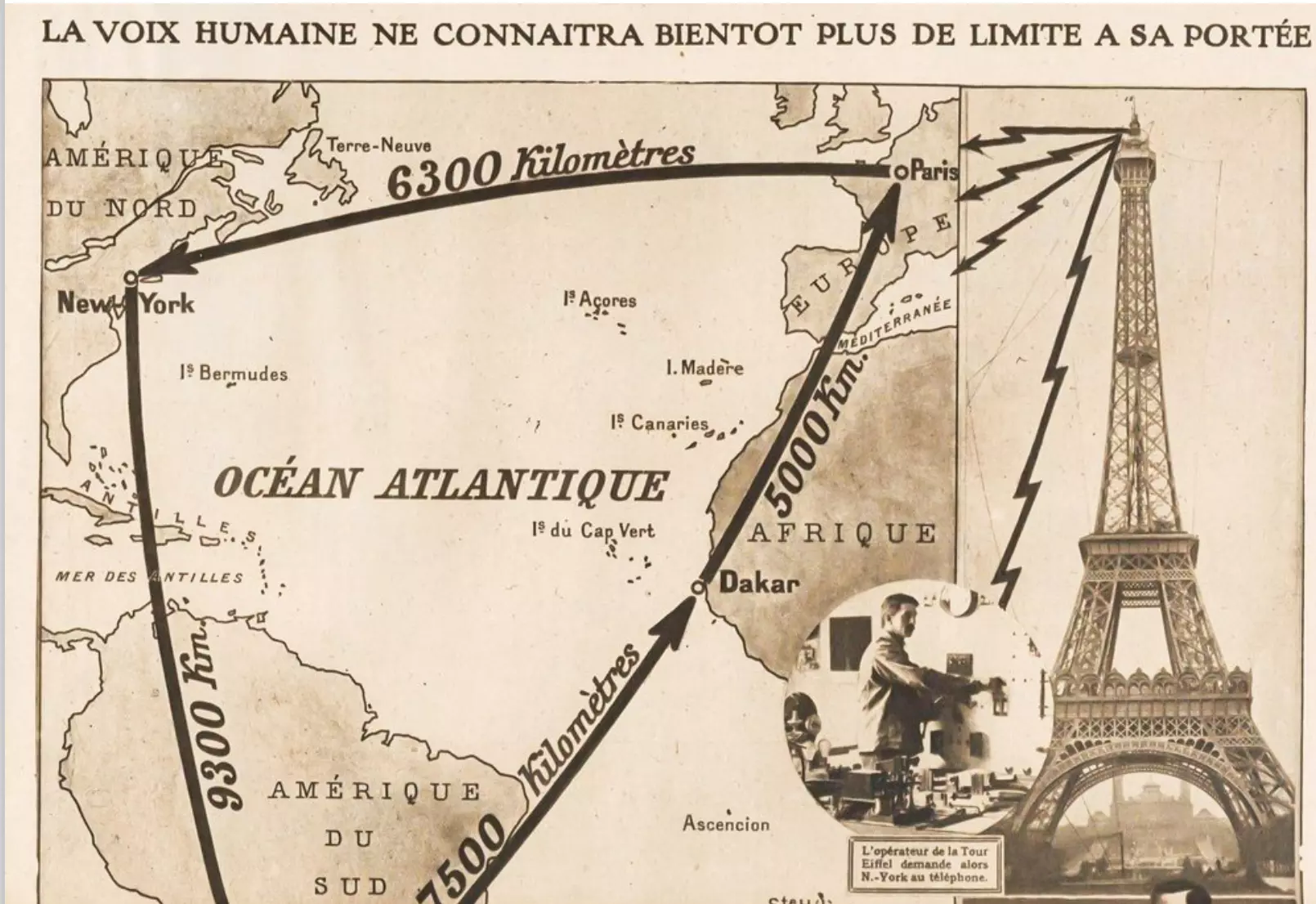
Signal of strength: Eiffel Tower celebrates a centenary of radio broadcast (RFI)

A hundred years ago this week, France’s most famous landmark, the Eiffel Tower, was first used as an antenna for radio programmes. Looming high above the city’s uniform skyline, the tower was an obvious choice to pioneer public radio in France, proving the country’s prowess in broadcast technology.

On 22 December 1921, just three years after the end of WWI, “Radio Tour Eiffel” broadcast its first ever show, a live performance featuring legendary singers.

The trial was the beginning of a long series of broadcasts that continues today, with 45 television stations and 32 FM stations – including RFI – broadcasting from the Eiffel Tower.

According to the Lille-based publication Le Réveil du Nord of 24 December 2021, “a concert by wireless telephony took place at the Lille Theatre”.

Famous artists of that era, the legendary Sacha Guitry, the soprano Jeanne Hatto, the tenor Maurice Dutreix and others sang in a microphone in a room in the Eiffel Tower, from where it was broadcast to a “wireless phone set” in the hall of the Lille theatre.

“A large audience attended this session,” according to the dispatch. [Continue reading…]

Nostalgic Raspberry Pi Radio Tunes to Music From Past Decades (Tom’s Hardware)

The Raspberry Pi makes an excellent gift on its own, but getting one in a custom Time Machine Radio is remarkably fulfilling. This holiday, a maker known as Byte-rider created a custom Raspberry Pi Zero 2 W-powered radio for his father. Continue reading
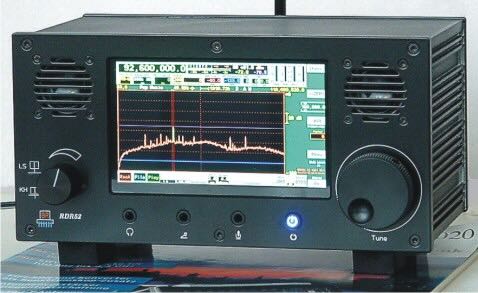
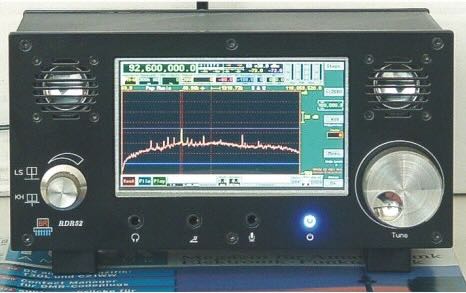
New Reuter Elektronik RDR52 QRP general coverage transceiver

Many thanks to SWLing Post contributor, Dave Zantow, who notes that Reuter Elektronik recently introduced their latest radio: the RDR52 QRP Transceiver.

Here’s the announcement from the Reuter Elektronik website:

RDR52 in standard “black” and special “metal”

The RDR52 can basically be seen as a desktop version of the popular Reuter Pocket mobile device. Astonishingly, the Pocket is often used as a full-fledged desktop receiver. Many operators report that they have sold their “large” devices and now only use the Pocket because it pairs good reception properties with simple operation and offers a very effective spectrum display while keeping the power consumption to a minimum.

However, the battery-powered Pocket was never designed for that purpose. First, it needs a stand-up aid to be easy to operate on your desktop (display almost vertical). Second, the playback volume of the loudspeakers is low and turning the scroll wheel feels finicky. Third, operation on a constant charging current supply is suboptimal for the built-in batteries: Constant full charging shortens their service life.

The RDR52 avoids these disadvantages. It essentially contains the circuit and thus the display and reception properties as well as the operating options of the Pocket. Due to the larger housing (heat dissipation) and a slightly higher possible current consumption (no batteries as power supply), improvements in the IM behavior (more powerful preamplifiers and AD converters) could be achieved. Other differences to the Pocket include:

    • Aluminum profile housing 190 x 90 x 100 mm³ with 5 mm thick front and 2 mm thick rear panel, powder-coated / anodized.
    • BNC sockets for antenna connection, separate for 0 – 71 MHz, FM / 2m / DAB and exciter / QRP transmitter.
    • Large rotary knob with solid optical rotary encoder.
    • Additional rotary knob for volume adjustment of headphones and loudspeakers.
    • Two 32 mm loudspeakers with good bass reproduction.
    • External power supply DC voltage 9 – 15 V (common hollow pin socket with 2.5 mm pin).

All the Pocket’s enhancements are also available for the RDR52 (broadband spectrum with up to 52.6 MHz display width, 8 different FM filters for extreme DX to high-end stereo, up to 16 GBit flash memory for audio or I/Q recordings, screen dump of the display to the recorder, WiFi, Bluetooth, power supply and control of the RLA4 / RFA1 directly from the antenna input, …). Two basic hardware versions will be available: Standard black with simple loudspeakers and plastic knobs, or a special version with metal knobs and aluminum loudspeaker membranes.

The equipment of different transmitter modules and frequency ranges has been a bit expanded in contrast to the Pocket. Two modules can be installed in the RDR52 at the same time (Pocket: only 1 module). This means, for example, that the FM module and the SW QRP transmitter can be installed at the same time, or the broadband exciter can be installed without the need for an FM module. However, equipping both transmitter modules (exciter and QRP transmitter at the same time) is not possible.

The RDR52 is in production and is expected to be available from the end of December 2021. Prices according to the current price list.

Based on the price list, it appears the RDR52 will start at € 999 with a number of optional upgrades/configurations.

Click here for more information.

Thank you for the tip, Dave!

Radio Waves: Pocket SSB Transceiver, Radio On The Bay Event, New Book on History of Spaceweather, and PSK31 on 437 MHz from the Moon

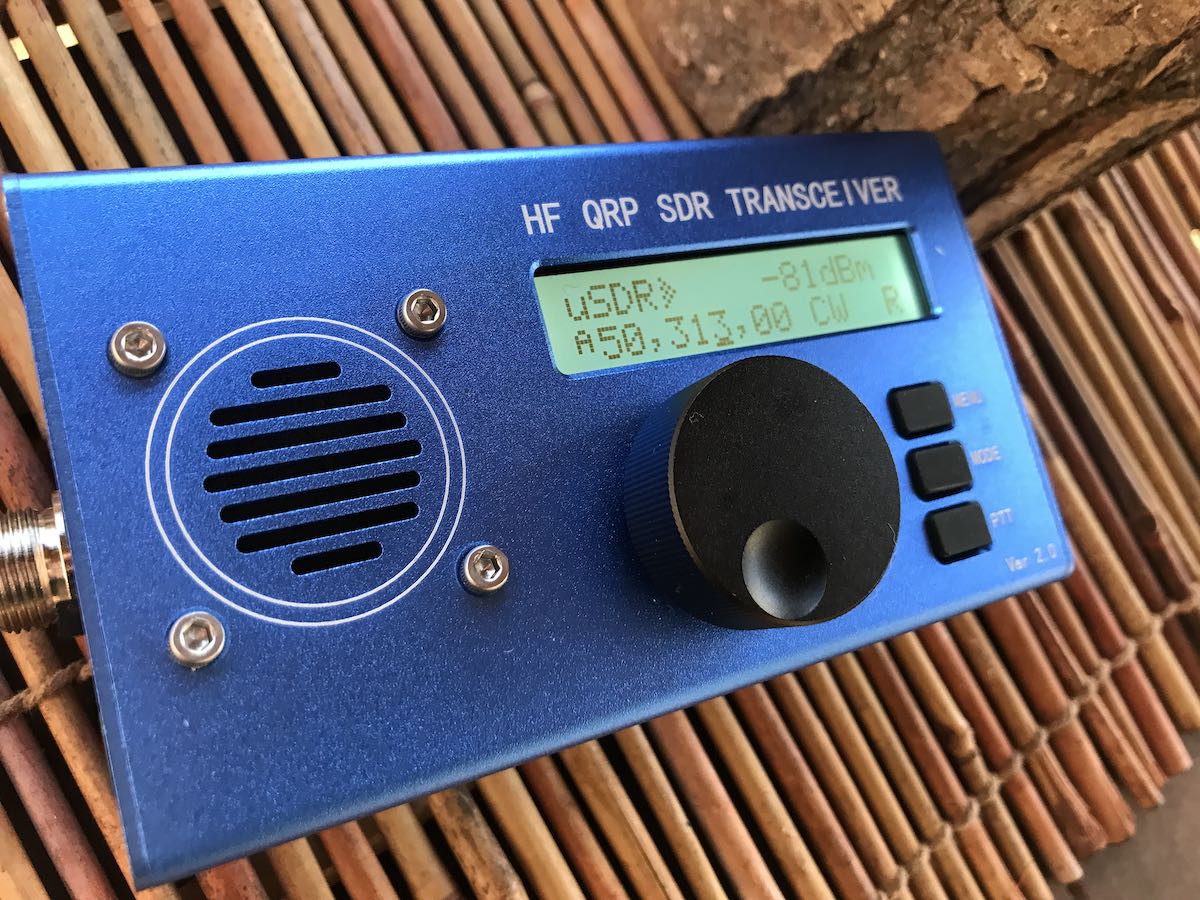
The uSDX/uSDR QRP transceiver (Chinese version)

Radio Waves:  Stories Making Waves in the World of Radio

Because I keep my ear to the waves, as well as receive many tips from others who do the same, I find myself privy to radio-related stories that might interest SWLing Post readers.  To that end: Welcome to the SWLing Post’s Radio Waves, a collection of links to interesting stories making waves in the world of radio. Enjoy!


Ham Radio SSB Transceiver Fits in Pocket (Hackaday)

Talking about this Chinese ham radio transceiver requires a veritable flurry of acronyms: HF, SSB, QRP, and SDR to start with. [Paul] does a nice job of unboxing the rig and checking it out. The radio is a clone of a German project and provides a low-power radio with a rechargeable battery. You can see his video about the gear below.

SSB is an odd choice for low power operation, although we wonder if you couldn’t feed digital data in using a mode like PSK31 that has good performance at low power. There are several variations of the radio available and they cost generally less than $200 — sometimes quite a bit less.

There isn’t much on the front of the radio. There are a few buttons, a rotary encoder, and an LCD along with a speaker and microphone built-in. There are ports for power to run the radio if you want to not use the battery and a separate port for battery charging. There are also ports for a key, external microphone and speakers, and audio connections that look like they’d work for digital modes. According to commenters, the radio doesn’t have an internal charging circuit, so you have to be careful what you plug into the charging port. [Continue reading…]

(SIDE NOTE: I have been testing one of the USDX / USDR transceivers (a Chinese version–not the open source homebrew project) over at QRPer.com and have been very displeased with performance. So much so, I returned it for a refund. One of the biggest issues being spurious emissions that were produced in harmonics, but also the receiver is one of the worst I’ve ever tested. -Thomas) Continue reading

BBC Newshour and the first shortwave Transatlantic Tests

Former BBC World Service HQ – The Bush House

Many thanks to SWLing Post contributors, Doug and Kris, who both share a link to BBC Newshour which was broadcast yesterday (Dec 12, 2021).

The final segment of the show focuses on the birth of international shortwave radio and the first Transatlantic tests. You can listen to this report over the next month via the BBC Sounds website. This is the final piece in Newshour and starts at the 45:05 mark. Very much worth your time!

Click here to listen to this segment on BBC Sounds (starting at 45:05).

100th Anniversary of Transatlantic Tests: Special event station using a 1921 replica transmitter

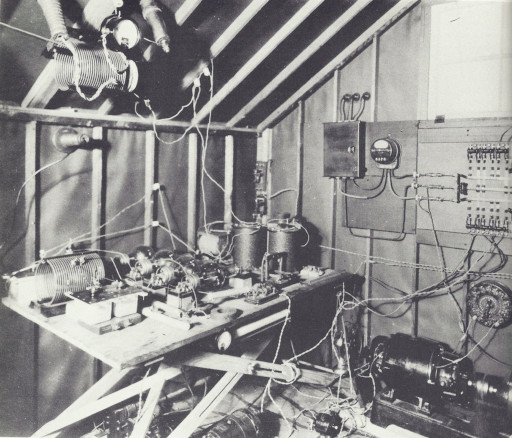
1BCG Transmitter in 1921 (Source: 1BCG.org)

Many thanks to SWLing Post contributor, Mark (AE2EA), who shares the following announcement:

2021 marks the 100th year anniversary of the historic Transatlantic Tests, where radio amateurs using the call sign 1BCG were responsible for the first successful radio communication across the Atlantic Ocean on “short waves.”

On December 11, 2021 the Antique Wireless Association will recreate these historic transmissions on 160 meters from the Vintage Radio and Communications Museum of Connecticut, using a replica transmitter constructed by volunteers at the Antique Wireless Association. This special event is your opportunity to relive a historic moment in amateur radio history.

More information can be found here http://1BCG.org

Here’s a summary:

The 1BCG replica transmitter will be operating as W2AN/1BCG on 1.820 MHz, plus or minus, using CW, from The Vintage Radio and Communications Museum of Connecticut. Transmissions from W2AN/1BCG will be one-way, just like the original transatlantic tests in 1921. You can get a SWL certificate for this Special Event by sending a copy of the transmitted message to [email protected]

Schedule: Transmissions start on December 11, 2021, on 1.820 MHz, +/-, at 1800 EST or 2300 UTC, then every 15 minutes thereafter for a total of five hours thusly; 1815, 1830, 1845, 1900, 1915, 1930, 1945, 2000, 2015, 2030, 2045, 2100, 2115, 2130, 2145, 2200, 2215, 2230 and the last transmission at 2245 EST.

Mark ~ AE2EA
Antique Wireless Association

I will definitely be listening! Thank you so much for sharing this, Mark!

Large archive of CW off-air recordings from Italy

Many thanks to SWLing Post contributor, LUIGI Ciampoli (IZ4KBW), who writes:

Some time ago with a friend of mine I created a very big archive of CW QSO recordings available for everybody who want to listen to CW traffic. The idea was born by the need to give to newcomer HAMS material to train on real CW traffic on the bands (with QSB, QRN, QRM, etc.).

So we started to record our ragchewing, ordering files with date/calls of participants/frequencies/keys used and WPM speed of QTC. At the beginning it was not a serious matter, but nowadays the archive counts thousands of records with local and international radio friends…hours and hours of “swinging morse code.” Some of these QSOs are made with ex professional RT involved on radio ham bands spending time talking about the past golden era and having QSO with OMs on the radio.

We released this large archive of recordings in a Google drive folder that can be shared. The archive is located at the following link : https://drive.google.com/drive/folders/1XaF3Mvwa6WvgOCzZjp0NwzgnYdNHsW2Q

de IZ4KBW/op Luigi

Sample recording made on November 21, 2021. I8QFK, IZ8VKW, IU1MRY (Using a Paddle on 7036 kHz):

Thank you for sharing this, Luigi! What a wonderful idea. I think I will approach you about adding a few of these to the Shortwave Radio Audio Archive as well as there are very few ham radio CW recordings.

Click here to check out IZ4KBW’s CW QSO off-air recording archive.

Radio Waves: Cassette’s Role in Creation of Internet, AU2JCB Special Event, Joel Hallas (W1ZR) SK, and Shortwave Chatter

Radio Waves:  Stories Making Waves in the World of Radio

Because I keep my ear to the waves, as well as receive many tips from others who do the same, I find myself privy to radio-related stories that might interest SWLing Post readers.  To that end: Welcome to the SWLing Post’s Radio Waves, a collection of links to interesting stories making waves in the world of radio. Enjoy!

Many thanks to SWLing Post contributors Datta (VU2DSI), Kim Elliott, Ron, and the Southgate ARC for the following tips:


How the Cassette Tape Helped Create the Internet (WNYC Studios)

In 1983, Simon Goodwin had a strange thought. Would it be possible to broadcast computer software over the radio? If so, could listeners record it off the air and onto a cassette tape? This experiment, and dozens of others in the early 80s, created a series of cassette fueled, analog internets. Our friend Simon Adler at Radiolab reports.

This is a segment from our November 26th, 2021 program, How Cassette Tapes Changed the World. [Read and listen to this piece at WNYC Studios…]

AU2JCB operation 19 NOV to 14 DEC 2021 (Datta, VU2DSI)

AU2JCB is a special event callsign to commemorate the birth date (30 NOV) & to pay homage & tell about the great INDIAN scientist Aacharya JAGADISH CHANDRA BOSE who is recognized as the “Father of Wireless Communication” by the scientific community of our world.
VU2DSI- Datta Deogaonkar will operate with this AU2JCB special event call sign. Continue reading