Category Archives: Ham Radio

Any advice on compact Lipo batteries, in-ear earphones with volume control, and portable amplified speakers?

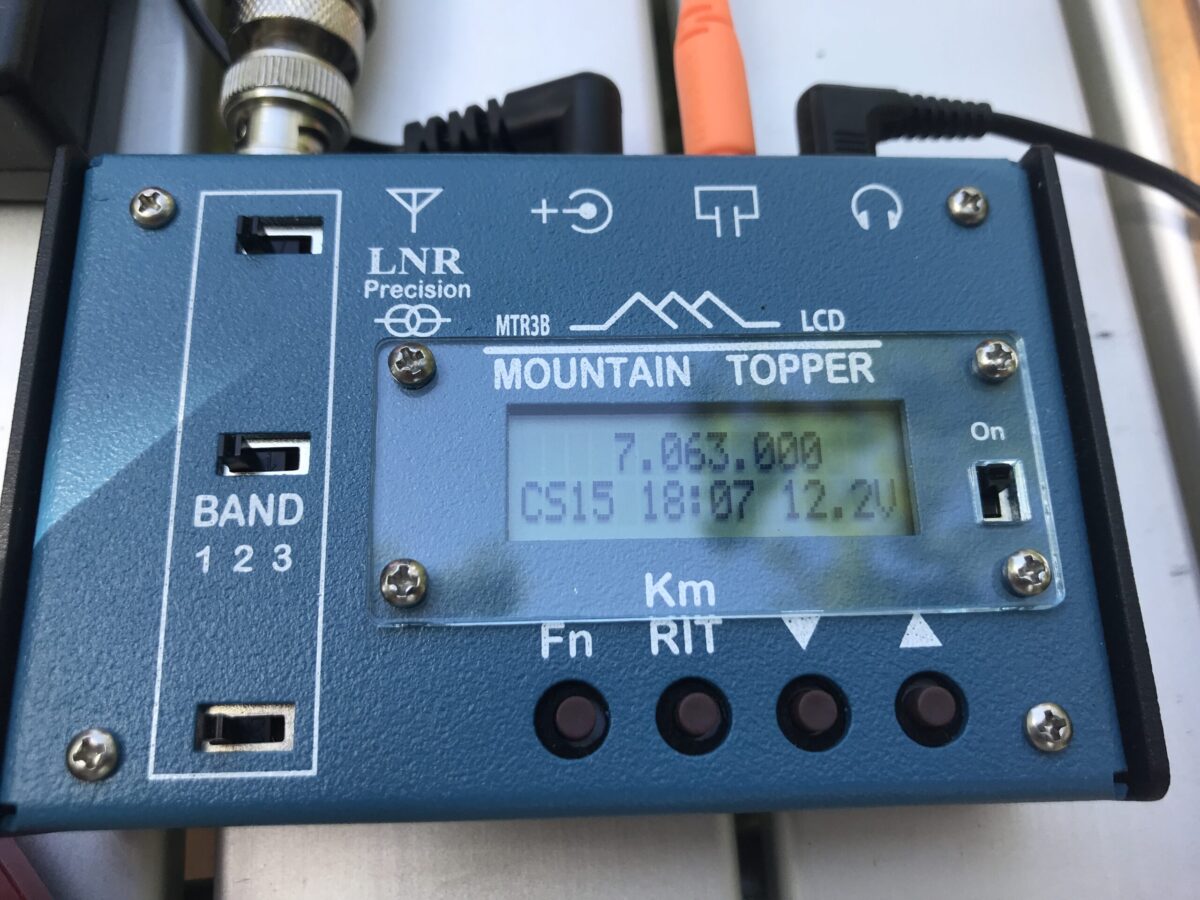
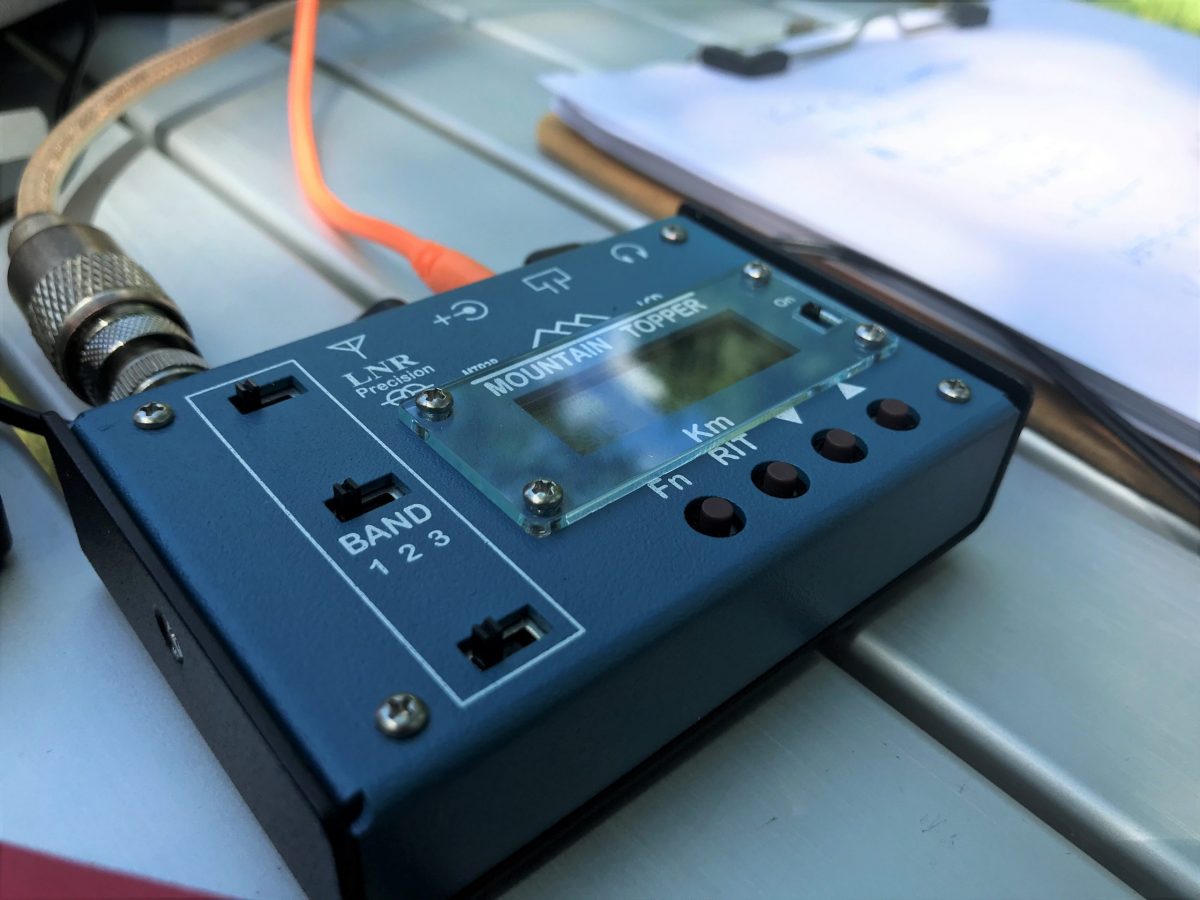
The MTR-3B 3 band transceiver is about the size of a pack of playing cards.

SWLing Post readers: I originally published the following post on QRPer.com. I thought I might share it here on the SWLing Post as well since we’ve so many readers who regularly use compact battery packs, earphones, and portable speakers. I’m looking for some advice as I build a super-compact SOTA/POTA field kit around the Mountain Topper MTR-3B. If interested in helping me sort this out, read on:


I received my Mountain Topper MTR-3B last week, and I’ve already taken it on a POTA activation.

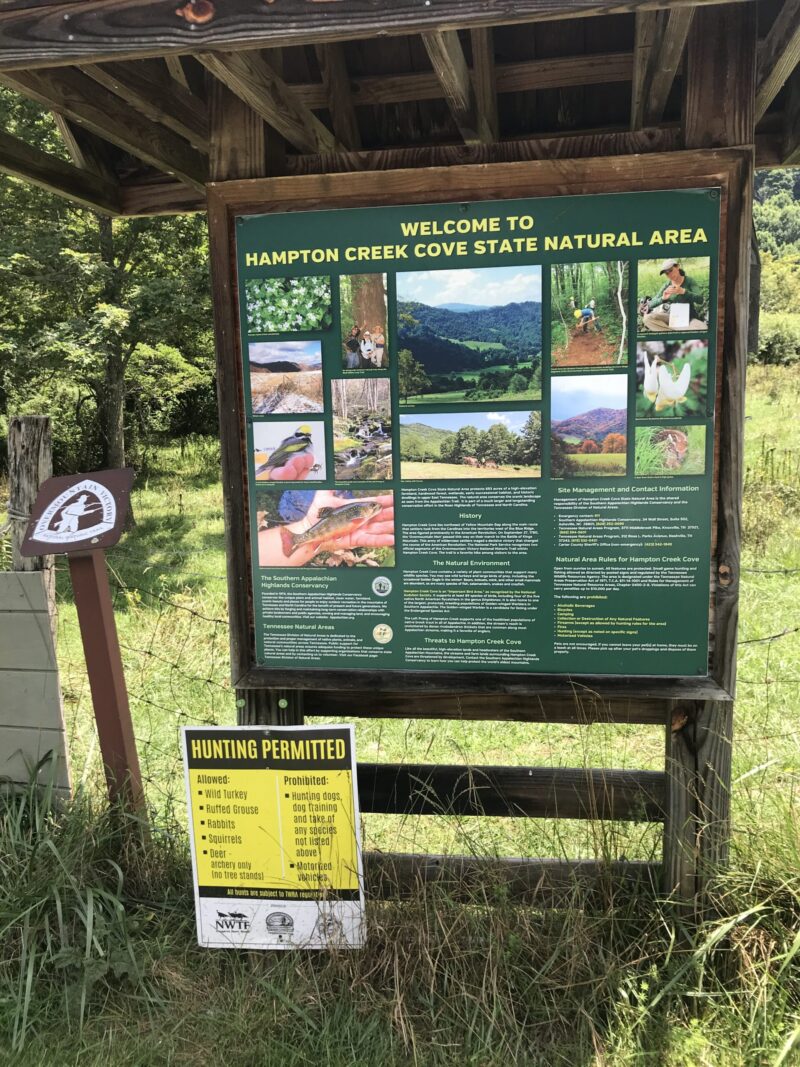
POTA Park Hampton Creek Cove

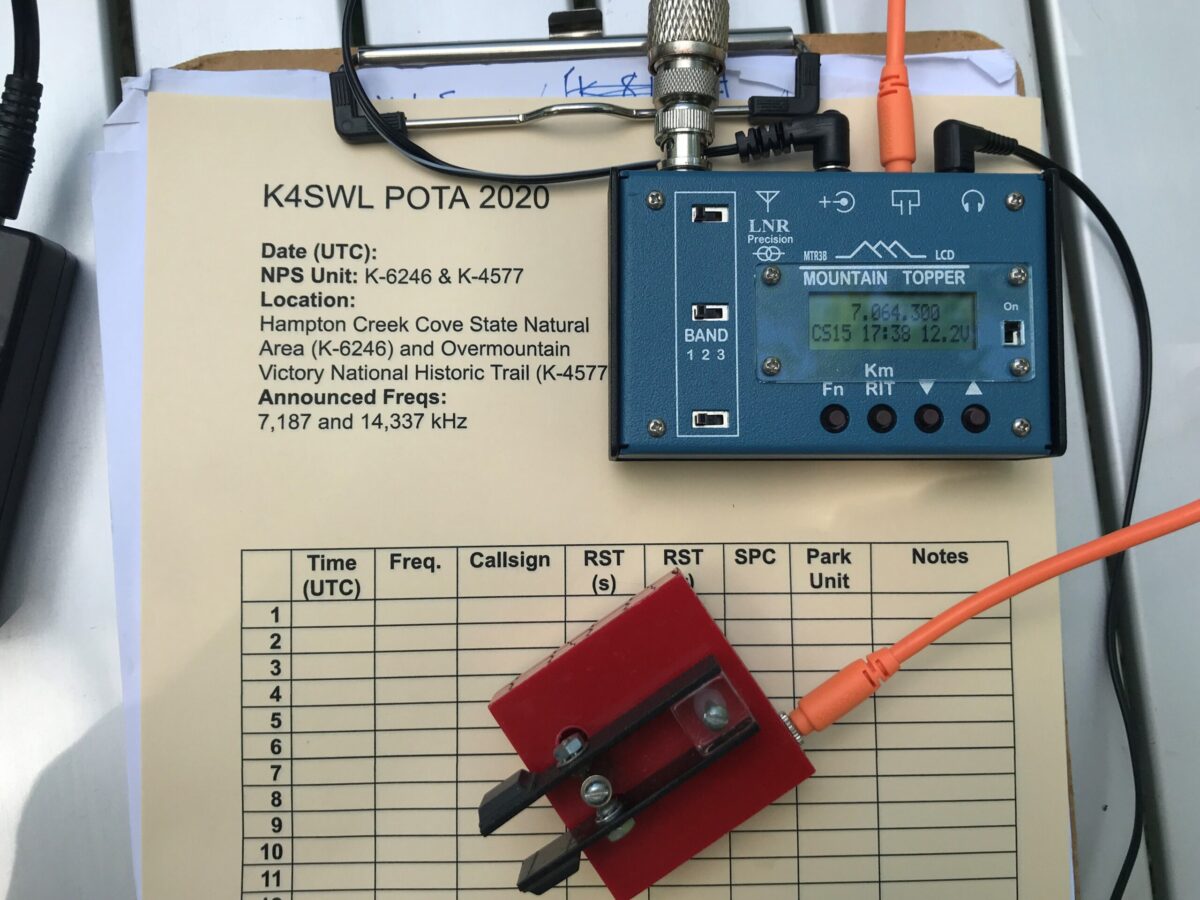
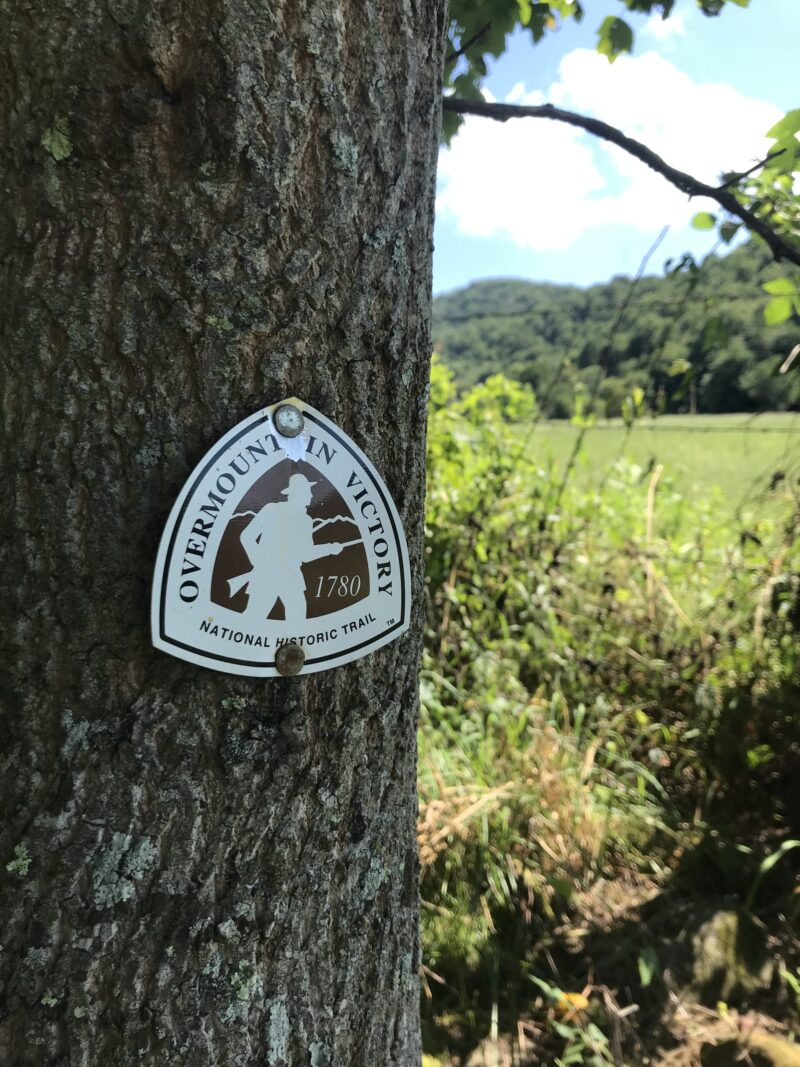
Last weekend, I decided to break it in on a POTA “two-fer” site: Hampton Creek Cove State Natural Area (K-6246) and The Overmountain Victory Trail (K-4577) in Tennessee. Hampton Creek Cove was actually an ATNO (all time new one) so it was a trial by fire!

POTA Park Overmountain Victory Trail

In short, the MTR-3B was marvelous. I’m so impressed.

As I mentioned in a previous post, I’m building a full SOTA/POTA activation kit for the MTR-3B. I already have a kit built around my KX2 and I don’t want to “borrow” any items from it (so I’m not surprised later in the field when an item is missing).

The TalentCell Rechargeable 12V 3000mAh Lithium Ion Battery Pack is the little black box.

For this activation, I powered the MTR-3B with this inexpensive 12V battery pack a friend recommended on Amazon.com (affiliate link). The battery pack is almost identical in size to the MTR-3B and works perfectly. The battery, charger and cable all set me back a whopping $25.

I also used my Whiterook paddle (which needs new paddle arms at this point) but that will soon be replaced with a set of N0SA portable paddles I recently ordered.

Since the MTR-3B has no volume control, I used a pair of 20 year old Sennheiser earphones I bought when I lived in Munich. These have been in a drawer for ages because I now prefer using in-ear earphones with silicon earpieces for better comfort and sound isolation. But the Sennheisers have one thing none of my other earphones sport: in-line volume control.

While the earphones worked well for this activation, I’d still prefer a set of in-ear earphones with in-line volume control. Any suggestions from MTR-3B owners? Also, I’d like a compact amplified speaker with volume control to carry as an option when needed. If you can recommend one, please comment!

I’m writing an article for The Spectrum Monitor magazine about portable power later this year. I noticed that a number of MTR-3B owners swear by 11V rechargeable Lipo cells that are used in the RC and drone markets. Many have a similar compact form-factor as the common 9V battery. I understand, however, some of these cells need special chargers and equipment to balance them.

I would appreciate any and all information about these batteries.

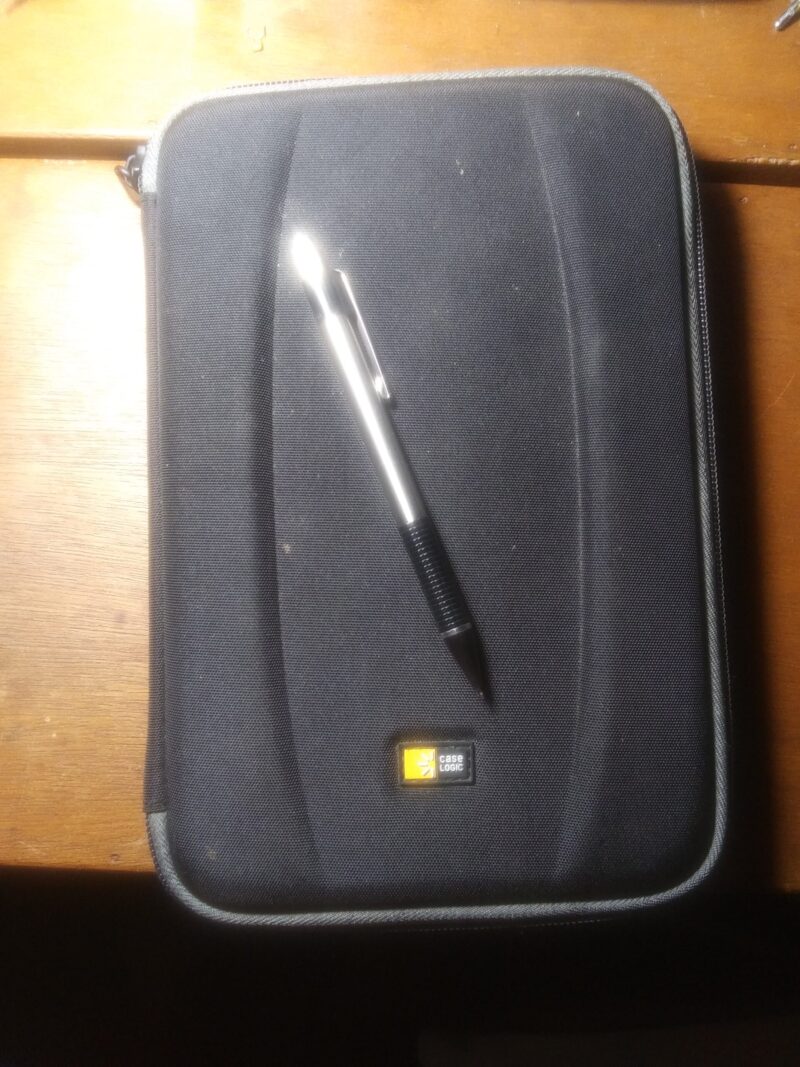
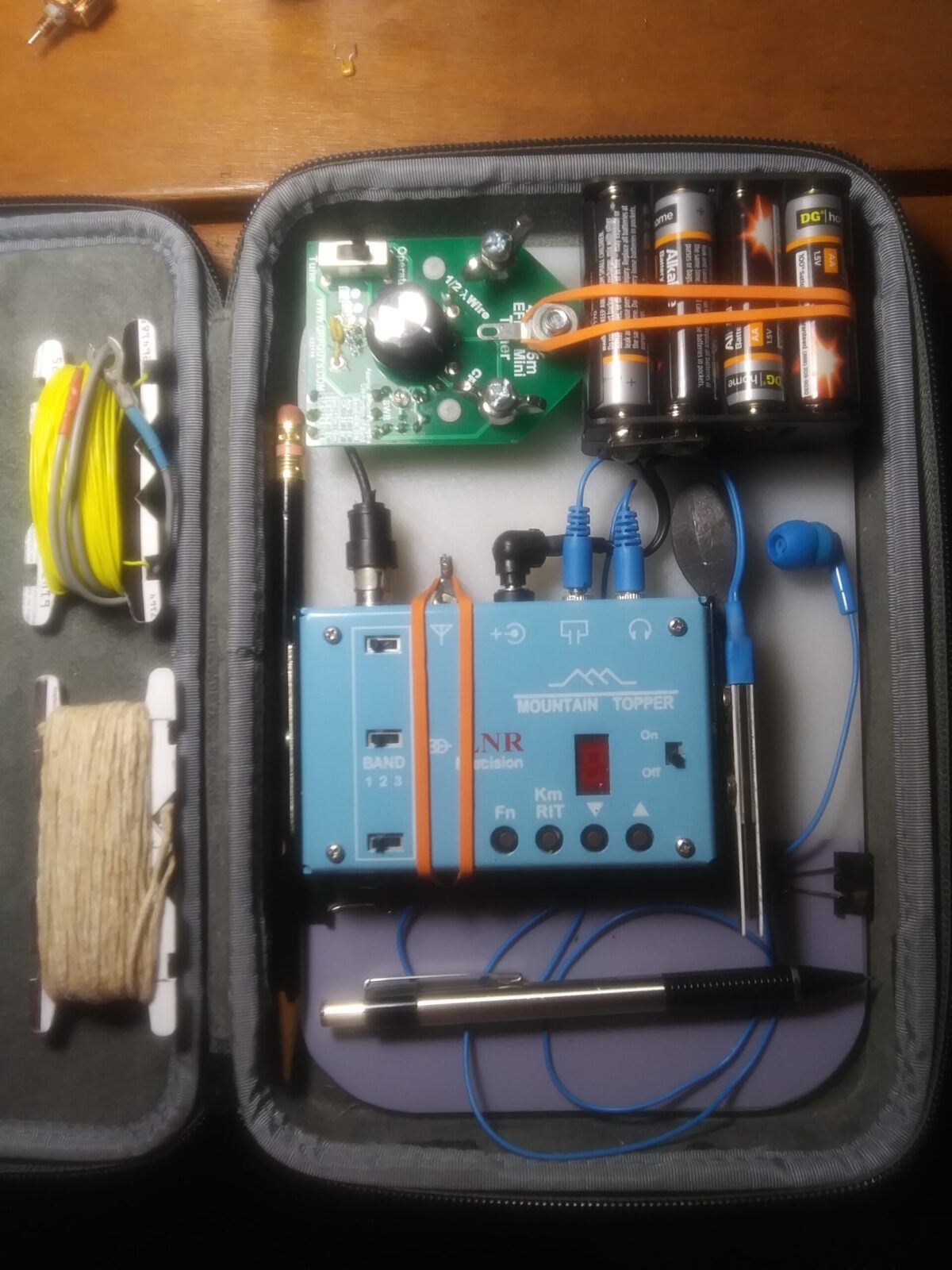
In the meantime, Rich (N8TGQ), recently shared a pic of his Mountain Topper portable pack. Check it out:

MTR Kit

I think it’s brilliant how he’s mounted everything on a compact plastic cutting board inside the case. Rich says that what he loves about this set-up is that everything is there, ready to go–simply plug in the antenna!

Please comment or contact me if you have any suggestions as I build out a compact MTR-3B kit!

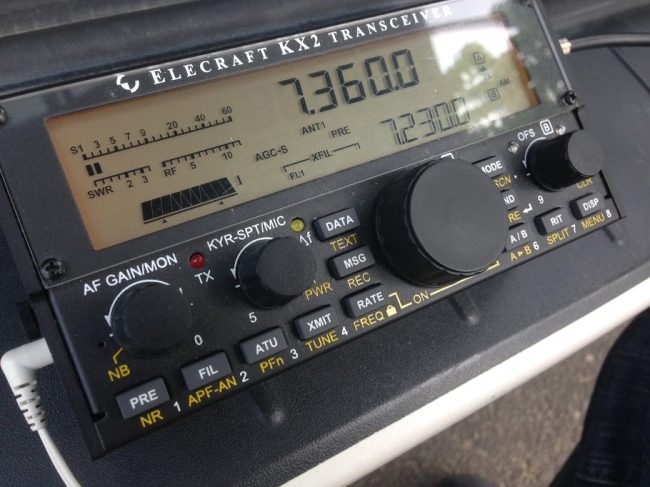
Elecraft KX2 3D model tour with Wayne Burdick (N6KR)

Wayne Burdick (N6KR) was one of the QSO Today Expo presenters this year and he took his audience on a very deep dive into the design philosophy behind the Elecraft KX2 (click here to read our KX2 review). The presentation is absolutely fascinating!  If you want geek-out on radio design, I highly recommend you take a look:

Val’s Morse Code videos and practice sessions

Many thanks to SWLing Post contributor, Valery Titievsky, who writes:

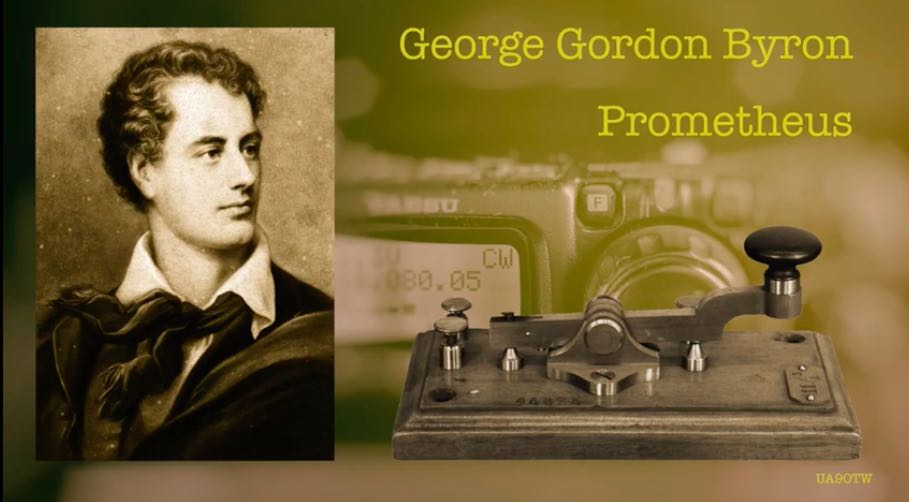
Perhaps it will be interesting to SWLing Post subscribers. A short video for those wishing to improve their skills in Morse code. Poem by George Byron “Prometheus».

The channel also has lessons in studying Morse code and a few videos with my SWL on shortwaves of various radio broadcasting, weather and other service and number stations.

73! Best Regards

Valery Titievsky (R9O-16) SWL

Click here to check out Val’s YouTube channel.

When I practice my CW skills, I do like listening to real content like this instead of randomly-generated characters. One reason is you start to recognize the sound of common words (like “the” “an” “and” “is” etc).

Thank you for sharing this, Val!

TX Factor Episode 26

Many thanks to SWLing Post contributor, Eric (WD8RIF), who notes that the 26th episode of TX Factor was recently released. Here’s the show summary:

A post-lockdown special – well, not really! Just a bumper edition of TX Factor that was planned for March 2020, but due to the Covid-19 restrictions never quite happened! We hope you are all safe and well and enjoying the summer opportunities for amateur radio despite the various restrictions upon us.

Back in February we dropped in for tea and biscuits at the new(ish) QTH of Tim Kirby GW4VXE to learn more about his passion for all things VHF / UHF. Also in February, Bob and Mike fitted a Radio Analog PTRX-7300 RF interface module into Bob’s beloved IC-7300, and, yes, can it be possibly true . . . bang up-to-date, Bob reviews one of the first Icom IC-705 SDR QRP all-mode transceivers in the country. We hope you enjoy the show!

Click here to view on YouTube or on the TX Factor website.

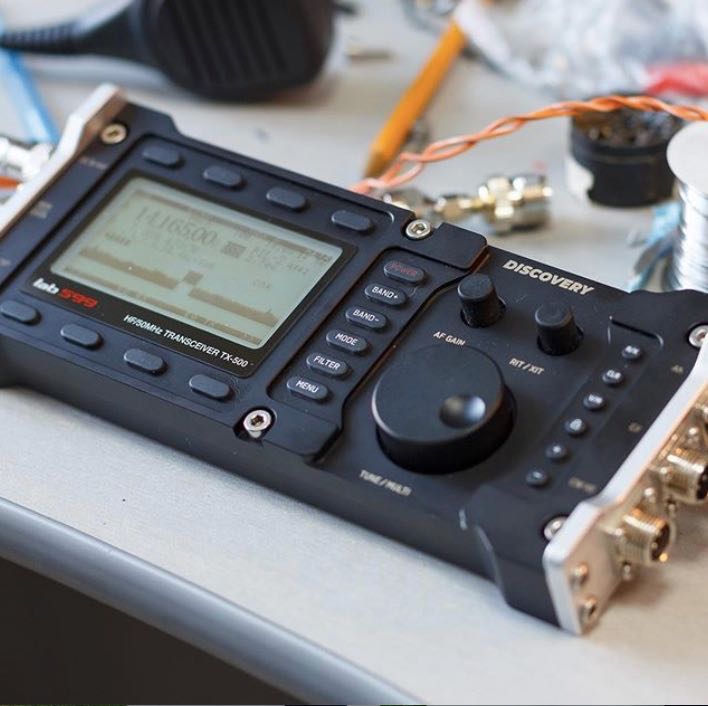
Video: Josh’s Lab599 TX-500 Deep Dive & Review

Many thanks to SWLing Post contributor, Don (W7SSB), who notes that Josh (KI6NAZ) at Ham Radio Crash Course has just posted his final TX-500 video. If you’ve been considering the TX-500, it’s very much worth your time:

Josh is actually sending me this very same TX-500 for review in The Spectrum Monitor magazine and here on the SWLing Post.

Please comment if you have any questions and I’ll do my best to answer them while I have the unit here at SWLing Post HQ.

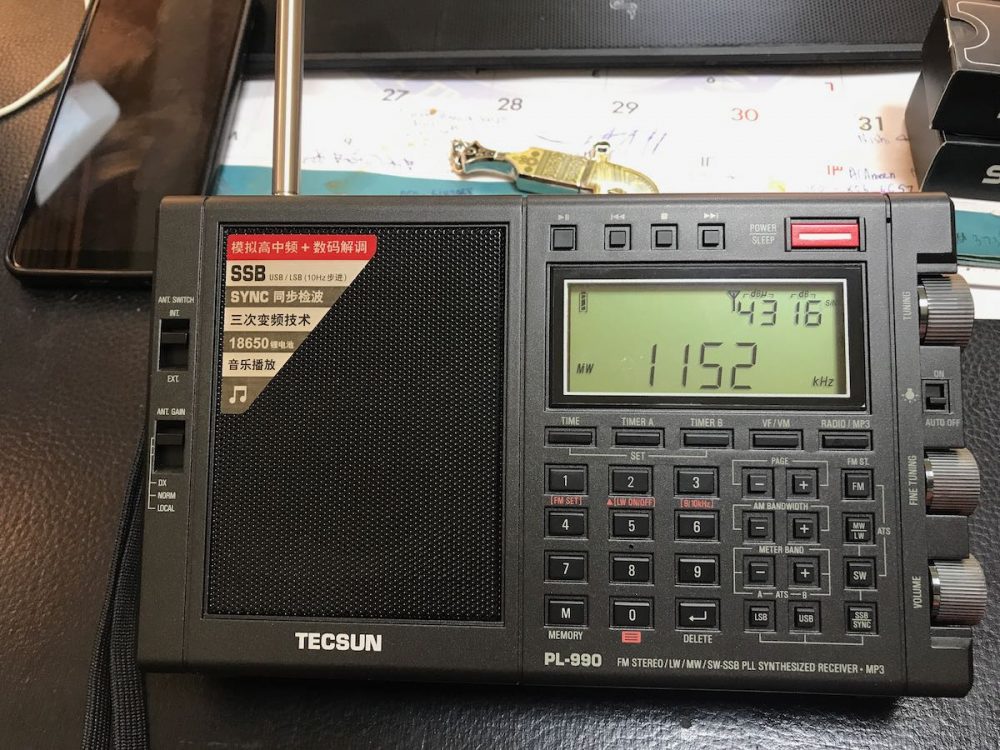
George reviews the new Tecsun PL-990

Many thanks to SWLing Post contributor, George Joachim, who shares the following review of the Tecsun PL-990.

AS George points out, the PL-990 in the following review is not the “export” model Anon-Co will eventually offer for sale later this year. It might be nearly identical in every respect, but at time of posting Tecsun is addressing some final firmware updates the the “export” version prior to starting a full first production run. As we learn more about the various versions of the PL-990 in the wild–compare serial numbers, etc.– we will eventually sort out any nuances between versions.

George purchased this PL-990 on AliExpress and I am incredibly grateful to read his review of this model:


Review of the Tecsun PL-990

by George Joachim
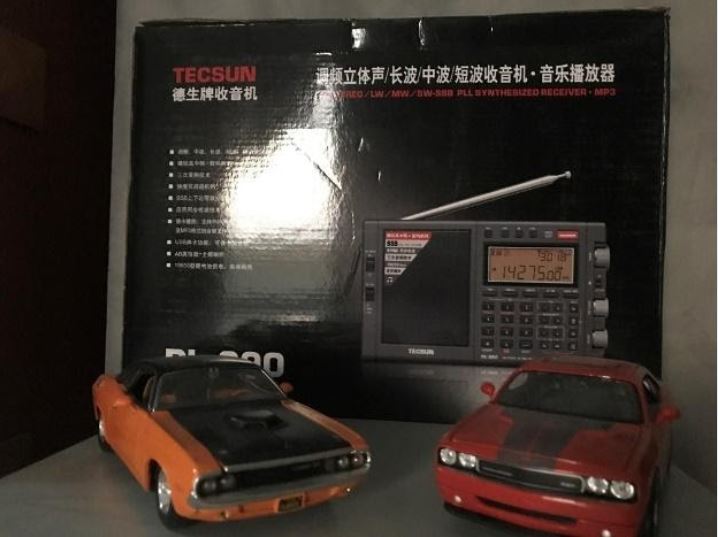
Introduction

The Tecsun PL 990 is one of the three new radios offered by Tecsun and according to the news from the company these may be the last developed.

The other two radios are the Tecsun H-501 and the PL-330. The H-501 is the largest with dual speakers and the PL-990 is of a similar size to the PL-880, PL-680, PL-660 and PL-600. The PL-330 is the smallest and is similar to the PL-310ET and PL-380.
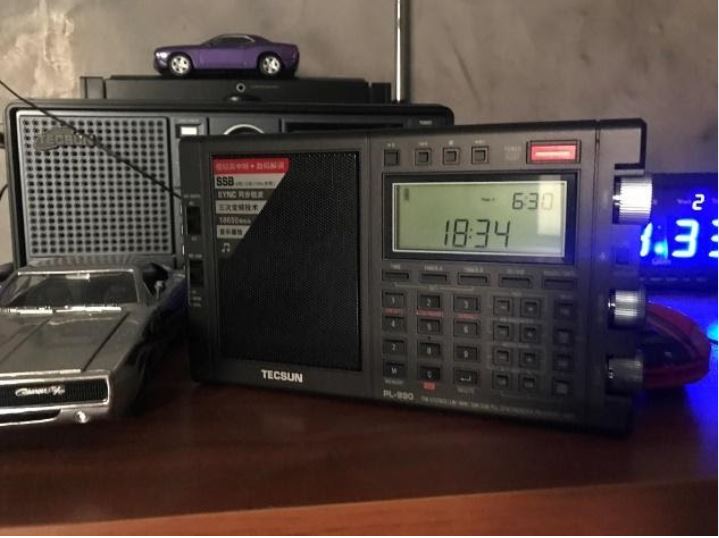
The Tecsun PL-990 is a medium sized portable multi-function radio. It has the following features:

  • Shortwave (SW)
  • Medium Wave (AM)
  • Frequency Modulation (FM)
  • SSB (LSB and USB)
  • Bluetooth connectivity (BT)
  • MP3 playback from a microSD port
  • Clock and two Timers with Alarms
  • Auto Sleep
  • powered by a single 18650 rechargeable 3.7V Lithium Ion Battery, unbranded and supplied.

The radio is a refinement of the PL-880 with styling similar to the PL-680. It is matte black with a hint of grey, finished in a quality plastic case and it is ergonomic with a good weight and feel, just like the PL-880.
Background

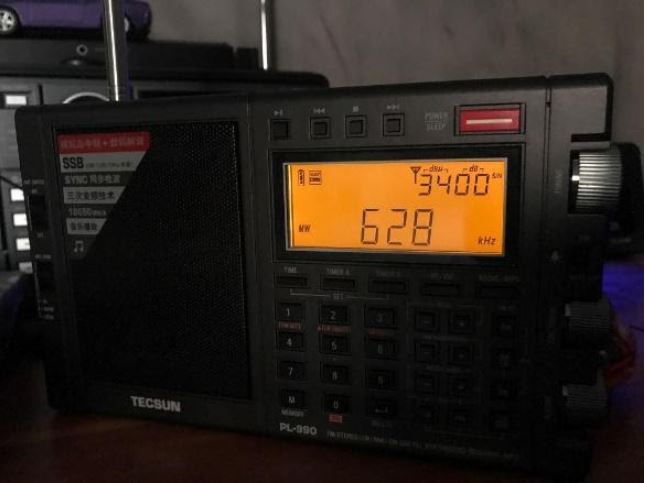
This is my fourth portable radio of this size. I had owned the analogue Sony ICF-7601 back in the day and then the PL-660 and PL-880. The Sony was destroyed by me doing naughty electronic experiments and both the PL-660 and PL-880 were gifted to my family members.

Having no such radio, I considered the purchase of a new PL-880. I had contacted Ms Anna from the Anon Co. in HK and she was very helpful and also mentioned that Tecsun is developing a couple of new radios, but these are not yet available. This got me interested in the PL-990 and the H-501. I had also considered the H-501, because I liked the fact that it has two speaker sets, however the radio did seem a big bulky for my needs. I have a few desktop radios, but I needed something to be on my lap or by the bedside. Usually I fiddle with these portable radios lying on my chest until I find something nice to listen to then let it play on auto sleep until it puts me to sleep. I am sure some of you guys do this too. I imagine the H-501 would be a bit big for this.

After reading articles on the SWLing Post and despite the warnings about Pilot run versions and Chinese versions, I decided to risk a purchase from AliExpress. This has been my one and only purchase on AliExpress so far.

Purchase

My radio was supplied by a company called Li Jia Shops in AliExpress. It cost a steep US$400 and US$157 DHL shipping. Totally expensive and risky in my opinion, but I am known to be reckless with my online purchases.? Besides, I wanted a new toy!

As this was my first purchase from AliExpress, I was a bit apprehensive, as I mainly use eBay. Also buying electronic items from China is a bit risky. One may end up not getting the item, or getting it after some significant delay. As you all know, electronic items exported from China is the largest electronics export operation in the world, so there is congestion in logistics and Covid-19 also adds to that. Selecting DHL to ship the item was very expensive, but I believe necessary. Waiting for an expensive electronic device for two months is a painful experience, at least from my perspective. Using DHL took a mere 12 days. The main delay originated from the shippers. They give the shipment information to DHL well in advance, but they do not actually take the item to DHL unless it suits their facilitators who they assign. The shipment shows as shipped and DHL status is ‘shipment information received’, but in reality the item is still with the shippers. Once it does actually get to DHL, then it is quite fast. Usually the shippers are located in the Shenzhen area and DHL is in Hong Kong. AliExpress will not release the payment unless the buyer confirms receipt of the item as described, so there is some safety for the buyer.

Overall, I was satisfied with the purchase and shipping process. But it was expensive and it was risky. It would be better to approach Anon Co in HK for your purchases rather than AliExpress and Bangood, but ultimately it is the buyer’s decision. For the English Export Version you must wait a bit I think.

The Export Version, the Chinese Version and the Pilot Run Version

This aspect is a bit confusing. From what I understood, and I could well be wrong, the versions are as follows:

Pilot run: this has the buttons as TIME DISPLAY and ALARM (this is also slightly cheaper on AliExpress and Banggood)
Chinese version: TIME TIMER A and TIMER B, but with Chinese manuals (what I have acquired)
Export Version: TIME TIMER A and TIMER B but with English manuals. (there may be further changes / improvements, as these units are still not available)

I am not sure about the firmware. My unit is presumably a later Chinese Version. And everything works properly as per the Firmware. The serial number of my unit indicates a possible manufacture date of July 2020, although this could be wrong.

Review

The review will be based on the different functions of the radio.

FM reception

In the UAE we are blessed with several English language FM radio stations with good music and limited advertisements. Each station caters to particular tastes, such as 90s music, modern and classic hits. Reproduction was crisp and in full bodied stereo. The speaker is powerful and not unlike the speaker of the PL-880.

MW reception
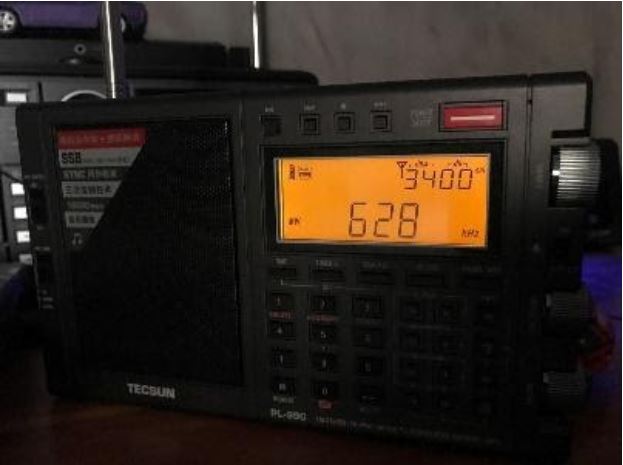
I do not usually listen to AM or MW. However, the radio does a good job receiving these stations with a deep sound and minimal crackling.

SW reception
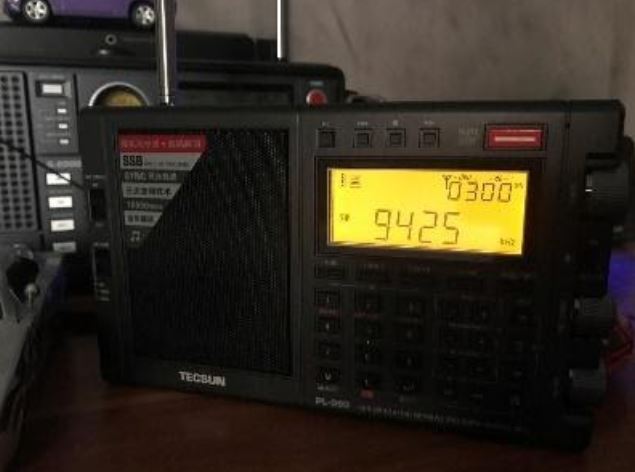
Shortwave is still out there folks, although its variety and abundance is greatly reduced. I do receive quite a few broadcasts using the telescopic antenna. Activity is concentrated around the 16m band, the 31m band and the 49m band, although occasional broadcasts can also be found in the 22m, 19m and 41m bands. The SYNC function holds on to weak broadcasts and makes them intelligible. I am sure that the Radio would do a commendable job if one could use a time machine to take it back to the SW hay-days of the 80s and 90s. I wonder if they have any time machines up for sale in AliExpress? 🙂

SSB Reception
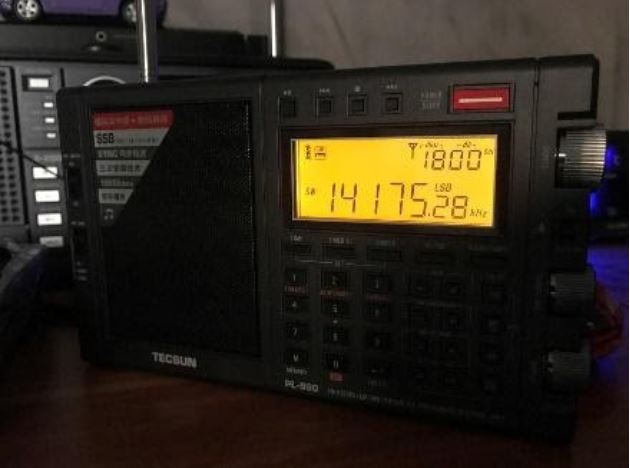
Right out of the box I was able to fine tune into 14,182.10 kHz on the USB and hear HAMS ‘doing their thang’. It was excellent and far better than what similar attempts resulted in my previous Tecsun radios. I do think that Tecsun has improved the SSB reception with this receiver. I am not a very capable SSB chaser, but if there is something SSB out there, the PL-990 should able to pull it in. One needs to know where and when to tune and luck also plays a role.

LW Reception

Yes it is there, but no, I have never heard anything in there using the PL-990 and all my previous radios. I do wonder if submarines transmit in the LW band? I don’t know.

MP3 Playback

A lot of listeners are not interested in MP3 listening, but I am. Especially with SW being so sparse nowadays. MP3 was a feature missed from previous Tecsun radios. I enjoy compiling a list of favourite tracks and listening to them, while engaged in a barbecue or in car maintenance or cleaning. I am also a train modeler and like to listen to MP3s while running my trains. Tecsun has even supplied a Sandisk micro SD card of 16GB with various Chinese and international tracks, which I think was nice of them.

Bluetooth

There is no Bluetooth button, but by pressing the RADIO/MP3 button an indication will come on the display as BT. The radio can then be conveniently paired with a mobile phone to transfer the audio from a you tube clip or similar to the radio, although I wouldn’t see the need for that. I am not sure if files can be transferred to the radio this way, I believe the function is only for audio playback.

Presentation and packaging
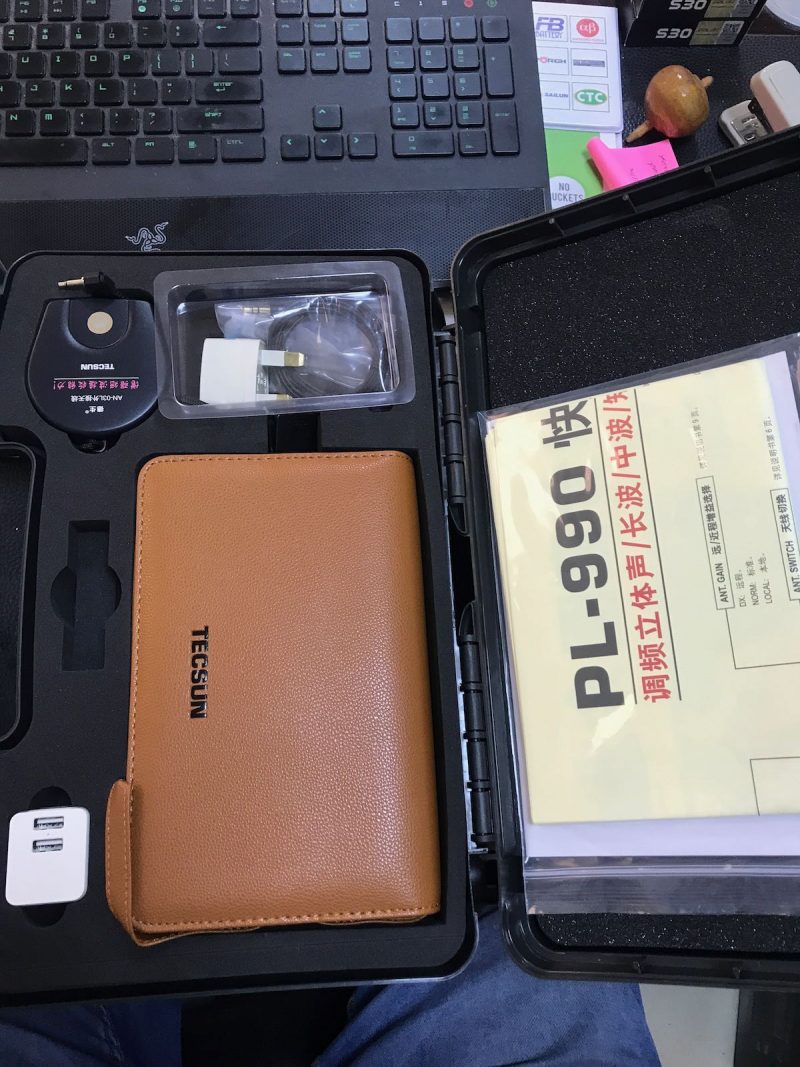
Much like the PL-880, the radio comes superbly packaged. The cardboard box functions as a glossy display of the radio and its features. Inside there are foam holders and there is a sturdy grey plastic toolbox case. In the toolbox case there is the radio, within a nylon bag inside its light brown faux leather pouch. The radio as well as the pouch have a carrying strap. In the toolbox there is a black foam case that contains:

  • A blue 18650 3.7 V Lithium Ion Battery
  • A long wire antenna in its real
  • A short(ish) charging cable
  • A UK style plug adaptor
  • A Chinese style charger with 2 USB outputs
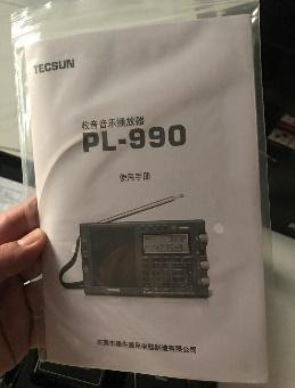
  • A Chinese language operation manual
  • A Poster containing the map of the world and country Radio codes
  • On the other side of the Poster is a detailed view of the PL-990 with illustrations in Chinese
Batteries

The radio uses one Li-Ion type 18650 3.7V battery. The included type is a blue generic unbranded type, I would have preferred a Tecsun-branded battery. I have a couple of vape equipment batteries –Golisi S30, which I believe are superior to the unbranded battery. (No, I am not a Vaper).

Concluding Remarks
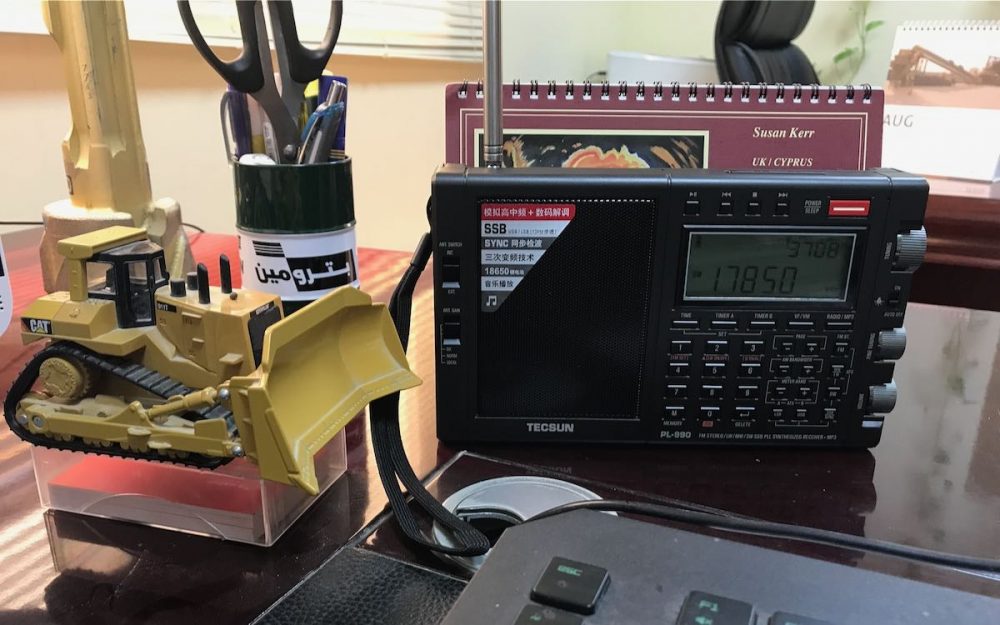
The latest Tecsun offering is a great conclusion to their series of multi-function portable radios. It offers some advantages over the PL-880, such as:

  • Styling
  • MP3
  • Much improved SSB reception
  • Superb FM reproduction
  • Bluetooth

Apart from the above I don’t see a compelling reason to acquire the radio unless, SSB or MP3 is important for you. Or like me, you just must have the latest.

Score

Style: 90%
FM: 100%
SW: 90% SYNC available
SSB: 95%
MW: 85%
LW: 80%
Battery Life: 70% for the provided battery 8/10 for externally sourced batteries
Display: 70% (the display is good, but it hasn’t really changed from previous displays)
Buttons: 85% Sturdy and precise, no wobbly buttons here.
Dials: 90% hard and precise with excellent indentations
Ports: 90% strong a tight female ports with protection plugs
Packaging: 95% anything you could wish for.
Documentation: 100% for Chinese speakers
Antenna: 60% normal telescopic antenna, should be a bit more shiny IMO.
Stability: 70% Stands well and has the rear bracket as the PL-880, however, would be easy to snap if pushed.
Sensitivity: 95% if it is there it will receive it and improve the signal over listening time.

Overall Review Score:
85.3%

Final thoughts:
Go get one, if you must, but better wait for the full export version.

George Joachim
11 AUG 2020


Many thanks, George, for sharing your review of the PL-990!

So far, the PL-990 sounds like it has iterative improvements over the PL-880 which is, I suppose, what I would expect. The PL-880 is a great portable, so I believe even minor performance upgrades–especially in terms of synchronous detection–could be very beneficial to some SWLs.  And thanks for taking the deep-dive and grabbing one of the models on AliExpress! It’ll be interesting to compare notes once the “export” PL-990 is released.

Radio Waves: GatesAir Invests in Equatorial Guinea, Community Radio Champion Lorenzo Wilson Milam SK, and GQRP Online Convention

Radio Waves:  Stories Making Waves in the World of Radio

Because I keep my ear to the waves, as well as receive many tips from others who do the same, I find myself privy to radio-related stories that might interest SWLing Post readers.  To that end: Welcome to the SWLing Post’s Radio Waves, a collection of links to interesting stories making waves in the world of radio. Enjoy!

Many thanks to SWLing Post contributors Tracy Wood, John Figliozzi, Heath Hall and Gérard Koopal for the following tips:


Investment project by North American company GatesAir in digitalisation of Equatorial Guinea (Equatorial Guinea Press and Information Office)

The company GatesAir could invest in a digitalisation project for audiovisual media in Equatorial Guinea in the near future. The information was revealed at the audience that the Vice-President of the Republic, H. E. Teodoro Nguema Obiang Mangue, granted on Friday 7th August, at the People’s palace in Malabo, to the accredited North American Ambassador to Equatorial Guinea, Susan Stevenson.

The willingness of the United States Government was expressed at a bilateral meeting that the Vice-President held with the Ambassador, Susan Stevenson, who came to report to H. E. Teodoro Nguema Obiang Mangue about the interest of the North American company GatesAir in investing in a digitalisation project in the country.

The initiative was well received by Nguema Obiang Mangue, who declared to his interlocutor that Equatorial Guinea has its doors open to any foreign investment.

The Coronavirus pandemic which is currently affecting the whole world also occupied a page on the menu of discussions between Nguema Obiang Mangue and Susan Stevenson.

In addition to this project, Equatorial Guinea and the United States continue to form closer ties in other sectors such as Defence, Education, the Economy and Culture, among others.[]

Lorenzo Wilson Milam, Guru of Community Radio, Is Dead at 86 (NY times)

He helped start noncommercial stations in the 1960s and ’70s, offering an eclectic mix of music and talk. His goal: to change the world.

Lorenzo Wilson Milam, who devoted much of his life to building noncommercial radio stations with eclectic fusions of music, talk and public affairs, died on July 19 at his home in Puerto Escondido, Mexico. He was 86.

[…]Mr. Milam loathed commercial radio stations, which he saw as purveyors of mindless junk. With KRAB and about a dozen other stations that he helped start in the 1960s and ’70s, he created a freewheeling, esoteric vision of commercial-free community radio as the voice of the people it served.

He wanted his stations to have inexperienced contributors, both on and off the air. He encouraged locals to help him program the stations and contribute a few dollars to keep these shoestring operations open.[]

RAE 100 year anniversary specials (Gérard Koopal)

I heard on RAE German that Argentina celebrates 100 years radio in Argentina on august 27th of this year.

This was announced by Rayén Braun the 4th of august on her broadcast show in German.

German listeners are asked to send in a personal message as video or mp3 to this event which will be incorporated in the special broadcast show on this matter.

She points out that more information will be found on the website of RAE. (www.rae.com.ar)

GQRP Club releases agenda for its Online Convention 2020 (Southgate ARC)

The GQRP Club has released a detailed agenda for its Online Convention 2020, taking place on Saturday 5th and Sunday 6th September.

The online event, which replaces the club’s annual GQRP convention at Telford due to current Covid-19 restrictions, is open to existing members. There is a special rate for non-members which will include GQRP Club membership until January 2022.

The two-day event comprises a series of online presentations and knowledge-sharing meetings where people can share ideas.

The packed presentation list includes:

• “Building QRP transceivers” with Hans Summers G0UPL, designer and manufacturer of the QCX QRP transceiver.

• “HF propagation and QRP” with Steve Nichols G0KYA, author and chairman of the RSGB’s Propagation Studies Committee

• “Homebrew SSB Transceivers” with Pete Juliano N6QW, co-presenter of the Soldersmoke podcast and a prolific home brewer.

• “Vector Network analysers explained and the NanoVNA” with Alan Wolke W2AEW, a professional electrical engineer who works for Tektronix.

• “Antennas for QRP” with Callum McCormick M0MCX, YouTube star and inventor and manufacturer of the DX Commander vertical antenna.

• “FT8/FT4 for the QRPer” with Anthony Luscre K8ZT, who will take a detailed look at this the fastest-growing mode in amateur radio.

There will also be range of knowledge-sharing sessions, including “Using Antenna analysers” with Heather M0HMO, “Running a QRP DxPedition” with Dom M1KTA, “Battery technology for QRP portable” with Bill G4ERV, “Omni Directional antennas” with John G8SEQ and many more.

The event costs £4 for GQRP club members. Non-members can also sign up for the event and join the GQRP club for just £10 (or £17 for international participants).

To sign up for the event just go to the Eventbrite sign-up page at: https://www.eventbrite.co.uk/e/gqrp-club-2020-online-convention-tickets-115417887007

For more information and to view the full event schedule see http://www.gqrp.com/convention.htm


Do you enjoy the SWLing Post?

Please consider supporting us via Patreon or our Coffee Fund!

Your support makes articles like this one possible. Thank you!