Category Archives: International Broadcasting

WBCQ builds 500 kW transmitting station

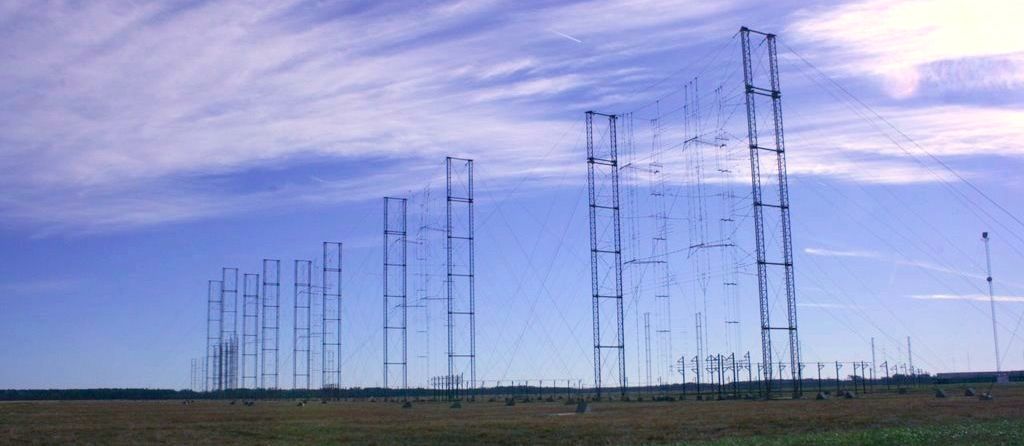
Here at the Winter SWL Fest, there has been much chatter about the new Ampegon rotatable antenna and transmitter system at WBCQ.

WBCQ made the following press releasee yesterday:

(Source: WBCQ)

For Immediate Release: March 2, 2018

WBCQ The Planet Announces New Showcase Radio Facility

Plymouth Meeting, PA:

WBCQ The Planet announced today that it is building one of the most powerful and versatile radio stations in the world. WBCQ’s new shortwave radio station, now under construction in Monticello, Maine, features a new 500-kilowatt transmitter from Continental Electronics and a state-of-the-art antenna system from Ampegon Antenna of Switzerland.

The new station, funded by private investors, will be able to direct a powerful shortwave signal to any country on Earth. Our new facility is planned to be a showcase for the radio world and is dedicated to our free speech mission.

The new station is planned to commence operations in fall 2018.

Obviously, the investor has deep pockets and I understand is affiliated with a religious organization. The new antenna and transmitter building is being built on land adjacent to the existing transmitter site.  WBCQ actually broke ground last summer and the massive antenna’s foundation is already in place. The antenna is on site now, but has not been assembled. Most of the construction is on hold during the winter, but WBCQ plans to have this 500 kW station on the air by Fall 2018.

Follow developments by bookmarking the tag: WBCQ

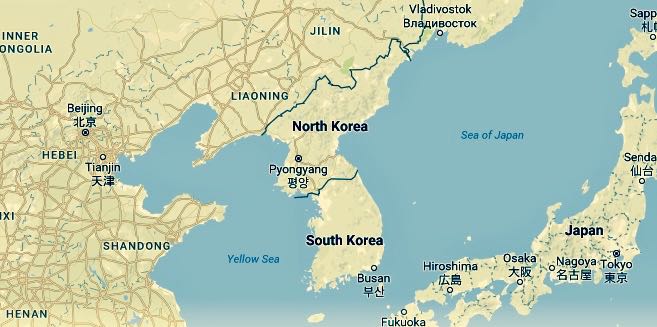
Kamchatka broadcasting on shortwave

Many thanks to SWLing Post contributor, Ralf Bender, who writes:

Here a link to a German radio station website, which yesterday released that a Russian broadcaster is back on air. In times when many broadcasters/stations are closed [this is] good news.

Here there original German website:
https://www.radioeins.de/programm/sendungen/medienmagazin/radio_news/beitraege/2018/kamtschatka.html

And here with automatic Google translation:

Kamchatka on shortwave

According to the broadcasting companies of the republics Adygea and Sakha, in the Russian Federation, a third broadcaster is again active on shortwave: the GTRK Kamchatka from Petropavlovsk. Sent for each two hours from 8.00 and 13.00 clock local time on the frequency 5940 kHz.[…]

The transmission to 5940 kHz compensates the omission of the long wave 180 kHz. Like all others, it had been shut down at the beginning of 2014 by long-wave and shortwave recordings that had previously been recorded on the account of the All-Russian State Broadcasting Corporation (WGTRK). Thus, the radio coverage ended outside the areas reached by the FM stations.[…]

The article also includes the following reception video from a DXer in Asia:

Click here to view on YouTube.

Thanks for the tip, Ralf! Perhaps some of our Russian readers can shed some light on this development?  Please comment!

Radio Taiwan International petition

Many thanks to SWLing Post contributor, David Iurescia (LW4DAF), who writes:

The Mexican Diexist Group has created a petition on the Change.org platform to ask that Radio Taiwan International don’t finish broadcasting their programs on the shortwave.

Those who want to add their signature, can do so by following this link.

Thank you very much

David Iurescia (LW4DAF)

Click here to sign the petition on Change.org.

WRTH updates to B17 schedule

(Source: Sean Gilbert via WRTH Facebook)

As in past seasons, WRTH is pleased to announce that an update file for the B17 broadcast schedules is now available for free download from http://www.wrth.com

This update contains changes, additions and frequency cancellations; new stations that have become active since WRTH was published; and the revised full schedules of certain stations.

We hope you find this file useful as an addition to WRTH (it is formatted in the same manner as the printed WRTH), or it can be used on its own, of course.

Please forward this information to your various mailing lists and reflectors and to anyone else who may be interested.

73 and happy listening

from the WRTH Editorial staff

BBC launches new shortwave services for Ethiopia and Eritrea

(Source: BBC Media Centre via Mike Hansgen)

The BBC is launching new daily radio services which will be aired Monday to Friday in Amharic, Afaan Oromo and Tigrinya. The new language services have been available online since September 2017 when they launched websites and Facebook pages in all three languages.

The new radio services will provide impartial news, current affairs, features and analysis for Ethiopia and Eritrea, as well as regional and international news. There will be a strong focus on culture, health and original journalism from the region. These services are part of the largest investment in the BBC World Service since the 1940s and are funded by the UK government.

The programme will be broadcast on shortwave, satellite – and streamed directly onto each service’s Facebook page.

In addition content produced by BBC Learning English, part of the BBC World Service which teaches English to global audiences will feature prominently across the schedules for all three languages, with daily content as follows:
·
Essential English – Beginners (airs on Monday, repeated on Wednesday)
A functional five-minute audio course presented by an English speaker and a local presenter, which aims to help beginners to learn English. Learners will be introduced to essential chunks of functional language, which will allow them to start having simple conversations in English immediately.

English Expressions – Intermediate (airs Tuesday, repeated on Thursday)
This five-minute audio course focusses on common expressions used in everyday English. An English speaking presenter and a local language presenter discuss the meaning and use a different expression each week.

English Together Advanced (airs Friday only)
This is a bilingual five-minute audio with three presenters (2 English and one local language) discussing a current (safe i.e. non news) topic and examining the language used in the story allowing the user the practise their listening skills and equip them with the grammar and vocabulary needed to discuss the story.

The programmes are broadcast Monday-Friday at the following times:

  • 17:30 – 17.45: Amharic news
  • 17.45 – 17:50: Amharic Learning English
  • 17:50 – 18:05: Afaan Oromo News
  • 18.05 – 18.10: Afaan Oromo Learning English
  • 18:10 – 18:25: Tigrinya News
  • 18:25 – 18:30: Tigrinya Learning English

Programmes will also be streamed via the respective BBC websites and Facebook pages (see links below).

Details of how to listen:

Amharic

Afaan Oromo

Tigrinya

Notes to Editors
The Initial shortwave broadcast to go out at 17:30 GMT/ 20:30 EAT on three transmitters providing coverage across Ethiopia and Eritrea:

  • 7.595MHz
  • 11.720MHz
  • 12.065MHz

Repeat to follow at 18:30 GMT /21:30 EAT

  • 9.855MHz
  • 15.490MHz

Satellite Radio content will go out on the following channels:

  • Arabsat (BADR4) – 11.966GHz, Horizontal
  • Nilesat 201 -11.843GHz, Horizontal
  • Hotbird 13D – 12.597GHz, Vertical

Evening satellite broadcast to go out at 17:30 GMT and will be repeated until 21:30 GMT.

  • The BBC World Service reaches a global audience of 269 million weekly, on radio, TV, and digital.
  • BBC World Service received further funding of £291m until 2019/20 from the UK Government to launch twelve new language services: Afaan Oromo, Amharic, Gujarati, Igbo, Korean, Marathi, Pidgin, Punjabi, Serbian, Telugu, Tigrinya, and Yoruba. This additional funding is not part of the licence fee.

MF

Click here to view thisnews item at the BBC Media Centre website.

WRTH 2018: A look inside

I received my copy of the 2018 World Radio and TV Handbook (WRTH) directly from the publisher yesterday, just prior to my Christmas holiday travels. As I mention every year, I look forward to receiving this excellent staple radio reference guide–and this is their 72nd edition!

WRTH’s team of noted DXers from around the world curate frequencies and broadcaster information by region; while I’m not sure how they orchestrate all of this, the end result is truly a symphony of radio information. In addition to broadcaster listings, WRTH’s radio reviews, feature articles, and annual HF report make for excellent reading.

But the WRTH isn’t just a frequency guide: the publication always devotes the first sixty or so pages to articles relating to various aspects of the radio hobby. Following, I offer a quick overview of these.

WRTH broadcast listings are incredibly thorough and informative

The first article always features a WRTH contributor:  this year, they feature Torgeir Woxen who is the contributor for Norway and editor of the Asia & Pacific frequency list. Reading about how Woxen became interested in radio and DXing reminds me of how I–and many of my radio friends–got their start as well.

The second set of articles is always my favorite: WRTH receiver reviews.

This year, WRTH begins with a review of the Icom IC-R8600 wideband tabletop SDR receiver.  They also review the Tecsun PL-880, Tecsun S-8800, Expert Electronics ColibriNano, SDRplay RSP2, and the new AOR AR-DV10 wideband handheld

(Photo: Cross Country Wireless)

Besides radio reviews, WRTH also includes an evaluation of the Cross Country Wireless Active Loop.

I must admit: the Cross Country sounds like an effective and affordable portable mag loop antenna. I might need to grab one in the future to use on impromptu travels and DXpeditions.

The following article features WRTH contributor, Brian Clark, and his travels from New Zealand to the geographic antipodes of his home: Spain, Portugal and Morocco. Of course, enjoying diverse radio broadcasts was an integral part of his journey!

I was pleased to find that the following feature article, entitled Receiving Noise, explores the radio interference that plagues our hobby. The article mentions several common sources of noise and some of the antennas that most effectively mitigate RFI. Sadly, radio noise/interference is an important topic for most radio enthusiasts.

Following this, WRTH writer, Hans Johnson, features an article on Radio Romania International. RRI is one of my favorite shortwave broadcasters, so this was a treat to find indeed–Johnson’s piece sheds light on the past, present and future of the station.

Next, in A New Voice of Hope in the Middle East, Founder and President of the Strategic Communications Group, John Taylor, writes about setting up a new mediumwave station in Israel.

The following article features Dr. Martin Hadlaw, a former advisor to the Solomon Islands Broadcasting Corporation (SIBC), who explores the history of broadcasting in the South Seas.

Next, WRTH feature their Digital Update which assesses the state of digital broadcasting and–this year a special note about–Digital Radio Mondiale.

The final article–a tradition–is the WRTH  HF propagation report/forecast by Ulf-Peter Hoppe. Always an informative read and this year he ends on a positive note despite the fact we’ve hit the solar rock-bottom!

The 72nd is another fantastic edition of the World Radio TV Handbook. As I say every year, I’ve never been disappointed with WRTH. Their publishing standards are such that the quality of their reviews, their writing, and (most importantly) their broadcast listings are simply unparalleled.

My WRTH 2018 and Digitech AR-1780 fit perfectly in my Red Oxx Lil Roy and are ready for holiday road travel and radio fun!

For DXers who collect QSL cards, you’ll find that broadcaster contact information in WRTH is often more up-to-date than a broadcaster’s own website. When readers contact me asking for QSL information from an obscure broadcaster, the first place I search is the current WRTH. Remember: their information is based on volunteer contributors who specialize in specific regions of the world–the most knowledgeable regional DXers keep this publication accurate.

Purchase your copy of WRTH 2018 directly from WRTH’s publishers, or from a distributor like Universal Radio (US) and Amazon.com (US), Radio HF (Canada), or BookDepository.com (International).