I originally wrote this article for the July 2013 issue of Monitoring Times Magazine. I hope you enjoy:
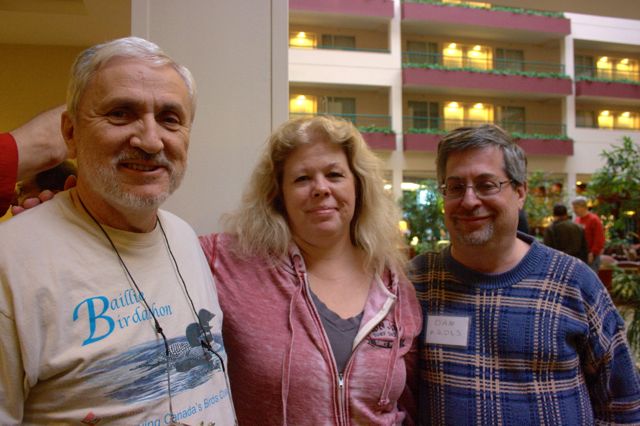
Left to right: my good friends Sheldon Harvey (of The International Radio Report), Tina Shields and Dan Srebnick
Every year, I look forward to the only event I know that brings together both my avid interest in radio and my loyal radio-listening friends: the Winter SWL Fest. This is the one place where, among the 100-plus attendees, you can talk freely about all aspects of the shortwave hobby without any need of explanation as to why you find radio so fascinating. As a result, over the course of the five years I’ve attended the ‘Fest, it has begun to feel less like a technical hobbyists convention and more like a (most enjoyable) family reunion.
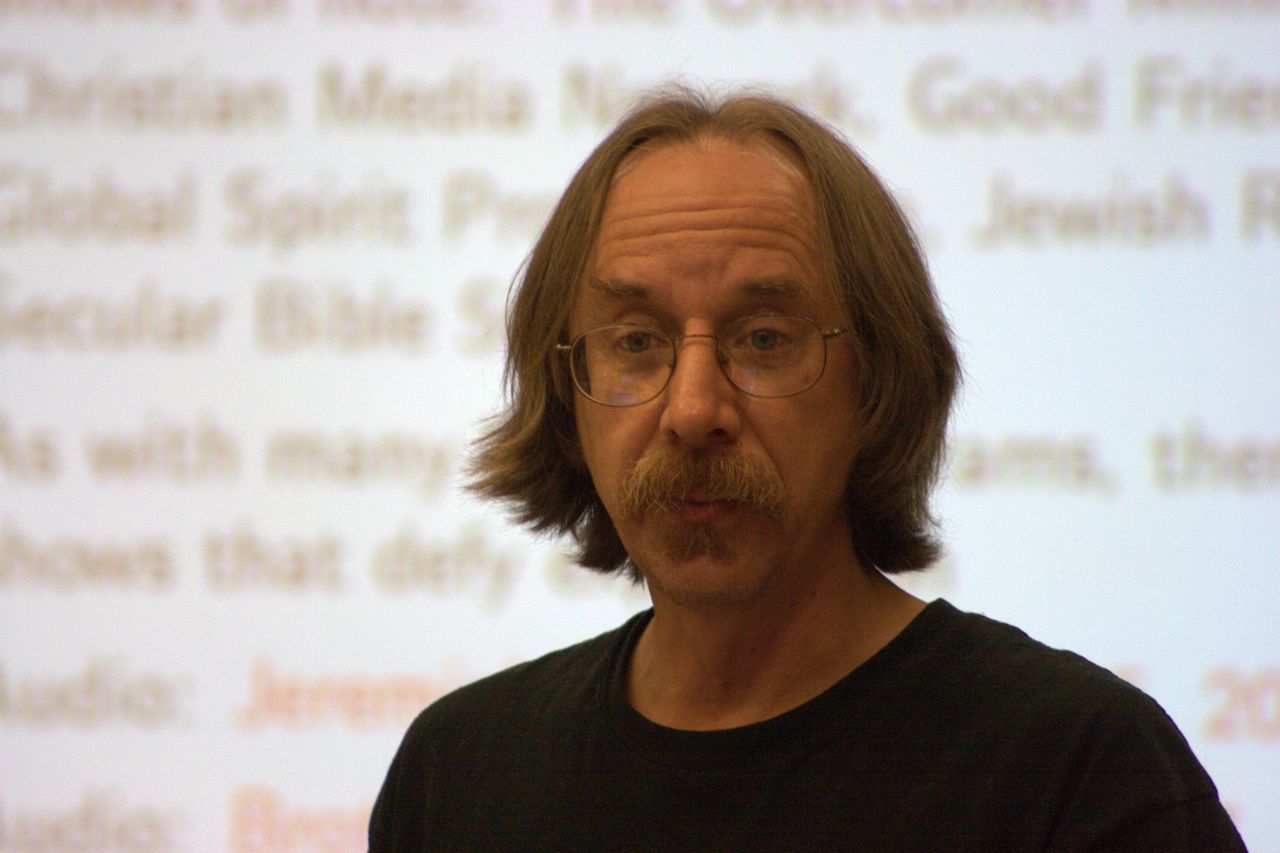
Larry Will of Area 51 presents an audio and video history of WBCQ
This year, and for the third year in a row, the Winterfest was held at the DoubleTree Inn and Suites in Plymouth Meeting, Pennsylvania, just outside Philadelphia. The venue is spacious and comfortable, and all presentations are held within its generous environs.
Moreover, we enjoyed presentations on a number of interesting and unique topics that were, by no means, limited just to shortwave radio. A few topics catered to individuals who simply enjoy DXing in any forms. Here’s a sampling:
- Ed Mauger started the forums off on a light note with a fun discussion on how to increase the size of your radio collection through online auctions and flea markets. His forum drew a large crowd–and many questions.
- Larry Wills, of Area 51 fame, held the second forum, which was a look back through the WBCQ video and audio archives. During the course of his presentation, Larry covered many of the nuances of WBCQ’s history, including some of the people and circumstances surrounding the birth of this remarkable free speech radio station. Trust me when I say that it was not difficult to keep the audience engaged on this topic: WBCQ listeners are well aware of the variety of shows, not to mention the on-air personalities, that station features. Larry’s presentation put these in context. By the conclusion, I felt I had visited the WBCQ transmitter site in Monticello, Maine, myself.
- Mario Filippi’s forum, DXing with a Dish, explained the hobby of TV DXing–in a sense, via Free-To-Air (FTA) satellite television and radio. His presentation was comprehensive, covering everything from the components of a home system to the free content currently available–and speaking of satellites, Dave Marthouse’s forum, Sounds from Space: Monitoring and Tracking Satellites Using HF, taught us how to monitor various orbiting satellites that can be heard throughout the spectrum. He also demystified the process, showing us how easy and inexpensive hunting space sounds can be.
- Skip Arey presented a topic many ham radio operators can appreciate, namely, QRP: How Low Can You Go? Skip’s presentation made for an interesting juxtaposition to the kilowatt shortwave broadcasting world when he revealed how to communicate across the planet on 5 watts or less–!
- Jef Eichner once again presented on the topic of loop antennas. As more and more of us are bombarded with radio interference (RFI) from consumer electronics, loop antennas make for an affordable means to an antenna that can help you cope with noise. Though this topic can get pretty technical, Jef kept the discussion at a level most anyone could understand. He even brought his own homemade loop for demonstration.
- Dr. Kim Andrew Elliott and yours truly presented a forum on Digital Text via Shortwave Broadcast. We demonstrated how incredibly effective and simple it is to broadcast digital text modes used by radio amateurs (e.g., PSK31) on analog amplitude-modulated shortwave broadcasts. These modes can be decoded by anyone with a basic shortwave radio and and personal computer or smartphone. We proved that even when the human voice is difficult to comprehend because of poor shortwave reception conditions, digital text can be received with nearly 100% accuracy. The applications for this technology are numerous, but the service can be invaluable when the internet is disrupted by disasters (or by dictators). [Update: since publishing this article, Kim Elliott’s VOA Radiogram has enjoyed great success on the air.]
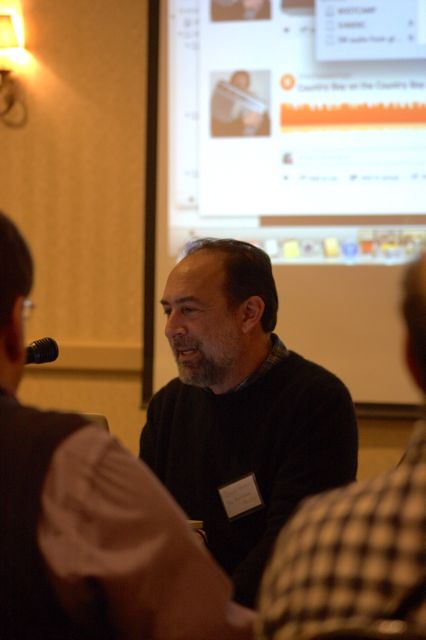
David Goren hosts the annual Shortwave Shindig
Of course, there are a few mainstays in the Winterfest forum line-up, forums we’ve come to anticipate:
- The annual “Scanner Scum” forum, which this year focused on scanner antennas that are effective and affordable. The presenters also explained the differences in the numerous types of rechargeable batteries on the market; as a result, many of us now have a better understanding of discharge curves and their effect on radios.
- The Annual Pirate Forum always attracts a large crowd. This year, George Zeller and a panel of pirate broadcast enthusiasts took the stage to introduce newcomers to the pirate radio listening hobby and review the pirate radio year. This year, Free Radio Weekly editor Chris Lobdell and the pirate station Captain Morgan were inducted into the Pirate Radio Hall of Fame.
- David Goren (our resident Shortwaveologist) held his 10th Annual Shortwave Shindig, an evening celebrating the unique sonic properties of our favorite international medium. David showcased a number of his own shortwave audio productions and numerous intriguing recordings. Saul Brady played radio-themed folk music, and the talented Martin Peck quizzed the audience with his woodwind renditions of dozens of interval signals past and present. Martin even took requests from the audience and played interval signals on demand…Where else could you hear this stuff, but at the Shortwave Shindig of the Winter SWL Fest?
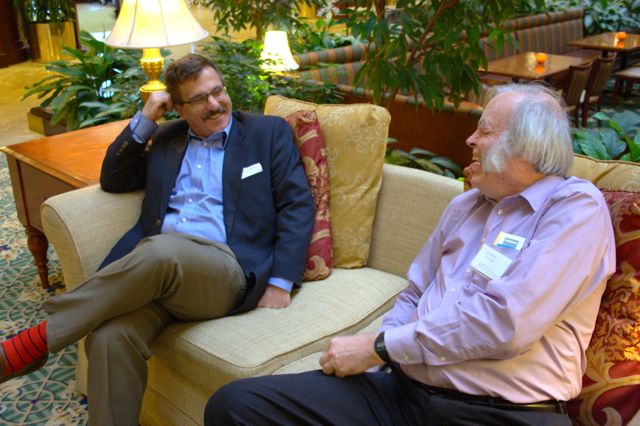
Of course, there are also opportunities to buy and trade equipment at the Friday night swap meet–and if you’re lucky, you might just win a treasure in the silent auction (where all proceeds go to charity) or in the dinner banquet raffle. Indeed, since I’ve been going to the ‘Fest, I’ve been most impressed with the number and quality of items in the raffle. The odds are good, and this year yours truly even won a few items. This year’s grand prize? The newly introduced CommRadio CR-1 tabletop SDR.
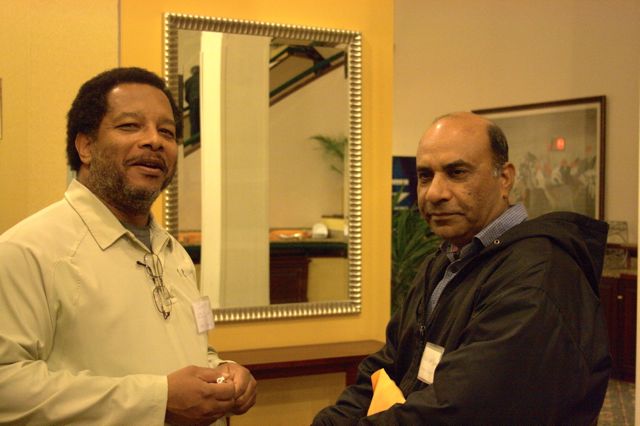 As interesting and varied as the forums are, and as rewarding as the silent auction and dinner/raffle can be, I believe many of the ‘Festers would agree that one of the strongest attractions is the yearly opportunity to socialize and connect with all of radio’s kindred. At times radio listening can feel like a very solitary hobby, as voices drift in and out of the ether; perhaps the beauty of the Winter SWL Fest is that it brings everyone together face-to-face to socialize and to theorize on the ever-widening scope of radio communications and broadcasting.
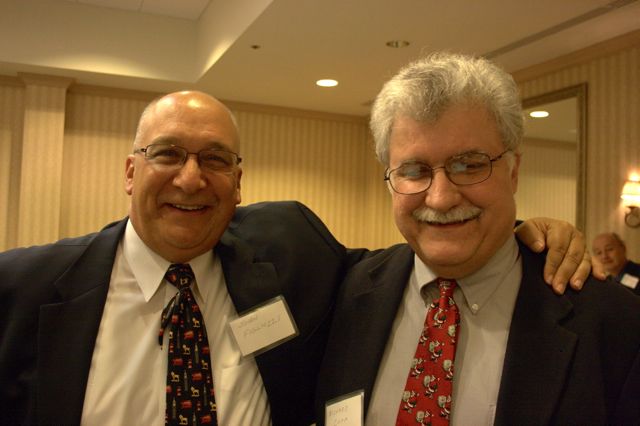
Many thanks to Festmeisters John Figliozzi and Richard Cuff
In short, the SWLing Winterfest is always a unique and dynamic event–but don’t take my word for it. Next year, you might just want to check it out for yourself! It will be held February 28-March 1st, 2014 somewhere in the greater Philadelphia area.
Click here to go to the SWLfest website and plan to join us in 2014.