“In conflict situations and times of crisis, radio is a lifeline for vulnerable communities.”
World Radio Day 2013: Message from UN Secretary-General Ban Ki-moon
Leave a reply

“In conflict situations and times of crisis, radio is a lifeline for vulnerable communities.”
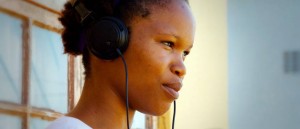 (Source: Voice of Russia)
February 13 is World Radio Day. It’s a young holiday, just two years old, established on the initiative of the United Nations Educational, Scientific and Cultural Organization (UNESCO) in 2011. Representatives of all of the world’s major radio broadcasters, the Voice of Russia among them, have gathered at the UNESCO’s central headquarters in Paris to celebrate World Radio Day.
February 13 is not a random date. On that day in 1946, Radio UN aired its first broadcast. In his World Radio Day-2013 message, UN Secretary General Ban Ki-moon said that as a boy growing up in a poor village after the Korean War with neither phones nor television people still had something that connected them to the world outside their small village – they had radio. Since its invention more than 100 years ago, radio has sparked imagination and opened doors for change, entertaining, informing, promoting democracy and connecting people wherever they are, and “in conflict situations and times of crisis, radio is a lifeline for vulnerable communities,” Ban Ki-moon remarked.
About 95% of all people throughout the globe listen to radio regularly, chief of the UNESCO’s Communication and Information Sector Mirta Lourenco told the Voice of Russia:
“Radio remains the most easily accessible mass media. You can listen to it in the remotest corners of the Earth. Thanks to radio, people who cannot read or write have access to information. Radio plays a crucial role in emergencies, natural disaster warning and during rescue operations. For the UNESCO, World Radio Day is the acknowledgment of the tremendous use of which radio has been to humanity over more than a century.”[…]
Read the full article at the Voice of Russia website.
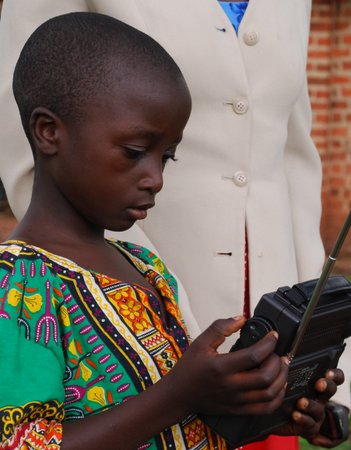
Student in Uganda tunes an Ears To Our World self-powered shortwave radio. (Photo: ETOW partner, The Empower Campaign, Uganda)
Wednesday, February 13th 2013 is World Radio Day. UNESCO describes World Radio Day as “a day to celebrate radio as a medium; to improve international cooperation between broadcasters; and to encourage major networks and community radio alike to promote access to information and freedom of expression over the airwaves.”
A worthy cause.
UNESCO asked me to record a segment about our non-profit, Ears To Our World, and the relevance of radio in honor of World Radio Day.

(Source: Google Analytics)
Dear Readers,
If you notice a little downtime over the next few days, it is because
we are in the process of moving the SWLing Post (and all of
SWLing.com) to a new, upgraded server.
Over the years, readership has grown at an incredible rate, and I am
most grateful. Your encouraging comments and personal stories fuel
this blog in innumerable ways.
The upgrade is mainly in response to the increased traffic here on the
site, as well as to implement security measures that should help with
recent attacks from abusers in China who actually attempted to bring
our site down. (No kidding!)
This morning, I glanced at my Google Analytics statistics. In the past
thirty days–which has only been “average”–SWLing.com has had over
78,000 pageviews and over 15,000 unique visitors. Wow! These numbers
do not include the 200+ readers who view the SWLing Post via
Feedburner and other RSS readers. As many of you know, we also have an
active Kindle subscription base, whose numbers increase monthly.
So I’d simply like to say, Thank you! And thanks for your
patience. I would have never guessed back in 2008 when I
began this hobby site, that it would have such an interactive
readership. Going forward, I would like the site to become even more
interactive–so I welcome even more of your stories, your photos, your
recordings, and your thoughts on radio and international broadcasting.
Our new server is faster, provides more bandwidth, and even better
overall support. Though page loads have always been fairly quick,
they’ll be even quicker now. Our upgraded bandwidth gives us even more
room to grow–a necessity, based on the current upward trend.
In the near future, we will begin to invite sponsorship from selected
radio retailers and businesses. Ads from sponsors relevant to
the hobby will be chosen and appropriately placed. We promise,
however, that our site will never be cluttered with
irrelevant, obtrusive ads–no pop-ups, nothing gimmicky–just
industry-related and hobby-related business and services. Our goal is
to simply make enough to support The SWLing Post over the long-haul,
and to showcase businesses that invest in and support the wonderful
hobby of shortwave radio. We also welcome direct donations from
readers, who can support us in any amount here.
Again, thank you all for your incredible support–and, especially,
your considerate comments and emails. The radio listening hobby can
feel rather solitary at times, but you have built community around
this site, and it’s particularly inspiring to realize that this club
of listeners is growing.
Thank you,
Thomas

(Photo: NASA via Wired)
(Source: Wired)
Over the weekend, a tiny spot on the sun erupted into a moderately sized solar flare that was particularly loud in radio waves. With the sound of a roaring wave, it completely drowned out radio communication all over the Earth between 28 MHz and 21.1 MHz.
The recording [found on this page] comes from either a short wave radio station or a Ham radio transmission, said amateur radio astronomer Thomas Ashcraft, who works with NASA’s Radio JOVE project. It’s interesting to hear the voices get “swallowed up as the solar wave passes through,” he added in an e-mail to Wired.[…]
Read the full article on Wired.

The CommRadio CR-1
You can now purchase the CommRadio CR1 (we recently mentioned) for $500 plus $12 shipping on CommRadio’s website.
Don Moore (N0HDX), founder of CommRadio, placed the following statement on the CR-1 order page:
As the lead designer of the CR-1, I am pleased to offer this new radio to you. It draws on my experience as a kid building Knight Kits, from my paper route earnings through currently owning a classic Drake 2B and a Zenith Transoceanic; my benchmarks for enjoyable, high quality short wave listening. I added a smooth machined aluminum tuning knob and minimized the number of buttons to provide you (and me), an intuitively obvious and enjoyable radio to operate. This radio is solid as a brick, looks cool and sounds great. The tall feet have a purpose besides good-looks: rest your hand on the tabletop to spin the knob and for the bottom- speaker to bounce the sound to you instead of going straight up into up in space. The military ‘black box’ people who visit us see it sitting on the shelf with the bright OLED display and they all say: “I want one!” Well, here it is. Let the CR-1 draw you into the wonderful hobby I’ve enjoyed throughout my life.
I do love the look of this little radio–its simplicity reminds me of the Palstar line of shortwave radios.
 Thanks, Benn, for sharing this:
Radio continues to be a powerful tool for community information, and the RootIO project amplifies it by mixing its power with new mobile and Internet technologies. RootIO is an open-source tool kit that allows communities to create their own micro radio stations with an inexpensive smartphone and transmitter, and to share, promote, and collaborate on dynamic content. The project will be piloted in Uganda in partnership with the Uganda Radio Network, UNICEF Uganda and UNICEF Innovation Unit.