Category Archives: Nostalgia

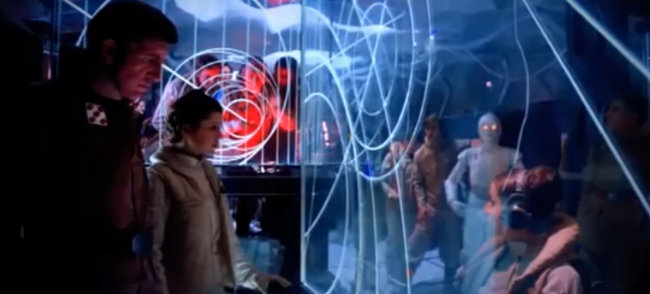
Time station CHU in The Empire Strikes Back

Fullscreen capture 12202015 40448 AM

Earlier today, I published a post noting that I thought I heard the time station WWV in a scene of The Empire Strikes Back.

SWLing Post reader, RadioGeek, quickly corrected me: that’s Canadian time station CHU‘s data pips I’m hearing, not circa-1980s WWV.  Cool!

Listen for yourself

Here’s the clip from The Empire Strikes Back, Battle of Hoth

https://youtu.be/5BkOVSFb2Zw?t=2m15s

Now listen to the recording of CHU I made only moments ago–note the tone and duration of the data pips:

No wonder I mixed up CHU and WWV; I’ve listened to both for propagation since I was a kid.

I wonder which of the Lucas Film sound engineer(s)/artist(s) chose CHU for this scene? Anyone know, by chance? Or can anyone find out?

No doubt, that sound designer is an SWL or ham radio operator. Perhaps this may also explain the SSB-esque radio dialog between fighter pilots throughout the Star Wars films:

https://www.youtube.com/watch?v=2WBG2rJZGW8&feature=youtu.be&t=2m5s

Please comment!

Jonathan shares archived Media Network Christmas and New Year shows

Crosley-Dial

Many thanks to SWLing Post contributor, Jonathan Marks, who shares the following from his Media Network Vintage Vault.

Jonathan writes:

“Picking up on the idea of revisiting archive Christmas and New Year shows, here are some from Radio Netherlands for the SWL Blog.

Seasons Greetings, Jonathan”

Media Network 26.12.1996 Boxing Day Show

A radio Christmas spent in the Media Network studio way back in 1996. Sounds like we were having fun! I look back on this period as perhaps one of the golden years for Dutch external broadcasting, producing a range of documentary productions in English and Spanish and recording great concerts, both classical and jazz.

This programme focussed on answering listeners’ letters on subjects like satellite television in Australia (DW was organising a bouquet of signals) and the major changes to the commercial radio scene in New Zealand. The auction of FM frequencies in the Netherlands and shortwave stations that sold radios were also topics for discussions. RBI archives have, for the most part, been destroyed. Swiss shortwave listeners were quizzed on their listening habits. The 410 ft tower formerly used by AFN has been dynamited out of existence. Capital Radio in South Africa is in trouble.

MN.28.12.1995 Rhodesia – Answering Back From Francistown

I met the late Harold Robin a couple of times at his home in Tunbridge Wells, UK. He was a brilliant Foreign Office engineer who built the wartime Aspidistra transmitter famous for its clandestine work out of Crowborough. Have a listen to the programmes Wartime Deception and you’ll see what I mean.

Although his work during the war is well documented in books like “The Black Game”by Ellic Howe, I think we managed to capture the other stories from later in his life. For instance, how he invented the “Picolo” modulation system as used by the diplomatic service to communicate text over shortwave between embassies. He also built the BBC Overseas relay station in Oman, and the external service of UAE Radio from Dubai. This edition, recorded after Christmas in 1995, looked at the story of the British response to the declaration of independence by Ian Smith in, what was then, Rhodesia. Harold talks about setting up a mediumwave transmitter in a matter of weeks in the town of Francistown, in the Bechuanaland Protectorate, now called Botswana. Thanks also to Colin Miller for some of the recordings of the RBC. It seems that one of the two transmitters was sent to Cyprus after the World and Rhodesia operation ended, the other ended up in Ordfordness for some experiments on 648 kHz. You might also want to check out the video of Margaret Howard, who refers to a special programme transmitted over this MW sender. It was called the World and Rhodesia and was more of a UK government editorial than any programme the BBC would make. The programme concept didn’t work although it seemed to have taken the British government a couple of years to find out. Harold refers to staying in the Tati Hotel River Lodge, about 8 kms outside of Francistown. Sure enough, it’s still there.

MN.23.12.1982: Christmas Review 33 years ago

I picked this recording out of the archives because it has a nice capsule summary of the major media stories from 1982. The highlight was, of course, the Falklands-Malvinas “conflict”. This programme contains clips from the FIBS, RAE Argentina and the BBC’s Calling the Falklands Programme. We also looked in some detail at the short-lived Radio South Atlantic which broadcast in May and June 1982 from a requisitioned BBC transmitter on Ascension Island. We asked the British Ministry of Defence to explain how the station was operated. We also analyzed a transmission broadcast on May 20th 1982 (the second night of transmission).

But it was also the last programme in which Wim van Amstel appeared as RNW Frequency Manager. It was certainly not the last time he was heard on the programme, though. Again it is striking to hear some of the predictions – and how they were spot on. The call with Arthur Cushen in New Zealand is rather like making contact with the moon. Cannot believe how fast time has flown.

At the time of publishing this podcast, I was also sad to hear of the passing of BBC correspondent and broadcaster Brian Hanrahan, who famous line when broadcasting under censorship from the Falklands Fleet was brilliant. Unable to reveal how many British aircraft had been involved in the conflict, he reported that after one sortie he “counted them all out and I counted them all back.

MN.26.12.1991.Year End Review

This was a news show 1.6 million tune in to Radio Netherlands in Dutch during their summer holiday. WWV and WWVH have had problems with their automated time announcements. Drum recorders are back on line. Victor Goonetilleke has news about Cambodia. VOA is having challenges building its transmitters at a new site 50km North of Colombo.

Why did we broadcast all these numbers? People forget none of the listeners had access on-line and only a fraction of the audience had access to printed DX bulletins. Andy Sennitt reports on what is in the 1992 World Radio TV Handbook. James Robinson reports that several UK local radio stations are leaving mediumwave. WLS 890kHz is scrapping its FM format. A new Catholic SW station WEWN was being built in Birmingham, Alabama. (The late) Dave Rosenthal reports on an experiment in McMurdo. Remember this show is 24 years old!

Vasily Strelnikov signs off at Radio Moscow World Service and recommends people to tune into Radio Netherlands. Radio Moscow staff watch the red flags of the USSR being lowered.

Thanks so much for sharing these, Jonathan–and Season’s Greetings to you!

I’m looking forward to several hours of listening over the coming days.

Looking for SWLing Post gear? We’ve got you covered!

Over the years, readers have often encouraged me to create SWLing Post shortwave radio-themed products, which is to say, t-shirts, coffee mugs, and the like. But for some reason, I’ve never gotten around to it.

That is, until now…

SWLingPost-DXFiend-Vintage-Front

What finally motivated me to create these items is a friendship:  I’m fortunate to number among my friends the amazingly talented Jeff Murray (K1NSS) of Dashtoons.  It occurred to me that I might commission Jeff to design some shortwave radio-themed graphics that represent the broad spectrum of radio enthusiasts here on the SWLing Post. Jeff, ever enthusiastic where radio is concerned, was the perfect artist for the job–particularly since he and I see eye-to-eye on the beauty of both radio innovations and radio nostalgia.  And with Jeff’s quirky sense of humor to enliven his sharp, dapper graphics, the great results you see here were simply inevitable.

SWLingPost-DXFiend-SDR-Front

Of course, his pictures speak louder than my words.  As I’ve said, Jeff’s clearly a graphic artist par excellence, and it certainly doesn’t hurt that he really knows radio–inside and out.

SWLingPost-DXFiend-Vintage-Back

While he was at it, Jeff created an SWLing Post logo that will soon accompany a refreshed Post design I’ve had in the works…stay tuned for that as the new year approaches.

SWLing-Post-Women's-T-shirtIn the meantime, I thought I’d share a link to a simple CafePress webstore I’ve put together for our newly-minted swag.

Click here to view great SWLing Post gear.

So far we only have a few select items on offer, but I’ll soon be adding more. But we do have two great t-shirt and coffee mug designs available now:  the Radio Waterfall design features the SWLing Post logo superimposed over a blue SDR waterfall, with the words “DX FIEND” emblazoned beneath; the Radio Nostalgia design features the above vintage-style radio image, with”DX FIEND” beneath, and the “SECRET WORLD” image on the back. Take it from me, they look great.

Let me know if there’s something in the CafePress catalog you’d like to own featuring Jeff Murray’s terrific radio art, and I may be able to put it out there for you.

SWLingPost-Shirt-FrontOh, and by the way–a small percentage of your purchase (typically between $2.00-4.00US) goes towards keeping the SWLing Post online. The rest of the cost goes to CafePress’ product base price. True, I doubt we’ll ever sell enough to break even this way, but who cares…! After all, I do all this for fun, not profit.

Plus I confess to a little personal motivation: I really wanted a Jeff Murray-designed mug for my own cuppa joe!

The great thing about CafePress–although slightly pricey for some items–is that they offer great products, great customer service, and a no-questions-asked return policy. I like that.

large_mug_sdr_waterfall_mugsSo, if you take a leap of faith and purchase one of our items, please comment and let me know how you like it!

Side note: If you ever need amazing custom artwork for your QSL cards, your company, or your shack, I highly recommend Jeff Murray. He worked with me over the course of a week to nail down these incredible designs, and wowed me with his powerful creativity every step of the way.  It was worth every single penny and more, and an honor to work with him, which is why I hope to have him create even more artwork next year! Thanks, Jeff!

And thanks to our Post readers for your purchase!  Go ahead–join me in a hot cuppa!

1989 RCI Christmas Special: a studio recording

UK-DXer-RCI-QSLMany thanks to Colin Newell who writes:

Over on the DXer.ca homepage I have a 32kbps MP3 recording on a CBC RCI broadcast that has not been heard since December 1989! A 1 hour program from the Reel-Reel master that Ian McFarland owns.

Head on over – download for free –

And Merry Christmas!

What a great early Christmas gift for those of us who miss the Ian McFarland days of RCI.  Thank you, Colin!

Click here to visit DXer.ca.

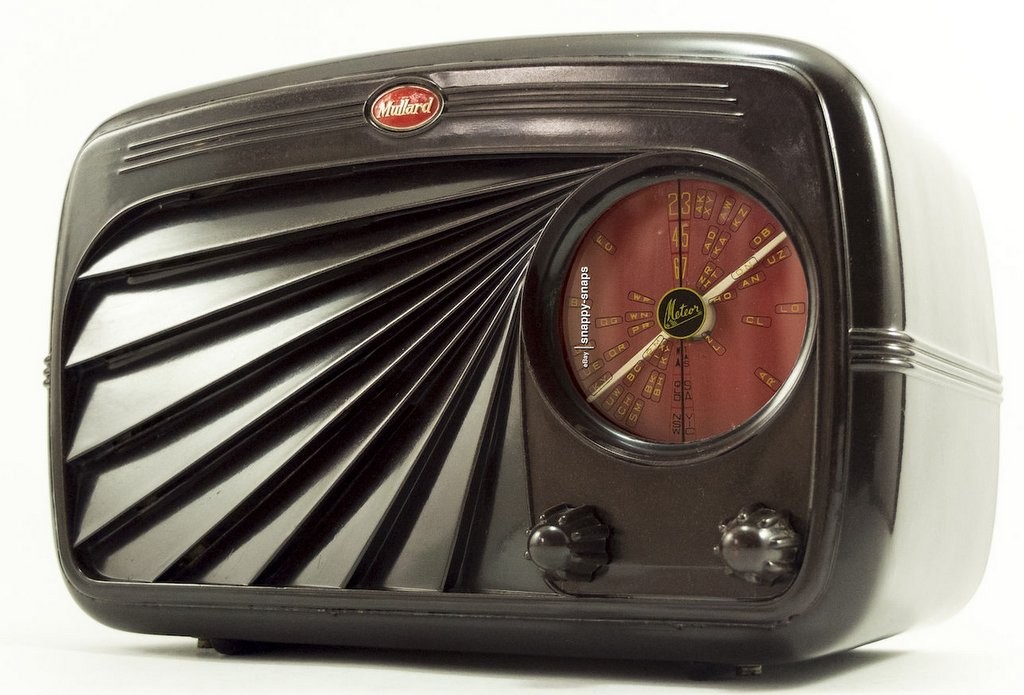
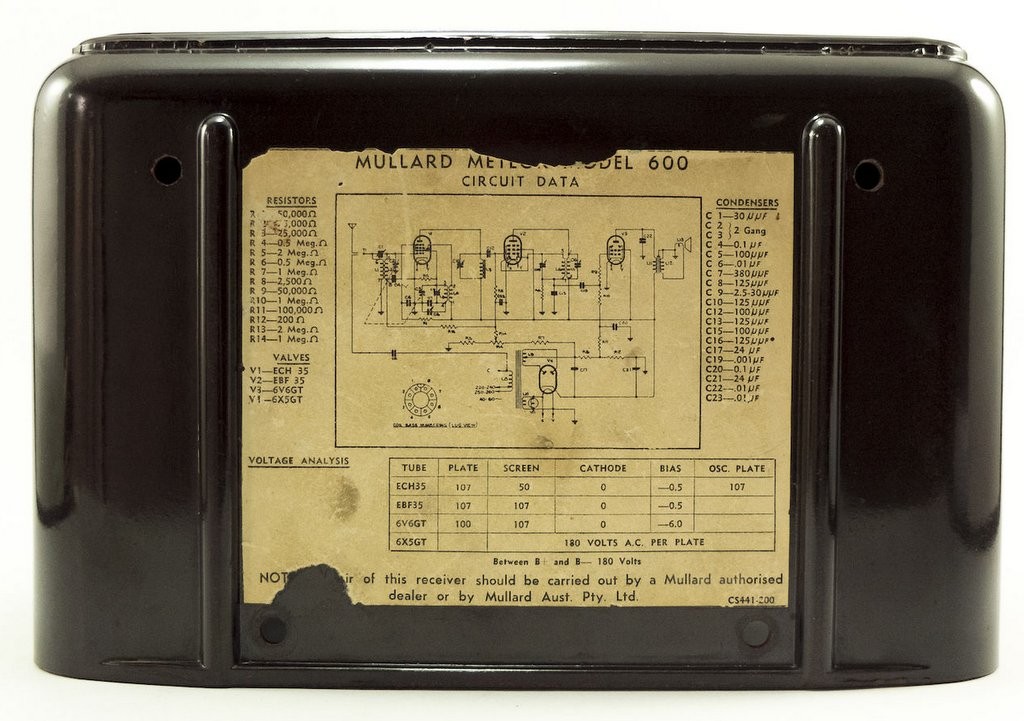
eBay find: Mullard Meteor 600A

Mullard-Tube-Radio-Bakelite-1Many thanks to SWLing Post reader, Monti, who knows that I have a serious affinity for 1940s era receivers. Monti writes from his home in Australia:

I had to send you this link Thomas. I’ve never seen this model before but what a stunning shape for a 40’s piece.

Look at this on eBay:
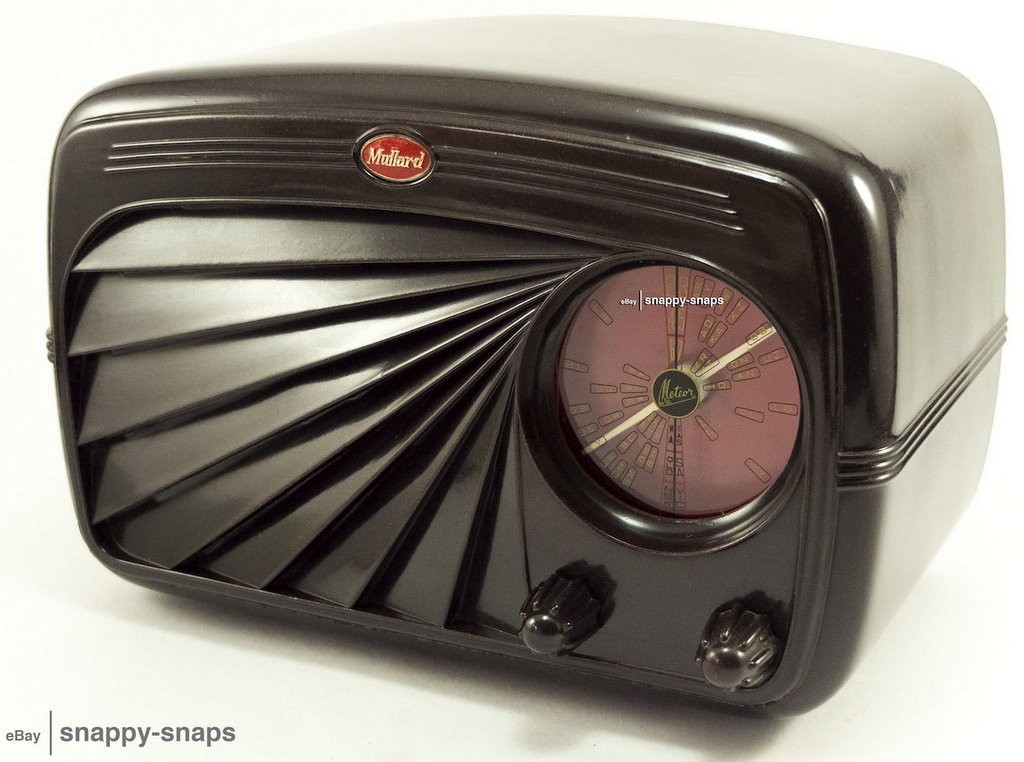
Mullard Meteor 600A Vintage Art Deco Bakelite Valve Radio c.1947

Lovely! While I could never pay $485.00 AUD for a non-working radio, I can certainly appreciate this gorgeous and unique design with radiating speaker grill louvres.

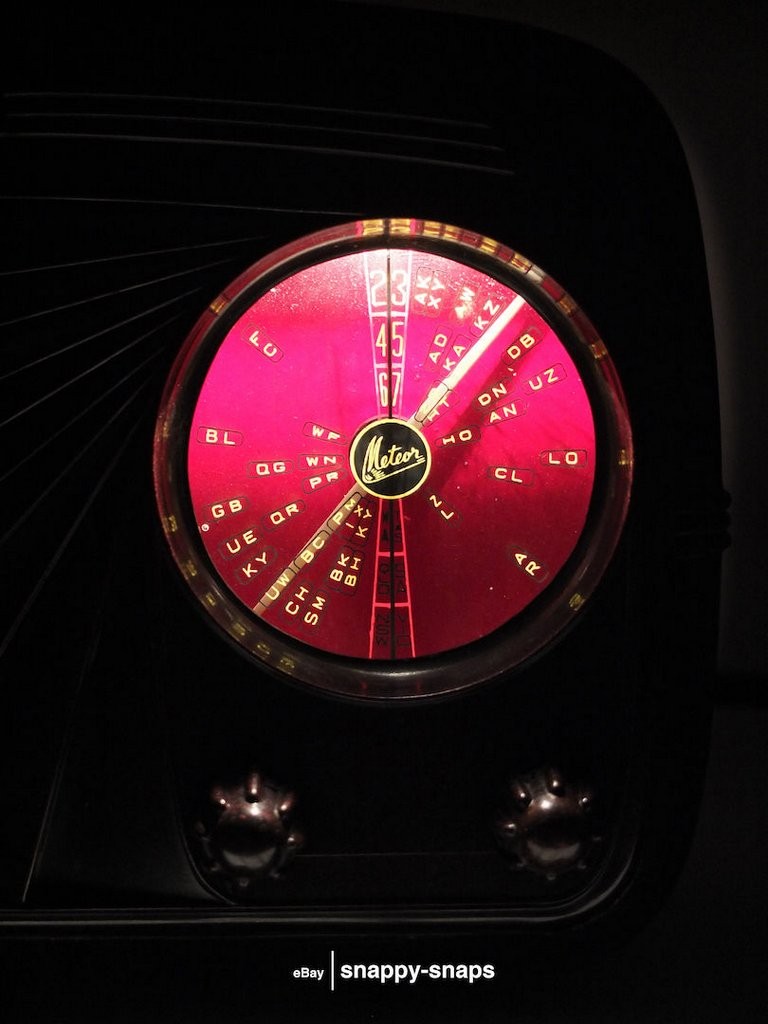
Check out this beautiful “meteor” dial:

Mullard-Tube-Radio-Bakelite-2

What a stunning radio!

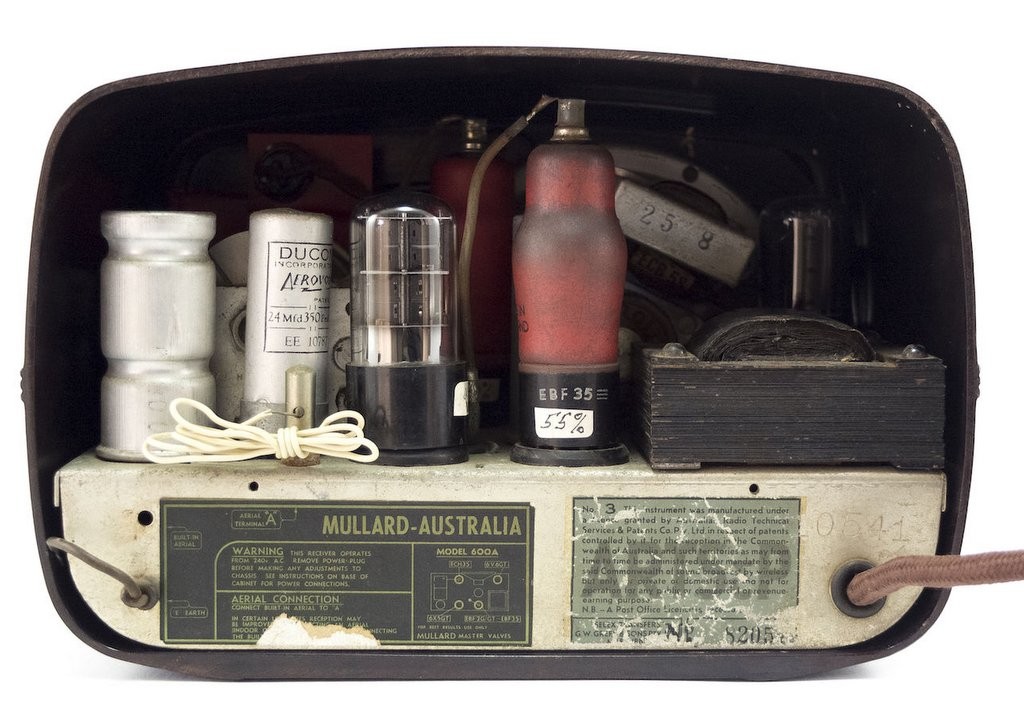
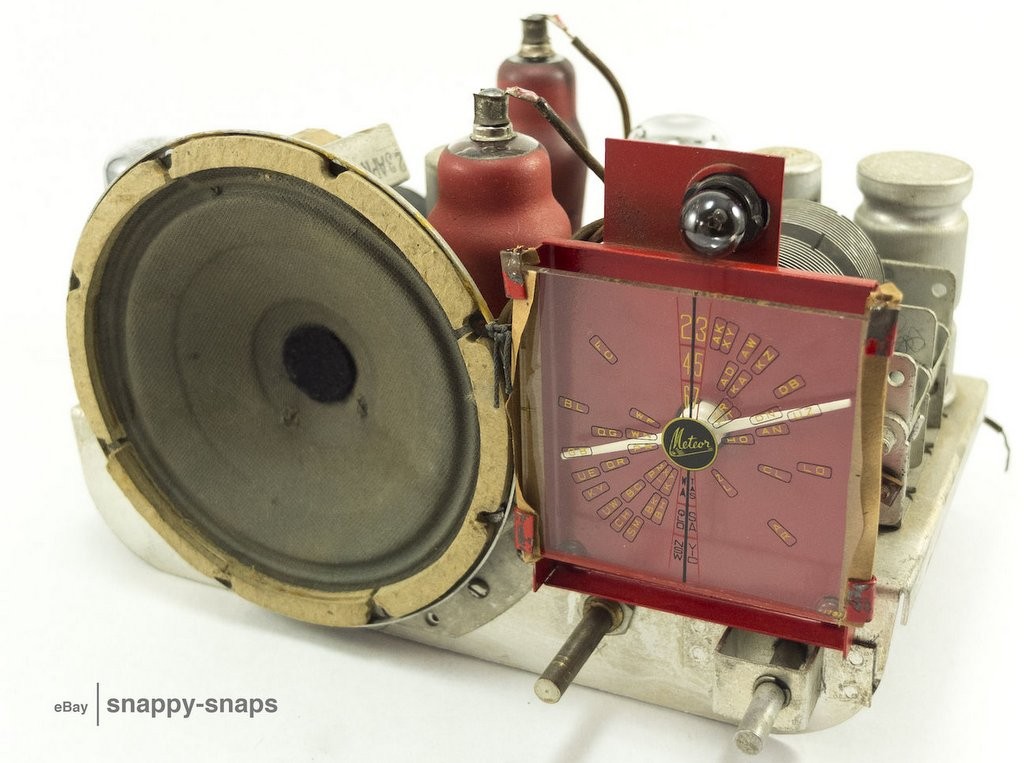
Here are a few more pics I snatched from the eBay listing:

Mullard-Tube-Radio-Bakelite-3Mullard-Tube-Radio-Bakelite-5

Mullard-Tube-Radio-Bakelite-4

Mullard-Tube-Radio-Bakelite-6

Thanks for sharing, Monti!

Any lucky SWLing Post readers in Australia or New Zealand own one of these Mullards?

eBay Find: the Zenith Trans-Oceanic Royal D7000Y, with Comparisons to the Sony CRF-320

ebaySometimes when  browsing eBay you’ll come across a hot item that wasn’t even on your wish list or Followed eBay Searches. This was the case for me early last month when I spotted a new listing for a Zenith Royal D7000Y-2 Trans-Oceanic that’s arguably the best performing T-O ever made. It’s not the most collectable (the final R7000 series has that distinction), but is the final model with the desirable band spread tuning arrangement. The D7000Y is also the last of the hand-wired Trans-Oceanics. Some claim this model has the best audio of the transistorized T-Os, too.

I have a soft spot in my heart for Zenith Trans-Oceanics, as the co-author of the “Royalty of Radios” reference book, the late Prof. John Bryant, was my best friend for many years. John also wrote books on Zenith’s corporate history and other models of Zenith radios. The transistorized Zenith Trans-Oceanics were unobtainable dream receivers for me when I was a teenager in the mid-1970s.royalty of radios book
I watched this Buy-It-Now auction for three days and was very surprised it remained available, especially after noticing its superior condition compared to other auctions for the same model. Finally on the third day I pulled the trigger–I’m not a collector of vintage radios but I couldn’t miss the chance to let this fine old Zenith follow me home. At a Buy-It-Now price of $219 including cross-country shipping, it seemed like a no-brainer decision.

When the radio arrived–packed extremely well–it was in ever better condition than pictured and described (I’d call it 9.8 on a 10 scale).  The package included the original hang tag, QA stickers, owners manual, service manual, marketing literature and even the original monaural earphone and AC power cord. All dial lamps and the chart light worked fine. The previous owner said the T-O was fully aligned a year ago, and indeed I found that the reception quality on the built-in whip antenna is great. I’d love to know where this receiver was stored for the last 38 years; it was clearly someone’s gently used, cherished Zenith.

This slideshow requires JavaScript.

________________________________

A folder of high resolution photos of this receiver can be viewed here.

Compared Against the Sony CRF-320

Besides simply enjoying receivers I get a kick out of comparing them against each other, and against various other ones owned by my radio hobby friends. Thanks to the loan of a vintage Sony CRF-320, I was able to directly compare it to my Zenith Trans-Oceanic Royal D7000Y-2 receiver. My friend’s CRF-320 is the equal of my Zenith in condition and quality. Each of us would like to own both of these radios!

This is an interesting pairing, since the Zenith was among the last of the premier, USA manufactured portable receivers (analog only, all hand-wired chassis), and the CRF-320 was an equally prestigious portable receiver of the “latest technology”–digital/analog readout with printed circuit board construction.
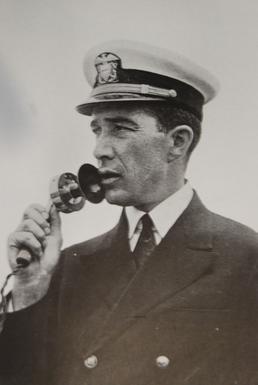
Eugene_F._McDonald_the_Commanderand_founder_of_ZenithOnce a leading receiver brand, Zenith did not react quickly enough to changing trends and business climate after the death of its founder, Commander Eugene F. McDonald.  The 40 year old (1942-1982) proud line of Trans-Oceanics gave way to new, semi-automated methods of building receivers with inexpensive labor from Asia.

After an initial production run of the next (and last) R7000 series, manufacturing was moved to Taiwan. The receiver was built just as well as the previous Royal D7000, but used PCBs inside and the useful band spread frequency ranges were done away with (at the expense of ease of tuning). Still, Zenith T-Os couldn’t compete on price or performance against the Sony CRF-320, and the R7000 Trans-Oceanics were the last (and now most collectible) versions.

This YouTube video compares reception of these two vintage receivers with mid-morning signals on the 31 meter band, from the Seattle area:

https://www.youtube.com/watch?v=Uli6DPRJkX8

Both radios were used with their built-in whip antennas although I couldn’t extend the Zenith’s its final four inches due to ceiling height in the room.

In my opinion, the CRF-320 is superior in keeping signals steady with its AGC, but the D7000Y-2 excels in audio quality and is neck-and-neck in most other respects. The Zenith may have performed a bit better with weak signals if the ceiling in my kitchen was a few inches higher! (Both radios have substantially long built-in antennas, and each are very well matched to their circuitry for excellent reception.)

There are many references around for the Zenith Trans-Oceanic series, but not a lot has been published on the CRF-320. Here is one page with good details on the Sony:  http://www.shortwaveradio.ch/radio-e/sony-crf320-e.htm

Jay Allen’s excellent article on restoring a Zenith T-O Royal D7000 has very clear photos of the receiver’s interior: http://radiojayallen.com/zenith-royal-7000/

Moral of the Story?

I’ve been active on eBay since 1998. As with garage sales, the chances of an excellent “find” increase with the time spent in the pursuit. Sometimes you just get lucky though and find a very desirable item remaining unsold for days, such as this Trans-Oceanic! It’s all about being in the right place at the right time. Since I’ve bought the receiver I’ve yet to see any other D7000s of equal or better quality, despite some with Buy-It-Now prices of up to $450 plus shipping (edit 12/16: I spotted one that appears in equal condition to mine, but for a Buy-It-Now of $675 + $40 S/H).

Guy Atkins is a Sr. Graphic Designer for T-Mobile and lives near Seattle, Washington.  He’s a regular contributor to the SWLing Post.

How Far We’ve Come: Looking Back at Radiotelegraphy, 1939 Style

It’s often insightful to look to the past to fully appreciate the current technology we take for granted.

When we tap a favorite contact’s name in our mobile phone–even for someone on the other side of the world–we can be talking to them within seconds, with clarity that’s often the equal of visiting face-to-face. Perhaps Skype or FaceTime is more your style? Yawn… just another two-way, real-time video session. The fact that the other person is thousands of miles away no longer makes you pause at the wonder of it all.  Continue reading