Category Archives: Nostalgia

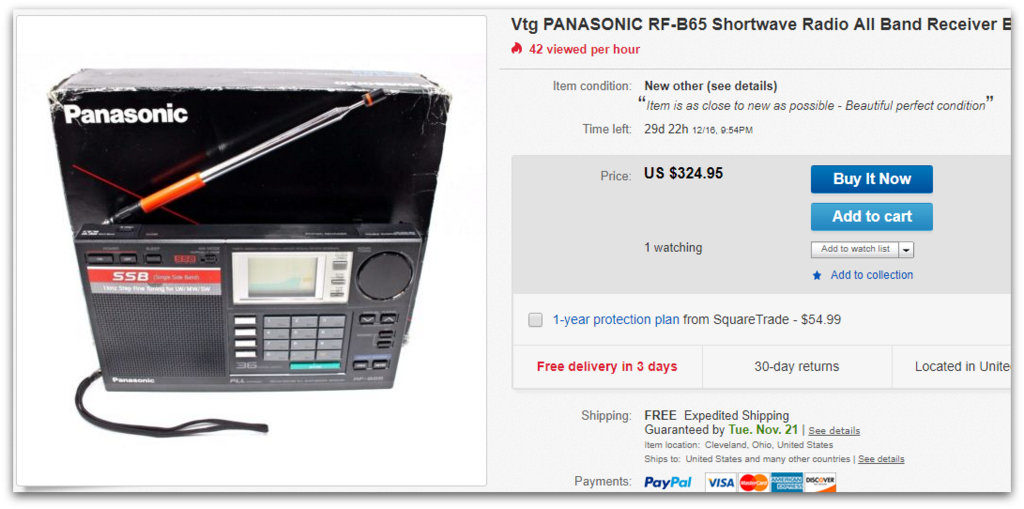
Dan spots a mint Panasonic RF-B65 on eBay

Many thanks to SWLing Post contributor, Dan Robinson, who shares the following:

This does not appear to have the AC adaptor — not all kits included that, but they are findable on Ebay] OK, folks here’s your chance — a Panasonic RF-B65, one of the best portables of all time in terms of overall sensitivity and audio (in this size category) in what appears to be Like New condition. Price is about right for one of these complete with box, manuals, etc I usually jump on these but I already have two in this condition….

Click here to view on eBay.

The RF-B65 is certainly a highly regarded portable and Dan knows I’m on the hunt for one. Frankly, I’ll probably wait until next year to search for a deal. This model is not the cheapest, but looks incredibly clean and is being sold by a seasoned seller with 100% positive feedback. If you’ve been considering an RF-65B, this is a good one.  Thanks for the tip, Dan!

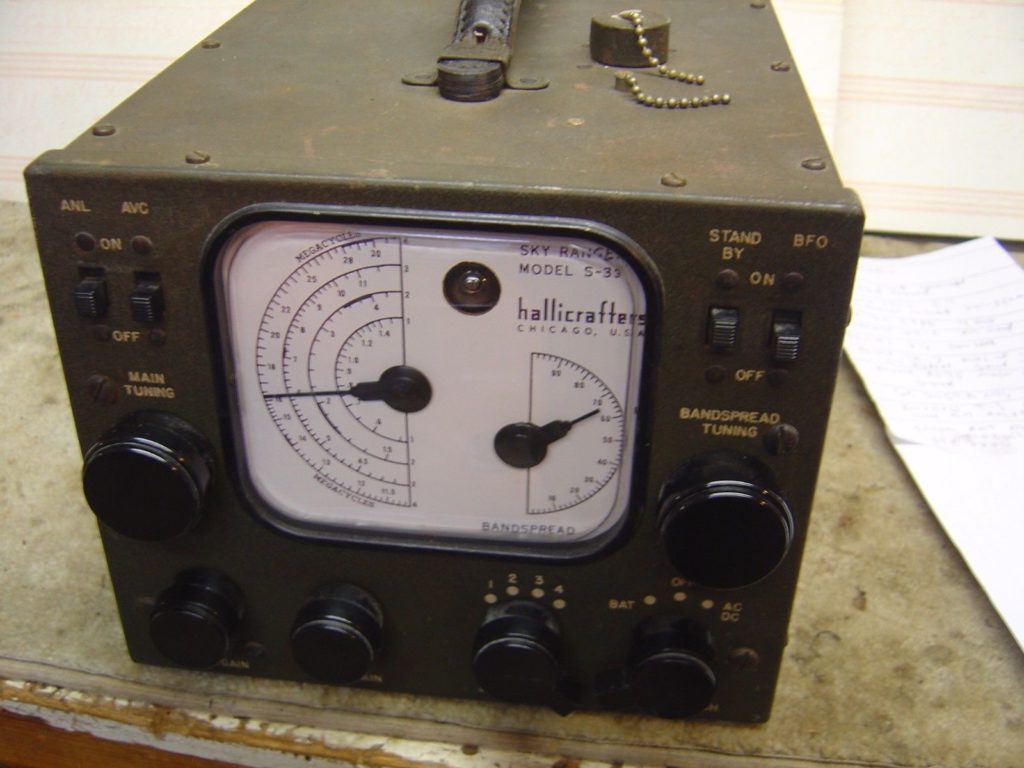
Ron discovers a military version of the Hallicrafters S-39 on eBay

Many thanks to SWLing Post contributor, Ron, who writes:

Thought I had seen them all, but here is the military version of the S-38:

Click here to view on eBay.

Also an earlier version of the Echophone:

Click here to view on eBay.

I’m a huge fan of Hallicrafters radios–especially from this era.  I’ve a friend that has this version of the S-39, but it hasn’t been restored yet. When he does restore it, I’ll try to steal it for a few weeks and head to the field pretending I’m listening to instructions from HQ from behind enemy lines!

Thanks for the tip, Ron!

Update: Ron also points out this excellent gallery of Hallicrafter radios.

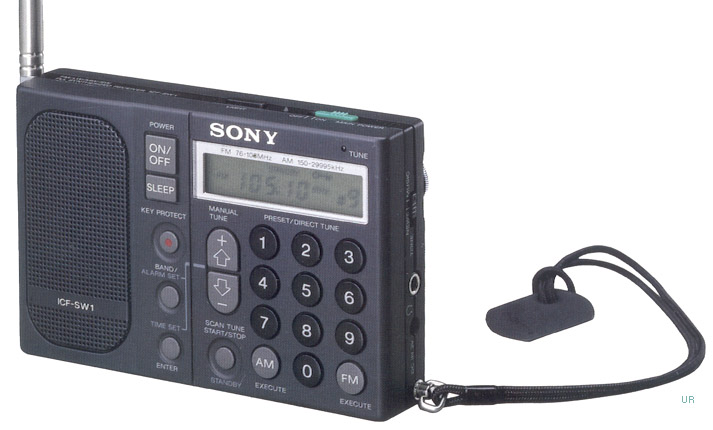
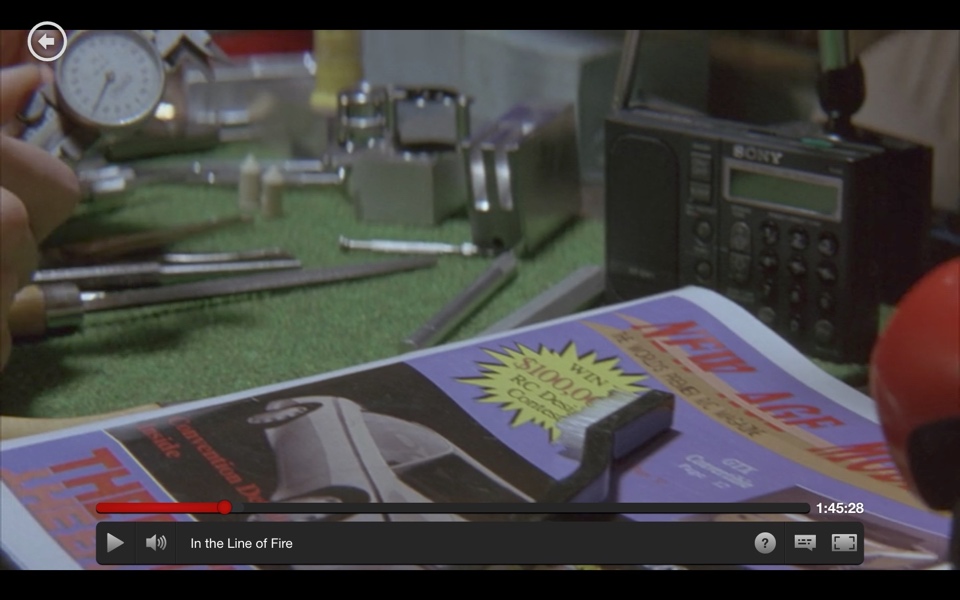
Mark Spots a Sony ICF-SW1S watching “In the Line of Fire”

Many thanks to SWLing Post contributor, Mark Hirst, who adds the following to our growing archive of radios in film.

Mark writes:

A Sony ICF-SW1S spotted in the 1993 Clint Eastwood film, In the Line of Fire.

Click to enlarge.

The radio belongs to the villain played by John Malkovich.

Thanks, Mark! Sharp eyes!

I’ve always thought the ICF-SW1S was one of the more amazing compact portables produced in the 1990s.  True, it lacked SSB mode and only had 10 memories, but it was such a compact receiver for the day! Like many Sonys, it also had a dedicated line-out jack for off-air recordings. I wish more modern portables had one.

The line-out jack is one of the reasons I still regularly pack my ICF-SW100.

I do check eBay fairly regularly in hopes one will suddenly appear at a good price point–ones in good condition routinely sell anywhere from $250-350. I’m actually tempted to purchase a defective one and see if my buddy Vlado can fix it. It’s a risk, though, because if the repair requires anything other than resistors and capacitors, parts might not be available.

Post readers: Anyone own both the ICF-SW1S and the ICF-SW100? Which do you prefer and why?

Shortwave Archives, Spectrum Archives and the Radio Preservation Task Force meeting

This week, I’m looking forward to participating in the three day Radio Preservation Task Force meeting in Washington, DC.
The Radio Preservation Task Force (RPTF), a project of the National Recording Preservation Board of the Library of Congress, will be held on November 2nd, 3rd, and 4th, 2017 at the Library of Congress, Woodrow Wilson International Center for Scholars, and the University of Maryland.

I’ve been invited to serve on the RPTF Material & Digital Curation panel where I’ll have an opportunity to talk about our work with the Shortwave Radio Audio Archive and a new project I’ve been working on: the Radio Spectrum Archive.

The Radio Spectrum Archive

For several years, I’ve been championing the concept of archiving radio spectrum recordings.

As many of you know, through the use of software defined radios (SDRs), we can record not just one individual broadcast from one radio station at a time, but we can record an entire broadcast band, all at once. Each recording can easily contain dozens of stations broadcasting simultaneously. Later, via an SDR app, recordings can be tuned and listened to as if they were live. We believe spectrum recordings will be valuable material for the future historian, anthropologist, enthusiast, etc.
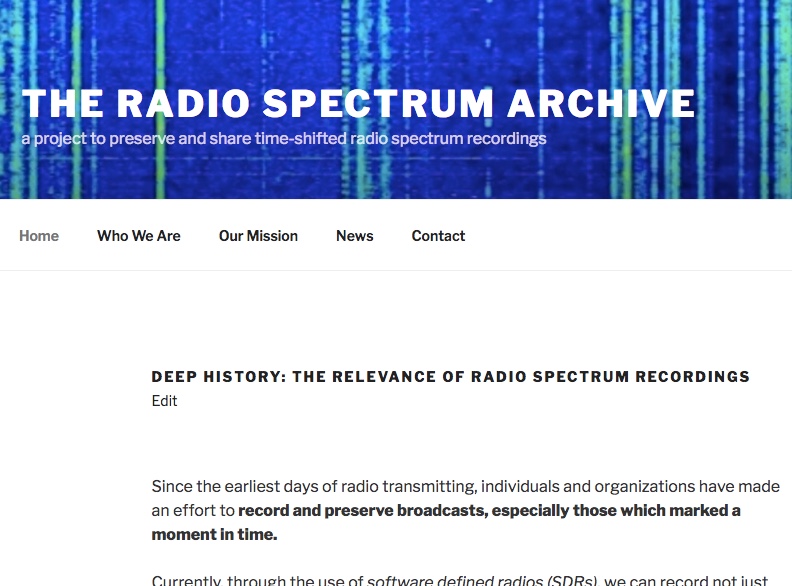
Screen shot of the RSA homepage.

I’ve published a new website for the Radio Spectrum Archive and I encourage you to check it out as it outlines our mission, goals and challenges. I also include a video demonstration using a spectrum recording from 1986 (originally recorded on a HiFi VCR!).

Note that the website is a work in progress, there are still sections to add including bios of our spectrum archive team.

Click here to check out the Radio Spectrum Archive website.

Though I didn’t mention this in my Patreon campaign post earlier this week, the Radio Spectrum Archive is yet another important radio project you are supporting with your pledge. This week, for example, extra funds help me with travel expenses associated with the RPTF conference (many thanks to a kind friend who is hosting me at his home for four nights, saving me several hundred dollars!).

If you have the means and would like to support the SWLing Post, the Shortwave Radio Index, the Shortwave Radio Audio Archive, and the Radio Spectrum Archive please use the link/button below to become a Patron. If you’d like more details or support options, check out this recent post.

Become a Patron!

And to all of you who have supported us through Patreon and with one time gifts: thank you, thank you, thank you!

If you’re not in a position to become a patron or coffee fund supporter, no worries! Just enjoy our radio sites and resources!

One more note: Due to travels and a heavy workload over the next couple of weeks, please allow extra time for replies to correspondence and comments. Thank you so much!

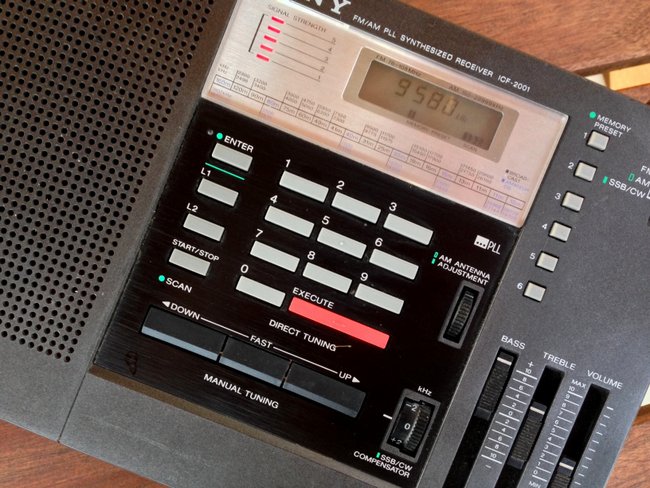
From the Shortwave Archives: Radio RSA reviews the Sony ICF-2001

I’ve mentioned many times before what a joy it is to curate the Shortwave Radio Audio Archive (SRAA). Sometimes I’m sent recordings that evoke a flood of memories. SRAA contributor, Tom Laskowski, just submitted another such recording.

Tom included the following notes with his Radio RSA – Voice of South Africa recording:

Every Saturday night during the early 1980s [in South Bend, Indiana] I would regularly tune to 9580 kHz at 0200 to listen to Radio RSA (Channel Africa as it is now known) to hear DX Corner, their regular DX program.

This episode from March 14, 1982 was a look at a brand new hot radio, the Sony ICF-2001.

The audio isn’t great but should be listenable. I think this was recorded using my new Realistic DX-302. Enjoy:

Click here to download this recording as an MP3.

 Thank you, Tom! I think Radio RSA did an admirable job reviewing the ICF-2001!

Post Readers: You can listen to more archived shortwave recordings at the SRAA website, or by subscribing to the audio feed via iTunes. You can also listen to the archive on TuneIn radio.

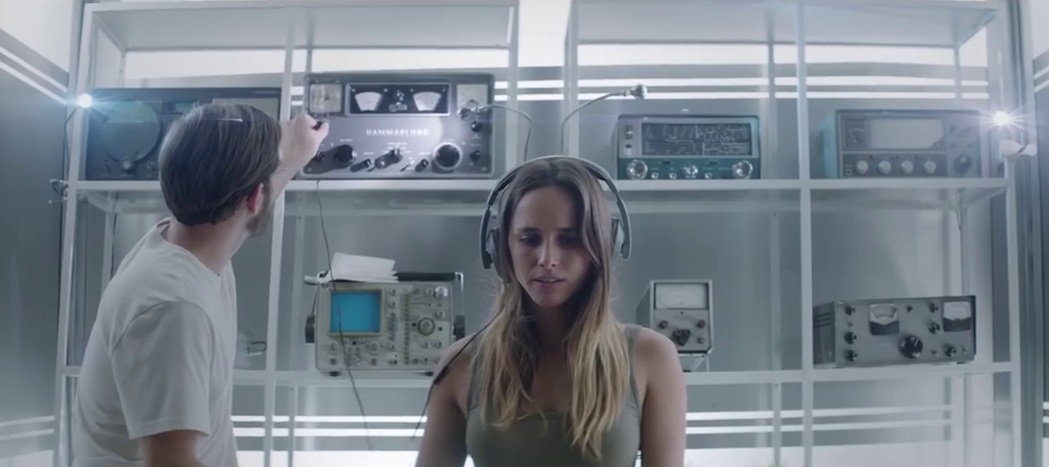
Shortwave film features a variety of radios

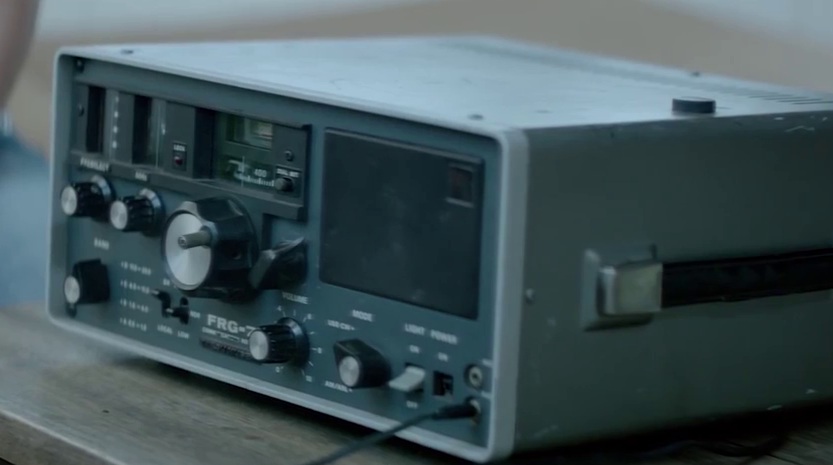
The Yaesu FRG-7 featured prominently in the film trailer

Many thanks to SWLing Post contributor, The Professor, who adds to our discussion about the recently released film Shortwave:

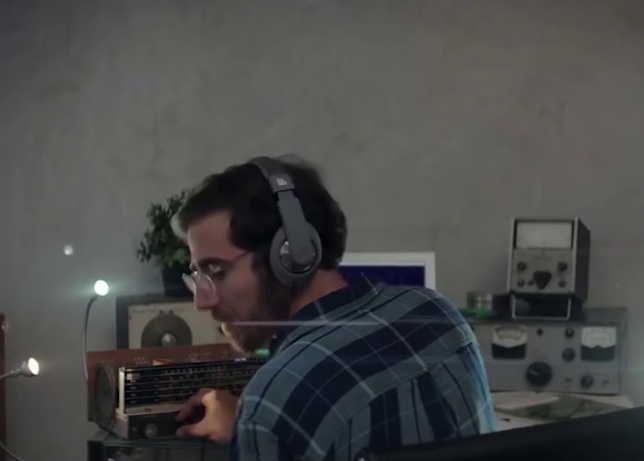
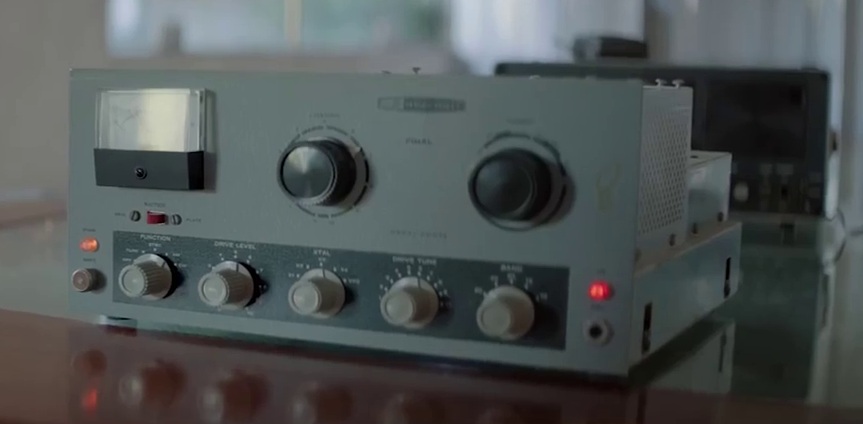
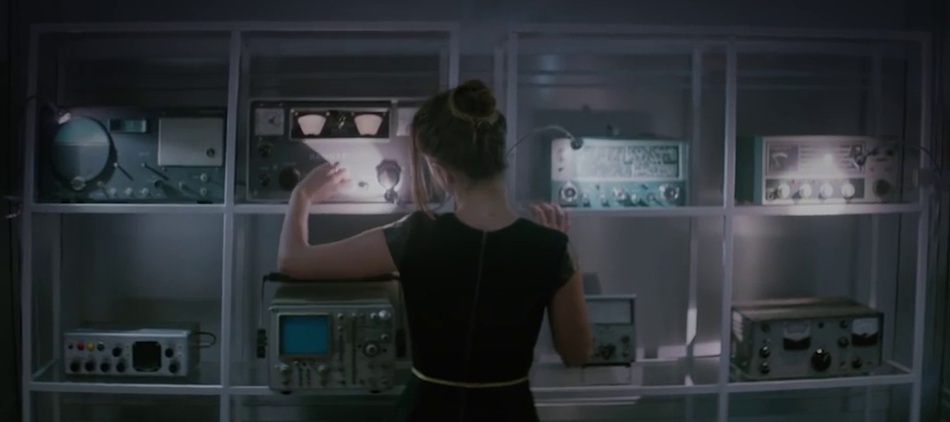
I saw that David posted a comment on your blog where he wondered what radio the guy in that “Shortwave” film might be using. Well, watched a couple trailers and discovered that the movie featured a few receivers.

So I took screen shots, and I thought some of your readers might be curious about this as well, and I’m sure some will ID all of them.

I had hoped the movie might feature Gene Scott or Pete Peters broadcasting from the underworld, but that doesn’t appear to be the case.

Anyway, here are some stills from the trailers[…]

Thanks, Prof! There are some classics here–Heathkit, Hammarlund, Hallicrafters and more.

Perhaps Post readers can comment with makes and models!

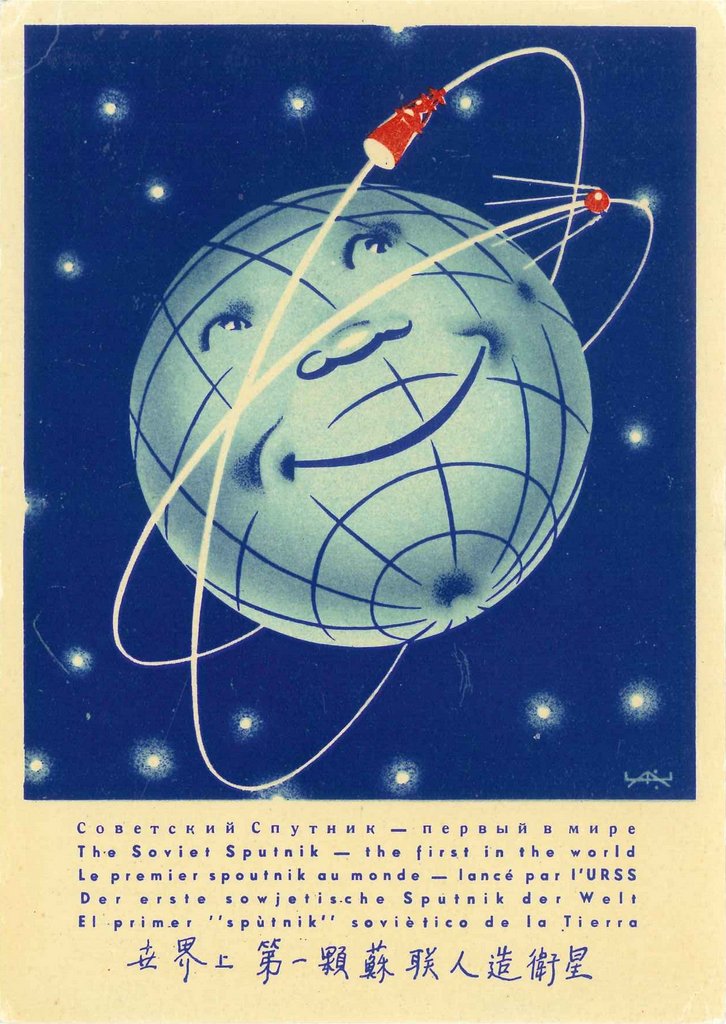
Today: Sixty year anniversary of Sputnik 1

Radio Moscow QSL Card (Credit: Richard Langley)

(Source: NASA History Archives)

Sputnik and The Dawn of the Space Age

History changed on October 4, 1957, when the Soviet Union successfully launched Sputnik I. The world’s first artificial satellite was about the size of a beach ball (58 cm.or 22.8 inches in diameter), weighed only 83.6 kg. or 183.9 pounds, and took about 98 minutes to orbit the Earth on its elliptical path. That launch ushered in new political, military, technological, and scientific developments. While the Sputnik launch was a single event, it marked the start of the space age and the U.S.-U.S.S.R space race.

The story begins in 1952, when the International Council of Scientific Unions decided to establish July 1, 1957, to December 31, 1958, as the International Geophysical Year (IGY)because the scientists knew that the cycles of solar activity would be at a high point then. In October 1954, the council adopted a resolution calling for artificial satellites to be launched during the IGY to map the Earth’s surface.

In July 1955, the White House announced plans to launch an Earth-orbiting satellite for the IGY and solicited proposals from various Government research agencies to undertake development. In September 1955, the Naval Research Laboratory’s Vanguard proposal was chosen to represent the U.S. during the IGY.

The Sputnik launch changed everything. As a technical achievement, Sputnik caught the world’s attention and the American public off-guard. Its size was more impressive than Vanguard’s intended 3.5-pound payload. In addition, the public feared that the Soviets’ ability to launch satellites also translated into the capability to launch ballistic missiles that could carry nuclear weapons from Europe to the U.S. Then the Soviets struck again; on November 3, Sputnik II was launched, carrying a much heavier payload, including a dog named Laika.

Immediately after the Sputnik I launch in October, the U.S. Defense Department responded to the political furor by approving funding for another U.S. satellite project. As a simultaneous alternative to Vanguard, Wernher von Braun and his Army Redstone Arsenal team began work on the Explorer project.

On January 31, 1958, the tide changed, when the United States successfully launched Explorer I. This satellite carried a small scientific payload that eventually discovered the magnetic radiation belts around the Earth, named after principal investigator James Van Allen. The Explorer program continued as a successful ongoing series of lightweight, scientifically useful spacecraft.

The Sputnik launch also led directly to the creation of National Aeronautics and Space Administration (NASA). In July 1958, Congress passed the National Aeronautics and Space Act (commonly called the “Space Act”), which created NASA as of October 1, 1958 from the National Advisory Committee for Aeronautics (NACA) and other government agencies.

Click here to read at NASA’s history website.

Source: NASA

More on Sputnik

Check out this post by SWLing Post contributor Richard Langley in our archives.

Also contributor, Colin Anderton, has posted a vintage Radio Moscow recording on his website, Apollo Audio Highlights.