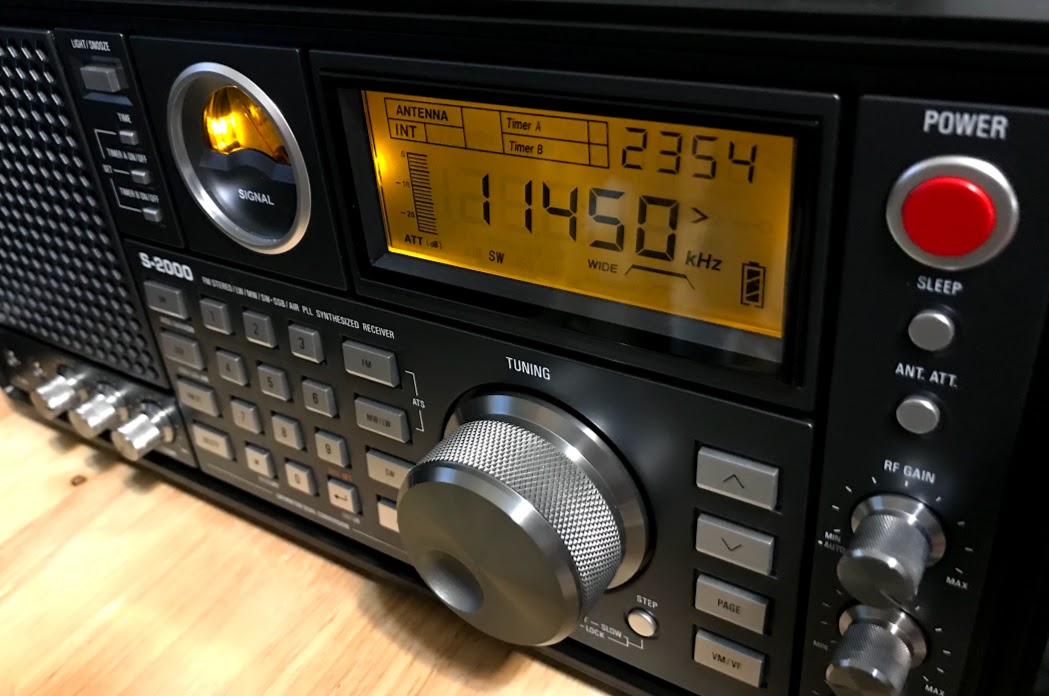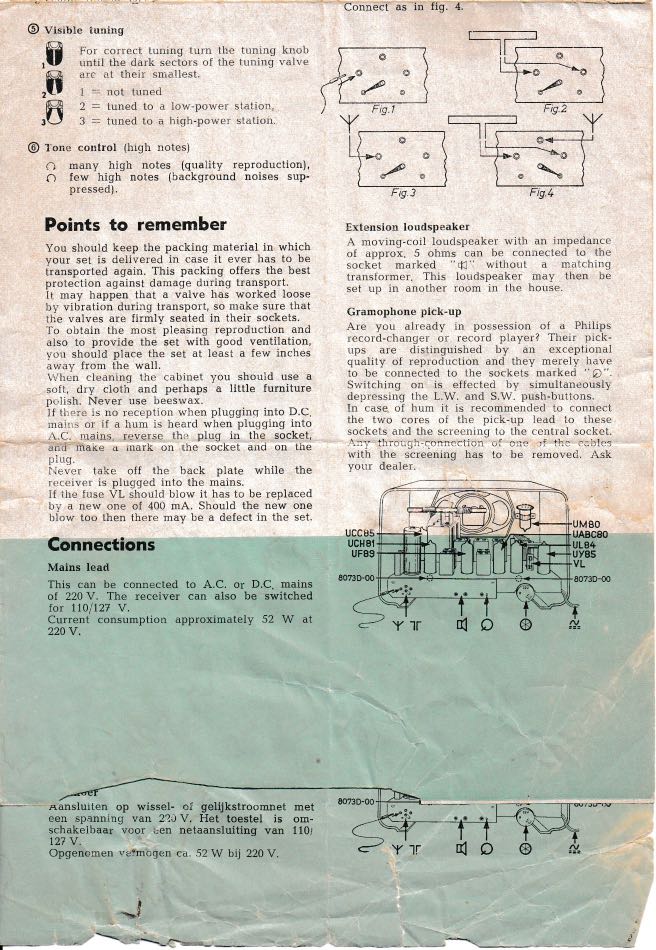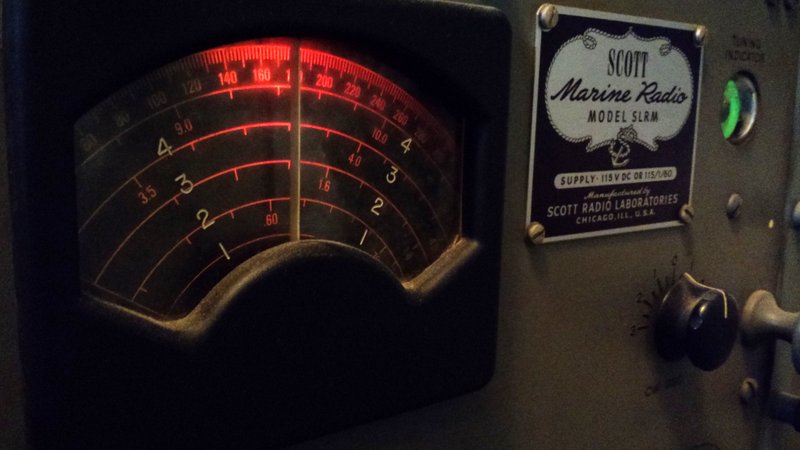
The Shortwave Radio Audio Archive (SRAA) is a pure labor of love. I founded the SRAA back in 2012 as a place to archive and freely share off-air recordings shortwave radio enthusiasts have made over the years.
I fund the archive out of my own back pocket and the site is open to everyone free of charge. All of the recordings in the archive are safely stored in multiple off-site locations as well as in the archive’s online database.
We currently have over 2,400 RSS and podcast subscribers who automatically download each recording as it’s published. Many of these subscribers have a copy of the full archive at home.
All of the recordings come from our amazing contributors who take the time to digitize or share recordings with us.
Radio memories
One of the things I truly enjoy about the Shortwave Radio Audio Archive are all of the memories listeners leave in the comments section.
I was just reading through a few comments and thought I’d share a selection here. Note I’ve linked to each recording if you’d like to take a listen:
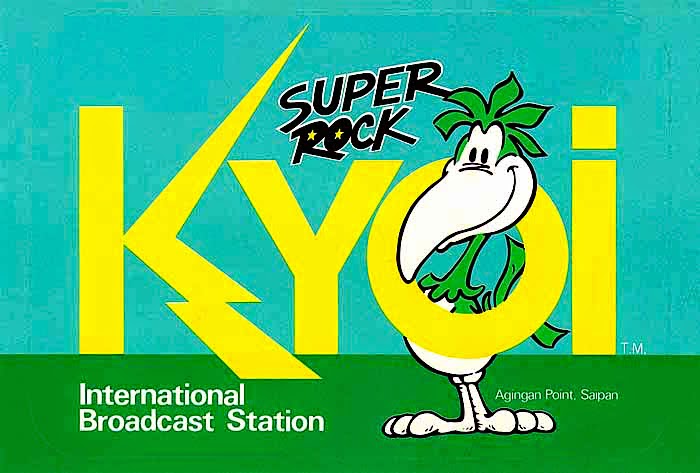
Comment from Heikki on Super Rock KYOI: September 13, 1983:
 January 1985 to December 1986 I was a soldier in Soviet army at far east of Soviet Union.
Actually listening [to] this radio station was strongly prohibited for Soviet soldiers because Soviet communist propaganda [claimed] that rock’n roll music is not suitable for Soviet people. We [listened] anyway.
Once I switched this broadcasting into our military base public loudspeakers so Super Rock KYOI sounds widely and loud all around for all people. It lasted about 20 minutes.
After this incident the KGB agents [were] interested about me. Why I did it? Am I anti-Soviet propagandist or something? Actually, it was a good reason to put me into the prison for some years. Estonian guys in Soviet occupation army loved very much this radio station. It was only way to listen world’s newest music.
Comment from Ian Donaldson on 1991 cassette of shortwave IDs, interval signals and numbers stations:
 Brought back many memories listening to your recordings, which seems a 100 years ago. I was a DXer in the 1970’s as a boy in southern Victoria. I had a radiogram with one shortwave band; no bandspread. My one compensation was living on a farm, and consequently, having ample room for long wires, etc. I remember listening to Radio Nacional de Espana during the days of Franco, and hearing very militaristic music at the beginning of their broadcast. When I wrote to Radio Peking, I received a picture book, calendar depicting impossibly happy peasants, etc. I sent a report to the BBC and thought that they didn’t take the bother of replying to me. A postcard of Big Ben came 12 months later. They had sent it via surface mail! During the Cold War, stations were jammed out, and I would hear day and night, high-pitched singing, which I learned later to be Peking Opera. I remember an announcement on VOA, which said: “This is the Voice of America, the following programme is in Special English”. And then It began: “President Nixon, today…..”, very slowly. So, thank you for allowing me to reminisce.
Comment from Mark Fahey on WRNO (Glenn Hauser’s World of Radio): April 11 & 25, 1982:
 OMG!! This recording includes a news item about the pirate I ran in the 1980’s Radio CBN! Ha so cool! It was a slick operation, I built a fully featured professional studio for the station in my home and all of our on-air personalities actually used the station to launch professional careers at stations including TV New Zealand, CNN, Sky News, Radio Singapore and various Australian AM and FM stations. I’m so pleased hearing this – never head Glenn’s report back in the day. The transmitter was an FT-101 which I modified for broadcast quality AM bandwidth transmission and I used various antennas over time including verticals and half wave dipoles. We did eventually get received in the USA. We even received reports from Jerry Berg and eventually Glenn Hauser himself.
I still have all the reports, broadcast tapes and even blank QSL cards. I married one of the DJs (Shannon LaGuardia) and shut down the station when I needed the studio for another project.
Cheers,
Mark Fahey
Australia
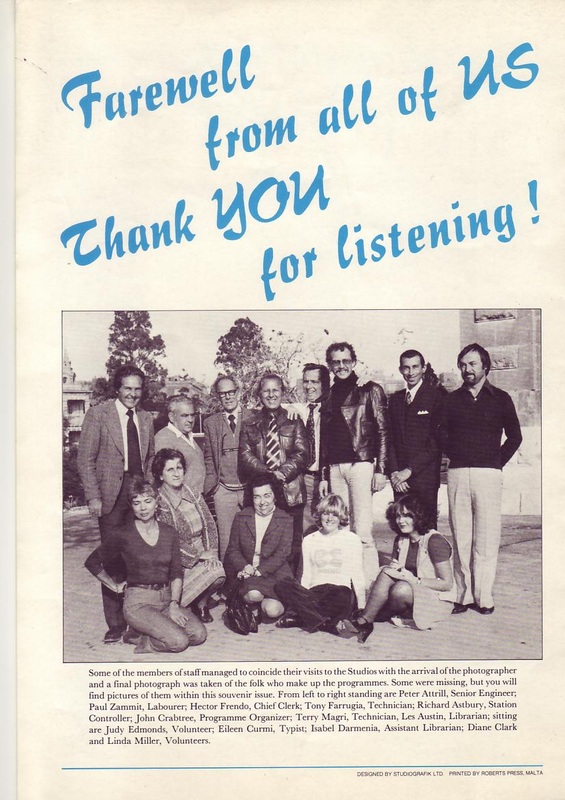
Comment from Gino Galea Malta Wedding Photographer on Final sign off of BFBS Malta: March 31, 1979:
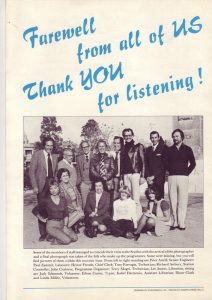 During the seventies, I had the luxury to tune in regularly to BFBS-MALTA, transmitting from St.Frances Ravelin, in Floriana, nowadays housing the MEPA offices.
This was associated with top quality entertainment varying from the latest UK pop music released in the charts to sports, particularly football, the golden oldies, Country music, the very latest news, interviews, etc. My favourite programs during those days were of course, the weekly UK TOP TWENTY. Another favourite has to be BFBS UK, aired daily in the afternoon, both presented by by the legendary Tommy Vance. I’ll never forget the other top presenters such as Richard Astbury, (Being the last station Controller) with his very own “Pop Around Europe”. Other top-class presenters were Richard Caperon, Alan Clough, Chris Russell, John Crabtree, P.McD, and Paul Gambaccini. Another favourite was “Solid Gold Singles” with Don Durbridge.
Christmas time with BFBS was also unique. We had the luxury to tune in to those amazing Christmas and ‘New Year’s Eve’ rich entertainment. That included the live charity program “Ring us up” which left its mark here in Malta to the extent that it inspired other local stations to come up with similar productions, even to this very day in support of the local charities! Being a student, BFBS MALTA was indeed a boost in my studies, particularly the language and current affairs.
Yes, I must admit that on the 31st March 1979, I really missed BFBS MALTA together with its great presenters. Although nowadays we have many other quality radio stations here BFBS MALTA always remained so very special.
Gino Galea
PS: I can also personally confirm that this clip is indeed the original voice, aired just minutes before the final closure by the station controller, Richard Astbury.
Many thanks, again, to all of our SRAA contributors! When your recordings are posted on the archive, they’re instantly shared with enthusiasts, historians, archivists, and (even) musicians around the world.
As you can see above, off-air recordings also bring back amazing memories for listeners.
Join us
You can subscribe to the Shortwave Radio Audio Archive as a podcast via iTunes or by using the following RSS feed: http://shortwavearchive.com/archive?format=rss You can also listen via TuneIn.
Of course, one of the best ways to listen to recordings and read all of the recording notes is by visiting the SRAA website.
If you’d like to contribute your recordings to the archive, check out this page.
Do you enjoy the SWLing Post?
Please consider supporting us via Patreon or our Coffee Fund!
Your support makes articles like this one possible. Thank you!


 Radio Waves: Stories Making Waves in the World of Radio