Category Archives: Radio History

Seeking information: 1959 Radio Progreso broadcasts by Daniel Fignolé and Louis Dejoie

SWLing Post community: perhaps you can help with an inquiry I recently received. Radio historian, Alejandra Bronfman, writes:

Dear Thomas;

I’m a historian of radio in the Caribbean, and David Goren suggested I contact you with a question about some 1959 broadcasts I’m trying to track down. These were produced by Haitian dissidents Daniel Fignolé and Louis Dejoie; one in Brooklyn, one in Havana, for broadcast over Havana’s Radio Progreso. They started in January 1959 and ended a few months later. I’m not sure whether they were in shortwave format, though I would guess that they were if they were aimed at Haiti as well as the eastern part of Cuba. I’m looking for any sources at all that might help me fill in the story, which I have mostly from some contemporary accounts, newspapers and US-based official sources.

Anyway, please excuse the intrusion and the out-of-the-blue nature of my query. I’m trying to hunt down all possible clues that may lead to more source material.

thanks so much;
Alejandra

Alejandra Bronfman
Associate Professor
Department of Latin American, Caribbean and US Latino Studies

If you have any information or leads that could help Professor Bronjman, please comment! Thank you!

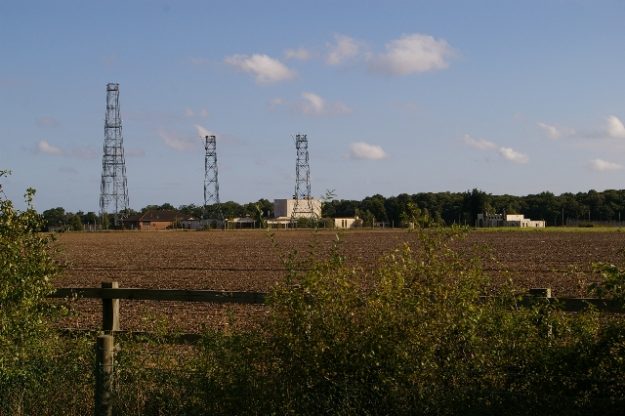
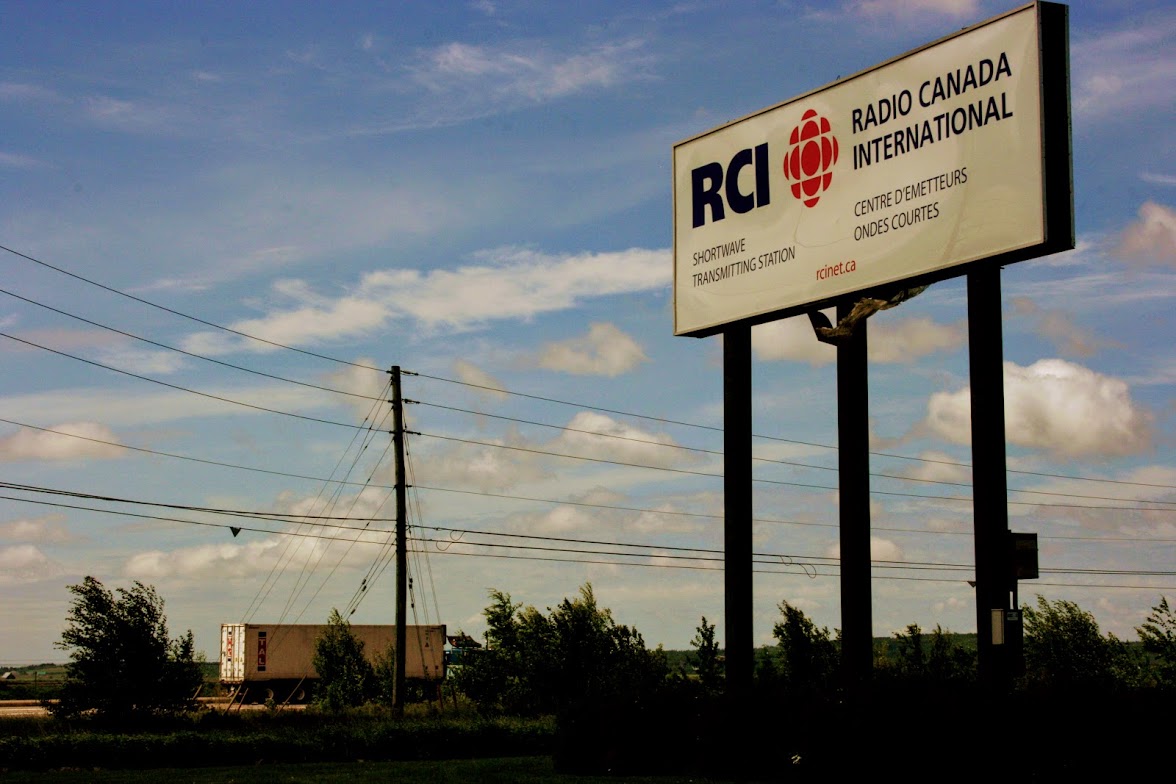
Former RCI Sackville transmitter site’s “slow transformation”

Many thanks to SWLing Post contributor, David Iurescia (LW4DAF), who writes:

[Here’s] an interesting article about former RCI transmitter site (Sackville):

Former RCI transmitter site – slow transformation
By Marc Montgomery

The former RCI transmitter site near Sackville New Brunswick, sold to a First Nations group, is now in the process of being absorbed into native reserve land and some as yet undetermined use.

During the Second World War as Canada was working towards creating a shortwave service, an ideal site for the transmission of radio signals was found in New Brunswick. Located on the Tantramar marshes, it was ideal ground for propagation of signals from the complex array of antenna wires and towers.

The service was ended over six decades later as a result of severe budget cuts in 2012. The site was later purchased by Mi’kmaq First Nations in 2017 and plans are slowly taking shape to transform the 90 acre site into reserve land. That process involves consultations with neighbouring municipalities, the Royal Canadian Mounted Police, the New Brunswick provincial government and other indigenous communities. It’s expected to take two years, during which time the Mi’kmaq will decide the use for the land, whether cultural or economic or a combination.[…]

Click here to read the full article and view photos at RCI.

Robert discovers radio station lucite artifacts

Many thanks to SWLing Post contributor, Robert Yowell, who writes:

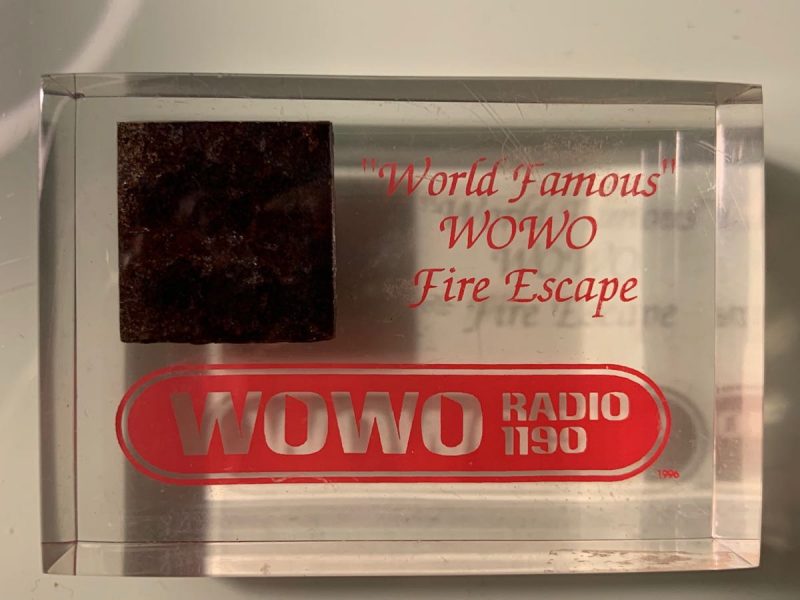
I walked into an awesome store today in Manhattan which specializes in vintage radios and ephemera. He had these two small lucite paperweights which I bought – one from KDKA the other from WOWO – two historic AM stations. The WOWO one contains a piece of the “world famous fire escape” [see above] which was from the original studio building on Washington Blvd in Ft Wayne Indiana.

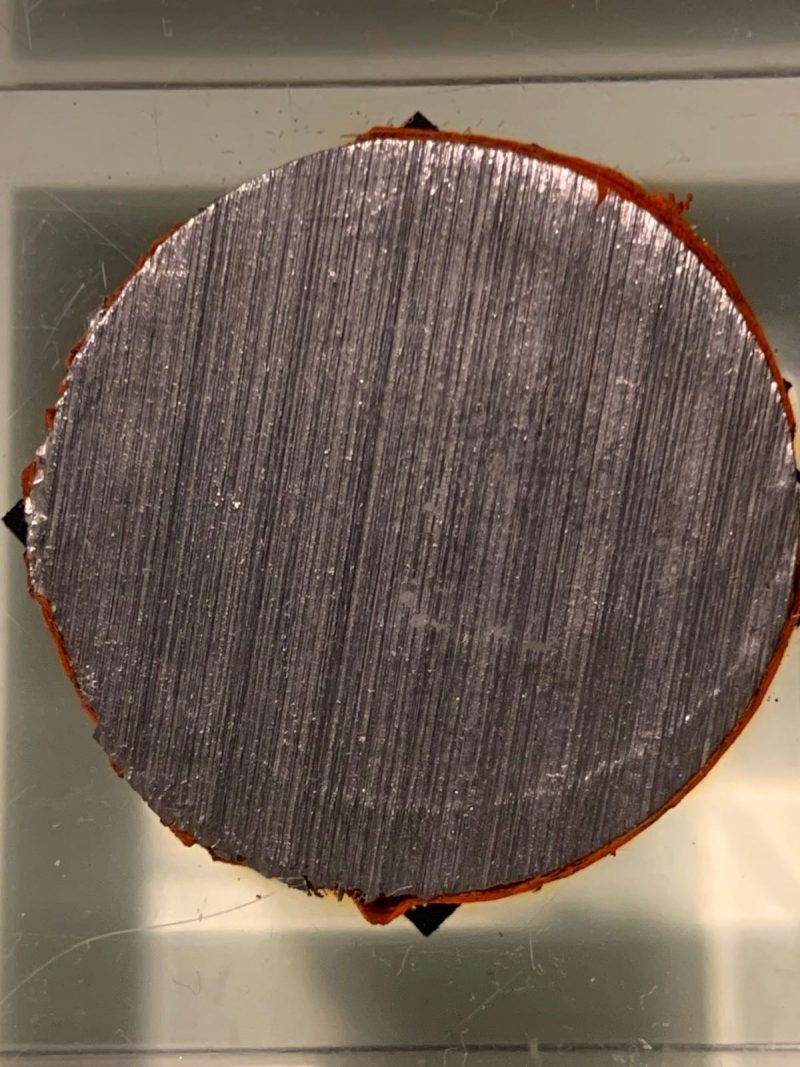
The other lucite is a mystery that I hope your readers might help with. It was issued in 1995 for the 75th anniversary of KDKA. It appears to be a silver disc sandwiched with something orange colored in the center. Could it be from the transmitter site? I have attached photos here.

Thanks so much for maintaining such a great Blog site for SWL and other radio listeners ! I hope someone out there can help with my question – thank you!

A few hours later, Robert wrote this follow-up message:

Thomas – I just found the answer to my question. I now own a piece of the original KDKA transmitter tower!

http://www.antiqueradio.com/KDKA_3-96.html

What a great piece of history you have there, Robert.  Both WOWO and KDKA are legendary! Thanks for sharing!

VOA Museum 75th Anniversary Events & Activities

(Source: WVXU via Michael Bird)

Voice Of America Museum Sets 75th Anniversary Events

The National Voice of America Museum of Broadcasting will celebrate the 75th anniversary of West Chester Township’s Bethany Station with yearlong programs highlighted by a presentation by VOA White House Bureau Chief Steve Herman on March 6.

Events include a talk by Rod Serling biographer Nicholas Parisi; a program on sound effects from the golden age of radio; a “Hamvention” by the West Chester Amateur Radio Association; and a free four-part series of programs called “The Voice of Truth in America: Celebrating 75 Years of the VOA Bethany Station” with the MidPointe Library System.[…]

The anniversary events include:

Feb. 17: “The Imagination of Rod Serling: A Conversation with Nick Parisi,” by the author of Rod Serling: His Life, Work, and Imagination published last year.

March 6: “Covering the White House and the World” by Steve Herman, VOA White House Bureau Chief.

April 6: “History of the VOA-Bethany Station and the VOA Museum Today” presentation by museum director Jack Dominic at MidPointe Library West Chester Township.

April 9: “Theater of the Mind: Sound Effects During Radio’s Golden Age” with Mike Martini, president of the museum’s Media Heritage Collection.

May 16-19: “Hamvention Nights at the VOA Museum” with the West Chester Amateur Radio Association.

June 5: “There’s a Radio in My Cell Phone!,” a children’s STEM (Science, Technology, Engineering and Mathematics) event at MidPointe Library Liberty Township.

July 11: “Stealth Antennas for Amateurs Living in HOAs.”

Aug. 25: Big Band music at MidPointe Library West Chester Township.

Sept. 21: The fourth annual VOA Museum “75 Years of Rockin’ the Radio” fundraiser.

Oct. 18-20: “Jamboree on the Air” with West Chester Amateur Radio Association and area scouting organizations at the museum.

[…]The museum is open Saturdays and Sundays 1-4 p.m. at 8070 Tylersville Road. General admission is $5 for adults and $1 for children.  Museum events are listed at the VOA Museum website.

Click here to read the full article at WVXU.

Fred Jacobs on “Rekindling Our Fading Romance With AM Radio”

Many thanks to SWLing Post contributor, Dennis Dura, who shares the following article which appeared in Jacob’s Media Strategies on Dec 31, 2018. I’ve pasted an excerpt below, but you’ll want to read the entire piece by clicking here:

Rekindling Our Fading Romance With AM Radio

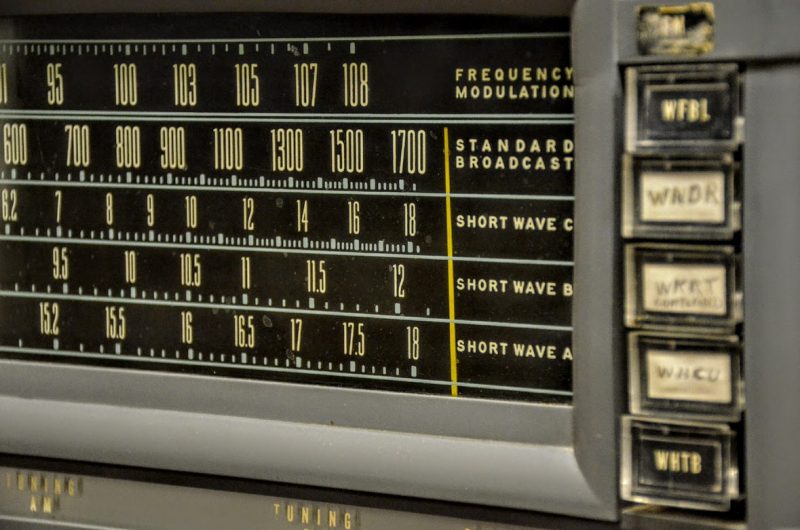
I know I may sound like a relic from another era, but chances are if you’re a Baby Boomer (or gasp – even older), you were inspired by AM radio as a kid growing up whether it was in a big city or a small town.  If you’re a member of a younger generation, you may not even know that AM – or amplitude modulation – has a magic power.  At night when the clouds are just right, AM signals have the ability to “skip” across geography, unlike frequency modulation (FM) which is line of sight.  “Clear channel” stations had an even easier time being heard beyond their metro confines – often covering many states during the nighttime hours.

Many of us radio veterans remember those nights, lying in bed, where your trusty bedside AM clock radio pulled in signals from all over the U.S. As a boy in Detroit and not especially well-traveled, I learned how to pronounced Des Plaines (Des-planes) and Touhy (2E) by listening to Chicago radio stations like WBBM and WLS.  Tuning in KYW in Philly (which came in “like it was next door”), I learned how to spell the quirky town of Conshohocken from listening to Phillips Ford commercials.  It was from a jingle that got in your head (CON-SHO-HO-CKEN).  At least, it got in mine.

It didn’t matter if you lived in Dallas or Des Moines, or a small town in Delaware – you were able to pick up big AM radio stations from faraway.  And if you talk to today’s broadcasters on the other side of 50, many will tell you their careers were likely inspired by these booming, exciting blowtorches on AM radio that provided a soundtrack for our teens.

AM radio was where we first heard the Beatles, the Supremes, the Stones, Stevie Wonder, and even the Doors.  Big AM Top 40 stations of the day – KHJ, WABC, CKLW, WLS – played all these cool rock songs, right next to Herb Alpert & the Tijuana Brass, Elvis, Bobby “Boris” Pickett, and the Singing Nun.  And even though the fidelity of amplitude modulation is obviously technically inferior to that of FM, there was something very different and even romantic about hearing all those songs first on AM radio.[…]

Continue reading the full piece at Jacob’s Media Strategies.

Thanks for the tip, Dennis! I think this piece speaks to so many of us radio listeners–especially this one who prefers the “fidelity of amplitude modulation” over so many other mediums.

Radio receiver innovations over the last century

(Source: Microwaves and RF)

A Selected History of Receiver Innovations Over the Last 100 Years

by Brad Brannon

This article, the first of a two-part series on receiver technology, looks at the genesis and early advances of this all-important area.

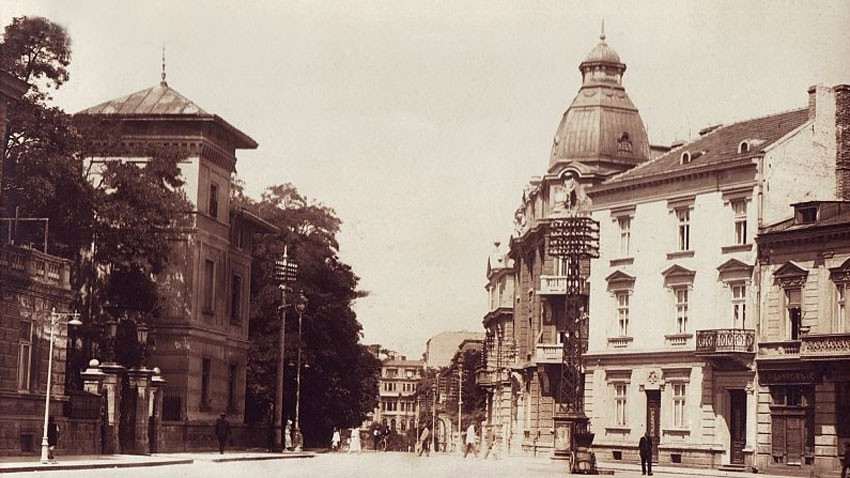
Many contributed to the early days of wireless, but it’s safe to say that Guglielmo Marconi ranks as one of the more prominent. While known for his wireless technology, many people are less familiar with the business he created around wireless technology at the turn of the 19th century. For about 20 years after the start of the 1900s, he built a critical business that launched the world of wireless toward what we have today.

His commercialized technology was not the most up-to-date.  However, it was good enough despite rapid technological changes because he figured out how to use the technology available to him to enable a new industry.

Marconi set out to deploy a worldwide network capable of sending and relaying messages wirelessly at a time when the world was in turmoil at the end of colonialism, mainly due to the wars and disasters that pockmarked the start of the 1900s, including the sinking of the RMS Titanic in April of 1912. The role that wireless played in both the rescue of survivors and the dissemination of the news of that accident reinforced the importance of this fledgling technology.

The key role that wireless technology could play wasn’t missed by either the public or the military, notably Joseph Daniels, who later became the secretary of the U.S. Navy. In the U.S. and elsewhere, leaders such as Daniels felt that the military should nationalize radio to ensure that they had access to it during wartime. It must be kept in mind that during this period, the only usable spectrum was below 200 kHz or so. At least for a while, things moved in this direction. After World War I, the government’s control of wireless weakened, but not before the formation of the government-sanctioned monopoly that created the Radio Corporation of America (RCA).1

The Early Radio Days

By our expectations, the radios of Marconi’s time were quite primitive. The transmitters employed spark-gap devices (only later did they employ mechanical alternators) to generate the RF. But on the receiving end, the systems were fully passive and consisted of an antenna, resonant LC tuner, and some sort of detector. These detectors will be covered shortly, but they were either mechanical, chemical, or organic.

Some of these systems employed a battery simply to bias them, but not to provide any circuit gain as we might recognize today. The output from these systems was supplied to some sort of headset to convert the signal to audio, which was always very weak and just a simple click or buzz at best.

Because these systems provided no gain on the receiving end, range was determined by the amount of transmitted power, the quality of the receiver, the experience of the operator to adjust it, and, of course, atmospheric conditions. What Marconi realized was that given a reasonably predictable range, a network of stations could be built to reliably communicate information across both continents and oceans. This included installations both on land and at sea.

Marconi set off to install his wireless stations across the globe and at sea, both on passenger ships and cargo ships.[…]

Click here to continue reading the full article at Microwaves and RF.

“Crystals Go To War”: A 1943 film about the production of Signal Corps radio crystals

Many thanks to SWLing Post contributor, Charlie (W4MEC), who shares this fascinating film which documents the production and calibration of crystals in 1943. I had no idea of the amount of labor and attention to detail this process required–an absolutely fascinating process:

UPDATE (08/09/2022): the YouTube account associated with this film has been deleted by the owner.

Click here to view this same film now hosted by the Antique Wireless Association.