Category Archives: Radio History

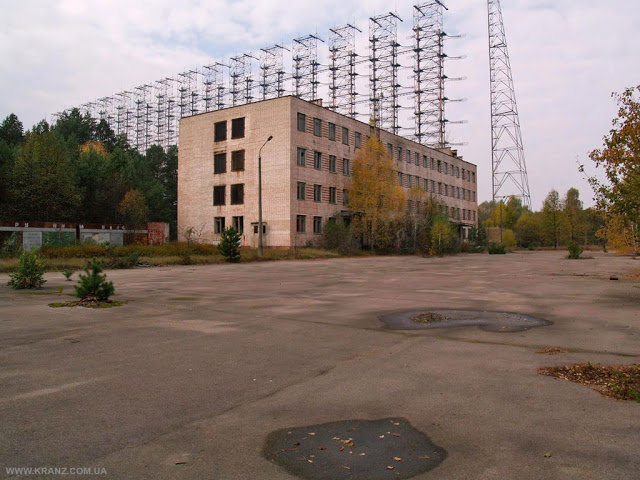
A close look at the Russian Woodpecker (Duga-3)

(Source: news.com.au via Ian P)

ON MAPS, this site was marked as a children’s playground. That couldn’t be further from the truth.

When the Chernobyl nuclear explosion happened in 1986, it shook the world in many ways. Not only did it put the now ghost town of Pripyat on the map for all the wrong reasons, it also exposed the world to what was really at this site in Ukraine — the dreaded Duga radar, also known as the Russian Woodpecker.

A Soviet engineering and scientific feat of its time, the Russian Woodpecker was an over-the-horizon radar system designed to provide early detection of an intercontinental ballistic missile attack.

[…]Air traffic controls, television and radio broadcasters would be irked by the mysterious pecking noises it emitted, hence its nickname, the Russian Woodpecker.

Built just outside the city of Pripyat, it was completely off limits and unknown to outsiders.
It was erected near Chernobyl due to its high power demands. On maps, it was marked as a summer camp for children hidden in the depths of the forest. Locals were told that the imposing skyscraper was a radio tower.[…]

Click here to read the full article…

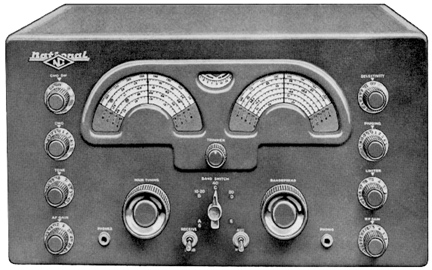
Seventy years ago, Thor Heyerdahl packed a National NC-173 and made history

The National NC-173

Many thanks to SWLing Post contributor, Kris Partridge (G8AUU), who sent the following feedback a few days ago. Sorry for missing the boat, Kris!

Kris writes:

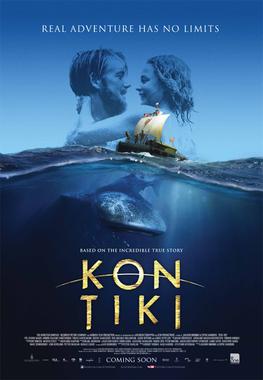
Just under two weeks ago I was watching a Norwegian film on Polish TV (no, don’t ask) and knowing how the sight of old radio’s in films is of interest to you and your readers I was going to write but travel and work, Passendale100 commemorations in Belgium, got in the way. The radio in question was a National NC-173 receiver. And the film Kon-Tiki.

There is much written about the exploits of the voyage and the operators of LI2B. I give as an example from PA7MDJ http://pa7mdj.blogspot.co.uk/2016/10/the-kon-tiki-expedition-and-heroes-of.html?m=1 I leave it to PA7MDJ’s most excellent blog to tell more, he has some Nation Radio Company images from 1947 illustrating his piece and at the end there is a very extensive links listing.

But another reason for writing is that tomorrow, Monday, 07 August is the 70th anniversary of the end of the voyage as the raft landed on the reef. On the 67th anniversary the ARRL did an article on LI2B, why the 67th?

What happened on the 7th of August 1947, and in the 36 hours after, says much about the build quality of the National NC-173.

How many radios today would survive a dunking in seawater and after drying out still be working?

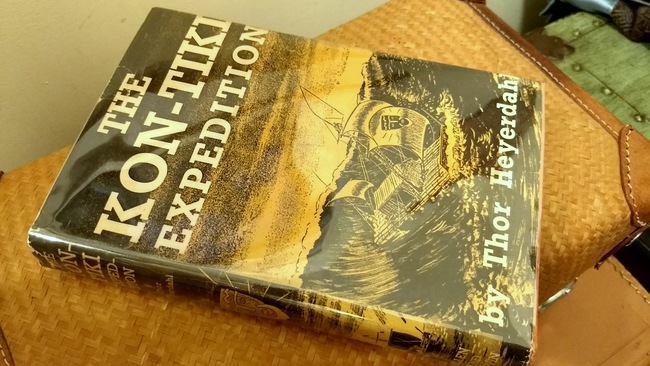
I’ve just been to my book shelves and after a small search found my copy of The Kon-Tiki Expedition published in 1950 given to me not too many years later.

You find LI2B in the book’s index twice. Once describing the operation of the radio ‘corner’ and a very QRP contact between the raft and Oslo Norway. 6 watts CW on 13990 kc. per second, the book being written in 1949 no kHz.

LI2B had been given permission to operate out of but adjacent to as well as in the 20 metre band. The second entry concerns what happen after the raft ends up on the reef and the radio shack and equipment got flooded.

They had been in contact before hitting the reef and there was a 36 hour window before the air search and rescue operations would begin. The drying out of the equipment took no little time and the writer describes how slowly the receiver came to life but no transmitter.

Finally they were able make contact, just before the 36 hrs ended,using a WW2 hand cranked resistance, the book says sabotage, transmitter.

Both the radio operators on the Kon-Tiki had been radio operators in the Norwegian resistance in WW2, only 2 years earlier.

If one puts LI2B into Google images quite an interesting assortment of radio related images are found (click here to view search), including QSL cards but the one I like best is this http://f6blk.net/photos/LI2Bshack_x1.jpg:

I’m sure I’ve seen an English language version, this one looks slightly cropped since the end of the ‘Earth’ wire is out of vision

Regards es 73 de

Kris G8AUU

How fascinating! Thanks so much for sharing this, Kris.

Again, apologies I didn’t get this posted prior to the 70th anniversary–I’m a tad behind (understatement alert) on email at the moment.

I have a particular affinity for The Kon-Tiki Expedition. I found a 1950s copy of the book while doing my undergraduate degree ages ago.

My 1950s copy of The Kon-Tiki Expedition in an archival cover.

The book played no small part in my fascination with anthropology–especially Heyerdahl’s version of “applied” anthropology. I went on to do my post grad work in anthropology at the London School of Economics. Indeed, I re-read that book before my finals to remind myself the significance of anthropology.

If you haven’t read The Kon-Tiki Expedition, I highly recommend you do so! Indeed, it’s about time I read it again.

I’m very curious how many SWLing Post readers have a National NC-173 sitting in their shack? Thor would tell you to take care of it, because it certainly took care of his crew!

Radio Fax: Christopher seeks more information about “Britain’s Number Two Short Wave Station”

Many thanks to SWLing Post contributor, Christopher Brennen, who writes:

I hope you’re keeping well. I stumbled across this site and thought you might be interested:

http://radiofax.org

I am a little too young to know anything about this; not only was I five / six when they first started but I also had no idea about shortwave radio at the time! 🙂

Do any of your readers know anything more about it (it is fairly detailed on this site, but perhaps someone reading was involved in some way?)

It seems to be a shortwave combination of the IBA Engineering Broadcasts for the trade that were shown on TV and something akin to the current InRadio (inrad.io).

Click here to view on YouTube.

Incidentally, the little IBA jingle at the start of that clip was also used – in a higher key – by Granada Television in the North West of England for some of their idents:

https://youtu.be/D30IKp6PCC8

Click here to view on YouTube.

Granada was my ‘home’ ITV region so I’m very familiar with that jingle.

Thanks again for the SWLing Post!

Many thanks, Christopher!

I’m willing to bet SWLing Post readers can comment with more details about the Radio Fax service.

VOA museum marks 75th anniversary with gala

(Source: Journal News via Howard Bailen)

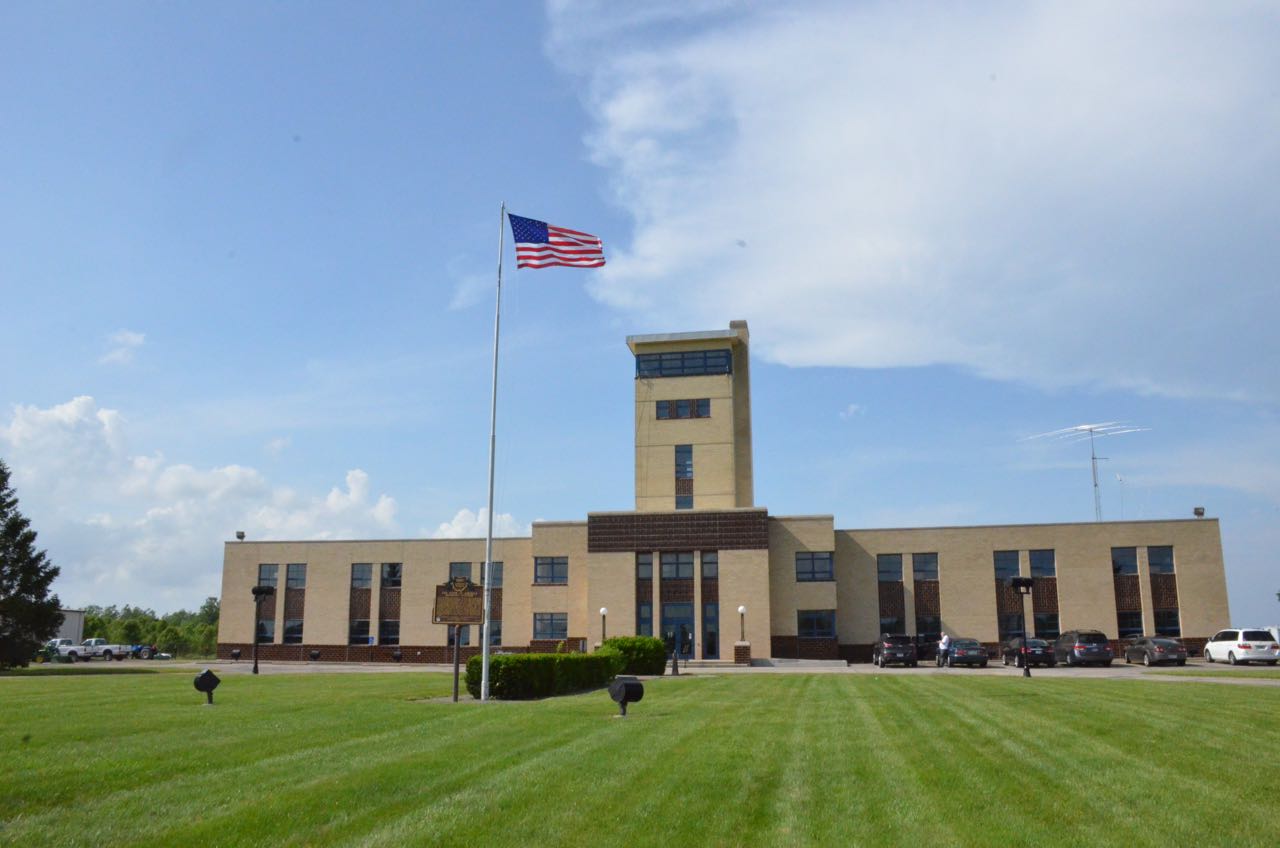
WEST CHESTER TWP. The National Voice of America Museum of Broadcasting will host “Celebrate the Voice of America under the Stars,” a romantic, Big Band dinner-and-dance party on Sept. 23 from 6 to 11 p.m. at the VOA museum.

The event will mark the 75th anniversary of the Voice of America and commemorate the Sept. 23, 1944 dedication of the VOA-Bethany Station.

Carmon DeLeone and his New Studio Big Band will provide entertainment and record a program for later broadcast on public radio station WVXU.

[…]For 50 years, the VOA-Bethany Station transmitted Voice of America broadcasts to countries worldwide that lacked a free press, first in Europe during World War II and to South America during the Cold War. It was decommissioned by the federal government in 1994.

The iconic art deco building has been developed into the National VOA Museum of Broadcasting with the help of the entire community, mostly with volunteer labor. Contributions and grants have been secured from local, regional and national companies and foundations.[…]

Read the full article at the Journal News online.

Click here to view our photos from the VOA Bethany Museum.

Radio Hats of Yore

Many thanks to SWLing Post contributor, Ed, who writes:

Hey Thomas, if you haven’t already covered this in the SWLing Post, this might be worth mentioning:

http://www.atlasobscura.com/articles/radio-hat-1931-1949-man-from-mars

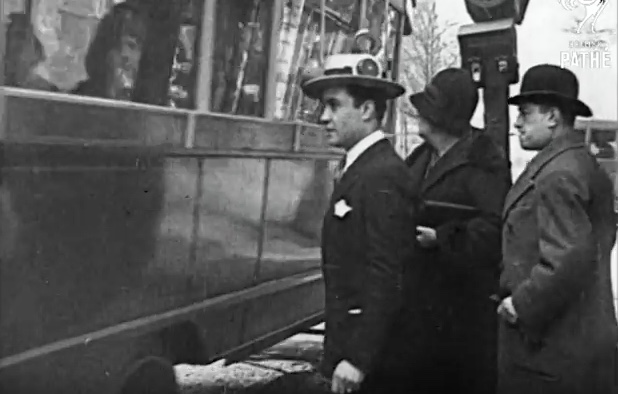
TURNS OUT, LISTENING TO PODCASTS on your morning commute is nothing new. In 1931, the British cinemagazine Pathetone Weekly—which documented odd fashion trends during its run from 1930 to 1941—premiered a new invention: the Radio Hat.

In it, a man waiting for the bus decides to listen to the radio—via his straw hat, from which two large antennas poke out.

As a Pathetone Weekly title card read: “They say there’s nothing new under the sun—this little French idea to while away the bus waits, must surely be!”

According to an August 1930 issue of Modern Mechanix, a Berlin engineer invented the hat, which allowed its wearer to “listen to the Sunday sermon while motoring or playing golf, get the stock market returns at the ball game, or get the benefit of the daily dozen while on the way to work by merely tuning in.”

[Continue reading…]

The video link in the article to a 1930’s British cinemagazine Pathetone Weekly­-which documented odd fashion trends during its run from 1930 to 1941­-shows a fascinating demonstration of the Radio Hat, which was way ahead of its time!

Click here to view on YouTube.

Very cool! Thank you for sharing, Ed. I love how the radio hat is so conspicuous–hey, I’d wear it!

Cold War Broadcasting: Two articles feature RFE & Radio Liberty

Many thanks to SWLing Post contributor, Andrea Borgnino, who shares the following article from the website Journalism Is Not A Crime:

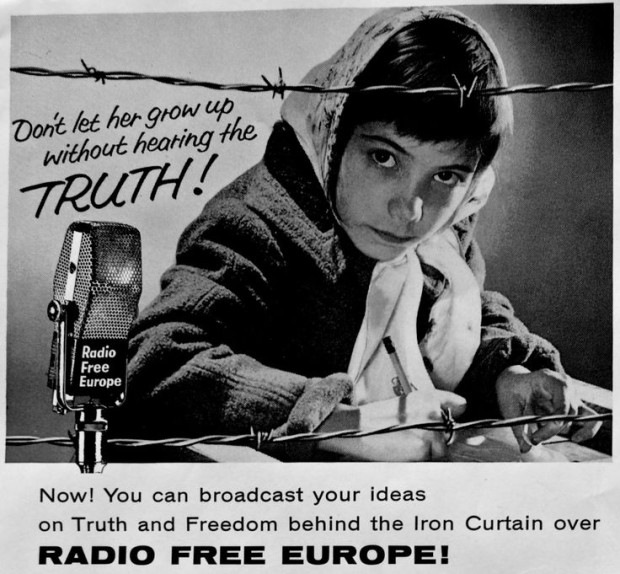
From Propaganda to Journalism: How Radio Free Europe Pierced the Iron Curtain

The end of the Second World War signaled the beginning of an information war in Europe. As the military alliance between the Soviet Union and its main western allies — the United States and Britain — came to an end, the USSR backed small communist parties that asserted ever-tighter control over much of Eastern Europe.

Speaking in Fulton, Missouri in March 1946, former British Prime Minister Winston Churchill warned of an “Iron Curtain” of totalitarian control sealing off half the continent. His speech heralded the beginning of an ideological “cold war” that would last for more than 40 years, a struggle in which citizens of the eastern camp were only meant to hear one side of the argument.

“We talk about the Iron Curtain as a physical barrier, but it was also an information curtain,” says A. Ross Johnson, a former director of Radio Free Europe and author of a history of RFE and its companion station, Radio Liberty, which broadcast into the Soviet Union. “All the communist regimes saw control of information as a key to their rule.”

Continue reading…

An SWLing Post contributor also recently shared the following PDF article by A. Ross Johnson for the Wilson Center. Here’s the summary:

To Monitor and be Monitored– Radio Free Europe and Radio Liberty during the Cold War

Monitoring of Soviet bloc radios was an important input to Radio Free and Radio Liberty broadcasts during the Cold War. RFE and RL also monitored the official print media and interviewed refugees and travelers. Soviet bloc officials in turn monitored RFE, RL, and other Western broadcasts (while jamming their transmissions) to inform themselves and to counter what they viewed as “ideological subversion.” On both sides, monitoring informed media policy.

RFE and RL monitored their radio audiences through listener letters and extensive travel
surveys, while the Communist authorities monitored those audiences through secret police
informants and secret internal polling. Both approaches were second-best efforts at survey
research but in retrospect provided reasonably accurate indicators of the audience for RFE, RL, and other Western broadcasters.

Click here to download the full Wilson Center article as a PDF.

If you’re interested in Cold War broadcasting, I would also encourage you to check out Richard Cummings’ blog, Cold War Radio Vignettes.

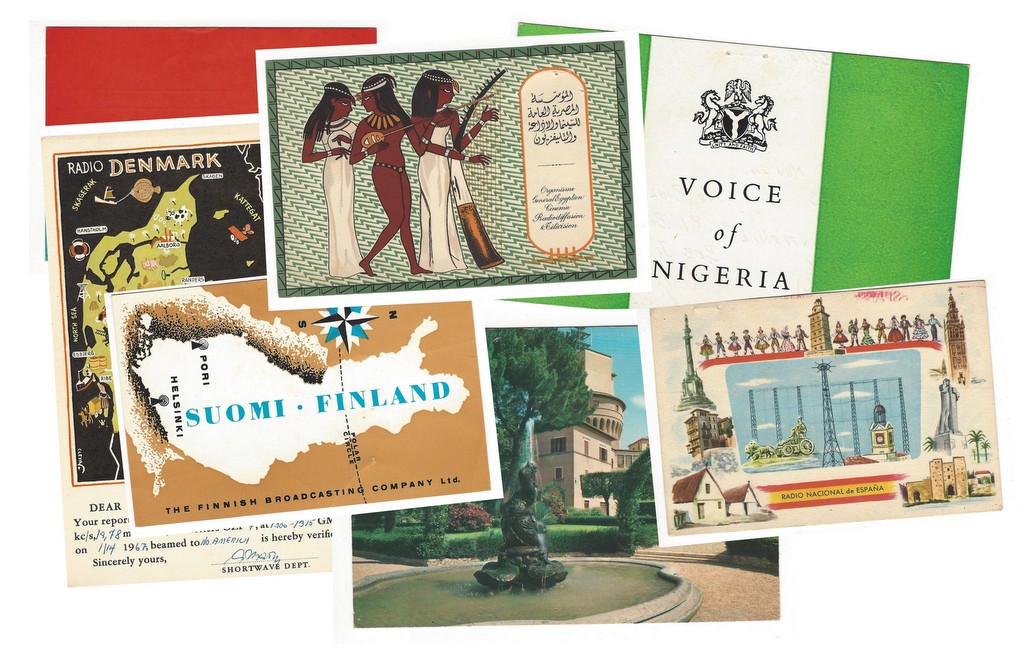
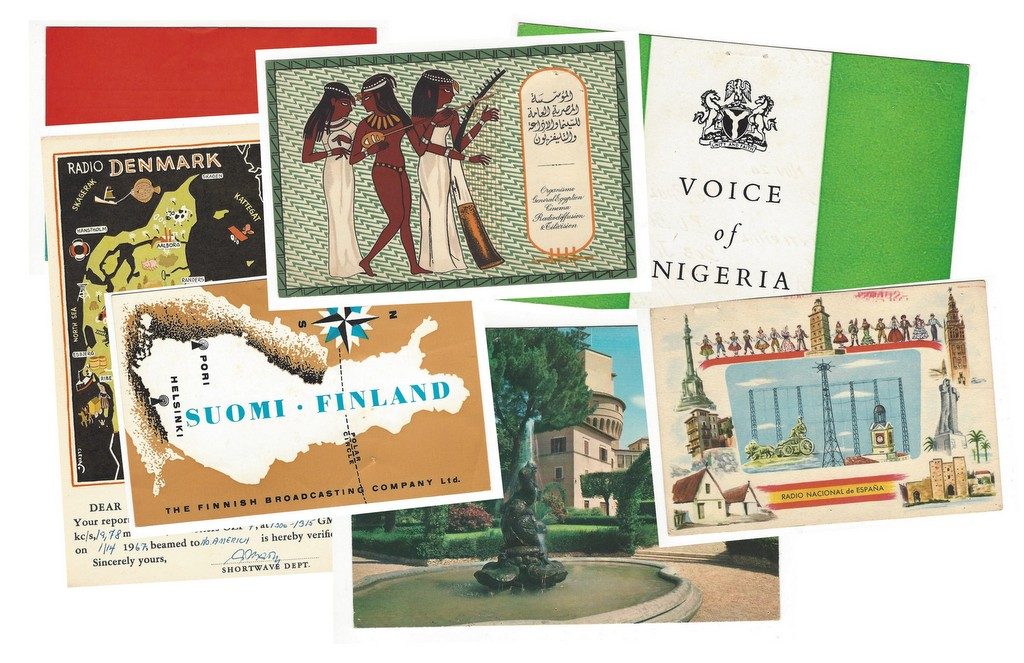
How to safely archive QSLs, postcards, photos, and printed memorabilia

Recently, an SWLing Post reader asked this simple question:

“If you were me, would you laminate a super-rare QSL card?”

The short answer–?  Please don’t!

Never laminate a QSL card, photo, page or postcard

You should never apply heat-seal or adhesive (cold) seal lamination to a QSL card or any other paper memorabilia if your ultimate goal is to protect and archive it.

Why?  Doesn’t lamination, for example, make your card impervious to moisture (and spilled coffee)?  Sort of.  So that makes it safe for the long term, doesn’t it? Well…not exactly.

These forms of lamination, over time, basically destroy printed media. In the short term, laminating your cards can look great, and will keep some of the coffee off (though it may still seep in the sides); in the long term, however, the (petroleum-based) plastic can “off gas,” causing a detrimental chemical reaction with the media it attempts to protect.  Plastic can also be acidic.  Coupled with the lamination heat (or the adhesive, in the case of cold-seal lamination) these processes can actually speed up the aging process “causing progressive deterioration and eventual embrittlement,” according to one archiving source.

I feel fairly passionate about this because, during my undergraduate studies, I worked for my university archives department where I was taught (by an excellent and knowledgeable archivist) to handle, document, index, and preserve sensitive documents, books, photos, cards, slides and other forms of media (known in the trade as “ephemera”).  Many times, we’d receive important documents or photos from donors who had laminated them, believing they were archiving these items for future generations. Alas, we saw the results of the lamination damage first-hand:  decades-old items that had been heat-laminated were separating and clouding up, often tearing apart the item inside. Our head archivist likened laminating to a self-destruct mechanism.

Take away? Lamination is a very bad idea for the long-term protection of any print media.

How to archive a QSL card––or any document, for that matter
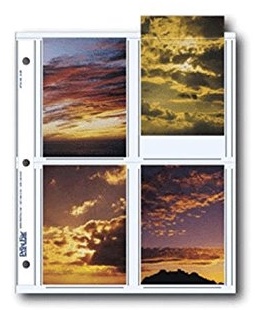
Archival sleeves come in all forms. This one holds four cards and fits in a three ring binder.

Fortunately, there are effective (and fairly affordable) ways to properly archive and organize your QSL card collection, as well as other sentimental and/or valuable ephemera.

Look for archival transparent sleeves supplied to libraries. These are generally made of polyethylene, mylar/polyester, or another transparent archival material that passes the Photographic Activity Test (PAT).

In short: If you find an archival sleeve, from a reputable seller that passes the P.A.T. test, you’ll know it’s safe.

Archival products are acid-free, lignan-free, and chemical softener-free, thus should not interact or bind with the media you’re preserving as non-acid-free items are prone to do. With anything I wish to archive, I go with archival quality all the way.

For example, I make sure not only the clear sleeves or pages are archival, but that the binder or box containing the items are acid-free and of archival quality, as well. Any labels I use are archival, as well . That may seem like overkill to many, but it’s just what an archivist would do!

Storage of the media is also important; you don’t want to put your cards in archival sleeves and then leave them in a damp shed or shack where moisture can become trapped between your card and the encapsulating archival sleeve; mold could still develop.  So a dry, somewhat temperature-controlled environment is key.  Generally speaking, keeping ephemera indoors where you live may be a better option.

Sources of Archival Materials
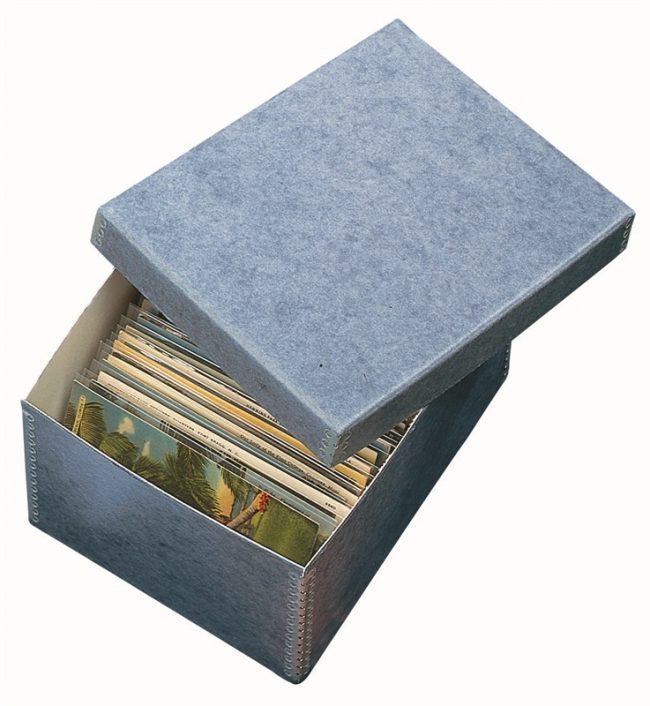
A simple acid-free box can store hundreds of QSL cards in archival sleeves sleeves.

Archival products are more expensive than standard office products, but they’re worth it. Make sure you’re purchasing the best quality you can afford. Two of my favorite suppliers are Gaylord Archival and Light Impressions, though there are many other reputable ones out there.

Amazon and eBay offer sources of archival quality products, as well, and pricing can be more competitive than either of the retailers I’ve listed above.

As for myself,  I only buy archival products from retailers that specialize in them. Both Light Impressions and Gaylord Archival have helpful staff you can call on the phone. They’ll help you find the best material for the preservation of your collection of QSL cards or whatever else you may want to protect.

I’d rather support Light Impressions with my purchase knowing that their standards are strict and their reputation rides on their products meeting strict archival standards. If you’re going to pay for something to protect your memorabilia, I say, go for quality!

And in the meantime…give the heat lamination a miss.

Good luck with your long-term archiving!  And don’t forget to share those rare QSL cards with us here.