Category Archives: Recordings

Shortwave Radio Recording: beHAVior Night via WBCQ

RadioListeniningFor your listening pleasure: beHAVior Night, a shortwave radio show (relayed by WBCQ) dedicated to showcasing music from the first four decades of the 20th Century.

This show was recorded on 7,490 kHz, starting at 22:00 UTC on February 13, 2015.

Click here to download the recording, or simply listen via the embedded player below:

Reader Survey: Comparing the Tecsun PL-660 and PL-680 on AM shortwave

Tecsun-PL-680

[Update: Please note that this survey has been closed, but the audio samples–labeled Radio A and Radio B–will remain to allow others the opportunity to make an evaluation prior to reading the PL-680 review.]

[Update 2: The PL-680 review and readers’ survey results have now been posted! Check it out here.]

I’ve been spending a little time with my new Tecsun PL-680 today, and it’s been most interesting. Of course, I’ve already begun to form a few opinions about the radio and am taking notes. Yet I never believe a shortwave radio can be judged in one sitting; there are simply too many variables to account for, such as minute changes in propagation, fading, local radio interference, all of which can have a temporary effect on performance. It’s better to judge a radio after having used it over the course of at least a week or so, in diverse reception conditions.

Still, as I tuned the PL-680, I was already wondering how it compared with its predecessor, the PL-660–? And since I’ve received at least ten emails from readers curious about the same thing, I thought I might start a series of blind audio tests in order to let our readers decide for themselves.

So…ready for some fun?

TecsunPL680andPL660

Below, I’ve embedded eight recordings comparing the PL-660 and PL-680 on shortwave. All of these are recordings of broadcast stations, no SSB yet (I simply didn’t have the time today).

To participate, just listen, then fill out the form that follows with your choice of “Best Radio” for each broadcast. But do note the following:

  1. I’ve attempted to set the audio levels equally on both radios. Iused the broadcast in the first recording to set the audio levels; they remain at this level for the remainder of the recordings. Nonetheless, you’ll note that one of the radios seems to have lower audio on a couple of the higher-band recordings; this is not due to any change in the incoming volume nor adjustments to the audio levels.
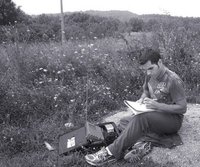
  2. As seen in the photo above, I used a Zoom H2N digital recorder to make these recordings on the tailgate of my truck.  Any time you hook a digital recorder up to a radio on the medium wave or shortwave bands, you most likely will inject a little noise. When I listened to each radio without the recorder in-line, I determined that the Zoom injected very little audible noise.
  3. The assignment of “Radio A” and “Radio B” was chosen by a coin toss–so pretty much at random!
  4. I included two recordings of WWV on 25 MHz. This is because the reception conditions from WWV change in a a matter of minutes, which would provide recording variation. I thought it would be best to include two such recordings.
  5. Both radios have the gain set to “DX” and bandwidth set to wide. None of these recordings employ synchronous detection. The telescopic antenna was fully extended on both units. Additionally, both radios had the tone control set to “bass.”
  6. No less relevant: it was 32F/OC with strong wind gusts and blowing snow in my face when I made these recordings. But I knew our readers would understand (and likely appreciate) this dedication to the absorbing art of  SWLing…just as I appreciate your participation in judging this head-to-head radio showdown!

Audio Samples

9,395 kHz – Radio Prague via Global 24 (strong signal example)

Radio A

Radio B

25,000 kHz – WWV Fort Collins, CO

Radio A – 1st recording

Radio B – 1st recording

Radio A – 2nd recording

Radio B – 2nd recording

17,620 kHz – Radio France International (weak signal example)

Radio A

Radio B


Submit your response

Click here to use our response form to vote on your favorites, or simply use the form embedded below:

Shortwave Radio Recordings: Detecting Radio Guyana/Voice of Guyana

GuyanaMap-SAMYesterday I learned that Voice of Guyana (a.k.a. Radio Guyana) is back on the shortwaves after being off-air for many years. Evidently, the station repaired some of its transmitters and antennas with the assistance of station supporter and technician Jamie Labadia. At this point the station is only capable of a 1,000 watt AM signal.

To be clear, 1 kW AM is not an easy catch for most of us in North America unless propagation is in our favor.

Last night while testing a new military-grade SDR (the Enablia TitanSDR) that I’m reviewing, I decided that Voice of Guyana might make for a good weak-signal test.

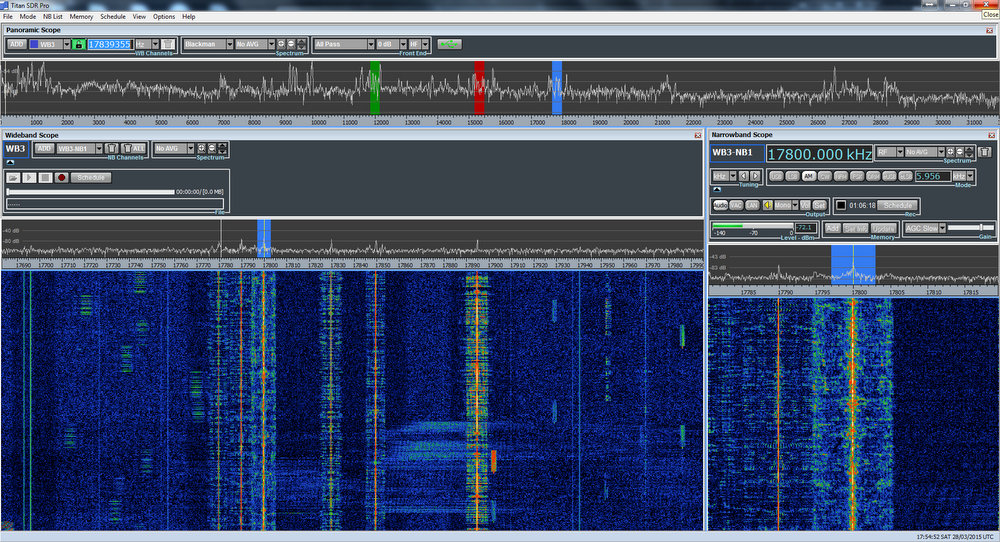
And so, last night at 21:00 EST (02:00 UTC) I tuned the TitanSDR to 3,290 kHz; I could see a faint carrier on frequency, but the audio was lost in the noise. I could detect talking and music, but I couldn’t base an ID from it. I set the TitanSDR to record a wideband chunk of spectrum throughout the night.  This morning, I played the spectrum recording and found that the signal was at its best around 0945 UTC.

TitanSDR-RadioGuyana-3290kHz

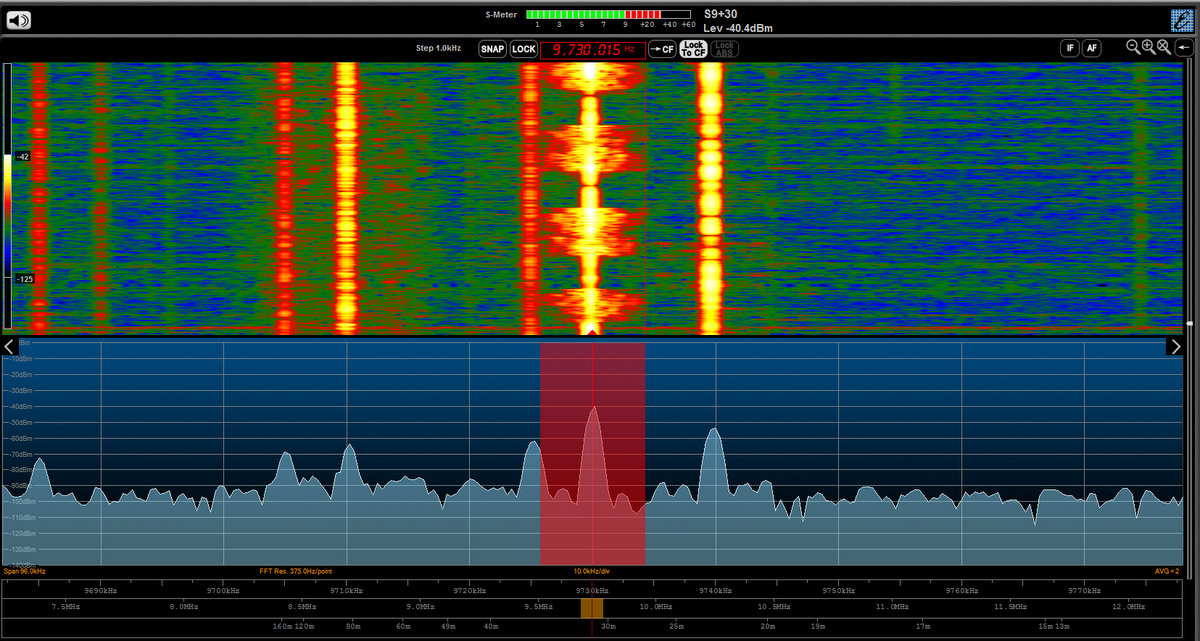
Above you can see Radio Guyana’s AM signal on the TitanSDR narrowband spectrum display (click to enlarge). While still quite weak, I could make out station IDs and music quite easily. It was wonderful to hear Voice of Guyana on the air again!

Note: the TitanSDR was exceptional at pulling the audio out of the static. More about this SDR to come…

Here’s a 27 minute recording I made with the TitanSDR, using its eUSB mode (ECSS), beginning around 0945 UTC:

Shortwave Radio Recordings: Radio Österreich International

Rotating high performance directional antenna of the ORF (Image: "Drehbare Hochleistungsrichtantenne ORF Moosbrunn“ von Daniel Csiky - selbst fotografiert. Lizenziert unter Bild-frei über Wikipedia - http://de.wikipedia.org/wiki/Datei:Drehbare_Hochleistungsrichtantenne_ORF_Moosbrunn.JPG#mediaviewer/File:Drehbare_Hochleistungsrichtantenne_ORF_Moosbrunn.JPG

Rotating high performance directional antenna of the ORF (“Drehbare Hochleistungsrichtantenne ORF Moosbrunn“ von Daniel Csiky)

For your listening pleasure: Radio Österreich International.

This recording was made on 6,155 kHz on January 29, 2015 starting about  05:59 UTC.

Only recently, SWLing Post reader, Eric asked about orchestral music on shortwave–as you’ll hear, Radio Oesterreich International is certainly a good source!

Click here to download the recording as an MP3, or simply listen via the embedded player below. Enjoy:

Shortwave Radio Recordings: Voice of Nigeria

VON-BH front yardFor your listening pleasure: the Voice of Nigeria–recorded on January 28, 2015, starting at 10:00 UTC on 9,690 kHz.

The past few days, the signal out of Ikorodu has been much stronger than normal, so I’ve spent several afternoons listening to the wonderful sounds and music from the Voice of Nigeria.

Click here to download the recording as an MP3, or simply listen via the embedded player below:

Shortwave Radio Recordings: Radio Vilnius 1990-1991

Shortwave Radio Audio Archive contributor, Richard Langley, has digitized another set of historic off-air recordings–this time, documenting the independence of Lithuania through Radio Vilinus.

Many thanks to Richard for the following guest post and archived audio:


Cathedral in Vilnius, seen in 1912 - Source: Public Domain via WikiMedia Commons

Radio Vilnius 1990-1991

On 11 March 1990, Lithuania was the first Soviet republic to declare its independence. The Soviet Union issued an ultimatum to the Lithuanian authorities to renounce independence or suffer the consequences.

On 17 March 1990, Lithuania rejected the demand and the Soviet Union responded by applying economic sanctions and occupied parts of Vilnius, the capital city. In January 1991, the Soviets launched a larger scale operation against Lithuania. On 11 January, Soviet military units seized several building in Vilnius and elsewhere. On 12 January, civilians congregated outside some strategically important buildings such as those of the Supreme Council (the Seimas Palace), the Radio and Television Committee, the Vilnius TV Tower, and the main telephone exchange in an attempt to prevent them from falling into the hands of the Soviet military. In the early hours of 13 January, tanks and soldiers attacked the TV tower. Fourteen Lithuanians and one Russian soldier died.

Subsequently, Soviet forces surrounded and entered the Radio and Television Committee building and forced the TV station off the air. Shortly thereafter, a small TV studio in Kaunas was used to resume TV transmissions and put out a call for help. Radio transmissions were also affected. Although Soviet forces were in the vicinity of the Supreme Council building, they retreated instead of attacking. The occupation and military raids continued for several months following the attacks.

Lithuania-FlagSubsequent Lithuanian-Russian negotiations resulted in the signing of a treaty on 31 January. A referendum on independence held on 9 February overwhelmingly supported the full and total independence of Lithuania. Other republics of the Soviet Union declared their independence and following the resignation speech by Mikhail Gorbachev on 25 December, the Soviet Union was dissolved the next day. The last Russian troops left Lithuania on 31 August 1993.

Radio Vilnius, the external service of Lithuanian Radio, transmitted news about events in Lithuania and the other Baltic republics even at the height of the Soviet attacks. The broadcasts were made, in part, using transmitters elsewhere in the Soviet Union. However, there was a temporary interruption in these broadcasts after the occupation of the Radio and TV Centre by Soviet troops early in the morning of 13 January. They resumed on 25 January.

Radio Nederland’s “Media Network” programs of 20 January 1991 and 14 January 1992 featured reports on Radio Vilnius and the Soviet occupation. The sound files of these programs are available on the Web (“Media Network Vintage Vault“).

I have six recordings of Radio Vilnius English Service shortwave broadcasts between March 1990 and January 1991. These were received in Hanwell, New Brunswick, Canada, using a Sony ICF-7600D receiver and supplied wire antenna draped around the listening room.

Recording 1 (30 minutes):

28 March 1990, 22:00 UTC, 11770 kHz (00m:00s – 00m:55s)

Strong signal. Interval signal (IS) and station identification (ID) but the transmission was cut off in mid-sentence: “This is Radio Vilnius. Hello and welcome to our daily broad” All that could be heard faintly on this frequency then was Radio Liberty in Russian (“Govorit Radio Svoboda”). Initially could hear nothing on Radio Vilnius parallel frequencies until about four minutes into the broadcast when a very faint signal on 12060 kHz could be heard (not recorded).

29 March 1990, 22:00 UTC, 12060 kHz (00m:55s – 02m:04s)

Weak signal. IS, station identification, and first part of “News About Lithuania.” Radio teletype interference. Checked other frequencies.

3 April 1990, 22:00 UTC, 17665 kHz (02m:06s – 30m:02s)

Improved signal. Receiver briefly switched to other frequencies to check quality during the recording. IS, ID, “News About Lithuania,” report on the occupation of the Lithuanian Prosecutor’s Office on Friday night (30 March), music, sports news, “Lithuanian by Radio.”

Recording 2 (45 minutes):


9 April 1990, 22:00 UTC, 11770 kHz

Strong signal. Some co-channel interference from Radio Liberty. Receiver briefly switched initially to other frequencies to check signal quality during the recording. IS, ID, “News About Lithuania,” report about the Lithuanian Mission in Moscow, “Around Lithuania,” program in Esperanto (begins around 23m:08s) — a regular feature at the end of Monday broadcasts from Radio Vilnius in English. Interesting sign-off statement: “It’s goodbye and good luck.” On the recording, the Radio Vilnius transmission is followed at 29m:29s (on the same frequency), by the first approximately 15 minutes of a transmission from pro-Moscow Radio Minsk in Belorussian (now usually referred to as Belarusian). The transmission begins with the IS and ID (“Havorits Minsk … Radyjostancyja Saviecki Bielaru?”), followed by a news program.

Recording 3 (32 minutes):


11 January 1991, 23:00 UTC, 7400 kHz

Strong signal. Recording actually starts at about 22:58 UTC with music, the tail-end of a transmission on this frequency, likely from Radio Kiev. Some transmitter hum. Then, Radio Vilnius IS and ID. “We’re still hold up and we hope you can still hear us.” “News About Lithuania” including occupation news, commentary, and reports from the neighbouring Baltic states. Receiver briefly switched to other usual frequencies to check on signal quality (9750, 15180, 17690, and 17720 kHz; 6100 kHz not heard). Transmission ends with “And that’s all we have for our today’s broadcast, we hope not the last one, from Radio Vilnius in the Republic of Lithuania.” This is followed by the transmission schedule and contact information. After about 45 seconds, the Radio Minsk transmission begins with IS and ID.

Recording 4 (45 minutes):


12 January 1991, 23:00 UTC, 9750 kHz

Strong signal. Initial mix-up of interval signals. The first IS is believed to be that of Moskovskaya Radio, the Russian Service of Radio Moscow, followed by a bit of the Radio Moscow World Service IS, and then finally the Radio Vilnius IS. The transmission begins with the statement “We’re still broadcasting from Vilnius.” This is followed by the Lithuanian news reporting on the acts of aggression of the Soviet occupying forces and “Correspondents’ Reports.” The latter includes a report that the exam session at Vilnius University has been postponed to allow students to help protect buildings from the occupation forces, including the Radio and Television Building, and a report on the restrictions on travel. The reports were interrupted with “some news just come in” about a group trying to break into the building of the Council of Ministers. The announcer subsequently reported that the attackers had been put off and so the conflict has been neutralized. The broadcast ends with the statement “We hope to be with you tomorrow again” followed by the transmission schedule and contact information. The Radio Vilnius transmission is followed by the one from Radio Minsk. News organizations reported that Soviet troops entered the Radio and Television Building about 15 minutes after this Radio Vilnius transmission.

Recording 5 (29 minutes):


13 January 1991, 23:00 UTC, 9750 kHz

Strong signal on this and other frequencies usually received except 17690 kHz; only background noise on that frequency. However, there was no Radio Vilnius transmission on any frequency. It had been replaced by light classical and contemporary orchestral music. No IS or announcement of any kind. Music was faded out at 29m:03s before ending. During the recording, the receiver was briefly tuned to other Radio Vilnius frequencies to check on signal quality.

Recording 6 (29 minutes):


30 January 1991, 23:00 UTC, 7400 kHz

Strong signal. The recording begins with a few seconds of music from the previous transmission on this frequency. Then, after about one minute (there was no IS), the Radio Vilnius transmission starts with the beginning of the patriotic song “Lietuvninkai Mes Esam Gim?” (Lithuanians We Are Born) and an introduction stating that the broadcast is coming “from the capital of the independent Republic of Lithuania.” This is followed by “News About Lithuania” including items on further acts of violence by Soviet troops and severe winter weather. Then, there are reports on Lithuanian-Polish relations and the work of the commission on Soviet aggression. Next is an eye-witness report on the attack on the TV tower on the night of 13 January, a report on the current feelings of Lithuanians under occupation, and how music and the arts keep the people going. During the recording, the receiver was briefly tuned to other Radio Vilnius frequencies to check on signal quality. In addition to 7400 kHz, only 9750 and 17690 kHz could be heard.


Richard: Thank you so kindly for sharing these amazing off-air recordings.

Click here to listen to other recordings by Richard Langley.

Shortwave Radio Recordings: Radio Slovakia

RadioSlavakia

For your listening pleasure: the English language service of Radio Slovakia–recorded on January 23, 2015 at 1230 UTC on 9,955 kHz.

This broadcast of Radio Slovakia comes by way of the World Radio Network and is relayed by Radio Miami International (WRMI).

Click here to download the recording as an MP3, or simply listen via the embedded player below: