Many thanks to SWLing Post contributor Terry (N5RTC), who shares the following schedules for Texas Radio Shortwave (click image to enlarge):
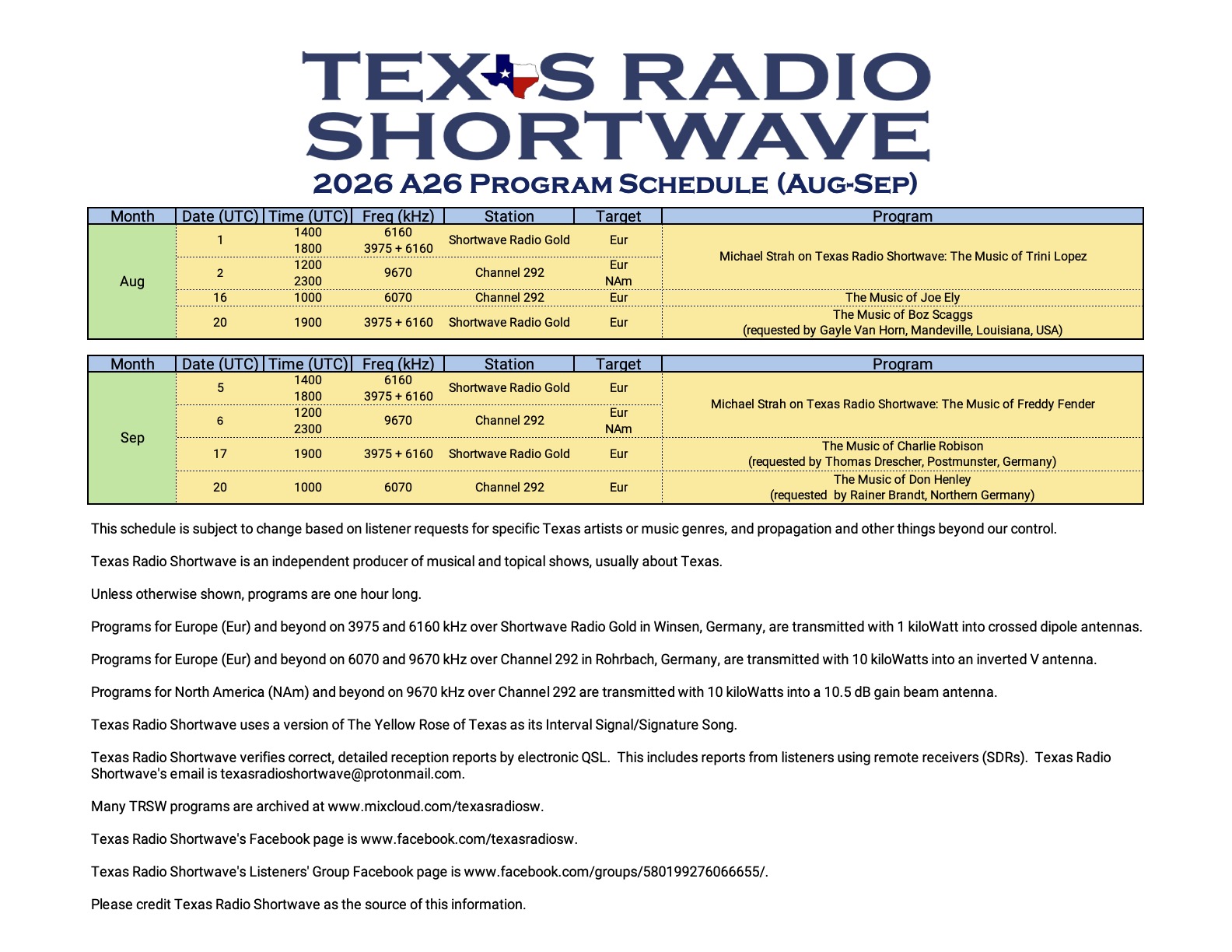
Many thanks to SWLing Post contributor Terry (N5RTC), who shares the following schedules for Texas Radio Shortwave (click image to enlarge):
Hi to all SWLing Post community. Here’s the Imaginary Stations schedule for this week’s summertime listening.
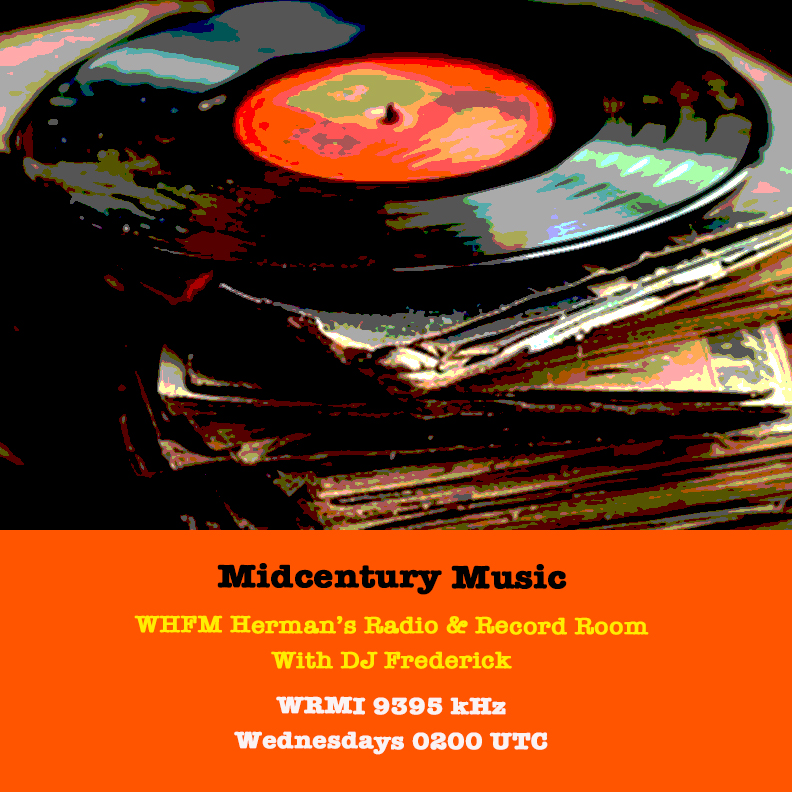
On Wednesday 22nd July 2026, at 0200 hrs UTC on 9395 kHz on WRMI we have WHFM – Herman’s Radio and Record Room. This is another show in a series of programmes by DJ Frederick Moe in memory of his father Herman (1919-2001) and features mid-century sounds including country, jazz, folk and easy listening.
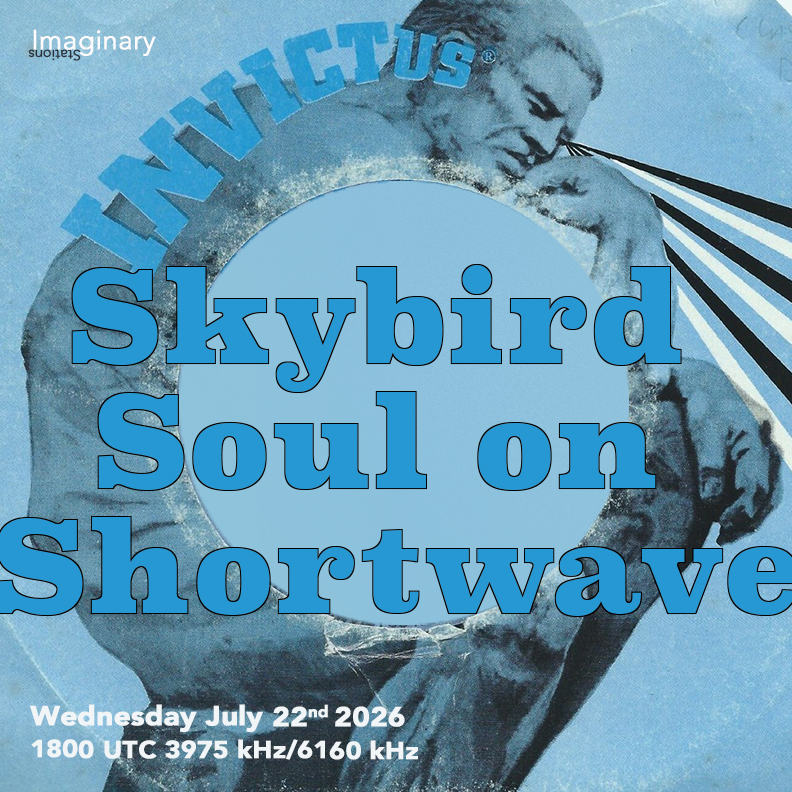
Later, that day at 2000 hrs UTC on 3975 kHz/6160 kHz via Shortwave Gold, we bring you a Skybird Special called Soul on Shortwave. Expect the best in soul and soul related tunes bounced off the ionosphere on a Wednesday night from DJ Frederick and One Deck Pete.
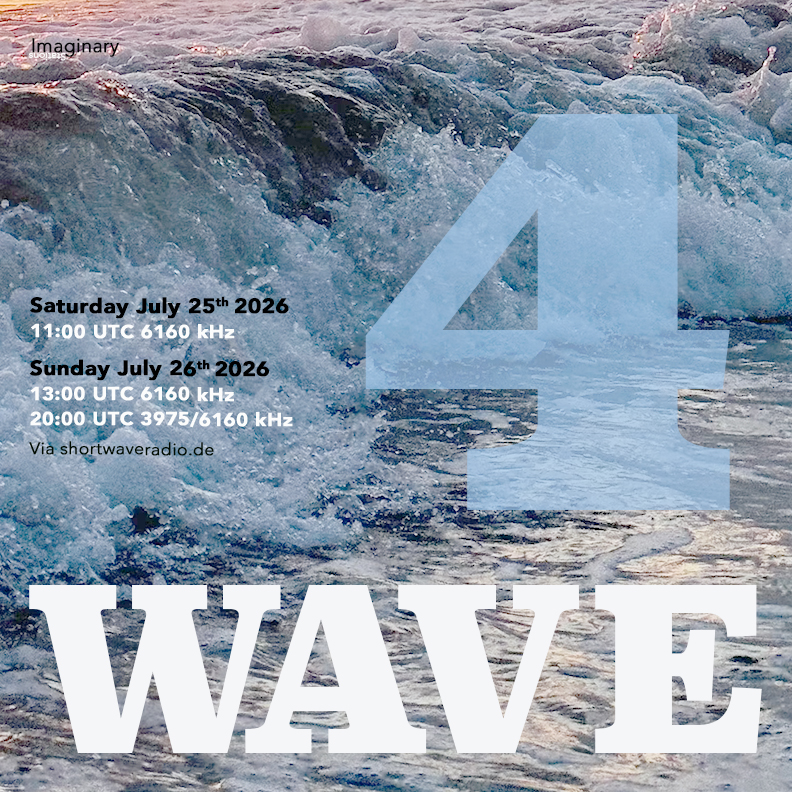
While on Saturday 25th July at 1100 hrs UTC on 6160 kHz and then again on Sunday 26th July at 1300 hrs UTC on 6160 kHz and 2000 hrs UTC on 3975 kHz/6160 kHz, we have the last episode of the show called Wave. Expect chilled out tunes, sunshine sounds and if all to plan the shortwave debut of the band Sandy Beeches depending on tide tables and the weather of course. Thanks to all our listeners for tuning into the Shortwave Gold and WRMI broadcasts, we at Imaginary Stations appreciate it!
For more information on all our shows, please write to us at [email protected] and check out our old shows at our Mixcloud page here.
FastRadioBurst23
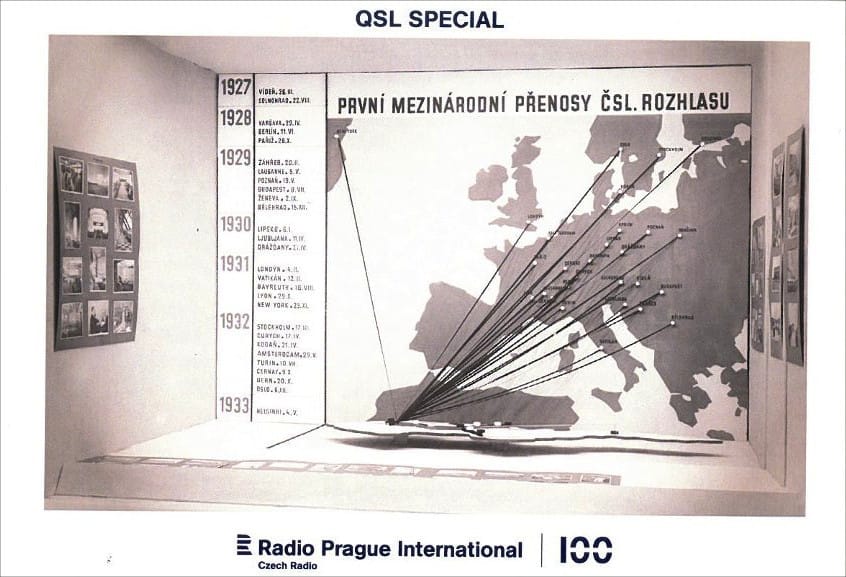 Many thanks to SWLing Post contributor David Iurescia for sharing the first installment of a fascinating look at how Radio Prague became a powerful weapon against Nazi propaganda in the years leading up to World War II.
You can read the full article here, and/or listen to the Radio Prague Episode below:

Hi to all SWLing Post community. Here’s what Imaginary Stations will be bringing to the shortwaves this week.
On Wednesday 15th July 2026, at 0200 hrs UTC on 9395 kHz on WRMI we have WHFM – Herman’s Radio and Record Room. This is another show in a series of programmes by DJ Frederick Moe in memory of his father Herman (1919-2001) and features mid-century sounds including country, jazz, folk and easy listening.

Later, that day at 2000 hrs UTC on 3975 kHz/6160 kHz via Shortwave Gold, we bring you the repeat of Skybird Jams from last week. The show is entitled “Music to increase your attention span” with DJ Frederick and mixes from Justin Patrick Moore and One Deck Pete. In other words, they’ll be extended tunes (we’re talking over 7 minutes here) and ‘jam bands’ on your shortwave dial on a Wednesday evening. Tune in and enjoy the sound of even more Skybird Jams.

While on Saturday 18th July at 1100 hrs UTC on 6160 kHz and then again on Sunday 19th July at 1300 hrs UTC on 6160 kHz and 2000 hrs UTC on 3975 kHz/6160 kHz, we have another episode of the show called Wave. This show is an antidote to the other wave we’re experiencing here at the the moment (the heatwave!) so expect chilled out tunes, sounds from the shade, cool breeze classics and stone cold anthems! Tune in and let the radio lower the temperature a good few degrees at your location.
For more information on all our shows, please write to us at [email protected] and check out our old shows at our Mixcloud page here.
FastRadioBurst23
Many thanks to SWLing Post contributor and noted political cartoonist Carlos Latuff, who shares the following illustrated radio listening report.
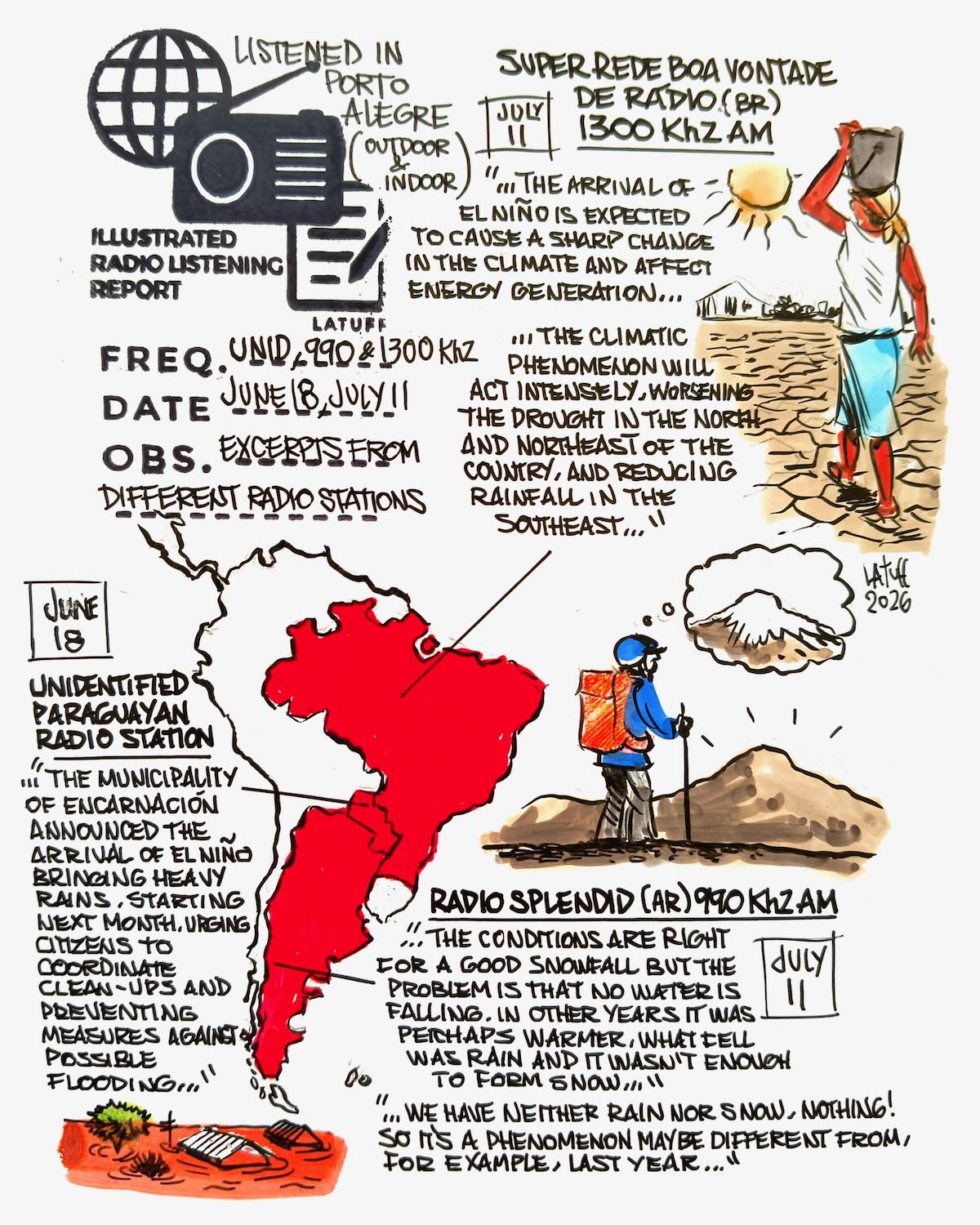
Carlos notes:
Climate change El Niño via UNID/Paraguay, Radio Splendid/Argentina & Super Rede Boa Vontade/Brazil
Many thanks to SWLing Post contributor and noted political cartoonist Carlos Latuff, who shares the following illustrated radio listening report.

Carlos notes:
Climate cataclysms via CGTN (China), BBC (UK) and Rádio Nacional de España (Spain)
News reports from around the world already confirm the intensification of weather events driven by climate change and the already-announced arrival of the (super) El Niño. These radio monitoring sessions were conducted in Porto Alegre using two receivers: the Xhdata D808 and the Ecopower EP-F23B.
 by Dan Greenall
Before the days of the internet and e-mail, the most common way for the listener to contact a radio station was to mail them a letter. This would include requests for a QSL card or letter, which would “officially” verify that reception took place and the details heard were accurate.
 Waiting for a reply was part of the SWL experience. A few weeks would go by, sometimes months, and the anticipation would build. I would arrive home from school or work each day in hopes of finding an envelope bearing exotic-looking stamps from halfway around the globe in my mailbox. This was the ultimate reward! Although I didn’t realize it at the time, many of these QSL’s would one day bear historical significance.
 Today, I have to admit, much of that magic is gone. With the advent of online streaming and the availability of remote SDR’s, broadcasters are understandably less enthusiastic about receiving a report from a distant listener. Though I have one or two email QSL’s, I have not mailed out a reception report since 1999.
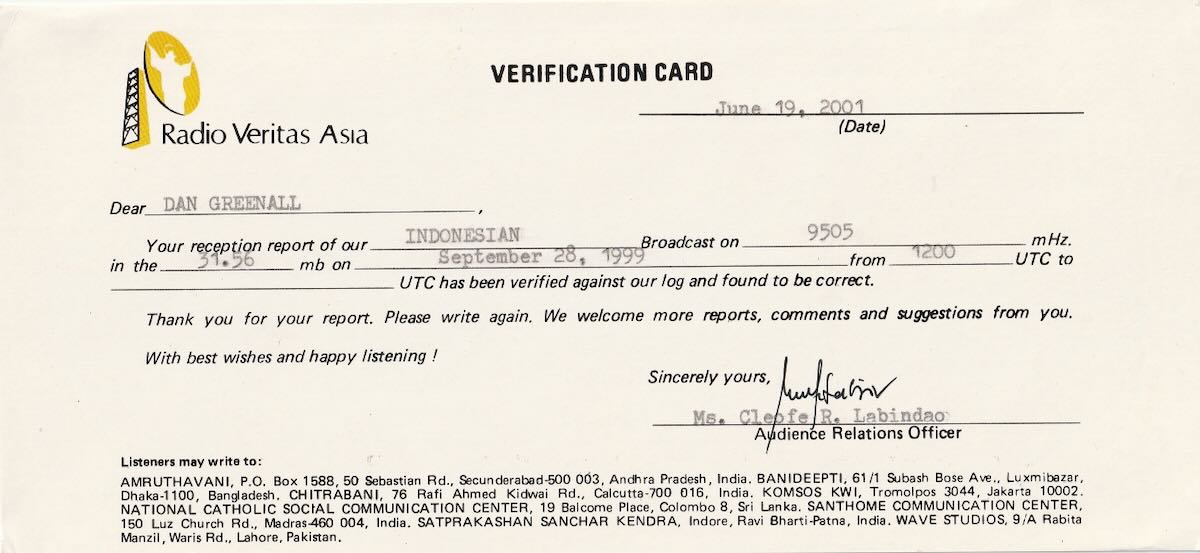 It was to Radio Veritas Asia in the Philippines, and their card finally arrived in 2001.
Some of my favorites were personal replies from a staff member at the station.
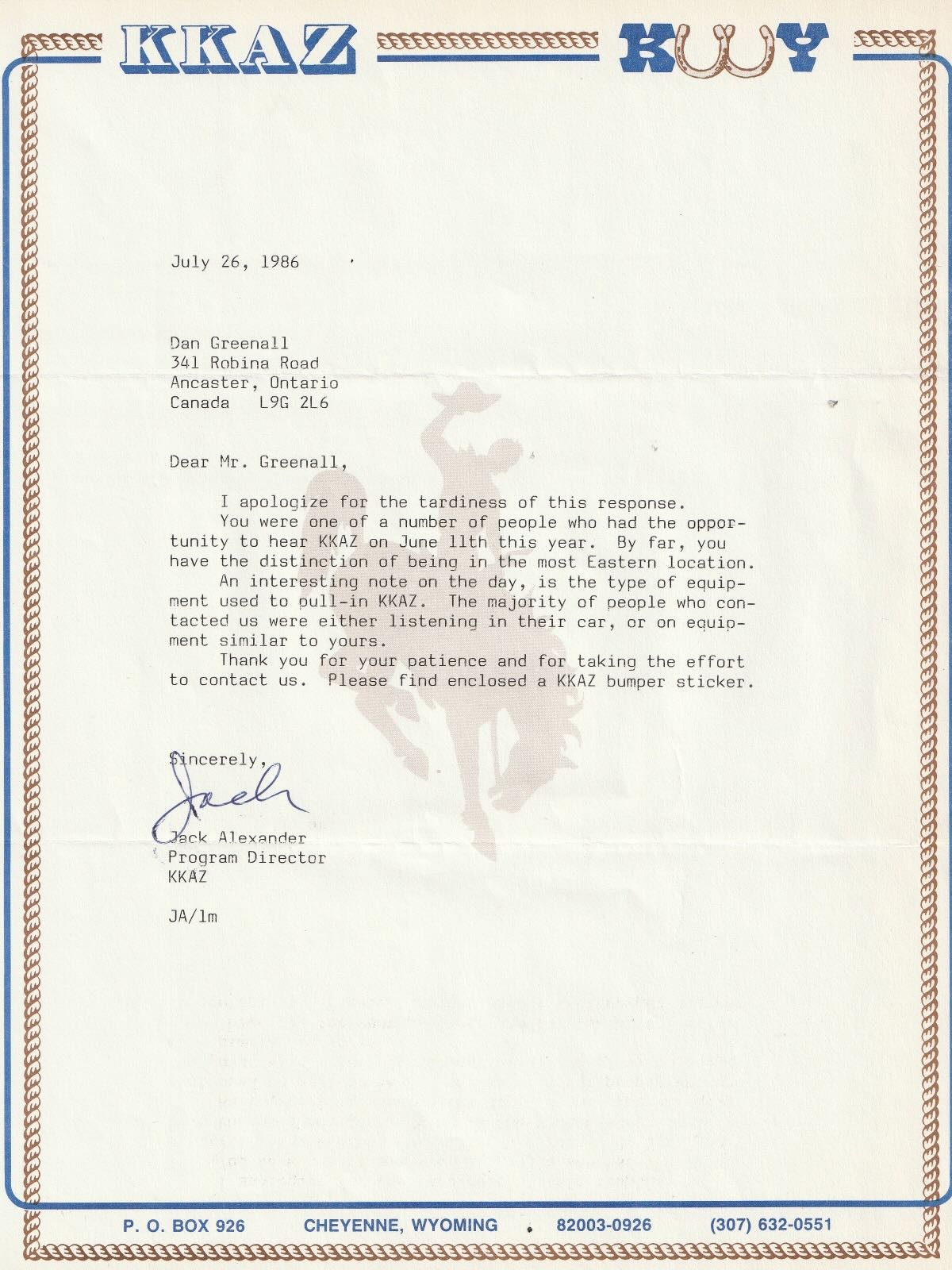
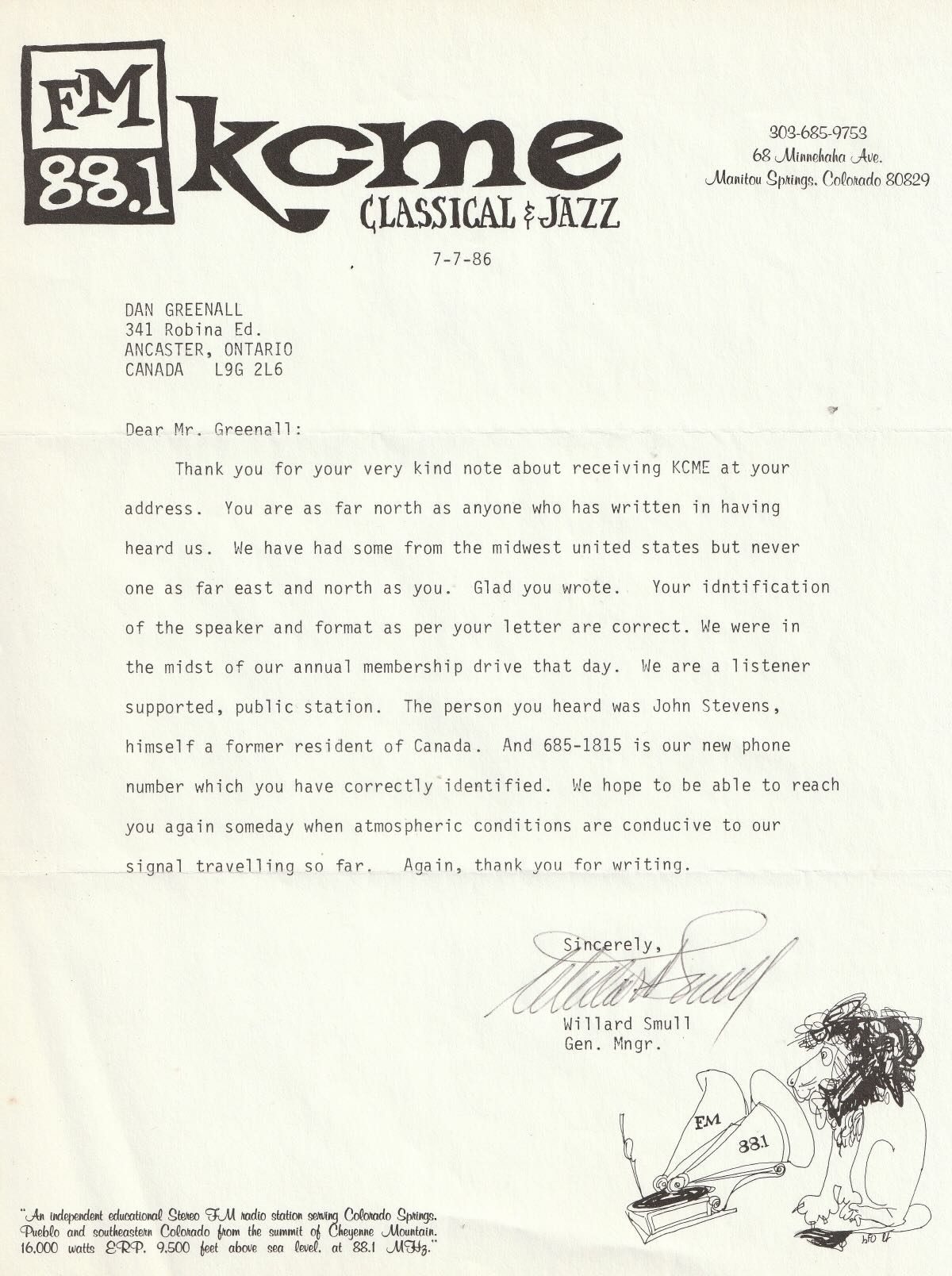
Examples are these 1986 letters received from FM stations KKAZ in Cheyenne, Wyoming, and KCME, Manitou Springs, Colorado, informing me that I was their most distant listener on the date of reception.
As well, B. Rudolph Paulus, the station manager at a low-powered maritime station in Rabaul, Papua New Guinea, typed out a long friendly letter and even included eight colour photographs of the station, equipment, and staff members.
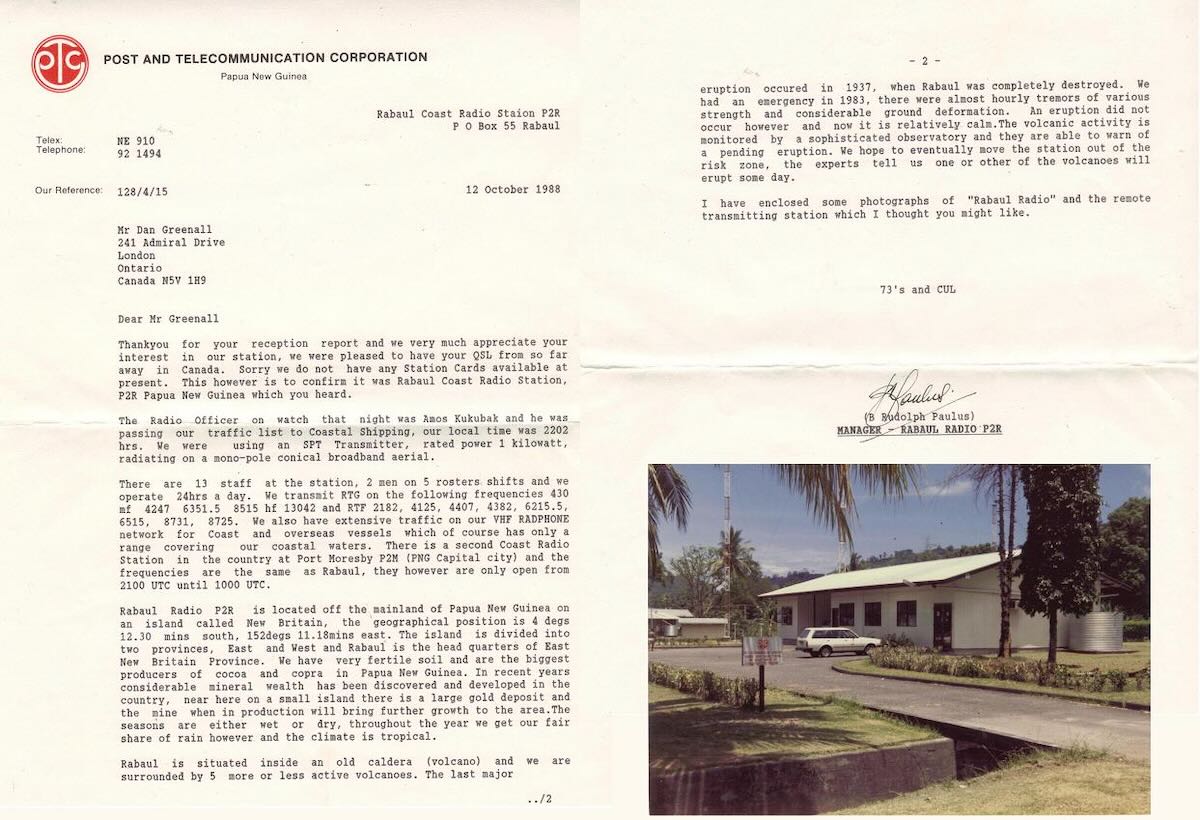 That was in 1988. Six years later, Rabaul suffered from a devastating volcanic eruption, and the fate of the station is unknown.
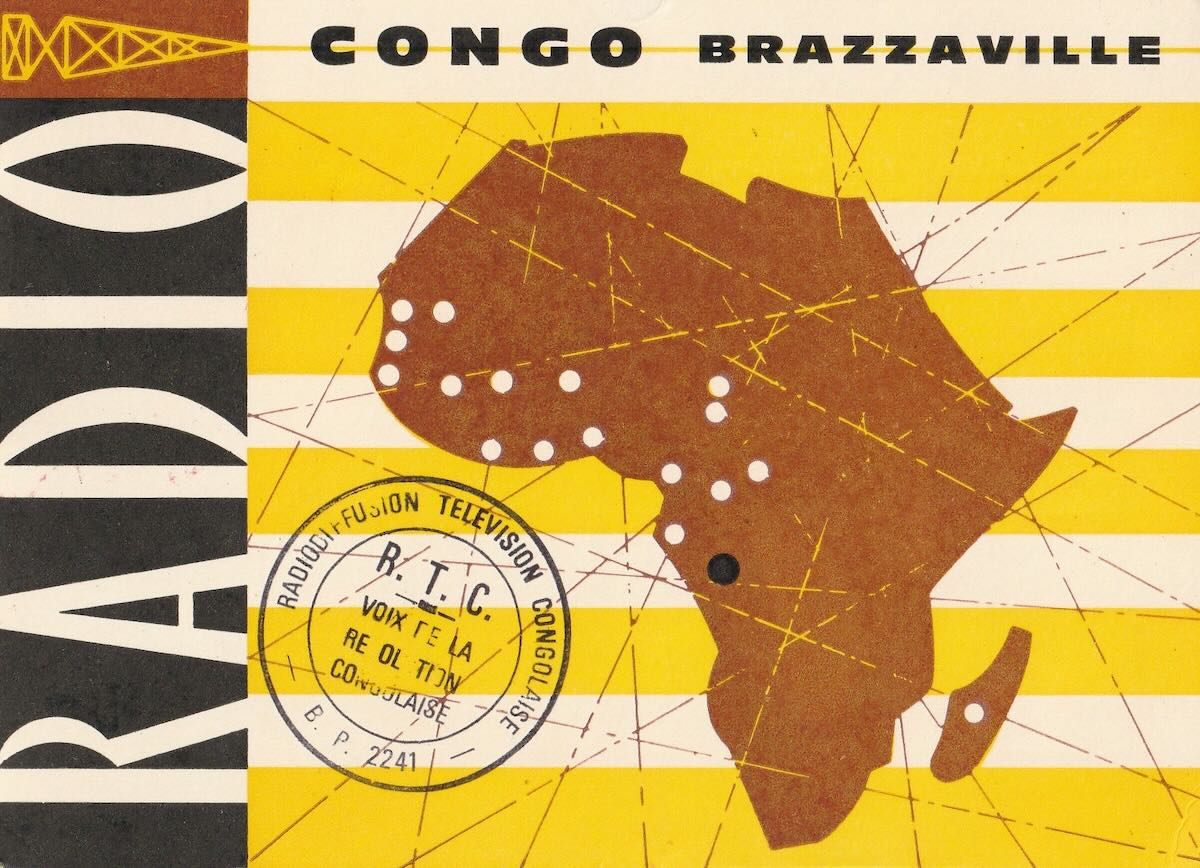
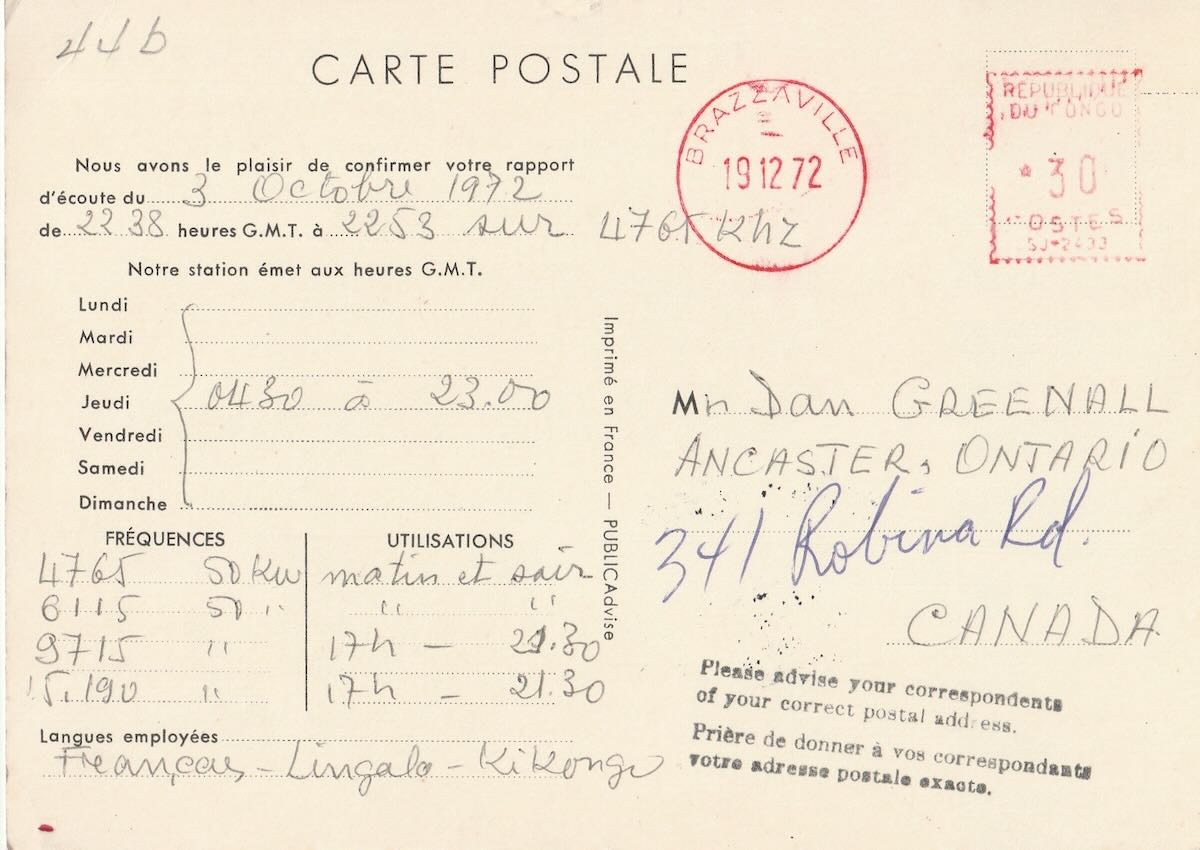
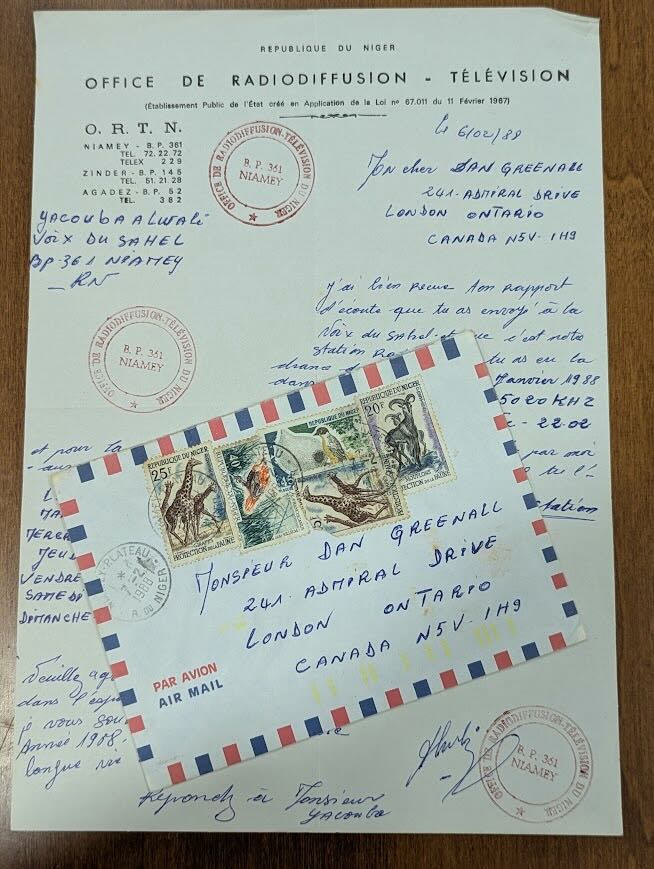
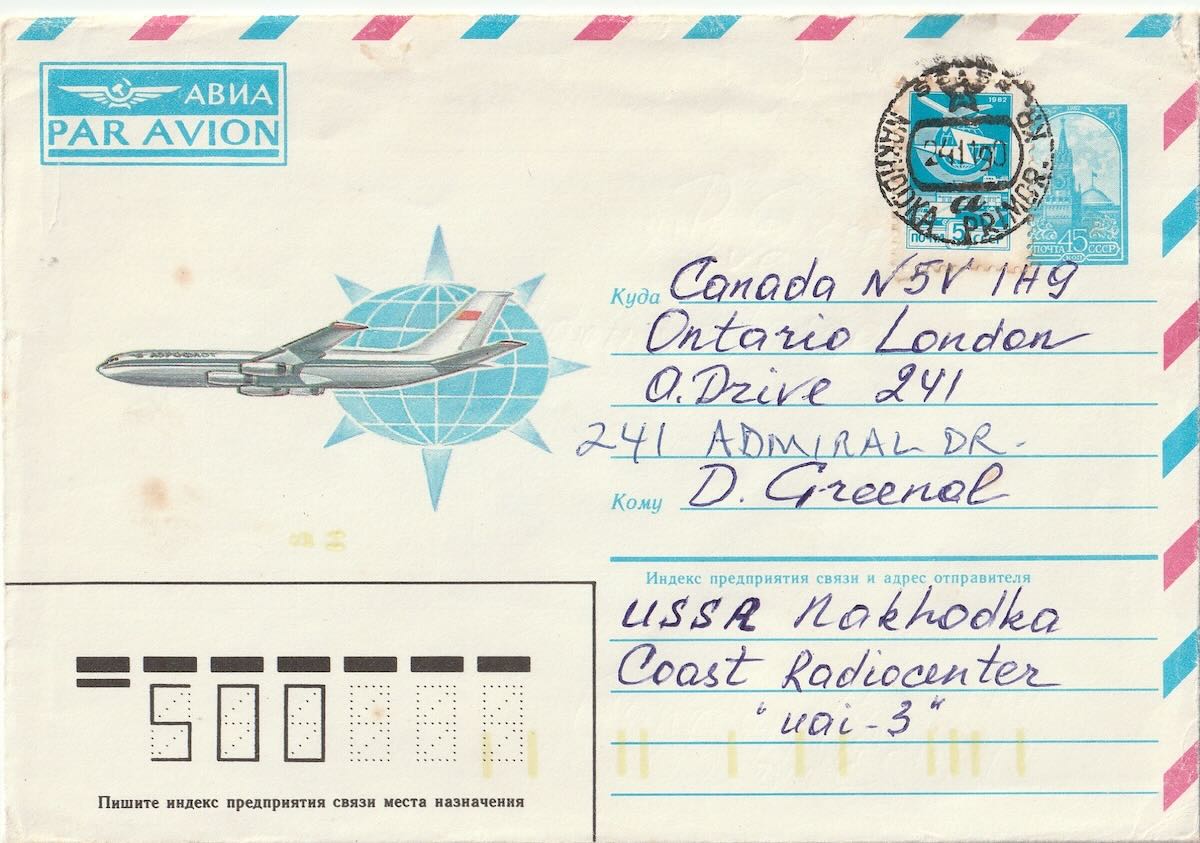
In some countries, the postal service could be irregular at best, so one could really never know if your letter got delivered. Then again, there were times when a station would fail to write my complete address on the card or envelope before mailing it. Fortunately, these managed to reach my hometown, where the folks at the local post office seemed to know who I was and added the missing information. These ones from Congo and the USSR were lucky to arrive.
As a radio amateur VE3HLC in 1978, I was thrilled to receive this beautiful postcard from a station I had contacted in the jungles of Guyana.
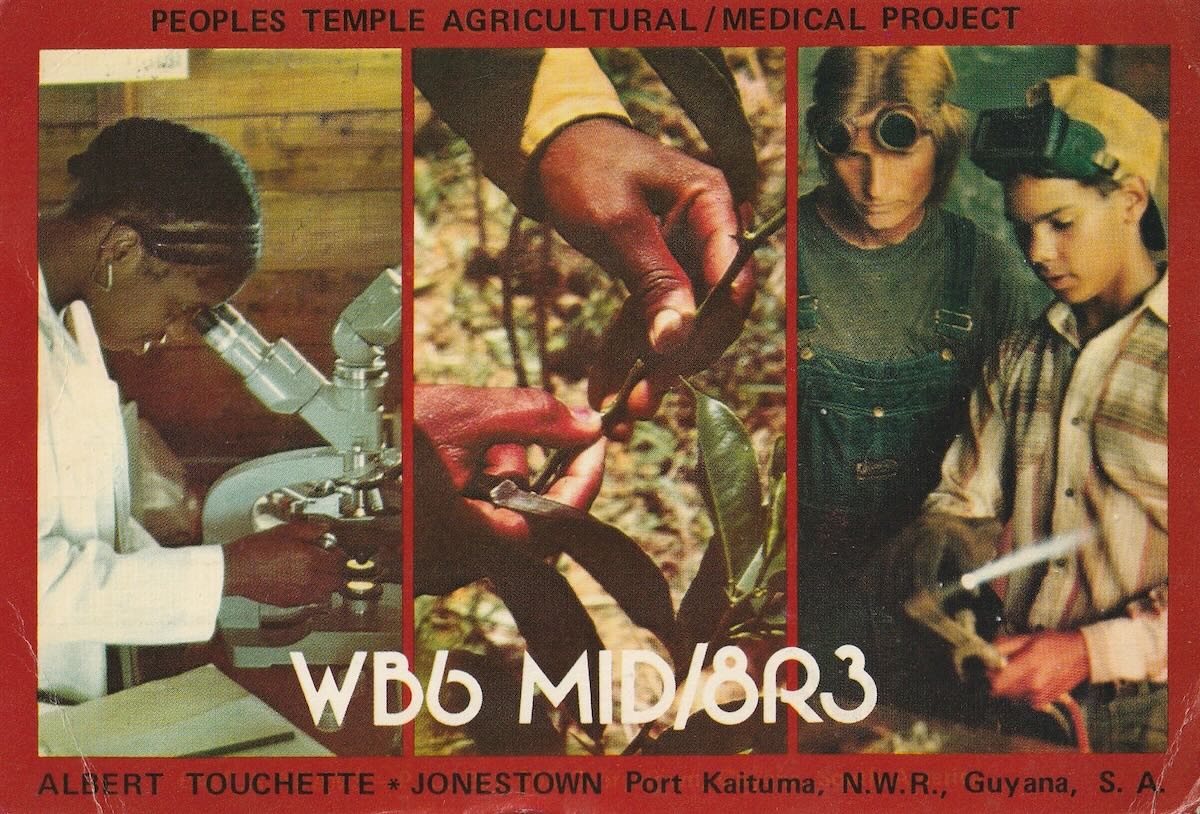
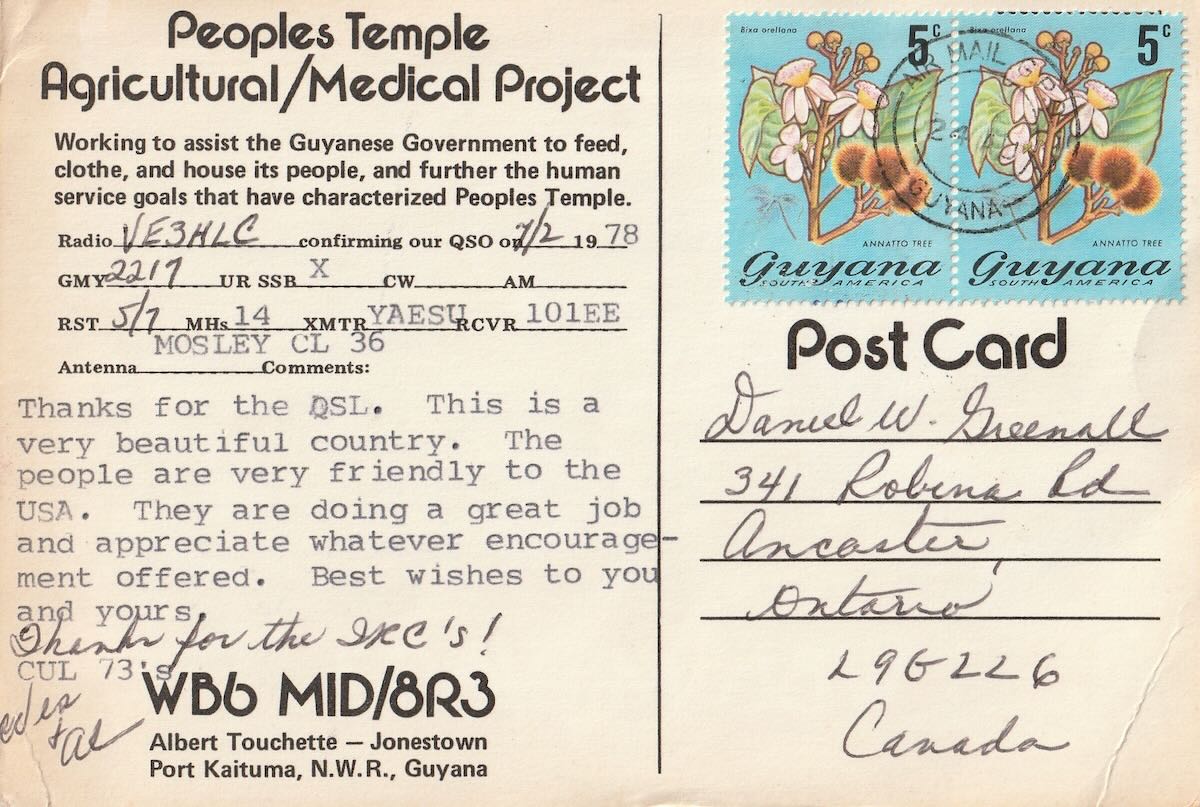 A few months later, I was horrified to learn of the unspeakable tragedy that had occurred at the Peoples Temple in Jonestown.
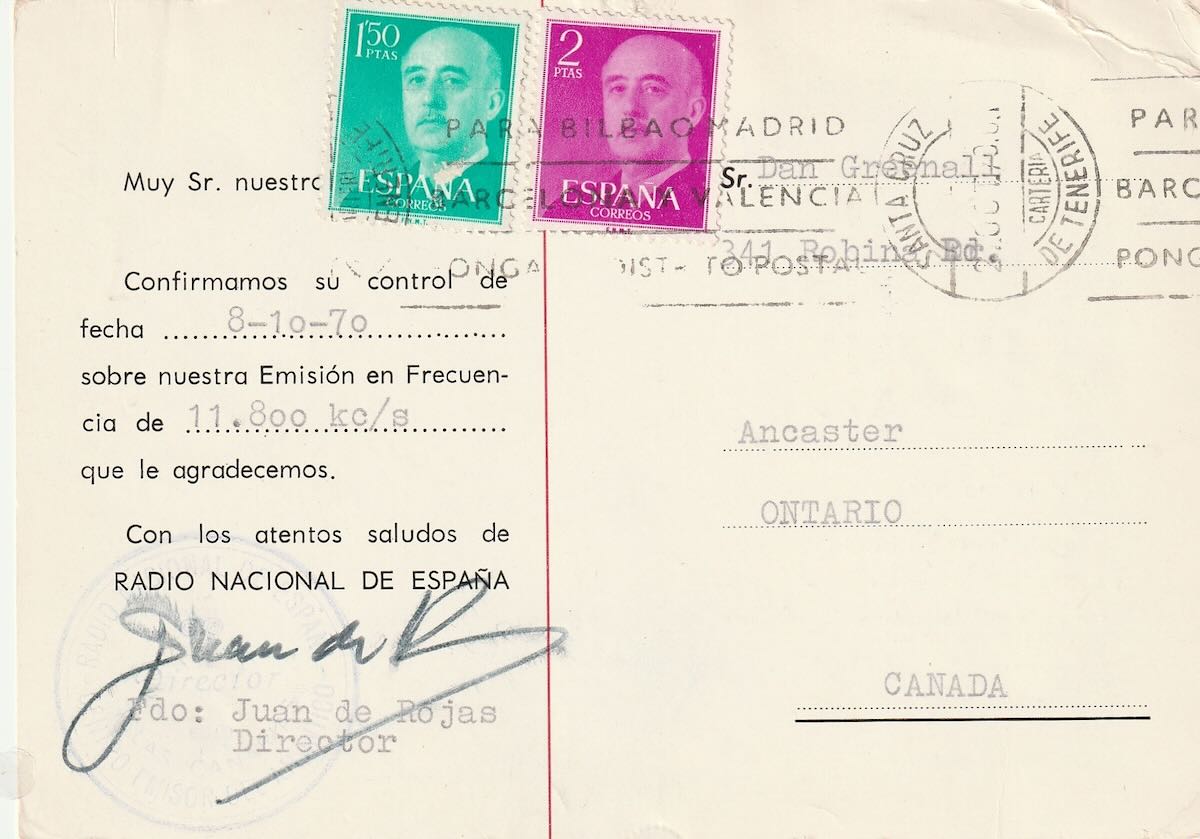
Even the postmark could prove significant, as evidenced by this card from Radio Nacional de España that came direct from their relay site at Santa Cruz de Tenerife in the Canary Islands.
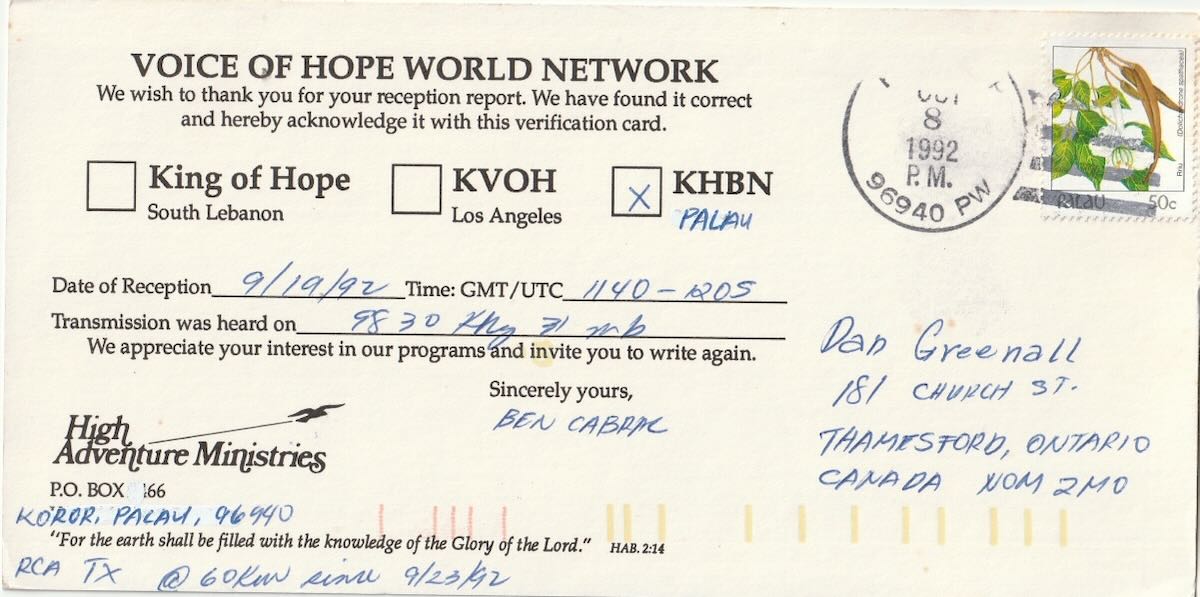
 In 1992, the island of Palau was still being governed by the U.S. The postmark on this card from KHBN shows the old zip code they once had.
 Many long-time listeners continue to keep these historical treasures tucked away in boxes or albums, waiting for their stories to be told. What is your most memorable QSL?