Category Archives: Shortwave Radio

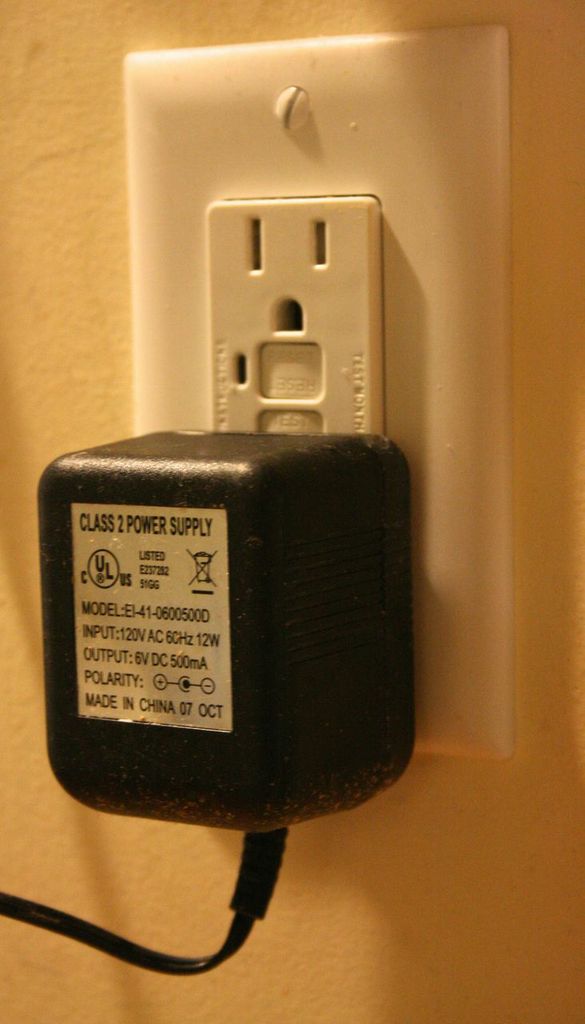
Jack finds that chokes have a huge impact on switching power supply noise

These “Wall Wart” type adapters can create a lot of RFI

Many thanks to SWLing Post contributor, Jack Dully, who writes:

I was putting some things in my radio junk parts box and came across some chokes. So I tried a test with my Tecsun PL-880 on battery and the Tecsun supplied switching AC adapter, with and without chokes on the adapter.

WOW!

I tuned to a vacant station on battery power with headphones on. Then on AC power, the hash and static were incredible. Putting one large choke on the adapter power cord, wrapped about four times and it decreased considerably. So I attached a second choke and once again the static & hash decreased even more, almost to the point of sounding like I was running just on battery power.

Those chokes really do work well.

Thank you for sharing this, Jack. I almost never operate my portables while connected to a power supply, so I often forget about the importance of using a choke with inexpensive, lightweight radio power supplies. Thing is, so many things in our houses and shacks are powered by these QRM generators. In the shack, I’ve added chokes I’ve picked up at hamfests to a number of various power supplies. It does certainly help decrease the noise level. I’ve even used them on power cords for other appliances in the house that tend to spew RFI.

If you ever find a deal on chokes at a hamfest or electronics store, grab some. They can be an affordable solution for those noisy power supplies we still rely on.

Thank you for the reminder and  tip, Jack!

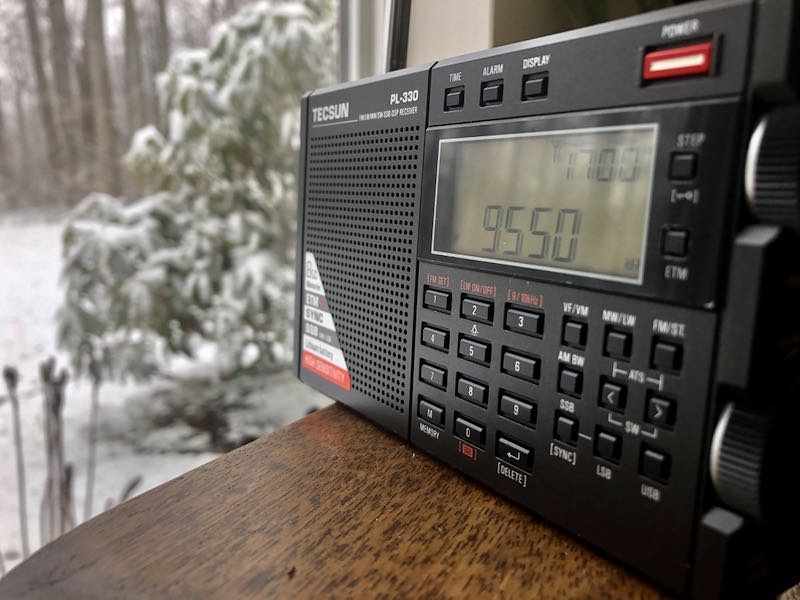
Tecsun PL-330 tip: Using the telescopic antenna for the LW & MW bands

Many thanks to SWLing Post contributor, Mad Radio DXer, who writes:

Hi,

I want to let you & your readers know of a Tecsun PL-330 trick that I saw mentioned in the comments section of your blog some time ago which does not seem to have a lot of awareness. This is for using the telescopic antenna for the LW & MW bands, & it works for the 3305 version of the PL-330 which I understand is the export version. The original comment I saw said this also works for the Chinese version of the PL-330, before firmware 3305.
It is very easy to do & instructions are the following…

1. Turn on the radio.
2. Select either the MW or LW band.
3. Press the number 3 key down for a few seconds, until the display shows “CH-S”.
This means the MW & LW bands can now be received with the telescopic antenna.
4. To use the ferrite bar again, press the number 3 key until “CH-A” appears on screen.

I also did a YouTube video showing this trick in action…

This reminds me of the trick used for the Degen DE1103 PLL version which allows reception of the telescopic antenna for the MW band. However, in my opinion this is much easier to use on the PL-330 than the DE1103 PLL which could be very fiddly. Also this trick is most effective on the LW band, as I find Chinese portables are usually very weak on this part of the band which is good news for LW DXers. I hope you & everyone reading find this trick very useful & that it works.

Thank you so much for the excellent tip!

Radio Waves: Friedrichshafen Cancelled, Coast Guard Seeks Rare Diode, Kindred Spirits in DXing, and DRM Pitch for India’s FM Band

Radio Waves:  Stories Making Waves in the World of Radio

Because I keep my ear to the waves, as well as receive many tips from others who do the same, I find myself privy to radio-related stories that might interest SWLing Post readers.  To that end: Welcome to the SWLing Post’s Radio Waves, a collection of links to interesting stories making waves in the world of radio. Enjoy!

Many thanks to SWLing Post contributors Dennis Dura, Ron Chester, and Mangosman for the following tips:


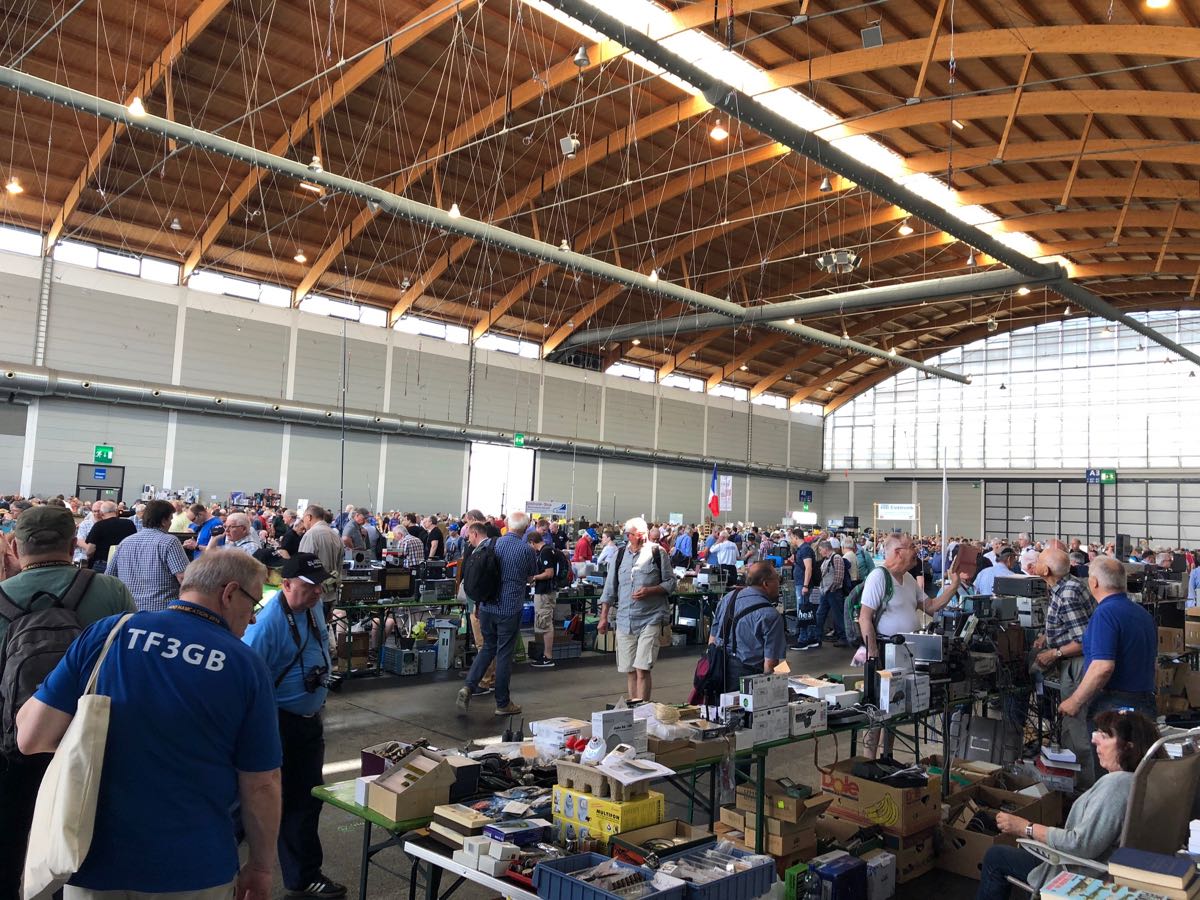
Ham Radio Verbindung 2021 kommt nicht zustande/Ham Radio convention 2021 has been cancelled (Messe Friedrichshafen)

[Note that the following is a Google translation of the original piece in German]

Ham Radio cannot take place this year either – other trade fair events remain on course

Due to the current corona developments, Messe Friedrichshafen cannot hold the international amateur radio exhibition Ham Radio in the planned period from June 25 to 27, 2021. Instead, the industry meeting will take place from June 24 to 26, 2022.

“The decision was not an easy one for us, but a trade fair like Ham Radio lives from its high level of internationality. Due to the current uncertainties in the travel sector, implementation is currently not feasible, ”explains Klaus Wellmann, Managing Director of Messe Friedrichshafen. All other trade fair events in the second quarter of 2021 and beyond should take place as planned at the present time. “A large percentage of our customers from these industries are still on board at the 2021 events. Together we hope that the immunization of society continues to gain momentum and that we can carry out the events with appropriate protection and hygiene concepts. “

Further information at: www.messe-friedrichshafen.de and http://www.hamradio-friedrichshafen.de/.

Rare Diode Threatens Coast Guard’s Arctic Ambitions (Hackaday)

The United States Coast Guard heavy icebreaker Polar Star is literally a one-of-a-kind ship. After its sister Polar Sea was deactivated in 2010 it became the most powerful icebreaker in the fleet, and one of only two US icebreakers capable of operating in the treacherous polar regions. The vessel is critical to protecting America’s scientific and economic interests in the Arctic, but according to a recent article in Business Insider, the ship’s age and scarcity of spare parts is making an already difficult mission even harder.

In the article, Captain William Woityra specifically mentions that the ship’s diesel-electric propulsion system is running on borrowed time as the diodes used in its AC/DC rectifier are no longer manufactured. With none remaining in the Coast Guard’s inventory, the crew has had to turn to eBay to source as many spares as possible. But once their hoard runs out, Captain Woityra fears his ship will be dead in the water[]

A toast to the fools standing high on broadcasting’s hill (Doc Searls Weblog)

In Winter, the cap of dark on half the Earth is cocked to the north. So, as the planet spins, places farther north get more night in the winter. In McGrath, Alaska, at close to sixty-three degrees north, most of the day is dark. This would be discouraging to most people, but to Paul B. Walker it’s a blessing. Because Paul is a DXer.

In the radio world, DX stands for for distance, and DXing is listening to distant radio stations. Thanks to that darkness, Paul listens to AM stations of all sizes, from Turkey to Tennessee, Thailand to Norway. And last night, New Zealand. Specifically, NewsTalk ZB‘s main AM signal at 1035 on the AM (what used to be the) dial. According to distancecalculator.net, the signal traveled 11886.34 km, or 7385.83 miles, across the face of the earth. In fact it flew much farther, since the signal needed to bounce up and down off the E layer of the ionosphere and the surface of the ocean multiple times between Wellington and McGrath. While that distance is no big deal on shortwave (which bounces off a higher layer) and no deal at all on the Internet (where we are all zero distance apart), for a DXer that’s like hauling in a fish the size of a boat.

In this sense alone, Paul and I are kindred souls. As a boy and a young man, I was a devout DXer too. I logged thousands of AM and FM stations, from my homes in New Jersey and North Carolina. (Here is a collection of QSL cards I got from stations to which I reported reception, in 1963, when I was a sophomore in high school.) More importantly, learning about all these distant stations sparked my interest in geography, electronics, geology, weather, astronomy, history and other adjacent fields. By the time I was a teen, I could draw all the states of the country, freehand, and name their capitals too. And that was on top of knowing on sight the likely purpose of every broadcast tower and antenna I saw.[]

DRM Makes Its Pitch for India’s FM Band (Radio World)

In India, where regulators have been working toward recommending a standard to digitize the FM band, Digital Radio Mondiale is presenting its case.

DRM has been conducting trials and demos since late February, when a digital radio transmission with three audio services and Journaline text information went live in Delhi alongside existing analog FM transmissions.

It said it is also showing the possibility of extending a shared transmitter infrastructure by broadcasting up to six individual DRM signals or blocks, carrying up to 18 audio services plus 6 multimedia services, being broadcast from one FM transmitter and antenna. It said the number of individual DRM signals is only limited by the bandwidth of the transmitter. Each signal can have its own power level, and gaps in the spectrum are possible, as are individual SFN networks per DRM signal.

“The transmission is part of an extensive trial and demonstration of DRM conducted by Prasar Bharati and its radio arm, All India Radio (AIR), with the help of the DRM Consortium and its local and international members,” DRM stated in a press release. “The test was officially launched on Feb. 24 and 25 at the headquarters of All India Radio in New Delhi.”

The test was requested by regulator TRAI and the Ministry of Information & Broadcasting.

DRM officials said a presentation to AIR’s committee showed DRM in the FM band on various car radios including line-fit, aftermarket, standalone receivers, mobile phones and tablets. A head unit from Mobis, upgraded for FM via firmware, was installed in a Hyundai Verna. DRM said, “The reception was found to be excellent for over 15 km radius with just 100 W of DRM power in digital,” including 5.1 surround sound test broadcasts on DRM.[]

You might also check out the article HD Radio and Digital FM in India at Radio World.


Do you enjoy the SWLing Post?

Please consider supporting us via Patreon or our Coffee Fund!

Your support makes articles like this one possible. Thank you!

RNEI seeks your feedback on test transmission this weekend

RNEI Test Transmission to the whole of Europe on Sunday the 28th of March, 17:30UTC. 7420kHz

We’re having a test transmission from Armenia this Sunday, the 28th of March 2021. on 7420KHz.

You’ll hear RNEI 15 but different songs will use different processing so we’d love it if you told us which songs sounded the best sound quality and which sounded the worst sound quality on your equipment!

This transmission will be with 100kW being fed into a 330 degrees beam that delivers signal to the following:

Strong Signal:

  • Ireland
  • UK
  • Nordic Countries (Finland, Norway, Sweden, Faroe Isands, Iceland & Denmark)
  • Baltic Countries (Latvia, Lithuania, Estonia)
  • Belgium, Netherlands, Luxembourg
  • Poland
  • North and West Germany
  • Northern Switzerland
  • Central and Northern France
  • Belarus
  • Romania
  • Bulgaria
  • Moldova
  • Ukraine
  • Hungary
  • Slovakia
  • North Macedonia
  • East Bosnia
  • Serbia
  • East Czechia

Good Signal:

  • Greece
  • Albania
  • West Bosnia
  • Slovenia
  • Austria
  • Southern Switzerland
  • Northern Italy
  • West Czechia
  • Croatia
  • Montenegro
  • Spain
  • Portugal

We look forward to reading your reception reports!
Wishing you well
Roseanna

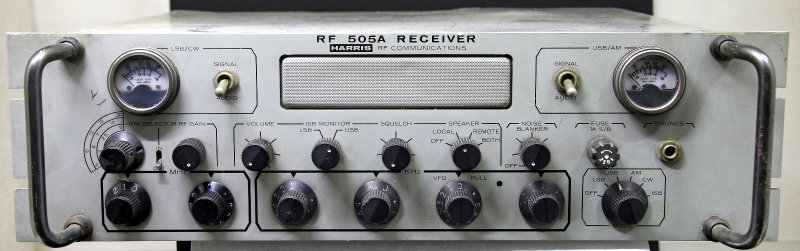
Nick acquires a Harris RF 505A receiver

Many thanks to SWLing Post contributor, Nick Booras, who writes:

I just picked up a Harris 505A and I made a couple videos your viewers might like.

This radio is extremely sensitive as you can see in the comparison videos. I am very lucky to have picked it up. I will add that in the comparison to the Kenwood TS890 I didn’t try the 15 kHz filter on video. I did try it afterwards and I was surprised to receive the weak 6.085 signal with similar results to the 505. I thought for sure that that huge width would only let in more noise but I was wrong. I learned something new! But the 505A is still a super sweet machine.

Thank you for sharing this, Nick! What a wonderful addition to your radio collection. I’ve always loved the incredibly simple design of the 505A and have assumed it would have a very low noise floor.

Thanks again!

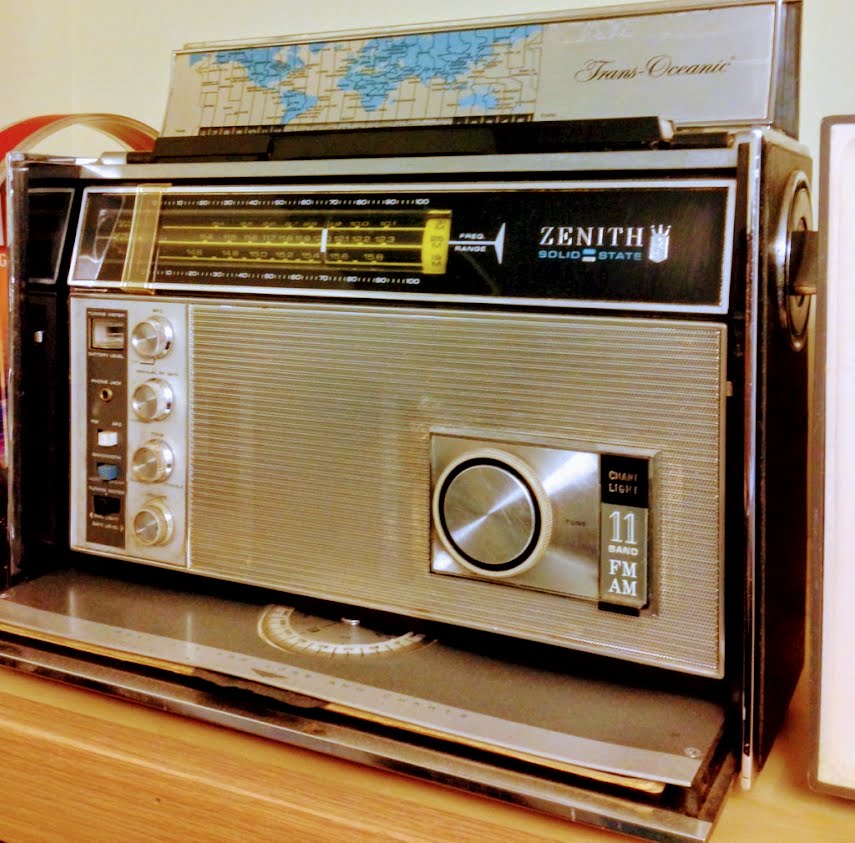
Dan notes a spike in Zenith Trans-Oceanic prices

Many thanks to SWLing Post contributor, Dan Robinson, who notes:

There appears to be a spike in Zenith Trans-Oceanic sales. The recent eBay sale of a D7000Y for $900 sparked a number of new auctions by sellers seeking to take advantage of this apparent
trend.

The following D7000Y was listed with a $900 Buy It Now price by someone obviously
cashed in.

Click here to view on eBay.

Wow! I’m curious what could have encouraged this spike in prices. I have a Trans-Oceanic but will not sell it because it was my first portable radio. With that said, if there are readers who’ve considered parting with theirs, this might be the right time. Thanks for the tip, Dan!

RIP George Zeller: Losing a giant in our shortwave radio world

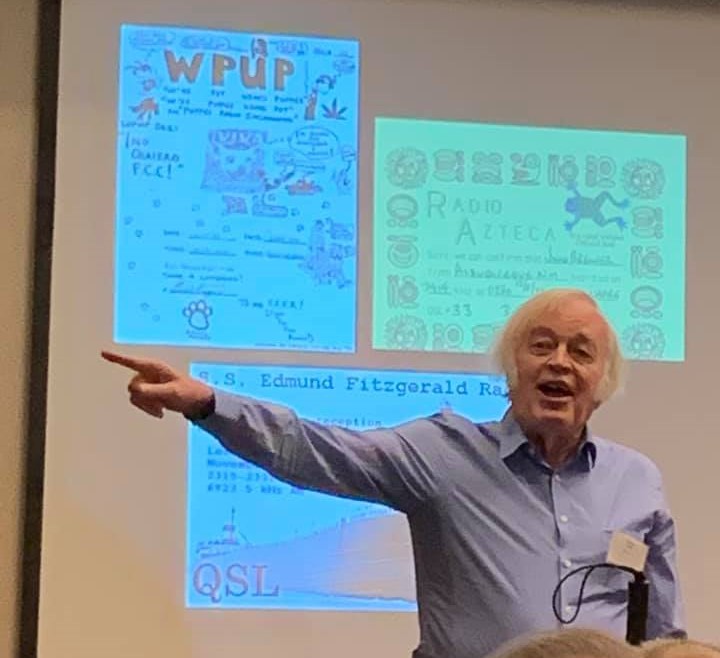
George Zeller at the Winter SWL Fest Pirate Radio forum (Photo by Paul Kaltenbach)

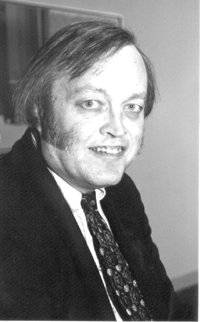
Many of us who were friends with George Zeller or who regularly attend the Winter SWL Fest are devastated to learn that this well-loved SWL personality passed away after an unintentional electrical fire in his Cleveland home on Saturday March 20, 2021.

Richard D’Angelo with NASWA posted this message about George:

I was shocked and saddened to learn of George Zeller’s sudden passing earlier today (March 20) in a house fire this morning. I had exchanged emails with George earlier this week on NASWA editorial matters as he was slowly recovering from his recent Covid-19 vaccination. The news article in the online Cleveland Comeback mentioned overcrowded electrical outlets/extension cords as the cause of the accidental fire. George was 71 years old.

George and I knew each other for about 40 years. George came to several DXpeditions at Gifford Pinchot and French Creek State Parks. We attended many of the same radio hobby gatherings over the years. For several years, I traveled to Cleveland for work; George and I would go out to dinner on those occasions. Naturally, any time my company was mentioned in the local newspaper George would eagerly forward that information to me. George also traveled to the Winter SWL Festival in Plymouth Meeting, Pennsylvania each year to gather with like minded radio people. He attended other radio conventions too over the year’s throughout the country.

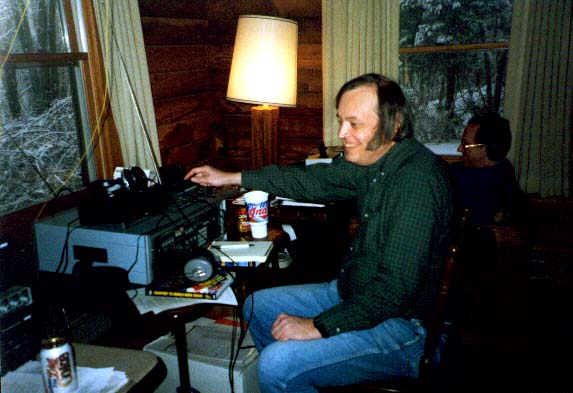
George at a Gifford Pinchot State Park DXpedition

George was well known in the greater Cleveland area as an Economist who kept close tabs on the Ohio economy. The Economic Indicators project he worked on provided continually updated information on poverty, earnings, and the economy in all Ohio counties and communities, with related demographics. In Ohio, Economic Indicators data include annual income trends for all 612 Ohio school districts. Detailed data was also available for job growth and payroll earnings in all Ohio counties going back to 1979, including measures of the very large job losses suffered by Cleveland and Ohio during the 2000s recession that has lingered longer in Ohio than it did elsewhere in the United States. Over the year’s he mixed with local political figures and served as a volunteer in a number of community organizations serving the greater Cleveland area. He was a regular on several talk radio programs when Ohio’s economy was the lead topic.

George was an active baseball and football fan. He attended baseball games wherever he could. He spent time traveling to difference cities attending games in many major league and minor league baseball stadiums. I recall making such a trip to Camden Yards in Baltimore with several others to catch an Orioles-Yankees baseball game when my children were youngsters. He was an enthusiastic Cleveland Indians and Cleveland Browns fan going back to the glory days of the 1950’s. He never forgave the Indians for trading away Rocky Colavito.

For twenty years George wrote a column about unlicensed pirate and clandestine shortwave radio broadcasting news in Monitoring Times magazine. He was also a contributing editor to Passport to World Band Radio, the definitive guide to international shortwave broadcasting frequencies, schedules, and receiving equipment. For decades he wrote a column on Clandestine radio broadcasting in the monthly issues of The ACE from the Association of Clandestine Radio Enthusiasts. Annually, he hosted the Pirate Radio Forum at the Winter SWL Festival in Plymouth Meeting, Pennsylvania as well as being the host of the prize raffle at the Saturday night banquet. In recent years, George was the editor of the Pirate Radio Report column for the North American Shortwave Association. He joined NASWA in December 1965 as a lad of sixteen.

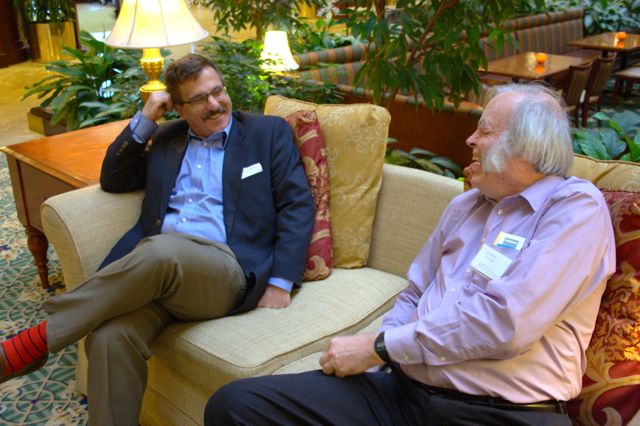
Left to right: Rich D’Angelo and George Zeller at the Winter SWL Fest

George was always fun to be with and a real character to boot. No matter what the topic of the conversation was, he had a story that may or may not have been pertinent. There was never a dull moment when he was part of the group. George Zeller will be missed by all of us.

Thank you for sharing, Rich.

In the news article about the house fire, his neighbor described George as always kind and somewhat reclusive. With his radio community, he was everything but reclusive.

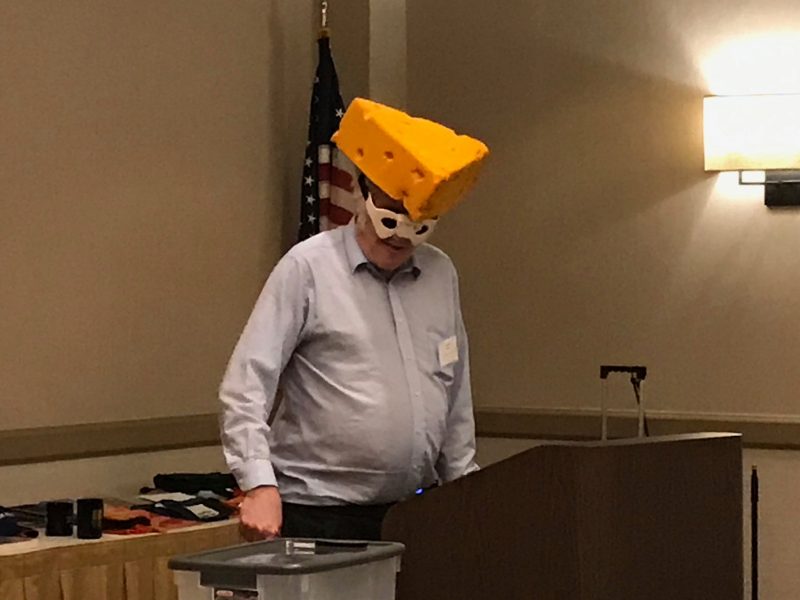
George wearing his ceremonial cheese hat and goggles at a Winter SWL Fest banquet. (Photo by Larry Willl)

George had a huge personality, amazing sense of humor, and perhaps what I admired about him most was his ability to poke fun of himself. A quality I hold in high regard.

We will miss you, George.

From Cleaveland.com (22 March 2021): George Zeller, economist, advocate for the poor and RTA riders, dies in house fire