Category Archives: Shortwave Radio

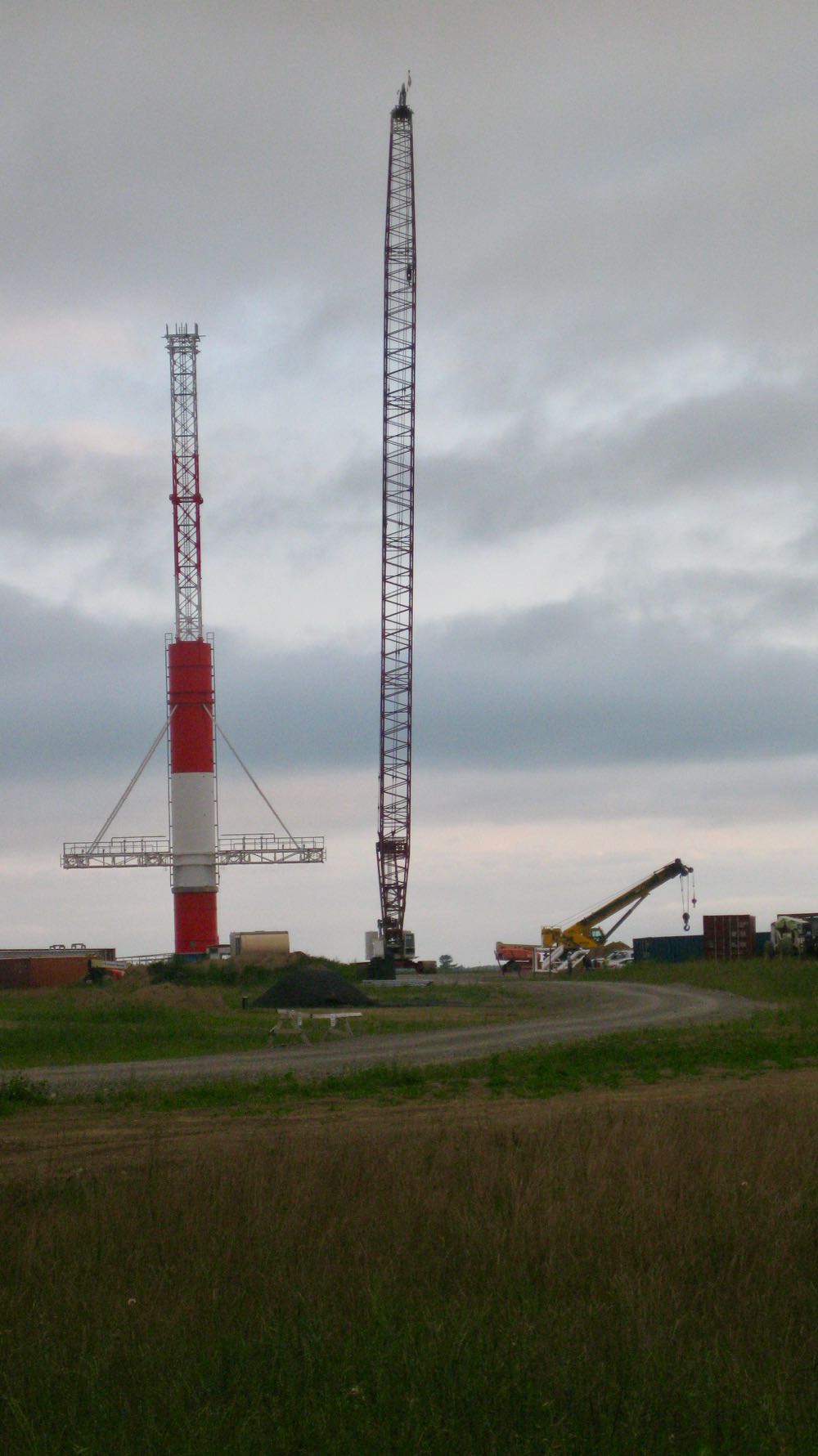
Photos of WBCQ station construction

Many thanks to SWLing Post contributor, Lee Reynolds, who shares these images and notes after he visited Monticello, Maine recently:

Here’re a few shots to show where the state of play of the new station setup
stands as of [six] days ago.

Thanks for sharing these shots, Lee! Looks like the station is coming along nicely.

VORW Radio International updated schedule

Many thanks to SWLing Post contributor John with TheReportOfTheWeek who writes:

Hello Shortwave Listeners! A few changes to the radio schedule of VORW Radio Int. have been made, please check below and take a look. I’ve both added and deleted several transmissions.

My show is a weekly light entertainment program, featuring misc talk and commentary as well as listener requested music spanning genres and eras!

Wednesday 1100 UTC – 15670 kHz – WINB 15 kW DRM – Europe
Thursday 2000 UTC – 7780 kHz – WRMI 100 kW – Eastern North America
Thursday 2200 UTC – 9955 kHz – WRMI 100 kW – South America
Friday 0000 UTC (Thu 8 PM Eastern) – 7730 kHz – WRMI 100 kW – Western North America
Friday 0000 UTC – 9395 kHz – WRMI 100 kW – North America
Friday 0100 UTC – 7490 kHz – WBCQ 50 kW – North America
Friday 0100 UTC – 7780 kHz – WRMI 100 kW – Eastern North America
Friday 0100 UTC – 5850 kHz – WRMI 100 kW – North America
Friday 0400 UTC – 7730 kHz – WRMI 100 kW – Western North America
Friday 2200 UTC – 9955 kHz – WRMI 100 kW – South America
Sunday 2200 UTC – 7570 kHz – WRMI 100 kW – Western North America

Questions, comments, reception reports and music requests may be sent to [email protected]

Reception reports will receive a QSL!

Happy listening,

John (VORW Radio Int.)

Information from the NIST regarding possible closure WWV radio stations

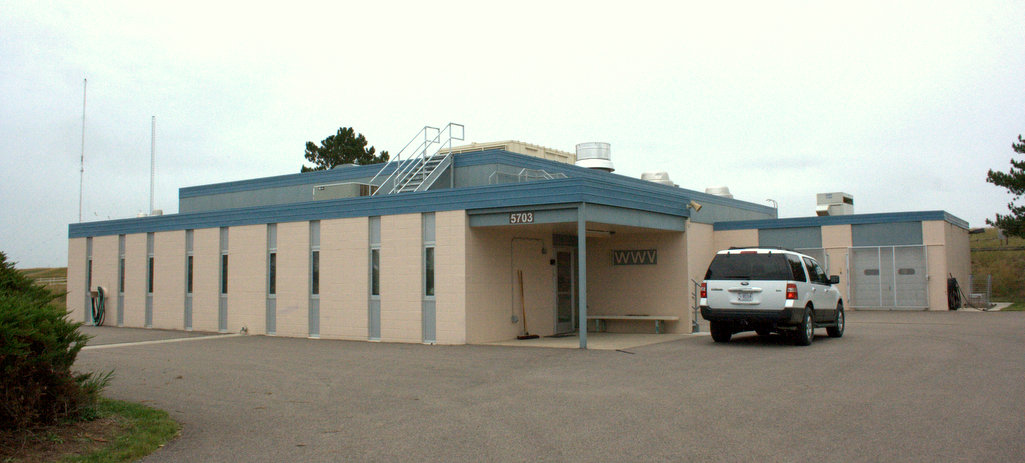
WWV’s transmitter building in Fort Collins, Colorado (2014)

Regarding the NIST FY2019 budget which includes a request to shutdown WWV, WWVH, and WWVB, many of you have been asking if there has been an update.

We will keep you posted as this budget moves through the process, but in the meantime I’ll share the feedback and links provided by Gail Porter, Public Relations Director for the National Institute of Standards and Technology (NIST).

Ms. Porter writes:

We are proud of the time and frequency services we provide through our radio stations and understand that these services are important to many people.

As you likely know, the President proposes budgets for executive branch agencies and then the Congress considers that request before determining funding levels for each agency and passing an appropriations law to implement a budget for a given year.

The President’s full NIST FY 2019 budget request to the Congress is available at the link below, including a brief description of why the shutdown of the radio stations is proposed: http://www.osec.doc.gov/bmi/budget/FY19CBJ/NIST_and_NTIS_FY2019_President’s_Budget_for_508_comp.pdf. see page NIST-25.

[…]The sentence below, which appears on page NIST 25, is the best description we have available to respond to your question.

“To consolidate and focus work on NIST efforts in quantum science, while maintaining essential core capabilities in measurement science research and measurement dissemination NIST will eliminate efforts that have been replaced by newer technologies, measurement science work that lies outside of NIST’s core mission space, and programs that can no longer be supported due to facility deterioration.”

[…]Here is a link to the NIST Budget Table for the FY2019 Presidential Request.

Also, in case these are of interest, here are links to press releases issued in May and June 2018 by the U.S. House of Representatives and the Senate Committees’ on Appropriations about the FY2019 budget process:

House

Senate

Hope this information is helpful.

Many readers have been asking if all NIST stations are included in these cuts–the answer is yes.

If this budget passes as written, WWV, WWVH, and WWVB will all be closed.

If you value these NIST time stations, I would encourage you to contact your local representatives, and sign this White House petition.

AIR External Service at odds with MIB over funding & future of shortwave service

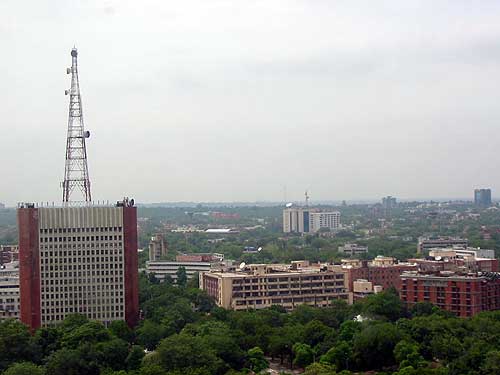
All India Radio (AIR) Headquarters in Dehli, India. Photo courtesy of Wikipedia.

(Source: Hindustan Times via Dan Robinson)

The external services division of All India Radio (AIR) is caught in a turf war between the ministry of information and broadcasting (MIB), which runs it and the ministry of external affairs (MEA), which is expected to fund it.

While the MIB wants the service to continue and even expand; MEA has been suggesting shutting down the programmes, pointing out that the service offered through short wave transmission has outlived its utility and does not attract listeners abroad, said an MIB official aware of the developments.

According to this MIB official, the service, which was started soon after the outbreak of World War II has emerged as a bone of contention between the two ministries, as the cost of running the shows is high and the MEA has been unwilling to pick the tab.

AIR is a broadcast arm of public broadcaster Prasar Bharati and anchors the external services division (ESD).

[…]On the need for the service, the official said feedback from listeners’ abroad acts as “eyes and ears of the government” and allows them a peek into perceptions abroad. “The short wave transmitters are used to send content meant to popularise and propagate Indian point of view on contentious issues,” the official said.[…]

A former Prasar Bharati official who had concurred with MEA’s suggestion to shut down the service told HT: “No one outside India ever hears Akashvani external services — over short wave or medium wave. It’s a waste of public funds. A few years ago as a test case we had asked a few ambassadors to give us feedback on the popularity of the shows; at least two wrote back saying that the frequencies of the programmes in their respective countries could not be found.”

This official went on to add that maintaining short wave transmission installation is a huge drain on the exchequer as they “guzzle power” and the equipment is “expensive to maintain.”[…]

Read the full article at the Hindustan Times online.

Lennart’s WWVH 5 MHz QSL and a quick NIST update

Many thanks to SWLing Post contributor, Lennart Weirell, who writes:

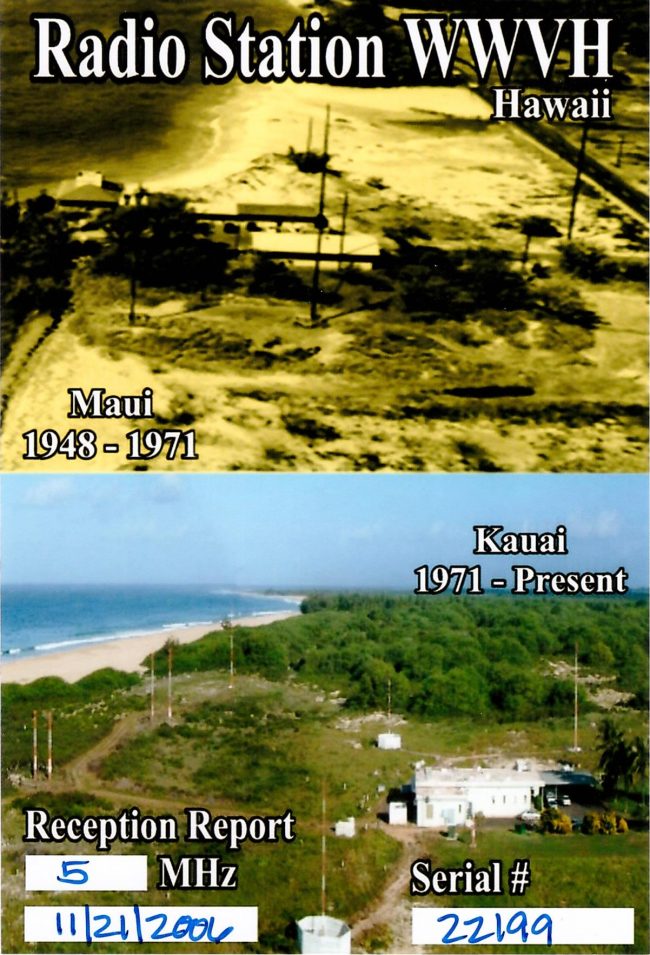
I saw the recent posting of a QSL card from WWV. Here is my QSL card from WWVH,
Hawaii 5 MHz from 2006 [above].

Thanks for sharing this excellent QSL, Lennart!

Update on shutdown of WWV, WWVH and WWVB

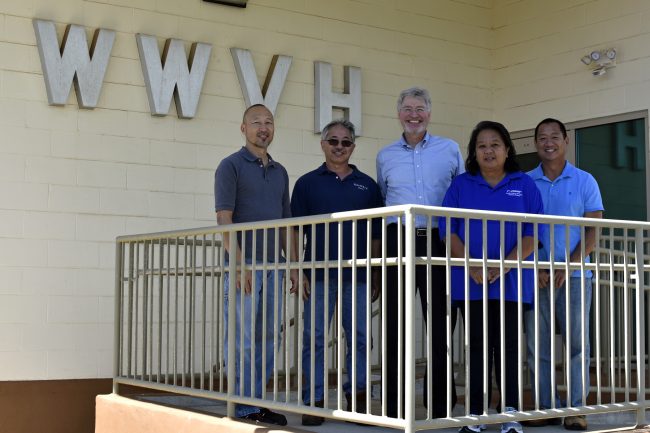
At WWVH Hawaii from left to right: Dean Takamatsu, Dean Okayama, Director Copan, Adela Mae Ochinang and Chris Fujita.
Credit: D. Okayama/NIST

Post Readers: please keep in mind that the NIST 2019 Presidential Budget request includes a desired reduction of, “$6.3 million supporting fundamental measurement dissemination, including the shutdown of NIST radio stations in Colorado and Hawaii.“

This would equate to the closure of WWV, WWVH and WWVB. 

Unless enough people protest this budget proposal, these sites will be closed.

If you value these services, I would encourage you to contact your local representatives, and sign this White House petition.

WAGM features WBCQ’s multi-million dollar shortwave station installation

(Source: Ampegon)

(Source: WAGM via Richard Cuff)

MONTICELLO, Maine – The town of Monticello will soon be home to one of the largest short wave radio stations in the world, according to those involved. In this week’s Aroostook 2020, Newssource 8’s Ashley Blackford finds out what this major project could mean for the area.

Click here to view this video at WAGM.

Click here for archived posts about WBCQ.

[Note: If the embedded video function wdoes not function properly, click here to view at WAGM.]