Category Archives: Shortwave Radio

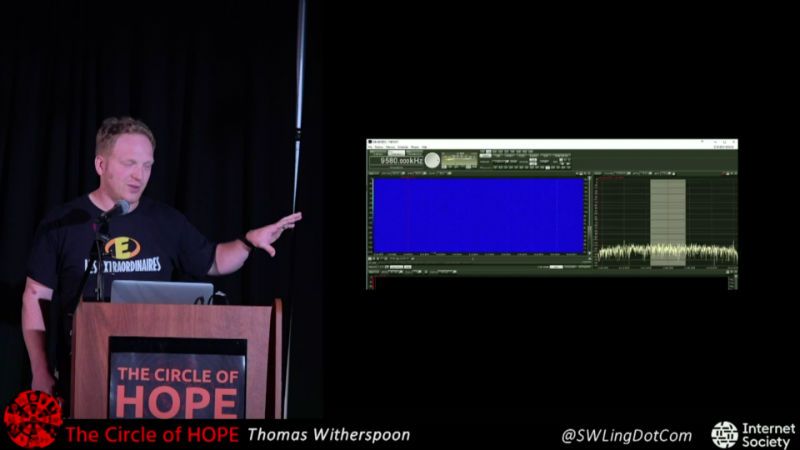
My Radio Spectrum Archive HOPE XII presentation on Hackaday

Wow! Thank you, Hackaday:

HOPE XII: TIME TRAVEL WITH SOFTWARE DEFINED RADIO

by: Tom Nardi

It’s easy to dismiss radio as little more than background noise while we drive. At worst you might even think it’s just another method for advertisers to peddle their wares. But in reality it’s a snapshot of the culture of a particular time and place; a record of what was in the news, what music was popular, what the weather was like, basically what life was like. If it was important enough to be worth the expense and complexity of broadcasting it on the radio, it’s probably worth keeping for future reference.

But radio is fleeting, a 24/7 stream of content that’s never exactly the same twice. Yet while we obsessively document music and video, nobody’s bothering to record radio. You can easily hop online and watch a TV show that originally aired 50 years ago, but good luck finding a recording of what your local radio station was broadcasting last week. All that information, that rich tapestry of life, is gone and there’s nothing we can do about it.

Or can we? At HOPE XII, Thomas Witherspoon gave a talk called “Creating a Radio Time Machine: Software-Defined Radios and Time-Shifted Recordings”, an overview of the work he’s been doing recording and cataloging the broadcast radio spectrum. He demonstrated how anyone can use low cost SDR hardware to record, and later play back, whole chunks of the AM and shortwave bands. Rather than an audio file containing a single radio station, the method he describes allows you to interactively tune in to different stations and explore the airwaves as if it were live.[…]

Continue reading the full article at Hackaday.

Boat Anchor Tuesday: Hallicrafters S-40B and SX-100

Many thanks to SWLing Post contributor, Chris Peters, who shares the above photo for Boat Anchor Tuesday and writes:

I was lucky enough to recently pick up both these familiar faces for $150.

Hallicrafters S-40B and SX-100

Both are in decent shape but are due for a recap and alignment.

Wow–both of these are classic sets, Chris! After a recap and alignment, I think you’ll especially be impressed with the performance that SX-100 delivers! Thank you for sharing!

Post readers: If you’d like to share a photo of your boat anchor on Boat Anchor Tuesdaysimply send me an email with the photo and a short description. I’ll put it in the pipeline to publish!

Elecraft KX2/KX3: An inexpensive adapter for earphone and mic operation

Many thanks to SWLing Post contributor, Mike Hansgen (K8RAT), who shares this message from Wayne (N6KR) of Elecraft. This message was originally posted on the Elecraft email reflector:

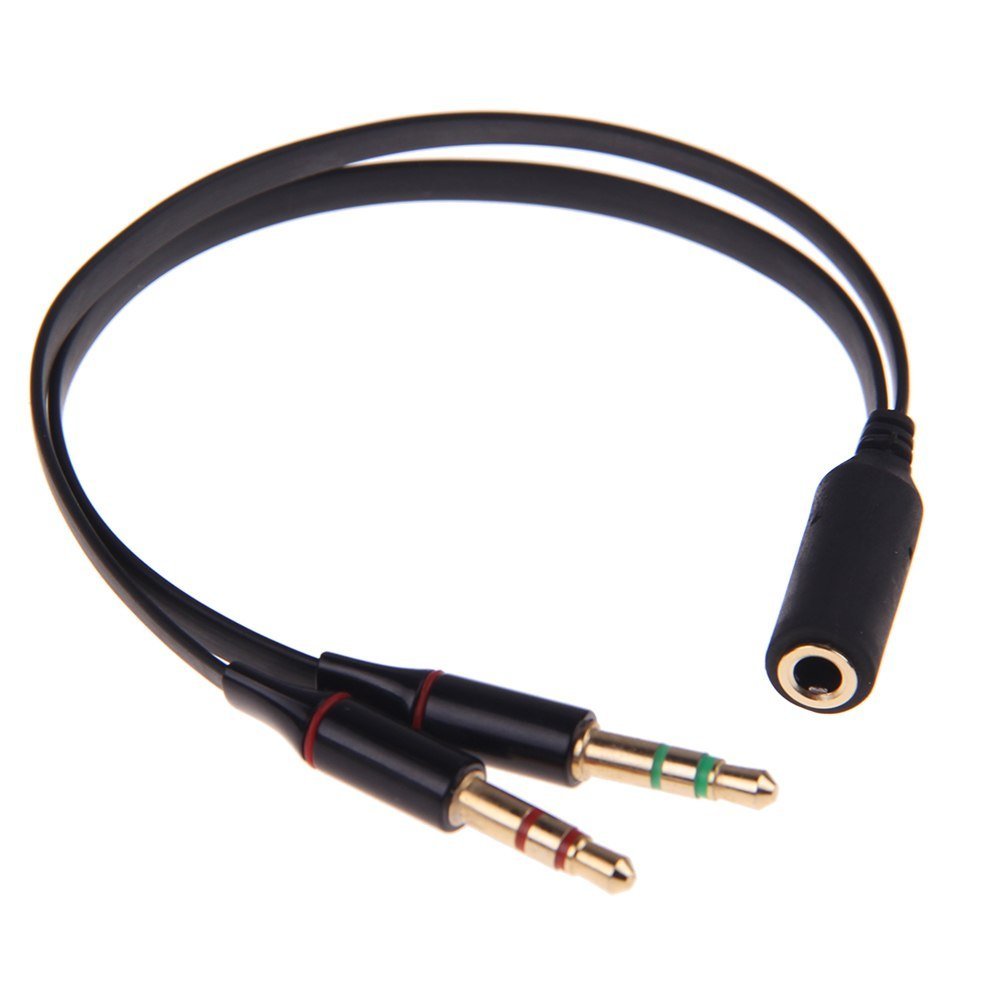
Several KX2/KX3 users have asked what I use as an adapter to go from an iPhone headset to the rig’s headphone and mic jacks.

Here it is.

This unit works beautifully with both my old and new iPhone headsets. The combination of the headset and this adapter take a tiny amount of space in my go-bag. Audio reports are great, even with speech compression set to max (MENU:TX CMP).

You’ll need to set MENU:MIC BIAS to ON, and I also recommend setting MIC BTN to OFF.

You can tap the XMIT button to start voice-mode transmit, or use VOX. See VOX menu entries in the owner’s manual.

Note: There’s a rumor that one legacy version of the iPhone headset was different from the others. I don’t have any info on this, but it means there’s a slight risk that this $6 adapter won’t work in your case. But it certainly works with the earpods I bought a couple of months ago.

73,
Wayne
N6KR

Thanks for sharing this, Mike! I’ve just placed an order for this little adapter. When doing field operations, I always use in-ear headphones, but a separate hand mic because I don’t like packing or wearing bulky headsets. I’ve a couple of earbud/mic sets (neither an Apple brand) that should work brilliantly with this adapter.

Click here to view on Amazon.com (affiliate link).

Boat Anchor Tuesday: National HRO-50T

Many thanks to SWLing Post contributor, Price Kagey, who shares the following photo for Boat Anchor Tuesday and writes:

“My wonderful HRO-50T. I have replaced all tubes and now need to start on capacitors and resistors.”

What a beautiful radio, Price!  Once you’ve re-capped and replaced the resistors in this girl, you’ll have a phenomenal receiver. I’m a sucker for those HRO dials! Thank you for sharing!

Post readers: If you’d like to share a photo of your boat anchor on Boat Anchor Tuesday, simply send me an email with the photo and a short description. I’ll put it in the pipeline to publish!

What is the Radio Hobby? One Perspective

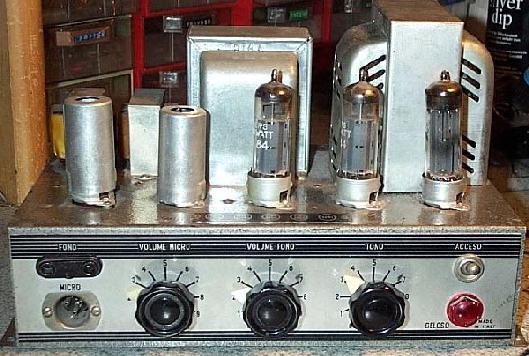
The Geloso G.215-AN

I have recently been re-exploring the hobby of photography, which is a lateral move from studying astronomy (my main interest being astrophotography). At one time in my life I was a semi-professional photographer, having studied photojournalism in college and dabbling in nature and street photography (as it is now named). And no, I was never a paparazzo!

Following a link from an article on today’s SWLing Blog I landed on an Italian radio/audio company’s archive, the company being Geloso.  The above image is an audio amplifier and it caused me to think about radios (and related equipment) in much the same way I have been currently thinking about photography. Allow me to explain.

I spent about a decade in photography back in the days of film, black and white and color. (This was back in the days when the earth was cooling and dinosaurs roamed the earth!) Film cameras are to modern-day DSLRs much like IBM PCs are to modern day Intel Pentium i7 computers — that is to say, technology has really changed! Seeing what modern cameras can do within the camera is rather astounding, and certainly far beyond what we could even dream of in the 70s. The same is true in radios, of course, with radios from the 40s and 50s in comparison to today’s rigs.

And yet, just like film cameras of old being used today producing incredible photographs, radios from the past can still produce incredible sound if maintained well and their operation understood. And yes, I am getting to my main point, but in an intentionally somewhat circuitous route!

As I have been learning about these modern cameras and watching copious videos on YouTube, I have heard a recurring theme come up. Back in my early days I, like many folks today, always believed the next lens or camera would take me over the top and allow me to produce incredible shots. Oh, I might not have stated it that way, but it certainly was present in recesses of my brain. Now mind you, I was producing good photographs, but I was always looking for those shots worthy of a portfolio, and thereby sometimes missing out on great shots right in front of me.

Having just recently  purchased a DSLR camera kit with two lenses, before I had even taken a handful of shots with it, I was starting to think, “What will I need to add to this setup to make it really good? Oops, old habits die hard! Today’s cameras (and optics) from the top 4 or 5 DSLR makers are all head-and-shoulders above what we had access to when I was in photography years ago. There is no reason to look for the absolute best optics unless you have literally thousands of dollars to spend for what are at best, modest improvements under specific shooting conditions. The talent is not in the camera or the lens, but rather in the person behind the camera.

The same holds true for radios today, whether receivers or transmitters. Sure, you can spend thousands of dollars on the top of the line receivers or transceivers, and under certain circumstances, such a purchase may be the right thing. But for most of us, which radio you use does not matter nearly so much as the skill of the operator using the radio. Both the camera and the radio are tools, nothing more. A skillful radio operator can pull signals out of the mud or work stations at the farthest reaches of the globe with a 1940s radio that has gorgeous audio with little to no filtering, or they can use a modern DSP-equipped, roofing filter-loaded rig to hear stations so close together a cat’s whisker could fit between them on the frequency dial. In both cases, it is the radio operator who makes the difference by understanding their rig and knowing how to get the best from it.

Now if you are the type of radio hobbyist who really enjoys playing with the newest radio to hit the market and can afford it, wonderful! You help the rest of us have options when we do decide it is time for a new rig. But if you are the type person who believes you can’t really enjoy radio without having that “other” radio with the slightly better specs derived from precise laboratory conditions with nothing to interfere with signal reception, you may just be missing out on what you have right in front of you.

Believe me, I am not one to judge because people in glass houses should not throw stones! I have simply been surprised at myself as these old instincts have arisen in me, when I thought I had put to rest such things! In the radio world I have resisted the siren call of enticing marketing for the latest whiz-bang radios, at least in these more recent years (!) and now must use that same resistance in my photography. In radio I have learned to get the best out of my gear, and the results are very satisfying. Here’s to hoping I can do the same behind the camera!

Robert Gulley, AK3Q, is the author of this post and a regular contributor to the SWLing Post.       Robert also blogs at All Things Radio.

Shortwave Trading Part IV (Final Post)

(Source: SNIPER IN MAHWAH & FRIENDS)

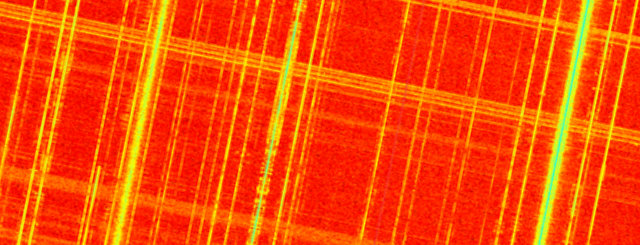
After my first few public posts about shortwave trading, I gradually realized that I’d inadvertently created a worldwide network of deputy antenna sleuths. This is the final post in the Shortwave Trading series since the terms of my forthcoming employment agreement will prohibit me from future public talk on the technology of trading. I want to leave behind details on some of the research tools and techniques I’ve used. This is how the sausage is made.

I’ll also leave a list of locations that may be worth watching. Some may be near you. Even if I can’t talk about what’s found in the future, maybe you can? The comments below might be a good place to document new findings until there’s a better place offered.

In addition, following sections will set out the criteria I’ve used to assess the confidence that a shortwave trading site has been found, give example FCC searches, list links to web-based research tools I’ve found useful, give some tips on research techniques, and acknowledge the many people behind the scenes who’ve contributed to this work.

Plausibility Criteria

If you find something that looks like a shortwave trading site, how confident can you be that you’ve found the real thing and not a landing beacon for body-snatching space aliens? Since a shortwave trading site exists to link a local market to a remote market, I can think of two things that set a minimum bar for plausibility:

  1. Visual evidence of a shortwave antenna with a heading toward a remote market. Previous posts in this series have shown many shortwave antennas you can use as models of what to expect. Examples have included headings around 50º from Chicago which cover Europe.
  2. A path for connectivity to a local market. Visual evidence of this can be a microwave dish pointed in the direction of a local market.[…]

Click here to continue reading the full article.

Kris recognizes Italian receiver in “The Same Sky”

Many thanks to SWLing Post contributor, Kris Partridge, who shares the following comment regarding John Harper’s recent post:

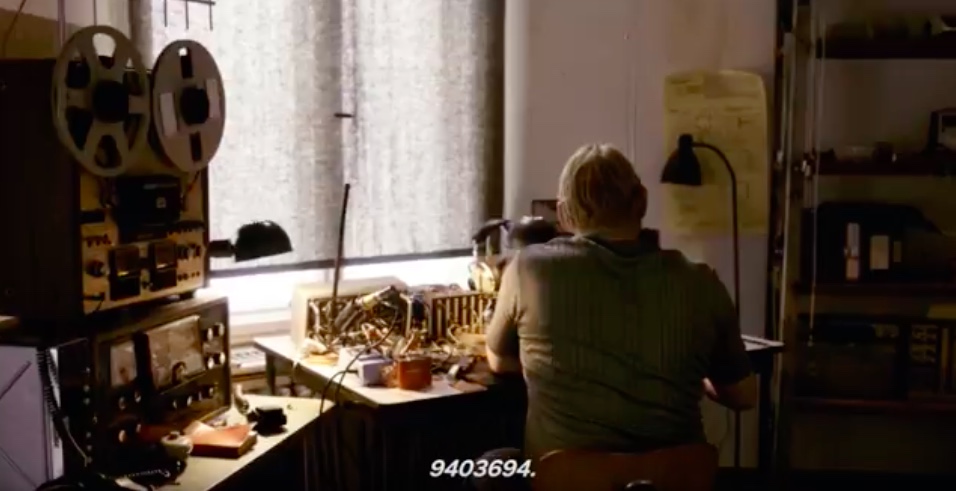
The receiver which featured in Same Sky is of Italian manufacture, it’s from Geloso but I’m not able to identify which model.

Here is a link to a very interest and comprehensive page, by Tony I0JX, about John Geloso the founder of the company. Scroll down, but read enroute, and there are pictures of the receivers and transmitters bearing the Geloso name.

http://www.qsl.net/i0jx/geloso.html

Yes, you will agree it’s a Geloso in the film.

It must be fifty plus years since I was allowed to touch one. As a teenager one of the ‘Elmers’ at the local amateur radio club in Torbay had a complete Geloso station.

What a beautiful receiver! Thanks for the follow-up, and links to this company’s history Kris!