Category Archives: Shortwave Radio

Radio Botswana, 1987 Style

No seasoned shortwave DXer can forget one of the most distinctive interval signals ever–the “barnyard animals” which marked the beginning of the broadcast day of Radio Botswana, Gaborone, for decades.

On its long-time frequency of 4820 kHz, Botswana was an occasional catch for me from the Seattle USA area. I yearned for clearer, more reliable reception of this station and other Africans which my East Coast USA DXer pals enjoyed!

Zebras mingle with other animals at Chobe National Park, Botswana.

Zebras mingle with other animals at Chobe National Park, Botswana.

It was always fun–and a DXing challenge–to catch Radio Botswana’s interval signal and sign-on announcements, but it was typically mid winter for reception in Seattle. Propagation on 60 meters needed to be favorable to enjoy anything other than a weak, barely listenable signal. Imagine my surprise and excitement when on the evening of December 27, 1987 I came upon the following signal booming in on 4820 kHz, far, FAR better than any previous Botswana reception. Indeed, their signal that evening surpassed in clarity even the Papua New Guinea and Indonesian “regulars” I would hear on the tropical bands from the Northwest USA.


This recording begins with the famous barnyard animals interval, the beautiful Botswana national anthem (Fatshe leno la rona, or This is Our Land in English) and is followed by a full list of broadcasting frequencies and times in English and the (presumed) Setswana language. That information is followed by a flute instrumental version of the Christian hymn Beautiful Savior, which introduces a short devotional or scripture message. The 10 minute recording wraps up with an a cappella children’s choir.

Great Circle route from the Gaborone transmitter to Seattle receiver location.

Great Circle route from the Gaborone transmitter to Seattle receiver location.

My receiving setup for this 1987 recording was an ICOM IC-R70 and a 300 foot long random wire antenna. Such a long antenna is unusual for the middle of an urban area, but I took advantage of living in a 3rd floor apartment across from a small city park. One midweek day, while most folks were at work, I managed to string out this long antenna with very small diameter braided steel wire from the 3rd floor apartment balcony to a distant treetop. This “sloper” antenna had significant directivity to the northeast, which happens to be the bearing for many African stations heard from the Pacific Northwest USA. The small diameter wire was suspended so high that it was virtually invisible from ground level.
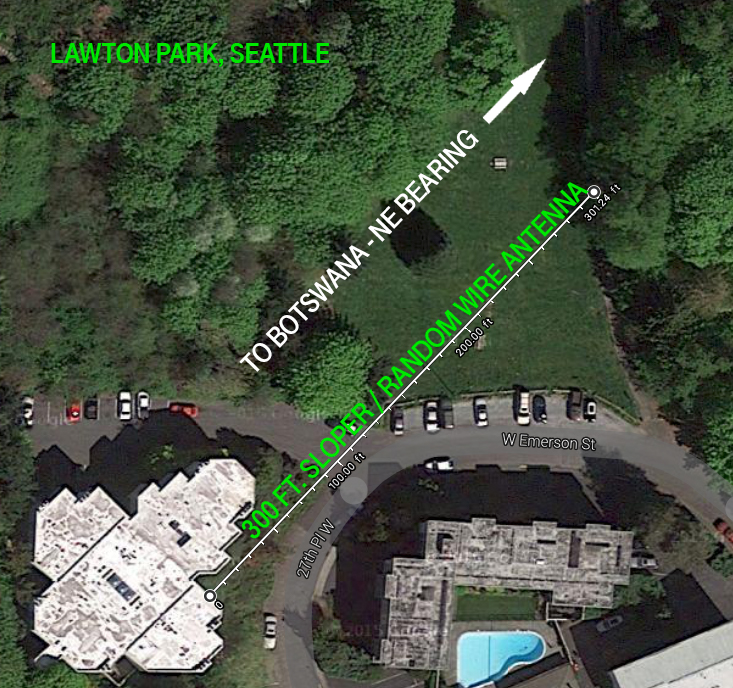
Antenna orientation for 1987 reception of Radio Botswana. I'm sure this urban location is plagued by QRM and radio frequency interference now in 2016! My ICOM IC-R70 receiver handled the strong signals from nearby MW & FM broadcasters surprisingly well with the addition of a Grove Tun3 Mini-tuner preselector.

Antenna orientation for 1987 reception of Radio Botswana. I’m sure this urban location is plagued by QRM and radio frequency interference now in 2016! My ICOM IC-R70 receiver handled the strong signals from nearby MW & FM broadcasters surprisingly well with the addition of a Grove Tun3 Mini-tuner preselector.

I continued to log Radio Botswana occasionally on 60 meters until the station eventually left the air (early 2000s I think), but I never heard them again with such a strong, clear signal as in late December 1987!

Guy Atkins is a Sr. Graphic Designer for T-Mobile and lives near Seattle, Washington.  He’s a regular contributor to the SWLing Post.
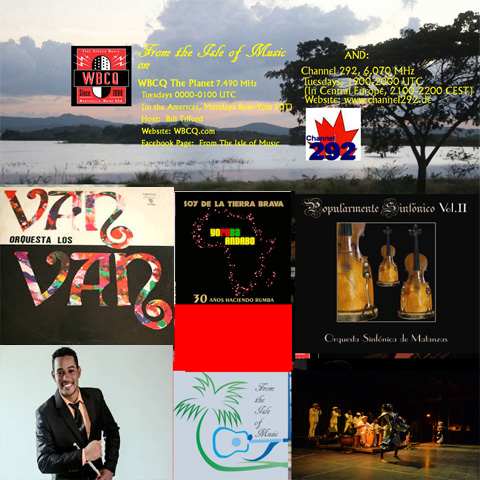
From the Isle of Music for June 21

smallPromoFTIOMjune06072016 copy

The next edition of From the Isle of Music:

The June 21 (June 20 in the Americas on WBCQ) program features special guest Ethiel Failde, whose album Llego la Failde was nominated in the Opera Prima and Traditional Popular Music categories in Cubadisco 2016; we will also play some of the winner of the Traditional Afrocuban category, Soy de la Tierra Brava by Yoruba Andabo. We’ll finish Popularmente Sinfónico Vol II by Orquesta Sinfónica de Matanzas, and we will play some Los Van Van from the 1970s.
Two listening options on shortwave:
WBCQ, 7490 KHz, Tuesdays 0000 UTC (8pm EDT Mondays)
Channel 292, 6070 KHz, Tuesdays 1900 UTC (2100 CEST)

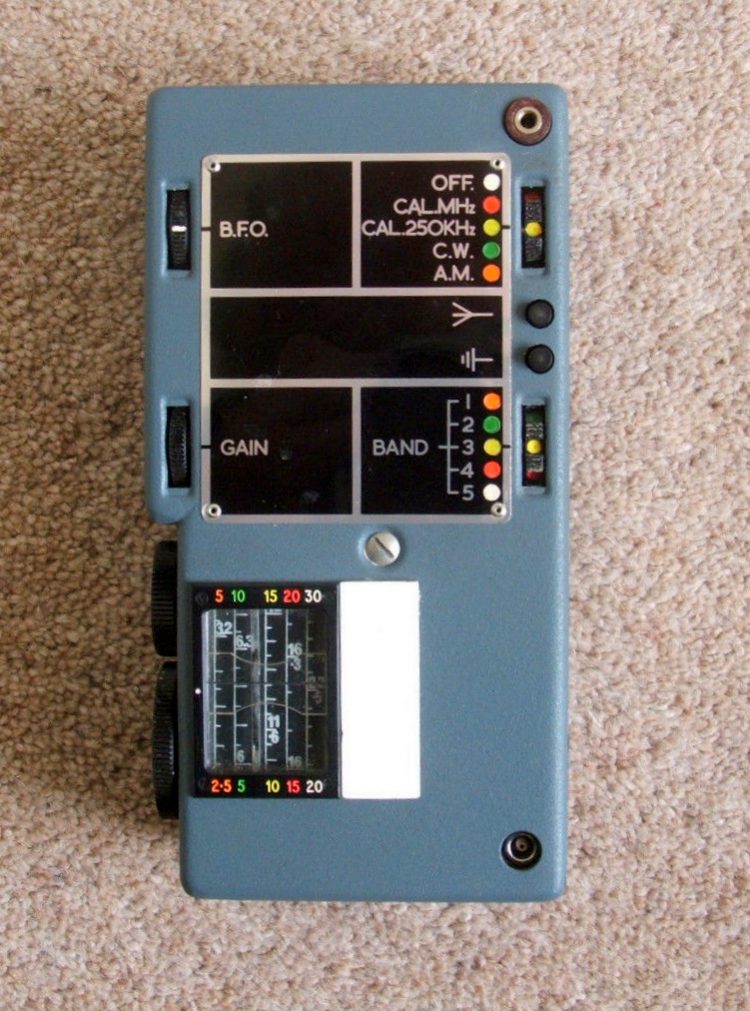
eBay find: The Mark 328 British Spy Radio

SpyRadio

Many thanks to SWLing Post reader Cap, who writes:

This little gem just popped up on eBay UK, it’s working and looks to be in very good condition and is also open to offers:

Click here to view on eBay.

[More info about the Mark 328 (a.k.a. MK.328) can be found here.]

This follows on from the FS5000 spy radio you posted about in April.

If I had a respectable amount to offer this Seller, I think I would.

True–by today’s standards–the Mk.328 isn’t a high-performance receiver. It’s single conversion and probably not über-sensitive.

Spy-Radio

Still, it’s a working piece of Cold War history and, back in the early 70s, probably packed the biggest punch for the size. I bet it’s over-engineered and will probably outlive most of us.

Mighty tempted to make an offer. I should probably distract myself about now.  Thanks, Cap! 🙂

Steve notes the ITU-R Recommendations on Radio Noise

SX-99-Dial

Commenting on our post about the FCC Noise Floor Inquiry, SWLing Post contributor, Steve Yothment writes:

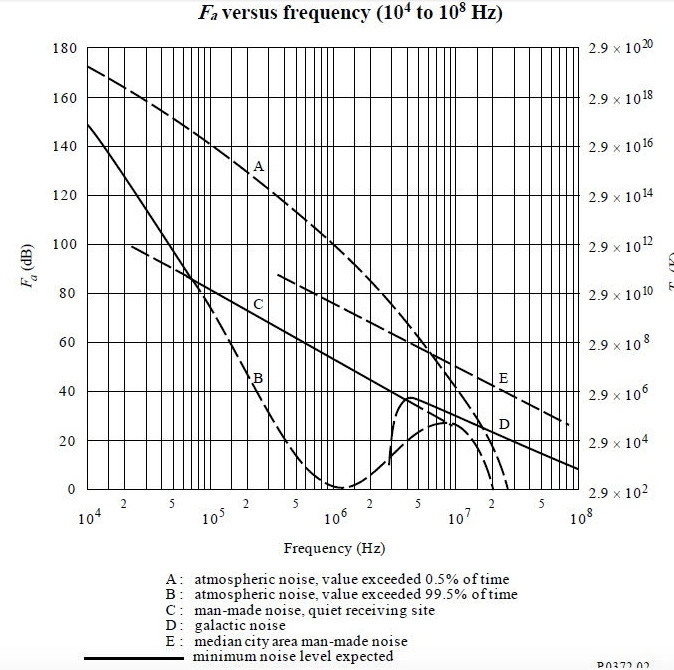
One of the definitive documents on Radio Noise is the ITU-R Recommendation on Radio Noise, version P.373-12. This (latest) version is dated 07/2015, so it’s only a year old. You can download it [as a PDF] here. It has a lot of info on natural and man-made radio noise.

My favorite graph from the document is shown below:

Graph

It shows the level of radio noise vs. frequency for good and poor conditions. It can be rather surprising how noise, even under the best conditions, can be quite excessive on shortwave frequencies. For example, the best case noise level for 10 MHz is about 30dB above the Johnson Noise level. (That’s the noise level from just a resistor at room temperature.) That’s why the noise level in your shortwave receiver’s speaker gets so much higher when you attach the antenna!

That is fascinating, Steve! It’s no wonder we struggle with noise issues–even in the best of times, it appears.

eBay sighting: Barlow Wadley XCR-30 Mark 2

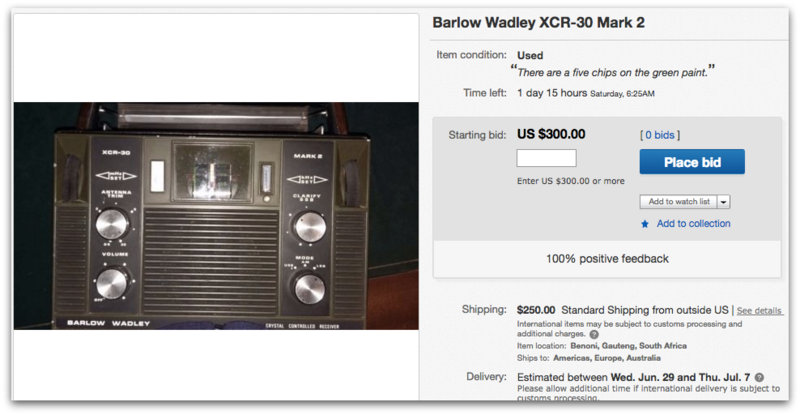
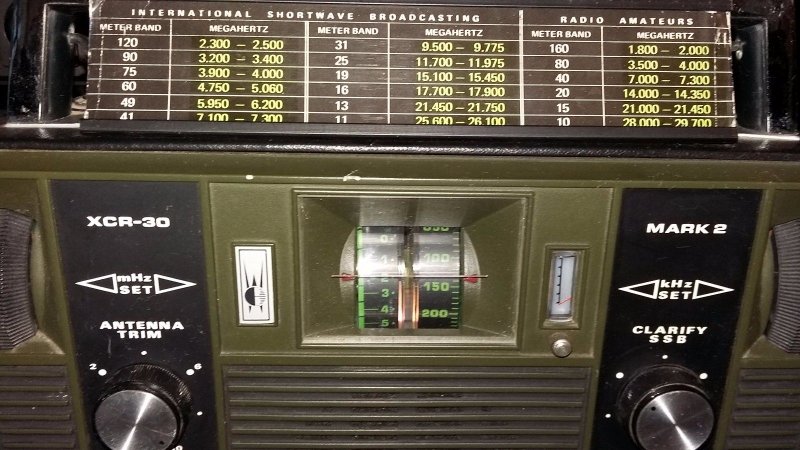
Barlow-Wadley-eBayMany thanks to SWLing Post contributor, Neil Goldstein, who shares a link to this Barlow Wadley XCR-30 Mark 2 on eBay.

Barlow-Wadley

The Seller writes the following description:

Up for auction is a rare military green Barlow Wadley XCR-30 Mark2. The radio works perfectly. This is a late serial number 14995.

Please request a shipping quote before bidding as I will charge actual shipping. I will ship via DHL which takes around 7 days.

It’s important to note that detail about shipping since eBay shows shipping as $250. Since it’s being shipped DHL from South Africa, costs could vary greatly, I imagine.

Click here to view on eBay.

FCC Noise Floor Inquiry

FCC-Public-Notice

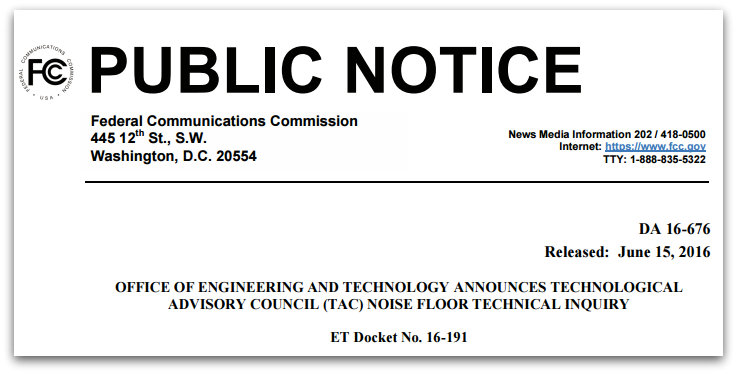
Many thanks to SWLing Post reader, Bill, who shares this public notice from the FCC:

Comment Deadline: August 11, 2016

The FCC’s Technological Advisory Council (TAC), an advisory group to the FCC operating under the Federal Advisory Committee Act, is investigating changes and trends to the radio spectrum noise floor to determine if there is an increasing noise problem, and if so, the scope and quantitative evidence of such problem(s), and how a noise study should be performed. In this public notice, the Office of Engineering and Technology (OET) announces the TAC’s public inquiry, seeking comments and answers to questions below for the TAC about radio spectrum noise.

Click here to download a PDF of the full notice.

It’s at least encouraging that the FCC is investigating radio noise/interference–a serious issue for radio enthusiasts. Note that the comment deadline is August 11, 2016.

Thanks again for the tip, Bill!

A16 version 2.1: Alan Roe’s guide to music on shortwave radio

Alan-Roe-Guide

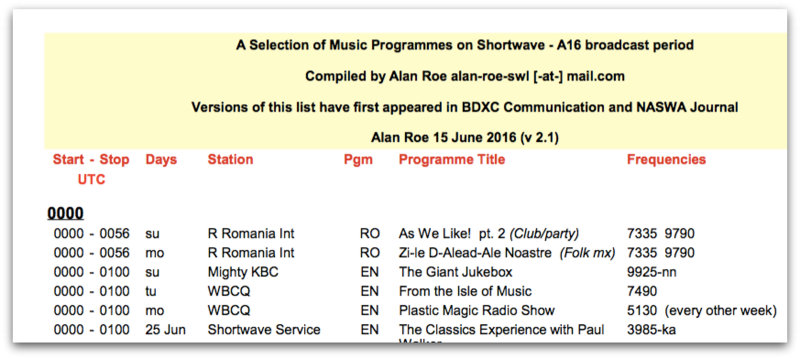
Many thanks to SWLing Post contributor, Alan Roe, who shares his updated  Music on Shortwave list for the A16 period. This version (2.1) incorporates several suggested additions by SWLing Post readers.

Alan, again, thank you so much for publishing this excellent little guide!

Click here to download Music on Shortwave A-16, Version 2.1 (PDF).