Category Archives: Vintage Radio

Bob recalls working at Harris and putting the RF-505A on the air

Fullscreen capture 5102016 114119 AM

In response to our post mentioning the Harris RF-505ASWLing Post contributor, Bob LaRose (W6ACU), writes:

I know the RF-505A very well. It was introduced in about 1969 while I worked at Harris in Rochester. I started working there as a Co-Op student while at RIT and then after I got my BSEE I joined them full time, initially as a Field Engineer but quickly found my way into Marketing and eventually Sales.

Right after the first version came out, the RF-505, I took one home to my parent’s house for a weekend and did some SWLing with it. It was very neat in one respect – it tuned ISB (Independent Side Band) and in those days there were a number of utility stations using ISB (separate traffic on each sideband). To an SWL some of the most interesting of these were the VOA point-to-point links from the East and West Coast, each carrying two simultaneous program feeds for the overseas relay stations!

Harris-RF-505A

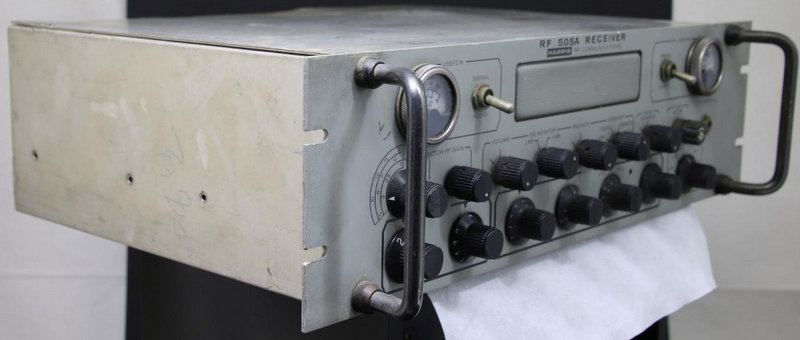
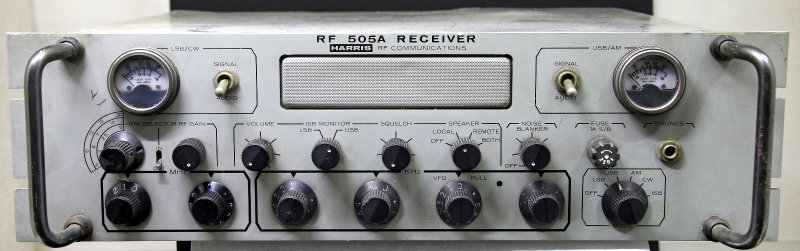
While overall a good receiver my personal results on the sensitivity of the original RF-505 were not very positive. On the bench with exactly a 50 ohm source it looked good but on a real world antenna it was pretty numb. Eventually, after a lot of internal arguments, they came out with the RF-505A that included a tunable active preselector as shown in the photos. Problem solved.

For a ham or SWL the RF-505 was a real pain in the butt to tune. You could dial in any exact frequency but the decade switches didn’t roll over (either mechanically or electrically) so you had to do a lot of knob twiddling to do any kind of band scanning. The detents on the switches connected to the knobs were pretty stiff so you could easily take some finger skin off tuning around!

If I remember correctly Harris built them for about a five year period and then replaced them with the RF-550, which was a monster of a receiver with all kinds of advanced features. It included a keyboard with electronic display.

Great memories!

Thanks so much for this RF-505A insight, Bob! I had a hunch that band-scanning wasn’t the RF-505A’s strong suit–it would be incredibly cumbersome to scan with so much “knob twiddling.”

It must have been pretty amazing to work for the legendary Harris corporation. Thanks for sharing!

Dan notes some rare Harris, Microtel and Drake receivers on eBay

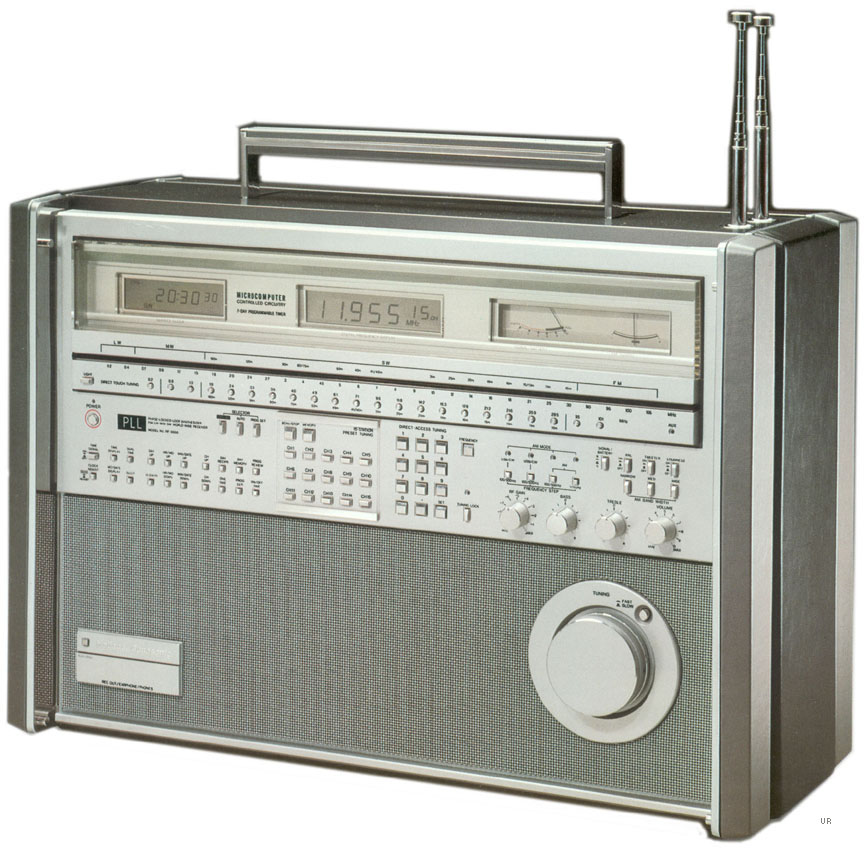
Harris-RF-505A

Harris RF 505A

Many thanks to SWLing Post contributor, Dan Robinson, who writes:

These days as shortwave continues on the decline, we’re seeing some great rarities, receivers that have never been seen before on the used market. One of  these is [top of page], a Harris RF-505A.

Fullscreen capture 5102016 114119 AM

Click here to view the RF 505-A on eBay.

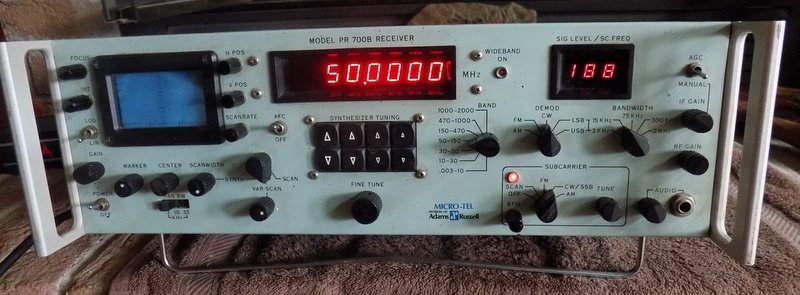
Another rarity, is a Microtel PR-700B receiver, information about which
can be found on Page 355 of the Osterman master guide to receivers.

Model PR-700B

Microtel Model PR 700B

Click here to view the Microtel PR-700B on eBay.

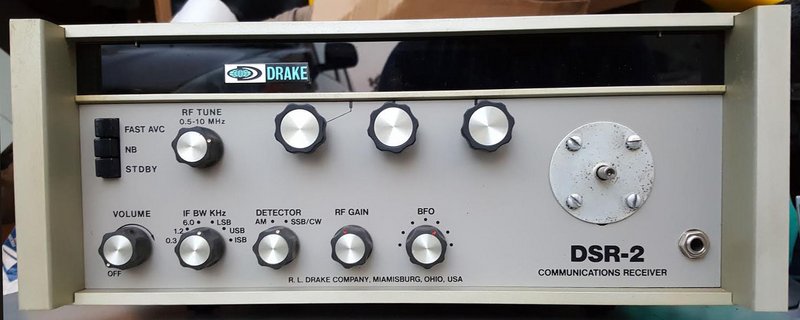
Last but not least, and this has never been seen before — a Drake DSR-2, apparently unused in its original packaging, which sold in flash for about $1300:

The Drake DSR-2

The Drake DSR-2

Click here to view the Drake DSR-2 on eBay.

Thanks, Dan! I’m a little surprised you haven’t at least jumped on that Harris receiver! I would be very tempted if I had the shelf depth for a rack-mounted commercial receiver.

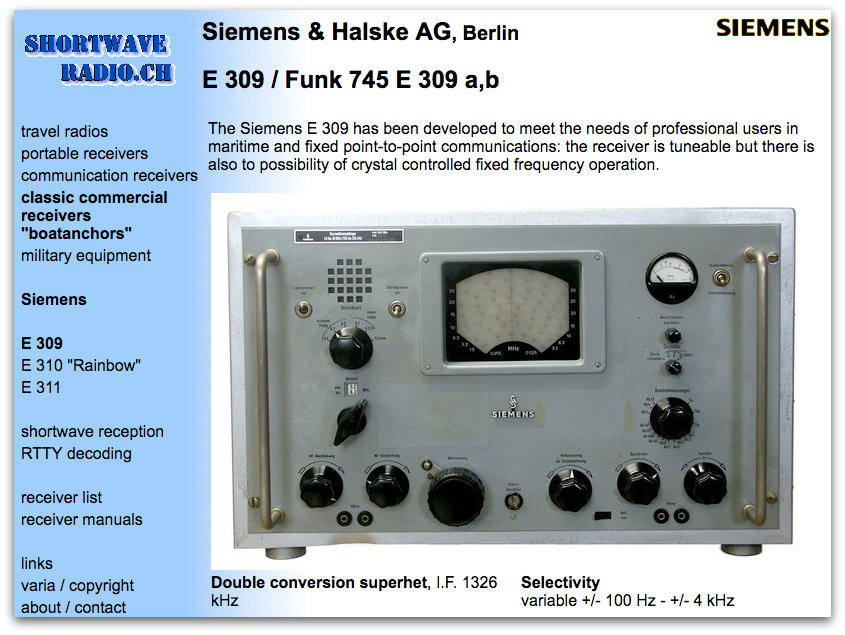
ShortwaveRadio.ch: A treasure trove of central European classic receivers

ShortwaveRadio.ch

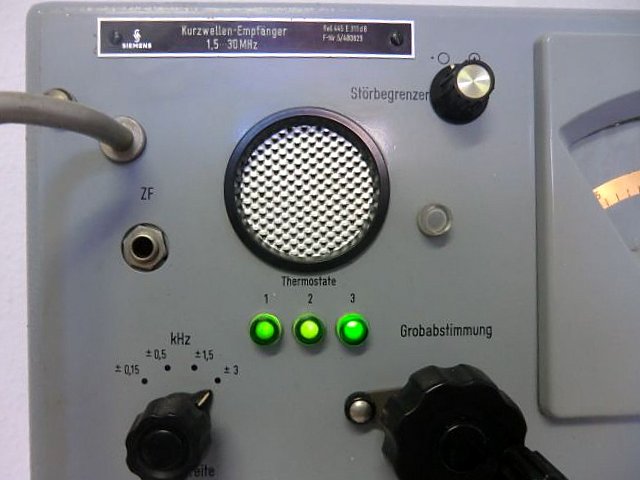
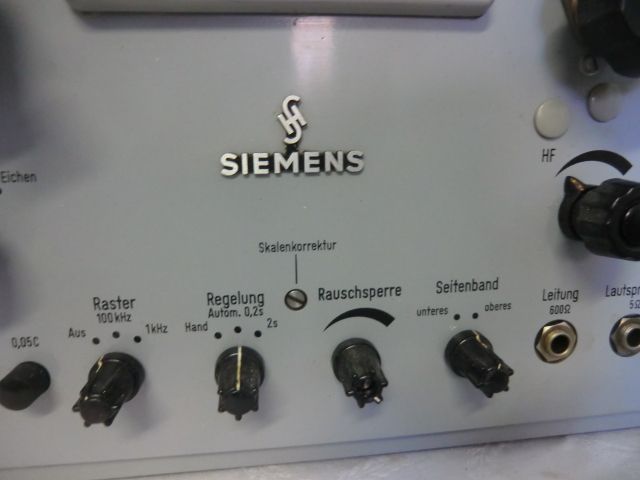
Commenting on our post regarding the Kurzwellen Empfänger Siemens receiver, SWLing Post reader “13dka” writes:

Some more info (mostly about the tuning procedure) [of the Kurzwellen Empfänger Siemens] here:

http://www.shortwaveradio.ch/radio-e/siemens-e311-e.htm

BTW this site is a comprehensive source on classic shortwave radios that enjoyed some popularity in central Europe.

Indeed!  I have stumbled across ShortwaveRadio.ch many times before doing research and meant to mention it here on the SWLing Post. Thank you for the reminder!

What’s so impressive about this site is that it’s in both German and English.

If I ever make it to the excellent Friedrichshafen ham radio convention, I’ll have ShortwaveRadio.ch bookmarked on my smartphone to help me ID all of those amazing European boat anchors in the flea market!

Thanks again for the tip!

eBay Sighting: Kurzwellen Empfänger Siemens

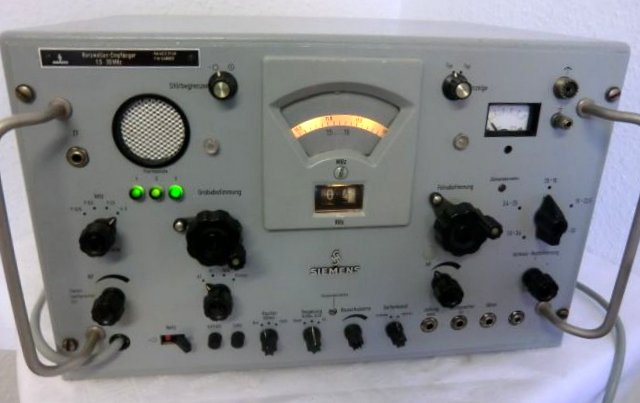
Siemens-Receiver

Once again, the intrepid Dan Robinson has discovered an eBay gem. Dan notes:

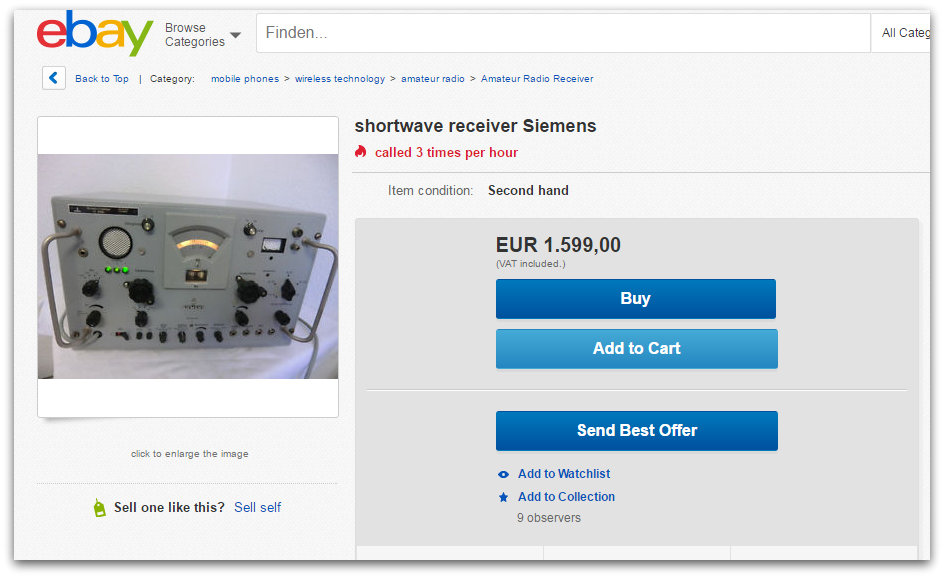
From eBay Germany comes this rarely seen and apparently in beautiful condition relic:

Siemens-Boat-Anchor-eBay

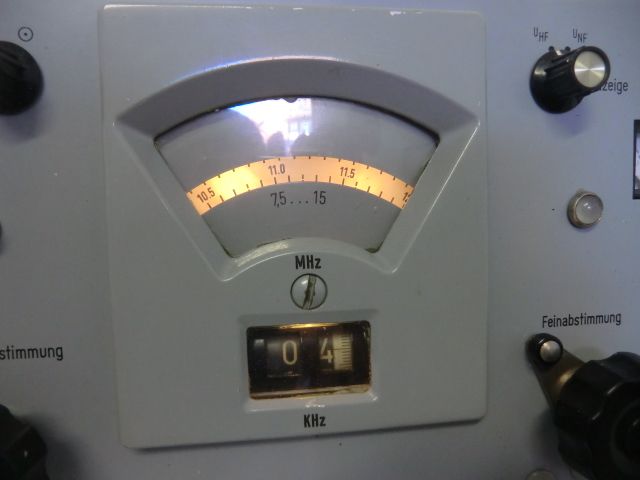
Wow–Dan–what a beautiful receiver! It has a dial blind like my BC-348-Q, but a dial design like my Hammarlund SP-600. The best of both worlds, in my opinion.

Siemens-Dial

And the green indicator lamps? Classy!

Siemens-Receiver-Indicator-Lamps

Siemens-Receiver-Panel

Siemens-Receiver-Right-Panel

Siemens-Receiver-Side

Siemens-Receiver

I assume, by the design, that this is a Cold War era receiver? I’m afraid I’m not at all familiar with Siemens receivers of the era.

Post readers: If you can shed light on this particular Siemens receiver, please comment!

Click here to view on eBay Germany.

eBay find: Rack of classic receivers

Rack-Gear

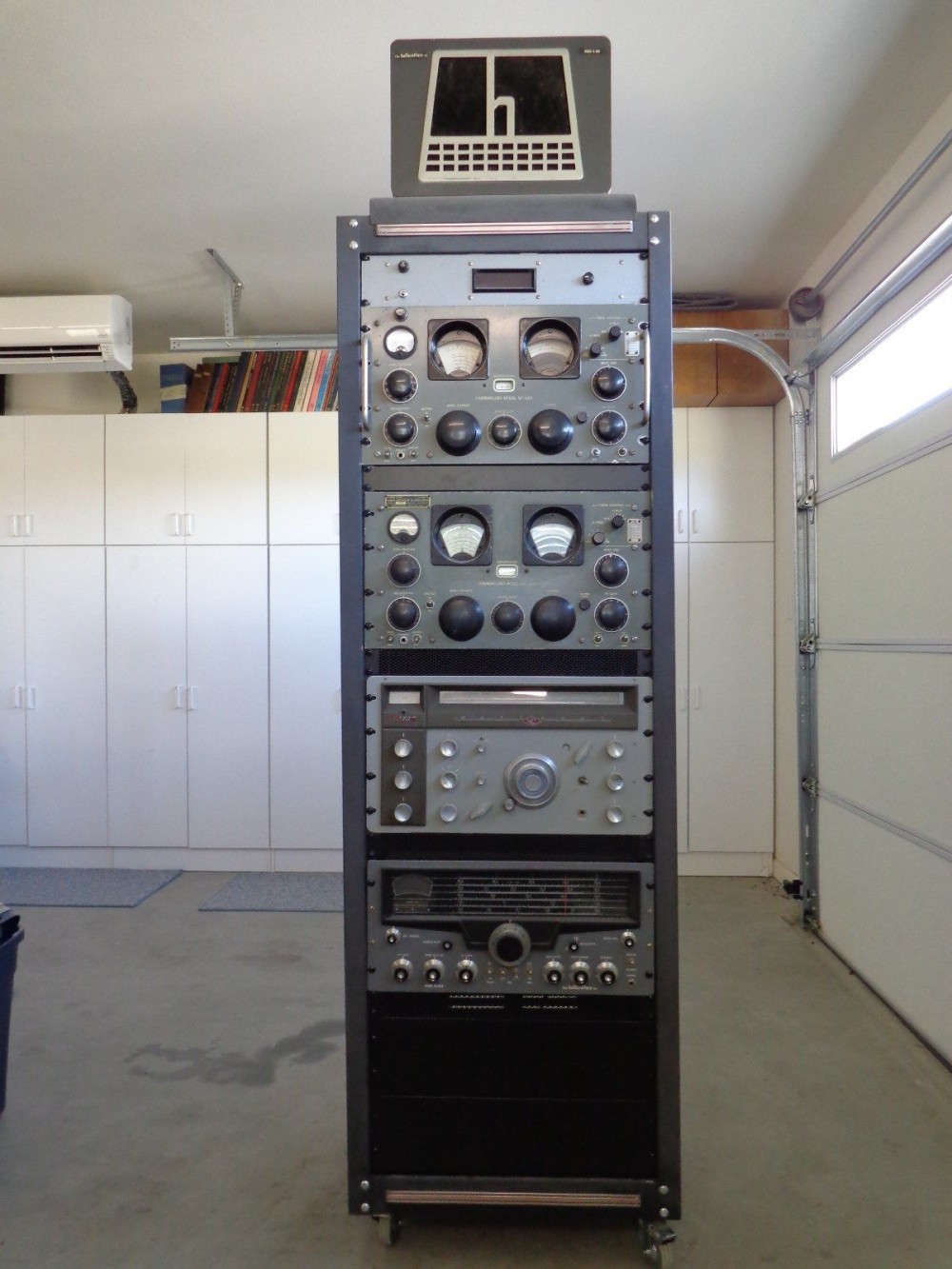
Many thanks to SWLing Post contributor, Dan Robinson, who shared a link to this rack of classic cold war era receivers. The starting bid is $943.75 and there is no shipping cost as it’s local pickup only (no surprise there).

Here’s the description from eBay:

LOCAL PICK UP ONLY Paso Robles Ca. 93446. Good condition, rack of Communications and Amateur Radio receivers. Includes Hallicrafters R-46B loudspeaker, two each Hammarlund SP-600 JX-26 receivers with one frequency readout as shown above the top receiver, a National NC-300 receiver with calibrator accessory, and a Hallcrafters SX-101A receiver with calibrator accessory. The rack cabinet is included. All have normal wear for vintage electronics, worn with faded, chipped and rust spots. The SP-600 receivers (both) dial slips and may need repair. All units may need further repair, alignment, or refurbishing. Local pick up only, I can help loading into your vehicle. 70hi 22wide 20deep weights about 600 pounds

Click here to view on eBay.

I think this would be a great deal if all of the equipment was in working order. I suspect this seller hasn’t tested anything and is, most likely, not a radio enthusiast. I bet the reason the SP-600 dials are spinning freely is because the tuning lock is engaged on each unit–possibly a good sign that the previous owner took care of the equipment.  All of it looks good (cosmetically) for its age.

If I were interested, I’d go by and check this out in person prior to bidding.

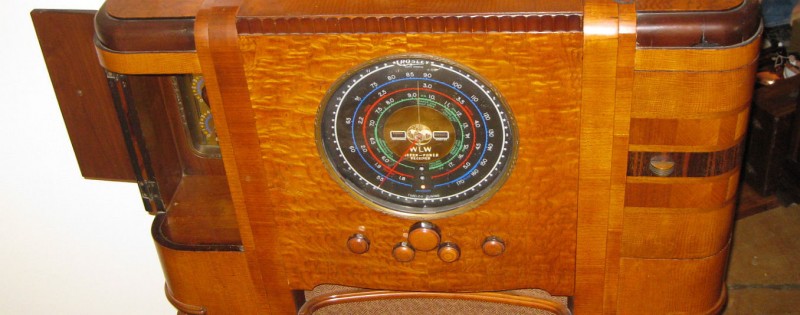
Video: 1936 Crosley WLW Model Super-Power Radio Receiver

WLW Model  Super-Power Radio Receiver-2

In response to our recent thread of posts about the Crosley WLW Model Super-Power Radio Receiver, I’d like to thank both Jonathan Marks and Mike Barraclough for sharing the following video by TNT Amusements on YouTube:

Click here to view on YouTube.

Ken’s E. H. Scott Philharmonic Beam of Light console radio

E. H. Scott Philharmonic Beam of Light Open 2

In response to an inquiry in our post about the Crosley WLW Model Super-Power Radio Receiver, SWLing Post contributor, Ken Carr, writes:

I’m not sure if my radio is a ‘benchmark’ but it sure is close to it.
It is the E. H. Scott Philharmonic Beam of Light console radio.

E. H. Scott Philharmonic Beam of Light Outside Closed

Mine appears to have been built in 1939 or early 1940. It has 30 tubes, most of which are covered by chrome-plated shields. The power supply/amplifier (4 6L6’s in the output stage), receiver, 15″ speaker and cabinet easily weigh over 150 pounds.

E. H. Scott Philharmonic Beam of Light inside

It took me two years of occasional work (I am retired so I don’t rush) to get it going and working reasonably well. I had to replace over 100 capacitors and correct some B+ voltage problems left by a previous repair person. 

None of the knobs are correct (mine came without them … 9 required) and replacements are difficult to come by (and quite expensive when they do appear).

When receiving a strong station the volume is such that it would easily drown out anything within 100 yards (and with no distortion).

E. H. Scott Philharmonic Beam of LightDial

Some day I will post some details and photos on my WordPress site (idlenot.com). I’ll be sure to let you know, Thomas. [Note: Yes, Ken, please do!]

Oh, the first time I powered it up and received a station they were playing Light My Fire (The Doors, I think). Appropriate. I put a video of it on YouTube. The radio is all apart as I was still working on it at the time.

Click here to view on YouTube.

Now that is serendipity, Ken–I mean, the first music you hear after restoring this beauty is Light My Fire? Brilliant!

The E. H. Scott Philharmonic Beam of Light is a benchmark console by any standard. I first learned about this radio through a local classified ad–the owner was selling the internal components (and original knobs) but had no cabinet. I believe he was asking $1200. The chrome plating is such eye candy, I can see why some owner in the past removed it from the cabinet to save space. Still, it was a shame the cabinet had been discarded–as one can see from your photos, the craftsmanship is simply stunning.

Ken, thank you for taking the time to share the Beam of Light console with us!

Post readers: you should check out Ken’s blog, Idlenot.com, where you’ll find more vintage radio and classic cars!