Category Archives: What’s On Shortwave

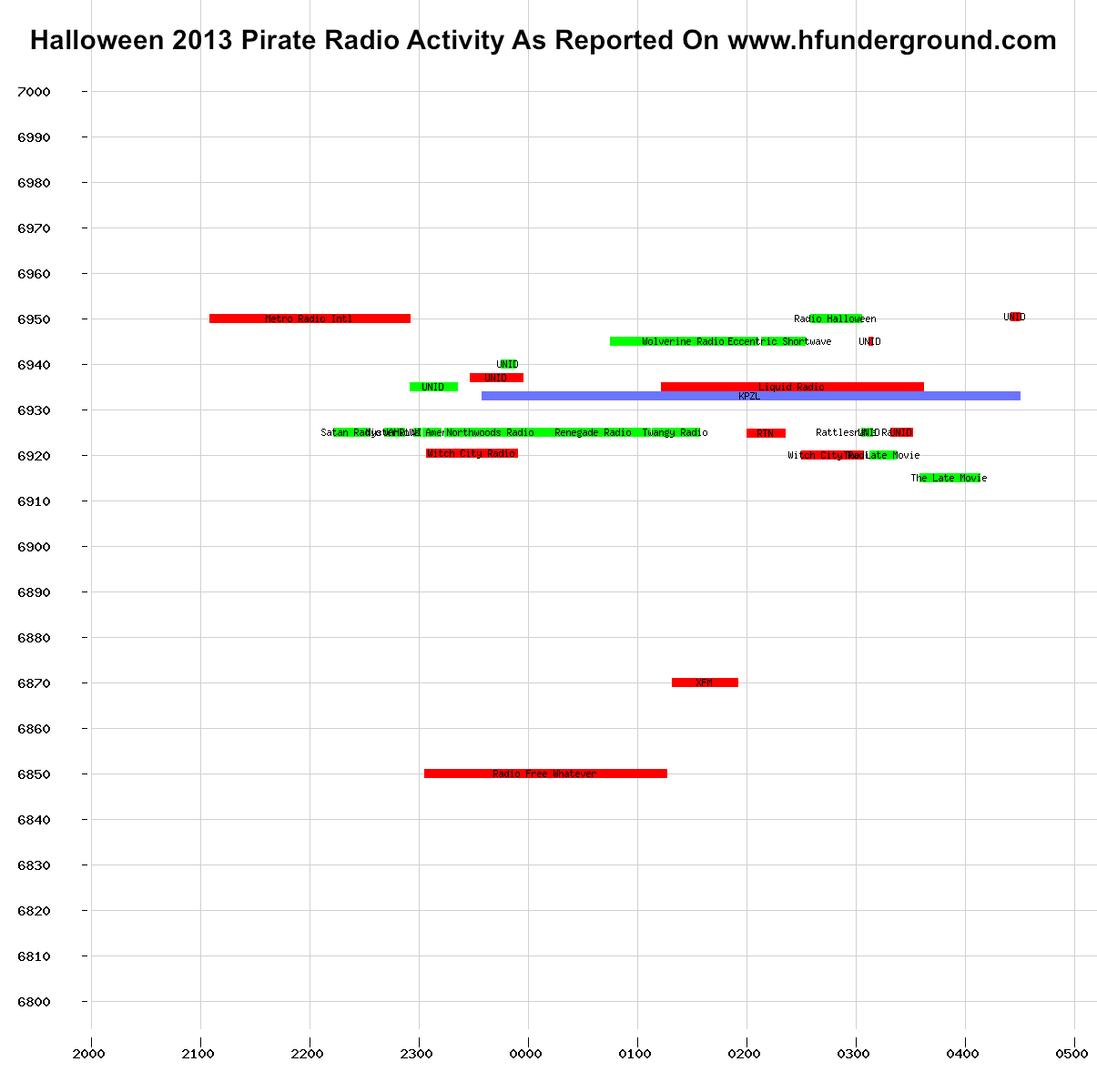
Pirate Radio Recordings: Radio Casablanca

CasablancaThursday night, I received word from Richard Blaine at Radio Casablanca:

“We plan to be on the air tonight on 6940 kHz AM, starting sometime around 2300 UTC, and running until the plane to Lisbon has departed.”

So at 23:00 Zulu, I started recording…

Though the noise level was particularly high on the lower HF bands, and Casablanca’s signal wasn’t quite as strong as previous nights, I could still enjoy Blaine’s nostalgic mix of WWII era music through the static. What a treat.

You can listen to the full recording via the embedded player above, or simply click here to download the MP3.

Hearing the speed of light: DX double echo

ionosphere-earth-radio-wavesTwo weeks ago, at the W4DXCC conference in Tennessee, I met Lyle Juroff (K9FIK). Not only did I find that Lyle and I had many radio interests in common, but he also told me a story about hearing, recording and analyzing a double echo on the HF bands. I asked if he would explain in an email and include the recording so that I could share it on the SWLing Post. He kindly agreed!

Lyle writes:

I worked a DX station [9A1A] on 10 meters this past spring.  As the band improved, I heard an echo develop on his signal and guessed it might be long path so I began recording the audio.   I then began to hear a double echo and looked at the waveform on AUDACITY.  The timing marks on AUDACITY indicated 140 milliseconds between echos.

I went to Wolfram Alfa, one of my go-to sights for things I can’t remember, and looked up the earth circumference.  It not only gave me the distance but also the time to travel it at the speed of light,  133 milliseconds.   Not sure if everyone working DX has heard this sort of thing, I played the recording at the next East Tennessee  DX Association meeting.  Nobody said they had heard that kind of double echo.

Click here to download an mp3 of Lyle’s recording or simply listen via the embedded player below (note that the second recording is .WAV format):

Have you heard a double echo this profound? Please comment.

Many thanks to Lyle (K9FIK) for sharing his story!

Shortwave Radio Recordings: The Mighty KBC

"Dad, that's The Mighty KBC! Turn it up!"

“Dad, that’s The Mighty KBC! Turn it up!”

Sunday at 00:00-02:00 UTC, I tuned to 7,375 kHz to listen to The Mighty KBC. This was the first time I tuned to their winter frequency this season and wasn’t sure how strong their signal would be on a relatively noisy night on the bands.

KBC’s signal was blowtorch strength into North America. It could have been easily received on even the most simple of portable radios.

As we’ve come to expect, the Mighty KBC’s Giant Jukebox of music has a lot of rock-n-roll and Euro-pop variety, spanning the decades; DJ, “Uncle Eric” knows how to entertain and spin the tunes! Uncle Eric includes Kim Elliott’s digital text modes in this broadcast–if you missed the live broadcast, you can even decode the messages from the recording below.

Click here to download the recording as an MP3, or simply listen via the embedded player below. Enjoy:

Shortwave Radio Recordings: Radio Progreso

Havana, Cuba (Photo: Wikimedia)

Earlier this week, I noted that Cuban medium wave station, Radio Progreso, was to begin broadcasting on 4,765 kHz shortwave, beginning October 1st at 00:30 UTC.

I listened between 00:30 and 2:30 UTC on Oct 1st, but heard nothing other than the weak carrier from (possibly) Radio Emissora De Educao Rural. However, the following evening at 01:00 UTC (October 2nd) I did hear a strong signal from Radio Progreso.

For your listening pleasure: the recording I made of Radio Progreso on October 2, 2013, starting around 01:00 UTC. Click here to download the recording as an MP3 or simply listen via the embedded player below:

Shortwave Radio Recordings: Radio Australia

CRI-bandwidthLike most Friday mornings, yesterday at 11:00 UTC, I tuned to 9,580 kHz to listen to Radio Australia news and ABC National’s technology program Download This Show.

While the signal out of Shepparton, Australia was as strong as ever, I heard adjacent interference from China Radio International.

Indeed, looking my WinRadio Excalibur‘s spectrum display (see image on right), you can see that CRI’s signal on 9,570 kHz was actually producing noise 15 kHz on either side of their AM carrier (for a total bandwidth of 30 kHz!). Radio Australia’s signal was much cleaner, sticking to their allotted 10 kHz bandwidth limit.

The recording of Radio Australia was still quite good, despite the interference, because I was able to run the Excalibur’s AM sync detector locked on the (less noisy) upper side band.

Click here to download the recording as an MP3, or simply listen via the embedded player below:

The BBC launches a new, interactive news program

Ros Atkins, host of Outside Source (Photo: BBC Media)

Ros Atkins, host of Outside Source (Photo: BBC Media Centre)

See full press release below–many thanks to Richard Cuff for the tip:

(Source: BBC Media Center)

The BBC has today announced development of a brand new news programme, Outside Source, hosted by Ros Atkins, to be broadcast across its international platforms – BBC World Service Radio, BBC World News TV and BBC.com.

This innovative new show will link the BBC’s global network of journalists with a worldwide audience using the latest in broadcast technology.

Broadcasting live from the BBC’s new state-of-the-art newsroom in the redeveloped Broadcasting House, London, the programme is launching initially on World Service Radio. It is then planned to develop the format to provide audiences with a fully integrated web, radio and TV experience.

Outside Source aims to open up the news process, enabling people to discover the latest on the stories that matter to them. An hour-long World Service Radio show is the first element of the pan-Global News format to be brought to air. Outside Source will be broadcast weekdays between 11am and 12pm GMT.

The programme will then be developed to include an online element, encouraging audiences to share their knowledge and experience of that day’s stories, no matter where they are in the world, via social media.

The online roll-out will be followed by the TV offering, due early in 2014 – a half-hour programme on BBC World News, the BBC’s international 24-hour television news channel – broadcast in the early evening GMT.

Using the latest technology means, Ros won’t be tied to a studio for the live broadcasts. He’ll be moving around Broadcasting House so listeners are getting the latest information on stories from our reporters, whether they are in one of the 27 language services or part of the BBC’s team of correspondents. Plus there will be ample opportunity for the audience to comment and add insight about stories happening where they are.

Sharing the ethos behind Outside Source, Editor Mark Sandell comments: “Outside Source is an exercise in open journalism. It aims to open up the news process and involve the audience in understanding the news. It will be technologically advanced and ambitious but also transparent and accessible. We want it to be ‘in the moment’ as we and the audience are discovering the news.”

Introducing the new programme, Ros Atkins says: “We are all incredibly excited about the new show. Such an innovative programme is only possible because of our new facilities here at Broadcasting House. While our starting point will be the expertise we have in the building, such as our language services and our bureaux teams, we’ll also be using social media and story communities to complement what we are discovering and to find out what our audience is making of the news. Outside Source will show we really are the world’s newsroom.”

Outside Source will launch first on BBC World Service on Monday 28 October at 11am GMT weekday mornings.

With the FCC in shutdown, pirates hit the air

pirateI noted at least seven pirate radio loggings here in North America on Wednesday, October 1–the first day of the US government shutdown. This is a remarkable number of pirate loggings for a weekday night.

I then saw a message from Ragnar Daneskjold, pointing to the FCC’s printed plan for an “Orderly Shutdown Due to Lapse of Congressional Appropriations” and this quote, in particular:

“FCC activities other than those immediately necessary for the protection of life or property will cease.”

So I’m sure, as one SWLing Post reader pointed out, pirates will “play while the (FCC) cat is away.”

During the US government shutdown, expect extra pirate activity weekday nights between 6920-6970 kHz.

Click here to read other items related to the US government shutdown.