Marion Webster (Source: Marion’s Attic)
If you’ve never heard Marion’s Attic on WBCQ, you don’t know what you’ve been missing–especially if you love early music recordings. Marion’s Attic describes the show as:
“[A] unique radio program, broadcasted on WBCQ, The Planet, [7.49] MHz (Shortwave Radio) every Sunday at 5 PM Eastern time. Hosted by Marion Webster & Kristina, and with occasional special guests.”
“Marion’s Attic is an eclectic radio program which plays original cylinder and disc records from the late 1890’s to the mid 1930’s. Having a library containing thousands of standard size cylinder records, dozens of 5 inch Concert Cylinders and an unknown amount of 78’s allows us to share unusual and forgotten music that you cannot hear anywhere else. What makes this special radio program unique is I play original records on the original phonographs when possible; many of which are over 100 years old. The theme varies from week to week; a show may feature popular songs from the early 1900’s one week, wild dance music from the roaring 20’s the next week.”
Marion’s Attic has been on WBCQ since September 21st, 1999 and is certainly one of their most popular shows. It’s quirky and authentic. I love it.
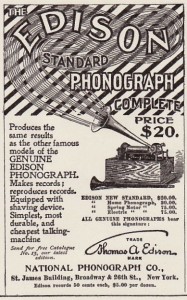
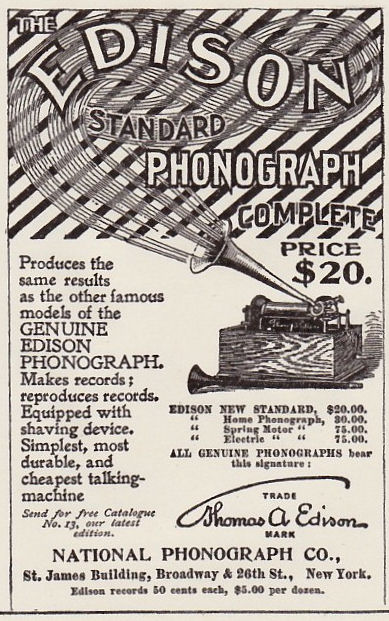
(Source: edisonphonology.com)
Mary tells us that each episode is recorded in her attic using simple recording equipment and original phonographs including:
- 1898 Edison Home phonograph for brown wax cylinders
- 1900 Columbia Graphophone AG for Concert Cylinders
- 1908 Edison Standard Model D phonograph for 2 & 4 minute wax cylinders
- 1913 Edison Amberola V phonograph for Blue Amberol cylinders
- 1923 Edison London Upright phonograph for Diamond Discs
- 1965 Gerrard electronic turntable for 78 rpm records
Yesterday afternoon, at 16:59 EST (21:59 UTC), I tuned to Marion’s Attic on 7,490 kHz and started recording. You’ll hear about one minute of WBCQ’s interval signal and station ID, then straight into Marion’s Attic. Click here to download the show as an MP3 or simply listen via the embedded player below:
If you missed Marion’s Attic yesterday, you can catch it again tonight on WBCQ–check out the full broadcast schedule below:
- Sundays: 7,490 kHz, 05:00PM – 06:00PM ET (22:00 – 23:00 UTC)
- Mondays: 5,110 kHz, 09:00PM – 10:00PM ET (02:00 – 03:00 UTC)
WBCQ is easily heard in North, Central and South America–also in Europe.
Marion and Kristina often give shout outs to their listeners. You can contact them at [email protected] or:
Marion’s Attic
P.O. Box 583
Coventry, CT 06238
Many thanks to Marion and Kristina for sharing your wonderful collection of early music recordings! I’d also like to thank SWLing Post reader, Mike, who is a big fan of Marion’s Attic and unknowingly gave me a nudge to mention their show here.

 Last week, we posted the following recording on the Shortwave Radio Audio Archive; our website and podcast of current and historic shortwave radio recordings.

 Many thanks to SWLing Post reader, Dominik, who points us to the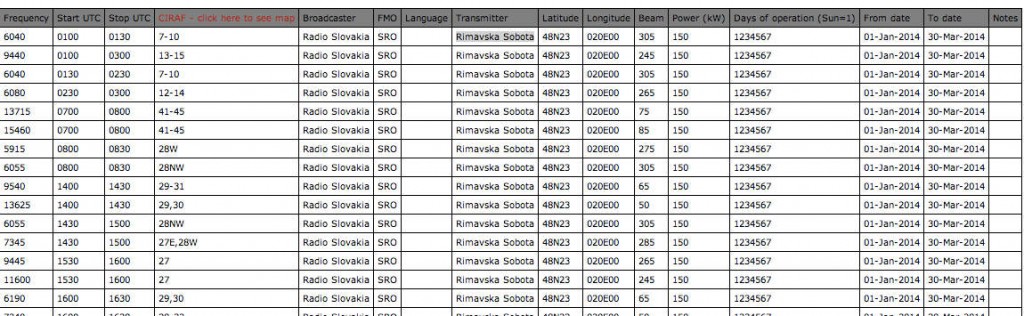


 You might remember my post from last week saying that