The rise and decline of AM radio in Pittsburgh

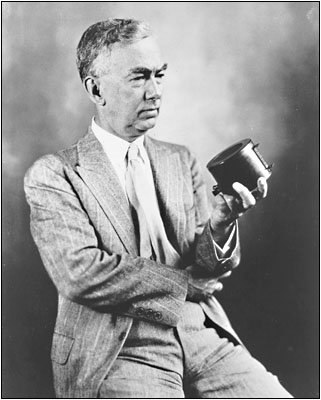
A portrait of Frank Conrad in 1921; holding a microphone in his hand (Source: Wikimedia Commons)

A portrait of Frank Conrad in 1921; holding a microphone in his hand (Source: Wikimedia Commons)

Many thanks to Jeff Brady who shared this article from the Pittsburgh Post-Gazette. While this article focuses on Pittsburgh’s AM radio scene, it’s certainly reflective of a common theme throughout the US and in other countries.

(Source: Pittsburgh Post-Gazette)

By Adrian McCoy and Maria Sciullo / Pittsburgh Post-Gazette

“Radio, as we know it, may have begun on a bet.

Frank Conrad, assistant chief engineer for Westinghouse in the early 20th century, wanted to see whether a new watch was keeping correct time. In 1912, he made a $5 wager with colleague Thomas Perkins. But how to verify his claim?

Tinkering with materials in his Wilkinsburg garage, Conrad created a small receiver capable of picking up time signals from the U.S. Naval Observatory in Arlington, Va.

He won his bet and went on to design bigger and better radios for Westinghouse. In turn, Westinghouse became a key player in turning the hobby of a few radio enthusiasts into an industry that changed the world.

Pittsburgh’s radio history is the history of modern radio.

For AM radio — and the radio industry in general — the hits just keep coming. Rapid technological changes, government legislation, aging demographics and a shifting media landscape have combined to erode AM’s once massive audience. Better clarity through FM, HD and satellite, and more diverse programming have resulted in AM leaning heavily on two formats: talk and sports.

Still, it all started here.” [Continue reading…]

For more information about Frank Conrad, check out this biography on Wikipedia. Read the full Gazette-Times article The Rise and Decline of AM Radio by clicking here.
Pirate Radio Recordings: Radio Paisano

RadioListening

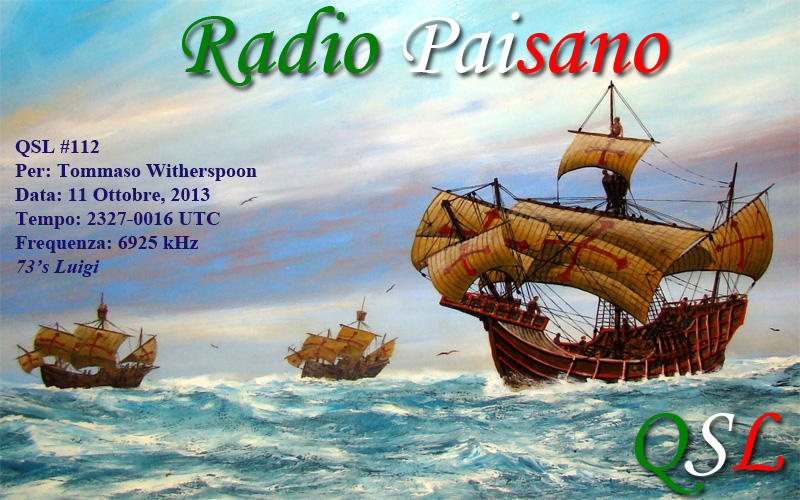
For your listening pleasure: fifty minutes of the pirate radio station, Radio Paisano.

I recorded this broadcast on Oct 11, 2013, starting around 23:30 UTC, on 6,925 kHz AM. This was the first time I had heard Radio Paisano on the air, though they do seem to broadcast around the same weekend every year.

Click here to download the recording as an MP3, or simply listen via the embedded player below:

2013PaisanoQSL-Witherspoon112

Pirate Radio Recordings: Wolverine Radio

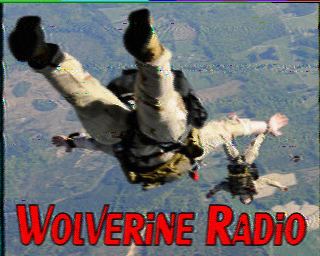
I decoded this Wolverine Radio SSTV QSL on the SSTV iOS App

I decoded this Wolverine Radio SSTV QSL with the SSTV iOS App–you can also decode this eQSL at the end of the recording

For your listening pleasure: 1 hour and 44 minutes of pirate radio station, Wolverine Radio–recorded Saturday, October 12, 2013 starting around 1:15 UTC.

Wolverine was broadcasting on 6.945 MHz in the upper side band. Typical of Wolverine, lots of music variety which spans the decades–staring in the 30s and 40s, ending with present day tunes–and no commentary other than station ID throughout.

Wolverine Radio typically has a blowtorch signal which makes for great audio fidelity, especially for an upper side band broadcast. This broadcast was no exception.

Click here to download the recording as an MP3 or simply listen via the embedded player below:

Pirate Radio Recordings: Radio Gallifrey Intergalactic

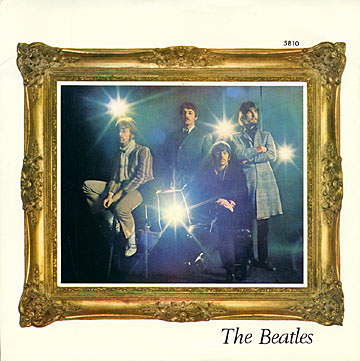
BeatlesWhile recording Radio Casablanca Thursday night, I was also fortunate to capture Radio Gallifrey Intergalactic.

Gallifrey started the broadcast with their customary audio sweeps and Dr. Who theme, then straight into the Beatles, “Strawberry Fields Forever.” Brilliant!
[I know my buddy, BJ, will enjoy this combo.]

Radio Gallifrey Intergalactic was on the air for almost 27 minutes with a mix including the Beatles, Bowie, Hendrix, Jefferson Airplane and more.

Click here to download an MP3 recording of the full show, or simply listen via the embedded player below. Enjoy:

Pirate Radio Recordings: Radio Casablanca

CasablancaThursday night, I received word from Richard Blaine at Radio Casablanca:

“We plan to be on the air tonight on 6940 kHz AM, starting sometime around 2300 UTC, and running until the plane to Lisbon has departed.”

So at 23:00 Zulu, I started recording…

Though the noise level was particularly high on the lower HF bands, and Casablanca’s signal wasn’t quite as strong as previous nights, I could still enjoy Blaine’s nostalgic mix of WWII era music through the static. What a treat.

You can listen to the full recording via the embedded player above, or simply click here to download the MP3.

Pavel’s 70s era recording of a German numbers station

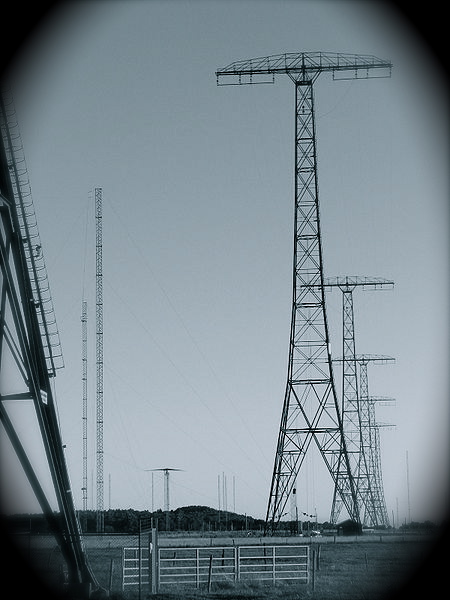
towersI read this account Pavel posted on the Spooks reflector and asked if he would share his story on the SWLing Post.  He kindly agreed.

Pavel writes:

“Inspired by a recent thread about a vintage number station, I searched my old tapes (I really [have a] LOT of them, hundreds of reels, mostly with music, but sometimes with other interesting things) and finally found a short snippet of a German number station transmission. There is neither a start nor end of the transmission, just a few 5-digit groups.   It was recorded sometime between 1977 – 1980, at my cottage near Ceska Lipa, Czech Republic (but it was Czechoslovak Socialistic Republic [then]).

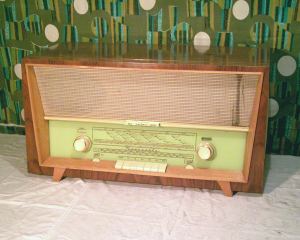
Reception was made on a Czechoslovak tube receiver “Barcarola” on a shortwave band with classic AM (of course this receiver was not capable of SSB or any other advanced modes) using a random wire (about 10 m) antenna.

A recording was made on the B400 Czechoslovak tape recorder using a Scotch 220 magnetic tape (exactly the one which is in the picture), speed 9.53 cm/s. Import to the digital domain was performed using the Audacity open source sound recording and processing software, without any artificial filtering or other DSP techniques.

As you can hear, it was perfect, clear readability:

I know that because the recording is incomplete, it has just a low value as such, but maybe it can at least demonstrate, which kind of equipment was obvious at this time and that it was possible to use it for activities like SW listening and number station (at least the strong ones) monitoring.

I’m curious whether somebody will identify the station.

With regards,
Pavel

Pavel's Barcarola was similar to this model (Photo source: http://www.oldradio.cz/)

Pavel’s Barcarola was similar to this model (Photo source: http://www.oldradio.cz/)

What really amazes me is the fidelity of Pavel’s recording. Though the transmitter might have been relatively local, there is certainly something to be said for analog equipment–both Pavel’s Barcarola receiver and his B400 recorder.

I actually collect and maintain more tube receivers than solid state. While their sensitivity and selectivity isn’t always on par with modern receivers, their warm audio fidelity makes up for it.


If you can identify Pavel’s numbers station recording, please comment.

Hearing the speed of light: DX double echo

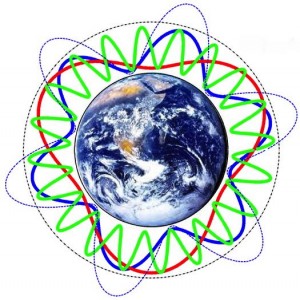
ionosphere-earth-radio-wavesTwo weeks ago, at the W4DXCC conference in Tennessee, I met Lyle Juroff (K9FIK). Not only did I find that Lyle and I had many radio interests in common, but he also told me a story about hearing, recording and analyzing a double echo on the HF bands. I asked if he would explain in an email and include the recording so that I could share it on the SWLing Post. He kindly agreed!

Lyle writes:

I worked a DX station [9A1A] on 10 meters this past spring.  As the band improved, I heard an echo develop on his signal and guessed it might be long path so I began recording the audio.   I then began to hear a double echo and looked at the waveform on AUDACITY.  The timing marks on AUDACITY indicated 140 milliseconds between echos.

I went to Wolfram Alfa, one of my go-to sights for things I can’t remember, and looked up the earth circumference.  It not only gave me the distance but also the time to travel it at the speed of light,  133 milliseconds.   Not sure if everyone working DX has heard this sort of thing, I played the recording at the next East Tennessee  DX Association meeting.  Nobody said they had heard that kind of double echo.

Click here to download an mp3 of Lyle’s recording or simply listen via the embedded player below (note that the second recording is .WAV format):

Have you heard a double echo this profound? Please comment.

Many thanks to Lyle (K9FIK) for sharing his story!