 Universal Radio is now selling the Uniwave Di-Wave in North America for $299.95US. What is the Di-Wave? See previous post and comments here.
Uniwave Di-Wave Now Available in North America through Universal Radio
Leave a reply

Universal Radio is now selling the Uniwave Di-Wave in North America for $299.95US. What is the Di-Wave? See previous post and comments here.
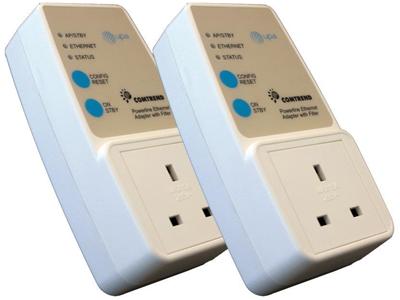
The noisy cuprits--Comtrend's power line adapters.
Whether you’re new to shortwave radio listening or have been an amateur radio operator for years, more than likely you’ve occasionally encountered electrical interference, that annoying hum or buzz that permeates your listening experience. This noise can often be difficult to pinpoint or eliminate. For most of us, the common culprits are fluorescent lights, computer monitors, televisions or even so-called “wall warts” (those ubiquitous AC adapters we use for most consumer electronics). For those of us living in sparsely populated rural areas, we can more easily find noisy interference in our own homes or on our farms (electric fences are notorious sound interrupters). If you live in an urban area, identifying interference can be a constant battle, since it may be the new LCD TV of the couple living in the apartment above you.
Or, even worse, the source of radio interference could be installed in your neighbors’ homes, in the form of a nationally mass-marketed home entertainment device promoted by your telephone company. That was the case for SWLer Mike Trodd in the United Kingdom; his neighbors installed a “BT Vision” multimedia entertainment package with Comtrend power line adaptors offered by British Telecom. “I switched on my short wave set to find a loud +20db screaming noise on all HF frequencies,” Mike describes. “Initially I suspected the actual home hub, but soon worked out it was the power line adaptors that were the cause.”

Figure 1 - Shortwave interference from PLT devices. Click to enlarge.
The fact is, these power line adapters use a smaller scale, more local version of a technology that amateur radio operators have long fought–namely “BPL”, or Broadband over Power Lines. In this case, though, Comtrend’s power line adapters turn your home’s electrical system into a communications system–also called Power Line Telecom (PLT). This novel (and possibly illegal) device has one crippling side-effect: loud broadband noise across most of the shortwave radio listening spectrum (see figure 1).
What did Mike do after discovering the source of his interference? He contacted the authorities, and upon learning that, despite laws protecting radio, there is no effort being made at enforcement, he founded a program to fight the interference. “I created UKQRM because once I discovered the source,” he says, “I was disgusted that it was being allowed and nothing was being done at all!”
So, how bad is the noise, anyway? Take a look at Mike’s first homemade video:
It’s pretty obvious that the interference is substantial and will deafen shortwave and ham radios. How did British Telecom respond to Mike’s well-documented evidence of the problem? “[They] were dreadful!” he exclaimed.”Initially you just can’t get any information out of anyone. Their dreadful overseas call centres are a waste of time. Only when a letter was sent to the chairman was any kind of reply received.” But even this was less than satisfactory. “To date,” he adds,”BT has never communicated its point of view.”
Are you safe from PLT interference if you don’t live in the UK? “PLT is already rolling out, uncontrolled,” Mike states, “across the EU. Portugal is suffering greatly as there are not even notches. In the US, PLT again is gathering speed. As successive governments give this illegal equipment the green card; I see a day when the HF spectrum is lost to us all.”
I asked Mike what radio operators and listeners can do? “We need support from radio listeners; in the main, this needs to be [in] an education role. Tell anyone who will listen about this. Point out that PLT does not meet regulations and laws and yet it’s being driven by the EU and governments, driven over the people with no regard at all.”
I urge you to take a look at UKQRM’s website (15 Oct 2011 update: site now called “Ban PTL) and see what you can do to fight interference on our radio spectrum.
Mike, on behalf of all radio listeners, thank you for fighting the good fight!
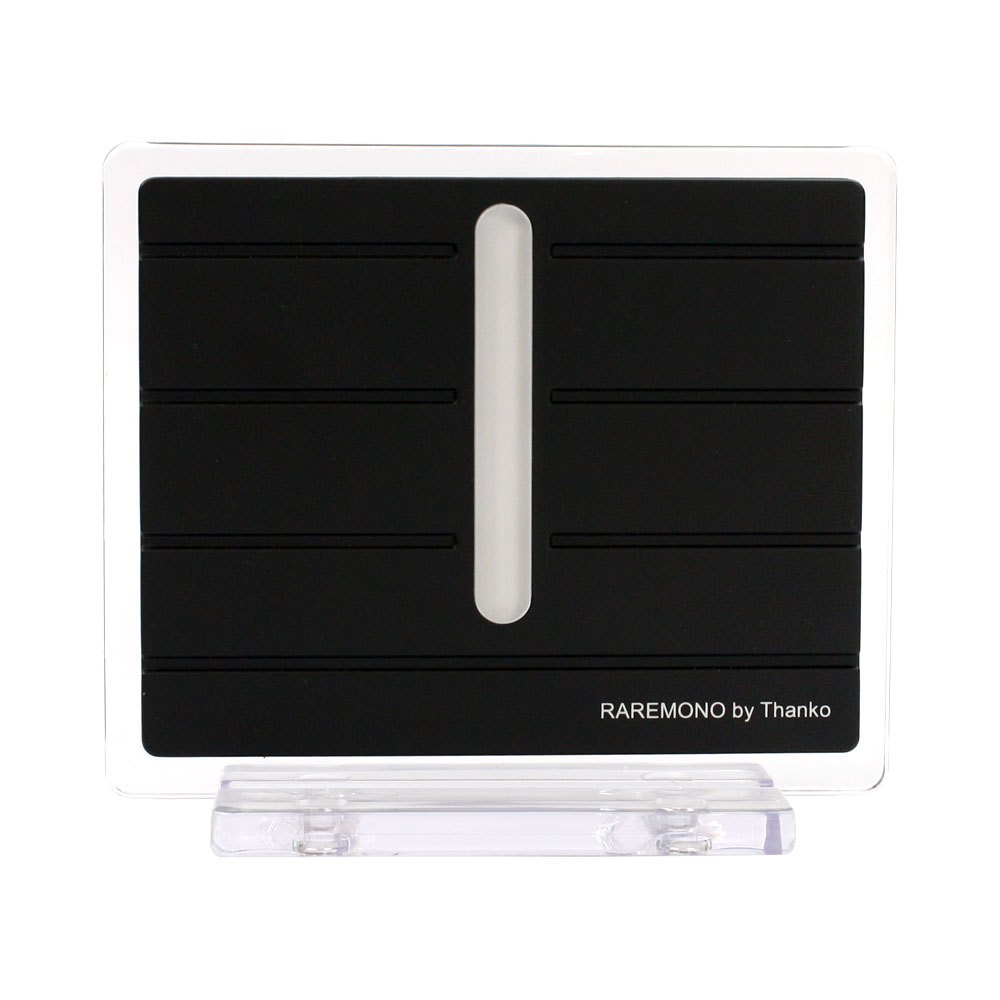
The Thanko Raremono USB shortwave radio.
I can’t wait to review one of these. It’s a new, inexpensive, computer-controlled shortwave radio by the Japanese company, Thanko. The jury is out about its performance, but it does have the following features:
The Thanko Raremono USB Shortwave is available from the Thanko website for $45 US (English translation).
Stay tuned–I plan to review this radio in the near future.
Facing a group of presidents loudly critical of Washington, the U.S. government’s Voice of America broadcast is expanding its audience in Venezuela, Bolivia, Ecuador and Nicaragua, VOA officials say.
VOA’s Spanish-language division also will step up its use of Radio/TV Martí’s production facilities in Miami because of budget pressures on both broadcasters, the officials added.
[…]”Our focus is on the Andean region because of the upheavals that are going on there,” said Spanish division director Alberto Mascaro. “Our second priority is Central America, especially Nicaragua and Honduras.”
A message from Larry Magne posted on PTWBR’s website:
Thanks for your many kind and helpful comments, which have touched us greatly.
Alas, although the long-term future of IBS’ activities continues to be mulled over, there will definitely be no printed 2010 edition of Passport to World Band Radio. At this juncture it appears nearly as certain that online options aren’t going to be feasible, either. Nonetheless, the Japanese-language (only) Blue Pages for 2010 will be offered within Japan, as in the past, by [email protected] later this year.
As one comment mentioned, this is much like the passing of a good friend. PTWBR was one of the first frequency guides I used for the shortwave bands.
Fear not– the World Radio and TV Handbook (WRTH) is still very much alive and well and I use it almost daily. I wrote a post about this fine publication and how it differs from PTWBR. Their 2010 edition can be pre-ordered now.
For a good article on coping without PTWBR, check out this post by Helmuth Kump.
September, 22 2011: Out of SWLing Post archives–David Goren Explores Numbers Stations:
David Goren, independent radio producer and shortwave enthusiast, has produced a radio documentary about numbers stations for The Lost and Found Sound Series. It has been recently picked up by L.A. Theatre Works.
 What are numbers stations? I wish I knew–but if you’ve been listening to shortwave radio for long, you’ve undoubtedly stumbled upon these mysterious broadcasts of strings of supposedly meaningless numbers, too.
When I tune to a numbers station, I stop and listen for several minutes. Why? I’m not sure. Is it that I imagine a spy in some foreign country, huddled up to a radio with pen in hand, ready to decode a secret message on the back of an envelope? Or is it that I think I’m actually hearing the pulse of the shortwave bands over the ether? I’m not exactly sure, but I now know they’ve been part of the SWLing experience since the Cold War (or longer), and that I’m not alone in my curiosity about them.
David also produces and mixes his own fascinating brand of “sonic, aesthetic, and cultural resonances of the shortwave radio spectrum” at his site, Shortwaveology.
Listen to “Atencion: Seis Siete Tres Siete Cero: The Shortwave Numbers Mystery” by visiting Shortwaveology.

Harry Helms at 13,000 feet on Wheeler Peak. Photo courtesy of Harry's Blog.
Noted author and radio enthusiast, Harry Helms (callsign W5HLH) passed away on Sunday November 15, 2009 after a long battle with cancer. He was only 57 years old.
Harry wrote numerous articles and books focusing on SWLing, amateur radio and many other technical matters. He was a mentor to many radio operators and will be sorely missed.
For more information about Harry Helms, please check out the links below: