
The Voice of America turns 70

(Source: Diplomatic Courier)

“The news may be good. The news may be bad. We shall tell you the truth.” – William Harlan Hale; February 1, 1942

Such began the first broadcast of a small team of dedicated men transmitting live from a claustrophobic New York City studio into Nazi Germany.  Their group had no name, although their first broadcast was titled Stimmen aus Amerika—Voices from America. The equipment they used was borrowed.  They had no direction as to what they would broadcast, except the truth.  At that moment, the United States stepped into a role as guardian of the power of ideas and honest messenger of information to all corners of the world.

From the very beginning, the Voice of America has held at its core the mission to present to the world the policies and culture of the United States, while reporting on global news events accurately, clearly, and objectively.  It has been one of the U.S.’s most effective public relations initiatives. All around the world, the Voice of America is highly respected as an honest and fair messenger, and in many places, as the only comprehensive source of news free from propaganda.  From Nazi Germany to Communist Eastern Europe to Kim Jong Il’s North Korea, VOA has often been the only connection to the outside world that people of repressive regimes have. […]

Today, VOA broadcasts through the Internet, television, and a network of AM, FM, and shortwave radio signals. The approximately 1500 hours of programs per week include features on American culture, learning English, international news, discussion programs, and regionally focused programs to address the needs of the local populations.  VOA broadcasts in 43 languages, televising programs in 26 of those, and reaches 141 million people weekly. All this makes VOA one of the largest multimedia news organizations in the world.

Read the full story at the Diplomatic Courier website.

The Winter SWL Fest 25th Anniversary

For those of you readers who often feel you’re alone in your enthusiasm for radio, I highly encourage you to attend the NASWA-sponsored SWL Fest in Plymouth Meeting, Pennsylvania this year. The ‘Fest is jam-packed with radio-related information and attended by many radio kindred spirits.  From their website :

The Winter SWL Fest is a conference of radio hobbyists of all stripes, from DC to daylight. Every year scores of hobbyists descend on the Philadelphia, Pennsylvania suburbs for a weekend of camaraderie. The Fest is sponsored by NASWA, the North American Shortwave Association, but it covers much more than just shortwave; mediumwave (AM), scanning, satellite TV, and pirate broadcasting are among the other topics that the Fest covers. Whether you’ve been to every Fest (all 25, starting with the first year at the fabled Pink & Purple Room of the Fiesta Motor Inn) or this year’s will be your first, you’re sure to find a welcome from your fellow hobbyists.

For 2012, its 25th Anniversary, the Winter SWL Fest will have three days of sessions where you can learn about the latest developments in the radio listening hobbies, but there’s so much more going on. There’s a silent auction that takes place, where you’re bound to find something of interest. There’s the Hospitality Suite, where attendees partake of tuning oil and other treats and engage in spirited conversations. There is the closing Banquet, with after-dinner remarks by a luminary from the field, often one of the many broadcasters who attend the Fest, followed by the raffle, where you could win one or more of the dozens of prizes, ranging from pens from stations up to top-notch communications receivers. And of course, the infamous midnight ride of Pancho Villa that closes things out every year.

Your hosts, Richard Cuff and John Figliozzi, work throughout the year to ensure that attendees have a great time over the weekend, and by all accounts, they succeed stunningly. How else could this event have lasted for 25 years (!) and draw people from around the world to southeastern Pennsylvania? Won’t you join us?

Sure, I will!

If you’re interested in attending the SWL Fest, too, go to the official website and register!

NSA declassifies “Receiver Dynamics” primer

The Watkins-Johnson HF-1000 (and NSA version, WJ-8711) are mentioned in this article

On January 11, 2012 the National Security Agency (NSA) released a pre-1995 article entitled “Receiver Dynamics” from its classified internal magazine, Cryptologic Quarterly. It contains an excellent, well-written explanation of the specifications of shortwave receivers used by some of NSA’s K4 divisions.

Download the article here (PDF).

Thanks to Ed in the SWLfest list for the tip!

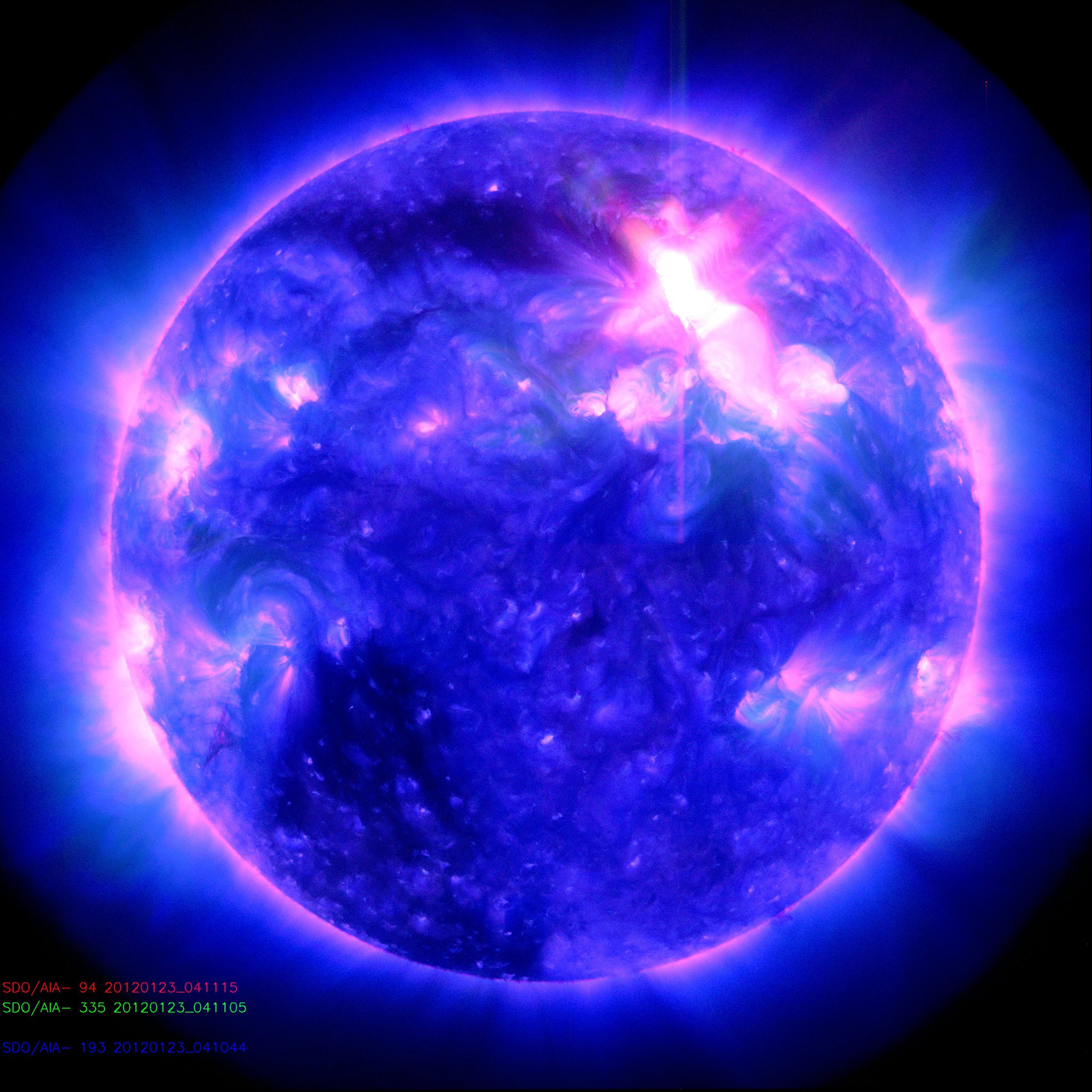
NPR explains space weather and the CME heading our way

(Source: SpaceWeather.com)

I think this is one of the best, simple explanations of space weather that I’ve seen lately:

(Source: NPR)

Space weather, as it is called, originates with solar magnetic activity. The sun is a giant spinning ball of charged particles. In addition to its spin, the heat released from the core through nuclear fusion eventually sets the upper layers of the sun into a kind of boiling motion called convection. All that motion — spin and convection — means lots of charged particles streaming this way and that. Since current (the flow of charges) produces magnetic fields, the outer domains of the sun are ruled by magnetism. Magnetic fields are the source of all those cool images of giant flares erupting in planet-spanning arcades of super-hot plasma. It’s also the source of so-called Coronal Mass Ejections or CMEs, which are, essentially, the space storms that space weather is all about.

CMEs are eruptions of matter and magnetism from the sun into space. A typical CME will blow 10 billion kilograms (about 22 billion pounds) of solar plasma into space along with enough energy to represent a flotilla of 220 aircraft carriers moving at 500 km/s. The fact the CME’s are quite common says a lot about the power locked up in an ordinary star like the sun.

While 1 to 3 CMEs may occur every day, we only the notice the ones that slam into the Earth on their journey across the solar system. When a CME crosses the Earth it runs into our planet’s own magnetic field. Charged particles from the CME get trapped by the Earth’s magnetic field and stream down toward the planet’s surface near the poles.

When those CME particles, running down magnetic field lines, strike atmospheric gas atoms, the collisions cause the atoms to light up like Christmas tree bulbs. That is the origin of the simmering walls of color we called aurora. There was a time when pretty lights were all there was to space weather. Those days are over.

Read the full article on NPR’s website.

Large Coronal Mass Ejection (CME) to hit earth January 24th

(Source: SpaceWeather.com)

CME‘s have a very negative effect on shortwave radio. This particular CME is the largest to hit earth in 7 years–certain high-flying airplanes may even be re-routed. On the positive note, the strong ensuing geo-magnet storms should create some beautiful aurorasin northern latitudes. More details:

(Source: Space Weather)

The Solar and Heliospheric Observatory (SOHO) and NASA’s STEREO-B spacecraft detected a CME rapidly emerging from the blast site: movie. Analysts at the Goddard Space Weather Lab say the leading edge of the CME will reach Earth on Jan. 24 at 14:18UT (+/- 7 hours). Their animated forecast track shows that Mars is in the line of fire, too; the CME will hit the Red Planet during the late hours of Jan. 25.
This is a relatively substantial and fast-moving (2200 km/s) CME. Spacecraft in geosynchronous, polar and other orbits passing through Earth’s ring current and auroral regions could be affected by the cloud’s arrival. In addition, strong geomagnetic storms are possible, so high-latitude sky watchers should be alert for auroras.


NPR stories expose internet tracking (while shortwave remains immune)

This morning, NPR’s (National Public Radio’s) Weekend edition aired two intriguing stories sharing one strong common thread. First, “CIA Tracks Public Information For The Private Eye“–a look inside the CIA’s Open Source Center:

Secrets: the currency of spies around the world. The rise of social media, hash-tags, forums, blogs and online news sites has revealed a new kind of secret, those hiding in plain sight. The CIA calls all this information “open source” material, and it’s changing the way America’s top spy agency does business.

While you must listen to or read the full story to fully appreciate it, its gist is that this featured department of the CIA essentially uses readily-available public information in order to unlock and predict all sorts of activities they’ve traditionally tracked through covert operations. It’s a paradigm shift in how they’ve traditionally done business. Though not surprising, if you know the nature of the internet, it is fascinating nonetheless.

The second story, “Technological Innovations Help Dictators See All” dealt with the flip side:

As technology gets better–and cheaper–it’s becoming easier for authoritarian governments to watch and record their populations’ every move. John Villasenor of the Brookings Institution joins host Rachel Martin to discuss the phenomenon.

This discussion covers a real and growing problem:  the online Big Brother phenomenon.  Many people feel secure and anonymous online, but are not.  Moreover, as tracking technologies get better, I fear it will give these governments even more control over (and methods to intimidate) their people.

[Incidentally, NPR’s Fresh Air did a story in December 2011 which focused on tracking technologies regimes use–it’s a must-listen, as well.]

I hope international broadcasters are listening to stories like these. It’s more clear than ever that VOA, BBC World Service, Radio Australia, Radio France International, Radio Netherlands Worldwide, and the like still hold the key to getting uncensored information into oppressed countries without bringing harm to listeners, namely, via broadcasts over shortwave radio.

For, as we’ve often said, shortwave radio is impossible to track, works at the speed of light, is everywhere, and requires very simple and affordable technology on behalf of the listener. Let’s keep it alive and well:  burgeoning democracies rely upon it.

Yet more supporting stories for our ongoing series, “Why shortwave radio?“

Test a professional SDR from the comfort of your home–free!

Though I’ve not yet achieved particularly advanced age, my history in radio certainly started with the analog. The vintage Zenith Transoceanic my great-aunt gave me when I was eight was a wonder to tune, and its ability to extract signals from across the planet captivated me. But there was a certain amount of guesswork in the tuning process.  So, when I purchased my first digital portable in 1990, it seemed revolutionary:  in a snap, I could punch in a frequency, and there I was (virtually speaking). No guessing required.

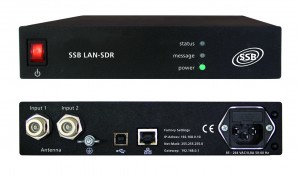
Front and back of the SSB LAN-SDR software-defined receiver

Front and back of the SSB LAN-SDR software-defined receiver

The next step in receiver evolution was, of course, Software-Defined Radios–those little boxes that you hook up to your computer that allow you incredible tuning flexibility and which permit amazing receiver performance.

So, you’ve never tried an SDR–? I know a fix for that.

In the course of an email conversation with Willi Paßmann, SDR support for SSB-Electronic, I learned that–simply by downloading a couple of files from their website–you can “test-drive” their high-end SSB LAN-SDR.

First, a brief primer…

Some SDRs–like the SSB LAN-SDR–actually allow you to record and to play back HF spectrum segments.

In a basic example: if I want to record pirate radio stations one evening, but am not sure where they might pop up on the spectrum, I can set my SDR to record, say, an 80 kHz swatch of bandwidth from 6,915 to 6,995 kHz, from, for example, 9:00 pm to midnight.

Later, I can play back and listen to the recording, with full demodulation and tuning capabilities.  In other words, during playback, I can literally tune around in the spectrum, using all/any receiver functions of my SDR. It is as though I am listening and tuning, live, in real time, though it may be many hours or days later.

Those of you with SDRs will not be surprised by this remarkable feature, as most likely, you’ve already experimented with this incredible time-bending functionality.

Now, back to SSB-Electronic, and how to test-drive their LAN-SDR receiver.  It’s easy, actually:

  1. You download the software that runs the LAN-SDR
  2. You download one (or both) available spectrum recordings

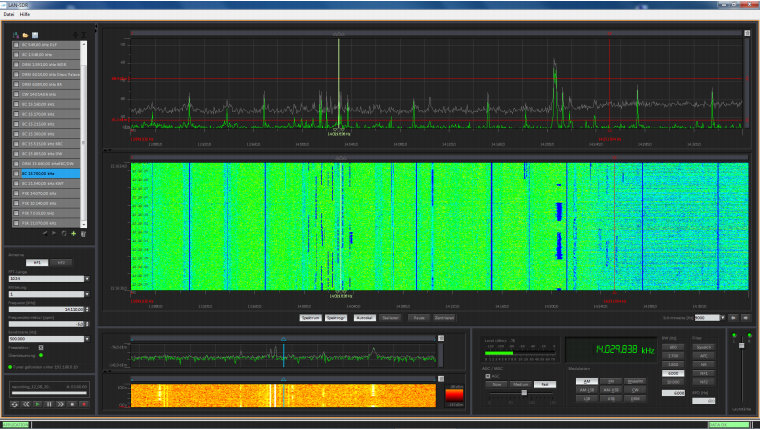
Once you install their software and import the recording, you can literally tune through and use all of the receiver’s features within the spectrum recording. You can listen to the noise floor, test the notch, adjustable filters, DSP, tuning rates–literally experience all the receiver functions in this process.

In my humble opinion, this is perhaps the most convenient and enjoyable way to try out a receiver.

Hopefully, other SDR manufacturers will follow SSB-Electronic’s lead and make their control software and spectrum recodings available online for download and testing.

Happy test-driving!