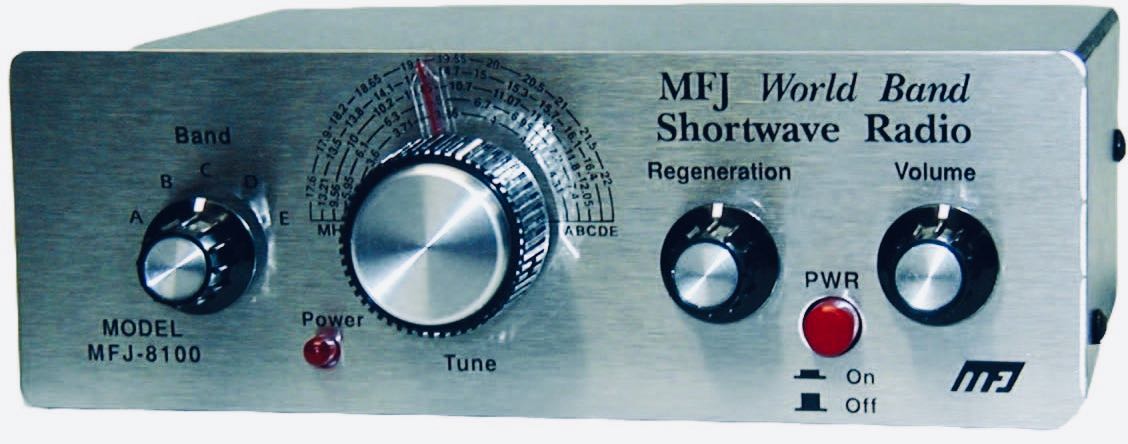
We have a winner! The MFJ-8100K shortwave receiver kit giveaway

Congratulations to SWLing Post reader, Audrius Simkunas from Lithuania, who was chosen at random from the comments on our contest post!

Many thanks to the kind folks at MFJ Enterprises who donated this prize and shipping that is worth well over $100! There aren’t many manufacturers and retailers who would agree to ship anywhere in the world.

What a response!

We had 165 comments/entries at 16:00 UTC yesterday when the contest ended. At that time we had a random number generator pull the comment number which lead us to Audrius.

Not only is that an impressive number of comments, but I absolutely loved reading about your favorite kits. What an amazing radio nostalgia trip!

Let’s do this again…and soon

This was a lot of fun, so we’re going to do more of these giveaways. If you have any ideas about a theme, contact me. While I enjoy making more challenging contests from time to time, I also love posting contests that are accessible to everyone regardless of their radio experience.

Thanks again, MFJ! And congratulations, Audrius!

FTIOM & UBMP, September 27-October 3


From the Isle of Music, September 27-October 3:

This week, a package of musical surprises from the 60s, 70s and 80s. Nearly all of it will be unfamiliar to most listeners outside of Cuba.
The broadcasts take place:
1. For Eastern Europe but audible well beyond the target area in most of the Eastern Hemisphere (including parts of East Asia and Oceania) with 100Kw, Sunday 1500-1600 UTC on SpaceLine, 9400 KHz, from Sofia, Bulgaria (1800-1900 MSK)
2. For the Americas and parts of Europe, Tuesday 0000-0100 on WBCQ, 7490 kHz from Monticello, ME, USA (Monday 8-9PM EDT in the US).
3 & 4. For Europe and sometimes beyond, Tuesday 1900-2000 UTC and Saturday 1200-1300 UTC on Channel 292, 6070 kHz from Rohrbach, Germany.
Our Facebook page is https://www.facebook.com/fromtheisleofmusic/
Our V-Kontakte page is https://vk.com/fromtheisleofmusic
Our Patreon page is https://www.patreon.com/tilford

Uncle Bill’s Melting Pot, September 27 and 29 & October 3:
Episode 184 presents some very enjoyable music from the Philippines, from traditional instruments to Pinoy rock.
The transmissions take place:
1.Sunday 2200-2300 (6:00PM -7:00PM EDT) on WBCQ The Planet 7490 kHz from the US to the Americas and parts of Europe
2.  Tuesday 2000-2100 UTC on Channel 292, 6070 kHz from Rohrbach, Germany for Europe.
3. Saturday 0800-0900 UTC on Channel 292, 9670 kHz from Rohrbach, Germany for Europe.
Our Facebook page is https://www.facebook.com/UncleBillsMeltingPot/
Our V-Kontakte page is https://vk.com/fromtheisleofmusic
Our Patreon page is https://www.patreon.com/tilford

University of Brasilia and the Ministry of Science, Technology and Innovation to experiment with 2.5 kW DRM transmitter

(Source: DRM Consortium)

A new era begins for Brazilian radio broadcasting with the arrival and installation of a first shortwave digital radio DRM transmitter developed and manufactured in the city of Porto Alegre by BT Transmitters. The transmitter will be sited at the public broadcaster (EBC) Rodeador Park, near the capital Brasilia, to be connected to one of the huge HF antennas of EBC (National Amazon Radio is transmitted from there).

The equipment (a transmitter of 2.5 kW) will be tested on an experimental and scientific basis with the help of the University of Brasilia (UnB) and the Ministry of Science, Technology and Innovation.

The National Radio of the Amazon broadcasts from Brasilia especially to the Northern, Amazonian region of Brazil. The signal will be also available in the neighbouring countries to the north of Brazil. This is primarily a domestic shortwave digital project aimed at the Amazon where about 7 million riverside and indigenous people live. They are far from any other means of communication as there is no mobile phone or internet coverage.

Rafael Diniz, the Chair of the DRM Brazilian Platform, thinks that: “Shortwave digital radio (DRM) for the Amazon region will ensure a new level of communication and information as Nacional’s programming is both popular and educational. It brings audio and much more at low energy cost to whole communities there. With the adoption of digital radio, one of the major problems, that of poor sound quality affecting at times shortwave, will end. Listeners will be able to enjoy DRM broadcasts in short wave with a quality similar to that of a local FM station together with textual and visual multimedia content.”

“This is a huge step forward, says Ruxandra Obreja, DRM Consortium Chair, “not just for Brazil but for the whole of Latin America. When everything else fails or does not exist, DRM will provide information, education, emergency warning and entertainment at reduced energy costs.”

Click here to read this article at the DRM Consortium website.

As a side note, I do hope the DRM Consortium or the University of Brasilia and the Ministry of Science, Technology and Innovation somehow make DRM receivers available to the “7 million riverside and indigenous people” they hope will eventually benefit from their broadcasts. At this point, however, this sounds more like a university experiment similar to those conducted at the Budapest University of Technology in Hungary.

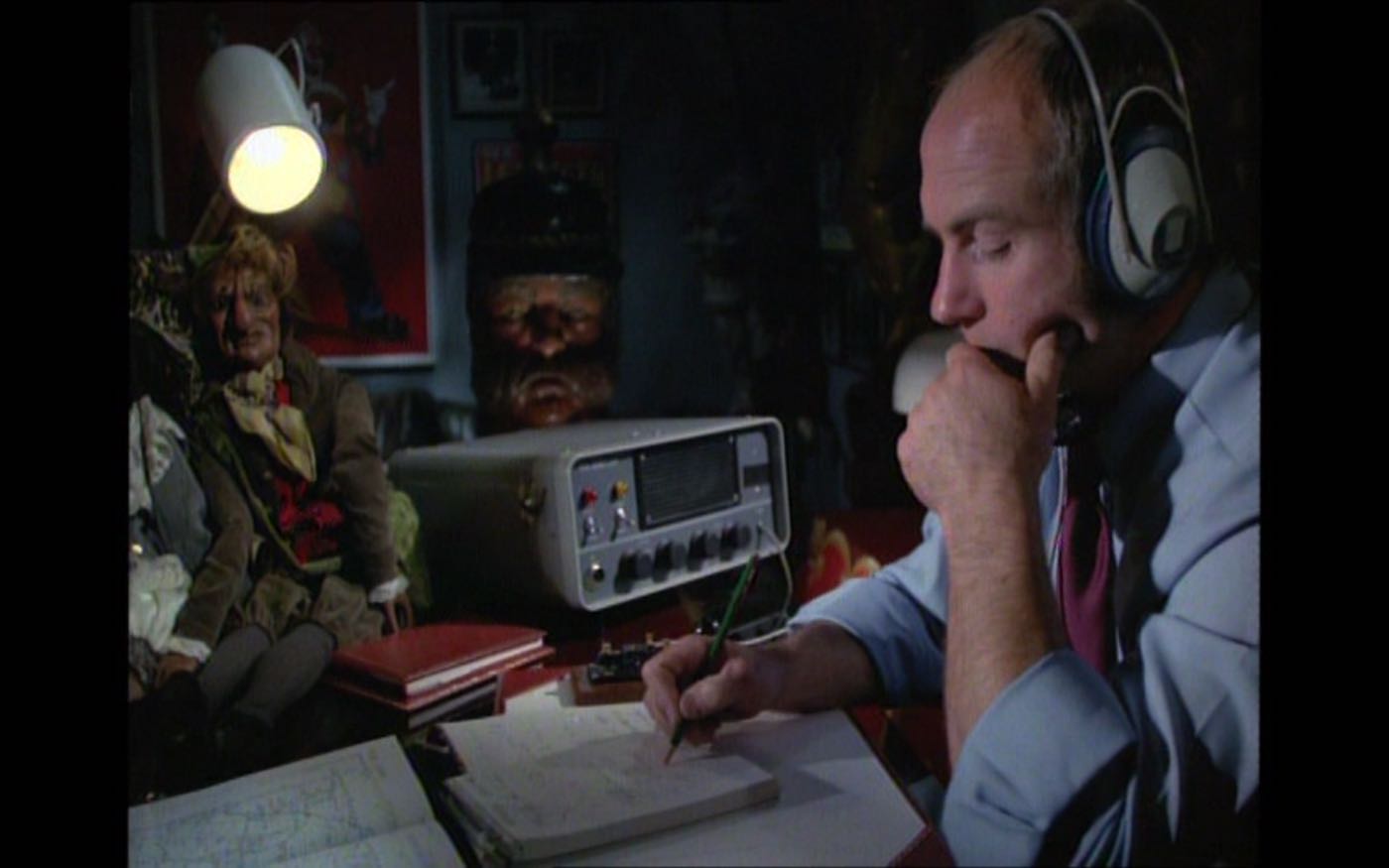
Help Mark identify this radio in The New Avengers

Many thanks to SWLing Post contributor, Mark Hirst, who writes with another mystery radio to identify:

This radio (see photo above) is featured in the mid 1970’s TV show ‘The New Avengers’, an episode called “To Catch a Rat”. Mysterious morse code messages are being intercepted in this scene.

Can you help Mark identify this radio model? Is it even a radio or is it simply a speaker? Please comment if you can ID this one!

I’ll add this post to our (massive) archive of radios in film.

September radio news items from Hungary

Many thanks to SWLing Post contributor, Balazs Kovacs, who shares the following headlines from Hungary:

Some Hungarian radio news from September, FM / online / DAB+

FM: The last independent radio station could be forced off airwaves
https://ipi.media/hungarys-last-independent-radio-station-could-be-forced-off-airwaves/

Online: RFE/RL Relaunches Operations In Hungary
https://www.rferl.org/a/rfe-rl-relaunches-operations-in-hungary-amid-drop-in-media-freedom/30826537.html

DAB+: all DAB+ broadcasts in Hungary ceased (by 5th September)
https://www.worlddab.org/countries/hungary
(remark: it was always only a test broadcast with a few stations and only in Budapest)

A lot going on in Hungary! Thank you, Balazs!

Faulty TV to blame for 18 month broadband outage

Many thanks to SWLing Post contributor, Jeremy, who–in light of our recent discussions about RFI–shares the following news item from the BBC:

The mystery of why an entire village lost its broadband every morning at 7am was solved when engineers discovered an old television was to blame.

An unnamed householder in Aberhosan, Powys, was unaware the old set would emit a signal which would interfere with the entire village’s broadband.

After 18 months engineers began an investigation after a cable replacement programme failed to fix the issue.

The embarrassed householder promised not to use the television again.

The village now has a stable broadband signal.

Openreach engineers were baffled by the continuous problem and it wasn’t until they used a monitoring device that they found the fault.

[…]”Our device picked up a large burst of electrical interference in the village.

“It turned out that at 7am every morning the occupant would switch on their old TV which would, in turn, knock out broadband for the entire village.”

The TV was found to be emitting a single high-level impulse noise (SHINE), which causes electrical interference in other devices.

Mr Jones said the problem has not returned since the fault was identified.[…]

Click here to read the full story at the BBC.

Thank you for sharing this, Jeremy. I can guarantee that if the TV was emitting enough noise to interfere with broadband, it likely also affected the HF, MW, and LW radio bands!

What baffles me is the amount of time it took for the engineers to track down the source in such a small community. A skilled RFI engineer would have likely discovered what was causing the noise by looking at the spectrum analyzer–quite often the signal shape and frequency are indicators. In addition, a little signal “fox hunting” could have proven useful. With that said, noises aren’t always easy to locate and can travel along unexpected paths.

I certainly don’t blame the resident for remaining anonymous!