Fast Radio Bursts (FRBs) from a distant galaxy detected

Many thanks to a number of SWLing Post contributors who’ve shared the following news:

(Source: Southgate ARC)

Mysterious radio signals from deep space detected

BBC News report astronomers have revealed details of mysterious signals emanating from a distant galaxy, picked up by a telescope in Canada.

The precise nature and origin of the blasts of radio waves is unknown.

Among the 13 fast radio bursts, known as FRBs, was a very unusual repeating signal, coming from the same source about 1.5 billion light years away.

Such an event has only been reported once before, by a different telescope.

“Knowing that there is another suggests that there could be more out there,” said Ingrid Stairs, an astrophysicist from the University of British Columbia (UBC).

“And with more repeaters and more sources available for study, we may be able to understand these cosmic puzzles – where they’re from and what causes them.”

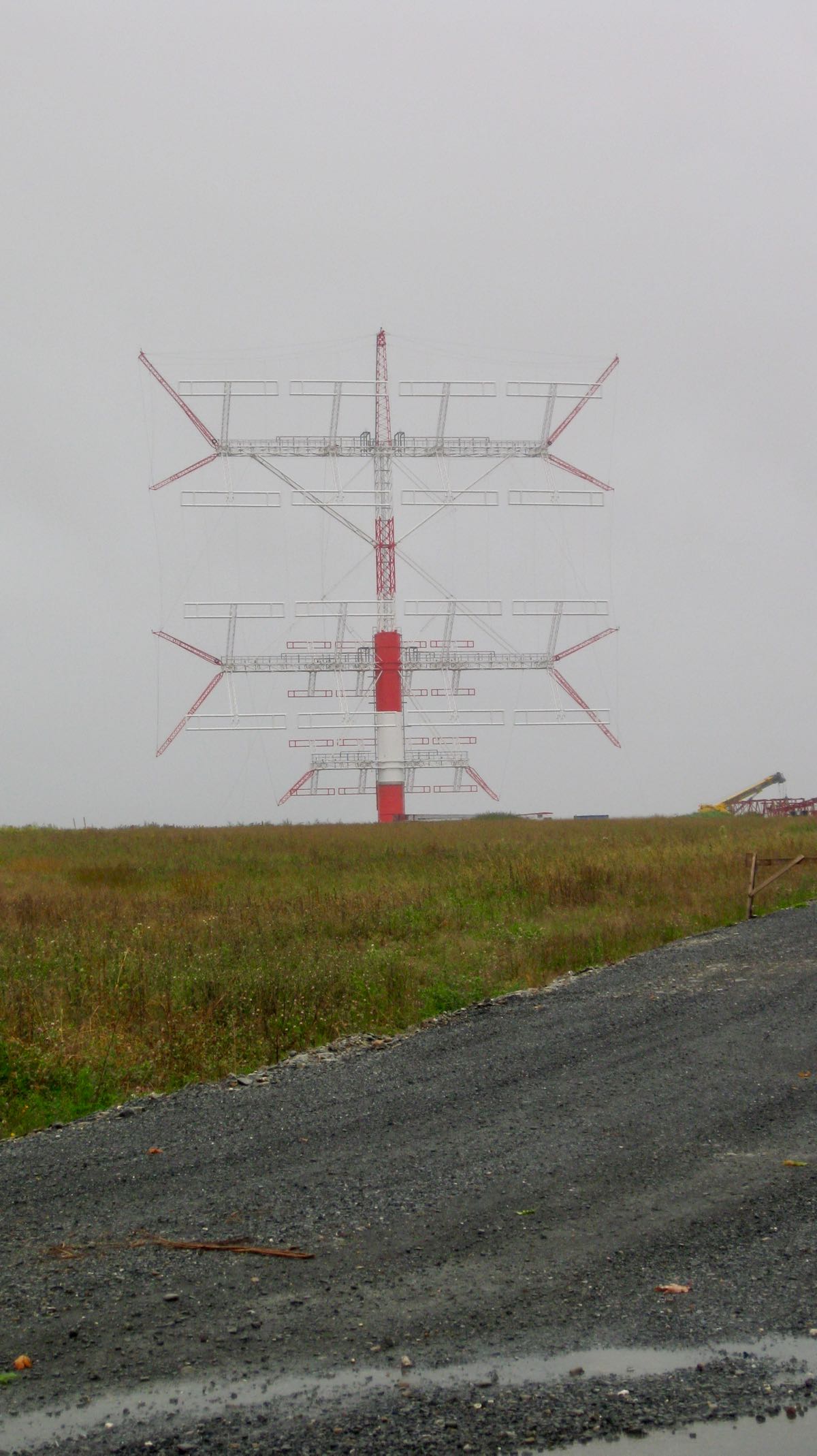
The CHIME observatory, located in British Columbia’s Okanagan Valley, consists of four 100-metre-long, semi-cylindrical antennas, which scan the entire northern sky each day.

The telescope only got up and running last year, detecting 13 of the radio bursts almost immediately, including the repeater.

Read the full BBC News article
https://www.bbc.co.uk/news/science-environment-46811618

Finding a repair service for boat anchors and other vintage valve/tube radio gear

Vintage tube radios will likely survive an EMP, but how do you power them without mains electricity?

Here’s a common question I receive from SWLing Post readers:

“Where can I have my vintage valve/tube radio repaired? Can you recommend a good repair service?”

The answer isn’t always a simple one, especially for those living in rural or remote parts of the world.

Go local

The short answer is: try to find a local repair service.

Unlike modern solid state radios, “boat anchors” (metal chassis vintage radios) are heavy and very pricey to ship.

Some repair services and retailers won’t even consider shipping vintage metal chassis radios because of the likelihood of damage or a tube or other component loosening during transit resulting in a DOA (Dead On Arrival) situation. They insist on in-store or local pickup/delivery.

Johnson Viking Ranger transmitter


Last year at the Dayton Hamvention I was speaking with an acquaintance who restores and repairs vintage tube radios–he specializes in WWII and Cold War era boat anchors (Collins, Signal Corps, Hallicrafters, National HRO, etc.). Although he makes a tidy profit from doing repairs, it’s most certainly a labor of love and not the most profitable use of his time.  He told me that he recently stopped accepting any repairs other than those delivered and picked up locally.

He told me he took great care in packing equipment after repairs had been made–he’d secure all components so that they couldn’t budge during shipment and would either double box or use industrial strength cartons. Being so diligent, his return shipments almost always arrived unscathed, but customers would complain about the shipping costs. He could, of course, skimp on packaging, but then risk his repair work being undermined by rough handling. He was never willing to compromise on shipping and I certainly don’t blame him.

So again, due to the complexities of shipping heavy gear, I always recommend trying to find someone local to do your “boat anchor” repair work first.

Where can you find a local repair shop? If you belong to or know of a local ham radio club, stop by a meeting and ask around. If there’s a vintage radio repair technician in town, someone in the club can likely connect you.

Shipping boat anchors

With that said, there are some excellent repair technicians out there who will take work via parcel shipments, but be prepared to pay upwards of $50-150 each way each way (depending, of course on the radio size and weight).

Lighter tube radios are easier and cheaper to ship, but should still be packed carefully. Bakelite radios, for example, are lightweight but incredibly fragile.

In short: if you ship your vintage radio, pack meticulously and confirm that your repair person will do the same.

And where do you find repair services? I point readers to radio repair service reviews on eHam.net. You might also search the QRZ.com forums or even post a question.

Let’s be clear: some radios are worth the shipping costs!

I am fortunate in that I do have a local friend and mentor Charlie (W4MEC) who repairs tube gear. Better yet, Charlie is willing to teach me how to do repairs and alignments myself. This, I would argue, is the best of both worlds!

A Note of Caution: When it comes to repairing tube/valve gear, I believe you should always learn the ropes with an experienced technician. Unlike battery-powered solid state devices, tube gear is mostly high voltage. If you don’t know what you’re doing inside the chassis of a tube radio, you could be severely shocked or even electrocuted. No radio is worth that price.

Who do you recommend?

If you have any advice about repairing boat anchors and other vintage electronics, please comment! Also, if you can recommend a repair service, please share details.

AM receiver design with regards to IBOC bandwidth claims

Many thanks to SWLing Post contributor, Emilio Ruiz, who writes:

Hi Thomas,

I’m writing because found this (interesting) analysis about radio
components and the impact on radio receiver quality:

http://www.geocities.ws/shreddermanrulz/myth1.htm

I think may be are interesting topic for readers of the SWLing Post.

This is interesting, Emilio.  Thank you for sharing. Although the reason the author put together this post was to refute IBOC’s claims about testing AM receivers, it is also a fascinating look into cheap AM radio/receiver design.  Thank you for sharing!

Remembering Don Schimmel

Photos courtesy of Skip Arey

This weekend, I learned of the passing of my friend, Don Schimmel.

Don was a prominent figure in the world of shortwave radio, author of Radio intrigue, and my go-to man on numbers stations and any other mysterious signals. Over the past ten years, I’ve gotten to spend quality time with Don at the Winter SWL Fest.

My buddy, Gary Donnelly, a regular here at the SWLing Post, was the one who informed me of Don’s passing. Gary wrote the following about his dear friend:

It is with much sadness I announce the death of my SWL Elmer, neighbor and good friend, Don Schimmel, 91. Don passed away at his Hedgesville, WV house.

Don served his country first in the US Navy as a communications guy, then a career at the Central Intelligence Agency where he again was a communications expert. Don served at several locations in Central and South America. Don spent his retirement years in the communications/radio area. He was a “Scanner Scum” with others from the NASWA group. He wrote for Popular Communications and also wrote a small monthly article called Radio Intrique for Dxing.com, a publication of Universal Radio.

Don got me interested in SWL and introduced me to the NASWA group where we later attended several meetings of the group, me more than me. Don gravitated to focusing on the Cuban numbers stations and until a few months before his death, he would tune them in.

Don remained in good health and spirits until past his 90th birthday. He will be missed by the community and he will be missed by me.

Indeed, he will be missed by us all. Thank you, Gary, for sharing this information and for all of the support you gave Don over the years.

FTIOM & UBMP, January 13-19

From the Isle of Music, January 13-19:
This week, we feature the music of Ramon Valle, winner of the Instrumental Music category in Cubadisco 2018 as well as a nominee in the Jazz Soloist and Jazz Ensemble categories. All this with three different albums, and we will taste a little of each.
The broadcasts take place:
1. For Eastern Europe but audible well beyond the target area in most of the Eastern Hemisphere (including parts of East Asia and Oceania) with 100Kw, Sunday 1500-1600 UTC on SpaceLine, 9400 KHz, from Kostinbrod, Bulgaria (1800-1900 MSK)
2. For the Americas and parts of Europe, Tuesday 0100-0200 UTC (New UTC) on WBCQ, 7490 KHz from Monticello, ME, USA (Monday 8-9PM EST in the US).
3 & 4. For Europe and sometimes beyond, Tuesday 1900-2000 UTC and Saturday 1200-1300 UTC (New CETs) on Channel 292, 6070 KHz from Rohrbach, Germany.

Uncle Bill’s Melting Pot, January 13 and 15:
Episode 96 features vocalese (sometimes called Scat) from around the world, from Bebop to Roma to Cuban to Carnatic.
1.Sunday 2300-2330 UTC (6:00PM -6:30PM Eastern US) on WBCQ The Planet 7490 KHz from the US to the Americas and parts of Europe
2. Tuesday 2000-2030 UTC on Channel 292, 6070 KHz from Rohrbach, Germany for Europe. If current propagation conditions hold, the broadcast should reach Iceland AND Western Russia due to a long skip.
Also recommended:
Marion’s Attic, a unique program produced and hosted by Marion Webster featuring early 20th Century records, Edison cylinders etc played on the original equipment, comes on immediately before UBMP on Sundays from 2200-2300 UTC on WBCQ 7490 Khz.

DE1DGK reviews the affordable Tecsun R-9012

Many thanks to SWLing Post contributor, DE1DGK, who shares the following mini review of the Tecsun R-9012:

I also have the Tecsun-R-9012, the little analog brother of the R-920c with digital display, and like to tune over the given bands with it. The sound is loud and clear and speaker-quality seems to be quite good as well. With earphones you can listen FM in stereo sound.

Either on Shortwave and Mediumwave, selectivity and sensitivity are fantastic for such a little 20€ worldband receiver. On FM, the bigger stations come in fine but it’s not very selective for weaker signals or FM-DX.

For shortwave, an external antenna like Tecsun AN-05, often overloads the receiver. It’s not recommend to use it for such low cost receivers at all.

In fact, the serial telescopic antenna works good enough in most of the situations. It could be helpful to shorten telescopic antenna a bit so reception might be better when there is too much RFI around. It depends from band to band. Battery life is amazing. It only needs two AA-batteries and works over months.

When you look for a basic worldband receiver, the Tecsun R-9012 is one of the best analog devices in the 20€-price-range. On the internet are out many reviews and tests about this little receiver which are all positive and often outperforms much more expensive worldband receivers. I would rate the Tecsun R-9012 with all pros and cons with 4.5 out of 5. It does perform great. Ideal for shortwave beginners and listeners who like the analog-feeling or those who want a universal little radio with shortwave.

Thank you for sharing your review!  I agree–the R-9012 is a safe choice for simple and affordable radio fun.

Tecsun R-912 retailers:

All India Radio to shut down national channel

All India Radio (AIR) Headquarters in Dehli, India. Photo courtesy of Wikipedia.

(Source: The Telegraph)

Public broadcaster Prasar Bharati has decided to close down All India Radio’s national channel and its regional training academies in five cities as part of “cost-cutting measures” and to “rationalise” services.

The programme, technical, ministerial and other staff posted at the national channel in Todapur and Nagpur, etc., apart from those working at the Regional Academies of Broadcasting and Multimedia (RABMs) in five cities, may be posted as per the requirement of the organisation, said the order issued by the Directorate General, All India Radio (AIR).

In order to “rationalise AIR services and keeping in view of the cost-cutting measures”, it has been decided by Prasar Bharati and communicated to DG AIR on December 24, 2018, to close down the national channel of AIR and RABMs located at Ahmedabad, Hyderabad, Lucknow, Shillong and Thiruvananthapuram with immediate effect, it said.

The order, dated January 3, stated that the programmes of archival value maintained by the national channel should be sent to the central archives in Delhi for digitisation and preservation for posterity.

The national channel, which broadcasts from 6pm to 6am, started airing in 1987 and played an important role in keeping people abreast of national issues, an AIR source said.

“National channel has a huge repository of programmes and the personnel will now be redeployed,” the source said.

It is understood that certain sections within AIR are not happy with the decision as they believe the national channel was an important part of the broadcasts and there were other ways to cut costs than shutting it down altogether.

“These days you can livestream, you can make it an application-based service, there are many other ways of cost cutting. The effort should have been to strengthen the national channel and not close it down,” a source said.

Click here to read at The Telegraph.

Many thanks to SWLing Post contributor, Dan Robinson, shares an image of the letter (mentioned above) which was originally posted by Jawahar, on the Gary Cohen Facebook page: