“Night of Nights” Returns Tonight!

Chief Operator Richard Dillman at Position 1 (Source: Maritime Radio Historical Society)

Many thanks to SWLing Post contributor, Brian Smith (W9IND), who writes:

The cast may be smaller than in previous years, but the “Night of Nights” nostalgia show will go on. At 8:01 p.m. Eastern Time today (0001 UTC July 13), two maritime CW stations operated by the Maritime Radio Historical Society will begin transmitting Morse code on shortwave and medium wave bands, while the Society’s amateur radio station will be active on four ham bands.

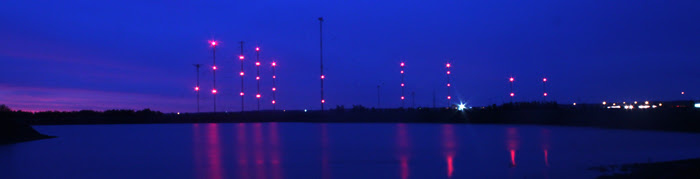
Venerable KPH will reappear tonight in the company of KFS and ham station K6KPH, all transmitting from a century-old Marconi site at Bolinas, California. They’ll be directed from a 1930 RCA station at 17400 Sir Francis Drake Boulevard in Point Reyes National Seashore. Several previous participants will be absent this year, including ship-to-shore powerhouse WLO of Mobile, Alabama, and a quartet of Coast Guard stations.

The annual July 12 event commemorates the date in 1999 when commercial Morse code operations ceased in the United States. One year later, “Night of Nights” debuted in a defiant declaration that maritime CW stations would not go gentle into that good night.

Typically, the two 5 kw coast stations transmit “code wheels” (repeating messages), personal messages, and tributes to long-gone maritime stations and operators, remaining on the air till at least 0700 UTC. And K6KPH will not only be heard, but contacted by fellow amateur radio stations. A list of KPH, KFS and K6KPH frequencies can be found at www.radiomarine.org, including those used by ships. Reception reports go to P.O. Box 392, Point Reyes Station, CA 94956.

The public is welcome to observe today’s event and tour the facility at Point Reyes. Doors open at 3 p.m. local (Pacific) time, and Morse aficionados are invited to operate K6KPH. Whisper the words “true believer” for a peek at the Treasure Room!

https://www.nps.gov/pore/planyourvisit/events_nightofnights.htm

For a comprehensive list of frequencies please click here.

Many thanks for the notice, Brian! We’ll tune in!

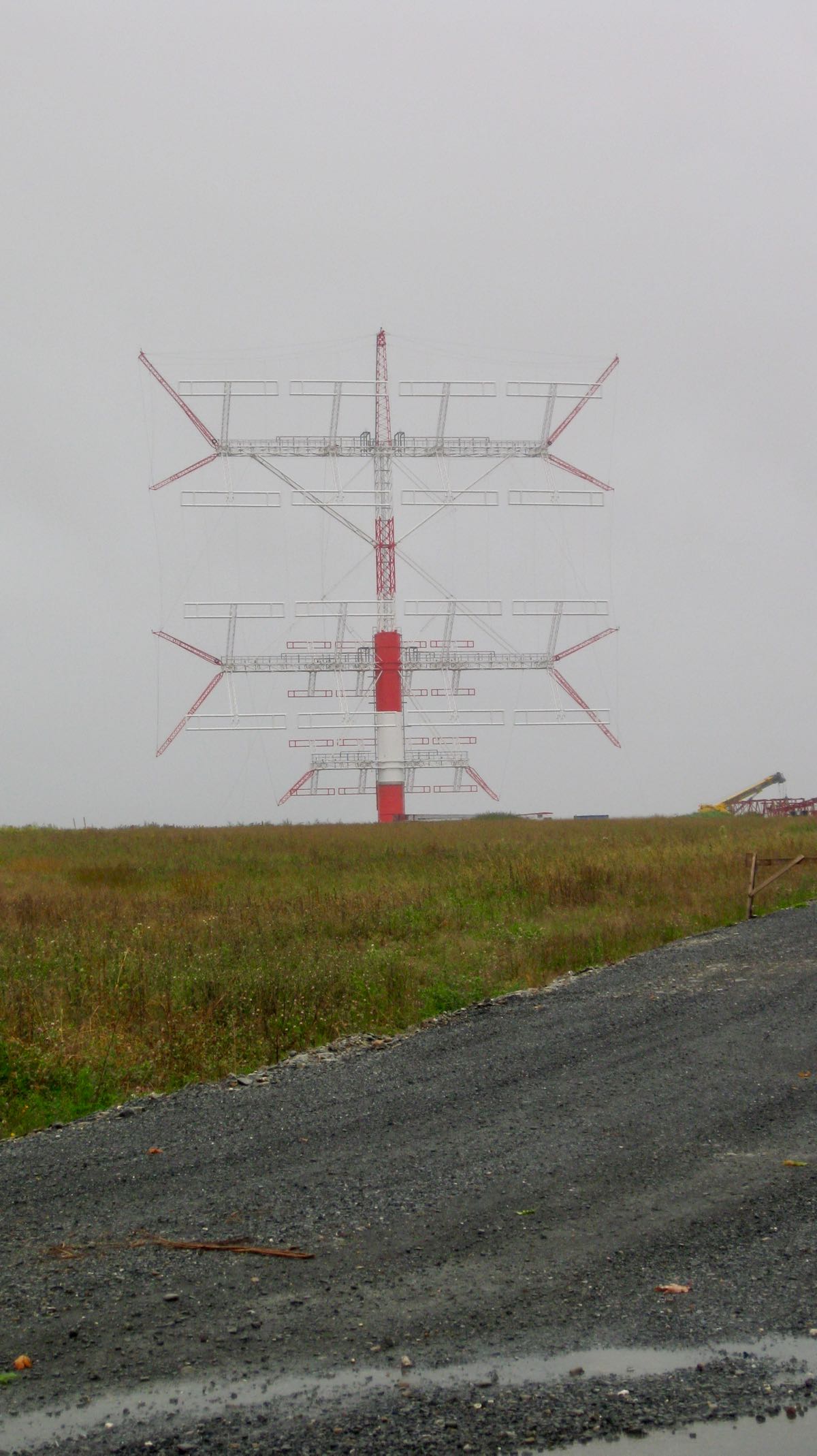
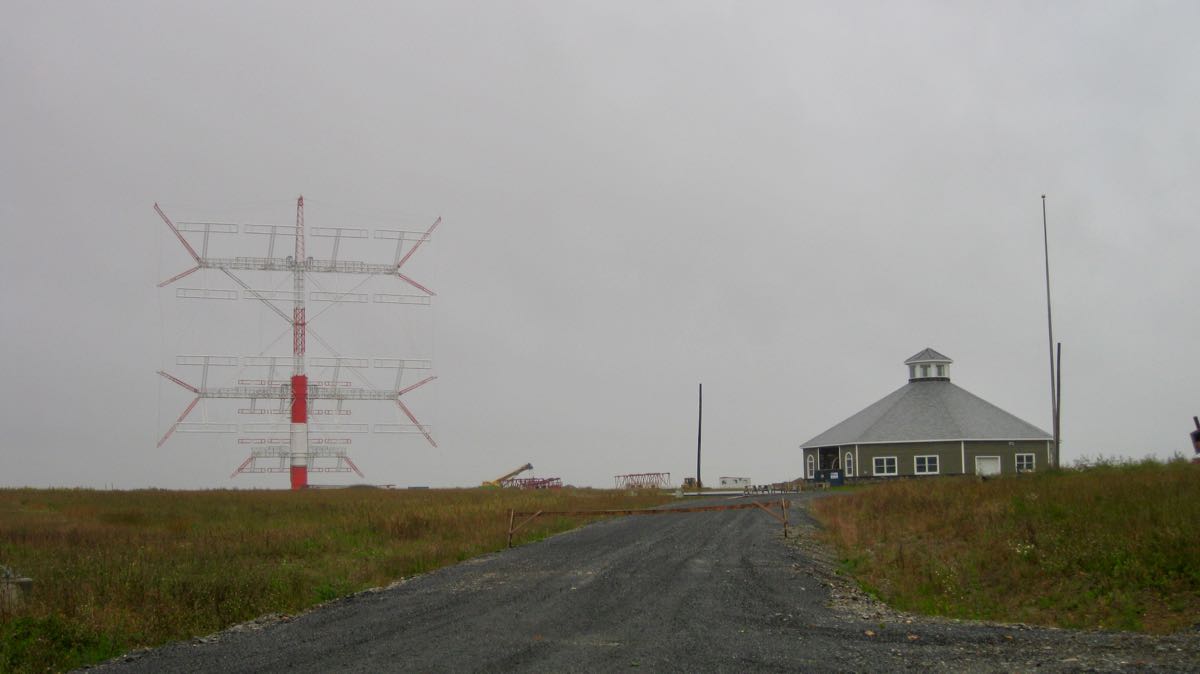
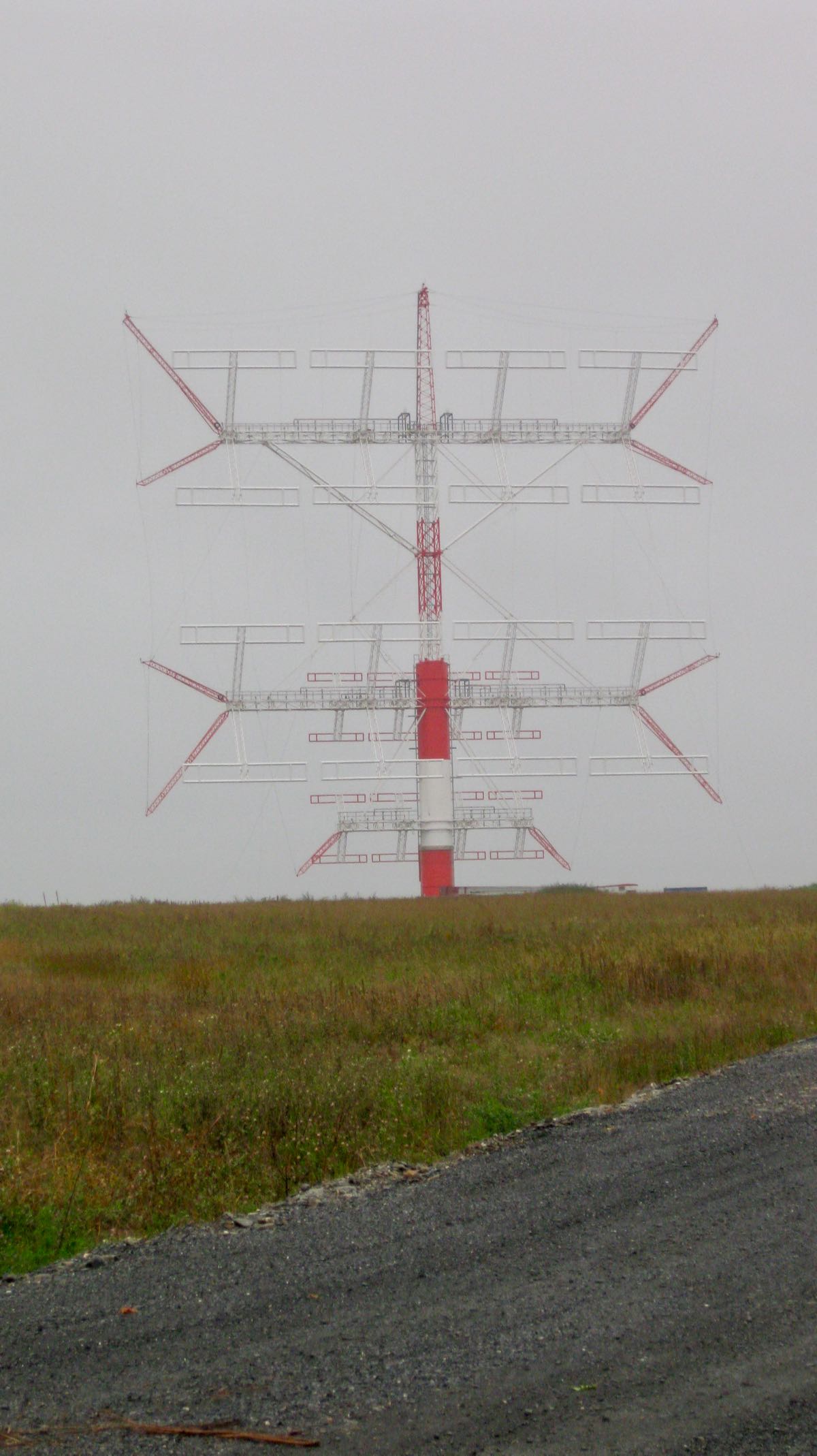
Impressive Transatlantic FM DX: Newfoundland to Northern Ireland on 88.5 MHz

(Source: Southgate ARC)

88 MHz Trans-Atlantic signals heard in Ireland

On Sunday the 8th of July 2018, there was a remarkable opening on the VHF bands across the North Atlantic. While there were plenty of strong multi-hop Sporadic-E signals on the 28 MHz and 50 MHz bands, the maximum qusable frequency did reach as high as 88 MHz at one stage.

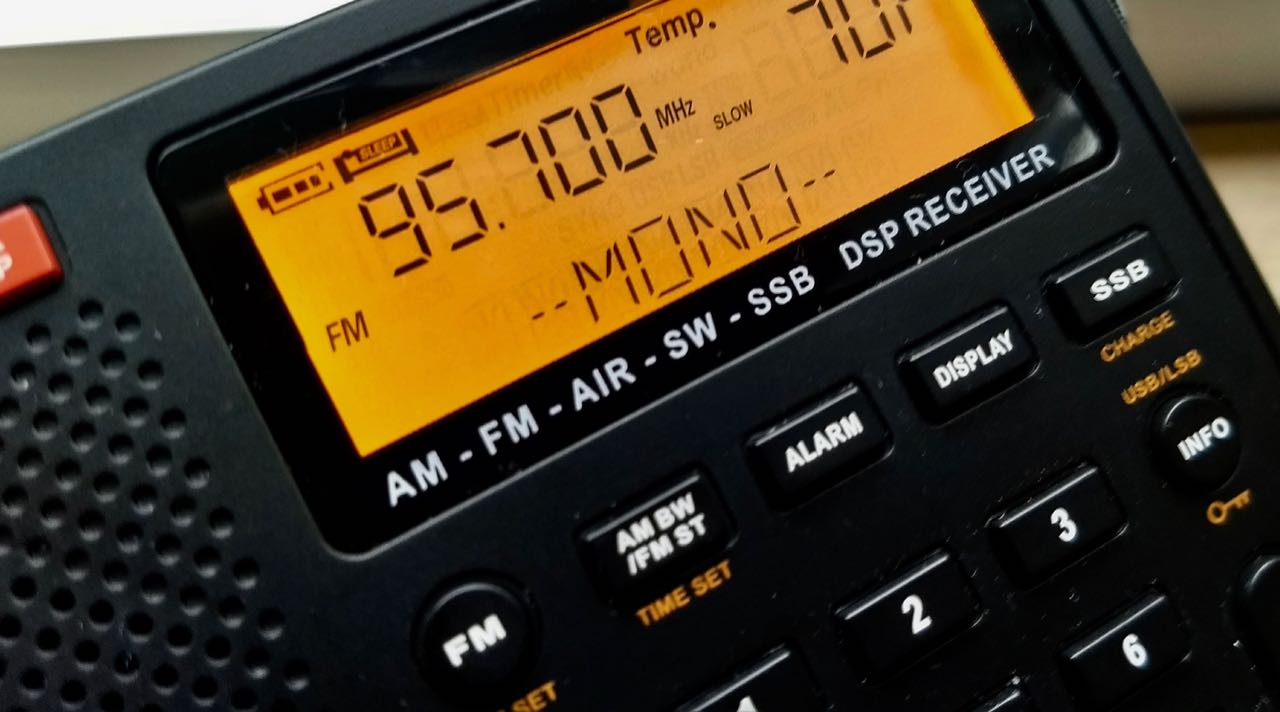
Paul Logan in Lisnaskea, Fermanagh, Northern Ireland managed to catch CBC radio 1 on 88.5 MHz from Newfoundland, Canada at 22:35 local time (21:35 UTC). It is very rare for openings on Band 2 across the Atlantic and to date, only two people have managed to succeed in hearing North American radio stations.

Click here to view video of reception on YouTube.

Click here to read the full article on EI7GL’s blog.

Radio propagation may improve soon with region of solar flux

Many thanks to SWLing Post contributor, Mike Hansgen, who shares this latest Space Weather report from Tamitha Skov:

Space Weather jumps into action this week with two weak solar storms en route to Earth. NASA models predict they will hit starting July 9 and they could easily bring aurora to high latitudes, if not mid-latitudes. Amateur radio operators are also in for some fun as a new region rotates into view and brings with it a boost in solar flux, which will help radio propagation just in time for hurricane season. GPS users shouldn’t be affected by the low-level flaring of this region on Earth’s day side, but should stay vigilant near aurora and near the dawn-dusk terminators for glitches in their reception. Low-latitude GPS/GNSS reception might even improve under the influence of these weak solar storms. See details of the coming storms, when this new active region will be in view, catch up on aurora photos, and see what else is in store!

Click here to view on YouTube.

Share your photos on Boat Anchor Tuesday!

Yesterday, as I took a little time to curate a massive collection of photos I took at the Museum of Radio and Technology, I posted a few “boat anchor” (heavy metal vintage radio) photos and labelled them “Boat Anchor Tuesday” on Twitter and Facebook.

Much to my surprise, I received a number of comments and emails with readers asking for more Boat Anchor Tuesday pics!

So I’ve decided to make it a feature here on the SWLing Post. After all, anyone who knows me knows that I’m a massive fan of boat anchors!

Your photos on Boat Anchor Tuesday!

Please send me a photo (or a few) of your favorite boat anchor. Every Tuesday, I’ll feature a reader’s boat anchor here on the SWLing Post.

If you can, include a few sentences about the radio: how you obtained it, what you like about it or any memories. We radio nostalgic people love this stuff!

Please send photo(s) and radio blurb to my email address found on our Contact page. I only plan to post one radio per week, so these will be scheduled far ahead to post automatically.

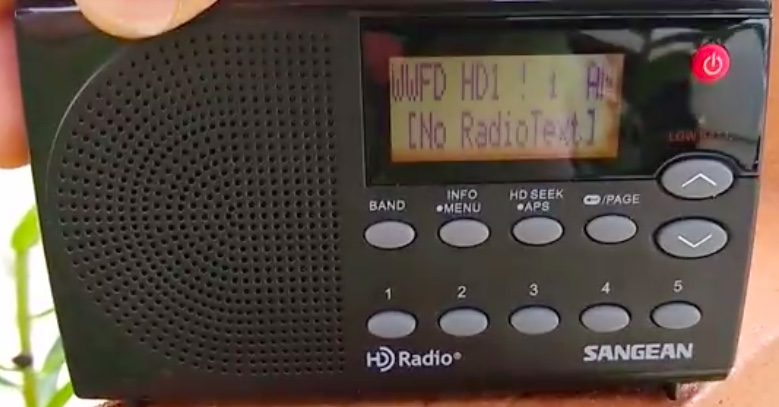
Jeff discovers that the Sangean WR-2 loses time when playing radio

Many thanks to SWLing Post contributor, Jeff McMahon, who writes:

I wanted you to know that my Sangean WR-2 keeps perfect time when I don’t play the radio, but when I do play the radio I lose 25 minutes; the clock is 25 minutes slow in other words. I’ve read other complaints from Sangean owners, including from those who own the Sangean HDR-18. Some say it has something to do with RDS. Have you heard of this problem? It’s annoying because I have to reset my clock every morning.

Wow–an otherwise excellent radio that prominently features a clock should never have this problem. This problem essentially renders the clock useless.  I’m not sure what would cause this unless it’s incorrectly pulling time data from the RDS function?

Post readers: Have you noticed this fault in the WR-2, WR-18 or other similar models? Please comment.

FTIOM & UBMP, July 15-21


From the Isle of Music, July 15-21:

This week, our special guest is trovador Pedro Luis Ferrer, who also spent a couple of years in the Rock/Pop group Los Dada. We will listen to some archival music of that group plus selections from Mr. Ferrer’s recordings over the years.   Some other surprises as well.
Four options to listen to the transmission:
1. For Eastern Europe but audible well beyond the target area in most of the Eastern Hemisphere (including parts of East Asia and Oceania) with 100Kw, Sunday 1500-1600 UTC on SpaceLine, 9400 KHz, from Kostinbrod, Bulgaria (1800-1900 MSK)
2. For the Americas and parts of Europe, Tuesday 0000-0100 UTC on WBCQ, 7490 KHz from Monticello, ME, USA (Monday 8-9PM EST in the US). This has been audible in parts of NW, Central and Southern Europe with an excellent skip to Italy recently.
3 & 4. For Europe and sometimes beyond, Tuesday 1900-2000 UTC and Saturday 1200-1300 UTC on Channel 292, 6070 KHz from Rohrbach, Germany.

Uncle Bill’s Melting Pot, Sun, July 15 & Tues, July 17, 2018
Episode 71, Play Any Vegetable, is dedicated to vegetables including music played on carrots and other edible instruments.
The broadcasts take place:
1. Sundays 2200-2230 UTC (6:00PM -6:30PM Eastern US) on
WBCQ The Planet 7490 KHz from the US to the Americas and parts of Europe
2. Tuesdays 2000-2030 UTC on Channel 292, 6070 KHz from Rohrbach, Germany for Europe. If current propagation conditions hold, the broadcast should reach from Iceland to Western Russia, Scandinavia down to North Africa and the Middle East, AND a long bounce to parts of New Zealand.

Presentation at The Circle of HOPE conference next week!

Dear Post Readers,

If you live near or are planning travel to New York City next week, I would encourage you to check out the HOPE (Hackers On Planet Earth) conference at the Hotel Pennsylvania (July 20-22, 2018). The location couldn’t be more accessible: across the street from Penn Station and down the block from the Empire State Building.

The HOPE conference is diverse with an incredibly wide range of topics spanning technology, culture and so more. We’re talking about “hacking” in the best sense: those with the technical knowledge and ingenuity to overcome problems and better understand/explore the world around us. HOPE always has a strong contingent of radio enthusiasts as well–many of whom also attend the Winter SWL Fest in Plymouth Meeting, PA.

This will be my first HOPE conference so I’m especially honored to have been selected as a presenter.

HOPE Presentation

My presentation is titled: Creating a Radio Time Machine: Software-Defined Radios and Time-Shifted Recordings–here’s the description:

Since the earliest days of radio transmitting, individuals and organizations have made an effort to record and preserve radio signals in the form of broadcasts and other over-the-air communications, especially those of historical significance. Now low-cost software-defined radios (SDRs) coupled with today’s faster memory-enhanced computers allow us to record not just individual signals from one radio station at a time, but an entire broadcast band – a wide swath of frequencies – all at once. Each recording from a particular day and time can easily contain dozens, if not hundreds, of stations broadcasting and communicating simultaneously. Later, via a software-defined radio application, recordings can be tuned and listened to (decoded) as if they were live. This talk will discuss how you can build your own “radio time machine” which supports such virtual time shifts by utilizing an inexpensive ($25-$100) SDR, and also show how you can – for free – virtually “travel” through recent history on radio archivists’ preexisting radio time machines.

Time & location: Saturday 1900 Booth

My two main goals with this presentation are to bring more radio converts into our hobby by showing how accessible and dynamic radios are today and also to give The Radio Spectrum Archive some exposure.

HOPE Workshop

I’m also excited to co-host workshop with my good friend, David Cripe (NM0S). Our workshop is titled: Build the HumanaLight: A “Green” Lamp from Trashed Batteries–here’s the description:

This mini-lamp developed for use in impoverished regions where there’s no electrical grid is powered by a surprising, but ubiquitous, waste product – the residual energy in depleted (used) AA batteries. Workshop attendees will build a HumanaLight on a high-quality printed circuit board. The kit includes all necessary parts, even a “dead” AA battery! No experience required. There is a $15 fee for the kit, with the proceeds going to the nonprofit organization Ears To Our World, which developed this valuable and important technology.

Time & location: Friday 1900-2030 Hardware Hacking Village (Mezzanine)

No kit building experience is necessary! We’ll help and guide you as you build an incredibly useful tool!

HOPE Radio


In my spare time, I also plan to help with HOPE’s special event amateur radio station W2H. If you can’t attend the event, consider trying to work us on the air! Here are the details:

Amateur Radio Special Event Station W2H and 70cm Repeater

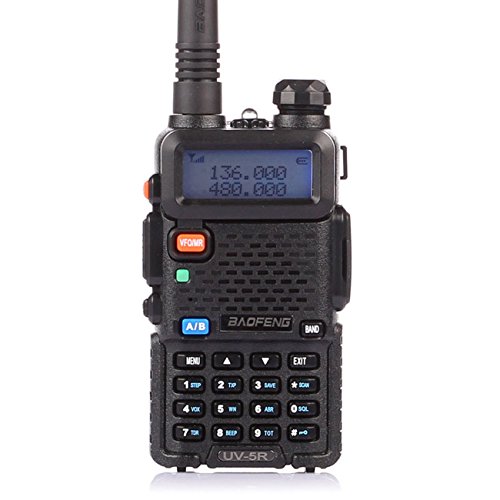
If you’re an amateur “ham” radio operator, you’re part of a hacker community that goes back over a century. Bring your handie-talkie to QSO with the many hams at HOPE to keep up with what’s happening. Visit Special Event Station W2H and operate on several HF/VHF/UHF bands in various voice and data modes to freely communicate with hams around the globe – sans telecom infrastructure! Our 70cm repeater input is 442.875 MHz (PL 167.9) and the output is 447.875 MHz which W2H operators will be monitoring. We also encourage simplex ops on 147.545 MHz and 433.545 MHz (PL 77.0).
More details at http://ham.hope.net.

Time and Location: Friday through Sunday – 18th Floor (next to the 2600 store)

If you can’t tell, it looks like an action-packed weekend! I’m super excited and (admittedly) a little intimidated! Should be lots of fun.

Come join the fun!

Full details can be found at The Circle of HOPE conference website.